NASDDDS Weekly news & updates

September 23, 2026 | Issue 30


NASDDDS Member Calendar

See what's happening this month.

__________________________

NASDDDS Member Support

__________________________

Major Program Links


Welcome

Welcome to the weekly NASDDDS newsletter where we spotlight state and federal updates in the IDD field! Send submissions to cmcgraw@nasddds.org.

news & updates


The NASDDDS Directors Forum: More Than Six Decades of State Leadership

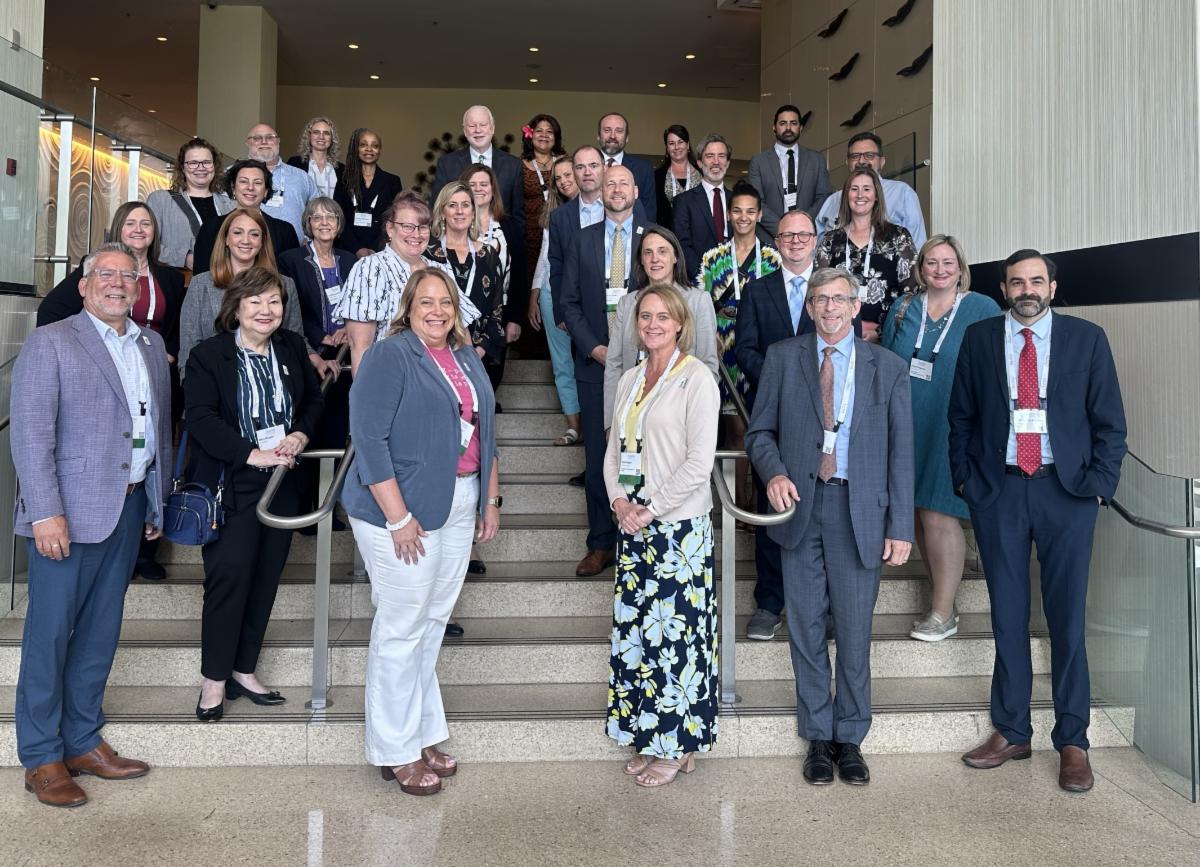
The NASDDDS Directors Forum brings together state leaders responsible for intellectual and developmental disabilities (I/DD) services to focus on the issues shaping state systems. What began as a gathering of state directors has grown to include members of state I/DD leadership teams, expanding opportunities for peer connection and shared learning across states.


The Forum reflects a tradition that reaches back to NASDDDS’ earliest days. In 1963, as national attention to disability services was growing, state officials came together to explore how they could communicate more effectively with one another and with the federal government. The first formal meeting was held in Portland, Oregon, on May 23, 1963, with 75 participants from 38 states. The association was formally incorporated in 1964.


More than six decades later, the Directors Forum continues to serve much the same purpose. The challenges facing state I/DD systems have changed, but the value of bringing state leaders together has not. State IDD Directors and your teams are invited to join NASDDDS and fellow state I/DD leaders from across the country on November 2nd in Chicago for this year’s Directors Forum and be part of this longstanding tradition of collaboration and connection. Others who work or are impacted by the I/DD field are invited to join us for the NASDDDS Annual Conference immediately following the Forum, November 3–5.

___________________________

Federal Updates

  • Congressman Brian Fitzpatrick (R-PA) and Congresswoman Doris Matsui (D-CA) this month reintroduced the 988 Implementation Act. The legislative package would provide federal funding and guidance for states to implement a 988 and crisis response infrastructure that relies on trained mental health specialists. The bill provides funding for community-based crisis response, including mobile crisis teams and crisis centers; provides increased funding for training and scholarship opportunities for a crisis workforce; and, requires all health insurance plans to cover crisis services. To read the bill or track its progress, READ MORE.


  • The Government Accountability Office (GAO) has issued a report describing the causes of Medicaid eligibility errors and corrective actions selected states took to address them, and assessing the Centers for Medicare & Medicaid Services' (CMS) oversight of state corrective actions. READ MORE


  • The House last week passed the Preventing Rip-offs and Obtaining Oversight of Funds (PROOF) Act (H.R. 10326) by a vote of 217-207. This bill was introduced by Representative Jefferson Van Drew (R-NJ). The bill creates a formal process for federal law enforcement to ask state agencies for records that may help uncover improper use of public funds. The process would apply to a set of programs that involve federal money administered by states, including Medicaid. READ MORE

___________________________

State News

  • Ohio implemented the statewide Joshua Alert for missing minors with developmental disabilities who face an immediate safety threat, including children who are nonverbal or have limited ability to communicate or seek help.


  • Washington provided an update on its “A Path Forward” planning process. Priorities include reducing reliance on costly congregate institutional settings, expanding community services, addressing access and equity, and identifying needed investments in workforce and service capacity. Self-advocates and families are represented on the steering committee, with broader public engagement planned. READ MORE


  • West Virginia will receive a $4.8 million federal investment through the Rural Health Transformation Program to strengthen the state’s healthcare workforce and expand access to primary, behavioral, maternal, emergency, specialty and preventive care. The funding includes $2.4 million for a statewide recruitment and relocation program aimed at bringing at least 125 licensed healthcare professionals to rural communities in its first year. Nearly $2.4 million will also support West Virginia’s Health to Prosperity initiative, expanding worksite clinics and employer-based healthcare services. Additional federal investments will support medical transportation and telehealth access. READ MORE

___________________________

Partner & Sponsor Updates

ThinkWork! Stories highlight the employment successes of people with intellectual and developmental disabilities (I/DD) and the innovative employment support practices that lead to successful, paid jobs. 


  • Read Matthew’s Story. Discover how education, volunteering, and a supportive writing group helped Matthew turn his passion for writing into self-employment. 
  • Read Cole’s Story. His journey shows that career growth is not always a straight path, and that every experience can create opportunities for what comes next.


Explore the ThinkWork website for more stories, data, innovative practices, and tools related to improving employment outcomes for people with I/DD.

___________________________

Community Resources

  • The Administration for Community Living (ACL) is seeking nominations for two advisory councils supporting family caregivers: the RAISE Family Caregiving Advisory Council and the Advisory Council to Support Grandparents Raising Grandchildren. Members will help inform implementation and updates to the National Strategy to Support Family Caregivers and related caregiving initiatives. Nominations for both councils are due October 14, 2026, by 11:59 p.m. ET. RAISE LINK and GRANDPARENT LINK


  • The U.S. Department of Labor’s Office of Disability Employment Policy (ODEP) is encouraging employers, HR professionals, workforce development organizations, financial professionals and other partners to share its new Make Work Pay Hub. The hub provides financial literacy information designed to help workers with disabilities understand how employment and earnings may interact with public benefits. It also includes a new explainer video on ABLE accounts, which can help eligible people with disabilities save money without jeopardizing certain benefits. ODEP is asking partners to share the resource through social media, newsletters, conferences, meetings and other outreach channels to help more workers with disabilities access information that supports employment, earnings and financial independence. READ MORE

___________________________

Thank you to our newsletter sponsors:

___________________________

The National Association of State Directors of Developmental Disabilities Services (NASDDDS) does not exclusively endorse any sponsor, product, or service referenced in this newsletter. Likewise, the views, information, and content presented in this newsletter do not constitute endorsement by any sponsor. All editorial content is developed independently by NASDDDS to inform and support its members.


For accessible or alternate versions of this information, please email cmcgraw@nasddds.org.

 
Facebook  LinkedIn