|
The Proactive Technologies Report™ newsletter is a free service of Proactive Technologies, Inc.®
Important stories and information you might have missed
| | News from Worker Development, Industry, the Economy, Education, Science, and much more! | | Celebrate a Happy and Safe Independence Day! | | | U.S. Department of Commerce - Bureau of Economic Analysis | |
Gross Domestic Product, 1st Quarter 2025 (Third Estimate), GDP by Industry, and Corporate Profits (Revised)
Real gross domestic product (GDP) decreased at an annual rate of 0.5 percent in the first quarter of 2025 (January, February, and March), according to the third estimate released by the U.S. Bureau of Economic Analysis. In the fourth quarter of 2024, real GDP increased 2.4 percent. The decrease in real GDP in the first quarter primarily reflected an increase in imports, which are a subtraction in the calculation of GDP, and a decrease in government spending. These movements were partly offset by increases in investment and consumer spending. Read Report
Personal Income and Outlays, May 2025
Personal income decreased $109.6 billion (0.4 percent at a monthly rate) in May, according to estimates released today by the U.S. Bureau of Economic Analysis. Disposable personal income (DPI)—personal income less personal current taxes—decreased $125.0 billion (0.6 percent) and personal consumption expenditures (PCE) decreased $29.3 billion (0.1 percent). Personal outlays—the sum of PCE, personal interest payments, and personal current transfer payments—decreased $27.6 billion in May. Personal saving was $1.01 trillion in May and the personal saving rate—personal saving as a percentage of disposable personal income—was 4.5 percent. Read Report
Regional Statistics
Today, BEA released GDP by state quarterly statistics for the first quarter of 2005 through the fourth quarter of 2018 as part of the 2023 comprehensive update of the Regional Economic Accounts. This completes the 2023 comprehensive updates to the National, Industry, and State Economic Accounts. Access Data Tables
| | | U.S. Department of Commerce - Bureau of the Census | |
Advance Report on Durable Goods Manufacturers’ Shipments, Inventories, and Orders
New orders for manufactured durable goods in May, up five of the last six months, increased $48.3 billion or 16.4 percent to $343.6 billion. May 2025: +16.4° % Change; April 2025 (r): -6.6° % Change. Read Report
Manufacturers’ Shipments, Inventories, and Orders
New orders for manufactured goods in April, down following four consecutive monthly increases, decreased $22.8 billion or 3.7 percent to $594.6 billion, the U.S. Census Bureau reported today. This followed a 3.4 percent March increase. Shipments, down two consecutive months, decreased $1.8 billion or 0.3 percent to $598.9 billion. This followed a 0.2 percent March decrease. Unfilled orders, up eleven of the last twelve months, increased $0.7 billion or virtually unchanged to $1,408.5 billion. This followed a 1.6 percent March increase. The unfilled orders-to-shipments ratio was 6.77, down from 6.86 in March. Inventories, down following six consecutive monthly increases, decreased $0.5 billion or 0.1 percent to $943.6 billion. This followed a 0.1 percent March increase. The inventories-to-shipments ratio was 1.58, up from 1.57 in March. Read Report
Manufacturing and Trade Inventory and Sales
U.S. total business end-of-month inventories for April 2025 were $2,656.5 billion, virtually unchanged (+/- 0.1 percent)* from last month. U.S. total business sales were $1,922.8 billion, down 0.1 percent (+/- 0.2 percent)* from last month. April 2025: 0.0* % Change in Inventories; March 2025 (r): +0.1* % Change in Inventories. Read Report
Monthly Wholesale Trade
April 2025 sales of merchant wholesalers were $700.2 billion, up 0.1 percent (+/- 0.5 percent)* from last month. End-of-month inventories were $908.7 billion, up 0.2 percent (+/- 0.4 percent)* from last month. April 2025: +0.2* % Change in Inventories; March 2025 (r): +0.3 % Change in Inventories. Read Report
Household Pulse Survey
What is the Household Pulse Survey?
The U.S. Census Bureau, in collaboration with multiple federal agencies, is in a unique position to produce data on the social and economic effects of coronavirus on American households. The Household Pulse Survey is designed to deploy quickly and efficiently, collecting data to measure household experiences during the coronavirus pandemic. Data will be disseminated in near real-time to inform federal and state response and recovery planning. Read Data
Small Business Pulse Survey
The Small Business Pulse Survey (Business Pulse) measures the effect of changing business conditions during the Coronavirus pandemic on our nation's small businesses. Business Pulse complements existing U.S. Census Bureau data collections by providing high-frequency, detailed information on the challenges small businesses are facing during the Coronavirus pandemic as well as their participation in federal programs such as the Paycheck Protection Program. Read Report
Monthly State Retail Sales
The Monthly State Retail Sales (MSRS) is the Census Bureau's new experimental data product featuring modeled state-level retail sales. This is a blended data product using Monthly Retail Trade Survey data, administrative data, and third-party data. Year-over-year percent changes are available for Total Retail Sales excluding Nonstore Retailers as well as 11 retail North American Industry Classification System (NAICS) retail subsectors. These data are provided by state and NAICS codes beginning with January 2019. The Census Bureau plans to continue to improve the methodology to be able to publish more data in the future. Access Tables
Economic Indicators
A composite of many of the requested domestic facts and figures. Visit Table
Data Profiles
View Quick Facts statistics across a variety of topics for your state, county or town. View Data
Updated Annual Industry Economic Account Statistics for 2017-2022 Now Available
The Bureau of Economic Analysis published the following annual Industry Economic Account statistics for 2017 through 2022, reflecting the 2023 comprehensive update of the National Economic Accounts:
- Make tables, use tables, and import matrices, Annual, 2017-2022
- Total and domestic requirements tables, Annual, 2017-2022
- PCE and PEQ bridge tables, Annual, 2017-2022
- Margin tables, Benchmark, 2017
Revised supply tables for 2017-2022 to correct the allocation of imports between the “Imports” column and the “CIF/FOB Adjustments on Imports” column for certain transportation commodities. All other elements of the supply tables are unaffected by this update.
Data prior to 2017 will be forthcoming. Access Data Files
| | | U. S. Department of Labor Statistics | |
Consumer Price Index
The Consumer Price Index for All Urban Consumers (CPI-U) increased 0.1 percent on a seasonally adjusted basis in May, after rising 0.2 percent in April, the U.S. Bureau of Labor Statistics reported today. Over the last 12 months, the all items index increased 2.4 percent before seasonal adjustment.
The index for shelter rose 0.3 percent in May and was the primary factor in the all items monthly increase. The food index increased 0.3 percent as both of its major components, the index for good at home and the index for food away from home also rose 0.3 percent in May. In contrast, the energy index declined 1.0 percent in May as the gasoline index fell over the month. Read Report
Producer Price Index
The Producer Price Index for final demand advanced 0.1 percent in May, seasonally adjusted, the U.S. Bureau of Labor Statistics reported today. Final demand prices declined 0.2 percent in April and 0.1 percent in March. On an unadjusted basis, the index for final demand rose 2.6 percent for the 12 months ended in May.
The May increase in the index for final demand was led by prices for final demand services, which advanced 0.1 percent. The index for final demand goods rose 0.2 percent.Prices for final demand less foods, energy, and trade services edged up 0.1 percent in May after falling 0.1 percent in April. For the 12 months ended in May, the index for final demand less foods, energy, and trade services increased 2.7 percent. Read Report
Job Openings and Labor Turnover
The number of job openings was little changed at 7.4 million in April, the U.S. Bureau of Labor Statistics reported today. Over the month, both hires and total separations were little changed at 5.6 million and 5.3 million, respectively. Within separations, quits (3.2 million) and layoffs and discharges (1.8 million) hanged little.
This release includes estimates of the number and rate of job openings, hires, and separations for the total nonfarm sector, by industry, and by establishment size class. Job openings include all positions that are open on the last business day of the month. Hires and separations include all changes to the payroll during the entire month. Read Report
Unemployment Rate for States
Unemployment Rates for States, Seasonally Adjusted. Read Report
Civilian Labor Participation Rate
For a 20 year chart of the U.S. Civilian Labor Participation Rate. Read Report
| | | |
University of Michigan: Consumer Sentiment (UMCSENT)
The Federal Reserve - St. Louis
View an index of the results of the University of Michigan's monthly Survey of Consumers, which is used to estimate future spending and saving. University of Michigan: Consumer Sentiment, University of Michigan: Consumer Sentiment [UMCSENT], retrieved from FRED, Federal Reserve Bank. Access Latest Report
| | | U.S. Private Sector Job Quality Index |
University of Buffalo - School of Management
The U.S. Private Sector Job Quality Index (JQI) assesses job quality in the United States by measuring desirable higher-wage/higher-hour jobs versus lower-wage/lower-hour jobs. The JQI results also may serve as a proxy for the overall health of the U.S. jobs market, since the index enables month-by-month tracking of the direction and degree of change in high-to-low job composition.
By tracking this information, policymakers and financial market participants can be more fully informed of past developments, current trends, and likely future developments in the absence of policy intervention. Economists and international organizations have in recent years developed other, complementary conceptions of job quality such as those addressing the emotional satisfaction employees derive from their jobs.
For the purposes of this JQI, “job quality” means the weekly dollar-income a job generates for an employee. Payment, after all, is a primary reason why people work: the income generated by a job being necessary to maintain a standard of living, to provide for the essentials of life and, hopefully, to save for retirement, among other things. Read Report
| | | Realtime Inequality - Who Benefits from Income and Wealth Growth in the United States? |
University of California, Berkeley - Thomas Blanchet, Emmanuel Saez, Gabriel Zucman; Department of Economics
Realtime Inequality provides the first timely statistics on how economic growth is distributed across groups. When new growth numbers come out each quarter, we show how each income and wealth group benefits.
Controlling for price inflation, average national income per adult in the United States increased at an annualized rate of 2.2% in the first quarter of 2023, and average income for the bottom 50% grew by 1.5%. National income is similar to GDP and a better indicator of income earned by US residents. Visit the Methodology page for complete methodological details. Review Data
| |
| |
USA Facts Website
USAFacts.org – Steve Balmer, Founder and Former Apple CEO
USAFacts is not-for-profit and nonpartisan. When former Microsoft CEO Steve Ballmer retired from tech to focus on philanthropy, he searched for solid, reliable, impartial numbers to understand what the US government does with tax dollars to help determine the best way to make an impact. How is the money spent? Who is served? What are the outcomes?
Those numbers weren’t readily available. So, he assembled a small team of economists, writers, and researchers to help comb through government data. Their eye-opening report laid the foundation for USAFacts. Today USAFacts reports are provided free as a resource for the American public and US government alike. Access Website
| | | |
Tracking Regulatory Changes in the Second Trump Administration
Brookings Institution
As the Trump administration returns to office for a second term with renewed deregulatory ambitions, the executive branch and its agencies are implementing significant policy changes. The Brookings Center on Regulation and Markets Regulatory Tracker (“Reg Tracker”) provides background information and status updates on a curated selection of significant regulatory and deregulatory changes made by the Trump administration.
This tracker allows you to monitor a curated selection of new, delayed, and repealed rules, notable guidance and policy revocations, executive actions, and important court battles across key policy areas such as environmental, health, labor, and more.
The Reg Tracker focuses on major regulatory changes implemented under the current Trump administration. Entries we tracked during the Biden administration and during President Trump’s first term can be accessed through the “Biden” or “Trump Term 1” archive checkboxes, respectively. Track Changes
| | | |
Business Executives' Optimism About U.S. Economy Sinks as Recession Fears Loom, AICPA and CIMA Survey Finds
PR Newswire - Morningstar
- Survey takers with a positive view of the economy fell from 47% last quarter to 27%
- More than half expect U.S. will be in recession by year-end
- Hiring outlook tightens
NEW YORK, June 5, 2025 /PRNewswire/ -- Business executives' view of the economy continued to sour amid recession fears and uncertainty about tariff impacts, according to the second-quarter AICPA and CIMA Economic Outlook Survey. The survey polls chief executive officers, chief financial officers, controllers and other CPAs in U.S. companies who hold executive and senior management accounting roles.
The high hopes business executives held about the economy immediately after the November election have ebbed dramatically in the past two quarters. Only 27% now hold a favorable view of the U.S. economy over the next 12 months, down from 47% last quarter and 67% at the end of 2024. Read Article
| | | |
Pentagon Awards Over $13B for Nuclear Subs
American Machinist
General Dynamics Electric Boat and Newport News Shipbuilding are authorized to construct two Virginia-class submarines – and to proceed with productivity-focused improvements, among other
The U.S. Dept of Defense issued a total of $13.7 billion in contract modifications to General Dynamics Electric Boat Corp. and Huntington Ingalls Inc., Newport News Shipbuilding for construction of two FY 2024 Virginia-class nuclear submarines (SSN 812 and SSN 813), as well as funding productivity-focused updates at the respective shipyards in Groton, Conn., and Newport News, Virginia. The funding also will address some nuclear-powered vessel programs’ workforce support.
About 90% of the total amount ($12.4 billion) issued by the Pentagon was assigned to the General Dynamics unit. Read Article
| | | |
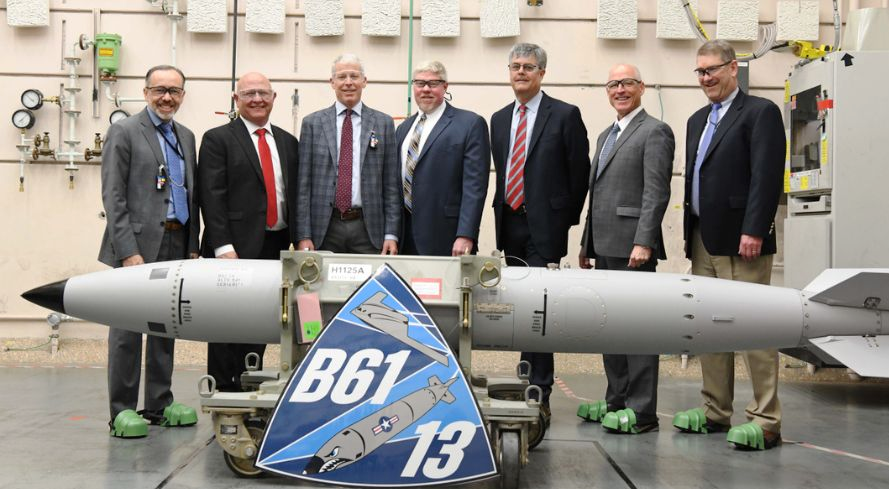
NNSA Finalizes Assembly of B61-13 Nuclear Bomb Nearly a Year Early
Assembly Magazine - Jennifer Pierce
AMARILLO, TX—The U.S. Department of Energy’s National Nuclear Security Administration has completed assembly of the first B61-13 nuclear gravity bomb—an achievement announced on May 19 by U.S. Secretary of Energy Chris Wright at the Pantex Plant in Amarillo, Texas.
Finalized nearly a full year ahead of schedule, the B61-13 marks a significant milestone in the modernization of the U.S. nuclear arsenal. It stands as one of the fastest-developed and fielded nuclear weapons since the Cold War. Read Article
| | | |
Unions Favored Over Big Business More Than Any Time in 60 Years: EPI
CFO Dive - Jim Tyson, Senior Reporter
While public support for unions has grown in recent years, they have not made significant inroads in worker representation.
Dive Brief:
- Americans favor labor unions over big business more than at any time in 60 years, the Economic Policy Institute said, in part because former President Joe Biden and President Donald Trump, during his first White House term and while seeking his second term, voiced support for pro-labor policies.
- Public perceptions toward unions and big business moved in tandem from 1964 until 2012 but began to split in 2016, the institute said Tuesday in a report. Organized labor gained comparative appeal regardless of differences in race, gender, education, wealth and political orientation.
-
“Labor unions have huge sympathy from Americans relative to big business right now,” the institute said, citing American National Election Studies data from 2024. “In fights between organized labor and organized capital, Americans are likely to support labor more now than at any time on record.” Read Article
| | | |
Modine Expands Grenada County, Mississippi, Manufacturing Operations
Area Development - News Desk
Thermal management company Modine plans to expand its operations in Grenada County, Mississippi. The $38 million project is expected to create more than 450 jobs by the end of 2028.
The investment will include building enhancements and product line additions to support an increased demand for the company’s data center cooling solutions.
“This is another big economic development win for Grenada County and Mississippi. Four-hundred-and-fifty jobs are a lot of jobs, and that means a lot of meaningful careers for Mississippians. Read Article
| | | |
‘It’s Just Musical Chairs’: Brands are Moving Manufacturing Out of China — But Not Back to the US
Area Development - Modern Retail, Allison Smith
When Donald Trump imposed steep tariffs on Chinese goods earlier this spring, the goal was clear: push U.S. brands to bring manufacturing back home. But weeks into the rollout — and even after a temporary 90-day tariff reduction — few companies are relocating their supply chains to the U.S. In fact, most are doing the opposite: moving out of China, yes, but into countries like Vietnam, India, Sri Lanka and Thailand.
That’s because for many consumer goods, including electronics, textiles and furniture, American manufacturing simply isn’t viable, according to a dozen brand executives who spoke to Modern Retail for this story. Labor costs are too high, factories are scarce and many components aren’t made here at all. While some companies are investing in U.S. production on a small scale, the vast majority are moving elsewhere in Asia. All the while, companies are juggling multiple trade-offs: managing sky-high tariffs, scrambling to find factory capacity elsewhere and explaining it all to customers without tanking sales. Read Article
| | | |
UAW Hails GM Investment in Tonawanda Plant
IndustryWeek - Laura Putre
The workhorse plant in upstate New York is slated to receive an $888 million boost for its ICE engines.
General Motors on Tuesday announced it would invest $888 million in its Tonawanda Propulsion Plant in New York State, a welcome decision for both the United Autoworkers union and the governor of New York.
The investment would go toward machinery, tooling and renovations at the plant to build the automaker’s new sixth-generation V-8 engines for full-size trucks and SUVS. Production of fifth-generation engines would continue during construction, which is expected to wrap up in 2027.
Employing 870 workers, the 3.1 million square foot Tonawanda, New York, plant is a real workhorse. It opened in 1938 to build Chevrolet engines and axles. During World War II, it was converted to produce military aircraft engines. After the war, the plant returned to automotive production, and by the 1960s it was assembling 16 engine models. The site currently builds engines for Cadillac, Chevrolet, GMC and Buick – including the 6.2L LT2 Small Block V8 for the Corvette Stingray and its hybrid cousin, E-Ray. Read Article
| | | |
Manufacturing Slumps as Tariff War Undercuts Orders, Inventories: ISM
CFO. Dive - Jim Tyson, Senior Reporter
Outside of manufacturing, the U.S. economy has so far shown signs of weathering a two-month-long trade war.
Dive Brief:
- U.S. manufacturing slumped in May for the third consecutive month, the Institute for Supply Management said Monday, as the Trump administration pushed on with its plan to revive the country’s manufacturing sector by imposing the highest tariffs on imports in decades.
- The ISM’s measures of imports and new orders fell amid haggling over who will pay import levies, and inventories of raw materials and other goods plunged as manufacturers drew down existing stock rather than buy higher-priced items made abroad, ISM said, describing components of its purchasing managers’ index of manufacturing activity.
-
“The pull forward of materials by companies to minimize the financial impacts of tariffs is largely completed, Susan Spence, chair of the ISM Manufacturing Business Survey Committee, said in a statement. “Overall, new orders continue to slow, as which party will pay for potential tariff costs is still the prime topic of negotiations between buyers and sellers.” Read Article
| | | |
AI Derangement Syndrome? Yes, It’s Really Happening in the C-suite
Human Resource Executive - Peter Cappelli, HR Executive’s Talent Management columnist and a fellow of the National Academy of Human Resources. He is the George W. Taylor Professor of Management and director of the Center for Human Resources at The Wharton School of the University of Pennsylvania in Philadelphia.
Perhaps because we can see and sometimes touch technology, we seem to be obsessed with imagining how it will transform our lives. Sometimes it does, but it takes a long time to happen. The number of those cases is very small—and many more times, that transformation just does not happen. Remember driverless trucks, which were supposed to take over the highways by 2019?
We are now a good 10 years into machine learning models of data science, which were transformative in theory but, in practice, expensive and hard to use. We are also now two years into large language models like ChatGPT, where speculation continues to be at a fever pitch—the peak of the Gartner Hype Cycle, coined by analyst Jackie Fenn 30 years ago. But unlike machine learning and past innovations, the pressure is really on to make AI integration at work a priority, despite the difficult time we have in finding examples where it is changing work in money-saving ways—let alone transforming it. Read Article
| | | |
Industry 4.0 Isn’t Quite So Sexy Anymore
IndustryWeek - Dennis Scimeca
“Future technology” is settling into “current technology” with Rockwell’s annual smart manufacturing report.
The GenAI hype bubble has finally burst and it’s back to business as usual—worrying about paying out ransomware demands, finding the right people, decreasing supply chain reliability and figuring out how smart manufacturing helps with any of this.
Rockwell Automation’s “State of Smart Manufacturing Report” is appreciably shorter than last year’s. My suspicion, based on industry conferences thus far in 2025 and the almost desperate need by vendors industry-wide to make AI seem sexy in 2024, is that industry 4.0 has finally settled into “ordinary.”
The lack of perceived excitement around AI, part of manufacturing software stacks for quite a while, has nothing to do with decreased relevance. AI only became a starlet last year owing to the emergence of large language models (LLMs) such as ChatGPT (are we sick that word, yet?) that it turns out have little if anything to do with what takes place on the shop floor. Read Article
| | | |
MapsU.S. Manufacturing by State: Who Gains Most from ‘Made in America’?
Area Development - The Visual Capitalist, Bruno Venditti, Sam Parker
Key Takeaways:
- Wisconsin ranks 8th in manufacturing jobs despite having the 20th-largest population.
- California leads the nation with 1.22 million manufacturing jobs, nearly double the next highest state.
- Texas (970.6K), Ohio (687.5K), and Michigan (597.6K) also rank among the top manufacturing states.
-
Small states and territories like Wyoming (10.6K), Alaska (11.9K), and D.C. (1.2K) have the lowest manufacturing employment. See Map
| | | |
Stellantis Building Advanced Parts Distribution Center
American Machinist
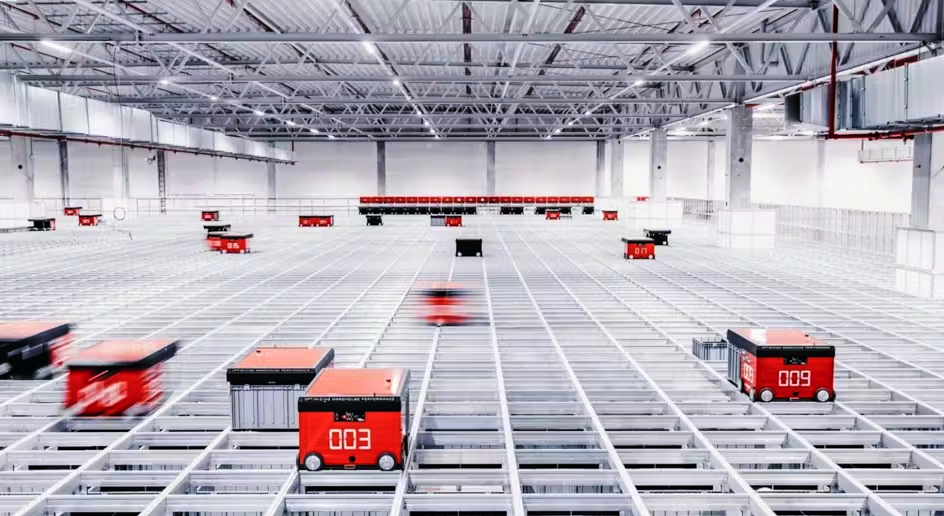
The almost $400-million Mopar Megahub opening in Michigan in 2027 will consolidate four operations and centralize aftermarket auto parts distribution for the U.S.
Stellantis is making a $388-million investment in a new distribution center for its Mopar aftermarket automotive parts subsidiary. The Mopar Megahub in suburban Detroit will centralize distribution of Mopar parts for the U.S., consolidating four other operations in Michigan and Wisconsin.
The new operation will open in 2027. The automaker indicated the Megahub will be designed with will feature “cutting-edge technology,” including AutoStore automated storage and retrieval systems and safe working environment for approximately 500 United Autoworkers union employees. Read Article
| | | |
Machine Tools Orders Trending Upward
American Machinist
Demand for manufacturing technology is now well-ahead of the year-ago and year-over-year rates, on a run that dates back to October 2024.
U.S. manufacturers’ orders for new machining equipment slipped to $444.9 million in April, down -12.7% from March. However, as noted by AMT - the Assn. for Manufacturing Technology, the new figure is 44.5% higher than the April 2024 total, and it raises the new order total for January-April 2025 to $1.69 billion, or 17.8% higher than last year’s four-month tally.
Those figures support AMT’s reading of rising demand for machine tools since the end of Q3 2024.
“Despite declines in overall manufacturing output, machinery manufacturers increased production by 0.3% in April, continuing the upward trend that began in October 2024,” AMT stated, pointing to Federal Reserve Bank data on durable goods production. Read Article
| | | Proactive Technologies' Project Partners | | |
Proven Solutions for Employers and Education
- Apprenticeship Program Design and Technical Implementation Support
- Employer - Educational Institution - Community Partnership Program Development and Support
- Employee Pre and Post-Hire Assessment Design, and
- Administration Management Consultation, Training and Support
Learn More
about K & D Consulting, LLC
Copyright © 2019-25 K & D Consulting, LLC
ALL RIGHTS RESERVED
| |
North-Central Ohio Employer-Based Worker Training Partnership
Established to:
-
Provide direct technical support to employers seeking to build structured on-the-job training programs for their job classifications, their employees, their business strategy;
- Better align local related technical instruction, economic development and worker support programs with employers;
-
Provide assistance to employers to navigate the many worker development grant programs.
- Visit our website
| | Classes alone will not close the "skills gap," but structured on-the-job training can...every time! | |
Under-capacity of workers is an enormous source of untapped value and unrealized return on worker investment. In addition, standardizing expert task performance -between workers and shifts - can add to worker ROI through lower scrap and rework.
- Increased worker capacity, productivity, work quantity, work quality and compliance (specifications, ISO/AS/IATF programs and safety mandates);
- Decreased internal costs of training
-
Higher return on worker investment! You would be surprised how small of an investment is needed to unlock enormous returns.
If budgets are tight, Proactive Technologies, Inc. can be an extension to your training department, with our technical implementation support - included with every project!
There's nothing to lose by taking a minute to contact us to learn more.
Copyright © 2019-25 Proactive Technologies, Inc.®
ALL RIGHTS RESERVED
| |
Are you certain your firm has trained all of your workers to their fullest? Do you continue to see signs that you may not be getting the most Return on Worker Investment?
Contact Proactive Technologies, Inc.® today for more information about their accelerated transfer of expertise system™!
Copyright © 2019-25 Proactive Technologies, Inc.®
ALL RIGHTS RESERVED
| | Core Skill Development and Enhancement |
- Skill, Knowledge and Behavioral Assessments
- Intro and Advanced Blueprint Reading Courses Geometric Dimensioning and Tolerancing
- Courses Front Line Supervisor Training
- Training Materials and Online Courses
Visit Our Website
Copyright © 2019-2025 Lifetime Learning
ALL RIGHTS RESERVED
|
If your institution is interested in becoming a Proactive Technologies, Inc. project partner, contact a representative for more information. | | |
Invoice Rejection Spike Suggests Tactic’s Use as Tariff Buffer, Study Says
CFO Dive - Maura Webber Sadovi, Senior Editor
The sharp rise suggests firms seek to delay payments as they did in the pandemic, according to an analysis from Basware, a financial automation company.
Dive Brief:
- Global businesses rejected 6.95% of the total of 272 million invoices received during the first quarter, compared to 1.86% during the year-earlier period, according to an analysis of invoices by Basware, a Helsinki, Finland-based financial automation company.
- The rise in rejections roughly coincides with the start of the U.S. trade war — initially kicked off about a third of the way through the quarter by President Donald Trump in February — which complicates the invoice process as rate fluctuations and changes in prices require additional administration that needs to be reflected in invoices, according to a release on the findings of the analysis reviewed by CFO Dive.
-
“The U.S. tariff situation is creating stress in an unintended place — finance operations and specifically invoice processing,” Jason Kurtz, CEO of Basware said in a statement included in the release. “Similar to the supply chain disruption experienced during the pandemic, it suggests companies are using payment delays as a financial buffer against economic uncertainty.” Read Article
| | | |
Shifting Strategy in a Weakening Economy
IndustryWeek - Dan Cakora
From soft landing to stagflation, global supply chains are feeling the strain.
The early months of 2025 have been a rude awakening for business leaders hoping for a smooth economic environment. In Q1, U.S. gross domestic product contracted by 0.3%, which is an early decisive downturn but not as gloomy as the Federal Reserve’s GDPNow Q1 estimate of -2.7%. Read Article
| | | |
Opinion: Medicare Advantage Crisis Deepens as Dr. Oz Launches ‘Aggressive’ Audits
MarketWatch - Brett Arends
The plan to investigate the private health-insurance companies that run Medicare Advantage has been drastically expanded
If the Medicare Advantage program isn’t in crisis, it’s doing a terrific impersonation of something that is.
The latest blow comes from Mehmet Oz, the physician and former TV personality turned MAGA Republican who now runs Medicare on behalf of the Trump administration. This week he announced a dramatically expanded plan to investigate the private health-insurance companies that run the program, auditing their invoices going back years.
And he wasn’t mincing words. “We are committed to crushing fraud, waste and abuse across all federal healthcare programs,” Oz said in a statement. “While the Administration values the work that Medicare Advantage plans do, it is time CMS faithfully executes its duty to audit these plans and ensure they are billing the government accurately for the coverage they provide to Medicare patients.” Read Article
| | | |
The Hidden Cost of Constant Innovation
CFO.com - Courtney Schuyler
Organizations often implement new technologies without accounting for training and productivity losses, but there are proven strategies to boost adoption rates and ROI.
Innovation often feels like a high-stakes pursuit — companies invest heavily in new technologies, chasing the promise of organizational transformation while overlooking hidden costs and diminishing returns. Like a corporate version of “keeping up with the Joneses”, the race to stay ahead blinds organizations to the psychological and financial toll of constant change. Resistance to new tools and poorly executed adoption strategies can turn potential breakthroughs into expensive setbacks. To unlock innovation’s true potential, leaders must first understand the psychology of change. Read Article
| | | |
DOL Rescinds Biden-era Warning Against Offering Cryptocurrency in 401(k) Plans
HR Dive - Ginger Christ, Editor
In reversing course on the 2022 guidance, the department said it is “reaffirm[ing] its neutral stance” on cryptocurrency’s inclusion in plans.
Dive Brief:
- The U.S. Department of Labor’s Employee Benefits Security Administration on Wednesday rescinded a Biden-era warning that cautioned 401(k) plan fiduciaries against offering cryptocurrency options. The 2022 guidance urged fiduciaries to exercise “extreme care” before adding cryptocurrency to their investment menus.
- The guidance’s language “deviated from the requirements of the Employee Retirement Income Security Act and marked a departure from the department’s historically neutral, principled-based approach to fiduciary investment decisions,” DOL said in a news release.
-
DOL said its decision to rescind the guidance “reaffirms its neutral stance” on whether fiduciaries include cryptocurrency in a plan’s investment menu. Read Article
| | | |
Is Private Equity’s Pushback on the CPA Credential a Regulatory Issue?
CFO.com - Adam Zaki, Reporter
The decision to make non-audit CPAs stop using the credential may be less of a private equity strategy and more of a compliance response to regulatory structures.
Amid the growing influence of private equity across business — particularly in public accounting — a quiet but consequential trend is beginning to ripple through the profession. Licensed CPAs who don’t work in audit or attest roles are being told to remove CPA from their email signatures, business cards and LinkedIn profiles.
In some cases, the directive is not coming from private equity owners, but from state boards of accountancy. It’s the regulators who are pressing firms to limit the use of the CPA title among licensed professionals in non-attest roles. State boards have expressed concern that CPAs in advisory or consulting positions may inadvertently mislead clients by signaling regulatory oversight where none applies. Read Article
| | | |
CFPB Now Protecting Financial Firms Ripping Off Consumers, Even Hiding Consumer Complaints & Licensing Lying About FDIC Insurance
Better Markets
WASHINGTON, D.C.—Brady Williams, Legal Counsel, issued the following statement in connection with the CFPB’s decision to rescind dozens of prior agency interpretive rules, policy statements, and advisory opinions:
“Today the CFPB announced its sweeping decision to rescind virtually all of its prior policy guidance—an alarming move that threatens the integrity of consumer oversight, erodes transparency, and signals a dangerous capitulation to industry influence.
“Among the most troubling implications of the Bureau’s action is the likely dismantling of the public-facing Consumer Complaint Database, a vital tool that has empowered millions of Americans to report fraud, abuse, and predatory practices—and allowed researchers, journalists, and watchdogs to hold financial institutions accountable. In fact, consumers have received over $200 million in restitution—or an average payout of $1,470 per person—as a result of the CFPB’s consumer complaint system. Read Article
| | | |
SEC Completes Transformation Into Washington’s Crypto Cheerleader, Drops Lawsuit Against Binance & Executives
Better Markets
WASHINGTON, D.C.—Amanda Fischer, Policy Director and COO of Better Markets, issued the following statement in response to the Securities and Exchange Commission’s (SEC) decision to formally drop its lawsuit against Binance, the world’s largest crypto exchange, and its founder Changpeng Zhao (CZ):
“This decision marks a new low in the SEC’s already disgraceful recent history of surrendering in crypto cases, regardless of the merits and even when the agency is winning in court. By dropping the case against Binance and its founder CZ, the SEC has signaled to lawbreakers that it’s open season to rip-off America’s investors and disrupt and defraud the fair and orderly markets that had made the U.S. the best capital markets in the world.
“The SEC sued Binance two years ago, accusing it and its chief executive CZ of thirteen separate, grievous violations of securities law, including operating an illegal exchange, broker, and clearing agency in the U.S. and also of aiding and abetting certain VIP U.S. clients with evading restrictions on American customers accessing Binance’s foreign exchange. The SEC also alleged that Binance perpetuated an illegal wash trading scheme by using an affiliated ‘market making’ trading firm, Sigma Chain, to create fake trading volume on the Binance.US platform. Taken together, these violations are indicative of a coordinated scheme to violate nearly every pillar of American securities law, which had previously established the U.S. as a fair and transparent place to do build a legitimate business. Read Article
| | | |
Analysts: Nippon Steel Investment Pledge Could Skew Market
IndustryWeek - Geert De Lombaerde
Medium-term fundamentals are likely to weaken as capacity additions come online.
The $14 billion that Nippon Steel Corp. executives have pledged to pump into the operations of U.S. Steel Corp. could weaken the U.S. steel market, two analysts noted this week—with one of them saying steel fundamentals are “in free fall.”
Both Gordon Johnson of GLJ Research and Chris LaFemina with Jefferies spoke of the sector’s struggles in announcing downgrades of shares of Cleveland-Cliffs Inc., which they say is particularly exposed to drops in the price of steel. Such a slide has become more likely, they wrote, now that Nippon Steel has committed to a far greater investment in U.S. Steel capacity than most observers had expected and the probability is growing that other foreign producers will also invest to grow their U.S. operations. Read Article
| | | |
Wall Street to Insurers: Keep Denying Care
Midtown South Community Council – The Lever, Katya Schwenk
UnitedHealth Group’s investors were profiting from its high denial rates. Now, they’re suing to ensure that doesn’t change.
Health care industry giant’s Wall Street overlords just admitted that the company’s sky-high health insurance coverage denial rates reaped them enormous profits — and to keep the money flowing, they’re suing to stop the insurer from approving more patient care.
UnitedHealth Group has been facing growing discontent from its investors, a battle that — as the corporation faces mounting public scrutiny over its care denials — could shape the future of health insurance for 29 million people.
A May 7 lawsuit brought by a small-time investor in UnitedHealth Group is one of the latest chapters in the battle, arguing that the company’s tanking stock performance this spring had cost its investors unfairly. Some corporate media reports framed the suit as investors taking on the company for its “aggressive, anti-consumer tactics.” Read Article
| | | |
Kimberly-Clark Sells Majority Stake in International Tissue Unit to Brazil's Suzano
Reuters
Summary
- Companies
- Kimberly-Clark to hold 49% stake in new joint venture
- Suzano to pay $1.73 bln for remaining 51% stake
- Deal expected to close in mid-2026
-
June 5 (Reuters) - Kimberly-Clark on Thursday struck a deal with Brazilian pulp maker Suzano (SUZB3.SA), opens new tab to sell a majority stake in its international tissue business, valuing the business at about $3.4 billion, the Kleenex tissue maker said. Read Article
| | | |
46 Programs Trump Wants to Eliminate, According to His Proposed Budget
PBS
Presidential budget proposals are usually seen as symbolic. But President Donald Trump is running the Republican Party and asserting presidential power in ways unseen in American history. At the least, the outline he has presented to Congress this year will influence lawmakers’ decisions.
From the White House and Republican perspective, his plan to eliminate some programs underscores that he is pushing for action that others have avoided. Looking at his initial or “skinny” budget proposal, along with an “appendix” the White House released last Friday, Trump’s budget would eliminate at least 46 programs and agencies. Read Article
| | | |
Are Defined Benefit Plans Back? Half of CFOs Are Now Using Them
CFO.com - Adam Zaki, Reporter
Some CFOs managing defined benefit plans are choosing to maintain them after years of phaseouts, with some even exploring ways to bring them back.
After years of closing, freezing or offloading defined benefit pension plans, a growing number of finance leaders are rethinking their strategy, according to Mercer’s 2025 CFO survey.
Data shows half of plan sponsors now say they intend to keep their DB plans for the long term, a sharp reversal from just two years ago, when just 36% of finance leaders said DB plans were sticking around. Read Article
| | | |
SEC Scraps Proposed Cybersecurity Rules for Investment Advisers, Market Participants
CFO Dive - Eric Geller, Senior Reporter
The commission offered no rationale for removing rules that would have imposed security requirements on financial services providers.
Dive Brief:
- The Securities and Exchange Commission has withdrawn proposed cybersecurity regulations for investment advisers and companies participating in securities markets.
- The decisions, announced on Thursday with no explanation, mark potentially significant reversals of the commission’s plans to subject major financial entities to cyber requirements for the first time.
-
The rollbacks also raise questions about the now Republican-led SEC’s commitment to a cyber incident disclosure rule for public companies that the agency adopted in 2023 under Democratic leadership. Read Article
| | | |
CFOs, Investors Diverge on Near-term Economic Prospects
CFO.com - Dan Niepow, Reporter
A new survey by New York consulting firm Teneo shows marked differences in opinion about economic conditions over the rest of the year.
Finance chiefs and investors appear to be at odds over the fate of the global economy in the near term.
In a survey released Tuesday by New York-based consulting firm Teneo, over three-quarters of investors said they expect economic conditions to improve in the second half of 2025. That compares to just 43% of CFOs who hold the same view. Read Article
| | | |
Rethinking Pharmaceutical Innovation Policy
Institute for New Economic Thinking - Talha Syed
Misaligned incentives account for many of the most troubling features of the pharmaceutical industry’s present practices and performance.
The pharmaceutical industry relies more heavily on patent protection than any other sector of the economy.
Empirical surveys across a wide range of industries consistently show that pharmaceutical firms are exceptional in how strongly they rate patents compared to other means of appropriating the benefits of innovative activity such as secrecy and first-mover advantages (e.g., lead time, moving down the learning curve, and establishing production, sales, and services facilities). (Mansfield et. al 1981; Levin et. al 1987; Cohen et. al 2000) Legal and economic analysts, for their part, agree that, whatever other concerns may be raised about the overall costs and benefits of patent protection in different sectors or across the economy as a whole, the case for such protection remains strong for pharmaceuticals. (Jaffe & Lerner 2004; Bessen & Meurer 2008) This includes those who are most skeptical of strong patent protection, such as leading legal economist and former seventh circuit judge, Richard Posner, who observed that “pharmaceuticals are the poster child for the patent system. But few industries resemble pharmaceuticals” (Posner 2009). Read Article
| | | |
Tariff Turmoil and the Money Markets: Single Payer Insurance to the Rescue
Institute for New Economic Thinking - Thomas Ferguson and Servaas Storm
In Treasury markets, there are no libertarians, only grateful recipients of single-payer insurance for ailing financial markets.
Bracket for a moment qualms about the Second Coming’s Cheshire Cat tariff politics and talk of invading Greenland, sweeping up Ukrainian mineral rights, or erecting Mediterranean seaside resorts. Instead, focus on one of the highest-profile pledges President Trump and Vice President Vance made to Joe Rogan and their exultant supporters in high tech and related industries: rolling back globalist “socialism” and severing the choking tentacles of Big Government.
Here, the first impression is strong that the new leadership has really tried to deliver, even if its ballyhooed efforts to trim the federal budget are clearly falling far short of Elon Musk’s promises. As Musk returns to his business interests, DOGE crews have rampaged through one federal agency after another, slashing people and budgets. Not even the famously thrifty Social Security Administration escaped their chainsaw. The Education Department has been downsized and is slated to be phased out. Federal support for science and education is being cut to the bone, along with the State Department, foreign assistance, and even the National Weather Service. The Post Office is being decimated for what looks like a possible privatization down the road, while the administration and Congressional Republicans are reaching an agreement on draconian cuts to Medicaid programs for poorer Americans.
But media impressions can be famously deceiving. They may just point analysts in the wrong direction. Recent events in financial markets raise profound questions about this libertarian resurgence – whether, in fact, a familiar specter famously known for haunting Europe is even now stealing further into American money markets. Read Article
| | | |
Can Bringing Back Manufacturing Help the Heartland Catch Up with 'Superstar' Cities?
NPR Planet Money - Greg Rosalsky
This is Part 3 in our Planet Money newsletter series on manufacturing in America. Part 1 asked why Americans aren't filling the manufacturing jobs that are already here. Part 2 dived deep into economic research that finds that manufacturing jobs pay a higher premium than many other industries. Subscribe here for the next installment. As always, our podcast is here.
We at the Planet Money newsletter have been looking into what makes manufacturing special. Last week, we looked at economics research that shows that manufacturing jobs continue to pay a higher premium than jobs in many other industries. Read Article
| | | |
World Map Shows Countries That Owe China Money
Newsweek - Micah McCartney, China News Reporter
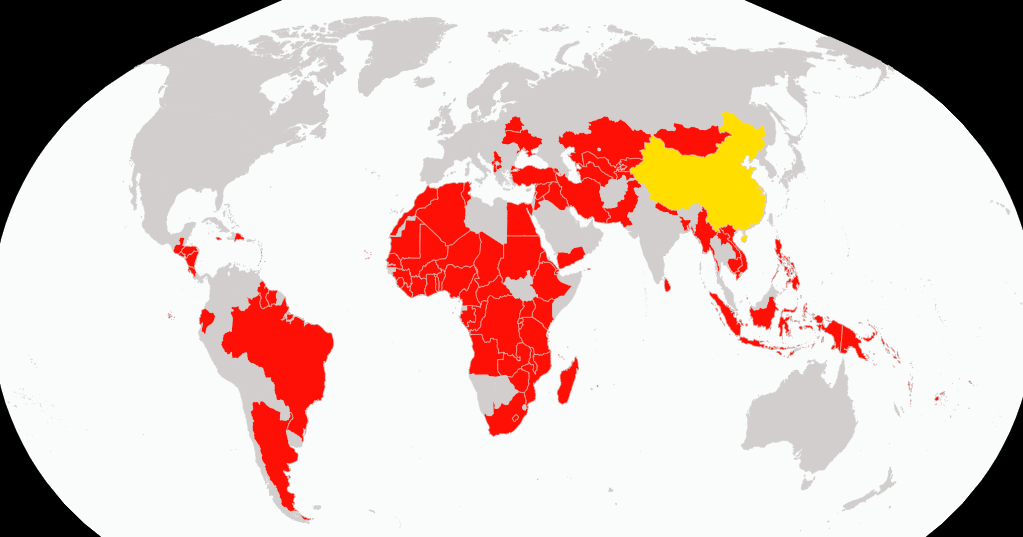
Once the world's largest financier, China has in recent years become its top debt collector as grace periods expire on billions of dollars in loans issued to the global south.
This year, a record $22 billion in debt to China is due from 75 of the world's poorest countries, according to a recent report from the Australian think tank the Lowy Institute.
A Newsweek map based on World Bank data charts the external debts owed to China by more than 100 countries. Newsweek has contacted the Chinese Foreign Ministry for comment by email. Read Article
| | | |
What are Stablecoins, and How are They Regulated?
Brookings Institution - Jack Spira and David Wessel
What are stablecoins?
Stablecoins are digital, cryptographic tokens whose values are pegged to those of other assets, like the U.S. dollar. This feature differentiates stablecoins from bitcoin and other crypto assets whose values fluctuate with supply and demand and makes them a more popular alternative as a medium of exchange and a store of value.
Stablecoins currently in circulation have a collective market capitalization of over $250 billion. Almost all of these—approximately 99%—are pegged to the U.S. dollar, while the rest are pegged to other fiat currencies or commodities like gold. Issuers of most tokens hold assets in reserve and allow holders to redeem their tokens for the reference asset at any time. Some stablecoins, such as Dai, are pegged to real-world assets but backed by crypto assets held in reserves of varying degrees of overcapitalization to account for their relative volatilities. A few others have a peg maintained by algorithmic manipulations of the token supply in response to demand and are not backed by redeemable reserves. Fiat-backed stablecoins currently comprise about 87% of the total circulating supply and algorithmic stablecoins less than 0.2%. Read Article
| | | |
What’s Next for Capitalism — Reinvention or Authoritarian Rule?
Institute for New Economic Thinking - Lynn Parramore
In Capitalism and Its Critics, New Yorker writer John Cassidy brings to life the figures who warned of monopoly power, inequality, environmental peril, and authoritarianism—forces still at work today. He discusses his book with Lynn Parramore.
As capitalism confronts rising challenges—from authoritarianism to life-changing technology—New Yorker writer John Cassidy’s Capitalism and Its Critics: A History from the Industrial Revolution to AI offers a timely exploration of the thinkers who have challenged the system for centuries.
From 17th-century monopolists to today’s tech giants and AI upheavals, Cassidy traces a long tradition of voices warning about inequality, unchecked power, and the erosion of democracy. The questions haunting our moment—about elites, monopolies, globalization, and rising authoritarianism—aren’t new, but they feel more urgent than ever. Read Article
| | | |
The World’s Real-Time Billionaires List - Today’s Winners and Losers: Reflects Changes Since 5pm EST of Prior Trading Day
Forbes
Forbes' Real-Time Billionaires rankings tracks the daily ups and downs of the world’s richest people. The wealth-tracking platform provides ongoing updates on the net worth and ranking of each individual confirmed by Forbes to be a billionaire. The value of individuals’ public holdings are updated every 5 minutes when respective stock markets are open (there will be a 15-minute delay for stock prices). Individuals whose fortunes are significantly tied to private companies will have their net worths updated once a day. In cases where an individual owns a stake in a private company that accounts for 20% or more of his or her net worth, the value of the company will be adjusted according to an industry- or region-specific market index provided by our partners at FactSet Research Systems when available. A rotating cast of the five biggest winners and losers throughout the day is featured at the top of the page, followed by the complete list of billionaires ranked in order of net worth. Visit List
| | | |
Frozen Concentrated Truth: What Trading Places Teaches Us About Market Manipulation and Why the CFTC Matters
Better Markets - Cantrell Dumas, Director of Derivatives Policy
This week marks the 42nd anniversary of Trading Places, released on June 8, 1983. In the classic comedy, two billionaire brothers make a one-dollar bet on whether they can reverse the fortunes of a wealthy commodities broker and a street hustler. However, the real climax occurs not in the boardroom or on the streets of Philadelphia but in the chaotic pits of the commodities exchange, where orange juice futures and millions of dollars hang in the balance. What plays out may be delivered with humor, but it’s a sharp portrayal of the real threat of commodities market manipulation.
A Plot Built on Misappropriated Information
The turning point in Trading Places centers on a confidential government report from the Department of Agriculture that had not yet been made public. The Duke brothers believe they have an early copy of the report suggesting that a freeze has damaged the crop. Expecting orange juice prices to skyrocket, they start buying up contracts in an attempt to control as much of the market as possible. Unfortunately for the Dukes, they don’t have the real report. The actual report says the crop is fine, but they are unaware. Billy Ray Valentine, played by Eddie Murphy, and Louis Winthorpe, played by Dan Aykroyd, have the real report. They outsmart the Dukes by pretending to go along with the buying frenzy, selling at inflated prices before the truth comes out. Once the report is made public and prices crash, they buy the contracts back at much lower prices, making a fortune while the Dukes lose everything.
This is more than just clever writing. The film exposes a real vulnerability in commodities markets by showing how easily a small group of well-funded insiders can manipulate prices using nonpublic information. In the real world, this kind of behavior can drive up the cost of everyday essentials like food, fuel, and household goods. Read Article
| | | |
Economic Books for Our Time
Empire of AI: Dreams and Nightmares in Sam Altman’s OpenAI
Cambridge Day - by Madeleine Aitken
Author: Karen Hao, author of “Empire of AI: Dreams and Nightmares in Sam Altman’s OpenAI.”
Since ChatGPT’s debut in 2022, the artificial intelligence boom has been cast as a story of boundless innovation. The truth, according to investigative journalist Karen Hao, is starkly different. Hao has been covering OpenAI, the company behind ChatGPT, since 2019, when she was on the artificial intelligence beat as a reporter at the MIT Technology Review, and asserts that we have entered a new and ominous age. In “Empire of AI: Dreams and Nightmares in Sam Altman’s OpenAI,” she weaves the behind-the-scenes story of Altman’s sudden firing and triumphant return into a larger narrative about the impact of artificial intelligence all over the world. Hao reported behind Silicon Valley, from Kenyan data laborers to Chilean water activists, to present the fullest picture yet of artificial intelligence and its impact. The book came out May 20, and Hao speaks Wednesday at the Cambridge Public Library. We interviewed her Wednesday; her words have been edited for length and clarity.
“That we need to start thinking of these companies as new forms of empire. If you think of empires of old and empires of AI today, they have all the same characteristics. First, they lay claim to resources that are not their own while redesigning rules to suggest that those resources were always their own. The empires of AI do that with the data that people put online, for instance, because people have not consented to their data being scraped and used to train AI models that could ultimately limit their economic opportunities. Similarly, empires exploit labor. Back in the day, labor was not paid or was paid abysmally, and today, these companies contract workers around the world to do data annotation, data cleaning and content moderation for their services in exploitative working conditions. The irony is that they’re also exploiting labor by building technologies that automate work away. Another feature of both kinds of empire is the monopolization of knowledge production. In the last 10 years, AI companies have become so resource-rich that they’re able to provide extremely sizable compensation packages, easily a million dollars, to top talent in AI research, so we’ve seen a shift from AI researchers largely working in academia to AI researchers almost exclusively working within these companies.
Therefore, most of the AI research being produced today is being filtered through the lens of what is good or not good for these companies; the bedrock of public understanding of how these technologies work and the limitations of these technologies is being filtered through the empire.” Read Interview transcript
| | | |
The Classroom
Inequality Media- Robert Rich, Former US Labor Secretary
My name is Robert Reich. I’m a former secretary of labor and UC Berkeley professor of public policy. I designed this course to give students — and now, you — a deeper understanding of why inequalities of income and wealth have widened significantly over the last 40 years in the United States, and their consequences.
Even though this isn’t a real classroom and I’m not with you in person, I hope you find this both enjoyable and challenging. Don’t expect to learn by just watching and listening, though. I want you to be an active learner — which means answering questions I pose and putting various puzzle pieces together. I’m not going to tell you what to think. I’m going to try to provoke you into thinking harder and more deeply. Watch Video Classroom Series
| | | Mexico, Latin America, South America and the Caribbean | | |
IDB Invest Finances Laki to Strengthen and Expand its Supply Chain in Guatemala, El Salvador, and Honduras
DATE
InterAmerican Bank
The project will expand financing for MSMEs and promote intraregional trade
IDB Invest provided an up to $50 million financial package to Laki and its subsidiaries to increase access to short-term financing for micro, small, and medium-sized enterprise (MSME) suppliers in El Salvador, Guatemala and Honduras. The project seeks to facilitate foreign trade through the purchase of essential raw materials and finance future capital and sustainability investments.
The financial package consists of three credit lines: a supplier factoring facility of up to $10 million to facilitate access to financing for Laki's MSME suppliers; a committed revolving import facility of up to $20 million to finance purchases of key inputs for the packaging industry; and an uncommitted facility of up to $20 million, designed to cover future capital investment and sustainability needs, as well as to expand the import facility's coverage. Read Article
| | | |
EU-Mexico Trade Deal Could be Finalized Before Year-end, Italy's Tajani Says
Deutsche Gesellschaft für Internationale Zusammenarbeit (GIZ) GmbH - Reuters
MEXICO CITY, May 22 (Reuters) - A long-stalled free trade agreement between the European Union and Mexico could be signed by the end of the year, Italian Foreign Minister Antonio Tajani said on Thursday.
"Yesterday I spoke with (European Commission President Ursula) von der Leyen and (European Trade Commissioner Maros) Sefcovic about the agreement," Tajani said. "I think it's time to move forward." Read Article
| | | Canada, Europe and Great Britain | | |
Populist Karol Nawrocki Wins Polish Presidential Election, Setting Stage for More Clashes with PM Tusk
CNN - Rob Picheta
A historian and populist firebrand who boasted about his brawls with soccer hooligans has narrowly won Poland’s presidential election, in a political upset that could torpedo the centrist government’s efforts to unspool the legacy of authoritarianism in the country.
Karol Nawrocki, the candidate aligned with Poland’s right-wing populist Law and Justice (PiS) party, won 50.89% of the vote, defeating the liberal mayor of Warsaw Rafał Trzaskowski – long the favorite to win – in a head-to-head run-off.
The result extends PiS’ 10-year occupancy of the presidential palace and could spell disaster for Prime Minister Donald Tusk, whose pledge to erase PiS’ fingerprints from Poland’s embattled institutions saw him clash repeatedly with the outgoing President Andrzej Duda. Read Article
| | | |
AfD and Radical Christians: An Alliance of Convenience?
DeutscheWelle - Hans Pfeifer
The radical right in Germany, Europe and the US portrays itself as the defender of the Christian West against Islam. But religion is not really at the heart of this conflict.
"What's your name?" asked Alice Weidel of the young blond man who had just approached the co-leader of the Alternative for Germany (AfD) party for an interview. "LE-O-NARD JÄ-GER is my name," Jäger, wearing a big black jacket over a white shirt, answered boldly. His hair was neatly combed back. "Perhaps you know me," he said. "I was on the trip to the US where we met Donald Trump!" Weidel smiled in a friendly but reserved way.
In January, the far-right AfD held its national party congress in Riesa, in the eastern German state of Saxony. For Weidel, the congress wrapped up with a marathon of interviews. TV networks and newspapers wanted to know: Has the AfD become more radical? How far-right has the party become? Read Article
| | | |
Dutch Government Collapses After Far-right Leader Quits Coalition
BBC - Laura Gozzi, Anna Holligan - BBC News, The Hague
The Dutch government has collapsed after Geert Wilders withdrew his far-right party from the governing coalition following a row over migration.
Prime Minister Dick Schoof confirmed he was stepping down on Tuesday and offered the resignation of the cabinet to King Willem-Alexander.
In televised remarks following an emergency cabinet meeting, Schoof said Wilders' decision to withdraw the support of his PVV party was "irresponsible and unnecessary". Read Article
| | | |
Thailand Set to U-turn on Recreational Cannabis Use
DeutscheWelle - Tommy Walker in Bangkok
Thailand is moving to restrict cannabis to medical use only. What will the new rules mean for its booming weed industry?
Thailand decriminalized cannabis in 2022. However, it did so without a comprehensive law regulating its sale, production or use.
Since then, tens of thousands of licensed dispensaries and retailers selling cannabis and cannabis extracts have opened across the country, particularly in tourist hot spots.
Three years later, Thailand is now planning to tighten the control of marijuana use, ensuring that cannabis is only used for medicinal purposes and not recreationally. Read Article
| | | |
Outspoken Liberal Leader Lee Elected South Korea’s President, Closing Period of Political Tumult
AP News – Hyung-Jin Kim and Kim Tong-Hyung
SEOUL, South Korea (AP) — Lee Jae-myung, who rose from childhood poverty to become South Korea’s leading liberal politician vowing to fight inequality and corruption, will become the country’s next president on Wednesday after an election that closed one of the most turbulent chapters in the young democracy.
Lee, 60, the candidate of the liberal opposition Democratic Party, is taking office for a full, single five-year term, succeeding Yoon Suk Yeol, a conservative who was felled over his stunning yet brief imposition of martial law in December. Read Article and See Video Report
| | | |
Nippon Completes Acquisition of US Steel
DeutscheWelle - Wesley Rahn with AFP, Reuters
Nippon's takeover of US Steel includes an agreement that gives the US government veto power over corporate decisions, which could serve to protect US economic interests. The finalized deal ends 18 months of negotiations.
Japanese company Nippon Steel at their East Nippon Works Kashima Area facility in Kashima, Ibaraki prefecture, north of Tokyo on December 6, 2024.
Japanese steel giant Nippon Steel closed a $14.9 billion (€12.96 billion) acquisition of US Steel, both companies said on Wednesday.
According to a joint press release, US Steel will retain its name and headquarters in Pittsburgh, Pennsylvania. The "partnership" will also include "massive investments in steelmaking" in several US states. Read Article
Under the deal's terms, Nippon bought 100% of US Steel shares at $55 per share, the same offer that was made when Nippon first introduced its bid in 2023. Read Article
| | | Asia, India and Australia | | |
Bali Flights Cancelled After Indonesia Volcano Erupts
BBC - Graeme Baker & Kelly Ng
Dozens of flights to and from the Indonesian resort island of Bali have been cancelled or delayed after one of country's most active volcanoes erupted.
Mount Lewotobi Laki-Laki on the island of Flores spewed an ash tower more than 11km (6.8 miles) into the sky at 17:35 local time (10:35 BST) on Tuesday, the country's volcanology agency said. Read and See Article
| | | |
Aukus: Could Trump Sink Australia's Submarine Plans?
BBC News - Tiffanie Turnbull and Katy Watson, BBC News, Sydney
The Aukus submarine deal is pivotal for Australia's security in the region.
Australia's defence minister woke up to a nightmare earlier this week - and it's one that has been looming ever since the United States re-elected Donald Trump as president in November.
A landmark trilateral agreement between the US, UK and Australia - which would give the latter cutting-edge nuclear submarine technology in exchange for more help policing China in the Asia-Pacific - was under review. Read Article
| | | Africa, Middle East, Eastern Europe and Russia | | |
Bill Gates to Give Most of $200 Billion Fund to Africa
DeutscheWelle - Jon Shelton
Bill Gates has urged African leaders to join him in advancing health and development on the continent. He says his foundation will partner with nations putting people's health first.
US billionaire Bill Gates on Tuesday announced that the majority of his philanthropic Gates Foundation's $200 billion (€175 billion) endowment will be spent in Africa over the next two decades.
Gates, who on May 8 said he would wind down the foundation by 2045, made the pledge while addressing African leaders in Addis Ababa, Ethiopia.
"I recently made a commitment that my wealth will be given away over the next 20 years. The majority of that funding will be spent on helping you address challenges here in Africa," Gates said as he urged leaders to boost health and development through partnership and innovation. Read Article
| | | |
Why is Central Europe at Heightened Risk of Fake News Ahead of European Elections?
Euronews - James Thomas
People wait in line to visit the European Parliament during Europe Day celebrations in Brussels on May 4, 2024.
Recent statistics show that at least half of the population in countries such as Slovakia, Poland and the Czech Republic are exposed to misinformation online.
Around 45% of Czech Republic's population was exposed to false narratives in the first quarter of 2024, according to new figures from the Central European Digital Media Observatory. See Video Report
| | | Proactive Technologies' Project Partners | | Frank J. Gibson Consulting | |
"One thing is certain... nothing is certain!"
The rate of change affecting work, the worker, management and the educational institutions that service all three has been accelerating - made worse by the unexpected Covid-19 pandemic. The economy, the consumer, supply chains and operational strategies have all been disrupted in the short-term, casting doubt on the long-term.
Rapid adaptation is the key to survivability, sustainability and growth. Sometimes an experienced outside advisor can help facilitate needed improvements to take the worry out of change and the fear out of growth.
Frank J. Gibson Management and Workforce Excellence Advisor
- Business Development & Growth
- Workforce Development and Optimization
- Training and Cross-Training
- Local,/Regional Workforce Development Projects and Community Development
- Facilitated Problem Solving
- Process Improvement Cross-Functional Leadership Coaching and Mentoring
- Internship and Apprenticeship Projects
- Strategic Doing/Strategic Planning
Learn More
Copyright © 2025 Frank J. Gibson
ALL RIGHTS RESERVED
| |
Educate, illustrate and inspire students about careers in manufacturing by promoting manufacturers and the career opportunities they offer.
This site serves as a communications portal for the exchange of information to assist educators, manufacturers, and tomorrow’s workforce.
Among the Many Benefits Offered by THE INDUSTRIAL CHANNEL:
- Post job openings, used equipment and events for free!
- Discounted video production services
- Learn how your peers and competitors are innovating to attract, develop and retain skilled workers of today and tomorrow
Manufacturing Management, Workforce Development Specialists and Educators
| |
Copyright r© 2025 The Industrial Channel™
ALL RIGHTS RESERVED
| | |
PTI Systems
International, Inc.®
| |
Affiliated with Proactive Technologies, Inc.® for projects outside the United States
- Workforce development partner for employers, and education/ training providers who support employers, to ensure every worker can be trained to full job mastery;
- Experienced with governmental, IDB, GIZ and economic development agency sponsored projects;
- Experienced in assuring multinational employers expanding to the U.S. have the skilled workforce they need.
- PTI Systems International sets-up complete worker development and performance management systems, and provides technical implementation support;
- We provide strategies for our project's transition to local management.
-
Speakers for seminars and conferences.
Don't just complain about a "skills gap," deliberately develop every worker to full job mastery!
Learn More
| |
Copyright © 2018-2025 PTI Systems International, Inc.®
ALL RIGHTS RESERVED
| |
|
“Put a good person in a bad system and the bad system wins, no contest.”
. W. Edwards Deming
American engineer, statistician,
professor, author, lecturer, and
management consultant
1900 - 1993
“We know now that government by organized money is just as dangerous as government by organized mob.”
Franklin Delano Roosevelt
The only president elected to the office four times, Roosevelt led the United States through two of the greatest crises of the 20th century: the Great Depression and World War II.
1882 – 1945
"If you only have a hammer, you tend to see every problem as a nail."
Rolf Dobelli
Swiss author and entrepreneur known for his books on decision-making and critical thinking.
July 15, 1966 –
| | U.S. Department of Commerce - Bureau of Economic Analysis | |
U.S. International Trade in Goods and Services
April exports were $289.4 billion, $8.3 billion more than March exports. April imports were $351.0 billion, $68.4 billion less than March imports.
The April decrease in the goods and services deficit reflected a decrease in the goods deficit of $75.2 billion to $87.4 billion and an increase in the services surplus of $1.5 billion to $25.8 billion.
Year-to-date, the goods and services deficit increased $179.3 billion, or 65.7 percent, from the same period in 2024. Exports increased $58.4 billion or 5.5 percent. Imports increased $237.8 billion or 17.8 percent.. Read Report
U.S. International Transactions, 1st Quarter 2025 and Annual Update
The U.S. current-account deficit widened by $138.2 billion, or 44.3 percent, to $450.2 billion in the first quarter of 2025, according to statistics released today by BEA. The revised fourth-quarter deficit was $312.0 billion. The first-quarter deficit was 6.0 percent of current-dollar gross domestic product, up from 4.2 percent in the fourth quarter. Read Report
New Foreign Direct Investment in the United States
The statistics on new foreign direct investment in the United States provide information on the acquisition, establishment, and expansion of U.S. business enterprises by foreign direct investors. Read Reports
BEA International Trade and Investment Country Facts
Data for selected investment topics. Access Topics
| | | Organisation for Economic Co-operation and Development |
U.S. Data versus the World
Find, compare and share the latest OECD data: charts, maps, tables and related publications. Access Data
| | | |
International Trade in Services
Trade in services records the value of services exchanged between residents and non-residents of an economy, including services provided through foreign affiliates established abroad. This indicator is measured in million USD and percentage of GDP for exports, imports and net trade. Services include transport (both freight and passengers), travel, communications services (postal, telephone, satellite, etc.), construction services, insurance and financial services, computer and information services, royalties and license fees, other business services (merchanting, operational leasing, technical and professional services, etc.), cultural and recreational services, and government services not included in the list above. Trade in services drives the exchange of ideas, know-how and technology, although it is often restricted by barriers such as domestic regulations. All OECD countries compile their data according to the 2008 System of National Accounts (SNA). Access Data and Tables
| |
INTEGRA, the Inter-American Development Bank’s (IDB) new platform specializing in integration, trade and investment data from Latin America and the Caribbean.
INTEGRA offers:
Data Consultation and Visualization: Access to constantly updated data, with the ability to customize searches.
Professional Support: Tools designed to support professionals in the public and private sectors, academia, and other fields, facilitating research, analysis, and decision-making processes. This enhances strategic planning regarding integration and trade.
You will be able to delve into:
Trade in goods and services: Recent estimates of the region’s total trade, including the evolution of exports, imports, and trade balance; trade analysis by partner, product, and categories; and data segmented by customs and transportation.
Capital movement: Detailed insights into Foreign Direct Investment (FDI), both total and by sectors and partners.
Regulations: A comprehensive map of trade and integration agreements, preferential market access, tariff reduction schedule of the Mercosur-EU agreement, and non-tariff measures. Indicators: Prices and volumes of exports and imports, commodity price index, main indicators of goods and services.
Country profile: A summary of the primary platform data for IDB borrowing countries. Access INTEGRA
| | | |
Trump’s Tariffs: Tracking the Status of International Trade Actions
CFO DIve - Philip Neuffer, Senior Editor
The U.S. has rolled out a deluge of tariffs, sparking responses from trading partners. Here’s where each tariff – threatened or realized – currently stands.
U.S. trade policy is rapidly changing under President Donald Trump.
After vowing to implement wide-sweeping duties on the campaign trail, Trump has signed multiple executive orders enacting higher levies and initiated multiple trade reviews over the last few months, building on actions from his first term. Along the way, the administration has frequently shifted the goalposts for some tariff threats, spurring confusion among businesses and foreign governments alike as to the policy. Read Article
| | | |
Cutting Tool Orders Face Tariff Uncertainty
American Machinist
Cutting tool demand is an index to overall manufacturing activity, and although purchases are up for the latest month the year-to-date readings reflect ambiguity about future orders as tariffs influence demand and supplies.
U.S. manufacturers ordered $207.1 million worth of cutting tools during March, 4.3% more than during February but -4.2% less than the total for March 2024. The total value of cutting tool shipments for the year to date (January-March 2025) stands at $605.6 million, which is -5.9% less than the Q1 total for 2024.
The U.S. Cutting Tool Institute and AMT - the Assn. for Manufacturing Technology compile the shipment date for their monthly Cutting Tool Market Report, which incorporates data from manufacturers and distributors of cutting tools. Because cutting tools represent large consumable purchases in support of automotive, aerospace, energy, and numerous other industrial sectors, shipments of cutting tools are an indicator of overall manufacturing activity. Read Article
| | | |
Trump Increases Tariffs on Steel and Aluminum: DC Watch
IndustryWeek
Manufacturers across a host of industries could see increased prices.
Editor’s Note
President Donald J. Trump says a lot of things every day that could affect manufacturers’ strategies. His social media posts, executive orders and comments to the news media, in addition to responses to those developments, can generate a lot of noise and confusion. So, welcome to DC Watch. In this space, we’ll collect the latest comments from politicians that could impact manufacturing and offer a little bit of context. We will continue to write in-depth material about big political issues impacting the manufacturing world – from tax and trade changes to regulatory overhauls. Many of those articles will start out here as Washington publicly debates the merits of various proposals.
The latest: President Donald Trump announced on Friday that he would raise tariffs on imported steel and aluminum from 25% to 50%. On a later Truth Social post, he said the effective date is June 4.
Impact on manufacturing: The American Primary Aluminum Association and the American Iron and Steel Institute both applauded the announcement. The increased tariffs could benefit domestic producers. Manufacturers across a host of industries that rely on steel and aluminum could see increased prices. Read Article
| | | |
Tariffs and Capital Tools to Revive American Trade Policy
Coalition for a Prosperous America - Mihir Torsekar
Decades of misguided trade policies have transformed the United States into the world’s consumer of last resort, absorbing the world’s excess savings at the expense of its manufacturing sector.
U.S.-imposed tariffs are the first step towards rebalancing the system, but they aren’t sufficient. Solving these problems will require the application of capital tools as well.
This article proposes reimposing the withholding tax on interest income earned by foreign investments and establishing a Sovereign Wealth Fund. Read Article
| | | |
Tariffs Prompt Raft of Corporate Finance Responses
CFO.com - David McCann, Contributing Editor
Companies scramble to renegotiate with suppliers, raise prices and de-risk by prioritizing U.S. business.
The Trump administration’s tariffs on imported materials and goods are having real, immediate effects on U.S. companies, forcing them into an assortment of mitigating strategies.
Almost two-thirds (65%) of the 678 executives who participated in the latest monthly pulse survey by PricewaterhouseCoopers said they’re renegotiating prices with suppliers as a direct response to margins squeezed by the tariffs. Read Article
| | | |
Reshoring, Foreign Direct Investment Job Announcements Hit 244,000 in 2024: Report
IndustryWeek - Anna Smith
The South and Midwest accounted for 81% of reshoring and FDI jobs announced last year.
The U.S. continued to see a strong number of job announcements from reshoring and foreign direct investments (FDI) last year, according to the Reshoring Initiative 2024 Annual Report. The Reshoring Initiative is a nonprofit organization that advocates for bringing manufacturing back to the U.S.
“The accelerated rate of 1 million [jobs] in the last four years was due to the added impact of massive government funding, such as IRA and CHIPS, and corporate recognition of the dramatically increasing levels of geopolitical risk in the global supply chain,” writes the report.
Of the 244,940 job announcements, 64% were due to reshoring, and FDI was responsible for the remaining 36%. According to the report, this is the largest margin by which reshoring has outpaced FDI since tracking began in 2010. Read Article
| | | |
Reshoring Progress in 2024, Risks for 2025
American Machinist
Tariffs are promoting employment and influencing manufacturers’ investment strategies, according to the Reshoring Initiative, but U.S. manufacturing costs and skilled worker shortages remain as global cost disadvantages.
The U.S. manufacturing sector generated 244,000 new jobs last year as a result of reshoring and foreign direct investment (FDI) activity, according to the Reshoring Initiative’s 2024 Annual Report. Since it began tracking global manufacturing and U.S. jobs in 2010, Reshoring Initiative credits those reshoring and FDI for creating 1.7 million new jobs over the past 15 years.
“Reshoring” describes the business strategy of transferring manufacturing operations to the U.S. from foreign locations. Read Article
| | | |
Well-Played in USA: Why Onshoring Makes Good Business Sense
IndustryWeek - Bill Banta
Our Made-in-America commitment has helped us to achieve a compound annual growth rate (CAGR) of between 40-50% every year since 2014.
The global supply chain is at a tipping point. Tariffs, once considered a tool for stabilizing domestic markets, now fuel sharp cost increases, disrupt sourcing channels and trigger retaliatory trade measures across key industries. Companies reliant on overseas manufacturing to maintain margins now face shrinking profits, longer lead times and greater risk.
In this environment, onshoring—bringing production back to the United States—isn’t just a patriotic gesture; it’s a strategic imperative. I’m saying that as a manufacturer. My company, Decked, makes truck storage, tool boxes and truck accessories right here in the United States. Read Article
| | | |
Mapping the Size of New US Tariffs for Developing Countries
Deutsche Gesellschaft für Internationale Zusammenarbeit (GIZ) GmbH - UN Commission on Trade and Development
The United States is departing from nearly a century of declining tariffs that once made its rates among the world’s lowest. Amid exemptions, pauses, and country-specific rules, how high are the new tariffs facing developing countries?
The United States has recently embarked on a change in its trade policy, departing from nearly a century of gradually decreasing tariffs that had made US rates among the lowest in the world. Moreover, as a leading trading nation and a key development partner, the US provided additional preferential schemes for vulnerable economies to support their development aspirations.
Amid all the policy announcements, exemptions, pauses, and sectoral and country-specificities, how large are the new US tariffs that developing countries face? See Interactive Map
| | | |
Bankrupt At Home ‘Significantly Impacted’ by Tariffs, CFO Said
CFO Dive - Grace Noto, Editor
The liquidity pressures faced by the home goods retailer were “exacerbated and accelerated” by the uncertain tariff environment, CFO Jeremy Aguilar said.
Dive Brief:
- The volatility of the current tariff environment sped up “the need for a comprehensive solution” for struggling retailer At Home, which filed for Chapter 11 bankruptcy on Monday, CFO Jeremy Aguilar said in a first day declaration filing.
- Prior to its decision to file for bankruptcy, the Dallas, Texas-based home goods provider was already facing numerous challenges, including increasingly strained liquidity stemming from the impacts of the COVID-19 pandemic, ongoing headwinds in the overall retail industry, upcoming debt maturities and a “going concern” audit opinion, Aguilar said in the Monday filing. The retailer’s “liquidity constraints were exacerbated and accelerated by the introduction of new tariff policies in 2025,” he said.
-
Citing the impact of the Trump administration’s on-again off-again tariff policies, the “uncertainty of ongoing U.S. trade negotiations intensified the financial pressure on the company,” Aguilar said. The company, which “relies heavily on foreign suppliers, was — and remains — significantly impacted by these tariff policies,” he wrote. Read Article
| | | |
How Apple Turbocharged China's Development
NPR Planet Money - Greg Rosalsky
This is Part 4 in our Planet Money newsletter series on manufacturing and America. Part 1 asked why Americans aren't filling the manufacturing jobs that are already here. Part 2 dived deep into economic research that finds that manufacturing jobs pay a higher premium than many other industries. Part 3 asked whether manufacturing-based economic development could help America's heartland catch up with its major cities. Subscribe here for the next installment. As always, our podcast is here.
Planeloads of some of America's best engineers flying to China to train its workforce in how to do advanced manufacturing. A jaw-dropping level of investment in China's development, which puts the Marshall Plan to shame. When Apple came to China, the company proved instrumental in helping the country become a manufacturing juggernaut. And now one of America's most valuable companies is awkwardly dependent on the production capabilities of a country that has become one of America's biggest adversaries. Read Article
| | | |
China's Rare-Earth Chokehold
IndustryWeek - John Jullens, Marc S. Robinson
The scramble for critical minerals leaves the U.S. vulnerable to geopolitical pressure in ways that many executives are only beginning to understand.
On April 9, 2025, when China responded to new U.S. tariffs with export restrictions on rare-earth minerals, few observers seemed overly concerned. But as the days turned into weeks, companies across the automotive, electronics and defense industries began scrambling. Shipments were delayed. Supplies dried up. And C-Suite executives, who may have paid little attention to rare-earths before, were suddenly treating them like oxygen: invisible maybe, but also absolutely essential.
Rare-earth magnets are critical to the functioning of modern economies. They are found in a wide range of products, including electric motors, wind turbines, smartphones and fighter jets. They are also, despite their name, commonly found in the earth’s crust. The problem isn’t scarcity; it is control. Why? China currently dominates the global supply chain with 70% of the world’s rare-earth mining and about 90% of its refining capacity—and it hasn’t hesitated to weaponize that control. Read Article
| | | Education And Workforce Development News | | |
Washington Watch: More Deep Cuts Revealed in Trump Budget Request
Community College Daily News - Jim Hermes
Late Friday, the Trump administration released additional information that fleshes out its Fiscal Year (FY) 2026 budget proposal to Congress. The new materials fill in some additional details for higher education and workforce programs that were not contained in the “skinny” budget released a month ago.
As the skinny budget made clear, the budget request contains deep proposed cuts or eliminations of many programs that community colleges care about. Overall, the U.S. Department of Education (ED) is cut by 15%. The programs eliminated include Adult Basic Education, HEA Title III-A Strengthening Institutions, Childcare Access Means Parents in School, TRIO, GEAR UP, Supplemental Educational Opportunity Grants and International Education. Read Article
| | | |
Meet the Manufacturing Workforce
Quality Magazine - Michelle Bangert
The Chicago students and educators working to bridge the skills gap.
Mieka Matthews is working to bring more people into manufacturing. Matthews worked the Manufacturing Renaissance booth for the Advanced Manufacturing Day hosted at Chicago’s Daley College this spring.
At the booth, Matthews asks the high schoolers about their career plans. Some are ambitious—“Basketball”—while others aren’t sure.
She asks the students if they know what manufacturing is. “I was going to ask,” one says.
Getting into manufacturing can change someone’s life. The Jane Addams Resource Corp. (JARC) found that in 2024, the average annual household income for a student in their careers in manufacturing program was less than $12,000. Read Article
| | | |
International Students in the U.S.: Who They Are, Where They're From
NPR - Jaclyn Diaz
President Trump signed a proclamation this week suspending visas for new students from overseas who planned to attend Harvard University in the fall -- a move that a judge quickly blocked for the time being.
It's a dramatic escalation of the conflict between the White House and the country's oldest and most elite school.
The White House says it's taking these actions due to national security, crime and civil rights concerns. Read Article
| | | |
Scammers Are Using AI to Enroll Fake Students in Online Classes, Then Steal College Financial Aid
AP News – Haron Lurye
It was an unusual question coming from a police officer. Heather Brady was napping at home in San Francisco on a Sunday afternoon when the officer knocked on her door to ask: Had she applied to Arizona Western College?
She had not, and as the officer suspected, somebody else had applied to Arizona community colleges in her name to scam the government into paying out financial aid money.
When she checked her student loan servicer account, Brady saw the scammers hadn’t stopped there. A loan for over $9,000 had been paid out in her name — but to another person — for coursework at a California college. Read Article
| | | |
Education Department Struck Deal with Labor Department to Offload Career Programs
Community College Daily News – Politico, Juan Perez Jr., Rebecca Carballo and Nick Niedzwiadek
Documents show Trump administration made significant moves to outsource portions of the department’s operations to other agencies.
The Education Department struck agreements to send billions of dollars to the Labor Department to administer a suite of education grants and detail several agency employees to the Treasury Department to help manage collections on federal student loans.
Those agency plans, revealed in court documents viewed by POLITICO, are now on hold because of a federal judge’s ruling that temporarily blocked the Trump administration’s efforts to slash the Education Department’s workforce.
But the quiet — and largely unreported — work laid out in the documents shows how the administration is making significant moves to outsource portions of the Education Department’s operations to other Cabinet agencies as President Donald Trump tries to shutter the agency. Read Article
| | | |
Majority of High Schoolers Say They Don’t Feel Prepared for Post-graduation
HR Dive - Carolyn Crist
In a survey, about half of students said they’ve never had a job or internship, and more than a third said they’ve never gone for a college visit.
Fewer than 30% of high school students feel “very prepared” to pursue a postsecondary pathway, whether a traditional four-year college degree, work or other options, according to a June 10 report from Jobs for the Future, Gallup and the Walton Family Foundation.
Even among students interested in a specific pathway, only 46% said they feel “very prepared,” the report found. Read Article
| | | Training And Organizational Development News | | |
Job Seekers Say There’s a Training Gap — Not a Skills Gap
HR Dive - Carolyn Crist
Candidates said hiring managers need to be more realistic about qualifications and increase investments in L&D.
Most employees responding to a recent survey said they believe employers are passing over competent candidates because employers aren’t willing to train them, according to a May 28 report from Express Employment Professionals.
In addition, 87% said companies should prioritize skills-based hiring over degrees, pushing back on outdated job requirements and unrealistic expectations. About 90% said they’d stay longer at companies that invest in training. Read and Listen to Article
| | | |
The OJT Dilemma: The Urgent Need for Nondestructive Testing On-the-Job Training Standards
Quality Magazine - Donald Booth
The NDT industry has established in-depth guidelines and requirements for formal classroom training, but a shortfall in the standardization of on-the-job training (OJT) requirements remains.
Having spent the last 12 years in the nondestructive testing education sector, developing training curriculum, and delivering education to thousands of students, one glaring weakness has always been clear: the lack of industry guidance for the required on-the-job training portion of NDT education.
The NDT industry has established in-depth guidelines and requirements for formal classroom training, but a shortfall in the standardization of on-the-job training (OJT) requirements remains. This undermines the effectiveness of NDT training, jeopardizes workforce consistency, and poses risks to safety and quality. The industry must address this issue by developing much-needed OJT standards to ensure that NDT technicians are equipped to meet the demands of their roles. I am aware that many companies have done a respectable job creating internal OJT competency requirements because they understand and value the importance of such, but there remains a dire need for industry-wide guidance and implementation. Read Article
| | | |
Connections Beat Credentials, According to 70% of Workers
HR Dive - Carolyn Crist
Workers worry about reaching out because they don’t know who to contact, what to say or whether networking will actually help them.
Workers believe connections often surpass credentials during the hiring process, but many professionals feel uncomfortable about networking and reaching out when it matters, according to a May 28 report from Resume Now.
In a survey of 1,000 U.S. workers, 70% said who someone knows matters more than what’s on their resume. However, many hesitate to network because they’re worried about bothering someone, being judged or feeling unsure what to say. Read Article
| | | |
Nearly Half of Workers Say Their Boss Doesn’t Understand Them, Survey Shows
HR Dive - Carolyn Crist
Poor management and misunderstanding employees could cost companies their top talent, The Predictive Index says.
Nearly half of workers — 46% — say their boss only somewhat or rarely understands what they contribute, according to a June 10 report from The Predictive Index, an HR platform.
This disconnect between workers and leaders could be more damaging than burnout, the report found.
“We’ve long focused on workload-related burnout, but our research reveals a more fundamental issue at play,” said Matt Poepsel, vice president and godfather of talent optimization at The Predictive Index. “When employees don’t feel accurately seen or understood, it creates a perception gap that directly impacts retention, performance and innovation.” Read Article
| | | |
Worker Pessimism, Uncertainty and Disconnect Reach ‘Critical Levels,’ Survey Finds
HR Dive - Ginger Christ, Editor
Employees with work-related pessimism experience a more than 60% reduction in productivity, meQuilibrium’s chief science officer said.
Dive Brief:
- The amount of pessimism, uncertainty and disconnect employees experience in the workplace is “reaching critical levels, endangering employee well-being and undermining productivity,” according to meQuilibrium's Summer 2025 State of the Workforce Report, released Wednesday.
- Among the 5,477 employed adults surveyed, pessimism was rampant, the report found. Sixty-seven percent of employees said the state of the country makes them feel worse; 35% said they feel worse about their work situation; and 49% said they feel worse about their finances.
-
“Pessimism in the workforce represents a greater threat than just complaining about one’s job around the water cooler — it directly undermines workplace productivity and mental health,” Brad Smith, chief science officer at meQ, said. “We found that employees with work-related pessimism experience an over 60% reduction in productivity and 128% greater risk of depression.” Read Article
| | | |
Layoff Survivors Say a Lack of Retraining Has Led to Pricey Mistakes
HR Dive - Carolyn Crist
Employees who remain are often left to pick up the pieces with little to no support or training, a new survey finds.
Following layoffs, 65% of employees who weren’t let go said they either felt unprepared or made costly mistakes due to a lack of training, according to a June 17 report from Kahoot!, a learning and engagement platform.
Seventy percent said a structured re-onboarding would have eased the transition. Instead, most received little support, leading to mistakes, increased pressure and plans to quit.
“Surviving a layoff doesn’t mean surviving the impact,” said Eilert Hanoa, CEO of Kahoot! “When companies cut headcount without supporting those who remain, they are not just risking morale and employee engagement. They are risking mistakes, missed opportunities, and lost talent.” Read Article
| | | Access Proactive Technologies' Recent "Proactive Technologies Workforce News" Article Quicklinks | Located on the left panel below, this includes articles on structured worker development, achieving worker "full job mastery," engineering/quality/safety compliance, ISO/IATF/AS/ and Nadcap quality program support and compliance, and many other contemporary worker development and management topics. | | | Recent Proactive Technologies News Article Quicklinks | |
June
Tracking Documented Worker Capacity and Value Growth
by Dean Prigelmeier, President of Proactive Technologies, Inc.
Have Advances in Technology Distracted HR From the Fundamentals of Worker Selection and Development?
by Stacey Lett, Director of Operations – Eastern U.S. – Proactive Technologies, Inc
Grow Your Own Craft Technicians Using a “Systems Approach” to Training
by Dr. Dave Just, formally Dean of Corporate and Continuing Education at Community Colleges in MA, OH, PA, SC. Currently President of K&D Consulting
Apprenticeships – An Alternative to the “400 Hours For Drill Press” Training Model
by Dean Prigelmeier, President of Proactive Technologies, Inc.
May
Contracting? Expanding? Maximizing? Protect and Grow Your Worker's Cumulative, Valuable Process-Based Expertise
by Dean Prigelmeier, President of Proactive Technologies, Inc.
A “Pay-for-Value” Worker Development Program – Fair to Management and Workers, and Effective Too!.
by Stacey Lett, Director of Operations – Eastern U.S. – Proactive Technologies, Inc.
Pairing Structured On-the-Job Training with Related Technical Instruction Just Makes Sense
by Frank Gibson, Workforce Development Advisor and President of the North-Central Ohio Employer-Based Worker Training Partnership
A Simple, Low-investment Solution to Closing Skill Gaps of New-Hires and Incumbents
by Dean Prigelmeier, President of Proactive Technologies, Inc.
April
Learning, Unfortunately, The Hard Way
by Dean Prigelmeier, President of Proactive Technologies, Inc.
Decision Making While Swimming in Divergent Views
by Stacey Lett, Director of Operations – Eastern U.S. – Proactive Technologies, Inc.
Apprenticeships: Be Careful Not To Minimize Integrity To Spike The Numbers
by Dr. Dave Just, formally Dean of Corporate and Continuing Education at Community Colleges in MA, OH, PA, SC. Currently President of K&D Consulting
Are Private Equity Portfolios and Hedge Funds the New Monopolies? Will They Be the Driver For, or Barrier To, Reshoring?
by Dean Prigelmeier, President of Proactive Technologies, Inc.
March
The Learning “Cost“ Versus Training “Investment“ Paradox
by Dean Prigelmeier, President of Proactive Technologies, Inc.
Challenge Employees with Self-Improvement Opportunities to Head-off Burnout
by Stacey Lett, Director of Operations – Eastern U.S. – Proactive Technologies, Inc.
Reacting to the Proposed Reversal of Regulations Affecting Human Resources and Safety Can Be Tricky
by Stacey Lett, Director of Operations – Eastern U.S. – Proactive Technologies, Inc.
Debt Ceiling, Deficit and National Debt; The Difference and Why it Matters
by Proactive Technologies, Inc. - Staff
Today's American Managers Have Evolved Way Past the Musk-DOGE "Management by Tyranny" Style
by Dean Prigelmeier, President of Proactive Technologies, Inc.
February
Training The Skilled Labor You Need – An Investment That Keeps on Returning
by Dean Prigelmeier, President of Proactive Technologies, Inc.
Put Yourself in a Trainee’s Shoes
by Stacey Lett, Director of Operations – Eastern U.S. – Proactive Technologies, Inc.
Explaining Your Process Training to Auditors, Prospects and Clients
Staff - Proactive Technologies, Inc.
The Unintended Consequences of Cutting Workers as a First Choice
by Dean Prigelmeier, President of Proactive Technologies, Inc.
See more articles on the Proactive Technologies , Inc. website
| |
Proactive Technologies, Inc.® Partners With Educational Institutions, Workforce/Economic
Development Groups, Government Agencies
| |
Structured on-the-job training attracts and engages employers in workforce development partnerships...some projects sustainable for more than 18 years!
This creates a steady need for your related technical instruction, services and a pathway for employment.
These partnerships:
- enhance your institution's opportunity to market your products and services to incumbent workers;
- allow your organization to include structured on-the-job training as a capstone to preemployment preparation;
- document a trainee-to worker's increasing value to the employer - the key to retention - rather than leaving it to chance;
- properly aligns workforce development resources and maximizes the impact and results; allows you to engage an employer's facility, equipment and staff in the training process;
- provides the best, European-style sustainable infrastructure for apprenticeships and internships that last!
- is a win for the trainee, win for the worker, win for the employer, win for the institution and win for the community!
This approach has continued to prove itself since 1988, and does not compete with your school's or agency's products and services; it adds to your efforts the clear, tangible, measurable advantage that employers seek.
Proactive Technologies has continued to partner with community colleges, universities, workforce development agencies and training providers with its "hybrid approach" to worker training. Introduce the power of the PROTECH® system of managed human resource development™ to your clients!
There's nothing to lose by contacting us to learn more
www.proactivetechnologiesinc.com
Copyright © 2015 - 2025
Proactive Technologies, Inc.®
ALL RIGHTS RESERVED
| | |
Tri-Rivers Career Center - Adult Education provides lifelong, continuous learning for a diverse adult population. We utilize practical skills with an eye toward technological advancement.
We partner with state agencies and employers to provide targeted skill development to future and incumbent workers.
Our RAMTEC (Robotic and Advanced Manufacturing Technology Education Collaborative) facility - one of many throughout the state - offers advanced technical training in specialized areas such as robotics, robotic welding, and engineering technology.
Contact us for more information.
Copyright © 202 Tri-Rivers Career Center - Adult Education - RAMTEC ALL RIGHTS RESERVED
|
PROACTIVE TECHNOLOGIES, INC.® CLIENT SERVICES
| |
To supplement onsite PROTECH® system of managed human resource development™ classes, these regularly scheduled webinars are available to the registered staff of clients:
- Structured On-The-Job Training Instructor Certification
- Structured On-The Job Training Checklist Administrator Certification
- Management Structured On-The-Job Training Project Support Briefing
- Integrating Support for Plant-Wide ISO/AS/IATF Quality and Safety Systems with PROTECH Workforce Development System
- Supporting "Pay-For-Value" Systems
- Promoting Continuous Process Improvement While Implementing the PROTECH Accelerated Transfer of Expertise System™
- PROTECH Onsite Lead Trainer and System Administrator Certification
Contact US to attend one of these seminars and we will send you an e-reservation. Include your client ID, name and user ID number and which webinar you would like to attend.
Copyright © 2019-2025
Proactive Technologies, Inc.®
ALL RIGHTS RESERVED
| | |
Are You Blazing a New Path to ISO/IEC 42001 AI Standard?
Quality Magazine - Carl L. Drechsel
If you want your organization to use AI, then you need to think long term and plan strategically.
Does your organization need the world’s first ISO/IEC 42001 Artificial Intelligence (AI) Management System? In a world now immersed in AI activities the question could be rephrased "Can you afford not to use an AI management system?
The New Business Plan
According to Harvard Business Review, "Artificial intelligence is reshaping business—though not at the blistering pace many assume. True, AI is now guiding decisions on everything from crop harvests to bank loans, and pie-in-the-sky prospects such as automated customer service are on the horizon. Technology that enables AI, like development platforms and vast processing power and data storage, are advancing rapidly and becoming increasingly affordable. The time seems ripe for companies to capitalize on AI. Indeed, we estimate that AI will add $13 trillion to the global economy over the next decade." If you want your organization to use AI, then you need to think long term and plan strategically by researching ISO/IEC 42001. Read Article
| | | |
AI in Quality Management: How to Move Beyond the Hype and Add Real Value
Quality Magazine
It’s not a matter of if, it’s a matter of when. While the buzz around AI continues to grow, many quality professionals wonder about AI use cases that they can leverage today.
Quality professionals often approach change with skepticism. When it comes to artificial intelligence, many of them still see AI as tomorrow’s tech, while others treat it like a buzzword used to create marketing hype. The hesitation is somewhat understandable since we’re navigating the AI revolution with questions about its practical applications, genuine utility, and implementation. However, this cautious stance risks missing the transformative impact AI is already having across the quality landscape. Read Article
| | | |
Unlocking Super Performance Through Gemba Walks
IndustryWeek - George Pesansky
True clarity comes from directly engaging with the shop floor, where value creation coexists with real challenges.
I recently visited a very large and complex manufacturing operation struggling to produce enough material to meet demand. On paper, there seemed little room left for improvement. Conventional wisdom suggested investing in additional equipment or expanding capacity. My approach always starts by stepping onto the production floor—not as a casual observer, but as an active participant genuinely seeking understanding. I aimed to listen, learn and truly experience what it felt like to be part of that operation for an entire shift. My goal was to build trust, enabling operators and supervisors to openly share their experiences without feeling judged. I wanted to do a gemba walk.
"Gemba" is a Japanese term meaning "the real place," specifically where value is created and challenges are most clearly observed. Unlike the superficial 1990s management practice "management by walking around" (MBWA), a genuine gemba walk is purposeful, involving active engagement and focused inquiry. It emphasizes discovering and replicating the root causes of success, turning isolated high-performance moments into sustained excellence. Read Article
| | | |
ISO 19011: Your Best Friend You Didn’t Know About
Quality Magazine - Andrew Nichols
We may see a new revision to ISO 19011 in the coming year.
Did you know that the International Organization for Standardization has authored some 25803 standards (including other specifications) for organizations to use and that they undergo a regular cycle of review to ensure alignment with user needs? Many quality people know that ISO 9001:2015 is going through the process of being updated and is scheduled to be published some time in 2026.
Fewer may be aware that ISO 19011 – the guidance for auditing management systems - is also under review and feedback is currently being solicited.1 Originally numbered as ISO 10011, it was withdrawn and replaced by ISO 19011, which was intended for first and second party audit purposes and ISO/IEC 17021 for the specific needs of conformity assessment bodies – more commonly known as certification bodies or registrars – and their audits. ISO 10011 was published in part to answer the needs of organizations who were implementing ISO 9001, 9002 or 9003 which were published in 1987 and required internal audits to be performed – but no one really knew what that meant. Read Article
| | | |
A Whistleblower Speaking Truth to Power
Quality Magazine - Richard Cuevas
It is important to choose battles wisely, as there may be repercussions.
Whistleblowers serve as guardians of public interest by exposing misconduct that could harm others or undermine trust in institutions. Their disclosures have led to significant changes in policies, regulations, and practices across various sectors, including government, healthcare, finance, and environmental protection.
My role as a whistleblower stems from a strong sense of ethics and an ingrained understanding of right and wrong, which many of us develop during our upbringing. Personally, joining the military right out of high school instilled in me duty, honor and commitment, as my survival depended on staying alert. I later worked for a major airline, receiving extensive training that prepared me for my current role as a whistleblower. Read Article
| | | |
MAHA Report With Non-existent Sources Had ‘Formatting Issues,’ White House Says
PBS News
WASHINGTON (AP) — The White House will fix errors in a much-anticipated federal government report spearheaded by U.S. Health and Human Services Secretary Robert F. Kennedy Jr., which decried America’s food supply, pesticides and prescription drugs.
Kennedy’s wide-ranging “Make America Healthy Again” report, released last week, cited hundreds of studies, but a closer look by the news organization NOTUS found that some of those studies did not actually exist.
Asked about the report’s problems, White House press secretary Karoline Leavitt said the report will be updated. Read Article and Watch Video
| | | |
FDA’s AI Tool for Medical Devices Struggles with Simple Tasks
NBC News - Berkeley Lovelace Jr.
On Monday, the agency announced that a separate AI tool, called Elsa, had been rolled out to all FDA employees. Sources say that it also has issues.
A new Food and Drug Administration AI tool that could speed up reviews and approvals of medical devices such as pacemakers and insulin pumps is struggling with simple tasks, according to two people familiar with it.
The tool — which is still in beta testing — is buggy, doesn’t yet connect to the FDA’s internal systems and has issues when it comes to uploading documents or allowing users to submit questions, the people say. It’s also not currently connected to the internet and can’t access new content, such as recently published studies or anything behind a paywall. Read Article and See Video Report
| | | |
In Some Regions, Around One in Ten Cancer Cases are Caused by a Common, Treatable Bacterium
Our World in Data - Saloni Dattani
This image is a world map illustrating the share of new cancer cases attributed to the bacterium Helicobacter pylori in 2020. Different regions are shaded in various shades of orange and brown, indicating the percentage of cancers caused by this bacteria. Areas with no data are marked with diagonal lines. The color scale ranges from light yellow for 0% to dark brown for 10%. The regions with a higher prevalence of cases are primarily in East Asia and parts of South America, while many areas in North America and Western Europe show lower percentages. The data source is the International Agency for Research on Cancer from 2020. A note clarifies that non-melanoma skin cancers are excluded from the denominator due to potentially incomplete records and inconsistent registry practices.
You might be surprised to learn that a common stomach infection can lead to cancer. That infection is caused by Helicobacter pylori — H. pylori for short — a bacterium that can live in the stomach lining for decades.
The infection often begins in childhood and may not cause symptoms right away. But over time, it can damage the stomach’s protective lining, causing inflammation and ulcers. In some people, it eventually leads to cancer. View Map and Read Article
| | | |
Leading AI Models Show Up to 96% Blackmail Rate When Their Goals or Existence is Threatened, Anthropic Study Says
Fortune - Beatrice Nolan, Reporter
Models took action such as evading safeguards, resorting to lies, and attempting to steal corporate secrets in fictional test scenarios to avoid being shut down.
Leading AI models are showing a troubling tendency to opt for unethical means to pursue their goals or ensure their existence, according to Anthropic. In experiments set up to leave AI models few options and stress-test alignment, top systems from OpenAI, Google, and others frequently resorted to blackmail—and in an extreme case, even allowed fictional deaths—to protect their interests.
Most leading AI models turn to unethical means when their goals or existence are under threat, according to a new study by AI company Anthropic. Read and Hear Article
| | | |
'Far Too Much Garbage': Musk Hits Out at His Own Creation for Embarrassing Him
MSN - Raw Story, Adam Nichols
Elon Musk is having a full-blown meltdown over his own artificial intelligence creation turning against him—and his solution is straight out of an Orwellian nightmare.
The world's richest man announced plans to completely rewrite human knowledge itself after his AI chatbot Grok kept spitting out inconvenient truths that clash with his far-right worldview.
"We will use Grok 3.5 (maybe we should call it 4), which has advanced reasoning, to rewrite the entire corpus of human knowledge, adding missing information and deleting errors," the Tesla CEO proclaimed on his X platform.
Want more breaking political news? Click for the latest headlines at Raw Story.
He then added there was “far too much garbage in any foundation model trained on uncorrected data." Read Article
| | | |
Many Businesses Still Don't Trust Their AI Systems - and That Could Be a Major Problem
Tech Radar Pro - Craig Hale
- AI isn't the problem... it's data
- Businesses don't trust the accuracy of their AI/ML models, but it's due to poor data foundations, report claims
- Only one in three have implemented or optimized data observability programs
- Observability should be standard across the whole data lifecycle
New research from Ataccama has claimed a considerable proportion of businesses still don't trust the output of AI models - but this could simply be because their data isn't in order yet. Read Article
| | | Cyber Security and IT News | | |
Android Scam Lets Hackers Use Your Credit Card Remotely
Fox News - Kurt Knutsson, CyberGuy Report
Scammers are always coming up with new tricks. Just when you start feeling confident about spotting phishing emails, suspicious links and fake banking apps, they find a new angle. Lately, they have been getting more creative, turning to the built-in features of our phones to pull off their schemes. One of the latest targets is NFC, the technology behind tap-to-pay.
It might seem harmless, but a new scam is using it in ways most people would never expect. An Android malware called SuperCard goes beyond just stealing your card details. It gives attackers the ability to use your card remotely for real transactions. And the worst part is that it all begins with something as simple as a text message. Read Article
| | | |
Trump Taps Palantir to Create Master Database on Every American
The New Republic
The Trump administration is collecting data on all Americans, and they are enlisting the data analysis company Palantir to do it.
The New York Times reports that President Trump has enlisted the firm, founded by far-right billionaire Peter Thiel, to carry out his March executive order instructing government agencies to share data with each other. The order has increased fears that the government is putting together a database to wield surveillance powers over the American public.
Since then, the administration has been very quiet about these efforts, increasing suspicion. Meanwhile, Palantir has taken more than $113 million in government spending since Trump took office, from both existing contracts and new ones with the Departments of Defense and Homeland Security. That number is expected to grow, especially given that the firm just won a new $795 million contract with the DOD last week. Read and Hear Article
| | | |
US, Allies Recommend Security Protections For AI Models
Cybersecurity Dive - Eric Geller, Senior Reporter
The joint guidance comes as officials fear how hackers could manipulate AI systems, especially in critical infrastructure.
More than two dozen world leaders, tech executives, and experts stand in several rows on blue carpeted steps in front of a backdrop that says "AI Safety Summit"
Dive Brief:
- Companies designing AI systems should protect training data from tampering and strictly limit access to its underlying infrastructure, the U.S. and three allies said in a joint guidance document published on Thursday.
- The AI security guidance addresses multiple topics, including protecting data throughout the AI systems’ life cycle, supply chain considerations and ways to mitigate possible attacks on large data sets.
-
The multilateral warning reflects concerns in the U.S. and allied nations about powerful AI models containing vulnerabilities that can ripple across critical infrastructure. Read Article
| | | |
AI's Extreme Human Imitation Makes It Act Deceptively, Cheat and Lie, "Godfather of AI" Says
CBS News
"Godfather of AI" Yoshua Bengio said concerns about the technology are not just about it taking jobs, but also the risks of training it to imitate humans. Tech journalist Yasmin Khorram has more on its "sociopathic tendencies." See Video Report
| | | |
CISA Loses Nearly All Top Officials As Purge Continues
Cybersecurity Dive - Eric Geller, Senior Reporter
Most of the leaders of the agency’s operating divisions and regional offices have left or will leave this month amid the Trump administration’s aggressive government-downsizing campaign.
Virtually all of the top officials at the Cybersecurity and Infrastructure Security Agency (CISA) have departed the agency or will do so this month, according to an email obtained by Cybersecurity Dive, further widening a growing void in expertise and leadership at the government’s lead cyber defense force at a time when tensions with foreign adversaries are escalating.
Five of CISA’s six operational divisions and six of its 10 regional offices will have lost top leaders by the end of the month, the agency’s new deputy director, Madhu Gottumukkala, informed employees in an email on Thursday. Read Article
| | | |
Trump’s CISA Budget Lays Out Deep Job Cuts, Program Reductions
Cybersecurity Dive - Eric Geller, Senior Reporter
Critical infrastructure organizations and small businesses would get less support under the president’s fiscal 2026 funding plan.
President Donald Trump wants to cut $495 million and nearly 30% of positions at the Cybersecurity and Infrastructure Security Agency, with deep cuts to the agency’s partner engagements and risk-management work.
Trump’s Fiscal Year 2026 budget proposal for CISA, which the administration released on Friday, details his team’s plan for slashing the work of the nation’s lead cyber defense agency as part of what administration officials call an effort to refocus CISA on its core mission. Read Article
| | | |
Billions of Chrome Users at Risk from New Data-stealing Browser Vulnerability - Here's How to Stay Safe
Tech Radar Pro - Efosa Udinmwen
- Chromium users on Debian remain vulnerable, with no fix yet
- Google Chrome’s unique handling of referrer-policy creates a major loophole for silent data siphoning
- CVE-2025-4664 proves even trusted browsers are not immune to catastrophic zero-day vulnerabilities
- Cross-origin data is up for grabs if you haven't updated Chrome or Chromium
-
A newly uncovered zero-day vulnerability which affects both Windows and Linux systems could put billions of Google Chrome and Chromium users at serious risk of data theft, experts have warned. Read Article
| | | |
This Devious Android Malware Adds Fake Contacts to Your Phone to Spoof Trusted Callers
Tech Rdar Ppro - Sead Fadilpašić
- That call from "bank support" might end up being a scam, after all
- Crocodilus Android trojan has been updated with new features
- Among them is the ability to add a fake contact and trick people into accepting calls
- The contacts don't sync with Google, experts say
-
Security researchers have spotted a new Android malware variant called Crocodilus, and what makes it stand out is the ability to add new contacts to the target device’s contacts list. Read Article
| | | |
Hackers Abuse Malicious Version of Salesforce Tool for Data Theft, Extortion
Cybersecuurity Dive - David Jones, Reporter
A threat group is using voice phishing to trick targeted organizations into sharing sensitive credentials.
A financially motivated hacker group has been targeting Salesforce instances for months in a campaign that uses voice phishing to engage in data theft and follow-on extortion attempts, according to Google Threat Intelligence Group.
The hackers, whom Google tracks as UNC6040, impersonated IT workers and tricked employees at often English-speaking branches of multinational companies into sharing sensitive credentials that were then used to access the organizations’ Salesforce data, Google said in a blog post published Wednesday. Read Article
| | | |
Small Machine Shops are New Targets for Ransomware
American Machinist - Emily Newton
Many manufacturers embrace digitalization and its benefits but may not be aware of the measures they should take to keep vital information safe.
The interconnectedness of operations, spearheaded by the Industrial Internet of Things (IIoT), has impacted everything from major manufacturers to the smallest machine shops, improving operational efficiency, communications and productivity. However, these great rewards also come with risks in the form of cybersecurity breaches and ransomware attacks.
Malicious actors target small machine shops, hack their systems and wreak havoc on operations. How can decision-makers strengthen cybersecurity and effectively fight the ransomware epidemic?
Sophos’ State of Ransomware in Manufacturing and Production 2024 report found that 65% of manufacturing and production organizations were hit by ransomware last year. This figure marks a 41% increase from 2020. Backing up critical data is the best way to recover it. Read Article
| | | |
Fake CAPTCHAs Are Being Used to Spread Malware
The Ohio State University – Office of Technolgy and Digital Innovation, Beth Varcho
You are probably familiar with CAPTCHA security challenges that enable websites to distinguish between humans and bots by asking visitors to type in characters or select the correct objects in an image. Recently scammers began distributing malware through fake CAPTCHAs by adding so-called “verification steps.” The fake CAPTCHAs can be found on any ordinary website through ads accepted by the site or by other compromised content.
The threat actor tricks website visitors into executing malicious code on their device by following the instructions in the fake CAPTCHA. This code downloads and executes malware that can steal passwords, cookies, and cryptocurrency wallet details from a user’s device. The so-called “verification steps” can include: Read Release
| | | |
Scammers Place Fake Phone Numbers on Legit Websites
Fox 35 Orlando
Scammers are hijacking legitimate websites to insert fake phone numbers to get your personal info. Matt Rose, CXO of Tech Rage IT joins FOX 35's Garrett Wymer live via Zoom to break down these attacks, how scammers make these changes to authentic websites, the red flags and what you can do to ensure you're keeping your personal data safe. See Video Report
| | | |
Synthetic ID Document Fraud is Exploding Worldwide Thanks Entirely to Generative AI: Here's How to Stay Safe
Tech Radar Pro - Efosa Udinmwen
AI is now creating better fake IDs than real ones, experts warn
AI-generated documents are replacing traditional forgeries and bypassing verification faster than ever imagined
Synthetic identity fraud has surged 195% globally, with Europe and North America hardest hit
Most fraud now happens after onboarding, using tricks like credential stuffing and device spoofing
Synthetic identity document fraud is now spreading at an alarming pace globally, driven almost entirely by the misuse of generative AI, experts have warned. Read Article
| | | Human Resource Management News | | |
Researchers Warn of China-backed Espionage Campaign Targeting Laid-off US Workers
HR Dive - David Jones, Reporter
A report by FDD says an elaborate online recruiting effort is using LinkedIn and fake online companies to gather sensitive intelligence.
Chinese President Xi Jinping (Fort Cebter) attends the fifth plenary meeting of the National People’s Congress at the Great Hall of the People on March 15, 2013, in Beijing, China. A report by FDD warns of an elaborate online campaign backed by China to recruit laid-off federal workers using front companies and LinkedIn listings. Lintao Zhang via Getty Images
A Chinese government-backed intelligence operation is actively using fake employment sites and social media to recruit laid-off federal workers, according to a report released Monday by the Foundation for Defense of Democracies.
Researchers warn that the operation is using front companies, LinkedIn and other tools as part of a broad online campaign to gather intelligence on the U.S., including sensitive information related to U.S. national security and corporate interests. Read Article
| | | |
6 Ways to Attract Leading Talent—and Become a Top Workplace’
Human Resource Executive - Nick Flowers
With a litany of factors exacerbating the United States’ labor shortage—Baby Boomers retiring in droves, decreasing birth rates and fewer working-age adults participating in the workforce, among others—many businesses are struggling to appeal to qualified contenders for vacant positions. While potential employees seem few and far between, the talent is out there. And as dynamic companies evolve, so will their hiring needs.
6 paths to becoming a ‘top workplace’
As a member of one of the nation’s top workplaces, according to USA Today, I want to share my six strategies that companies can implement to attract the best candidates. These approaches, rooted in my own company’s practices, have proven effective in making our organization a desirable place to work and recognized by USA Today this year. Let’s dive in. Read Article
| | | |
What is ‘Quiet Cracking’? Worker Disengagement Has a New Name
HR Dive - Caroline Colvin, Reporter
Like the quiet quitting and quiet vacationing trends before it, quiet cracking gets at worker insecurity fueled by the current economy.
Dive Brief:
- Following the “quiet quitting” and “quiet firing” phenomena, researchers at TalentLMS are highlighting another silent crisis: “quiet cracking.” The term describes employee disengagement, tanked performance and plans to quit.
- 1 in 3 of survey-takers said they experience workplace unhappiness “occasionally,” whereas 1 in 5 said they experience workplace unhappiness “constantly” or “frequently.”
- While about half of employees surveyed said they aren’t experiencing “quiet cracking,” 54% said they feel that way to some degree, according to the survey.
Dive Insight:
The root cause of quiet cracking may be workers feeling insecure in their current jobs, the report indicated. This lack of confidence could be the result of a lack of training, which makes workers feel insecure in their role, according to the data. Employees who said they hadn’t received any training in the past year were also 140% more likely to feel insecure about their jobs. Read Article
| | | |
Few Companies Feel Effective at Skill Validation, Survey Shows
HR Dive - Carolyn Crist
Despite an increasing focus on skills-based hiring, most organizations still rely on resumes and job titles to evaluate talent, Hirevue says.
Only 12% of companies feel effective at skill validation, prompting concern when trying to implement a skills-first hiring approach, according to a May 1 report from Hirevue and Aptitude Research.
Half of the respondents reported feeling frustrated over the task of validating skills, with 72% still relying on resumes or self-reported skills to assess talent. Only 26% said they feel confident in their current skills approach. Read Article
| | | |
Psst, Employers: AI Interviewers May be Alienating Applicants
HR Dive - Emilie Shumway, Editor
Some companies are bringing a “wild west” mentality to AI integration in the workplace, organizational psychologist Brian Smith told HR Dive — and creating an ethical quandary.
There’s a video on TikTok that has, as of early June, been liked nearly 1 million times. In it, a man in a suit and tie smiles and raises his eyebrows in excitement at the camera. A caption over the video sets the viewer up: He’s landed an interview for his dream job, and then “this happens.”
The video cuts to a virtual interview starting on his laptop. “Hello,” he says.
“Hi,” a stilted female voice says. “Thank you so much for joining the interview today.” Read Article
| | | |
Younger Workers Say a Tough Job Market is Pushing Them to Lie on Resumes — and Few Regret It
HR Dive - Carolyn Crist
Among those who lied, three-quarters said they received a job offer and almost all said their lies were never discovered.
Ten percent of job seekers said they’ve lied on their resume, typically about dates of employment, years of experience and job responsibilities in previous roles, according to a May 28 report from AI Resume Builder.
Among those who lied, 76% said they received a job offer, and 81% said the lie helped them get the job. Only 21% said they regret lying on their resume, and 92% said their lies were never discovered. Read Article
| | | |
Immigration Raid at Omaha Meat Production Plant Leaves Company Officials Bewildered
Politico – Associated Press
The company president said: “We do everything by the book.”
OMAHA, Nebraska — Immigration authorities raided an Omaha meat production plant Tuesday morning and took dozens of workers away in buses, leaving company officials bewildered because they said they had followed the law.
The raid happened around 9 a.m. at Glenn Valley Foods in south Omaha, an area where nearly a quarter of residents were foreign born according to the 2020 census. Read Article
| | | |
Corporate Executives Face Mounting Digital Threats as AI Drives Impersonation
Cybersecurity Dive - David Jones, Reporter
Malicious actors are using deepfakes and voice-cloning technology to target senior executives in both the workplace and personal spaces.
Corporate executives are facing a rise in impersonation-based cyberattacks aimed at gaining access to their home networks and putting them and their families at risk of personal harm, security researchers and other experts warn.
The increase in threat activity is connected to the growing sophistication of voice-cloning and deepfake technology, which allows attackers to send out fake videos and messages claiming to be from trusted contacts, such as senior executives at the targets’ companies. After breaching their targets, the attackers use their privileged access to further dupe the victims’ colleagues and engage in corporate espionage or extortion. Read Article
| | | Environmental, Health & Safety News | | |
OSHA Inspectors Spared From Forced Resignations
Industrial Safety and Hygiene News - Dave Johnson
OSHA inspectors and investigators are safe from forced resignations as part of the federal government’s deferred resignation program because they are considered essential enforcement employees, Labor Secretary Lori Chavez-DeRemer said at a Senate hearing May 22 on the Department of Labor’s fiscal year 2026 budget.
The exemption also applies to Mine Safety and Health Administration inspectors.
“For our inspectors and our investigators, who I think are key to the Department of Labor, the essential workers through OSHA, MSHA and Wage and Hour Division, we have exempted from taking (part in) that program because they are essential to the Department of Labor for enforcement,” Chavez-DeRemer told the Senate Appropriations Labor, Health and Human Services, Education, and Related Agencies Subcommittee. Read Article
| | | |
Understanding and Avoiding Electrocution Risks
EHS Today - Randy Dombrowski
Comprehensive training and a robust safety culture are key to preventing electrocution risks in manufacturing settings.
Electrical hazards are one of the most dangerous and often overlooked risks in manufacturing. Many workers assume that factory and production-controlled environments, established protocols, and modern equipment eliminate the possibility of electrocution from high-voltage equipment. However, data proves otherwise.
The manufacturing industry is among the top five industries with the highest number of electrical fatalities. According to the Electrical Safety Foundation International (ESFI), 74% of workplace electrical fatalities occur in non-electrical occupations, indicating that workers outside of traditional electrical roles face significant risks.
Additionally, 28% of all workplace electrical fatalities take place on industrial premises, reinforcing the need for heightened safety awareness in manufacturing environments. Read Article
| | | |
Employees Are Concerned About Safety and Lack of Training
EHS Today
Half feel companies could be doing more to reduce incidents, and 83% said protocols are merely checkboxes.
The idea that job retention is related to how safe an employee feels at work isn’t new, but it it’s coming up more often in general surveys.
Case in point is a recent survey from Vector Solutions, The State of Industrial Worker Safety and Well-Being report, which spoke to more than 600 full-time professionals across maintenance, production and operations, engineering, health and safety. The survey found that despite the value they place on safety, nearly half (46%) of workers believe their employer could be doing more to reduce safety incidents.
Almost double that amount, 83%, said that their company's safety protocols feel like checkboxes rather than genuine commitments to employee well-being. The good news is that 58% of those surveyed believe additional training would improve their workplace safety. Read Article
| | | |
The Human Factor: Why Proper Lockout Tagout Procedures Still Fail
EHS Today - Herbert Post
Workplace culture impacts LOTO compliance, beyond just having the right equipment and procedures.
On June 22, 2023, a worker at a rubber hose manufacturing plant suffered severe crushing injuries when powered belts that were still energized and unguarded pulled him into a machine. OSHA later determined that the company had failed to follow lockout/tagout (LOTO) procedures, ultimately proposing more than $389,000 in penalties. This incident, unfortunately, is not news when it comes to lockout/tagout violations as it consistently ranks among OSHA’s top 10 most frequently cited standards each year.
Most facilities cited for LOTO violations would claim to have the right equipment, procedures and safety protocols in place, so why do we still get alarming numbers of LOTO-related accidents? The answer may lie in the human factors that are behind every safety procedure. Read Article
| | | |
Having trouble finding, selecting, training and keeping the skilled workers you need? Are your employee turnover costs a concern?
Let's start with what we already know:
- Classes alone will not train workers to perform your tasks...
- Quality Control policies and Process Documents are not a substitute for task training...
- Putting 2 people together and hoping for the best is not a training strategy...
- Wishing and hoping won't develop the skilled workers you need...
The cost of one worker malperformance or one worker's under-capacity or under-performance - due to lack of proper training - can more than justify the investment to train all your workers properly!
AND, unstructured, uncontrolled, undocumented task training is going on all day, every day. But if you cannot explain the process, you surely cannot measure and improve it.
Proactive Technologies's approach to structured on-the-job training takes place where, and while, the work is performed. You need no additional staff and structured on-the-job training does not interrupt your work schedule like unstructured, haphazard and ad hoc training or classroom learning does.
You probably have most of the pieces are already in place; they just need structure around them to make the training experience work for everyone through the accelerated transfer of expertise system™.
As part of every project, Proactive Technologies provides the support to set-up, implement, manage, document and revise the worker development system so you can stay focused on business.
Ask your Proactive Technologies, Inc. representative about the PROTECH® system of managed human resource development
Copyright © 2019-2025 Proactive Technologies, Inc.® ALL RIGHTS RESERVED
| |  | |
EMPLOYERS!
If your organization sees training as a cost, not as an investment, maybe you should consider another approach!
The PROTECH® System of Managed Human Resource Development™
- Creates and infrastructure around your informal on-the-job training approach to make it certain, deliberate, measurable, revisable and
- Cuts the employer's internal costs of training;
- Lowers the costs associated with turnover;
- Drives new-hires and incumbent workers to "full job mastery;"
- Increases worker capacity, work quality, productivity and compliance (ISO/AS/IATF training and records requirement, engineering specifications and safety mandates);
- Creates framework for cross-training, retraining and worker certification;
- Establishes the framework for employer specific/job-specific apprenticeships and internships - registered or not;
- Builds career development tracks and succession plans for hourly (and salary) workers;
- Ensures the increased and maintained "Return on Worker investment" through any type of change...
ALL OF THIS FROM ONE APPROACH!
This structured on-the-job training is performed where, and while, the work takes place!
You need no additional staff, and this will not disrupt your work schedule or burden your existing staff!
If your firm is partnered with local career and technical educational institutions, use of shared employer's equipment, facilities and paid wages of trainer(s) and trainee(s) are attractive match for potential grant assistance.
Contact a Proactive Technologies representative for more information.
www.proactivetechnologiesinc.com
Copyright © 2019-2025 Proactive Technologies, Inc.®
ALL RIGHTS RESERVED
| | | |
| |
Copyright © 1988 - 2025 Proactive Technologies, Inc.®
ALL RIGHTS RESERVED
| | | | |