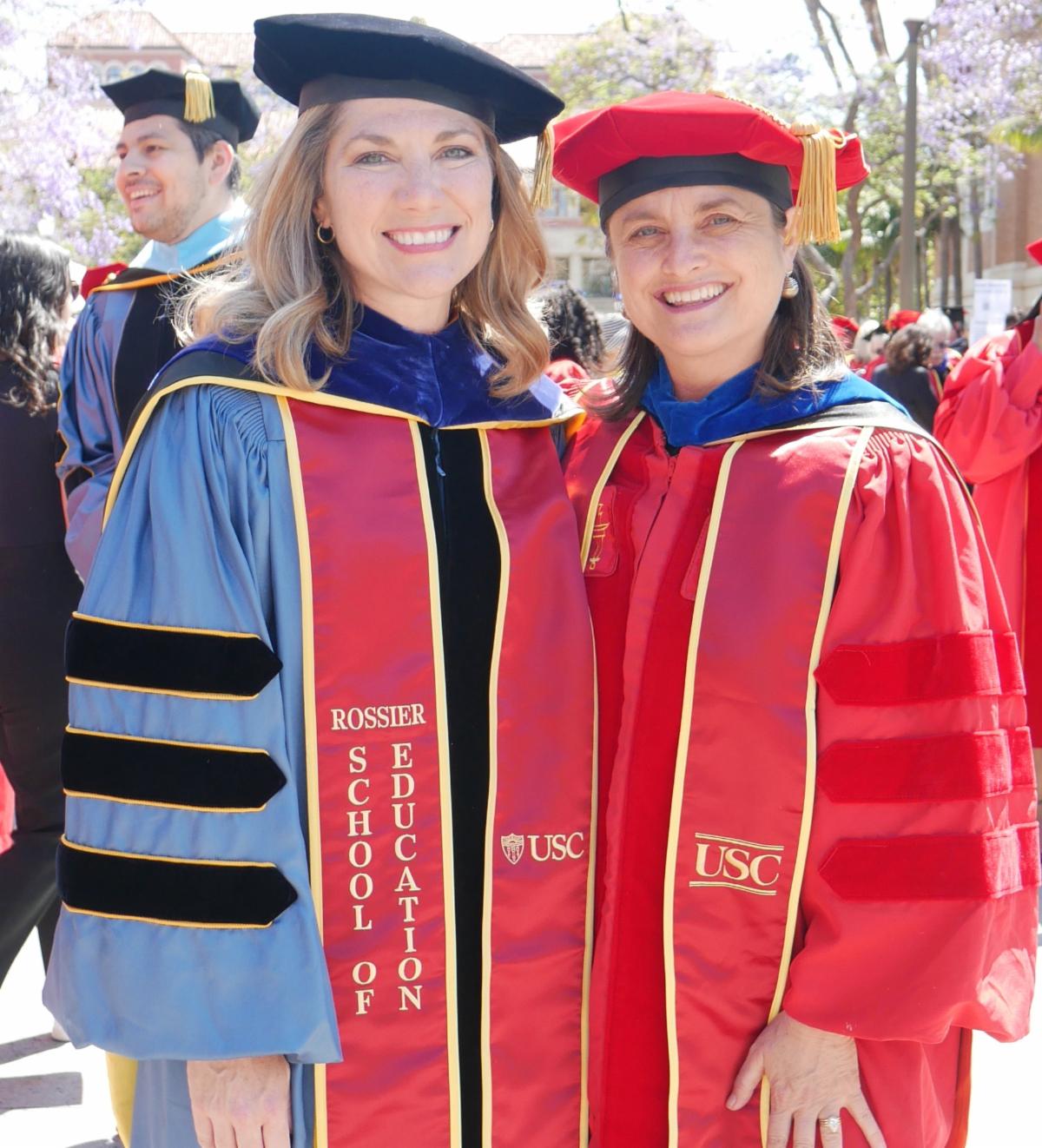
Guest Editor Zoë Corwin, Pullias Center Research Professor
Dear Colleagues,
This is the last Pullias Center newsletter for the academic year and it is likely hitting your inbox at a time when you are ready to take a well-deserved break.
After the isolation of the pandemic, this year has presented its unique challenges to university stakeholders. College student mental health garnered serious reflection, with eight out of ten college and university presidents indicating on the Healthy Minds study that students’ mental health concerns have become a larger priority for their institutions in the last three years. And then there was Kevin McClure and Alisa Hicklin Fryar’s piece in The Chronicle on faculty disengagement that generated considerable discussion. These two pieces resonated deeply with my own professional journey this past year as I sought to re-engage on USC’s physical campus – and as I attempted to support students, colleagues and self in navigating a changed mental health and wellness landscape.
Funnily enough, two of the projects I’ve appreciated most over the past year relate to the aforementioned articles as they have entailed robust faculty engagement – in partnership with postdoctoral scholars, students, staff and community partners – and are committed to learning from and better serving the wellness needs of young people from historically marginalized communities. One, the Promoting At-promise Student Success (PASS) project, involves a multi-faceted, longitudinal study at the University of Nebraska; the other, Mattering in the Margins, involves a super-creative interdisciplinary collaboration with faculty from six USC schools, a colleague from UNLV…and a group of skateboarders (yes, you read that correctly).
I am deeply grateful to my colleagues for journeying with me during this unconventional year. And I wish all Pullias Center newsletter readers time this summer to rejuvenate – and meaningful engagement with colleagues and projects when you return in the fall.
Warmly,
|
|
Research Professor, Pullias Center and Rossier School of Education
|
|
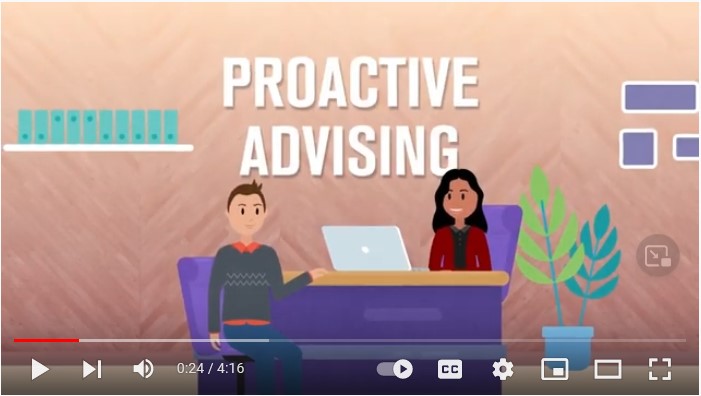
Proactive Advising Practice Guide and Video Now Available |
Now, there are two additional resources that we hope will be helpful to the field:
Both of these resources provide guidance to practitioners on implementing proactive advising.
These materials were developed in response to findings from our longitudinal mixed methods research study – and made possible due to a strong collaboration with a stellar group of practitioners from the University of Nebraska and support from the Susan Thompson Buffett Foundation.
|
|
|
Opinion
STEM Education Needs a Dose of Humanity
USC Dean's Professor of Education & Engineering
STEM education. The very mention evokes visions of young people learning coding or the latest tech software, engineering rocket ships to send to Mars or performing high-level math that will be used to build a better cell phone. All of these are admittedly, good things. However, I argue that much of current STEM education has.....Read More
|
|
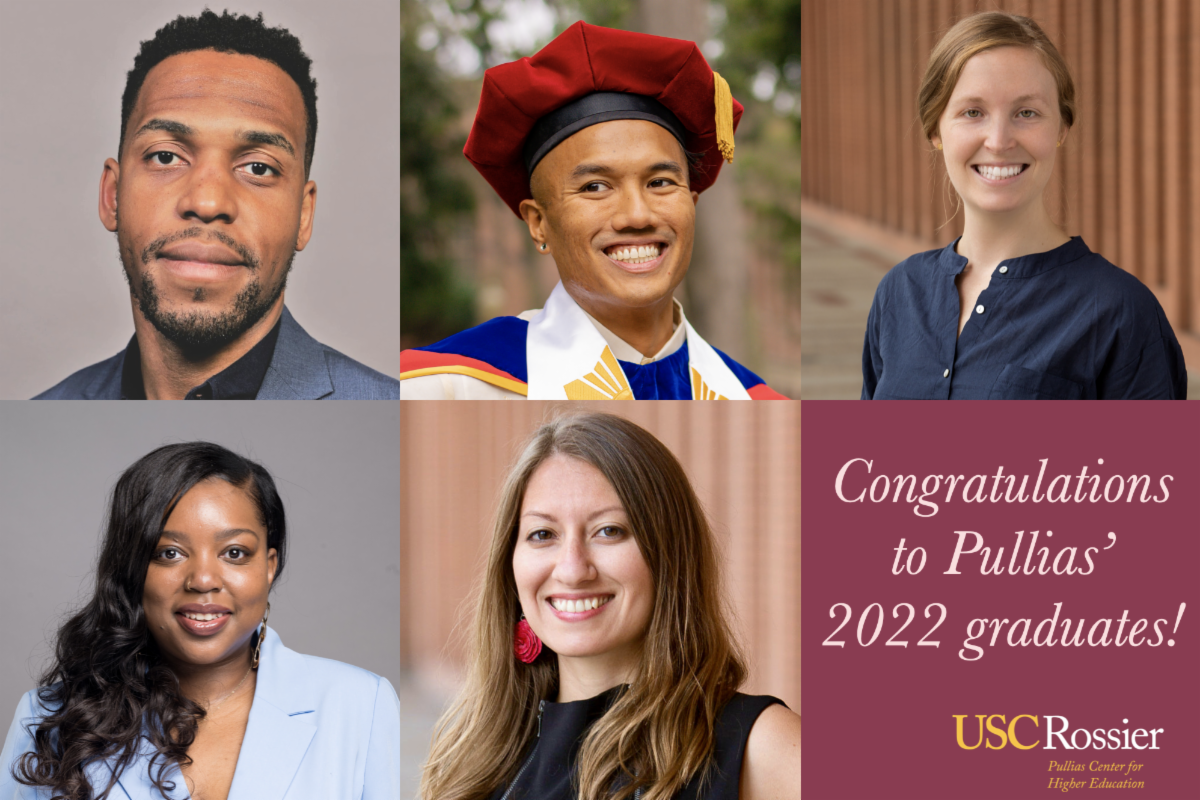
Meet the Pullias Center Doctoral Graduates
This May, five Pullias Center doctoral candidates will graduate from the USC Rossier School of Education. We would like to offer our sincerest congratulations to Steve Desir, Jude Paul Matias Dizon, Theresa E. Hernandez, Aireale J. Rodgers and Deborah E. Southern and as they continue their professional careers.....Read More
|
|
FEATURED PUBLICATIONS
Adrian H. Huerta, Maria Romero-Morales, Jude Paul Matias Dizon, Julie Vu Nguyen
|
|
MORE NEWS
-
At The National Conference on Diversity, Race & Learning Conference hosted at The Ohio State University, Adrian H. Huerta presented “Promoting College Pathways & Opportunities for Young Men of Color: Lessons Learned from 10-Years of Research & Practice," and Joseph Kitchen and Ralitsa Todorova presented "Increased Belonging and Success through Validating Relationships with Diverse Low-income College Students."
- Ángel González presented at the 4th Annual LGBTQ+ Summit for California Community Colleges on Queering HSIs: Levering Policy Unapologetically to Advance Racial Equity for LGBTQ+ Community College Students.
- Jordan Harper was invited to host a live briefing (webinar) for NASPA titled “When This World Is Not Enough: On Leadership, Liberation, and Im/Possibilities in Higher Education.”
- Julie Posselt spoke at the Alfred P. Sloan Foundation on May 4 in a seminar for their staff, who are applying her framework of equity-minded holistic review for the grant review process.
- Royel M. Johnson spoke at Northwestern University as part of their “Let’s Talk Diversity” lecture series on April 20th. His talk, “Fostering Belonging Through Equity-Minded, Anti-Racist Course Design,” was hosted by the Graduate School’s Office of Diversity and Inclusion.
|
|
THE PULLIAS CENTER FOR
HIGHER EDUCATION
Promoting Equity in Higher Education
|
|
The World's Leading Research Center on Student Access and Success in Higher Education |
|
|
|
|
|
|