|
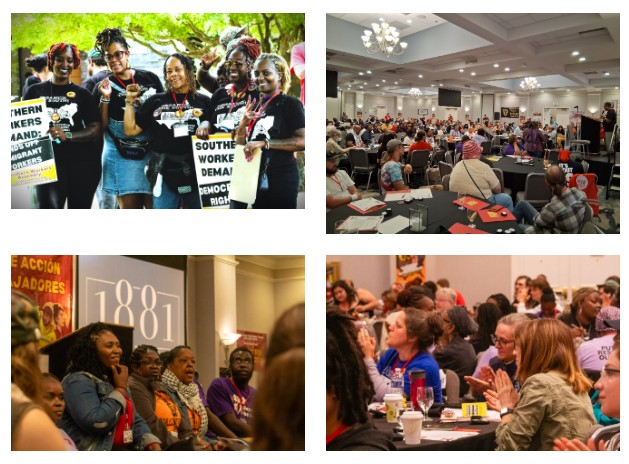
FRUIT OF LABOR, icon Jaribu Hill and cultural workers at
Southern Workers Action Summit, in S.C.
| | |
FRUIT OF LABOR, Jaribu Hill and Cultural Worker Activists @ Southern Worker Action Summit in Spartanburg, SC shares Music that speaks to Workers Building Organization, Fightback and more
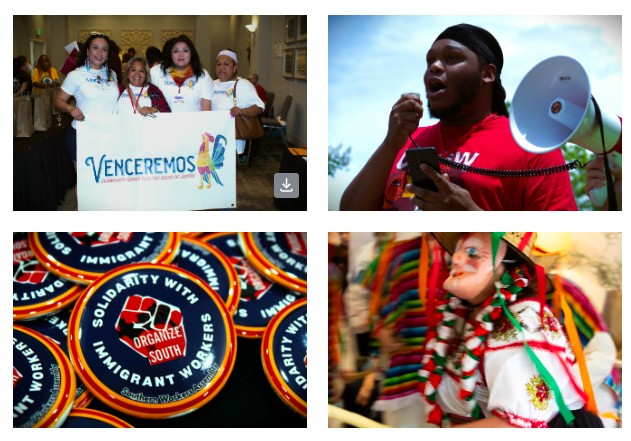
In the industrial hub of Spartanburg, SC, nearly 400 rank and file workers from every Southern state and key sectors across the region gathered from June 13 – 15 to chart a path to building greater worker organization and broader fightback in the midst of the attacks from the billionaire class. The gathering – the Southern Worker Action Summit – was convened by the Southern Workers Assembly in collaboration with 16 worker organizations throughout the region (see full listing below).
In addition to strong contingents from the convening organizations, the Summit also included participation from delegations from all fifteen active workers assemblies, the United Autoworkers (UAW), several locals of the International Longshoremen’s Association, Beyond the Bars, Amazonians United, the Emergency Workplace Organizing Committee, Labor Notes, and more.
| |
Music and Culture of working class resistance
was shared throughout gathering
That spirit carried into the Summit, which was marked by an electric energy of resistance and solidarity throughout. Cultural performances from the Fruit of Labor Singing Ensemble, El Futuro Es Nuestro, iconic singer Jaribu Hill, and others contributed to that fighting spirit of resistance.
| | |
MOVIE REVIEW: Sinners & Trumpism
Niela Orr
Van Coogler's horror movie Sinners is (so far) the pop cultural sensation of the second trump administration. Elijah and Elias Moore, aka Smoke and Stack, twin brothers played by an alternately caddish and cantankerous Michael B. Jordan, return home to Clarksdale in the Mississippi Delta in 1932. Smoke and Stack aren't content to take on a sharecropper's plot, but want to be entrepreneurial New Negroes. The twins have been away – fighting in the First World War, pimping in Little Rock, working as enforcers for Al Capone in Chicago – and have come back to Clarksdale to escape the racism in the north for the 'devil we know'. They decide to open a juke joint, and buy a derelict mill from the town's closeted KKK leader, Hogwood (David Maldonado). The twins enlist their cousin Sammie (Miles Caton), a sharecropper and precociously talented preacher's boy who sings and plays the blues, and assemble a crew of old friends and lovers to do up the place, which they call Club Juke.
Stack and Sammie chug along Depression roads, scything through the cotton, proselytising to potential collaborators and customers about their little corner of freedom. The Southern topography and the sharecroppers' moments of surreptitious pleasure – secret meetings under the cover of vegetation, bawdy jokes beneath the blistering sun – bring to mind the way LeRoi Jones (who became Amiri Baraka) describes Billie Holiday's voice in Black Music. It morphed, he writes, from a singer's instrument to a woman's to 'a Black landscape of need and, perhaps, suffocated desire': 'Sometimes you are afraid to listen to this lady.'
The cousins scoop up a harmonica player called Delta Slim (a riotous Delroy Lindo). As the trio motor through Clarksdale, he recognises some men on a chain gang and tries to lift their spirits. 'Hold your heads!' he shouts, before an overseer blasts warning shots at them. As they drive away, Slim recalls being locked up with a musician friend, and the way the jailers exploited their talent, getting them to play at a high-society house party. White people love Black music, he says, but not Black people. Or, in the words of the late, great critic Greg Tate, they want everything but the burden. He tells them about his musician friend, who was travelling by train with all of his savings and was robbed by a group of Klansmen for the money he made performing at the shindig. The thieves made up a story about murder and rape, and the mob lynched the man on the spot, 'right there in the railroad station'. Slim trails off, his speech giving way to humming, then singing, then to something deeper still, an existential funk, which is managed by a little improvised drumming on the car door and some inchoate murmuring that can be shaped into song later on. A little remembering and a little forgetting. The moment is a distillation of the mysterious process of converting hardwon experience into music. On the 1920 census, taken when he was somewhere between twelve and fifteen (the records are inconsistent), my great-grandfather is listed as a labourer and prison inmate in Bledsoe County, Tennessee. Watching that scene, I couldn't help but imagine him on a chain gang, snatching the blues during the blistering work of picking crops. Read more here.
| | JUNE 2025 CALENDAR OF EVENTS | | |
1st & 3rd Sundays; 1:00-4:00 PM; Black Farmers Market at the Durham Tech. Community College is located at 1637 E Lawson Street, Durham, NC. Go and support Black Farmers growing healthy food to nourish our communities!
2nd & 4th Sundays; 1:00-4:00 PM; Black Farmers Market at the SE Raleigh YMCA located at 1436 Rock Quarry Road, Raleigh, NC. Go and support Black Farmers growing healthy food to nourish our communities!
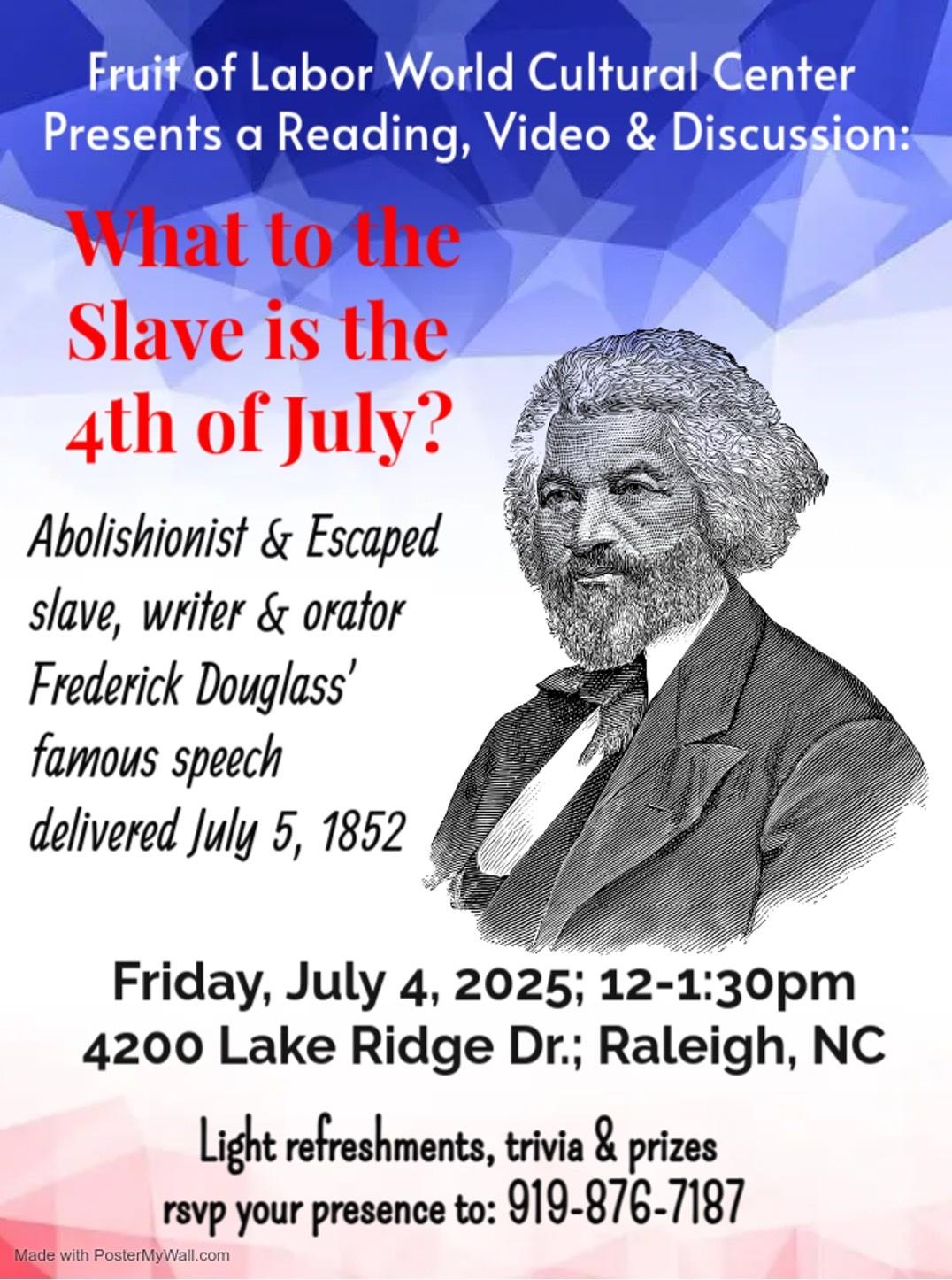
Friday, July 4; 12:00-1:30 PM; What to the Slave is the 4th of July? Everyone is invited to a video preview, reading, and discussion about Frederick Douglass's famous speech delivered on July 5th, 1852 - it is FREE. RSVP your attendance to (919) 876-7187 or fruitoflaborwcc@netscape.com.
Sunday, July 27, 11:00 AM-2:00 PM; Only on Sunday Brunch at the Fruit of Labor World Cultural Café! There will be delicious food and drinks, great music, poetry, discussion, books, games, and networking. You're also welcome to bring your laptop and get comfy, even if you need to get a little work done—$ 15 donation requested. RSVP your attendance to (919) 876-7187 or email: fruitoflaborwcc@netscape.com.
| | Saturday, July 27, 1:30 PM; Book Club Study Group Session: Black Working Class, U.S. Crisis Financial Health. Purchase your books at the FOL WCC or call (919) 231-2660 and leave your name, phone number, and message. | | Smartphones Again Set the Agenda for Justice | | |
portside.org
It has been five years since May 25, 2020, when George Floyd gasped for air beneath the knee of a Minneapolis police officer at the corner of 38th Street and Chicago Avenue. Five years since 17-year-old Darnella Frazier stood outside Cup Foods, raised her phone and bore witness to nine minutes and 29 seconds that would galvanize a global movement against racial injustice.
Frazier’s video didn’t just show what happened. It insisted the world stop and see.
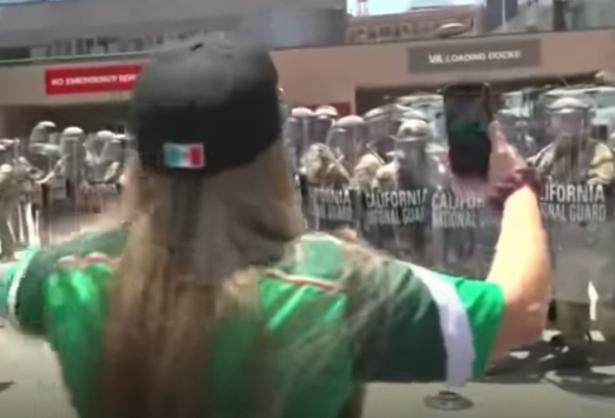
Today, that legacy continues in the hands of a different community, facing different threats but wielding the same tools. Across the United States, Latino organizers are raising their phones, not to go viral but to go on record. They livestream Immigration and Customs Enforcement raids, film family separations and document protests outside detention centers. Their footage is not merely content. It is evidence, warning – and resistance.
Share this article on Twitter Facebook Mail
Here in Los Angeles where I teach journalism, for example, several images have seared themselves into public memory. One viral video shows a shackled father stepping into a white, unmarked van as his daughter sobs behind the camera, pleading with him not to sign any official documents. He turns, gestures for her to calm down, and blows her a kiss. In another video, filmed across town, Los Angeles Police Department officers on horseback charge into crowds of peaceful protesters, swinging wooden batons with chilling precision.
In Spokane, Washington, residents form a spontaneous human chain around their neighbors mid-raid, their bodies and cameras erecting a barricade of defiance. In San Diego, a video shows white allies yelling “Shame!” as they chase a car full of National Guard troops from their neighborhood.
The impact of smartphone witnessing has been immediate and unmistakable – visceral at street level, seismic in statehouses. On the ground, the videos helped inspire a “No Kings” movement, which organized protests in all 50 states on June 14, 2025.
Lawmakers are intensifying their focus on immigration policy as well. As the Trump administration escalates enforcement, Democratic-led states are expanding laws that limit cooperation with federal agents. On June 12, the House Oversight Committee questioned Democratic governors about these measures, with Republican lawmakers citing public safety concerns. The hearing underscored deep divisions between federal and state approaches to immigration enforcement.
The legacy of Black witnessing
What’s unfolding now is not new – it is newly visible. As my research shows, Latino organizers are drawing from a playbook that was sharpened in 2020 and rooted in a much older lineage of Black media survival strategies that were forged under extreme oppression.
In my 2020 book “Bearing Witness While Black: African Americans, Smartphones and the New Protest Journalism,” I document how Black Americans have used media – slave narratives, pamphlets, newspapers, radio and now smartphones – to fight for justice. From Frederick Douglass to Ida B. Wells to Darnella Frazier, Black witnesses have long used journalism as a tool for survival and transformation. Read more here.
| | |
Raleigh is heating up fast, and so is your car! Before your seats turn into a skillet and your steering wheel melts your fingertips, check out these 10 must-do tips to protect yourself and your vehicle:
- Park in the shade – Trees, decks, or next to a building = instant relief.
- Use a windshield sunshade – Blocks heat and protects your dash.
- Crack your windows slightly – Helps hot air escape (if it’s safe to do so!).
- Cover your steering wheel – Save your hands from the sizzle.
- Check your coolant levels – Keep your engine from overheating.
- Get your battery tested – Heat can drain battery life fast.
- Avoid leaving electronics inside – Phones + heat = trouble.
- Never leave people or pets in the car – Not even for a minute!
- Ventilate before driving – Open all doors for 30 seconds to release trapped heat.
- Keep an emergency kit with water + cooling towels – Just in case!
Stay cool, drive safe, and protect what matters most—yourself, your passengers, and your car.
| |
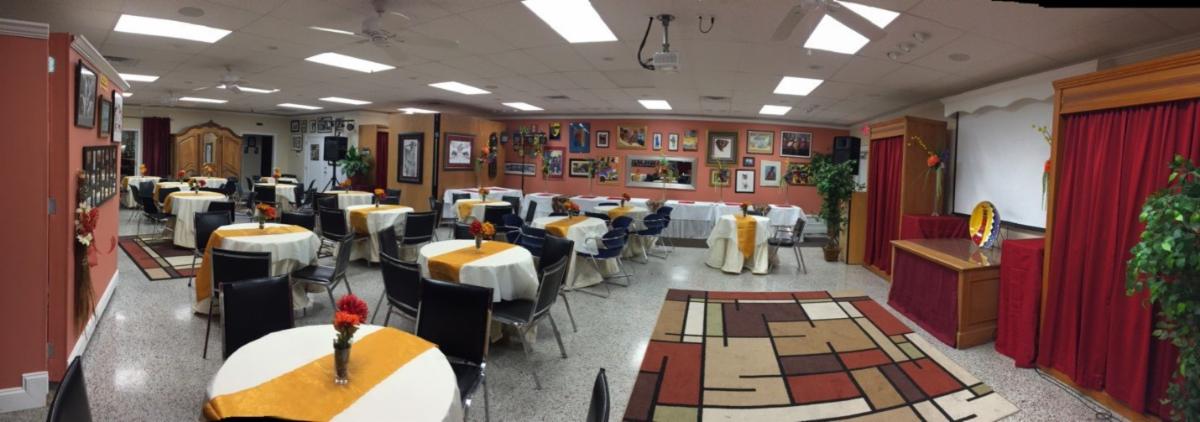
FOLWCC Special Event Rental
Need a special place for your special event?
Award-Winning Fruit of Labor World Cultural Event Center
Main Center | Café –Meeting Room | Outdoor Garden Area
The Fruit of Labor World Cultural Center and the World Cultural Café are your place. The 2,000 sq. ft. World Cultural Center, with a big screen and surround sound theater, is the ideal intimate setting for:
- Parties & Game Nights
- Movie Screenings
- Organizational & Business Meetings
- Receptions
- Classes, Seminars & Workshops
- Gatherings to Watch Sporting Events
- Conferences
- Art Shows
- Religious & Family Gatherings
- Small Concerts & Fundraisers
- Bridal & Baby Showers
| |
AVAILABLE NOW!
Music and songs that inspire, engage, and liberate our spirit!
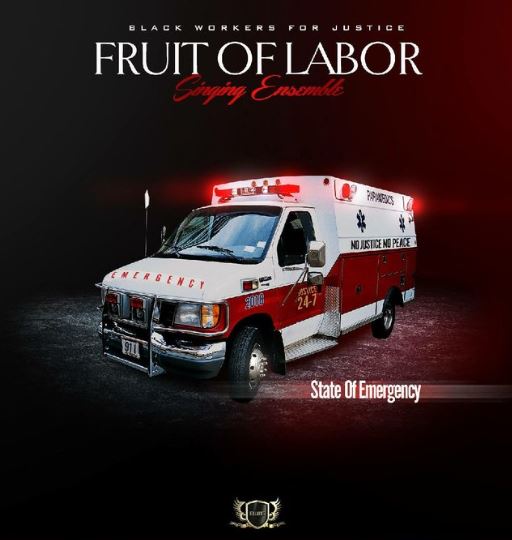
Enjoy Fruit of Labor Singing Ensemble’s Album: State of Emergency
The album is available on
Amazon, Apple Music, iTunes, Spotify, YouTube Music, iHeart Radio
and many more streaming services and retailers.
| | “No Kings” Seeded a Mass Movement Against Trump, Backed by Labor | |
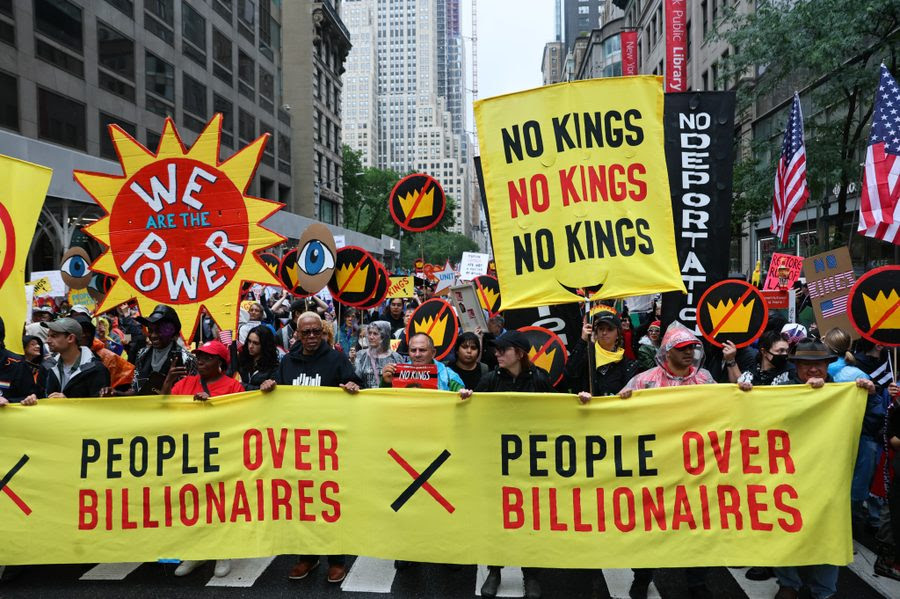
Millions of demonstrators across the country came out into the streets on June 14 at more than 2,000 protests in all 50 states and Puerto Rico. Organizers estimated that the mobilization, called “No Kings Day of Defiance,” drew at least five million people nationwide, which would make it the largest single-day protest in U.S. history.
Indivisible, the ACLU and the 50501 Movement were key organizers of the nationwide rallies and marches denouncing the Trump administration, which were timed to coincide with a military parade in Washington, D.C., that President Trump co-opted as a 79th birthday celebration. Storytelling is part of all social movements, and the organizers chose the country’s founding as a touchstone to organize the resistance against what they describe as an authoritarian regime.
In New York City, a small group of demonstrators dressed in Revolutionary War-era garb, including tri-corner hats, marched alongside a brass band, imbuing the protest with a joyful air of the carnivalesque. One woman who only gave her name as Kate wore a black birdcage veil.
“We are in mourning for the dying of our democracy,” she says.
Sign up for our weekend newsletter
A weekly digest of our best coverage
Email Address
Protester Louise Wollman came as part of the Democratic Party-aligned Downtown Nasty Women Social Group to decry Trump’s abuses of power and deportation raids.
Protestors nationwide championed various causes in their signs and chants, decrying attacks on trans people, cuts to social programs like Medicaid that working people rely on, the United States supplying the bombs and political support for Israel’s ongoing genocide in Gaza, book bans and prohibitions against teaching about systemic racism, and the takeover of government by billionaires. But the main messages in New York City, Chicago and Los Angeles were about defending immigrants from ICE abductions that have torn families apart, and the defense of democracy, including the right to due process, political speech and dissent.
“The fight is hitting too close to home,” says Gladys, a 12-year public school teacher who requested to use only her first name, when asked why she participated in the New York rally. “A lot of our [immigrant] students are very scared.” She says absence rates at her school have been high.
“As a teacher, I feel like I’m a mom to all of these kids,” Gladys continues. “Citizens, people that are permanent residents — my own family members — are also scared. And I think that’s what’s different now, like there are no laws that are being followed, and it’s just not fair.” Read more here.
| | New Hip Hop Single - No Kings | | | | |