Stewardship of Invitation | |
- Year of Living Generously: Four Practices for a Generous Congregation
- October lectionary Stewardship preaching and teaching tips
- Whose Image do you Bear?
- Learn about the 2026/2027 Campaign Theme: Plenty Good Room
| | |
Greetings!,
Generosity Is a Practice
October is the month when stewardship becomes wonderfully concrete. Across the church, pledge cards are appearing in pews and mailboxes. Congregations are sharing stories of ministry, inviting testimony, making plans for the year ahead, and asking members to consider how their giving reflects their faith. For many of us, this is the busiest season of the stewardship year.
But a campaign does not create generosity. It gives us an opportunity to practice it.
We practice gratitude by noticing what God has already given. We practice trust when we loosen our grip on some of what we have received. We practice hope when we invest in ministries whose full fruit we may never see. We practice community when we remember that the church is not simply something we attend or support, but a body to which we belong and through which God is at work in the world.
That is why the strongest stewardship campaigns begin not with what the church needs from its members, but with what God is doing through the church. Tell the story of the child who found a place to belong. Tell the story of the neighbor who was fed, the mourner who was accompanied, the volunteer who discovered a vocation, the newcomer who became family. Budgets matter, of course. Buildings matter. Programs matter. But they matter because they make ministry possible. Mission gives the numbers meaning.
October's lectionary gives us language for this practice. Jesus speaks of a vineyard entrusted to tenants and asks what fruit it will bear. He tells of a banquet and the invitation to come. He holds up a coin stamped with Caesar's image and presses us to consider what belongs to God. And at the end of the month, he brings everything back to love of God and love of neighbor. These are not only stewardship texts. They are reminders that all Christian life is lived in response to gift, invitation, belonging, and love.
So this month, as your congregation asks people to make commitments, resist the temptation to treat stewardship as a once-a-year transaction. Make it a practice. Tell stories. Say thank you. Invite clearly. Follow up personally. Celebrate every act of generosity, whether it is a pledge, a ministry offered, a meal delivered, a pet brought to be blessed, or a prayer whispered for the life of the parish.
October is not simply pledge-card season. It is practice season: a chance to rehearse, together, the generous life God calls us to live all year long.
All good gifts,
J. Davey Gerhard, Executive Director
| | | |
Weekly Reflections on the October Lectionary for Preachers, Teachers, and Readers
October’s readings offer a rich progression for campaign season: fruitfulness, invitation, belonging, and love. These short reflections are designed as sermon seeds or reflections - brief theological openings that can grow in many directions.
October 4: Proper 22
Matthew 21:33–46 — The Vineyard and Its Fruit
Jesus tells of a vineyard that has been carefully planted, fenced, equipped, and entrusted to tenants. The problem is not that the tenants have nothing; the problem is that they begin to act as though what they have been given belongs entirely to them. Stewardship begins with remembering that we are tenants, not owners. Our buildings, resources, relationships, talents, traditions, and opportunities are gifts entrusted to us for a purpose. The vineyard is meant to bear fruit.
That can be an especially important word during campaign season. The question is not merely, “How much does the church need?” but, “What fruit might God bring forth through what has been entrusted to us?” Generosity becomes less about preserving what we possess and more about participating in what God is growing. We give because we have been trusted with something worth tending.
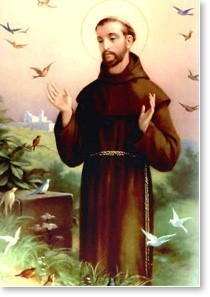
October 4 — St. Francis of Assisi
Luke 12:13–21; Job 39:1–18 — Delight Instead of Possession
The rich fool looks at abundance and immediately asks how he can hold onto more of it. Francis teaches us another way to look at abundance: with delight. The appointed reading from Job reminds us that God cares for wild creatures beyond our usefulness or control, while Jesus’ parable warns against imagining that the purpose of abundance is simply accumulation.
A Blessing of the Animals can therefore be more than a charming parish tradition. It can become a little school for stewardship. We bless animals because creation is not simply ours to use; it is God’s to love. And when neighbors arrive with dogs, cats, rabbits, and the occasional deeply uncooperative goat, we have an opportunity to say something beautifully Christian: you and the creatures you love are welcome here.
October 11 — Proper 23, Year A
Matthew 22:1–14 — Come to the Banquet
The feast is ready. The tables are set. The invitation has gone out. Yet some people simply do not come. Jesus’ parable of the wedding banquet is complicated and even unsettling in places, but at its heart is the astonishing abundance of God’s invitation: there is room at the feast, and the invitation keeps widening. Isaiah strengthens the image by imagining God preparing a feast “for all peoples.”
That is a wonderful image for a stewardship campaign. Christian generosity is not fundamentally a demand; it is an invitation. Come be part of this. Come help set the table. Come participate in the ministry God is already doing among us. A good campaign does not merely tell people what the church needs from them. It helps people see the feast that is being prepared—and invites them to take their place in making it possible.
October 18 — Proper 24, Year A
Matthew 22:15–22 — Whose Image Is This?
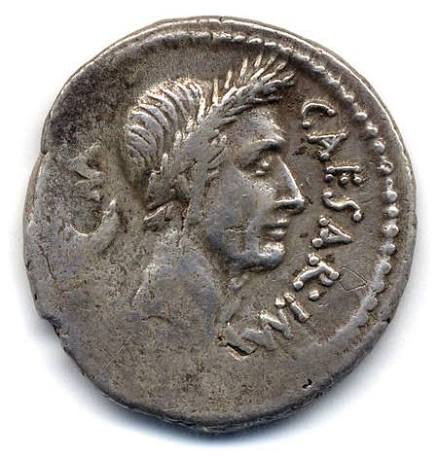
Jesus is handed a coin and asks whose image it bears. Caesar’s image is stamped into the metal, and Jesus says to give Caesar what belongs to Caesar—and to God what belongs to God. But Scripture has already told us what bears God’s image: we do. That turns a clever answer about taxes into a much larger claim about belonging.
The Christian life is not a matter of deciding which small portion of ourselves belongs to God. Our whole lives bear God’s imprint. Our money, time, labor, relationships, imagination, and choices all belong within the life we offer back to God. Stewardship is therefore not simply about making a gift. It is about learning to live as someone who knows whose image they bear.
October 25 — Proper 25, Year A
Matthew 22:34–46 — Love Is the Measure
Asked to name the greatest commandment, Jesus refuses to give just one. Love God with everything you have, he says—and love your neighbor as yourself. Everything else hangs on these.
That may be the best place possible to end a month of stewardship preaching. Budgets matter. Pledges matter. Buildings, programs, and ministries matter. But they are never the final measure of Christian generosity. Love is. We give because we love God. We sustain ministry because we love our neighbors. We care for the world because love does not treat God’s gifts as disposable. Generosity is love taking material form.
| | |
Whose Image Do You Bear?
Matthew 22:15–22 and the stewardship of a whole life
The question Jesus asks in Matthew 22 seems almost too simple: “Whose head is this, and whose title?” His opponents have handed him a denarius, hoping to trap him in a political and religious controversy about taxes. Jesus looks at the coin and points to what is stamped upon it: Caesar’s image. Then comes the famous answer: give to Caesar what belongs to Caesar, and to God what belongs to God. We often hear that as a tidy division of responsibilities, as though some things belong to government and other things belong to God. But Jesus’ answer is more unsettling than that. It invites another question: if the coin bears Caesar’s image, what bears God’s image?
The opening chapter of Genesis gives the Christian imagination its answer: human beings are created in the image and likeness of God. The denarius may carry the emperor’s portrait, but our lives carry a deeper imprint. We bear the image of the One who made us. That means Jesus’ words cannot finally be reduced to a formula for separating the sacred from the secular or deciding which percentage of our income belongs to God. The more searching claim is that we ourselves belong to God. There is no portion of our lives that exists outside that relationship.
This is where stewardship becomes much larger than fundraising. Christian stewardship is not the practice of deciding how much of what is “ours” we can afford to give back to God. It is the practice of learning to live faithfully with what has already been entrusted to us. Money is part of that, but so are time, skill, work, relationships, property, influence, imagination, citizenship, and the created world itself. Every choice about how we use these gifts becomes a response to the God whose image we bear.
The other October readings deepen this vision. In the parable of the vineyard, the tenants forget that the vineyard has been entrusted to them and begin to behave as though it belongs to them. At the wedding banquet, God’s abundance is pictured as a feast prepared and offered in invitation. On the feast of St. Francis, creation itself becomes a school for learning delight instead of possession. Again and again, Scripture unsettles the illusion that ownership is absolute. What we call “ours” is first gift, and gifts are meant to be received with gratitude, tended with care, and used toward God’s purposes.
That is why generosity is best understood as a spiritual practice rather than an occasional financial act. We practice generosity when we allow what has been entrusted to us to serve love rather than fear, mission rather than accumulation, and community rather than isolation. A pledge to the church can be one expression of that practice, but it is not the whole of it. The deeper invitation is to let our giving, spending, saving, working, resting, serving, and sharing all be shaped by the recognition that our lives bear God’s image.
By the end of October, Matthew brings us to the Great Commandment: love God with heart, soul, and mind, and love your neighbor as yourself. That is where stewardship finally lands. The question is not simply, “How much should I give?” but, “What does love ask of what has been entrusted to me?” Stewardship is the lifelong practice of answering that question.
The coin may bear Caesar’s image. We bear God’s. And everything we offer begins there.
| |
Are you planning a campaign in 2027 for Capital, Feasibility, Legacy, or Annual Stewardship? We are opening up capacity for 2027 campaigns now. Let our experience and our theological approach to fundraising guide your congregation in a sustainable, successful campaign! Please give us a call!
TENS Consulting follows four core principles:
Transparency
Equal Accessibility
Need-Responsiveness
Sustainability
These values inform everything from our pricing ranges to our commitment to customize services for congregations with fewer resources. Our goal is to make campaign consulting affordable, accessible, and theologically grounded for Episcopal congregations of all sizes and budgets.
TENS Offers consulting to congregations, to institutions (schools, camps, special ministries), and to dioceses. Our experienced consultant team has completed successful campaigns across the Church.
We invite you to learn more on our website, and, as you imagine your program growth and capital needs for this year, to reach out to us for more information on how we can create a scalable, affordable initiative for your congregation or diocese.
Be sure to ask about Member Discounts
| |
A Year of Living Generously: October. Tips for Year-Round Stewardship - Four Practices for a Generous Congregation
October is the month when generosity becomes especially visible in congregational life. Campaigns are beginning, pledge cards are circulating, ministry stories are being told, and people are being invited to consider how they will participate in the year ahead. That makes October a good time to focus not only on giving, but on the practices that help generosity grow: telling the story of mission, giving thanks, welcoming our neighbors, and following up with care. These simple habits remind us that a generous congregation is not built by one campaign or one Sunday. It is formed, over time, by the way we notice, invite, thank, and respond.
1. Tell One Story Before You Tell One Number
During campaign season, congregations often rush toward budgets, goals, and percentages. Those things matter, but they are rarely what inspires generosity. Before you share a number, share a story. Tell how a ministry changed a life, strengthened a relationship, fed a neighbor, formed a child, supported someone in grief, or created a place of belonging.
Try this each Sunday in October: tell one brief, specific story of ministry before making any campaign announcement. Keep it human, concrete, and short. Then make the connection: our generosity makes this possible. Numbers tell people what is needed. Stories remind them why it matters.
2. Make Gratitude Visible
Generosity grows where gratitude is practiced. During October, give people simple ways to name what they are thankful for in the life of the congregation. Put cards in the pews asking, “What are you grateful this church makes possible?” Create a gratitude board in the parish hall. Invite ministry leaders to thank volunteers publicly. Send handwritten notes to longtime givers, new members, or people whose quiet service is easy to overlook.
The important thing is that gratitude should not become another fundraising tactic. Thank people without immediately asking them for something. A congregation that knows how to give thanks becomes better at recognizing abundance — and people who recognize abundance are more able to respond generously.
3. Turn the Blessing of the Animals Into a Neighborhood Invitation
St. Francis Day is a wonderful opportunity to connect generosity, creation care, and evangelism. Don’t treat the Blessing of the Animals as an event only for people who already attend church. Put a sign outside. Share the invitation in neighborhood groups. Hold the blessing somewhere visible. Provide water bowls, simple treats, and a warm welcome for anyone who arrives with a beloved animal.
Then widen the stewardship message. Caring for animals reminds us that creation is not simply ours to use; it is God’s gift to cherish. Consider collecting supplies for a local shelter, inviting a rescue organization to participate, or offering a simple creation-care pledge people can take home. Sometimes the easiest invitation into Christian community begins with, “Bring your dog.”
4. Make Follow-Up Pastoral, Not Transactional
One of the most important campaign practices is also one of the simplest: follow up. People forget. They travel. They misplace the pledge card. One spouse assumes the other handled it. Silence rarely means rejection.
Instead of, “We haven’t received your pledge,” try, “We wanted to make sure you received the campaign materials and see whether you have any questions.” Make follow-up personal whenever possible, and let it come from someone who already has a relationship with the household. A gracious reminder can be an act of pastoral care. The goal is not to pressure people into responding; it is to make sure everyone has genuinely been invited to participate.
| | |
Year-End User Survey
Share your opinions, make an impact!
Please help us evaluate the effectiveness, mission-alignment, and implementation of your Annual Campaign materials. This short survey will give us insight into how you use TENS materials so that we can create more adaptable, responsive campaign materials that work in your context.
Just a few minutes will help us immeasurably! Thank you for your help.
| |
Download the 2026/27 Annual Campaign Materials and prepare for a successful Pledge Campaign!
In God’s house there is always room for more: more ideas, more people, more ways to share, more stories to tell. And in the world that God created, there is more needed: more love, more connection, more peace, more creativity. Plenty Good Room reminds us that there is always room in God’s house; we just need to make ourselves at home and invite others to join us. The ways we steward our relationships, resources, and responses to grow ministry and serve our neighbors are the ways we connect our gratitude to our generosity. There’s Plenty Good Room in God’s House; pull up a chair and sit down. Want to know the inspiration behind this year's theme? Here's the talented Lynda Randle singing the spiritual Plenty Good Room
Our theme for the annual campaign this year focuses on our hospitality and how, if we ask members to be generous, we can always find a way to increase our work in God's kingdom.
Our 2026/27 campaign materials are ready for download now.. As always, we offer our campaign materials in English and Spanish. This year's package includes:
- Seasonal Reflections and Questions - Advent through Christ the King
- Sample letters from clergy, wardens, and committee members
- Sample thank-you letter
- Logos and artwork for the Plenty Good Room / Invitados a la Mesa campaign
- Liturgical resources - Prayers of the People and Offertory blessings
- Pledge cards in Word and .pdf
- Campaign timeline for ideal implementation
| | |
Do you follow us on Facebook, Instagram, and YouTube?
TENS Shares inspiration, resources, and reflection materials on our social media every week.
On Tuesdays: A Year of Living Generously Tip so you don't have to search your inbox to find our newsletter every week!
On Thursdays: Reflections on the coming Gospel
On Feast Days: A reflection on stewardship and celebration
Seasons of the Church Year: Every time the color changes in church there is a seasonal reflection you may use for personal or congregational formation. We post these on social media along with including them in the campaign resources download.
| | | | |