Weekly Digest Number 34 - August 23, 2022 |
|
Welcome to the RWU Rail & Labor News! This news bulletin is produced and emailed out each Tuesday morning. We hope you find each week's news and information useful. If so, please share with co-workers, friends, and colleagues. If you like, you can sign them up to get all the news from RWU HERE. Or forward them the link. Note: If you read over this news bulletin each week, you will be sure to never miss the important news of what is going on in the railroad world from a worker's perspective!
|
|
(Editor's Note: The Presidential Emergency Board appointed by President Joe Biden released its Report last Tuesday. Rank & file rail workers are not particularly happy with its recommendations.) |
|
PEB #250 Releases Report; RWU Responds |
|
Like many rank & file railroaders, the membership and Steering Committee of Railroad Workers United (RWU) is let down and feeling somewhat betrayed with the Recommendations of PEB #250. The organization has released a Summary of the PEB along with its preliminary views of the PEB Report. This week, RWU is conducting a survey of rank and file rail workers to get a better idea of the level of discontent and anger that actually exists. Look for that coming soon. |
|
(Editor's Note: It is impossible to say if rail workers will go on strike. But we need to make it clear that we are not bluffing, and that if the rail industry - and all industry - wishes to avoid a national shut-down, then they need to meet our very modest demands for basic humane conditions of employment.) |
|
Will Congress Halt a Rail Shutdown? |
|
Will there be a voluntary settlement based on PEB No. 250 recommendations? Or will some or all of the 12 unions that have serially rejected management offers also reject PEB recommendations and elect to strike, likely shutting down the nation’s rail network? Similarly, will management, for the same reasons, lock-out their 125,000 unionized rail workers, leading to the same result?
The short answer is that nobody will know for certain until 12:01 a.m. Sept. 16, as the Railway Labor Act (RLA) prohibits a strike or lockout for 30 days following release of the PEB’s non-binding recommendations.
The statutory 30-day delay—as the RLA is a manual of labor-management peace rather than war—allows both sides to consider the PEB recommendations and make another effort to achieve a voluntary settlement. The sides could even agree on extending the cooling-off period—as it is known in labor relations parlance—if an agreement appears within reach, although a voluntary extension is not likely.
First, a caveat. Even if all 12 rail unions reach an agreement with carriers prior to Sept. 16, it is a tentative agreement that must then be ratified by the affected membership of each rail union. So a strike could still occur at a later date.
Typically, following a tentative agreement, carriers and unions agree to an additional cooling-off period of 60-90 days, meaning no strike or lockout while union members vote to accept or reject the tentative contract.
If one or more union memberships reject the tentative agreement, the union or unions may then initiate a strike or seek more status quo time to permit additional negotiations with carriers. It is highly unlikely carriers would permit leapfrogging of what other unions accepted, although union-specific issues not affecting the pattern established by the tentative agreement may be open for further amendment so as to encourage, in a second go-round, successful ratification by one or more holdouts.
Let’s now consider what happens if a work stoppage does occur - Sept. 16 or later.
|
|
(Editor's Note: It is very telling that the industry mouthpieces are all aflutter with the PEB's recommendations. One cannot help but think that they were expecting the worst and got a much better set of recommendations than they had expected. They should be happy. Practically all of the work rule changes that were requested by the unions were shot down by the PEB. The 5 annual $1000 bonuses are somewhat offset by the increase cost of health insurance. And the wage recommendation barely keeps rail workers ahead of inflation.) |
|
Rail Industry is Thrilled With the PEB #250 Recommendations |
|
Railway Age Magazine, the AAR and the NCCC are all gushing about how "Fair and Equiable" the PEB recommendations are. Meantime, rank and file rail workers are not so happy. They know that this was supposed to be our time, this was supposed to be the day that we would actually win something. They feel kicked to the curb once again. See the articles below where the carriers are downright giddy about the PEB's Report. The fact that our oppenents at the bargaining table are delighted with the PEB speaks volumes. |
|
Engineer Michael Lindsey Speaks About the PEB Recommendations |
|
Engineer Michael Lindsey has produced another home-spun video where he states his position on the PEB and explains the ins and outs of the Recommendations. RWU encourages all rail workers to get involved, raise your voice, state your views, make a video, create a T-shirt or a bumper sticker. If we are going to win it is going to take all of us. We cannot rely on our union leaders, politicians, judges or PEBs to save us. Time to organize, brothers and sisters! |
|
(Editor's Note: The unexpected recommendation from PEB #250 appears to have the rail union official confused and disoriented.) |
|
Rail Unions Cautiously Respond to PEB Recommendations |
|
After pushing for bargaining to go to a Presidential Emergency Board with high hopes for a positive recommendation, the rail unions are a bit confused as to how to respond to this turn of events. The PEB recommendations did not quite turn out like the union officials had planned. On almost every request, the PEB told the unions to go back to the bargaining table or to simply withdraw their proposals.
The rail union officials are in a quandary. They want the members to support the PEB recommendations ... but they know that it is going to take a lot of lipstick on this pig. So ... they are gradually and cautiously coming out with their statements. See the SMART-TD and BMWED statements below.
|
|
(Editor's Note: The interview below is with freight locomotive engineer and RWU Co-Chair Ross Grooters. He is interviewed by Joe DeManuelle-Hall on staff with our good friends at Labor Notes.)
|
|
The U.S. Could Be on the Verge of a Nationwide Railroad Strike |
|
With railroad companies refusing to offer employees a favorable contract, 115,000 rail workers could soon launch a nationwide strike. We spoke with a train engineer about the industry’s brutal working conditions — and why a strike could spread like wildfire.
Rail unions in the United States representing 115,000 workers have been locked in negotiations with rail carriers for over two years. This week, a Presidential Emergency Board (PEB), convened by the Biden administration to intervene in the dispute, issued its recommendations for a settlement. The railroads have stated their support for the deal, so the outcome is now in the hands of the twelve unions that represent freight rail workers — as well as Congress, which could intervene to force a deal.
But many rail workers are opposed to the PEB recommendations, which they view as lopsided in favor of railroad companies. They point to their deteriorating working conditions — including inhumane schedules and “lean production” policies that pile on work and threaten their safety and that of the public — and ask why they should accept givebacks when companies don’t even respect their labor. Indeed, in the PEB recommendations, the board reports that “the Carriers maintain that capital investment and risk are the reasons for their profits, not any contributions by labor.”
Some workers are now talking about a national strike — an action that that hasn’t occurred since 1991 and that could have massive economic and political effects during an election year and an uptick in labor activity.
In a conversation with Joe DeManuelle-Hall of Labor Notes, Iowa-based freight engineer Ross Grooters discussed how working conditions on the railroad have gotten worse, why he opposes the deal on the table, and what a national rail strike could look like in the United States.
|
|
(Editor's Note: While workers risk their health and safety and their lives everyday on the railroad, the carriers have the unmitigated audacity to claim that it is Wall Street investors alone who "take all the risk" to make the railroad profitable. Bullshit!) |
|
Paragraph in Presidential Emergency Board Report Stokes Controversy
Rail workers dispute contention that they played no role in creating the industry’s record profits
|
|
WASHINGTON – Rank-and-file members of rail labor are critical of a paragraph in the Presidential Emergency Board report that says railroads believe their workers have not contributed in any way to the industry’s record profits.
The Presidential Emergency Board, whose duty was to help settle the contract impasse between unionized workers and the U.S. railroads, this week summarized the positions of railroads and labor unions in its report outlining its contract recommendations.
“The Carriers maintain that capital investment and risk are the reasons for their profits, not any contributions by labor. The Carriers further argue that there is no correlation historically between high profits and higher compensation, either in the freight rail industry or more generally. To the contrary, one of the Carriers’ experts maintained that the most profitable companies are not those whose compensation is the highest. The Carriers assert that since employees have been fairly and adequately paid for their efforts and do not share in the downside risks if the operations are less profitable, then they have no claim to share in the upside either,” the report says.
Railroaders objected to the notion that they don’t help produce profits, as well as the assertion that they don’t share in downside risks. The paragraph, shared widely on social media, drew immediate reaction from railroaders who worked through the pandemic and have not had a raise since 2019. Some of their responses:
“Here’s what the carriers think about our contribution to their success.”
“Man, we went from essential to completely useless in a short amount of time.”
“Let’s all stop working and test this theory.”
“Don’t share in the downside? What do you call furloughed employees? I guess having to find another way to feed your family until the upside comes back, doesn’t count?”
“Last I checked ‘capital investment and risk’ isn’t moving their freight.”
“This should be printed out and hung in every depot….so nobody forgets what management REALLY thinks of us.”
|
|
(Editor's Note: Ironically, yet another way that the rail carriers have contributed to their staffing shortages is this illegal removal from service of hundreds if not thousands of workers due to minor illnesses and injuries that should not exclude a worker from returning to work and performing her/his job.) |
|
Disqualified for Disabilities, Railroad Workers Fight Back |
|
OMAHA, Neb. (AP) — After Terrence Hersey had a stroke on the way home from his railroad job in 2015, he underwent months of therapy to learn how to put words together in sentences and learn to walk again. He had to relearn how to get in and out of a car and how to dress himself before his doctors eventually cleared him to return to work with no restrictions.
That recommendation wasn’t good enough for Union Pacific. The railroad decided after reviewing Hersey’s records — but without a doctor’s examination — that he was unfit for his job overseeing inspections of stationary railcars in Chicago because of the risk he would become incapacitated.
“I had a doctor that cleared me, and then Union Pacific did not give me any kind of physical or anything. I felt tossed to the side,” said Hersey.
Without his job, his car was repossessed. He lost his house. He had worked on the railroad for more than 20 years, and finding a job that paid as well as Union Pacific was hard for the 50-year-old Hersey, who now drives a school bus. For his current job, he’s had no problem passing an annual medical test to retain his commercial driver’s license.
Hersey is among hundreds of Union Pacific employees who are fighting back with federal lawsuits after losing their jobs because of health issues. Although they make up only a small percentage of the railroad’s more than 30,000 employees, their cases could prove costly to Union Pacific and could hinder the companies’ efforts to fill scores of open jobs at a time when all of the nation’s railroads are dealing with worker shortages.
Former Union Pacific workers have filed at least 15 other federal lawsuits, and more than 200 other complaints are pending with the Equal Employment Opportunity Commission that are likely to turn into lawsuits. Seven other cases have been settled.
The lawsuits were originally going to be part of a class-action case filed by former employees, but a federal appeals court decided in 2020 that the complaints had to be pursued individually. The first few cases have now been tried and verdicts over $1 million have been issued in all three.
A spokeswoman for the EEOC said it can’t comment on whether it is investigating allegations against Union Pacific. However, one of the lawyers representing the plaintiffs, Jim Kaster, said the EEOC has ongoing investigations of the railroad’s practices.
“What makes this case so egregious is the planning from the top down,” said Kaster, who helped handle the class-action case. “It is one thing for a rogue manager in a company to discriminate on the basis of disability. This case is different because this company targeted people with disabilities and disqualified them from working without even examining them and many times without even talking to them.”
The cases all argue that Union Pacific discriminates against people with disabilities because of the way it disqualifies employees after they report certain health conditions, even if they have little bearing on whether an employee can safely do their job.
|
|
(Editor's Note: One of the many examples by which "binding arbitration" is not exactly a winning strategy for organized labor. Ironically, the U.S. rail unions rejected it ... only to be admonished by a PEB a few months later that - on a number of key subjects of bargaining - we should now accept binding arbitration. Unions and their members opt for this approach at their own peril.) |
|
Canadian Pacific, TCRC-T&E Arbitration Ends With New Two-Year Pact |
|
The new agreement includes a 3.5% wage increase in 2022 and 2023 and increased benefits. Under the arbitration decision, the TCRC will also join a CP Pension Improvement Account, CP officials said in a press release.
The new collective agreement runs through 2023.
TCRC represents 3,000 locomotive engineers, conductors, and train and yard workers across Canada.
CP and TCRC agreed to enter binding arbitration in March to resolve outstanding matters as part of a new collective agreement, including wages and pensions.
|
|
(Editor's Note: Max Alvarez from The Real News conducts an extensive interview with a rank and file railroad worker.) |
|
Ask a Railroad Worker: How Did Railroad Jobs Get So Bad?
As a national rail shutdown over mounting labor disputes looms in the US, it’s worth asking how we got here from the folks who know best—the workers themselves
|
|
Right now, the major railroad companies and 13 different unions representing over 115,000 railroad workers have reached an impasse in contract negotiations that have been going on for years, and we are now closer to a national rail shutdown than we’ve been in a generation. President Biden has even appointed an Emergency Presidential Board to try to mediate between the rail unions and the rail carriers, but if that mediation fails we’ll be on the verge of a historic shutdown.
So, how did we get here? If you talk to any railroader in private, you’ll get an earful about how decades of corporate greed, consolidation, cost cutting, automation, layoffs, and other profit-maximizing, shareholder-serving decisions have upended the railroads and turned what used to be good lifelong jobs into exhausting, impossible jobs that veteran workers are leaving in droves. But if any workers speak up publicly about what’s going on on the railroads, they will likely face severe consequences.
Luckily, we were able to connect with Jay, a qualified conductor who was licensed to operate locomotives at 19 years old, and who became a qualified train dispatcher before he was 23. We talk about Jay’s life, how he came to work at the railroads, and what the job of a train dispatcher entails, but we also talk about how the industry has changed in recent decades, the havoc those changes have wreaked on workers and the supply chain, and why we should all be concerned about the crisis the railroads are in right now.
|
|
(Editor's Note: This is not partisan. This report is an analysis that can be supported by the vast majority of railroad workers - Democrat or Republican - as she tells it like it is. Rail union officials, take notice!) |
|
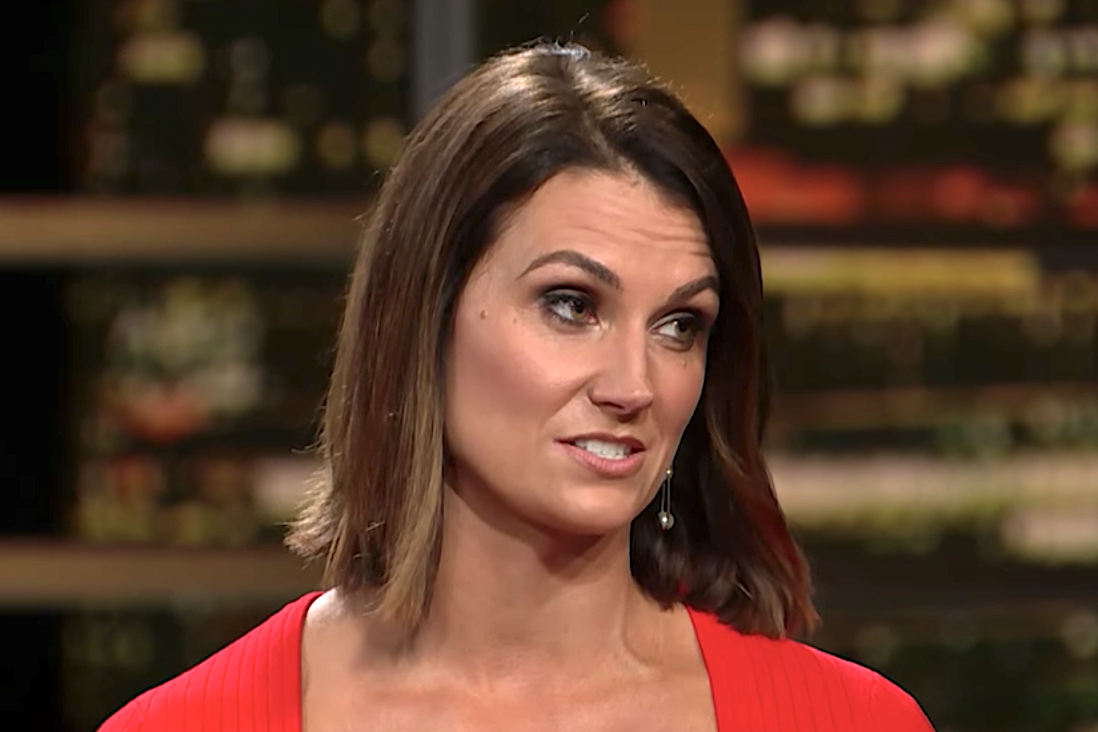
Krystal Ball: Biden Backs Bosses as Rail Strike Looms |
|
Krystal Ball breaks down the recommendation by Biden's special board to settle a dispute between railway workers and bosses that could lead to a strike.
This is a clear and concise analysis that needs to be viewed by everyone.
|
|
(Editor's Note: Rail unions continue to foment rolling strikes across the UK this past week. We in the U.S. may be able to learn a lot from their strategy of intermittent, rolling, and selective strikes.) |
|
Unions on Brink of ‘Synchronized’ Strikes, Says RMT’s Mick Lynch
Railway workers leader predicts ‘massive response’ to impact of rapidly rising inflation on wages
|
|
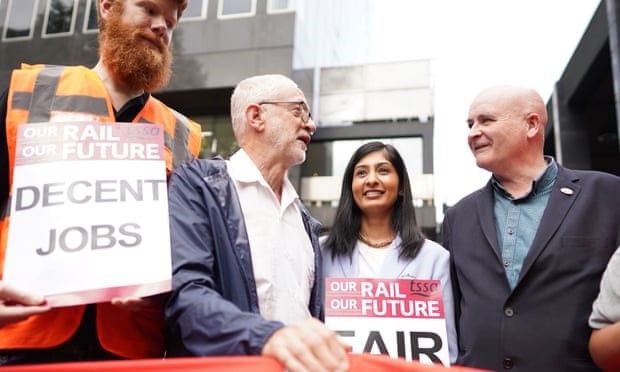
The leader of the RMT union, Mick Lynch, has suggested unions are on the brink of calling for “synchronised” strikes over widespread anger at how much soaring inflation is outpacing wages.
Speaking from a picket line in Euston as railway workers staged another strike in their dispute over pay and conditions, Lynch predicted “a massive response coming from working people”.
Asked by Sky News how close the UK was to a general strike, Lynch said: “Only the TUC can call a general strike.” The TUC’s general secretary, Frances O’Grady, was on the picket line behind the RMT boss as he spoke.
Lynch added: “There is a wave of reaction amongst working people to the way they’re being treated. People are getting poorer every day of the week. People can’t pay their bills. They’re getting treated despicably at the workplace. I think there will be generalised and synchronised action. It may not be in a traditional form.
“But we’ve seen the Post Office workers and BT [on strike] we’ve seen the bus workers in London out on strike tomorrow and over the weekend. I think there is a massive response coming from working people because they’re fed up with the way they’ve been treated.”
|
|
(Editor's Note: Ohio now joins other states in recent years that have seen their blocked crossing laws nixed by the State Supreme Court. The idea here is that the railroad is above the law, and can literally get away with murder.) |
|
Ohio Supreme Court Strikes Down Blocked-Crossing Law |
|
COLUMBUS, Ohio — The Ohio Supreme Court has struck down a state law prohibiting stopped trains from blocking railroad crossings, citing federal jurisdiction in regulation of railroads.
The Cincinnati Enquirer reports that in a ruling issued Wednesday, the opinion by Justice Sharon Kennedy acknowledged “the significant danger to the public” created when trains obstruct the passage of first responders, but Kennedy wrote, “the federal government alone has the power to address the threat to public safety caused by blocked crossings.”
The case involved the state citing CSX Transportation multiple times in 2018 for violating the blocked-crossing law, with the railroad saying crossings had to be blocked at times to service a Honda plant in Marysville, Ohio. And an Ohio legislator had proposed fines of up to $10,000 for blocked-crossing violations [see “Ohio blocked-crossing bill would levy fines …,” Trains News Wire, Nov. 1, 2021]; that bill is now moot.
A number of states and communities have enacted similar blocked-crossing laws, only to have them struck down because of federal jurisdiction. Prior examples include Oklahoma , Indiana, and Kansas
|
|
(Editor's Note: Unfortunately, there is quite a bit of derailment news this week.) |
|
BNSF Intermodal Train Derails in Texas |
|
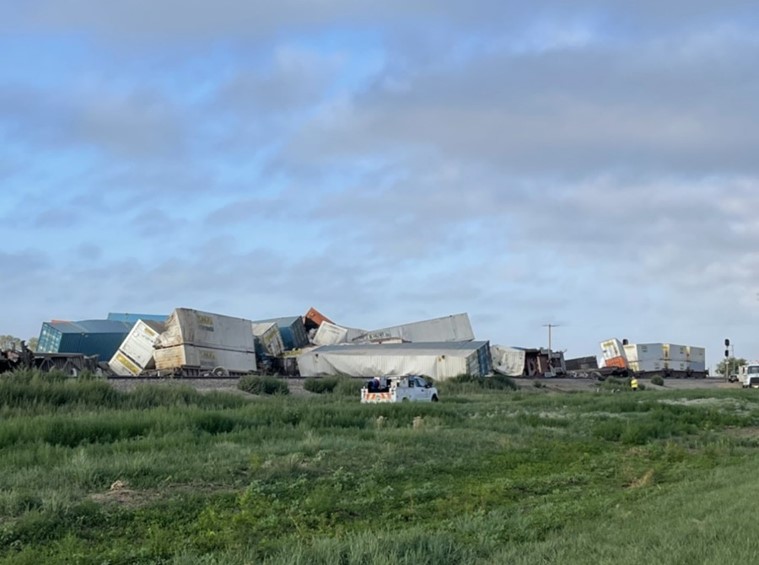
HEREFORD, Texas — Seventeen cars of a BNSF Railway intermodal train derailed early Wednesday morning on the railroad’s Southern Transcon near the town of Hereford, the Amarillo Globe-News reports.
The derailment occurred about 5 a.m. on the Hereford Subdivision, between the towns of Dawn and Hereford, about 45 miles southwest of Amarillo. No injuries were reported. The railroad told the newspaper the cause was under investigation.
BNSF said in a report to customers that it reopened one of the two main tracks at the accident scene at 5:15 p.m. Wednesday, with the second main reopened today (Thursday, Aug. 18) at 11 a.m. The accident comes two weeks after another intermodal derailment closed the Southern Transcon at East Galesburg, Ill.
|
|
|
|
|
|
|