Q2 2026 | The Conduit: Connected Solutions for a Better Built Environment | | Humidity in the Desert: Troubleshooting Clues | | |
Humidity complaints are among the most expensive HVAC callbacks because the root cause often isn't where technicians first look.
Equipment gets replaced. Sensors get changed. Yet the real issue may be pressure relationships, outside air, or a thermostat override.
Humidity is largely misunderstood in the Southwest. Aside from critical environments, most of the year, buildings in Arizona, New Mexico, and West Texas are focused on cooling and ventilation and can ignore humidity altogether.
It's not because we're humid.
Because we think we're not.
Our Albuquerque case study from the last two newsletters shows just how simple errors can cost extensive money or damage.
| |
INDOOR HUMIDITY LEVELS AND ASSOCIATIONS WITH REPORTED SYMPTOMS IN OFFICE BUILDINGS | Moderate indoor relative humidity (RH) levels (i.e., 40%-60%) may minimize transmission and viability of some viruses, maximize human immune function, and minimize health risks from mold, yet uncertainties exist about typical RH levels in offices ... | | | | Humidity Costs More Than Complaints | | |
When humidity is too high or too low, occupants often adjust thermostats to compensate or facilities teams spend all day answering comfort calls costing time and energy.
According to ASHRAE guidance, every 1°F thermostat adjustment can impact HVAC energy use by roughly 1-3%. For a typical commercial building, a 3°F comfort-driven change could add thousands of dollars per year in unnecessary energy costs.
Humidity control isn't just about comfort, it's about protecting budgets, building performance, and occupant satisfaction.
In addition to this, costs can show up in productivity, damage and more...
| | |
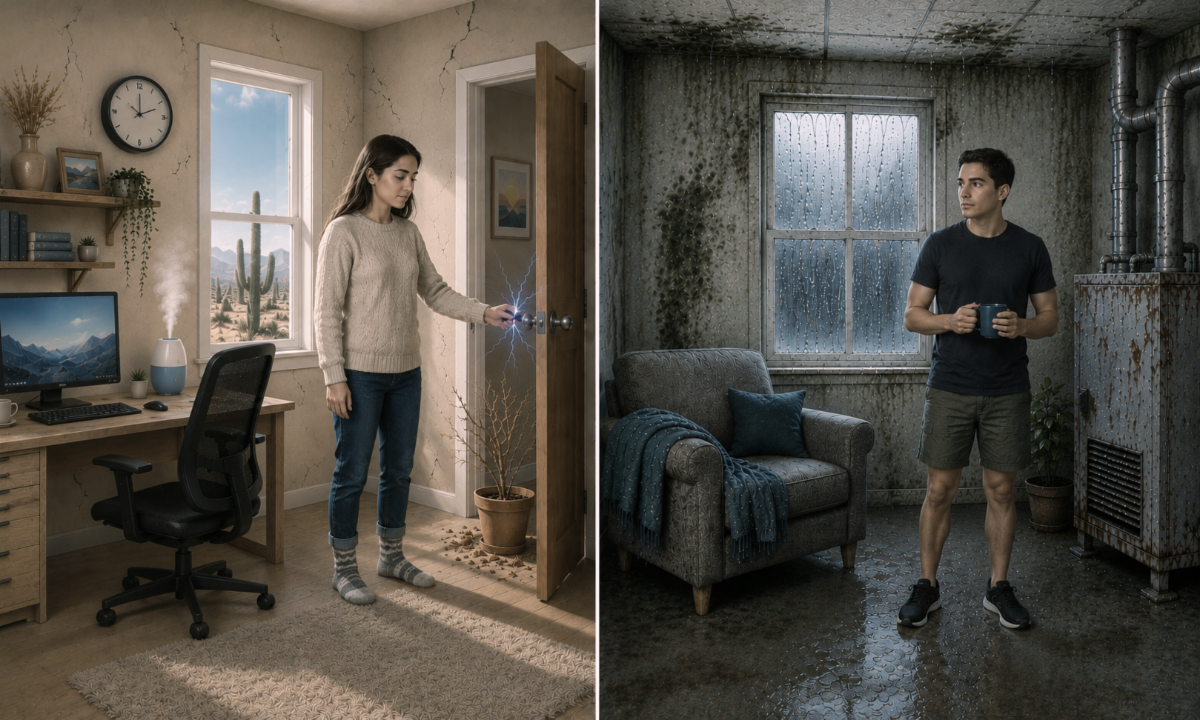
Not Enough Humidity
Static shocks
Dry eyes
Increased illness transmission
Cracked materials
Fatigue and discomfort
| | |
Too Much Humidity
Mold growth
Wet ceiling tiles
Rusted equipment
Condensation damage
Occupant complaints
| |
Get Ahead of the Problem
Lessons From the Field
Common Mistakes and Practical Solutions to Troubleshooting
| | |
|
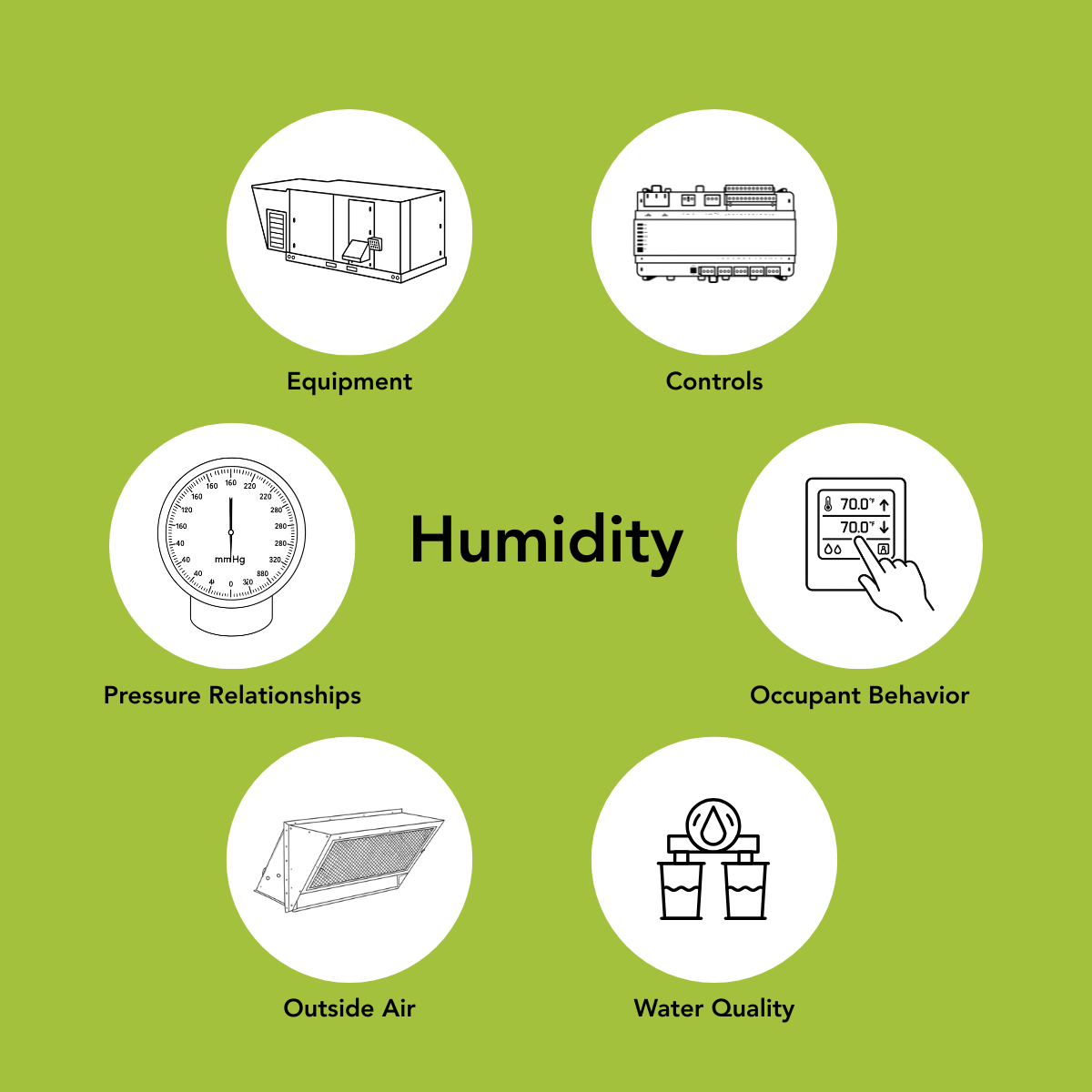
Humidity issues often involve equipment, controls, airflow, pressure relationships, outdoor air conditions, occupant behavior, and even water quality.
The best troubleshooting starts by understanding where humidity problems actually come from and how they can show up.
| | | Below are a few Examples | | | |
Thermostat War
Lowering a room temperature doesn't remove moisture. In fact, lowering setpoints can bring surfaces closer to the dew point and create unexpected condensation.
In healthcare spaces, labs, and other critical environments, a few degrees can mean the difference between a comfortable space and a moisture problem.
| |
- Space temperatures below design intent
- Occupant overrides
- Condensation on diffusers, windows, or walls
- "Crying" drywall
| |
- Find out the control authority during design process to ensure adjustments with the system and expectations.
- Limit temperature adjustment ranges
- Trend dew point alongside temperature
- Educate occupants on condensation risk
- Use humidity-based reset strategies
| | | | |
KEY TAKEAWAY
A colder thermostat does not remove moisture. It can move surfaces closer to dew point and create condensation problems.
| | | | |
The Missing Return
Air has to get back somehow.
One missing return grille can completely change how a room behaves. We've seen retrofit projects where supply air was added but return air was overlooked. The result wasn't comfort—it was pressure imbalances, trapped moisture, and condensation issues that looked like equipment failures.
| | |
🚪 Doors difficult to open or close
🌬️ Uneven temperatures between spaces
📈 Room pressure complaints
💧 Condensation with units operating normally
| | |
⚖️ Verify supply/return balance
🏢 Check room pressure relationships
📐 Review retrofit drawings for airflow paths
🔄 Confirm transfer air routes exist
| | | |
Water Quality is King
The humidifier is only as good as the water feeding it.
Steam, evaporative, atomizing, and adiabatic systems all have different water quality requirements. Scale buildup, mineral deposits, and untreated water can reduce capacity, increase maintenance costs, and shorten equipment life.
| |
- Scale accumulation
- Frequent maintenance calls
- Reduced humidification output / low humidity readings or alarms on controls system
- Water treatment issues
| | |
DON'T SKIMP ON WATER FILTRATION
Poor water quality can lead to scale buildup, inaccurate readings, and costly service calls in less than 6 months.
| | | | |
Monitoring the Wrong Controls Points
Monitoring, Trending & Alarming
Many humidity problems aren't caused by failed equipment. They're caused by missing visibility because the concept of humidity is challenging and people don't know what to look at, or look for, first. Let's make that full proof.
We've seen buildings trend only space humidity while ignoring the information needed to determine why humidity is changing.
Without the right points, troubleshooting becomes guessing.
| | |
➡️ Space humidity alarms with no obvious cause
➡️ Condensation that appears only during certain times of day
➡️ Occupant complaints during monsoon season
➡️ Humidifiers running continuously
➡️ Reheat operating excessively
➡️ Large humidity swings after occupancy changes
| |
TRENDING SPACE HUMIDITY ALONE | | THE MISSING INFORMATION... | | |
DEW POINT Trend humidity and dew point together
OUTDOOR CONDITIONS Trend outdoor conditions to compare to indoor conditions
BUILDING PRESSURE Review building pressure before replacing equipment
EQUIPMENT OPERATION Verify sensors annually
OCCUPANCY CHANGES Use analytics to identify patterns rather than chasing individual alarms
| | |
Want to know what points to trend and other controls tips for troubleshooting?
Keep scrolling to download our Guide!
| |
Before You Replace Anything, Ask:
☑ What changed?
☑ Is the dew point increasing?
☑ Has airflow changed?
☑ Has outside air changed?
☑ Is the sensor trustworthy?
Those five questions solve more humidity issues than replacing parts.
| | | | | Up next quarter: an AHU-centric series exploring the equipment, controls, and design decisions that keep airside systems performing at their best. | | Troubleshoot Like a Humidity Pro | | Nine Practical Tips for Installing Steam Humidifiers | Field-proven guidance for HVAC contractors and installers - pointers for successfully installing humidification systems | | Controls Humidity Troubleshooting Guide | A step-by-step field guide for identifying the real cause of humidity issues before replacing equipment. | | Varitec Solutions, a member of Daikin group | varitecsolutions.com | |  | | | | |