|
|
University of New Mexico
METALS
Superfund Center
Metal Exposure and Toxicity Assessment on Tribal Lands in the Southwest
|
|
|
Welcome to our July 2021 Newsletter! |
|
RESEARCH SPOTLIGHT
Mechanisms of Immune Dysregulation Produced by Uranium, Arsenic and Metal Mixtures
PIs: Scott Burchiel and Jim Liu
|
|
Research Objective:
To understand how uranium and arsenic exposure, alone or in combination, may lead to immune dysfunction through B- and T-cell toxicity, and interact with zinc finger proteins such as poly-ADP-ribose polymerase (PARP). Research highlights include:
|
|
|
|
After 45-day drinking water exposures in mice
lymphoid cells in the gut received high exposure leading to changes in cell subsets in the intraepithelial (IEL) and Lamina Propria (LP) compartments of the small intestine.
|
|
|
In addition, no effect on systemic immunity of Uranium Acetate (UA) was identified, nor were any interactions between UA and AsIII in biodistribution when given alone or in combination.
In vitro, UA had little effect on PARP activity in mouse thymus cells.
However, in immunoprecipitates from normal human neonatal epidermal keratinocytes, HEKn cells, UA was found to cause zinc release and impair PARP activity.
There may be important differences between the interactions of UA with PARP obtained from epithelial and lymphoid tissues.
Currently, this project is exploring the modulation of murine gut immunity by UA and AsIII - alone or in combination - and the role of the gut microbiome.
|
|
News and Highlights
UNM METALS Center Research Inform Policy Makers to Help Navajo Communities
On March 1st, 2021, the UNM METALS Center updated the Navajo Health, Education, and Human Services Committee (HEHSC) on research results and the support both MEATLS and the Navajo Birth Cohort Study provided during the COVID-19 pandemic. Daniel Tso, Councilman and Chairman of Navajo HEHSC noted the importance of UNM partnerships in the committee's efforts to inform policy makers to help Navajo Communities including responding, mitigating and recovering from the impacts of COVID-19.
NIH-EPA Environmental Health Disparities Research Webinar Series
On May 24th, 2021, METALS investigator, Dr. Esther Erdei, presented on "Adding Mental Health Outcomes and Socioeconomic Information to Exposure Assessment", as part of the fourth NIH-EPA Environmental Health Disparities Research Webinar Series. Read more about Dr. Erdei's work at: https://www.niehs.nih.gov/news/events/ehd/index.cfm
SRP Risk Communication Strategies to Reduce Exposures and Improve Health
Virtual Workshop
On June 21st, 2021, METALS Research Translation Core Lead, Dr. Melissa Gonzales presented a summary of METALS risk communications strageties, which underly the participatory research partnerships with our partner cummunities. Dr. Gonzales also particpated in a panel discussion on Engaging Communities to Strengthen Environmental Health. Read more information on the workshop at: https://tools.niehs.nih.gov/conference/srp2021/
June 28th, 2021
EPA-NIEHS webinar on Exposure Pathways & Environmental Health Disparities.
Presentation:
Investigating the Impact of Microbial Processes on Arsenic Stability in Sediments From Cheyenne River
Presenter: Lucia Rodriguez-Freire, Assistant Professor, New Jersey Institute of Technology
Panel Discussion:
Environmental Exposures and Health Disparities:
Lessons Learned from the Centers of Excellence on Environmental Health Disparities Research
Panelists Drs. Debra MacKenzie, and Joseph Hoover will discuss the UNM Center for Native American Environmental Health (EH) Equity
|
|
Trainee Core Highlights
25 trainees (17 graduate students and eight postdoctoral fellows) participated in the METALS Superfund Center during in 2020-2021.
11 trainees matriculate out of the SRP training core last year. Of these, four trainees successfully defended their Ph.D. dissertations this year, and three successfully defended their Master’s thesis
11 manuscripts were published in 2020-2021 by UNM METALS SRP Trainees. Two additional manuscritps have been accepted to date.
A list of publicaiton by METALS Center Trainees can be accessed at:
|
|
Recently Acepted Publication |
|
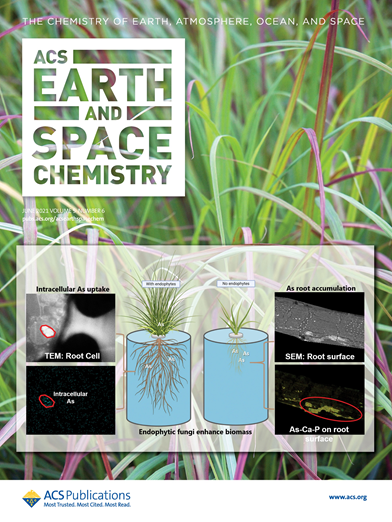
Arsenic Accumulation in Hydroponically Grown Schizachyrium scoparium (Little Bluestem) Amended with Root-Colonizing Endophytes.
Illustrations from this recently accepted publicaiton by METALS Trainees Dr. Cherie DeVore, Dr. Elian El Hayek and Taylor Busch are featured on the cover of an upcoming issue of ACS Earth and Space Chemistry.
DeVore, C.L., El Hayek, E., Busch, T., Long, B., Mann, M., Rudgers, J.A., Ali, A.S., Howard, T., Spilde, M.N., Brearley, A.J., Ducheneaux, C., and Cerrato, J.M. (2021). ACS Earth and Space Chemistry, https://pubs.acs.org/doi/10.1021/acsearthspacechem.0c00302
|
|
|
COMMUNITY ENGAGEMENT
Laguna Pueblo
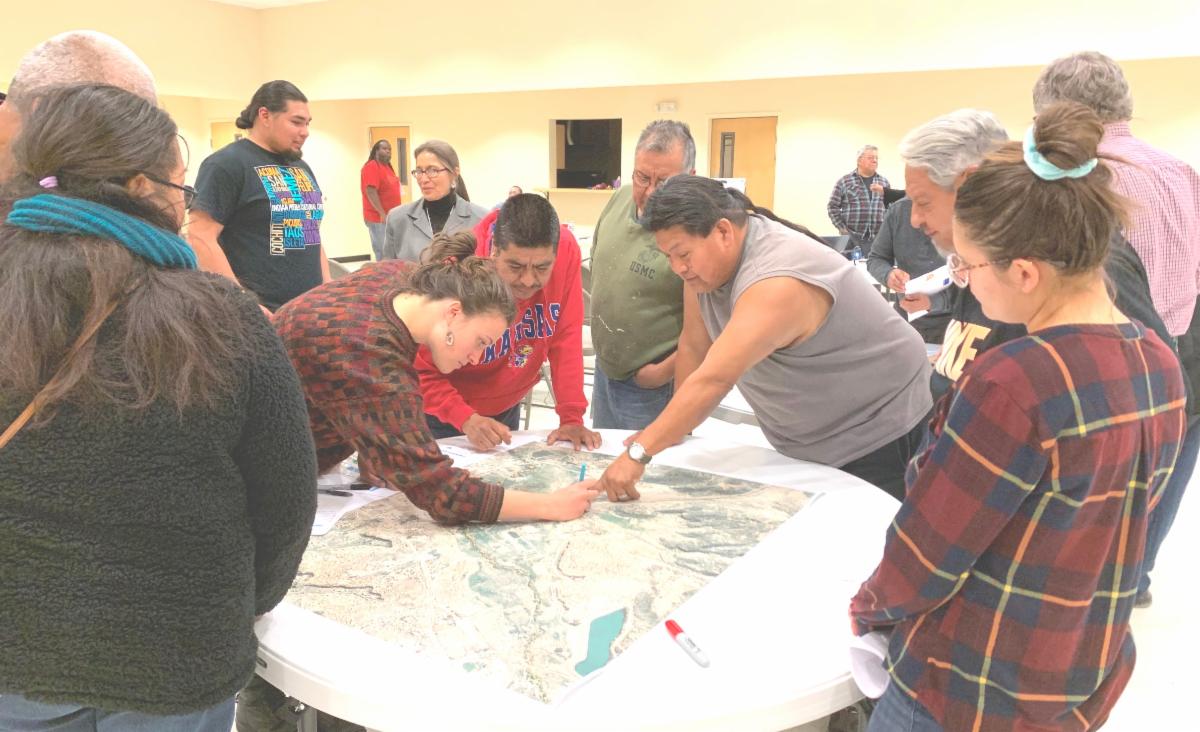
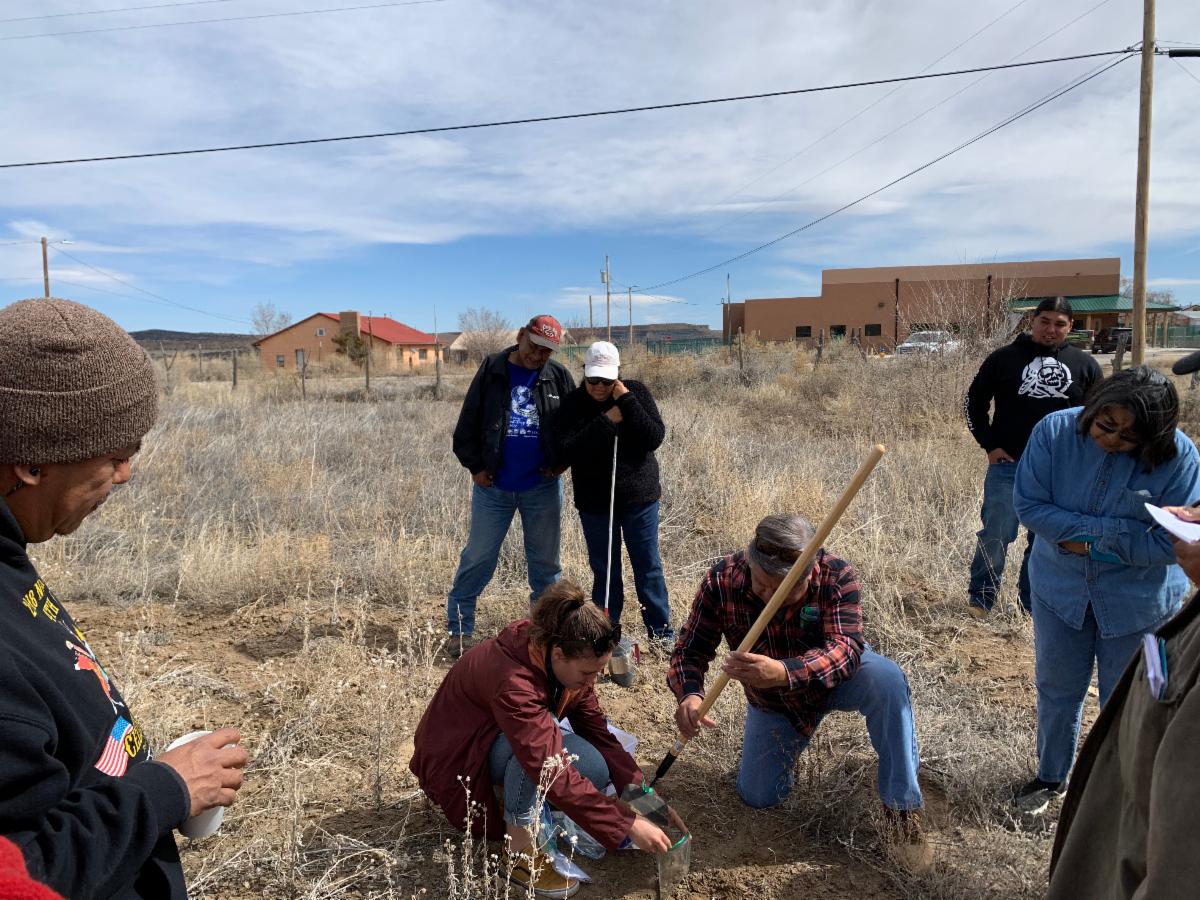
Pueblo of Laguna elected officials and staff of the Environmental and Natural Resources Department met by Zoom with METALS SRP scientists to review 2021 plans for continuing our ongoing and collaborative environmental and biomedical research focused on potential impacts of the abandoned Jackpile Uranium Mine. METALS Environmental Project 1 and CEC staffs will continue their semi-annual sampling of water in the Rio Paguate upstream, inside and downstream of the mine. EP2 is working with the CEC to operate PM (particulate matter) samplers and Krestel meteorological stations at four sites in the Pueblo to assess potential exposures to soil- and airborne metals mixtures. EP2 and CEC are also continuing a community-engaged soil and plant sampling project launched during the 2020 growing season, and expect to share analytical results for soils, roots, plants and produce with community members in May. CEC is teaming with staff of METALS Bioproject 1 to develop a community-led health studies planning process in collaboration with local community health specialists, providers and tribal stakeholders.
|
|
|
|
NIH/NIEHS P42 ES025589 (UNM METALS) This material was developed in part under cited research awards to the University of New Mexico. It has not been formally reviewed by the funding agencies. The views expressed are solely those of the speakers and do not necessarily reflect those of the agencies. The funders do not endorse any products or commercial services mentioned in this presentation. |
|
|
|
|
|
|
|