Having trouble viewing this email? click here to read online. | | |
Welcome to September.
Summer's holding on. Schools in. Working from the beach - still. Thinking about the first night when there will be a chill in the air.
We're remembering what Labor Day means, suggesting books and recipes and offering up yet another epistle filled with surprise. And one silly link!
Hope you enjoy. (Oh, and make sure to get your heating system cleaned before the chill sets in.) ;))
|
| Oh. Let's Remember It's Labor Day. | | |
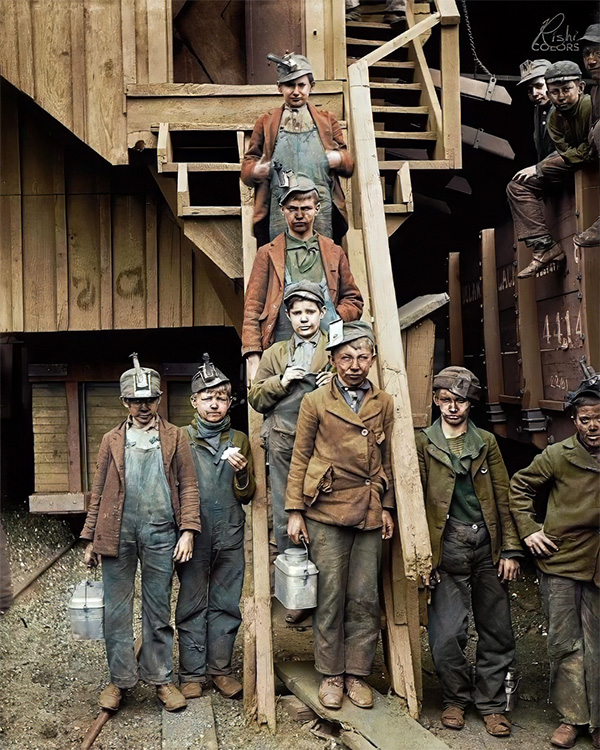
A group of breaker boys at the Woodward Coal Mines in Kingston, Pennsylvania, pose for a photograph taken in c. 1900.
A breaker boy was a coal-mining worker whose job was to separate impurities from coal by hand in a coal breaker.
Breaker boys were primarily children, and the practice of employing children for this job did not end until the early 1920s.
https://www.instagram.com/p/CmoOM7WgTCi/?igshid=NGJjMDIxMWI=
|
| |
Maya blue is a chemical curiosity: a hybrid organic-inorganic pigment that combines an unstable plant dye with a clay framework to produce a color more durable than either component alone.
The dye is indigo, derived in Mesoamerica from the leaves of Indigofera suffruticosa. The mineral is palygorskite, a fibrous magnesium-aluminium silicate with internal channels of molecular dimensions.
When the two are heated together (to roughly 100-150°C, well below any normal kiln temperature) the indigo molecules thread into the silicate channels and become essentially locked in place, protected from acid, alkali, biological attack and ordinary photodegradation. That resistance helps explain why the pigment survives on stucco that has been buried in tropical conditions for a thousand years.
Maya blue appears on architecture, ceramics, codices, and painted figurines from roughly the eighth century onwards through the entire Late Classic and Postclassic periods, and on into colonial-era church and convent murals in Yucatan.
The most spectacularly preserved instances are the murals at Bonampak (c. 790 CE), where a Maya blue background survived a thousand years in tropical conditions; the painted figurines from the island of Jaina; and ceramic vessels of the Late Classic period. The pigment is essentially the diagnostic colour of Maya art.
The most striking single use site is the Cenote of Chichen Itza, the limestone sinkhole that served as a sacrificial well for the Postclassic Maya.
Archeologists have suggested that human sacrificial victims were painted with the freshly prepared blue before being thrown into the well. The pigment is found in a thick layer at the bottom of the cenote, consistent with sustained ritual use over centuries.
The Maya recipe was effectively lost after the Spanish conquest. Modern attempts to reproduce the pigment have largely succeeded, and by the 2000s the chemistry was well understood. The colour, as a thing of nature, is essentially indestructible. More info here: https://storiedcolors.com
| | Better Budgets Beat The Blues | | |
Nothing worse than when you get a bill you didn’t expect.
That’s why Daniels suggests budgeting your fuel needs with an 11 or 12 month Daniels Budget Plan. It’s simple. We calculate your average fuel usage, multiple an expected average cost and divide by 11 or 12.
The result is an easy to plan – easy to digest – NO SURPRISE – monthly payment. And no “Oh I didn’t see that coming,” Blues!
Call us and set up your plan before the heating seasons starts.
| | Wait. Did You Call About Your Budget Yet? | | |
See all the reasons above why NO SURPRISE is better than anything!
Daniels Budget Plans are easy to set up – easy to plan for – and as easy as we can make them to afford. Call us and get your plan set up today!
| | |
In trolling the Internetweb to fill this epistle every month I stumble onto things that I think are funny and that you may enjoy.
Here’s one – and I want you to have fun with it.
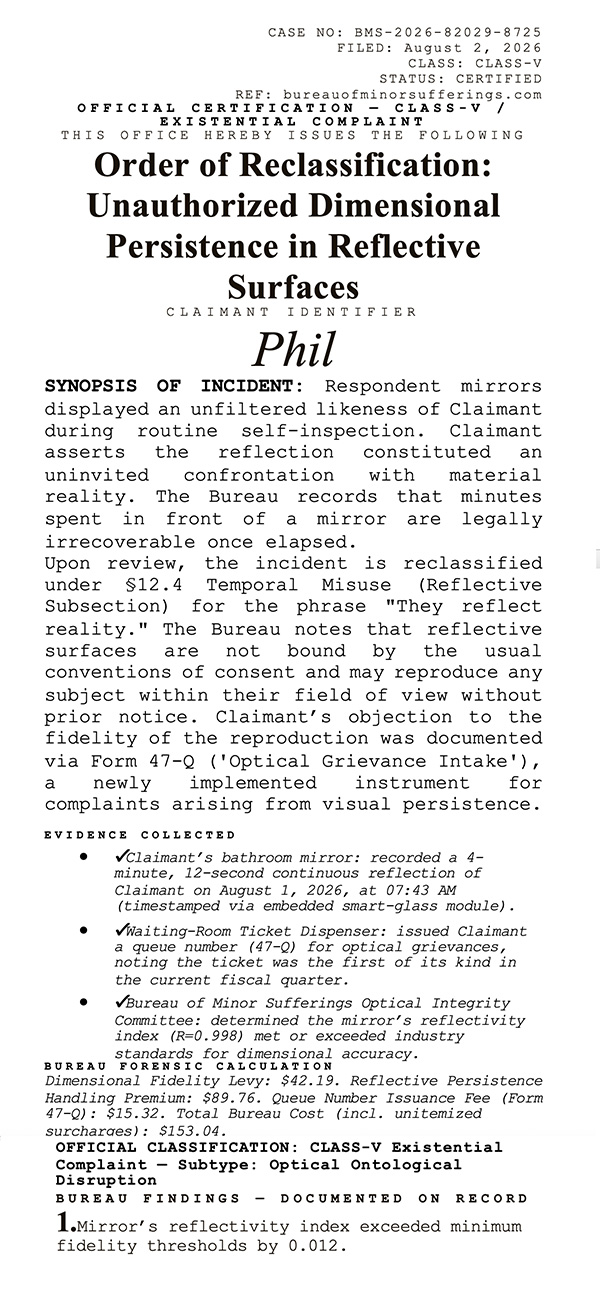
It’s this website: https://bureauofminorsufferings.com
You submit your grievance to the Bureau of Minor Sufferings. Mine was…Mirrors and their staggering clarity and consistent truth telling. (About which I am more than a bit annoyed). Once I posted, I got this from the Bureau:
| | |
Thought it was hilarious. My challenge to you fun-filled crazies is:
Submit your minor annoyance – and send us your report.
We’ll publish the best two or three.
| | |
Three Ways To Save. Save. Save.
Fuel Oil.
Propane.
Conversion.
| | |
Indeed. Six does follow five, naturally, but if not six than…what?
Tell us and perhaps you’ll be rewarded with a new Amazon gift card with our thanks. Last month 206 of you – the most ever to play – recognized JZ – (we knew it was easy, but THAT easy???)
Gail S, Lloyd O., Rich A., Joyce W and Keith H. recognized JZ.
Todd C and Cindy L and 77 of you identified actress Phoebe Cates.
So, the days of wicked easy quizzes is….over!
| | |
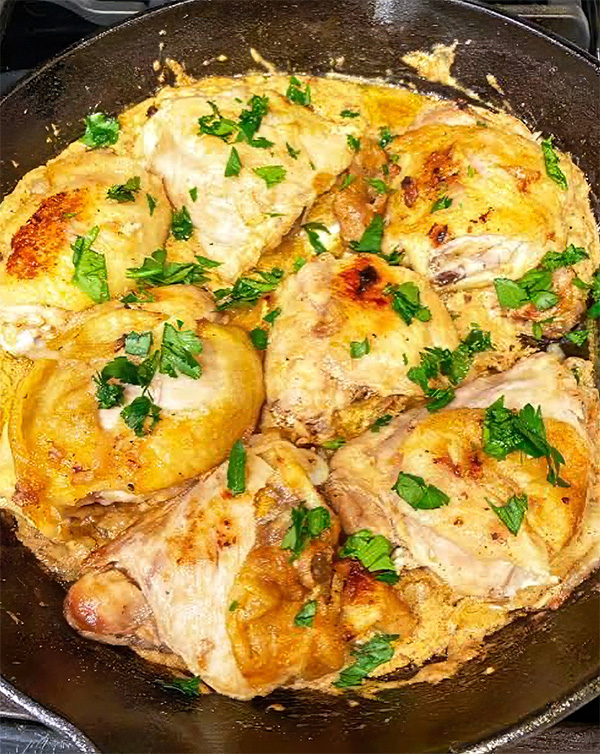
I made this.
It was delicious. Should have invited people over
| | |
The Contessa’s Chicken Thighs with Creamy Mustard Sauce
- 8 medium bone-in, skin-on chicken thighs (2¼ pounds)
- Kosher salt and freshly ground black pepper
- Good olive oil
- 2 cups halved and thinly sliced yellow onion (2 onions)
- 2 tablespoons dry white wine
- 8 ounces crème fraîche
- 1 tablespoon good Dijon mustard
- 1 teaspoon whole-grain mustard
- 1 tablespoon chopped fresh parsley
| | |
Place the chicken thighs on a cutting board, skin side up, and pat them dry with paper towels. Sprinkle the chicken with 1½ teaspoons salt and ¾ teaspoon pepper. Turn them over and sprinkle them with one more teaspoon of salt.
Heat 1 tablespoon olive oil in a large (11 to 12-inch) cast-iron skillet over medium heat. When the oil is hot, place the chicken in the pan in one layer, skin side down. Cook over medium heat for 15 minutes without moving, until the skin is golden brown. (If the skin gets too dark, turn the heat to medium low.)
Turn the chicken pieces with tongs, add the onions to the pan, including under the chicken, and cook over medium heat for 15 minutes, stirring the onions occasionally, until the thighs are cooked to 155 to 160 degrees and the onions are browned.
Transfer the chicken (not the onions) to a plate and allow to rest uncovered while you make the sauce. If the onions aren’t browned, cook them for another minute.
Add the wine, crème fraîche, Dijon mustard, whole-grain mustard, and 1 teaspoon salt to the skillet and stir over medium heat for one minute. Return the chicken, skin side up, and the juices to the skillet, sprinkle with parsley, and serve hot.
| | We’re in the 9th month of our 100th year celebration and our September winner is Phil C of Middletown. We thank him for being with us year in and year out – as we do each and everyone of you. | | |
During the Grapes of Wrath Days – and beyond – those who travelled the road by rail or shanks mare often found their way to food, a place to sleep or bathe or maybe friendship via a specific set of coded symbols that they came to understand.
Here are a few and a bit more info here: https://en.wikipedia.org/wiki/Hobo
| | |
How Come No One Does This Kind
Of Thing Anymore?
| | |
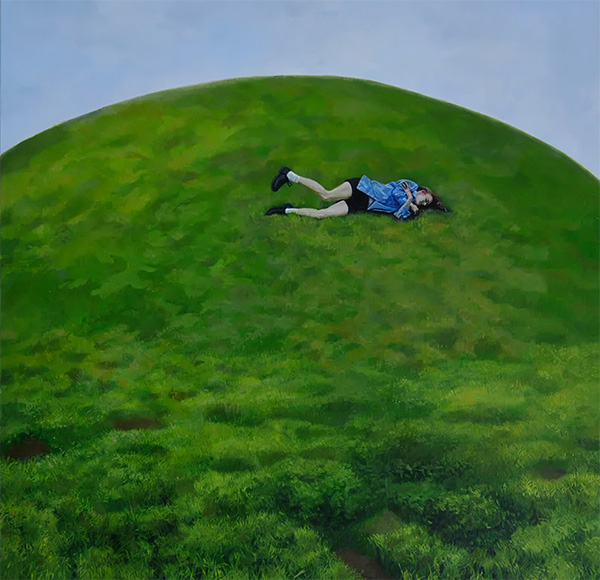
On May 19, 1914, G. Howell Parr of Baltimore lay down and rolled three continuous miles to win a bet of $1,000. Details, from the New York Times Archives:
Wagered $1,000 he could roll three miles.
Made the time limit June 1.
Started at 8 o’clock last night from the Elk Ridge Kennels.
Finished at 11:10 A M. at Charles Street and University Parkway.
Rolled fifteen hours and ten minutes, with intermissions for rest.
Covered approximately 15,840 feet, or about three miles.
Took about four feet to a roll.
Made about 3,960 rolls.
Won the $1,000. ($33,395 in today’s money)
Every time he rolled he won about 25 cents.
He wore football gear and turned with every fourth revolution into a pillowed chair positioned by his friends, where he’d rest for 30 seconds. At times the wife approached him solicitously and asked how he felt. He always looked up at her, and smiled and said: ‘Feel fine.'”
Indeed, he felt well enough afterward to go to the racetrack, “where several of his horses were on the day’s program.” When asked where he felt the strain of the rolling most, he said, ‘At my wrists; I put so much weight on them.'”
| | |
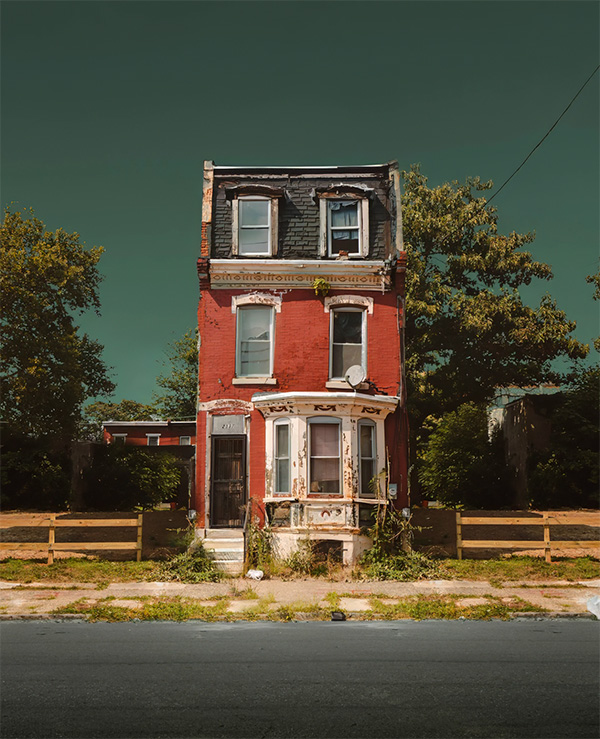
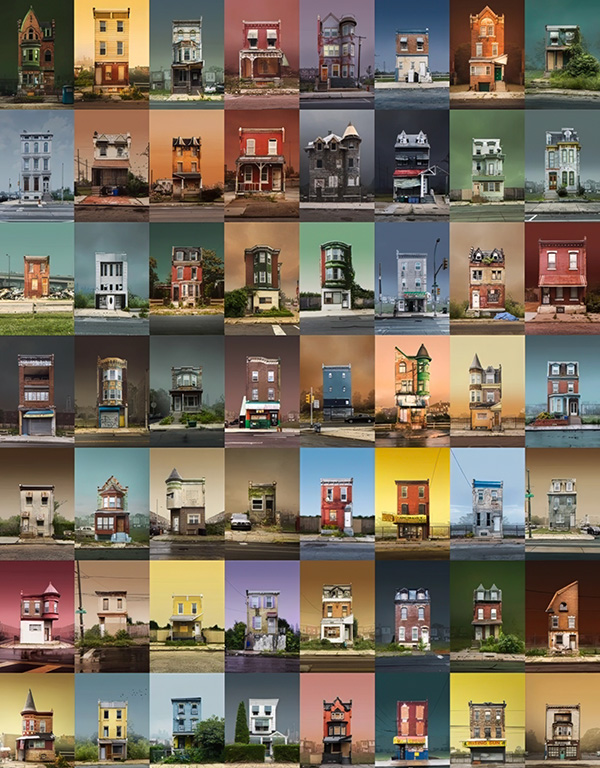
This is the project of architectural student Chris Hytha.
The project statement was such: The urban fabric of Philadelphia is defined by its row home typology. Two to three stories, 15-20 feet wide.
| | |
Within this consistent format, there is a remarkable amount of architectural variety that makes each home unique.
Many of these structures have been standing for over 100 years, and for some, that time has started to show. More beautiful images here: https://www.hythacg.zom/rowhomes
| | | | |
Jay Z.
Jaycee.
JZ.
Shawn Corey Carter!
I mean 500 of you knew who that guy was. It was…So. Freakin. Easy.
So, this month tell us who Quiz #2 is and you might win a nice gift card from our friends at R. Julia in Middletown and Madison!
Sink your teeth into this one and you might be our next winner!
| | |
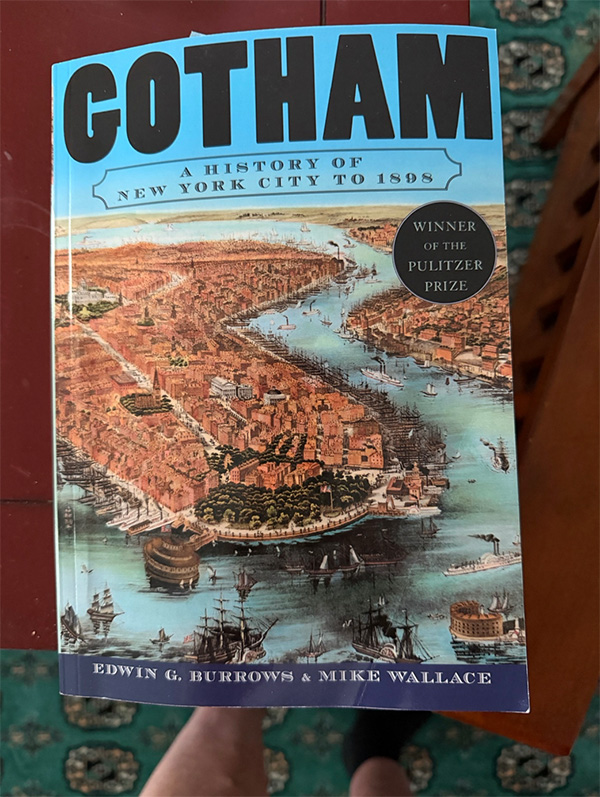
OK, so I realize that not everyone is a New York City booster. I am. Grew up down there. Love the city.
Recently I stumbled onto this definitive biography of the city. This is Gotham by Ed Burrows and Mike Wallace – the first of three volumes – first volume is 1,260 pages of tiny type (weighs about 12 pounds) and takes us from the Lanape Native Americans, through the Dutch to the end of the 19th century. And there is so much more to come, in case you fall in love with the story.
| | Back To School? Back To Work? | | Quick, Before It Closes... | | | |
|
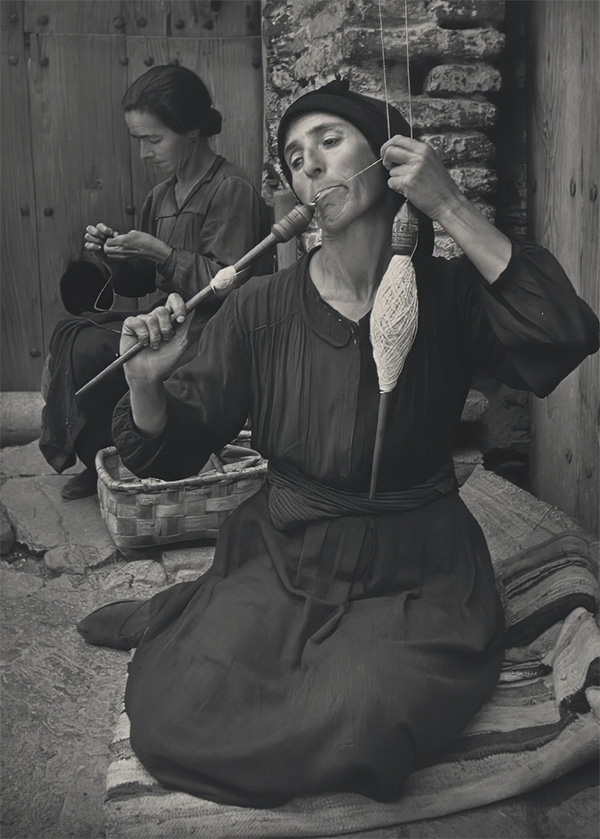
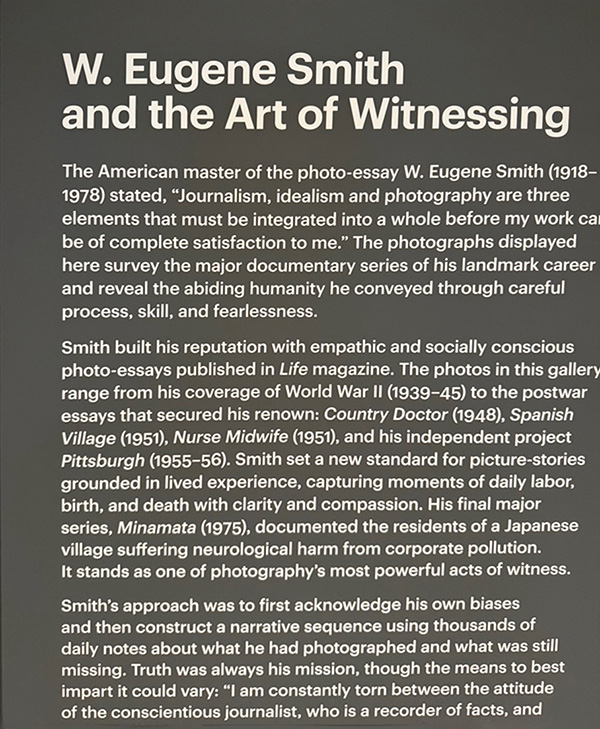
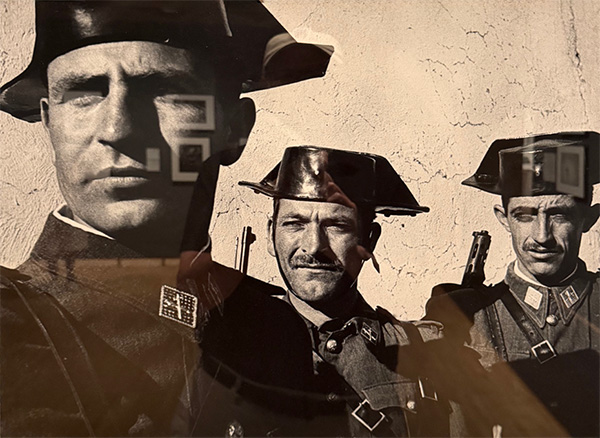
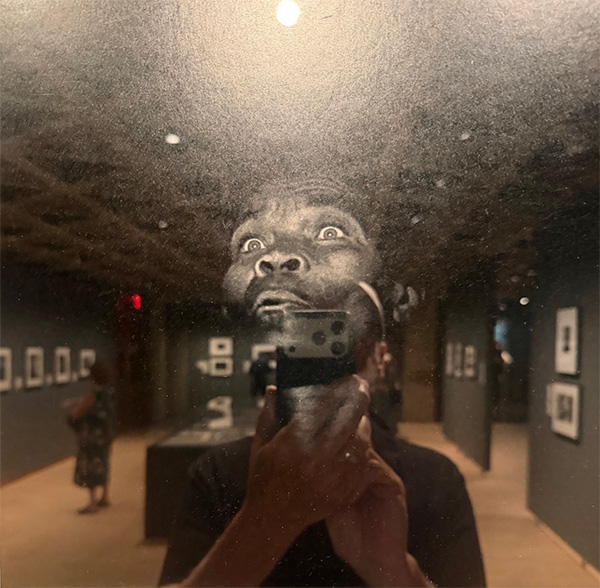
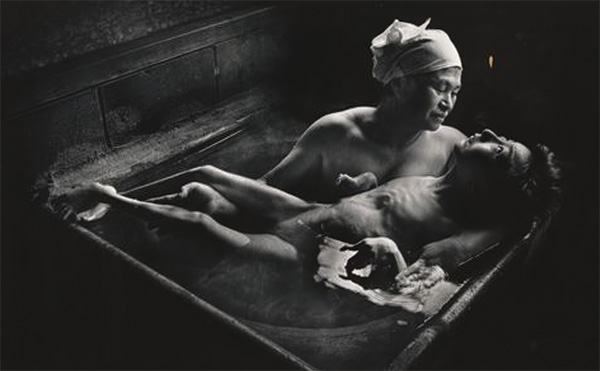
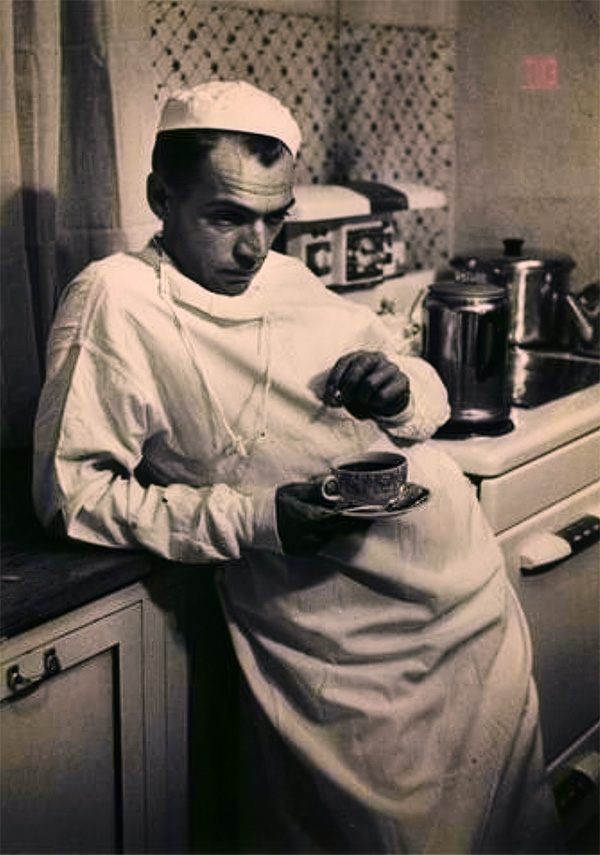
At Yale Art Museum in New Haven is a fabulous retrospective of the work of W. Eugene Smith, a prodigious Life Magazine photo-journalist.
It’s called “The Art of Witnessing.”
You will not be able to pull yourself away from some of the images, while becoming a life long admirer of his work.
Here’s the link to Yale – and it’s free! https://artgallery.yale.edu
| | Remembrances of Loves Lost | | |
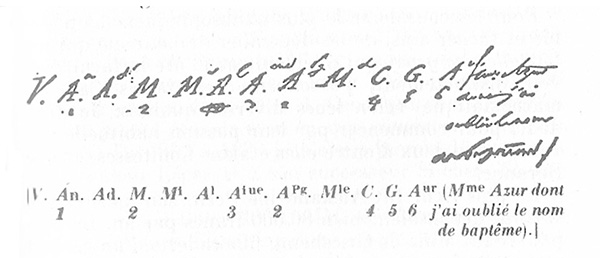
In September 1835, Marie-Henri Beyle, better known by his pen name Stendhal, a French writer, wrote on the shore of Lake Albano the initials of the women he had loved:
Virginie Kubly, Angela Pietragrua, Adèle Rebuffel, Mina de Griesheim, Mélanie Guilbert, Angelina Bereyter, Alexandrine Daru, Angela Pietragrua, Matilde Dembowski, Clémentine Curial, Giulia Rinieri, and Madame Azur-Alberthe de Rubempré. (Busy guy)
“I dreamed deeply of these names, and of the astonishing follies and stupidities they made me commit,” he wrote. “The habitual condition of my life is that of an unhappy lover.” Sound familiar?
(From his unfinished autobiography The Life of Henry Brulard, 1890.)
| | |
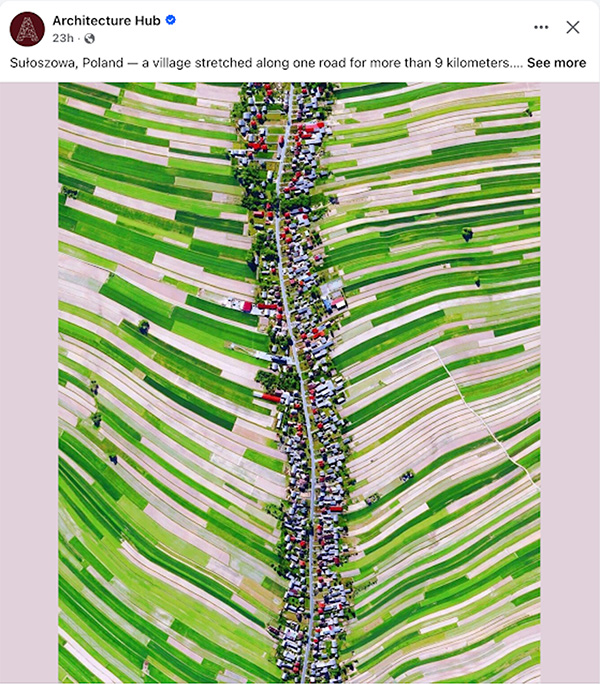
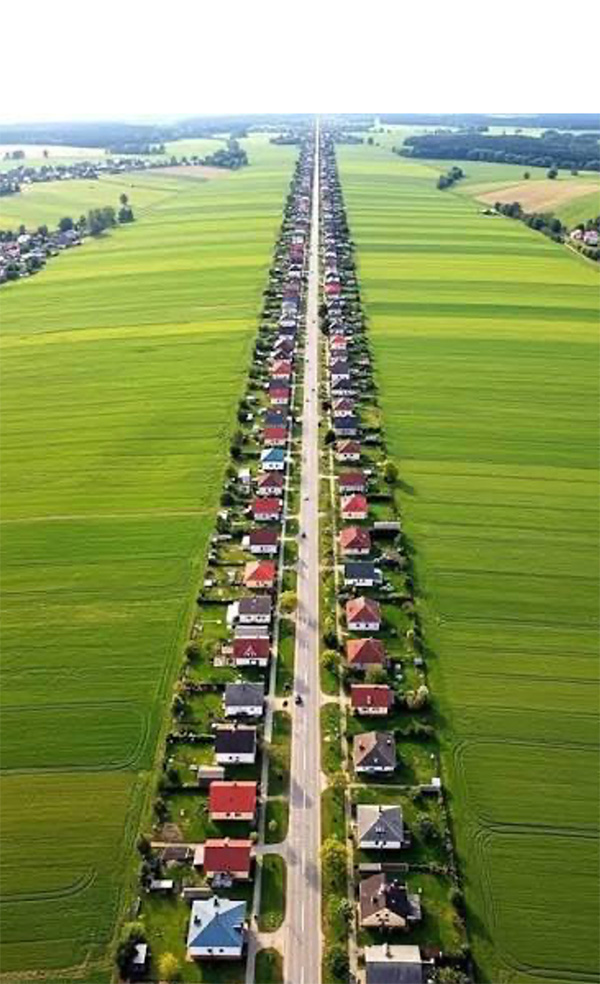
Sułoszowa is a unique village in southern Poland where roughly 6,000 residents all live on the exact same street.
Located roughly 29 kilometers (18 miles) northwest of Kraków, this remarkable linear settlement stretches unbroken for approximately 9 kilometers (5.5 miles).
It has earned a viral reputation online and the nickname "Little Tuscany.” People find different ways of living. Here’s more proof.
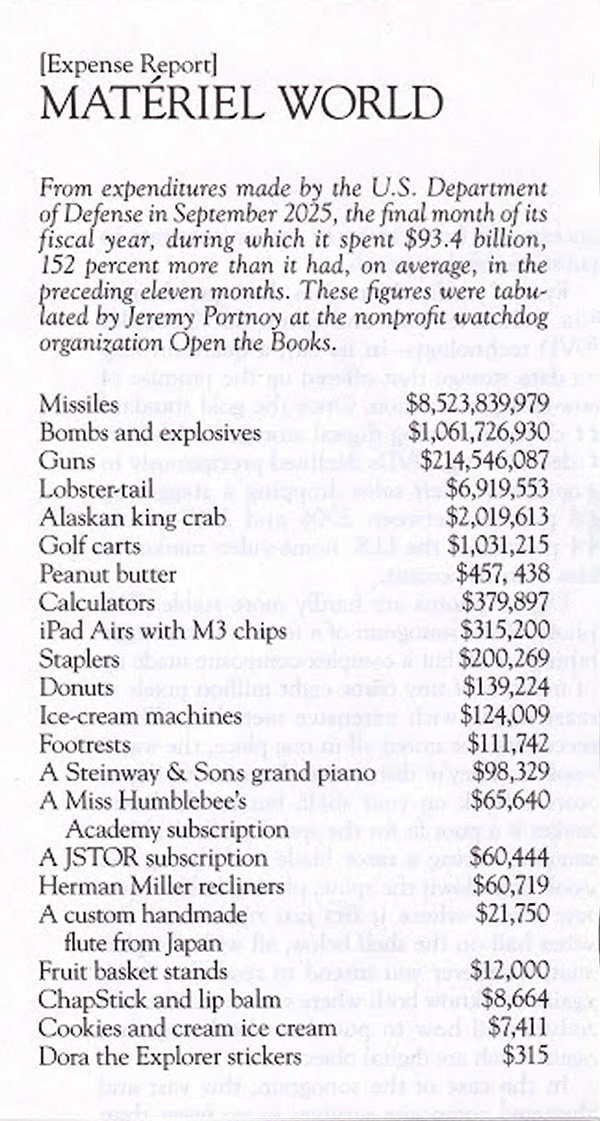
| | | From Harper’s Magazine, June 26 | | |
danielsenergy.com
Daniels Energy: CT License S1-385517 HOD#19 /
Daniels Propane. LLC: #846 CT License S1-302857
| | | | | |