Call Us: (703) 542-4000
 

Greetings!


Happy Fall! Football season is in full swing and Halloween will be here before we know it. I do enjoy the cooler weather. Speaking of fall, many of us are approaching the fall of our life. And one of the things that come with that is Social Security. There is a lot of talk about Social Security running out of money. What does that mean to you? The first article covers that question.


In the A/V section I talk with Mark Creasey who landed a job with a major defense prime. It's worth finding out how he did it. My Chalk Talk covers something we used to talk about a lot...AMT.


The second article covers a way you could save some money on your auto insurance, especially if you drive an old truck like me.


This edition wraps up with my Quick Comment about what happens to the taxes you pay on Social Security benefits. We then have a blog post that talks about ordering distributions from IRAs (also check it out for the historically significant airplane I used to fly). The last blog post talks about how you'll report the new tax deductions put in place by the OBBBA. You're going to need pretty good records to claim some of them.


Not sure what to make of the Packers so far. They're still my team and I'm still optimistic. Go Pack Go!


And one more thing...Go Air Force! Beat Navy!


Curtis L. Sheldon, CFP®, EA, AIF®
C.L. Sheldon & Company, LLC
(703) 542-4000 or (800) 928-1820
 

Featured Article

Should You Be Worried About Social Security?

It seems every couple of weeks or so, I see an article/post about Social Security running out of money. Should you be concerned about it? Maybe. Maybe not. So, let’s take a look. I’ll try to be objective, and I won’t get emotional about it.


How Social Security Really Works

A lot of people think that their Social Security taxes go into an account for their future retirement. That’s not the case and never has been. Social Security taxes, in general, are paid out as benefits as they come in. Said another way, current workers are paying for current retirees’ retirement. It has always been that way.


The first Social Security recipient, Ida May Fuller, received her first monthly check for $22.54 in January of 1940. She worked and paid into Social Security for a little under 3 years. She paid a total of $24.75 in Social Security taxes. She lived to 100 and received lifetime benefits of almost $23,000. Pretty good return on investment.


While baby boomers were working, Social Security brought in more money than it paid out, so the money flowed to the Social Security Trust Funds. Well, most those baby boomers aren’t working (I guess technically, I’m a baby boomer) and now Social Security is paying out more than it takes in. They’re drawing the shortage from the Trust Funds. Obviously, they can’t do that forever.


What Happens When the Social Security Trust Funds Run Out?

Under current projections, the Trust Funds will be exhausted in 2034. At that point collected Social Security taxes will only cover 81% of promised benefits. That is projected to be true until 2099 when Social Security taxes will cover 72% of promised benefits.


We’ve Been Here Before

As some of you may remember, Social Security was fixed in the 80’s (1983 to be exact). In 1982, the Social Security Trustees predicted that the Trust Funds would be exhausted in July of 1983. The Trust Funds got so low that at one point Social Security only had enough money to cover full benefits for about 2 more weeks.


Congress finally got off the dime and passed legislation to fix Social Security. It is worth noting that those changes are just fully going into effect now (Full Retirement Age (FRA) for those born in 1960 or later is 67…those born in 1960 are currently 65).


How Can Congress Fix Social Security Now?

There are a lot of ideas out there and here are a couple. These will fix Social Security until 2099. Also, keep in mind the longer Congress waits, the more draconian the changes will need to be.


  • Increase Social Security tax by 1%; Raise FRA to 68; Reduce COLA for top 70% of recipients
  • Increase Social Security tax by 1%; Change COLA to “Chained CPI”; Subject all wages to payroll taxes and potentially increase benefits


There are plenty of other ideas as well. The point being that there are solutions and they’re not horrible. Congress just needs to earn their paycheck and address the problem (instead of using Social Security to bludgeon the other party)


What Should You Do About Social Security Uncertainty?

If you are in your 50’s or older, I think your risk is relatively low. But you might want to see how your financial plan works out if Social Security is cut by 20%, just so you can sleep at night. If you’re younger than 50, I think you’re at greater risk of having a different Social Security benefit that current retirees receive. That seems like that is always the case. Many current Social Security recipients have a different Social Security than their parents had and their parents had a different Social Security than their grandparents had (like Ida May). So, if you’re younger than 50 you might want to plan on a later FRA and reduced benefits as you work through your plan.


One thing I probably wouldn’t do is claim early before the cuts occur (if they do). As you age would you rather receive 80% of a bigger number or a smaller number?


Bottom line: Keep your eye on it; plan for the worst; hope for the best; and take what you get. 

Recent Podcasts And Videos


Making it With a

Defense "Prime"

Executive Acronyms: AMT

Second Thoughts

The 100,000 Mile Rule: How to Save on Car Insurance Without Adding Risk

As financial professionals, one of our core responsibilities is helping clients make confident decisions about where and how to put their money to work. While most conversations focus on investments, retirement savings, or tax planning, everyday financial choices—such as car insurance—can also make a meaningful difference in your bottom line.


A common but often overlooked opportunity to save is evaluating whether you’re paying for more auto insurance coverage than you need. This is where the “100,000-mile rule” comes into play. While not perfect, it offers a practical framework for deciding when it may be time to reduce coverage and redirect those savings toward more important financial goals.


What the 100,000-Mile Rule Means

The idea behind the 100,000-mile rule is straightforward: once your vehicle surpasses that milestone, it may no longer make sense to carry both collision and comprehensive coverage. These parts of an auto policy cover repairs or replacement after an accident, theft, or damage, but they are limited by the car’s current market value. As vehicles age and accumulate mileage, their value declines steadily. At a certain point, the cost of insuring the car can outweigh what you could reasonably expect to receive in a claim. Reducing coverage at that stage can save hundreds of dollars each year without materially increasing your financial risk.


Why Insurance Companies Rarely Emphasize It

Insurance providers are quick to highlight why you should add coverage but far less likely to encourage you to drop it. That’s because premiums on older, high-mileage cars still generate revenue for them—even if the actual benefit to you has diminished. From your perspective, however, paying premiums for protection you can no longer realistically use is a drain on financial efficiency. Just as in investing, where minimizing unnecessary fees is critical, insurance decisions should focus on optimizing protection while avoiding waste.


Understanding the Financial Trade-Off

Imagine a car valued at $4,000. If you are paying $400 a year for collision and comprehensive coverage, the maximum payout you could receive is capped at the car’s value minus your deductible. If a major repair exceeds that amount, the insurer declares the car a total loss, leaving you with only a small settlement. Instead of continuing to pay for limited protection, those same dollars could be redirected into a high-yield savings account or certificate of deposit, gradually building what is essentially a “self-insurance fund” for accidents, deductibles, or even a future down payment.


Key Considerations Before Dropping Coverage

The 100,000-mile rule should be treated as a milestone, not a mandate. Several factors need to be weighed carefully. Lease agreements usually require full coverage until the lease ends, and loan contracts typically impose the same requirement until the balance is paid off. Market value is also crucial; resources such as Kelley Blue Book or Carfax can help estimate whether the car is still worth insuring beyond liability. Comparing expected repair costs with the car’s value offers further insight. If common repairs approach or exceed what the car is worth, coverage provides little benefit. Most importantly, your financial reserves matter. If you have sufficient savings to fund a replacement vehicle without disrupting long-term plans, reducing coverage may be wise. If not, keeping it a bit longer could provide peace of mind.


When the Rule Applies—and When It Doesn’t

This guideline is most relevant for modest sedans, compact cars, or older models worth only a few thousand dollars, where premiums can quickly exceed the likely benefit. It may not apply as quickly to luxury vehicles, trucks, or SUVs with strong resale demand, which can retain meaningful value past the 100,000-mile mark. And of course, it does not apply at all if you are bound by a lease or loan contract requiring full coverage.


The broader takeaway is that insurance coverage should be reassessed regularly, not just when your car crosses a mileage threshold.


An Annual Checkpoint

One simple test is to compare your deductible with the car’s market value. If your vehicle is worth only a few hundred dollars more than the deductible, you are effectively insuring very little. In that case, scaling back coverage often makes sense.


Making the Most of Savings

Once coverage is reduced, the savings can be put to better use. For many people, the best option is to build a replacement fund specifically earmarked for a future vehicle. Others may prefer to add to an emergency reserve, pay down high-interest debt, or invest for long-term goals such as retirement or education. Each choice ensures the money is working for you, rather than for the insurance company.


Avoiding the Extremes

It is important not to swing too far in either direction. Liability insurance should never be reduced below state minimum requirements, as it protects you from potentially devastating financial consequences in the event of a serious accident. At the same time, carrying full coverage long after your car has lost substantial value is rarely a sound financial decision. The right balance lies in using insurance for losses you cannot comfortably absorb, while recognizing when risks are manageable within your broader financial plan.


A Practical Perspective

Ultimately, the 100,000-mile rule is less about mileage and more about mindset. It is a reminder not to overpay for coverage that no longer serves you. When your car has high mileage and a lower value, it is worth asking whether collision and comprehensive coverage are still justified. Even modest premium savings can be redirected into strategies that move your financial plan forward—whether that means strengthening cash reserves, reducing debt, or building long-term investments.


As with any financial decision, the right answer depends on your personal goals, resources, and comfort with risk. If you are uncertain, a conversation with both your insurance provider and financial advisor can help ensure your coverage aligns with your overall financial strategy.


Copyright © 2025 FMeX. All rights reserved.

Distributed by Financial Media Exchange.


Get More Information

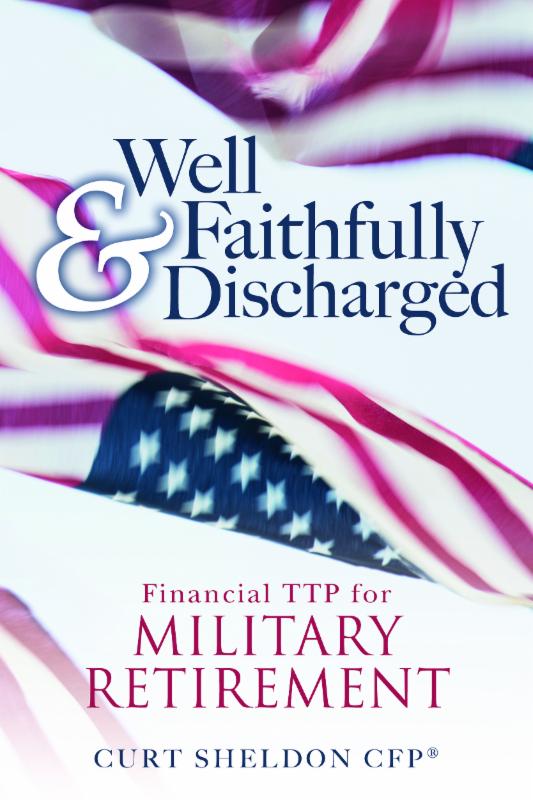
Like what you read here? My book includes even more information.


Outstanding read. Quick and to the point with just the right amount of detail on an incredibly comprehensive set of topics for the military retiree. Curt drops in familiar lingo and some humor that make this a must read for military and even civilian retirees. I'd highly recommend acquiring this book before you punch out of the service as it is an extremely useful planning tool.


Outstanding, comprehensive, well written and easy to understand! This book is a must read for all military personnel about to retire. Do not start your transition without reading and putting Curt Sheldon's financial tactics, training and procedures to work for you! I purchased many copies to hand out to my military colleagues about to retire.


Around the Horn


Here's one I didn't know...when you pay income taxes on your Social Security income the taxes don't go into the general fund. Instead, they are returned to the Social Security Administration to go towards future Social Security benefits.


I started out in the USAF as a Forward Air Controller (FAC) and I flew the mighty O-2A. We had a saying, First In; Last Out. It had to do with the fact that FACs arrived on target before the fighters and were there after the fighters left.


As you may be aware, the One Big Beautiful Bill Act (OBBBA...but I'll call it HR-1) added some new deductions. They are deductions from tip income, overtime, car loans and an enhanced deduction for seniors.


VIRGINIA OFFICE
1800 Diagonal Road, Suite 600
Alexandria, VA 22314
(703) 542-4000 or (800) 928-1820
TEXAS OFFICE
9901 I.H 10 West, Suite 800
San Antonio, TX 78230
(210) 960-0699 or (800) 928-1820
Please remember that past performance may not be indicative of future results. Different types of investments involve varying degrees of risk, and there can be no assurance that the future performance of any specific investment, investment strategy, or product (including the investments and/or investment strategies recommended or undertaken by C.L. Sheldon & Company, LLC ), or any non-investment related content, made reference to directly or indirectly in this newsletter will be profitable, equal any corresponding indicated historical performance level(s), be suitable for your portfolio or individual situation, or prove successful. Due to various factors, including changing market conditions and/or applicable laws, the content may no longer be reflective of current opinions or positions. Moreover, you should not assume that any discussion or information contained in this newsletter serves as the receipt of, or as a substitute for, personalized investment advice from C.L. Sheldon & Company, LLC . To the extent that a reader has any questions regarding the applicability of any specific issue discussed above to his/her individual situation, he/she is encouraged to consult with the professional advisor of his/her choosing. C.L. Sheldon & Company, LLC is neither a law firm nor a certified public accounting firm and no portion of the newsletter content should be construed as legal or accounting advice. A copy of the C.L. Sheldon & Company, LLC 's current written disclosure statement discussing our advisory services and fees is available for review upon request.