The STARR News: June 2023 |
|
Congratulations to the 2022 STARR
Lew Yagodnik Award Winner:
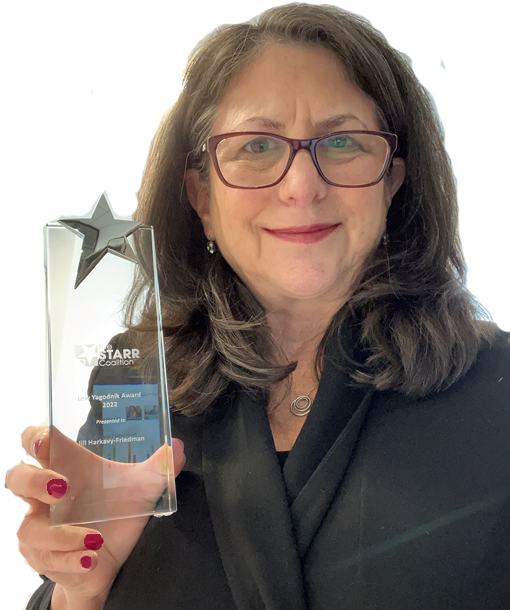
Dr. Jill Harkavy-Friedman
|
|
The ‘Lewie’ is the only STARR award given to an individual that has made a significant impact in support of new treatments for those living with mental health illnesses. Dr. Jill Harkavy-Friedman was selected as this year’s Lewie award winner in recognition of her active participation in STARR programs and her unwavering commitment to advocacy, suicide prevention, and those living with mental illnesses.
Not only is Dr. Jill on every single Advocacy Board call, she also is the first to volunteer her time for call to actions, podcasts, polls, or looking over resources for output. Dr. Jill was one of the STARR's featured podcast guests earlier this year where she provided some fantastic information on talking about suicide and helping spread awareness on suicide prevention, life after loss, and resources for individuals struggling with their mental health. She volunteered many hours of her time to help ensure this podcast was thoughtful and showed the need for further research on suicide prevention.
Dr. Jill always makes time to support and promote The STARR Coalition regardless of her busy schedule, especially with the launch of 988. She has been integral in answering questions regarding new legislation and helping Coalition members understand how they can help support 988 in their state. Dr. Jill's passion for mental health advocacy makes her a wonderful resource for the STARR community, while her incredible insight on innovative change opportunities within mental health research, and her never-ending willingness to help support everyone within the Coalition with her time, expertise, and ideas make her an obvious choice for this year's Lew Yagodnik Award.
Congratulations to Dr. Jill Harkavy-Friedman!
|
|
In 2010, the U.S. Senate declared June 27 to be National PTSD Awareness Day. However, in 2014, it designated the whole month of June to be observed as National PTSD Awareness Month. This was a welcome move by many PTSD organizations and support groups as many felt that more awareness campaigns needed to be held for people to seek help when it came to PTSD.
The U.S. Department of Veterans Affairs, one of the most active forerunners in the fight against PTSD, has great resources for PTSD Awareness Month, and has released a special June calendar with activities including raising awareness on social media through sharing PTSD helplines, articles, subscribing to YouTube channels, finding local PTSD therapists. Many of the resources are appropriate for research volunteers, so check them out for possible distribution at your site.
Whether you are involved in a PTSD trial or not, it is never a bad idea to review the STARR's Trauma-Informed Care module. This month, be sure to support PTSD Awareness! ❤
|
|
Importance of Clinical Research for PTSD:
Working with Trauma Survivors from a Clinical Rater Point of View
By Sara Swanson, MS, Clinical Rater at Segal Trials
Having the ability to provide an alternative care option through clinical trials for individuals who have experienced past trauma has been very rewarding, due, in part, to the shortage of FDA-approved medications for the treatment of PTSD as compared to the availability of medications for other conditions. It can be much more difficult for an individual living with PTSD to find an effective treatment for managing symptoms of PTSD and many individuals self-medicate to alleviate their symptoms. It is vital to effectively and compassionately communicate the importance of clinical trials for PTSD, beyond showing volunteers your appreciation for their time spent completing study procedures.
Although it can be difficult for patients who live with PTSD to discuss their past trauma(s) while participating in a clinical trial, providing trauma-informed care can help the patient feel safe, heard, and empowered throughout their experience. Understanding the five principles of trauma-informed care (safety, trust, choice, collaboration, and empowerment) has allowed me to make lasting connections with survivors of trauma and ensure positive patient engagement. Learning and recognizing the magnitude of the impact of symptoms of PTSD on day-to-day living allows for more collaborative, empathetic interactions between patients and site staff, promoting a healthy, patient-centered approach to PTSD clinical research.
|
|
Throughout June, Pride Month commemorates the Stonewall riots in Manhattan in 1969 and rallies support for the LGBTQ community. Communities across the country hold parades, workshops, celebrations, and marches for LGBTQ civil rights and awareness.
The month is a time for breaking the stigma around LGBTQ people and remembering those who paved the way for the LGBTQ community and who continue to do so.
|
|
This month's STARR Podcast Spotlights
Molly Little
Community Outreach Director,
Neuro-Behavioral Clinical Research
In this episode, in honor of Pride Month, Mallory chats with Molly Little, who is the Community Outreach Director at Neuro-Behavioral Clinical Research (NBCR).
Molly brings her experience as a member of the LGBTQ community and talks candidly about the her experience in the clinical research industry, as well as the challenges, barriers, and resources for LGBTQ individuals and their caregivers.
Meet Molly on this month's featured podcast HERE.
For this and all of the STARR Podcasts, you can find the STARR Podcast archive HERE.
|
|
Trauma: A Universal Language
Excerpt from the Trauma Super Conference (held Feb 2023)
It is important to provide a common language for talking about trauma so that people understand what trauma is, how people respond because of trauma, providing a trauma-informed environment, and a path to healing.
Seeing behavior through a trauma-informed lens helps people get rid of some of their shame and their guilt because they understand why they are behaving a certain way or why they're always repeating the same mistakes or why they are always in relationship that are not okay for them. They say, there's something wrong with me. If they understand that underneath that, there's certainly a trauma and that the trauma produced these behaviors or the harmful loop they keep getting in. And that's really important and that's really part of the healing.
The element of compassion is key to healing. The importance of talking about trauma to be able to heal, so the first step is understanding -- becoming conscious of our patterns -- and having a common language to be able to talk about it.
When people say, I'm bipolar, or I'm depressed, I say, okay, let's put that aside and let's talk about you and talk about what happened to you and, and see what's in your body and see how you react, how your body reacts. Because that's the path we need to take, coming from the body to the mind.
Bipolar, or depressed or aggressive behaviors or whatever harmful loop -- these are some labels, some diagnosis you've been assigned. But let's see about YOU. Bring it back to the human, to the individual, to the understanding that these are the consequence of trauma. These are trauma symptoms, these are trauma responses. And bringing about that understanding so that we can have the compassion.
Whatever the trauma, if there is no connection - no compassionate person or even a dog or cat to help cope with the trauma, if persists. That definition of trauma as disconnection is really helpful. And that the way of healing is through connection.
The first instinct you will have will have is to go to another person and share that story with a compassionate person, someone who can really listen to you and listen to what happened. And so this connection, if there is connection, the trauma will not become a psychological trauma. It'll just be an event, a traumatic event, but not a trauma. And so connection is so, so important when we're begin, we're trying to begin to understand trauma.
Except from “Trauma: a universal language” with Florence Bernard, a psychotherapist and host of the Trauma, Attachment and Resilience Summit, talks about why it's so important to have conversations about trauma. Interview by Jaia Bristow.
|
|
Dr. Adam Smith, Amada Napoleon and Lizette Pimental from Richmond Behavioral Associates (An Evolution Research Group Portfolio Company) participated in the Nami (National Alliance for the Mentally Ill) metro walk at South Street Seaport in NYC this month. NAMI metro provides support services to families impacted by mental illness in NYC. Dr. Smith is the Site Director at RBA and also serves on the Board of Directors for the NAMI Staten Island chapter. What a wonderful way to contribute to Mental Health Awareness!
|
|
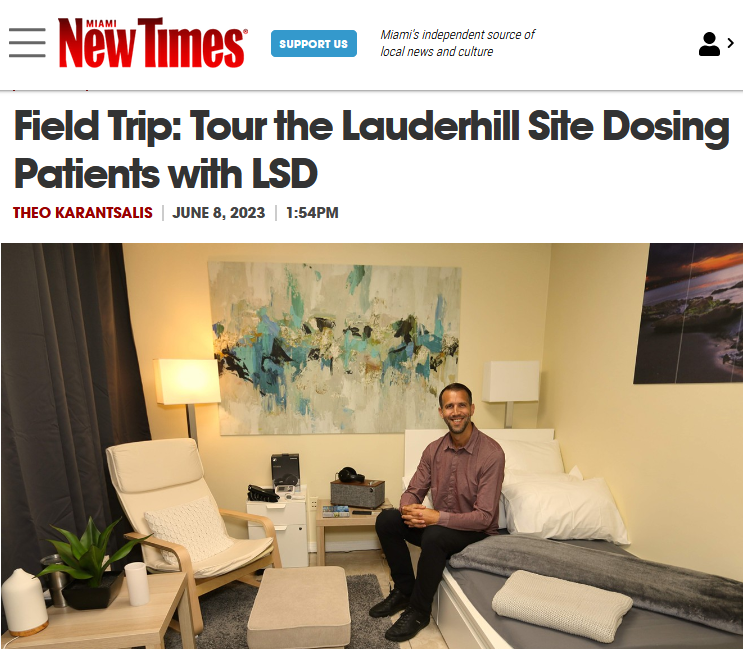
Segal Trials' Center for Psychedelic & Cannabis Research office was featured in the Miami New Times after inviting the newspaper to tour the facility, which includes the cozy trip room, complete with a stereo, headphones, a futon, and lots of pillows. The New Times covered the MindMed study for the article, a Phase II study with LSD for anxiety, and interviewed Dr. Scott Fisher, the lead facilitator and trainer at Segal's Lauderhill site.
|
|
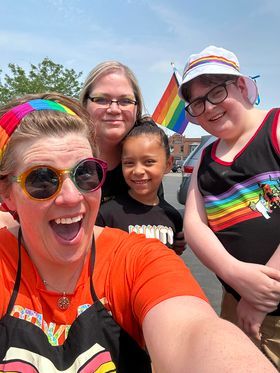
Neuro-Behavioral Clinical Research and the Ohio Center for Hope sponsored a cookout during Stark County Ohio's Pride Festival! The NB-CR team had a great time celebrating the diverse communities that make clinical research possible while advocating for mental health awareness within the LGBTQIA+ community.
What a great way to bring the community together and show some love!
|
|
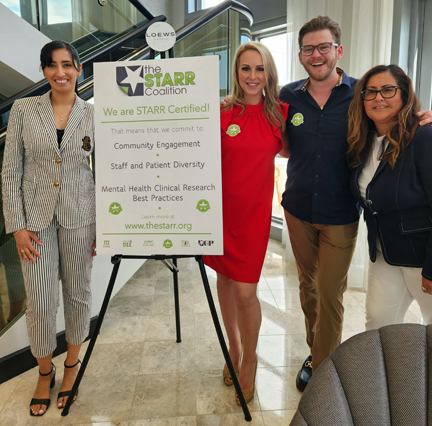
The STARR team met with the Pillar Clinical Research team in Miami at ASCP 2023! From left to right, that's Curtis Ponton, Chief Science Officer, Ted Alford, Vice President of Community Outreach, Carol Witham, CEO, Nichole Gutierrez, COO, Adrienne Catalina, Vice President of Clinical Affairs, and Kim Myers, Director of Corporate Development. If you look closely, you'll see that Kim's tiny intern, Betty White, joined the crew in Miami!
|
|
We also caught up with the phenomenal team from CenExel at ASCP! Pictured here is Sarah Kazmi, MD, VP and General Manager at CenExel-RCA, Lauren White, Director Of Business Development at CenExel-ACMR, Zach Mitchell, Executive Director, Project Management at CenExel-iResearch ATL, and Cecilia Mendez, Business Development Specialist and Clinical Rater at CenExel-RCA.
|
|
Inhale, Exhale, Remember: Uncovering the Breath-Memory Connection -- Intricate links between breathing and memory recall have been unraveled by recent scientific research, painting a more complex picture of our cognitive processes. Studies reveal that the rhythm of our breathing can influence neural activity, impacting cognitive functions such as emotional processing and memory recall. The most compelling evidence highlights that inhalation, particularly through the nose, can improve memory function. As this field of study emerges, these insights could lead to novel therapeutic approaches for cognitive decline and memory-related conditions.
Iron Deficiency’s Unseen Impact on Mental Health -- Recent research emphasizes the role of iron in maintaining mental health. Researchers suggest iron deficiency could exacerbate mental health conditions such as depression and anxiety. Ferritin tests, assessing the body’s iron storage, are recommended for individuals with mental health conditions, providing more accurate insight than standard iron or hemoglobin tests.
Supplementation of iron has shown improvements in mood and fatigue, even in those without full-blown iron-deficiency anemia, suggesting its potential as part of an integrated mental health treatment plan.
Vitamin D’s Crucial Role in Dopamine Function and Schizophrenia -- Neuroscientists at The University of Queensland discovered how vitamin D deficiency impacts the development of neurons, contributing to disorders such as schizophrenia. Researchers were able to observe that a lack of vitamin D not only changes neuron growth but also affects the brain’s dopamine release mechanism. They found dopamine release was enhanced in cells grown in the presence of vitamin D, compared to a control. This study underscores the importance of vitamin D in the structural differentiation of dopaminergic neurons and suggests that maternal vitamin D deficiency might alter how early dopaminergic circuits form.
Post-traumatic stress affects more than one in ten cardiac device patients -- Researchers at the University of South Australia find that the rates of mood disorders in people with an ICD are much higher than in the general population, suggesting that psychological assessment and therapy should be integrated into the routine care of these patients. Note from the editor: is this a potential new population for PTSD studies?
Avatar therapy-linked emotions identified in treatment-resistant schizophrenia -- The predominant emotions expressed by patients with treatment-resistant schizophrenia undergoing virtual reality-based Avatar therapy (AT) are mostly neutral, joy, and anger emotions, according to a study published BMC Psychiatry. What is interesting here is that the Centre de recherche de l'Institut Universitaire en Santé Mentale de Montréal is researching the potential benefits of using VR avatar therapy with individuals living with schizophrenia.
From promise to practice: A dose of reality for psychedelic therapies -- While the potential benefits of psychedelics is clear, one notable challenge is the difficulty of conducting unbiased double-blind studies, as the distinct psychoactive effects make it obvious to both participant and researcher who has received the treatment or placebo. Additionally, the question of accessibility in the public health system arises, given that each psychedelic experience can last eight hours and usually involves two trained therapists. "A potential solution," explains Luís Madeira, President-elect of the Portuguese Society of Psychiatry and Mental Health, and Counselor of the National Council of Ethics for the Life Sciences, "might be group therapy, allowing therapists to treat multiple patients simultaneously, thereby reducing costs and making the treatment more feasible within public health systems."
Early Bipolar Diagnosis Linked to Lower Suicide Rates in Boys -- Researchers identified that fewer teenage boys commit suicide in regions of Sweden where bipolar diagnoses are more common. This discovery highlights the potential of more proactive care in reducing suicides. The study found that suicide rates among boys were nearly 5% lower in regions with the highest bipolar diagnoses compared to those with the fewest. This suggests that suicide rates could be reduced through improved bipolar disorder diagnosis and treatment.
Pivotal Protein in Female PTSD Identified -- Researchers discovered an exciting new role for a widely known protein, ubiquitin, particularly in its K-63 form. They found K-63 ubiquitin selectively influences fear memory formation in female brains, potentially contributing to post-traumatic stress disorder (PTSD). This discovery sheds light on why women are more likely to suffer from PTSD and paves the way for developing female-specific therapeutic treatments.
CVS’ clinical trials departure highlights challenges, opportunities for retail clinical trials -- Retailers like CVS touted their ability to provide easier access and greater diversity for clinical studies, but found clinical research a challenging space due to the competitive nature of the clinical trial marketplace, the requirements for appropriately trained clinical trial staff, coordination with providers, sponsors, CROs, and others, and other operational and regulatory complexities related to coordinating these trials.
In recognition of Juneteenth, the NIH Eight Changes for Racial Equity (8CRE) and the National Institute of Mental Health (NIMH) co-hosted a webinar on Mental Health Equity. NIMH Director Joshua A. Gordon, M.D., Ph.D., and NIMH Clinical Psychologist Krystal M. Lewis, Ph.D., discussed inequities in risk and care for mental illnesses and the impact and intersection of trauma and racism. They also discussed how to identify and address mental health concerns for yourself or a loved one. Check out the recording here.
|
|
Boehringer Ingelheim team volunteers at Pegasus Therapeutic Riding For the third year in a row, employees from Boehringer's Connecticut site took a day to lend a hand at Pegasus Therapeutic Riding. The volunteers helped the riding center refresh their beautiful farm so that there's more paddocks for the horses and a new path for children to use for sensory trail riding. The volunteer day was centered on lending a hand to a community partner and helping those who come to the farm for equine therapy. This speaks to Boehringer's Culture of Caring -- a corporate-wide program for volunteering and serving the community.
|
|
Team Alkermes was out in force at Boston's Pride for the People Parade! Alkermes is proud to help educate and advocate against the presence and impacts of oppression that cause harm to LGBTQ individuals and celebrate and honor the rich, diverse, creative, and fabulous culture of LGBTQ+ communities!
Rock on, Alkermes!
|
|
DBSA is hosting the 2023 Gerald L. Klerman Awards Reception at 6pm on June 24, 2023, in Chicago. Presented each year, this award recognizes researchers whose work advances knowledge of the causes, diagnosis, and treatment of depression and bipolar disorder. For more information and to RSVP, click here.
Rural Minds: Mental Health Benefits of Sleep, Nutrition, Exercise and Mindfulness is a free webinar to be held June 21st at 7pm ET. In keeping with their mission to serve as the informed voice for mental health in rural America, Rural Minds and the National Grange are pleased to celebrate the longest day of sunlight with the latest Rural Mental Health Connections free webinar. Click here for information and to register.
|
|
The 25th Annual Conference of the International Society for Bipolar Disorders (ISBD) being held at the Hyatt Regency Chicago from June 22-25, 2023. ISBD is the leading international mood disorders conference focusing on bipolar disorders, major depressive disorders and other common co-morbid psychiatric conditions. It's platform for clinicians and scientists to present, discuss, and trade expertise in the most rapidly evolving area of psychiatry and mood disorders. Join other international scientists and clinicians sharing the latest cutting edge findings and network with distinguished experts in the field. Find more information HERE.
|
|
NAMI-TX is hosting a Texas Mental Health Post-Legislative Session Webinar on July 20th at 11am CT.
Join NAMI Texas for this informational webinar for updates on the latest mental health policies passed into Texas state law, and the key funding opportunities for the mental health system, among other updates. Register in advance here.
|
|
The 148th Annual Meeting of the American Neurological Association (ANA2023) will be held in Philadelphia, September 9-12, 2023. The Annual Meeting will convene the nation’s top academic neurologists and neuroscientists. Learn more here.
|
|
The Site Solutions Summit is being held October 6-8, 2023 in Hollywood, Florida. Organized by the Society for Clinical Research Site (SCRS), the Site Solutions Summit provides a unique hub where sites, sponsors, CRO executives, and regulators come together to discuss best practices and ideas while developing strategic partnerships through ideation sessions, workshops, and focus groups. Learn more here.
|
|
The 2023 Mental Health Services Conference, October 12-14, in Washington, D.C., brings together everyone caring for those with mental illness, including psychiatrists, nurse practitioners, primary care physicians, social workers, and more, to collaborate on practical advice to influence systems-level change for their patients. Learn more here.
6th Edition of International Conference on Neurology and Brain Disorders Conference (INBC2023) will be held in Boston, October 19-21, 2023. More information here.
|
|
Sites -- please share your feedback!
Do you survey your research volunteers during or after the clinical trial?
|
|
|
Please select ONLY ONE response:
|
|
Yes, we survey the volunteers THROUGHOUT the study.
|
|
|
|
|
Yes, we survey the volunteers AT THE END the study.
|
|
|
|
|
No, we don't survey the volunteers.
|
|
|
|
|
|
|
Hidden Brain:
Success 2.0: The Obstacles You Don’t See
Introducing new ideas is hard. Most of us think the best way to win people over is to push harder. But organizational psychologist Loran Nordgren says a more effective approach is to focus on the invisible obstacles to new ideas.
We loved this podcast and are excited to share it -- check it out HERE.
|
|
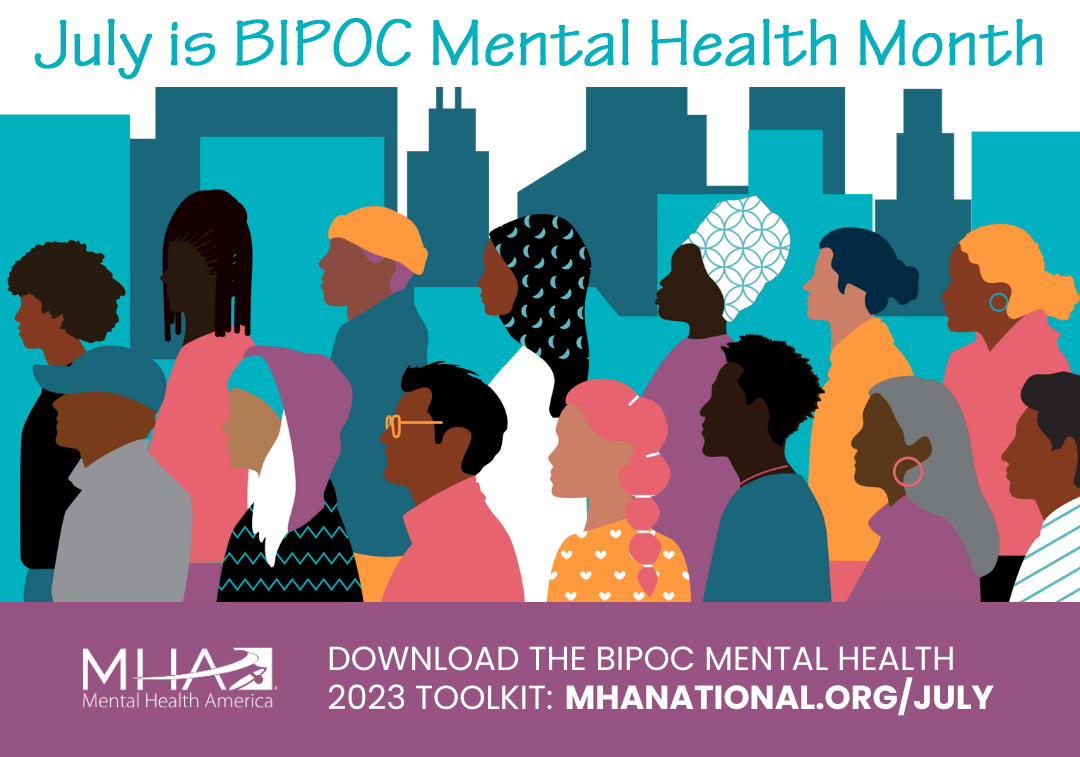
Just a reminder: July is right around the corner! If you haven't already started planning for BIPOC Mental Health Awareness Month, we can help. Check out our resources page and feel free to use our #BIPOCMentalHealth graphics and links: BIPOC Mental Health Awareness Month page.
|
|
Thank you for reading!
If you have questions, comments, or would like to submit an item to be included in an upcoming newsletter, please email erica@thestarr.org.
|
|
The STARR Coalition is a 501(c)(3) nonprofit organization, our Tax ID # is 47-4634007.
|
|
Everything The STARR Coalition does comes from our stakeholders looking to make positive change.
The STARR Coalition | phone: 501-725-8890 | www.thestarr.org
|
|
SHARE, CARE, AND BE KIND. |
|
|
|
|
|
|