|
Michele Campbell, Editor | Todd Williams, Rockwall County Extension Agent
NEWSLETTER CONTRIBUTORS: Lisa Behne, Laura Chaney, Randy Culpepper, Linda Gates, Sarah Lawson, Kim Townsend, Debora Zerneri
| | |
|
HAVE A GARDENING QUESTION? | |
We love to talk plants! Visit our Extension Master Gardeners at the Rockwall County Library the 1st and 3rd Wednesdays of the month from 10am - noon.
Also, find us at the Extension Office every Wednesday from 10am - noon. Call (972) 204-7660 or email us anytime at: rockwallmg@ag.tamu.edu
| |
|
ASK A MASTER GARDENER
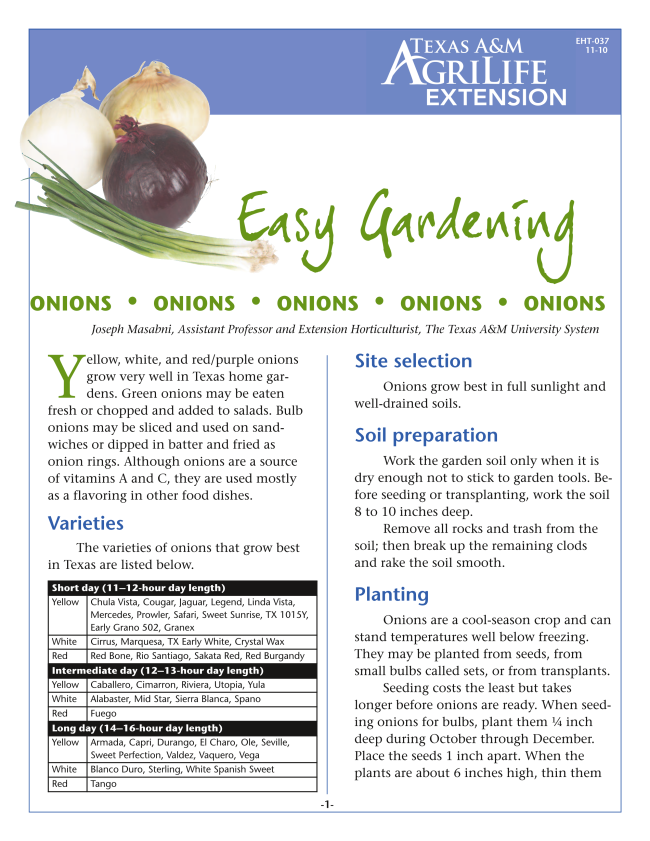
Bundles of onion sets will begin to arrive in our garden centers in mid to late January. Choose an area in full sunlight with well-drained soil to grow your onions. Ammend soil using 1/3 native soil, 1/3 compost, and 1/3 expanded shale, if needed. Work your amended soil 8 to 10 inches deep before planting your onions and fertilize with a 10-10-10 fertilizer. Plant your onions 3⁄4 inch deep and 3 inches apart no later than mid-February (they can withstand temperatures well below freezing). Water your onions slowly and deeply. Watering once a week is usually enough in the spring. When the onion plants have 5 to 6 leaves, apply another round of fertilizer. Each leaf forms a ring in the onion bulb. You may pick leaves from your plants to use as green onions as soon as the leaves are pencil size and bulbs have begun to form. Once the tops begin to fall over stop watering and wait for the tops of your plants to brown, then pull the plants out of the soil and leave them outside in a dry location for 1 to 2 days. You may then cut the tops back to 1”, remove the roots, and let them continue drying in baskets or mesh bags in a dry and cool location.
| |
|
WE LOVE BUGS!
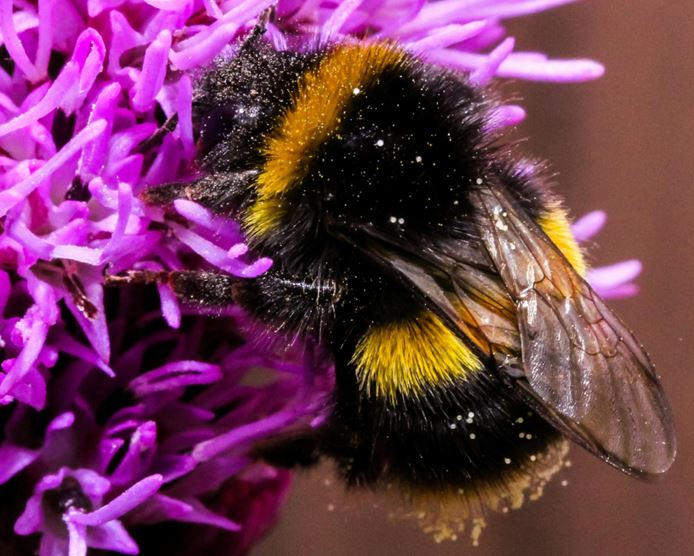
Bombus spp.
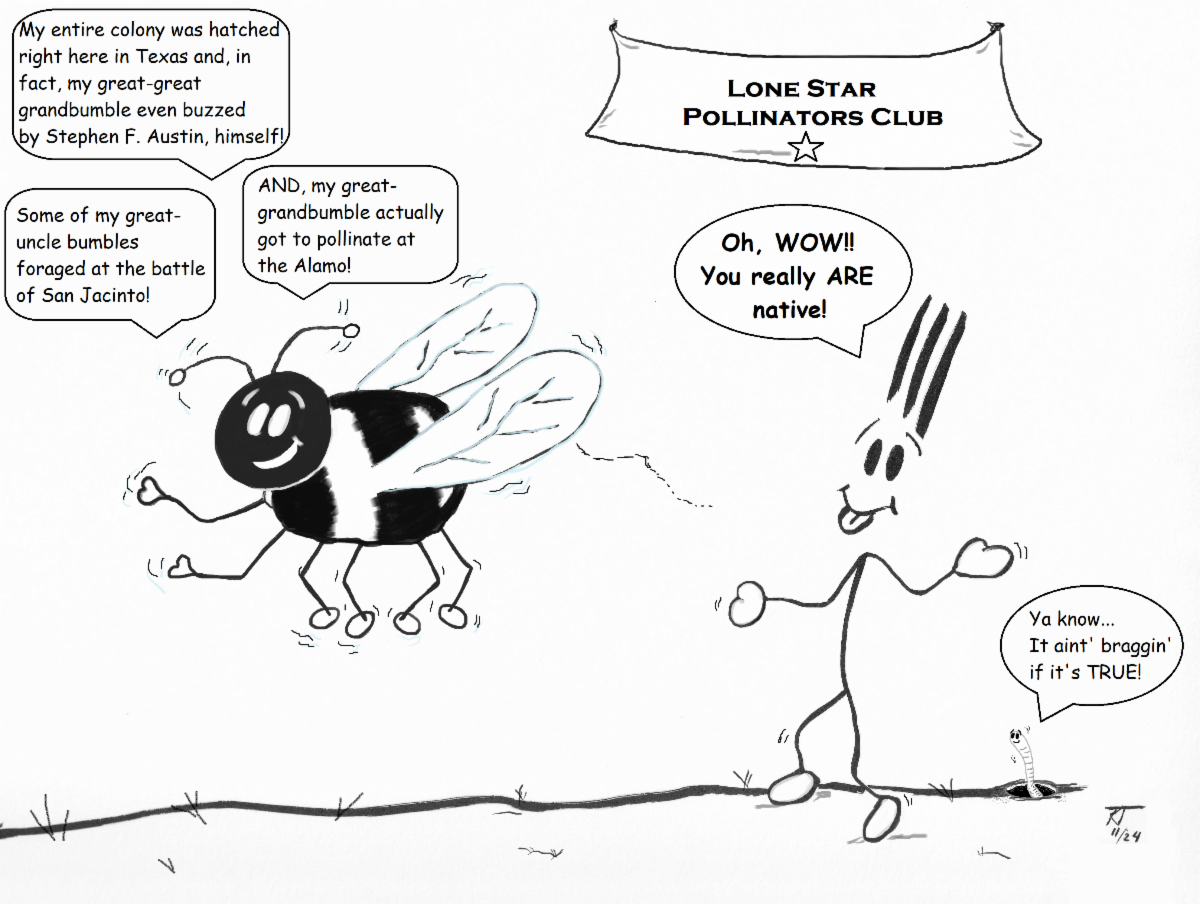
Bumble bees! The panda bear of the insect world! There are currently 9 species of native bumble bees in Texas. They are important pollinators for many of our agricultural crops such as blueberries, melons, squash, and tomatoes. Our native wildflowers also depend on bumble bee pollination. As the weather gets colder we must help our plump, fuzzy garden friends. Bumble bees prefer to nest in pre-existing cavities that provide insulation and protection from the elements. They nest underground, in hollow trees, rock walls, compost piles, logs, anywhere they can find an enclosed space, avoiding wet areas and direct sunlight. And don't forget, pithy, hollow stems left unpruned from your perennials and annuals provide habitat for stem-nesting native bees. Be patient and don't disturb, rake, or prune your garden beds until the bees wake up and are ready to leave their cozy winter homes in early spring. Learn more about Texas native bees.
| |
|
Kids Activity!
Go on a bug hunt with our Insect Scavenger Hunt worksheet.
| | | |
|
Winter is here. So, let’s get ready for Spring!
Seasonal Garden Care
| | |
|
At this time of year many of us say the same thing, "It’s already Christmas?! Where did the year go?" It seems only yesterday that we were on vacation and watching fireworks and the year is about to end. Before we know it, spring will tease us as the days start to get warmer at the end of February. As tempting as it is to hide inside by the fire, spring is not that far away. There is a lot of work to do.
Please. Don’t heave the leaves.
In the US, 33 million tons of yard debris is sent to the landfill every year. Mixed in with other forms of debris, this organic matter lacks the oxygen it needs to sufficiently decompose. It then releases methane gas as a biproduct. Solid-waste landfills are the largest contributor of man-made methane released into the atmosphere. So instead of sending your leaves to the landfill, turn your leaves into a blessing by adding them back into the very gardens that they came from.
Using a mulching mower, leaf shredder, or a string trimmer & garbage can, shred your leaves into smaller pieces so that your leaves can be used as a soil amendment to enrich the garden. This will serve as the first ingredient in an organic meal that your garden will thank you for.
Feed your soil. Feed your plants.
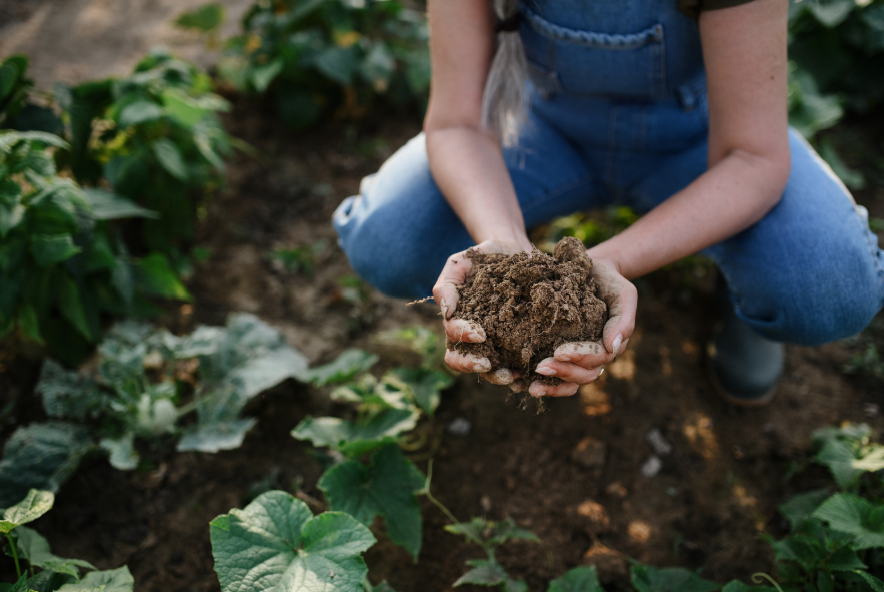
Plants thrive when grown in a nutrient-rich soil. But those nutrients do not come in an endless supply. Once these nutrients have been consumed, the soil becomes lifeless, and your plants will struggle. To keep your plants healthy each year, you must give your soil an annual meal.
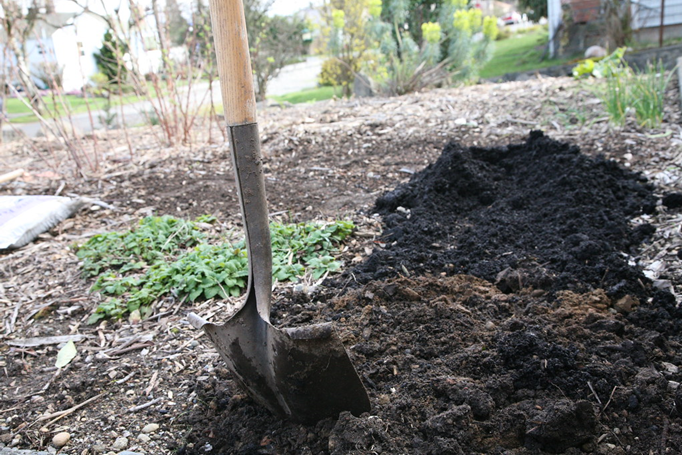
Assuming that your garden is overdue for a good feeding, the recipe is simple. Start by adding the following ingredients into your garden or flower bed. Next year and every year afterward, reduce the recipe by half to continue this annual snack:
- 1 inch of shredded leaves and/or finely shredded pine bark mulch
- 1 inch of well-rotted manure (cow, horse, poultry)
- 2 inches of compost
- 2 inches of peat moss (or- leaf mold, pine straw)
Assuming your soil is the heavy clay that is found throughout most of Rockwall County, add one inch of expanded shale into the mix to add more drainage and break up the soil. Expanded shale does not break down like organic materials, so once added you are good for years to come.
Once all the ingredients have been added, turn the mixture into the top 10 to 12 inches of soil using a rototiller or pitchfork. If using a pitchfork, turn the soil vigorously so that all the ingredients are blended well.
And finally, top off this meal with 3-4 inches of a native hardwood mulch. Why a native hardwood mulch? Because the organisms and earthworms that live in our soils are accustomed to breaking down the materials that come from the oaks and pecans that are abundant in north Texas. Cypress mulches, although inexpensive, are native to the woodlands of east Texas and Louisiana. Colored mulches, although aesthetically appealing, are also made from cypress or other wood blends. To get the most from the organisms that consume this organic meal, give them what they love.
In conclusion, there isn’t a better time of year to do this task while your plants are dormant. Before you know it, spring will be here. Feed your soil now while you have the chance.
| |
Live long, prosper and garden! | | |
|
New year, new you? Around this time of year there seems to be an abundance of advice on how to reset your goals, become healthier, get more exercise, adopt a more nutritious diet –– and the list goes on. If you are reading this article, chances are that you’re already in on the secret that gardening is good for you. In fact, science is substantiating what gardeners have known for centuries. Gardening is good for your health. Really good for your health.
Whether you garden for exercise, a feeling of well-being or to grow your own delicious food, you are reaping profound benefits and potentially extending your life!
There is no shortage of information on the positive and unexpected effects of gardening on mental and physical health. In an article published by Texas A&M AgriLife Today, experts cited research from the Journal of Environmental Horticulture acknowledging the psychological benefits of plants and the activity of gardening. These potential benefits include:
• Anxiety and stress reduction
• Attention deficit recovery
• Decreased depression
• Enhanced memory retention
• Improved happiness and life satisfaction
• Mitigation of PTSD
• Increased creativity, productivity, and attention
• Reduced effects of dementia
Beyond these important psychological benefits, we know that gardening can be a whole-body, life-changing experience, potentially attributing to favorable levels of BMI, increased strength, dexterity and much more.
When we expose ourselves to a little bit of sunshine and begin to get our hands dirty, it really begins to get interesting! Exposure to direct sunlight stimulates Vitamin D production in the body, supporting our immune systems and bone health. Sunlight can also boost serotonin, the hormone that helps create relaxation. When we dig in the dirt, we unleash the health benefits of Mycobacterium vaccae. This nonpathogenic species of bacteria has also been linked to increases in serotonin levels, which are being studied for anti-inflammatory and anti-depressive qualities.
Will gardening help you live longer? According to an article by Dr. Lucy Bradley, Professor and Extension Specialist at N.C. State, the evidence is compelling. Dr. Bradley referenced a study published in the British Journal of Sports Medicine that reported gardening can prolong life as much as 30% in the 60-plus age group. The study focused on the importance of non-exercise physical activity for cardiovascular health and longevity. The goal was to examine the association between non-exercise activities like gardening and DIY and cardiovascular health, risk of the first cardiovascular disease event and total mortality over the period of the study. The study included over 4000 participants, measured regular detailed lab tests, specifics on physical activity, diet, and lifestyle, spanning 12.5 years. In conclusion, regular physical activity, like gardening and DIY, was found to prolong life and reduce heart attack and stroke by as much as 30% among the 60-plus age-group participants.
By now, it has become abundantly clear that gardeners are really on to something! We all have a uniquely different reason for gardening. Many participate in this activity to be closer to nature, to experience a sense of joy and accomplishment, to build community and friendships, and often with the end result of beautiful landscapes and bountiful gardens. As research advances, we will continue to learn about the deeper physical and mental advantages of gardening. Until then, and with the New Year upon us, we know that there is no need for a “new you”. If you’re gardening, or attempting to, you are perfect just the way you are. References.
|
|
|
For the Birds
Homemade treats this winter
| | |
|
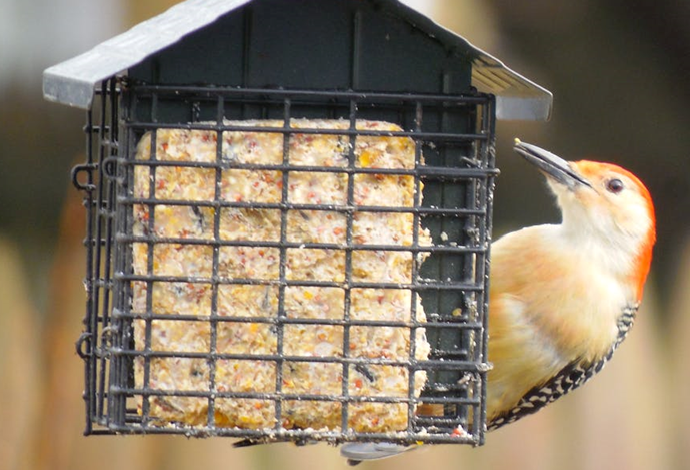
Make your own bird suet during our cool months in Texas to attract different wild birds. This recipe is popular with chickadees, titmice, sparrows, blue jays, and cardinals. Serve the birds this homemade suet during the winter and spring – our hot summers can cause bird suet to melt or turn rancid.
1 cup crunchy peanut butter
1 cup lard
2 cups quick-cooking oats
2 cups cornmeal
1 cup all-purpose flour
1/3 cup sugar
Raisins, seeds, dried fruit or hulled sunflower seeds (optional)
Melt the peanut butter and lard together. Stir in the remaining ingredients. Pour into square freezer
containers until about 1½ inches thick. Cool completely and cut into squares. Store the extra squares in the freezer. Place the suet squares in the holders attached to your bird feeders. You can also place the homemade suet on small plates and place on shelves and benches in the garden.
This next treat is fun to make with children. Simply spread peanut butter over, under, around and through all the cracks and crevices of large pine cones. (HINT: Rig a hanger through the top of the pine cone first using yarn, twine, or wire!) Then roll the gooey pinecone in a plate or shallow bowl full of bird seed. Hang on tree branches outside. Enjoy the sights and sounds of visiting birds.
| |
|
Winter Vegetable Gardening
with Laura!
| | |
|
Though we have had a very mild fall – as of this writing, first frost has not made an appearance before Thanksgiving – winter is still on the way. If we continue to have mild weather, winter gardening could be much easier! Or get those building and improvement projects done. I certainly want to have a new garden gate by spring. Don’t feel you have to do much though – winter is the time that nature rests. If you don’t plan on planting winter crops, allow the dead plants to wait for spring clean-up. This allows some plant material to break down and enrich soil (you may even have volunteer crops in Spring) but, most importantly, it provides habitat for good critters and insects through winter.
December
Transplant – Broccoli, Brussels Sprouts, Cauliflower, Greens (Collard, Mustard), Kale, Lettuce, Spinach, Swiss Chard
January
Seed Outdoors – Spinach, Swiss Chard
Seed Indoors – Broccoli, Brussels Sprouts, Cabbage, Cauliflower, Greens (Collard, Mustard), Eggplant*, Kale, Leeks, Lettuce, Peppers*, Spinach, Swiss Chard, Tomatoes*
Transplant – Onions
February
Seed Outoors – Carrots, Cauliflower, Greens (Collard, Mustard), Leeks, Lettuce, Spinach, Swiss Chard
Seed Indoors – Eggplant*, Peppers*, Tomatoes*
Transplant – Asparagus Crowns, Broccoli, Brussels Sprouts, Cabbage, Cauliflower, Greens (Collard, Mustard), Kale, Lettuce, Potatoes, Spinach, Swiss Chard
*Do not transplant until all danger of frost has passed.
Herbs
This winter I’d like to highlight two lesser grown, but well known, culinary herbs – savory and sage. These two herbs are very popular flavors this time of year and are commonly included in spice mixes or meat rubs but not very many people include them in their herb gardens. These compact, useful shrubs would also be a wonderful addition to your landscaping!
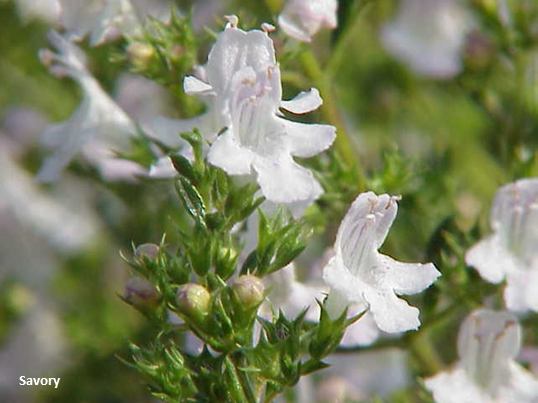
Winter Savory (Satureja montana) is a perennial herb that is very similar in appearance and growing conditions to Rosemary. However, it stays smaller and doesn’t have as stiff of leaves. Winter Savory, as the name suggests, is very cold tolerant but can be grown in our warmer climate with proper planting. Be sure to choose a space with excellent drainage and full morning sun. If possible, allow this plant to be shaded and protected from the harsh afternoon sun in our summers. Once established, this plant is drought tolerant (much like rosemary). You can also grow Summer Savory (Satureja hortensis) which is similar in flavor, but an annual. For potential uses, I’ve often heard that Winter Savory “captures the best qualities of several herbs in one.” The flavor is complex with hints of thyme and mint but can also be peppery. This herb (fresh or dried) is a wonderful addition to any meat dish and blends well with oregano, thyme, basil, and rosemary. This herb is also included with Sage as an aromatic in soups and stuffings.
Common Sage (Salvia officinalis), a short lived perennial, is a small shrub with grayish leaves. This plant also prefers cool weather, so plant in a location very similar (or even next to) Savory. Sage is very aromatic and has a very herbal, earthy flavor with hints of mint and citrus. The leaves can be used fresh or dried and work well in meat dishes or with rich ingredients as the flavor can be quite bold. Sage is most famously used in many Thanksgiving stuffings but is also wonderful in stews or soups and is even used in some teas. Sage is often included as an ingredient in homemade soaps and lotions for its wonderful earthy smell that doesn’t overpower.
| |
|
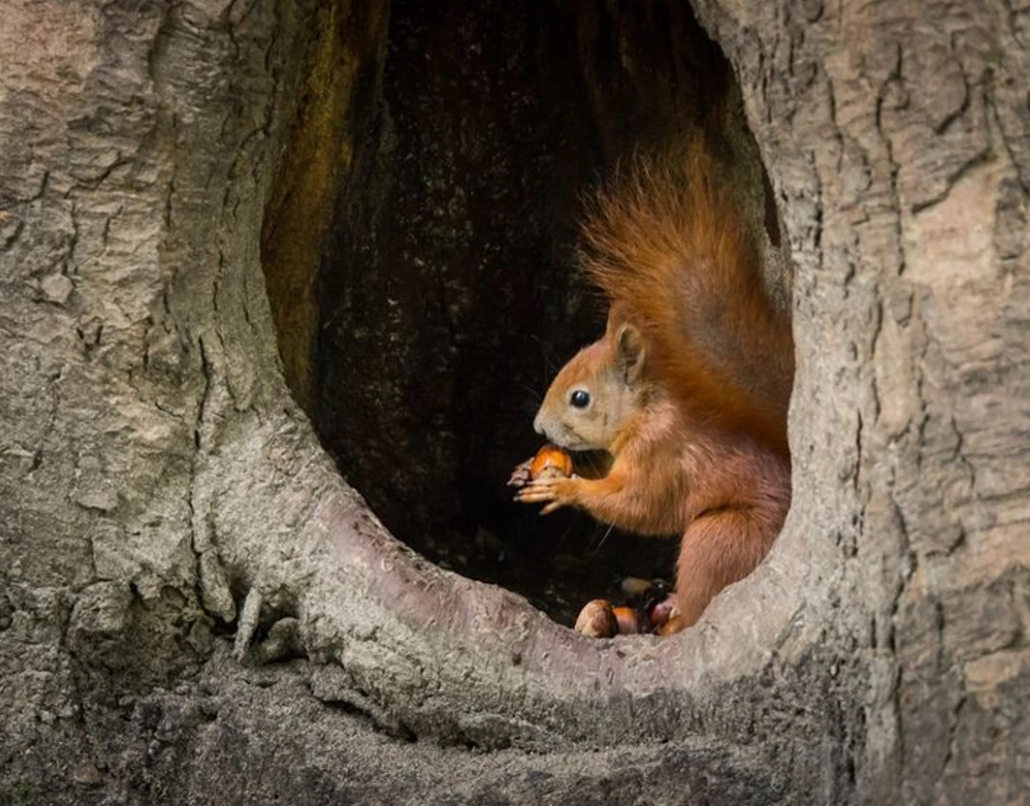
“Mommie, Mommie, Mommie!” Sammy squirrel was trying to get his mom’s attention. His sister, Mabel, called out too. “Mommie, Mommmmmie!!!” Two pint-sized, high-pitched squirrel voices rang through the trees, as they ran and hopped as fast as they could to keep up with their mother. Mommie paused and turned around, saying “Hurry up you two, you’re going to learn how to collect food for the winter today.” And then off she ran again! Mommie was eager to help Sammy and Mabel learn the art of collecting acorns. It’s their first winter, and they will need to know how to survive when the cold days arrive. Squirrels do many things that help them stay fed and warm in the winter, and one of the most important ones is gathering and stashing food.
Finally, Mommie squirrel stopped under a huge, old oak tree. This tree had provided acorns for the many squirrels in the neighborhood for decades. Her branches reach high into the sky, and her acorns fall every year as winter approaches. The three squirrels gaze about, and everywhere they look, there are acorns lying on the ground. Then they hear a “plop,” and another “plop.” The acorns are still falling as the wind rustles the great oak tree’s branches. “It’s time to get to work,” Mommie tells Sammy and Mabel. “It’s time to collect acorns to store in our nest in the tree. We will eat acorns, berries, and seeds when it’s too cold outside to leave the nest to search for food.” Mabel and Sammy look at each other. This is important work they think to themselves.
Mommie explains that they will take some of the acorns back to the nest, but they will also bury some in hiding places such as garden beds and flowerpots, and even the soft dirt under the great oak. For there is not enough room in the cozy tree nest to store ALL the acorns they collect. Then, Mommie tells them the secret to collecting acorns, “Skitter, scramble, and skedaddle,” she instructs. So off Sammy and Mabel go, skittering to the first mound of acorns. They scramble about and gather as many as they can, holding them in their cheeks. Once their cheeks are full, off they skedaddle to the nest to store their winter treasure. Mommie is busy under the tree as she gathers acorns to bury. They will seek them out when the winter days are mild, and the young ones need some exercise.
As the sun begins to set, Mommie finishes her gathering and skedaddles to the nest. Sammy and Mabel, having spent the day skittering, scrambling, and skedaddling, were settled in for an evening nap. Mommie smiles with pride. Sammy and Mabel learned an important lesson today.
Learning Questions
What lesson did Sammy and Mabel learn?
How do Sammy and Mabel carry their acorns to the nest?
Why does Mommie bury acorns in gardens and pots?
Try these Crafty Ideas!
|
|
|
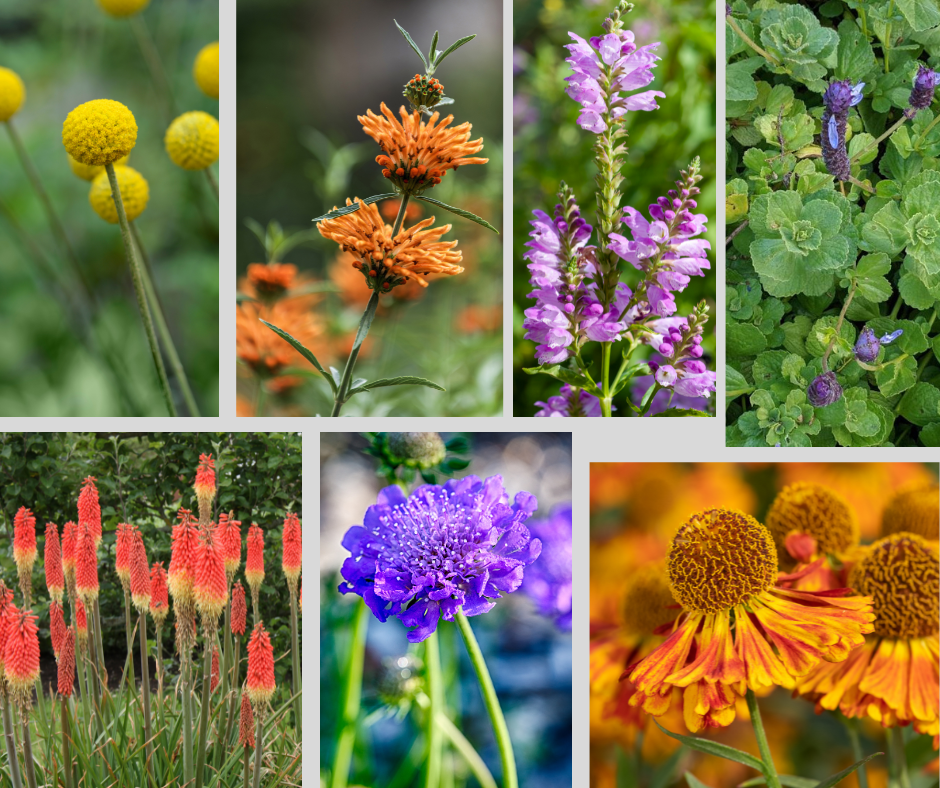
Sneezeweed (Helenium autumnale)
Full sun, Texas native, perennial. The common name is based on the former use of its dried leaves in making snuff, inhaled to cause sneezing that would rid the body of evil spirits. Daisy-like blossoms with big, dark, yellow-speckled centers characterize Sneezeweed. Attracts butterflies in early summer and fall. It is toxic to humans, pets, and livestock.
Pincushion Flower (Scabiosa)
Full sun perennial. This flower contains a rounded head that resembles a pin cushion full of pins. The Pincushion Flower attracts pollinators such as bees and butterflies. They also make beautiful cut flowers.
Red-Hot Poker (Kniphofia)
Full sun perennial. Grass-like foliage, bare stems, and tubular clusters that resemble a glowing torch are characteristics of Red-Hot Poker. Features stunning flower spikes in bright red, orange, yellow, and other color varieties. Attracts hummingbirds, bees, and butterflies.
Obedient Plant (Physostegia virginiana)
Full sun, Texas native, perennial. This plant has tall, upright stems with funnel-shaped flowers. Obedient plant receives its name from the ability of an individual flower to stay in the position you place it after moving it back and forth on its axis. Obedient plants are a good nectar source for butterflies, bees, and hummingbirds.
Lion’s Tail (Leonotis leonurus)
Full sun perennial. Fuzzy stems with spherical, whorled orange flowers create a lion's tail appearance. This plant is excellent for attracting pollinators as the red-orange flower is full of nectar. Deadhead the plant after it blooms and before the first frost of the season.
Drumsticks (Billy Buttons) (Craspedia globosa)
Tender perennial to annual in North Texas. Flowers shaped like small yellow globes and silvery foliage give this plant its Drumsticks moniker. This plant can last a long time in a vase, making it ideal for crafts or cuttings. Drumsticks easily adapt to dry soil and tolerate drought once established.
Scaredy Cat Plant (Coleus caninus)
Annual in North Texas. Keep cats and other mammals out of your garden the natural way with a stinky Scaredy Cat plant! As a member of the mint family, Coleus caninus forms a neat bush of lush foliage and bears blue flowers in summer.
| Can you recognize these plants by their common names listed above? | | |
|
|
The Extension Master Gardener program is focused on educating and providing research-based horticultural information to the community. This fall we visited with Rockwall's youth, adult, and senior populations.
Ask a Master Gardener & Library Help Desk
Village Green Memory Care
Rockwall Farmers Market
Cut Flower Garden Class
Veggie Tasting Youth Library Class
Fall Lessons from the Garden @ Harry Myers
Fall Plant Sale
Rockwall Library Fall Community Festival
Bees and Pollination Youth Library Class
Succulent Pumpkin Class @ Rosini Vineyards
Texas Arbor Day and Tree Seedling Giveaway
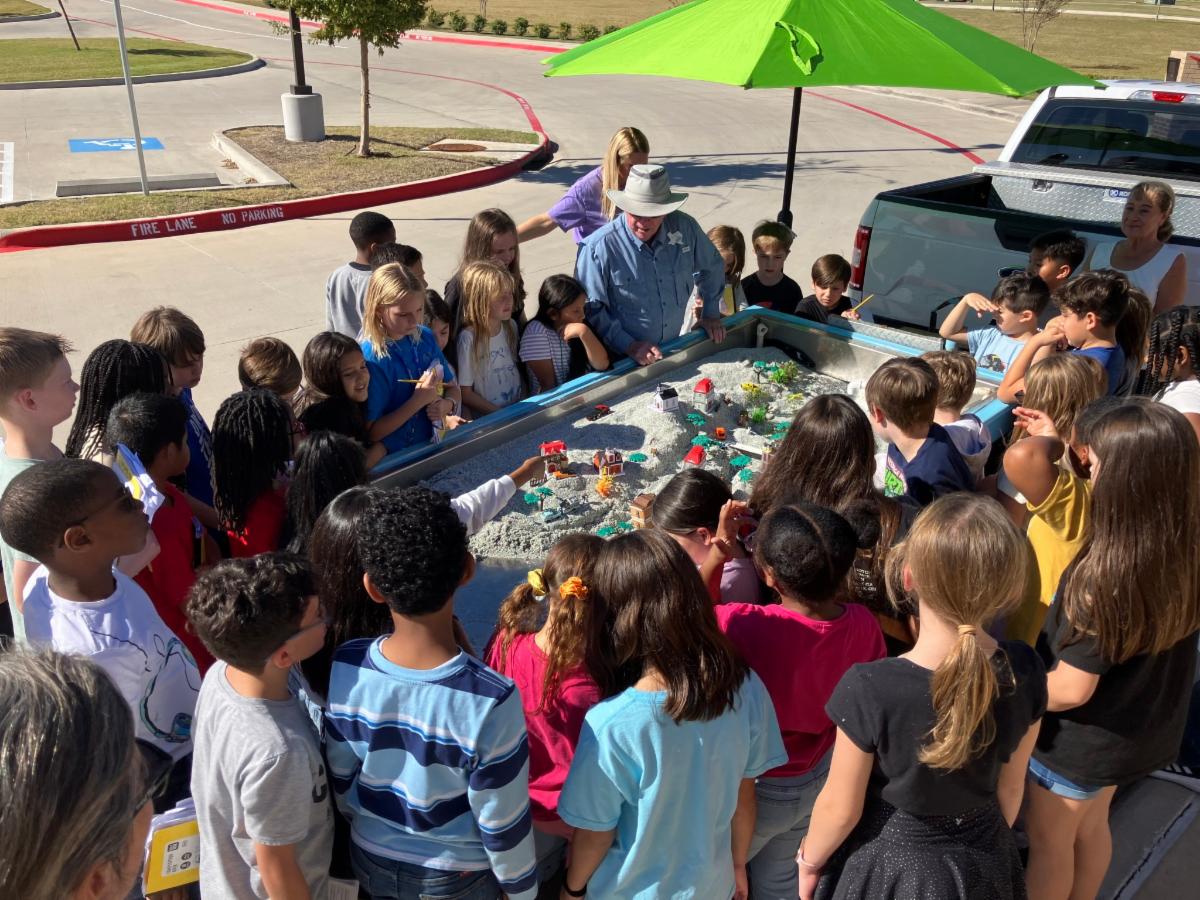
Stream Trailer @ Rockwall Elementary Schools
Sheriff's Posse Roundup in Downtown Rockwall
Composting Class @ Rockwall Library
| |
| In 2025, a gardening topic that I want to learn more about is... | | | |
In our last issue we asked if fall was the best time to plant trees in North Texas. 70% of those who answered were correct! The answer is true! Trees (and shrubs) utilize the fall, winter, and spring weather to establish their roots and better prepare themselves for our harsh summers. Plant roots grow when the soil temperature is above 40°F. Read more. | |
|
Master SNAPS!
Photos from Rockwall County Extension Master Gardeners
| |
|
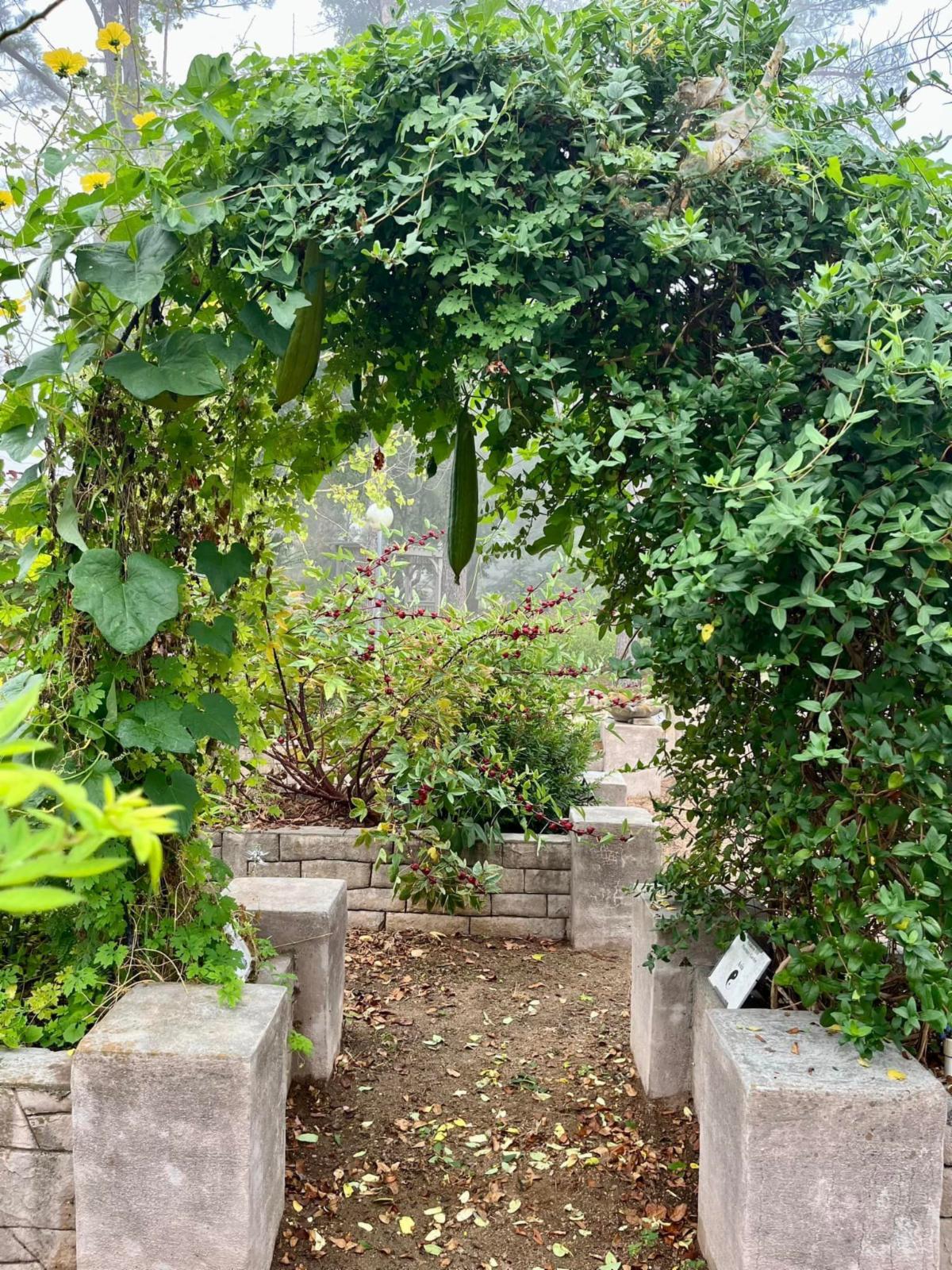
Luffa arch in Roundtop, TX.
-Lisa J.
| |
|
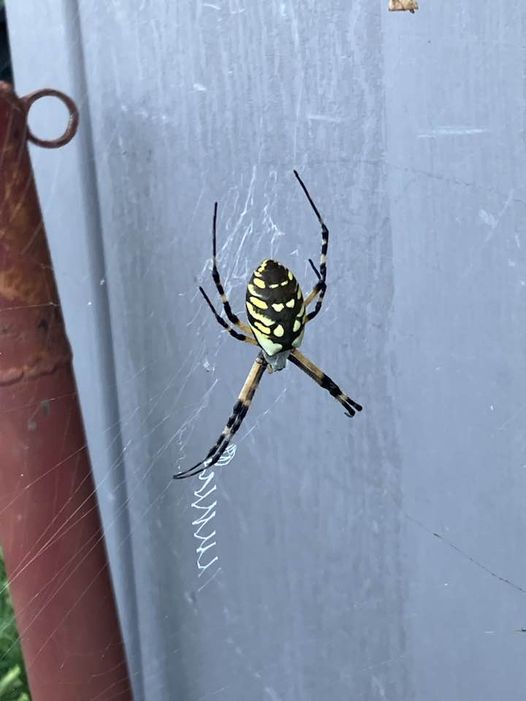
Yellow, orb-weaving, garden spider. Beneficial friend in the garden.
-Debora Z.
| |
|
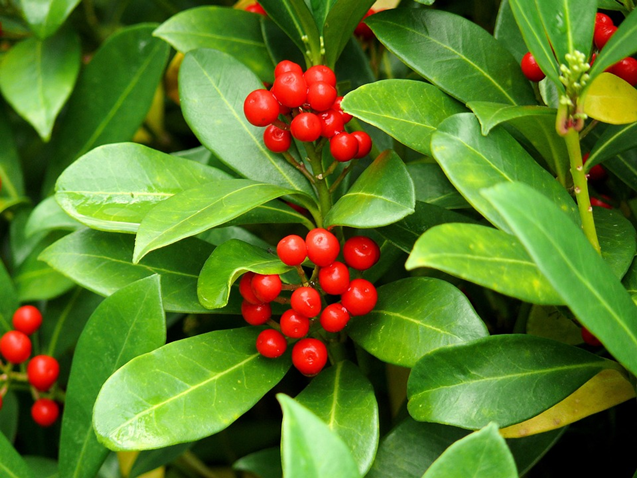
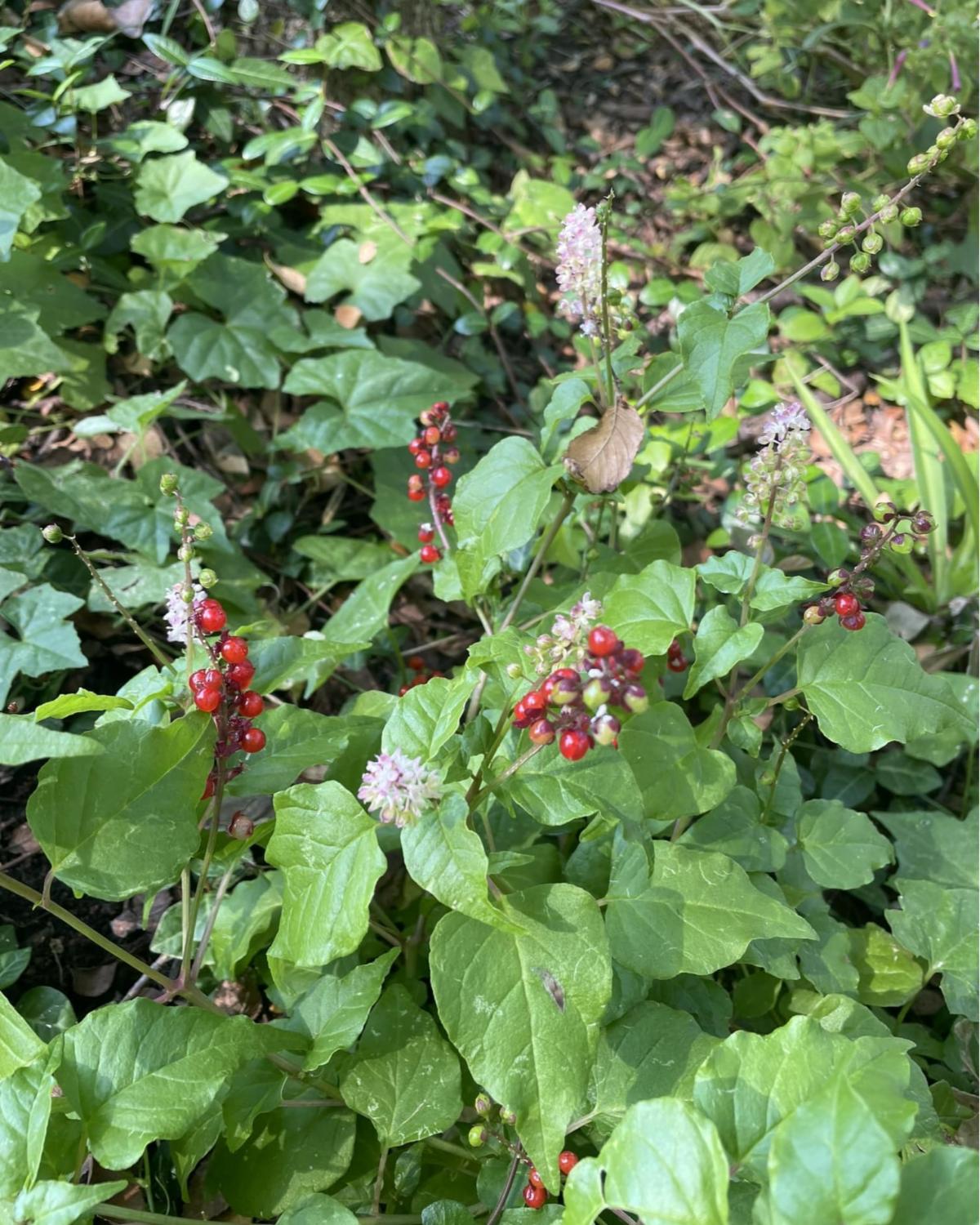
TX Native Pigeonberry plant.
- Sarah L.
| |
Please take our short survey to help improve our educational outreach. | |
EnviroSmart is published by: Rockwall County Master Gardener Association part of Texas A&M AgriLife Extension Service, the Texas A&M University System. The information given herein is for education purposes only. Reference to commercial products or trade names is made with the understanding that no discrimination is intended and no endorsement by Texas A&M AgriLife Extension is implied. | |  |
|
Todd Williams - County Extension Agent
Ag/ Natural Resources
972-204-7660
tk-williams@tamu.edu
Texas A&M AgriLife Extension provides equal opportunities in its programs and employment to all persons, regardless of race, color, sex, religion, national origin, disability, age, genetic information, veteran status, sexual orientation or gender identity. The Texas A&M University System, U.S. Department of Agriculture, and the County of Commissioners Courts of Texas Cooperating.
| | | | |