ANOTHER SUCCESSFUL OHIO LEADERSHIP RECEPTION DURING CBC WEEK | | | | |
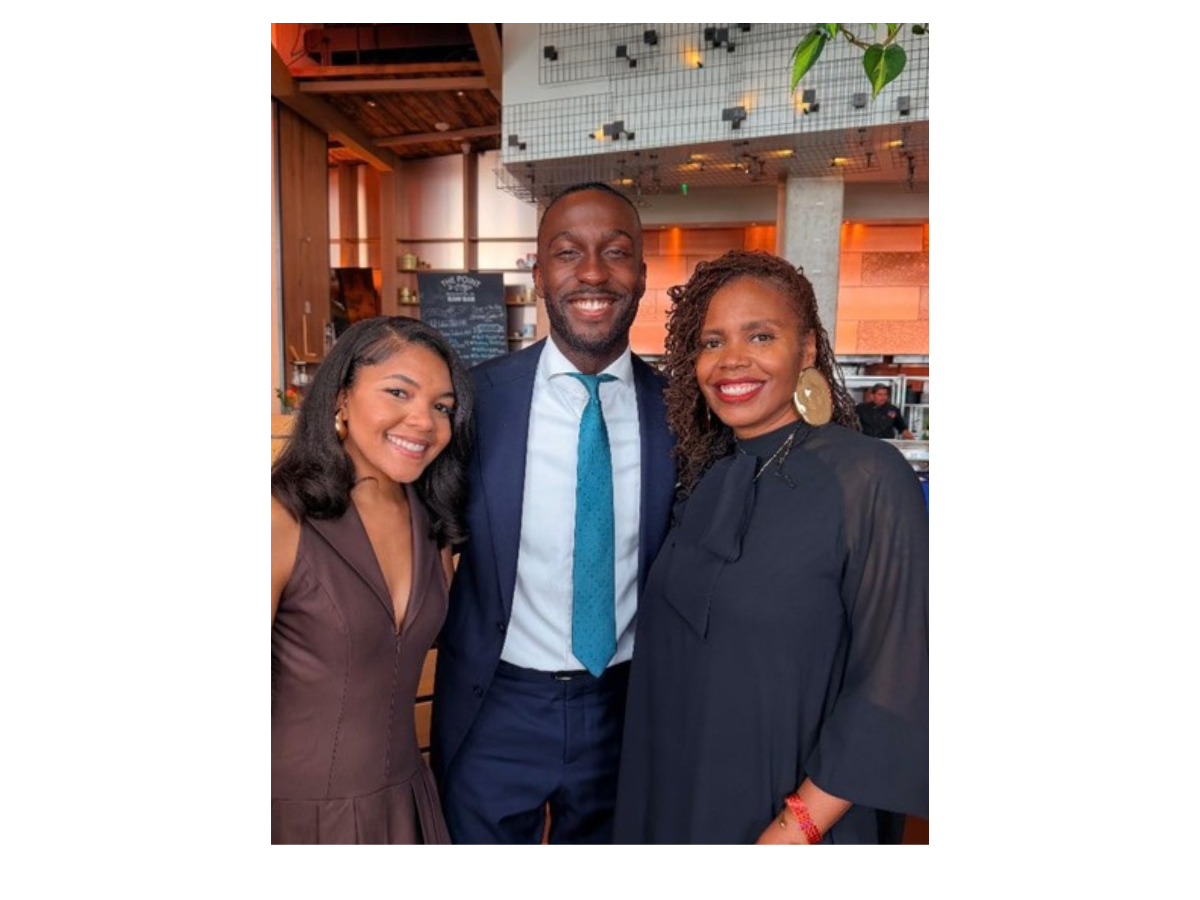
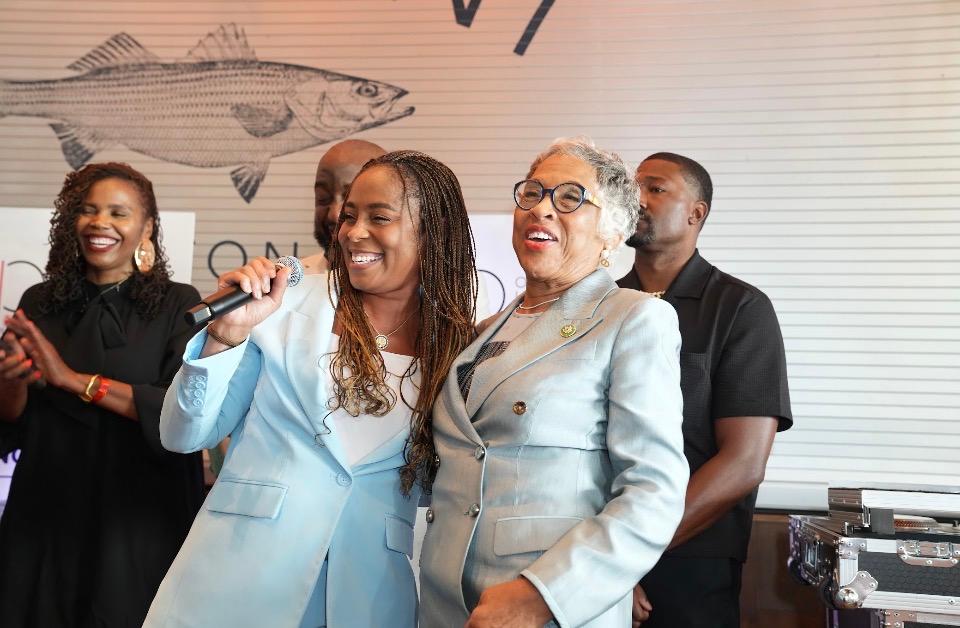
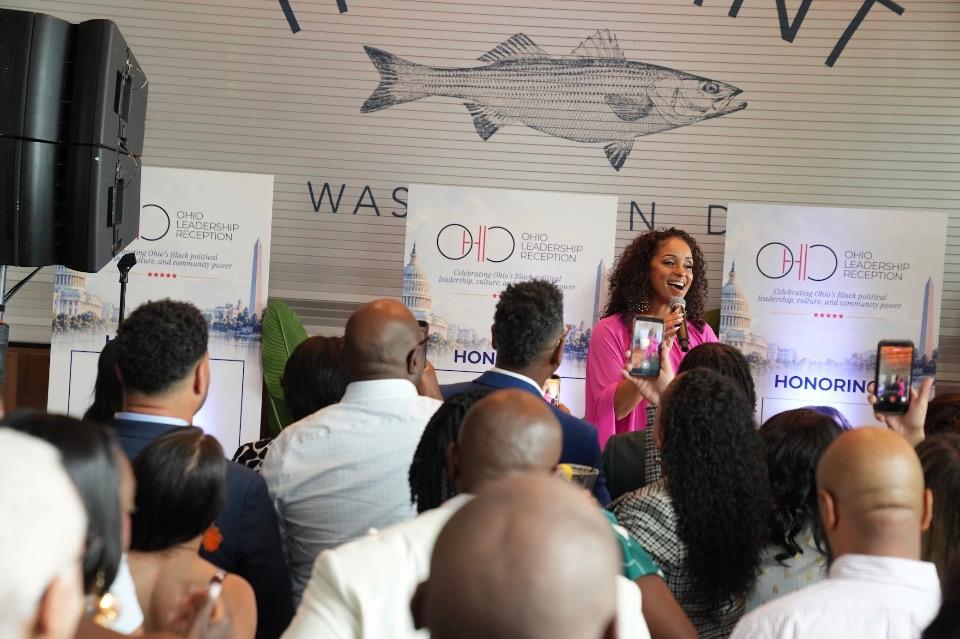
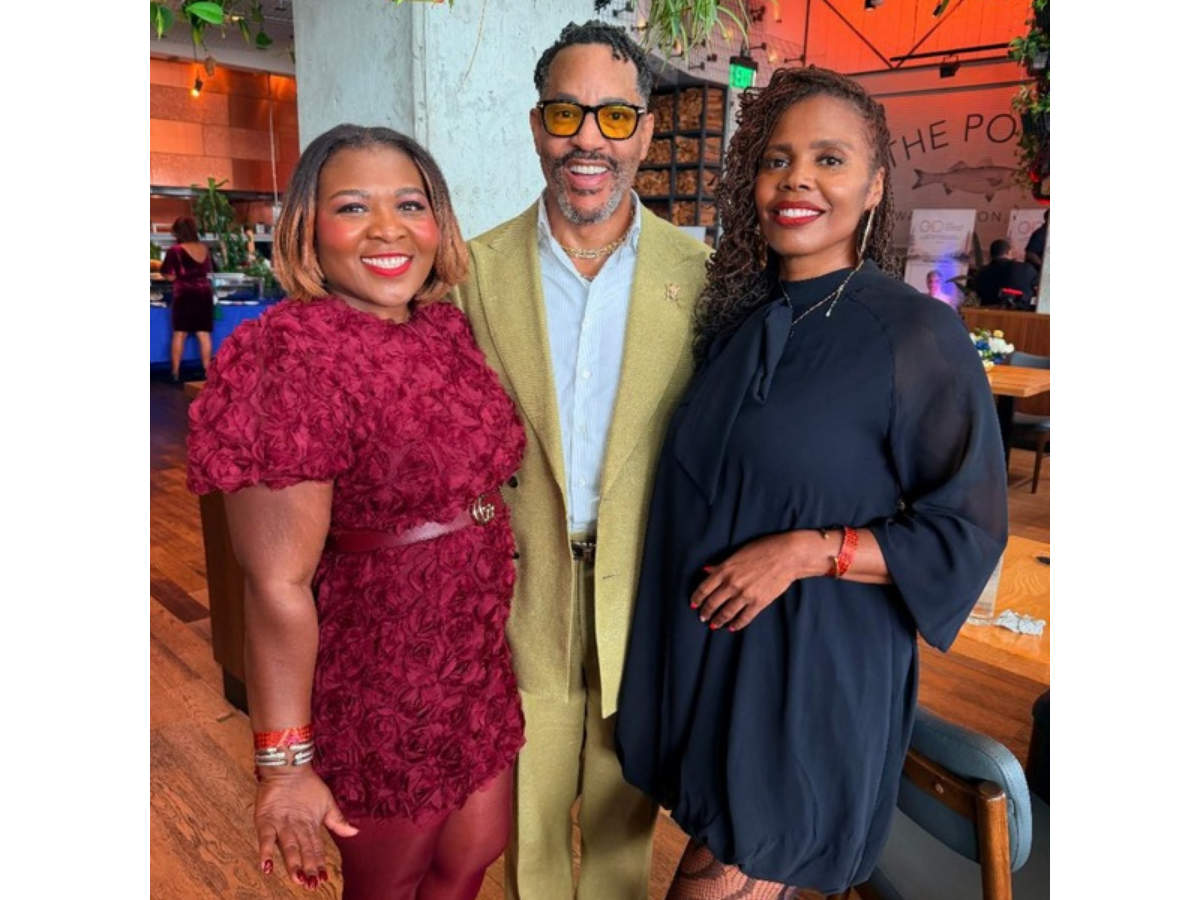
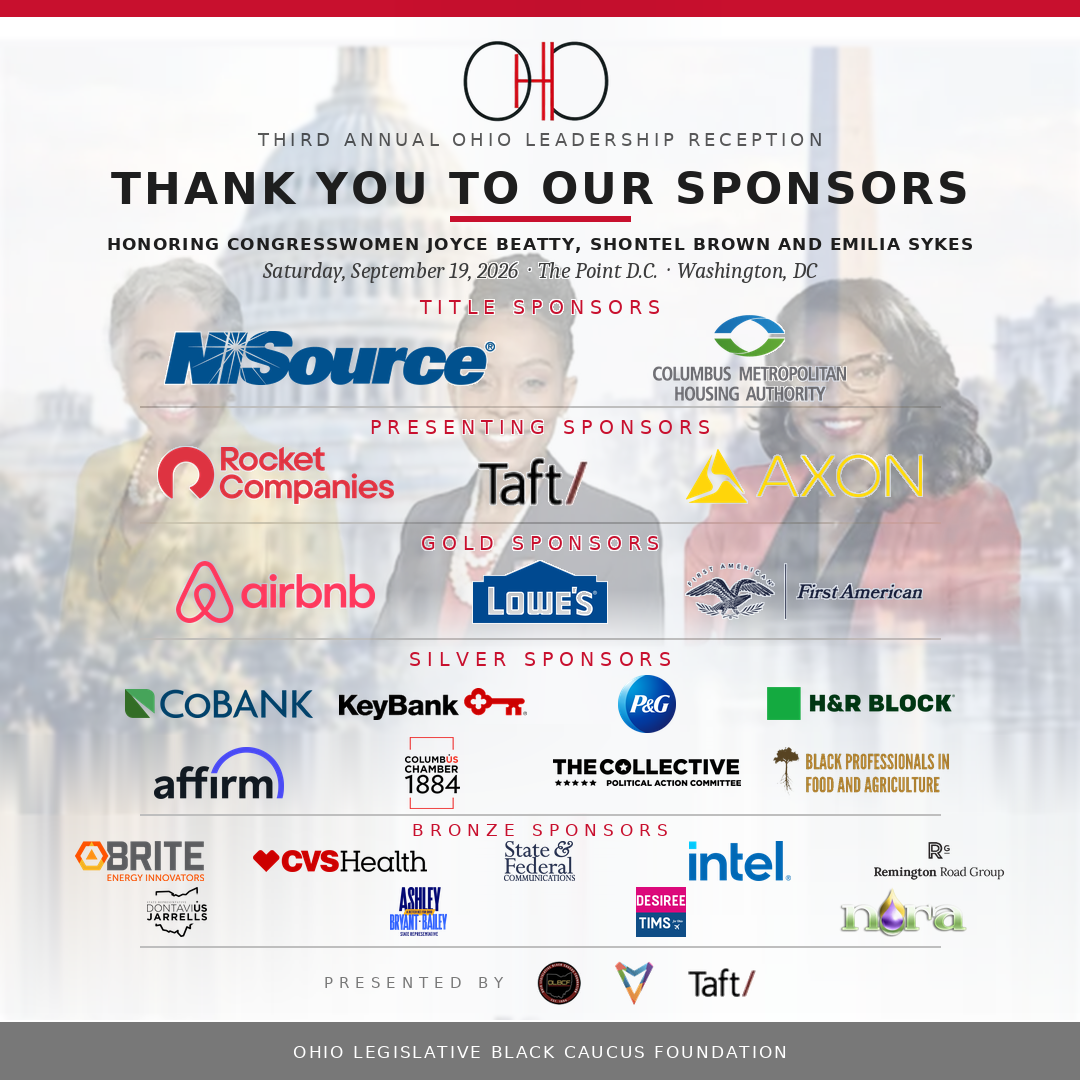
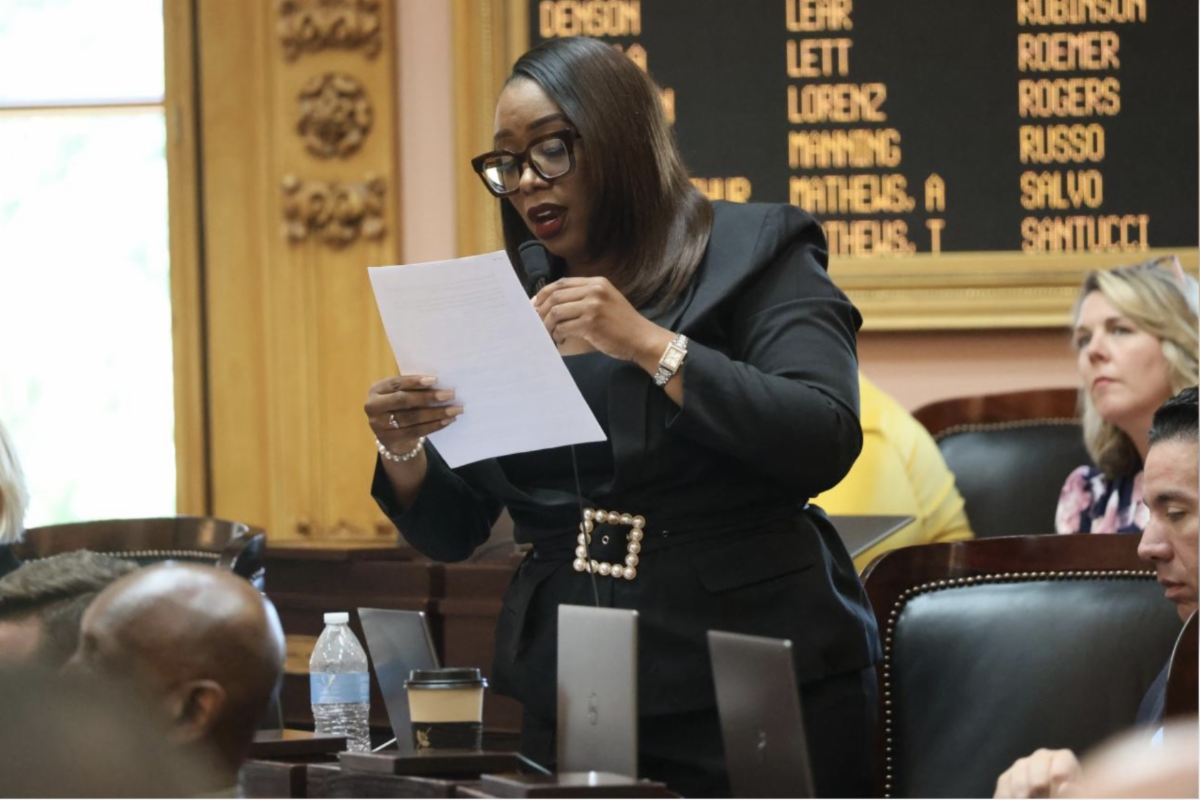
OLBCF President Shayla L. Davis joined Ohio lawmakers, community leaders, and changemakers in Washington, D.C., for CBCF Annual Legislative Conference Week, where the Foundation held its Third Annual Ohio Leadership Reception. The reception brought leaders and supporters together to build relationships and celebrate the work happening across our state, honoring the legacy of the late Congressman Louis Stokes and his tradition of bringing Black leadership together during conference week.
This year’s conference theme, “Rooted, Ready & Rising,” celebrated the CBCF’s 50th anniversary and the generations of Black leadership that have helped move our communities forward. The week brought people together to discuss education, healthcare, economic opportunity, and other issues affecting Black Americans.
It was also a chance to connect, share ideas, and think about how those conversations can lead to meaningful change back home. Having Ohio leaders in these spaces matters because our communities deserve to be part of the national conversation.
OLBCF Board Chair Clifton Williams of Cleveland and Secretary Alan Bannister of Toledo were among them.
A beautiful exhibit also honored the life and legacy of the late Honorable Stephanie Tubbs Jones, the first Black woman to represent Ohio in Congress. We were honored to have her son, Mervyn L. Jones II, join us as we celebrated her lasting impact on Ohio and the generations of Black leaders who continue to follow in her footsteps.
Thank you to all of our sponsors for their financial support, especially our title sponsors NiSource and the Columbus Metropolitan Housing Authority. Your support made this gathering possible and helps OLBCF create spaces where Black Ohioans can connect, lead, and make an impact.
We are excited to partner once again with Taft Law and Vestige Strategies for the 2027 Ohio Leadership Reception.
Interested in sponsorship? Reach out to President Davis at president@olbcfoundation.org.
| | OLBCF STRONGLY OPPOSES ISSUE 3 | | |
The Ohio Legislative Black Caucus Foundation (OLBCF) opposes Issue 3, standing alongside the Ohio Legislative Black Caucus in support of accessible voting. The Foundation’s opposition centers on the amendment’s lasting impact: placing Ohio’s voter identification requirements in the state Constitution would limit lawmakers’ ability to expand accepted forms of identification and address barriers to voting.
“We are asking Ohioans to widen the door, not weld it shut,” said OLBCF President and CEO Shayla L. Davis. The Foundation advocates for expanded early voting, protected mail-in access, a broader list of acceptable identification, and sustained voter education.
OLBCF believes Ohio should preserve the ability to improve voting access without requiring another constitutional amendment.
| | |
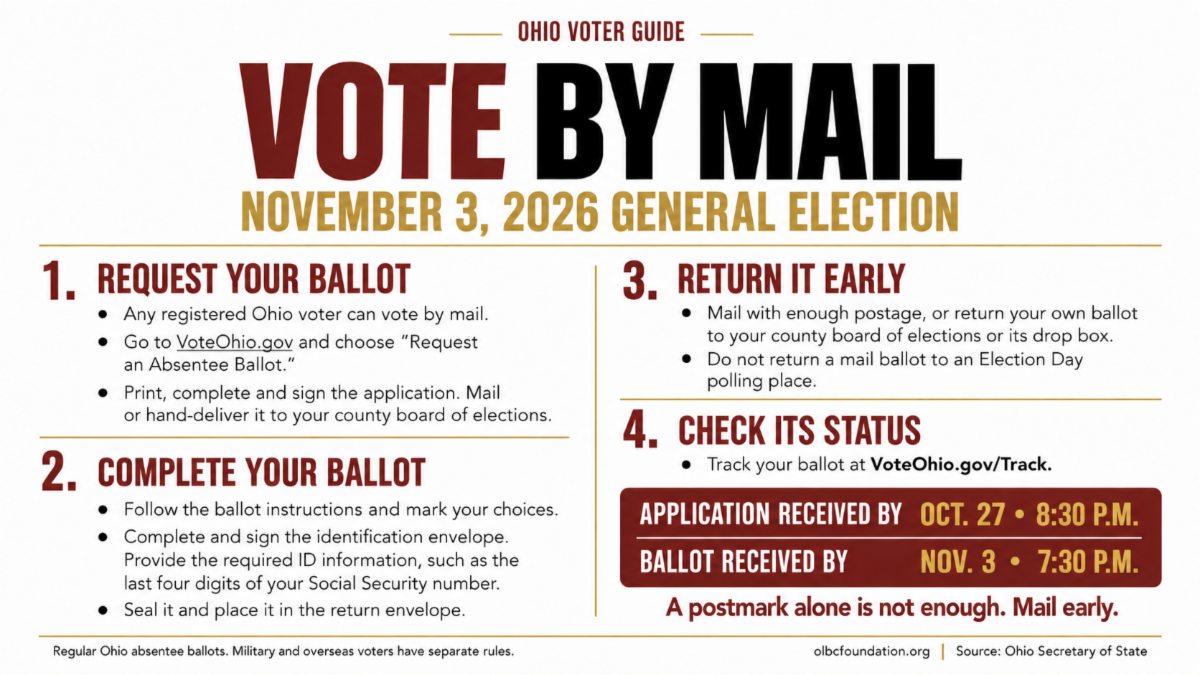
On November 3, Ohio voters will vote on Issue 3, which would add photo ID requirements for voting to the Ohio Constitution.
Ohio already requires an approved photo ID to vote in person. Issue 3 would put that requirement into the Constitution, making it harder to change later.
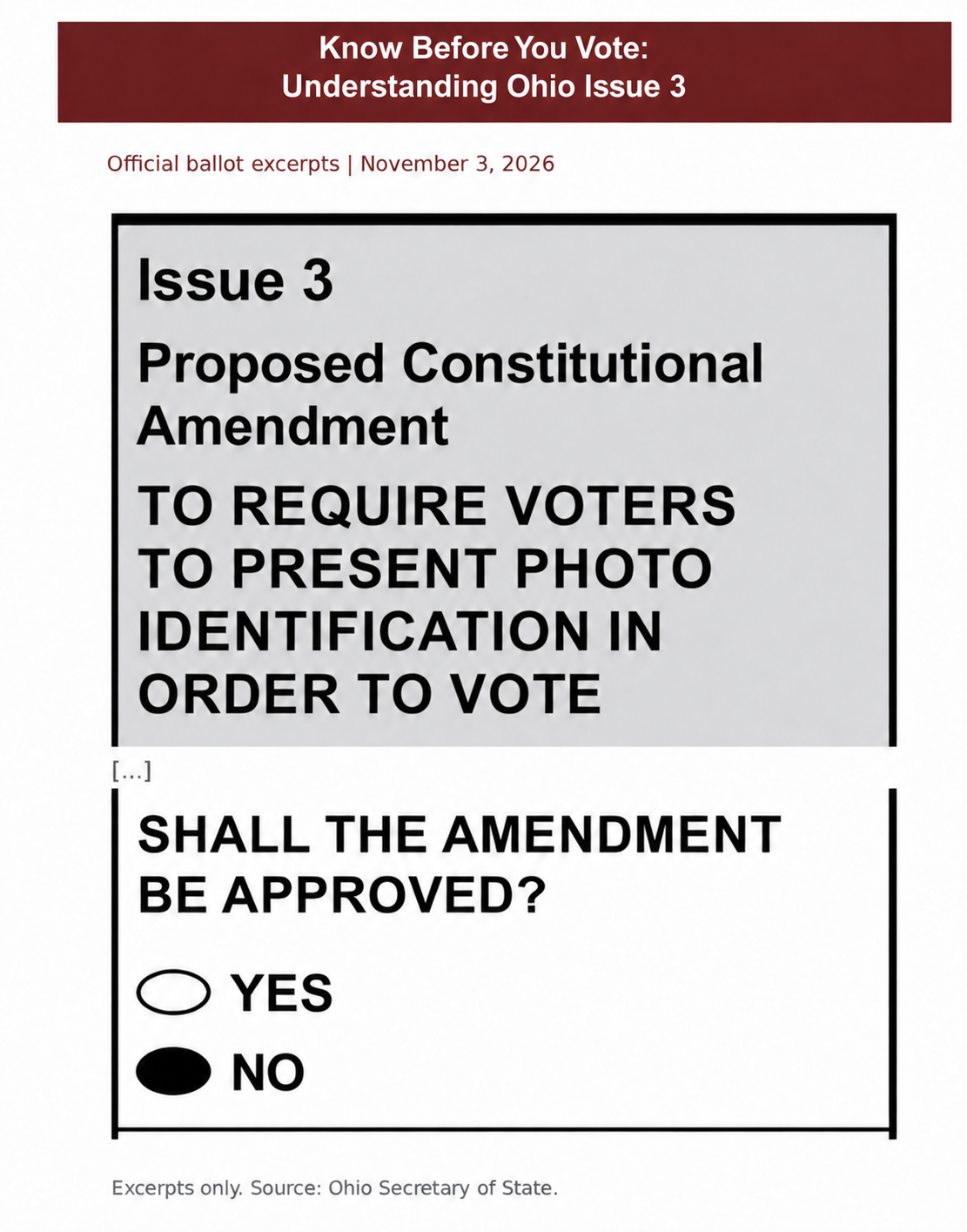
What does the ballot say?
The official title is: “TO REQUIRE VOTERS TO PRESENT PHOTO IDENTIFICATION IN ORDER TO VOTE.” You can read the full wording in the sample ballot included here.
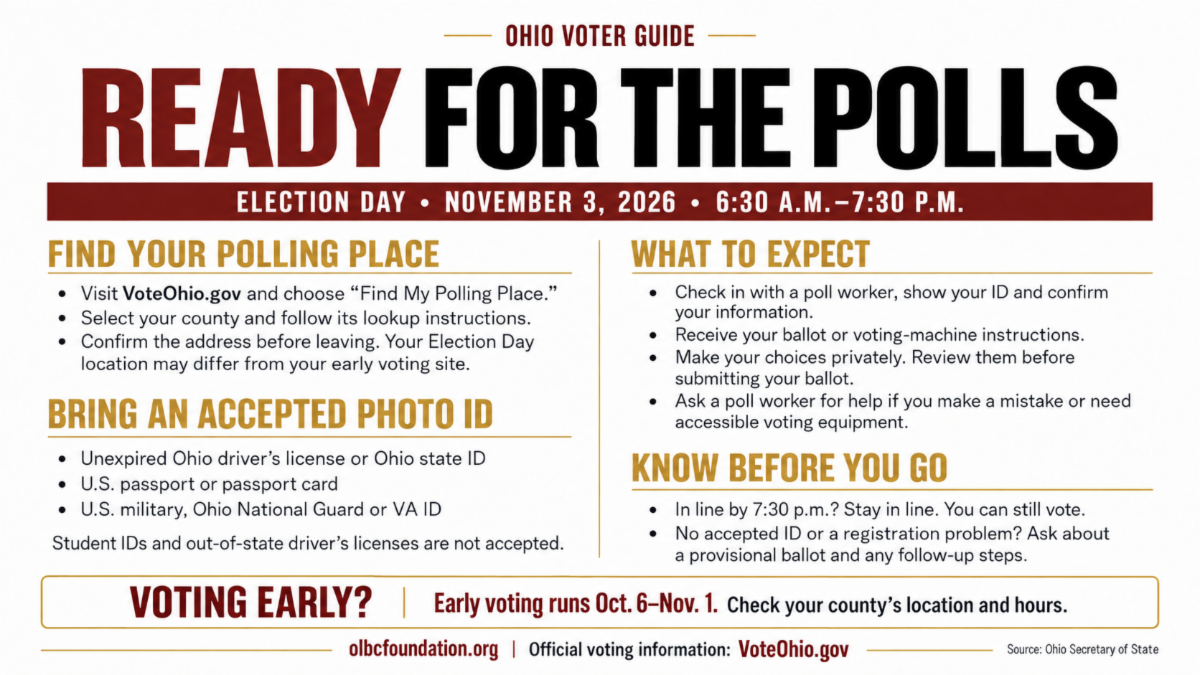
Approved photo IDs include an unexpired Ohio driver’s license or state ID, a U.S. passport or passport card, and certain military or veterans IDs.
The proposal also allows other options under state law for voters with religious objections to being photographed and for people voting by mail.
What does your vote mean?
- YES: Adds the proposed voter ID requirements to the Ohio Constitution.
- NO: Rejects the amendment, meaning it will not be added to the Ohio Constitution. Ohio’s current photo ID law would remain in place.
Why does this matter?
Lawmakers can change a regular state law. Changing a requirement in the Ohio Constitution takes another constitutional amendment approved by voters.
OLBCF opposes Issue 3 because it would make Ohio’s voter ID requirements harder to change in the future.
| | 532 OFFICIALS. ONE STATEWIDE RECORD. OLBCF'S BLACK ELECTED OFFICIALS DIRECTORY LAUNCHES 532 OFFICIALS | |
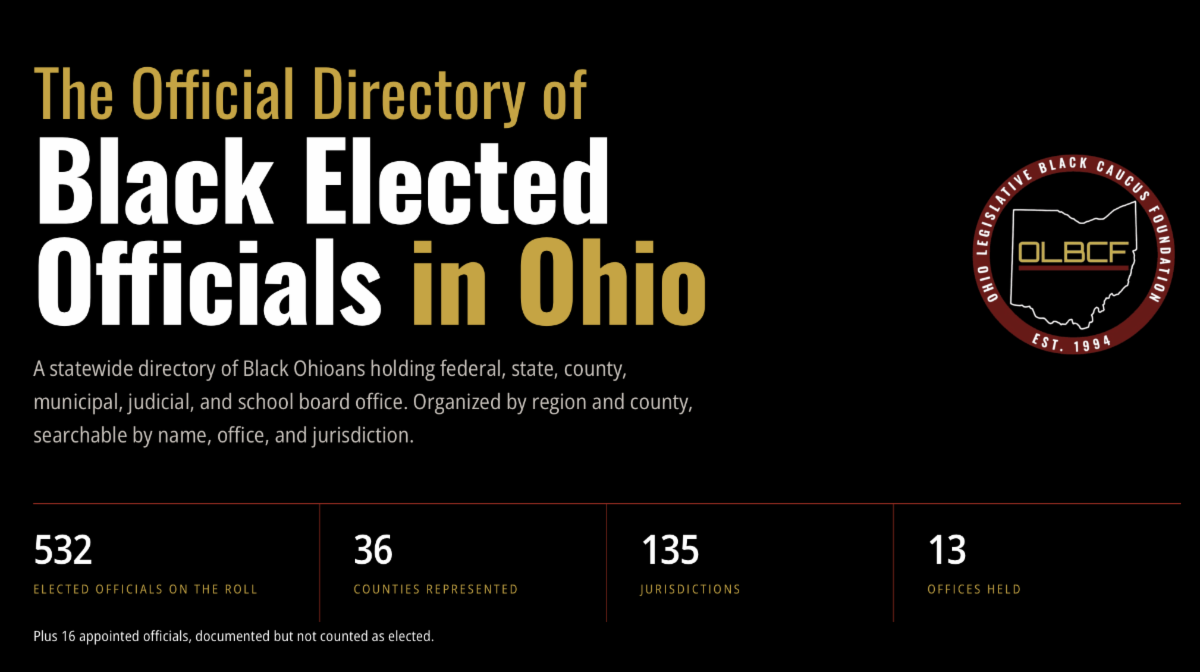
On Monday, October 5, the Ohio Legislative Black Caucus Foundation launched The Official Black Elected Officials Directory, the first verified statewide record of Black Ohioans serving in elected office, from Congress to school boards.
The October 2026 edition documents 532 Black elected officials across 36 of Ohio’s 88 counties. Black Ohioans number approximately 1.8 million, representing 14.6 percent of the state’s population. The directory shows where Black leadership is present and where representation remains limited.
One finding stands out: Black Ohioans hold just 7 of Ohio’s 704 countywide offices, or 1 percent. The directory identifies no Black county auditor, county engineer, or county coroner anywhere in the state. These offices oversee responsibilities that affect property taxes, infrastructure, and investigations into deaths.
The directory helps residents, journalists, researchers, and community organizations understand who serves their communities and identify gaps in representation. Updated editions are planned for January and July to track changes after future elections.
We extend a special thank-you to our researchers, Yassah and Fiona, for their commitment and dedication over the last 5 months. We appreciate their hard work and dedication to making this important resource possible.
Explore the directory to learn who holds office, where they serve, and what the record reveals about Black representation in Ohio.
| |
Relief at the Pump: What Ohio’s Gas Tax Holiday Means for Black Communities
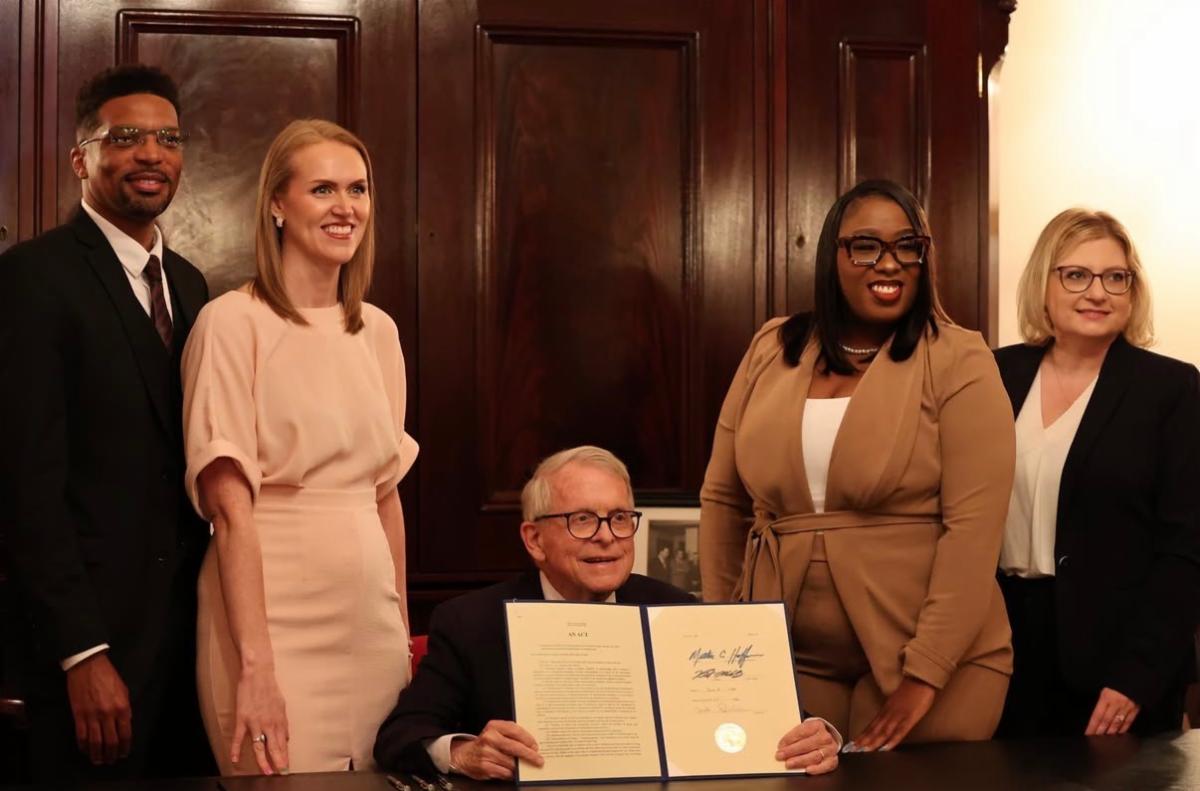
Governor Mike DeWine signed House Bill 519 on October 1, establishing a 90-day gas tax holiday. The law temporarily suspends nearly all of Ohio’s state taxes on gasoline and diesel.
The legislation uses approximately $725 million from Ohio’s general fund to replace lost road and bridge funding. That is the same fund that supports education, public health, and childcare. Once that money is spent, it will no longer be available for those or other state needs.
Ohio’s gasoline tax is 38.5 cents per gallon. If retailers pass the full reduction along to customers, a typical driver could save about $4 a week, or roughly $50 over the 90 days.
Actual savings will depend on how much fuel someone purchases and whether the tax reduction is reflected in prices at the pump.
The holiday directly reaches people and businesses that purchase gasoline or diesel. Ohioans who ride the bus receive no direct savings on fares, because reducing fuel taxes does not change what passengers pay.
For Black communities, the effects will vary. Drivers may see lower fuel costs, while residents who rely on public transportation will not receive the same relief. The law provides temporary savings for fuel buyers while using state funds that also support services across Ohio.
| | |
A Fair Chance After Prison: Humphrey’s Laws Address Jobs and Parole Transparency
Getting out of prison is only one step in returning home. Finding a job, supporting a family, and navigating the parole process can bring challenges of their own. Two bipartisan Ohio laws, House Bill 268 and House Bill 31, address these challenges in ways that could matter especially for Black Ohioans.
Black Ohioans are incarcerated in state prisons at more than five times the rate of white Ohioans. That disparity means Black families are more likely to feel the effects of decisions about parole and the barriers that follow a criminal conviction.
House Bill 268 makes changes to Ohio’s Certificate of Qualification for Employment process. Sponsored by State Representatives Latyna Humphrey (D-Columbus) and Gary Click (R-Vickery), the legislation addresses barriers that can make finding employment difficult for people with criminal records. The certificate can help eligible people overcome certain restrictions on employment and occupational licensing. For someone trying to rebuild after incarceration, access to work can mean the ability to pay rent, care for children, and regain stability. A person who has served their sentence should have a real opportunity to pursue those goals. HB 268 was signed in June and took effect on September 23, 2026.
| |
House Bill 31 requires electronic recordings of certain parole board hearings. Sponsored by State Representatives Latyna Humphrey (D-Columbus) and Brian Stewart (R-Ashville), the legislation addresses transparency in a process that can have lasting consequences for incarcerated individuals and their families. Parole decisions can change the course of a person’s life and deeply affect the people waiting for them at home.
Keeping a recording creates a clearer account of what was said and how the hearing unfolded. It also makes it easier to examine a process that families often experience as difficult to understand. HB 31 took effect on September 7, 2026.
| |
Ohio's New Joshua Alert Takes Effect
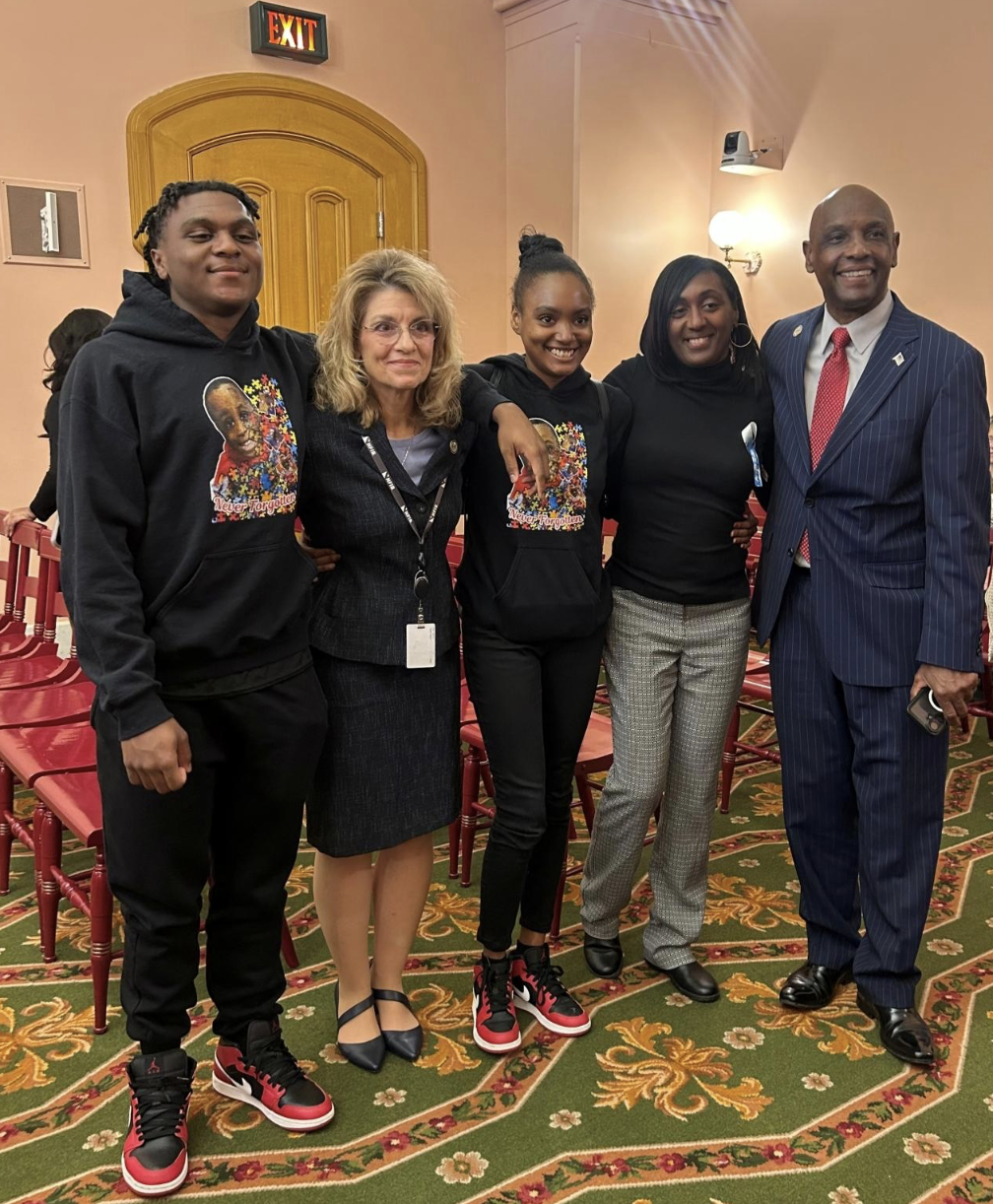
House Bill 359 took effect on September 17, establishing the Joshua Alert to help locate missing children with autism and other developmental disabilities across Ohio. Introduced by State Representatives Cecil Thomas (D-Cincinnati) and Jennifer Gross (R-West Chester), the bipartisan law was inspired by Joshua Al-Lateef Jr., a Cincinnati child with autism who went missing. His mother, Jonisa Cook, advocated for stronger protections and helped advance the legislation.
The statewide emergency alert allows law enforcement and communities to share information about a missing child’s disability and needs when the child may be in danger.
For Black families, this context can be especially important. Black children with disabilities can face both racial disparities and disability-related barriers. Behaviors such as avoiding eye contact, not responding to verbal commands or becoming distressed may be misunderstood during an emergency. Sharing a child’s communication needs can help responders approach them with greater understanding.
The Joshua Alert demonstrates how one family’s advocacy can shape statewide protections. As Ohio implements the system, key questions include whether families know it exists and whether responders have the information needed to locate and safely assist missing children.
| |
Your Response is Crucial: Take the State of Black Ohio Survey
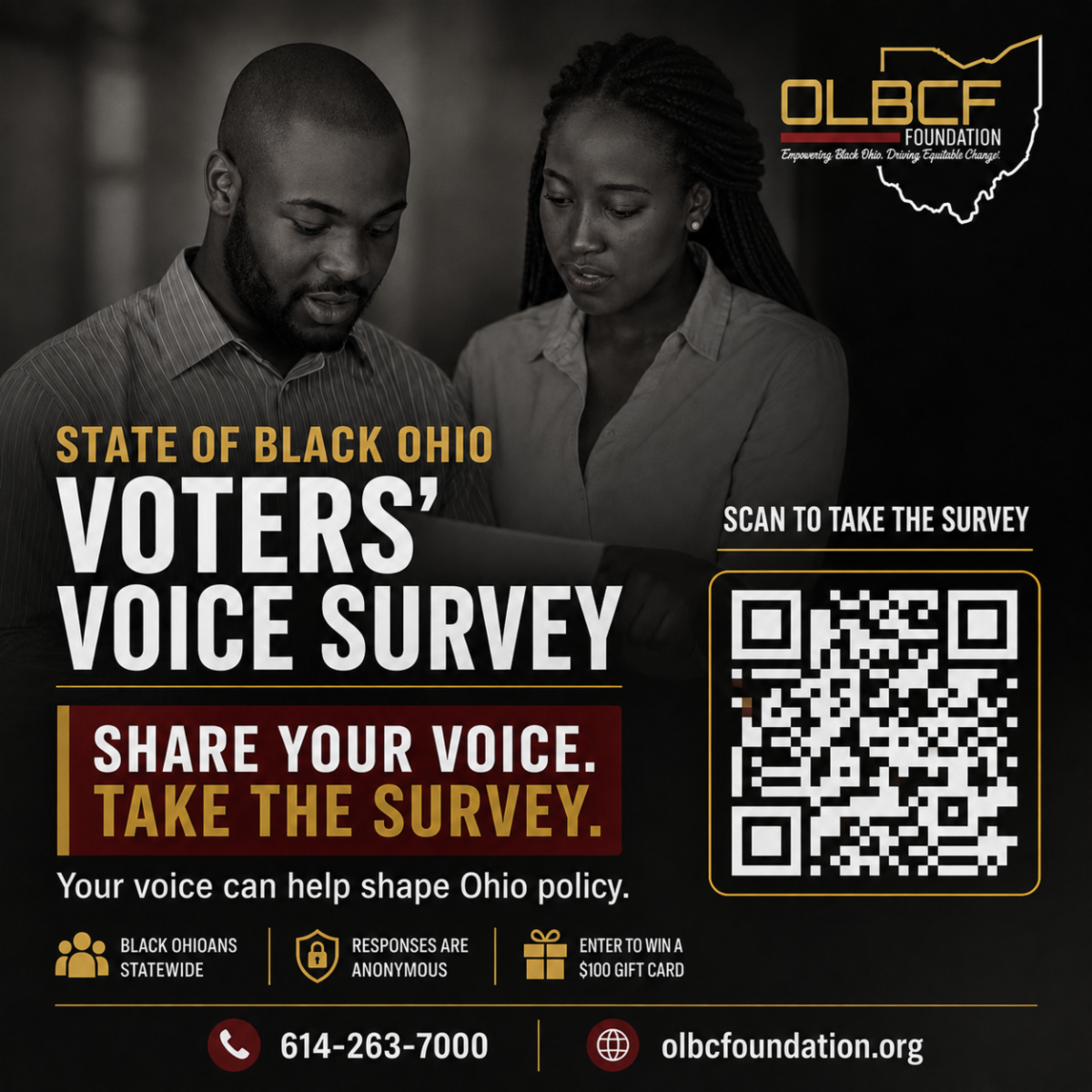
We are actively collecting responses for the State of Black Ohio: Voter's Voice Survey and are willing to travel to community events and gatherings to help residents complete the survey.
The State of Black Ohio Survey is how we turn lived experiences into meaningful policy change. When lawmakers ask, “What do Black Ohioans need?” we answer with your data, your voice, and your priorities. Just five minutes of your time can help shape a living policy agenda placed directly on desks at the Statehouse.
Have an upcoming event or community gathering? Partner with us by emailing office@olbcfoundation.org. Take the survey. Share it with three people. That’s how we build power together!
| | STATE OF BLACK CIVIC POWER IN OHIO REPORT | | |
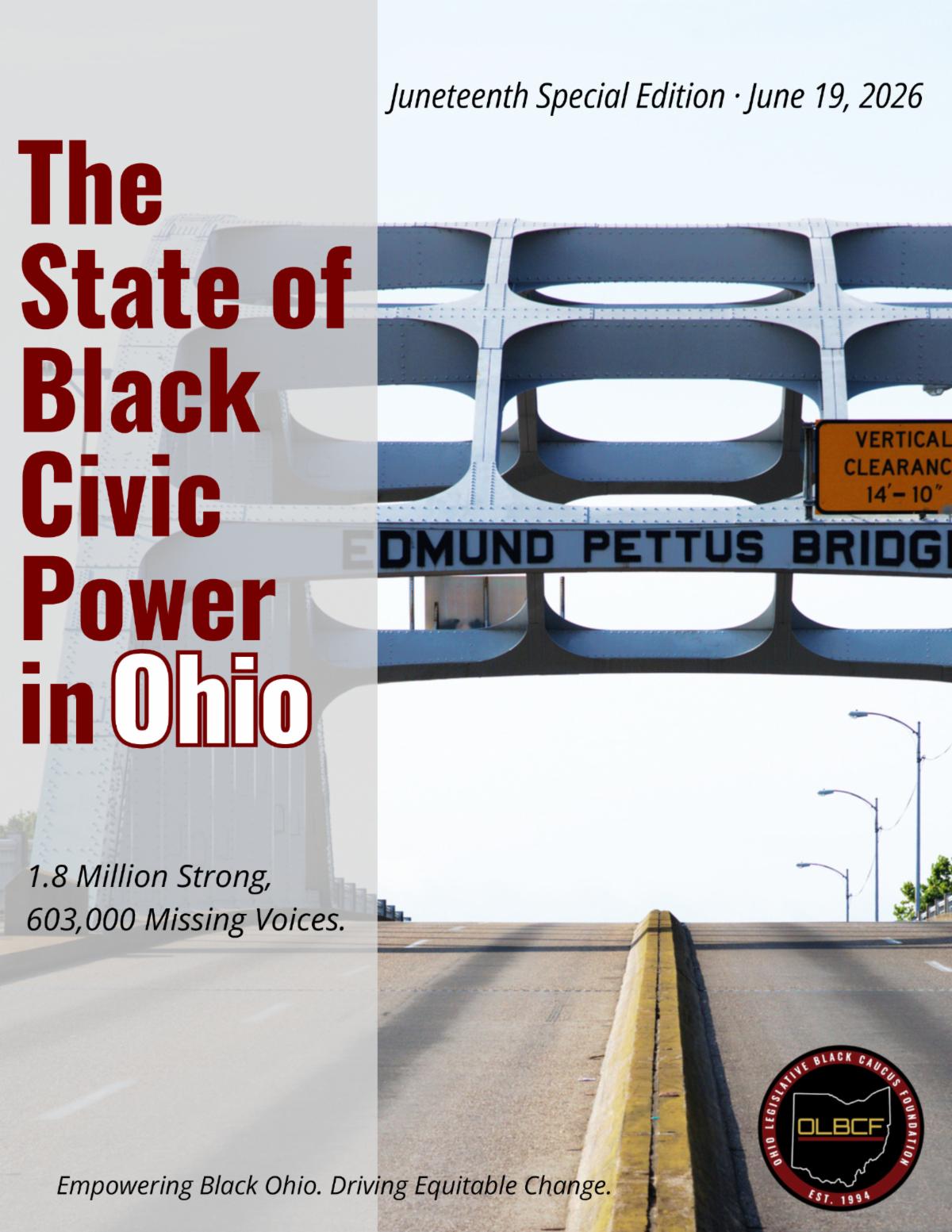
Black Ohio is 1.8 million strong, yet more than 603,000 eligible Black Ohioans were missing from the last midterm election. The State of Black Civic Power in Ohio examines the policies, economic conditions, and systemic barriers shaping Black political participation and representation across the state.
The report explores declining Black voter turnout, restrictive voting policies, widening economic disparities, and the challenges Black leaders continue to face despite increased representation. It also highlights the strength, influence, and untapped civic power present within Black communities.
This report is both a warning and a call to action. By understanding the barriers that limit participation and investing in voter education, leadership, and community engagement, Black Ohioans can strengthen their collective voice and help shape the decisions affecting their families, neighborhoods, and future.
| | | | |