Volume Eight - November 2020
Conaway's Legislative Digest
|
8008 Rt 130 North, Suite 450, Delran, NJ 08075
(856) 461-3997
|
Message to our readers
We are proud to offer you our publication. Assemblyman Herb Conaway, M.D. has over 22 years of experience as a trusted, reliable, and effective legislator.
|
|
USPS and The Mail-in-Ballot |
|
The United States Postal Service (USPS) is a branch of the federal government which provides mail processing and delivery to all individuals and businesses in the US. The Postal Service provides an important public service that is crucial to our nation’s infrastructure. It employs 600,000 individuals and pays approximately $2 billion in salaries and benefits every two weeks. The Postal Service employs more than 97,000 veterans making it one of the largest employers of veterans in the country. The postal service is a government agency; however, it is entirely self-funded. It does not receive appropriations from Congress for its operations. This means that they must raise funds through stamps and other service fees.
The Postal Service has a long standing history of financial troubles worsened by the misguided efforts of a recent Republican congressional majority. Even worse USPS has seen a steady decline in mail volume since 2006, with technology being the main culprit. In 2006, mail volume was estimated at approximately 213 billion units compared to 2019 with 142.5 billion units. This is a 33 percent drop. The COVID-19 pandemic has threatened to destroy the Postal Service financially. The CARES Act authorized the USPS to borrow up to $10 billion from Treasury for operating expenses if the agency deems it necessary. While certain industries such as Airlines and airports received direct grants, USPS was excluded from direct aid due to opposition from the Trump Administration.
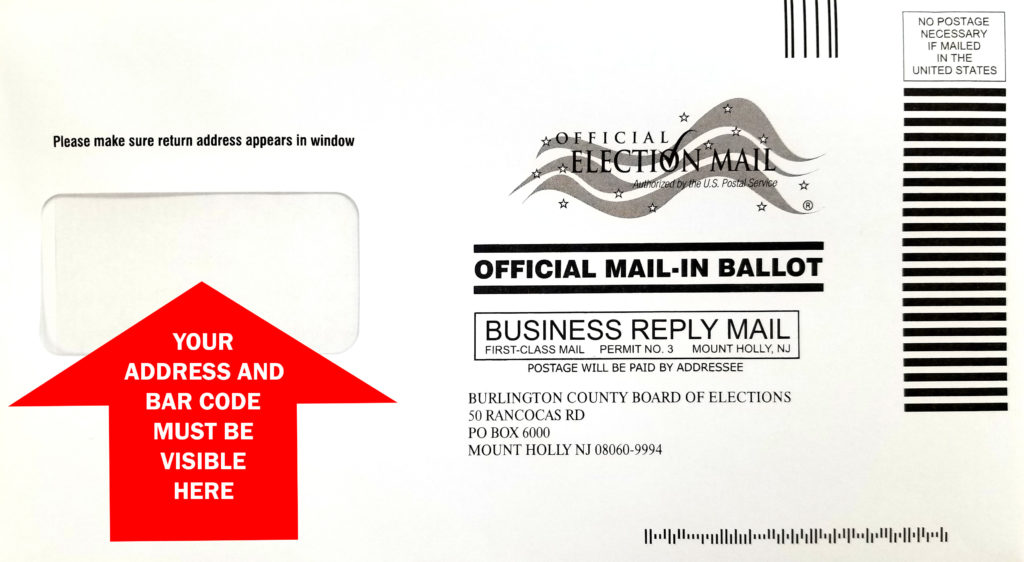
With rise of vote-by-mail balloting all over the United States, the USPSs role in the elections process is indispensable. Of the 1.5 million ballots cast for the NJ primary election, 1.28 million were vote by mail. Of the 5,558,403 people across the state that are registered to vote, there were 1,009,358 democratic ballots cast and 457,656 Republican ballots cast. This is a 26 percent turnout. According to the New York Times; over 80 million voters across the county are expected to vote by mail in the upcoming general election.
During the primary election, approximately 2.7 percent of New Jersey’s 1.5 million ballots were rejected. The majority of rejected ballots were for the following reasons:
- 9,550 ballots were received late
- 4,200 ballots had a signature mismatch
- 3,733 had no ballot enclosed
- 1,960 did not have the certificate signed
- 6,095 had the certificate missing
I sponsored the Ballot Cure Act to resolve some of the issues causing ballots to be rejected. This bill enables voters to access a confidential, free system to see whether their provisional, mail-in or overseas ballot was accepted for counting. This bill also prevents ballots from being rejected for a physical defect in the inner and outer envelope, certificate or ballot that is outside the voter’s control. If a ballot is rejected due to a signature deficiency, the county board of elections must notify the voter within 24 hours of the decision. The voter then has up to 48 hours, prior to the date for the final certification of election results, to complete and submit the ‘Cure Form” provided via mail or email. Once the Cure Form is sent back by the voter, and the ballot is otherwise valid, the ballot should be counted. There will be several options available this year for New Jersey voters to cast their ballot. Voters may also drop their ballot at their nearest Ballot Drop Box. There are at least 10 drop boxes located throughout each county. All Drop Boxes are secure, locked structures that are under surveillance by security cameras. The Drop Boxes are available 24 hours a day and the contents are collected daily by county election officials. Regardless of how you choose to cast your ballot, make sure your vote counts.
|
|
New Jersey State Health Insurance Exchange |
|
A study published in the American Journal of Public Health last year found that 66.5 percent of bankruptcies, by far the biggest cause, were due to medical issues including high bills and loss of income from missed work. For those of you who are old enough to remember, before the Affordable Care Act (ACA) getting private health coverage was even more stressful and time consuming. Because plans were medically underwritten, insurers evaluated health status, health history, and other risk factors to determine whether and under what terms to offer coverage. When the (ACA) took effect in 2014 value consumer protections followed.
One of the most popular and well known provisions of the law is the clause that states insurance companies cannot deny coverage based on a consumer’s pre-existing conditions. A Kaiser Family Foundation analysis from 2019 found that nearly 54 million people, 27 percent of all adults under 65, have pre-existing conditions that would have likely made them uninsurable in the pre-ACA individual marketplace. Other popular provisions were requirements to provide easy to understand plan summaries, subsidy assistance to individuals, and more.
Importantly, the ACA lifted lifetime caps on insurance payouts for most plans. There was a time in this country that if someone needed an expensive surgery, or serious care for a chronic condition, the insurance company could tell them that they had hit their maximum allowable payout and any additional care would be out of pocket. Estimates report that in 2009, about 55 percent of Americans were on employer plans with capped medical plans. Roughly 20 percent were capped at $1 million and roughly 32 percent were capped at $2 million. PWC estimated that roughly 20,000-25,000 Americans exceeded their cap at that time.
These are protections that we should be seeking to defend as a society. Hopefully many of us will never have a catastrophic emergency that necessitates these protections but we all know a family member or friend who has struggled with their health. I see patients and hear from constituents every day and without some of these benefits it will be almost impossible for them to get the care that they need, let alone recovery financially. I therefore find it very disheartening when I see people trying to erode these protections through the court system. I believe that many of the Affordable Care Act’s detractors would come to support the bill if all of its provisions were expanded by each state and they could come to learn about how many people it helps.
In an effort to protect the ACA and its many life-saving benefits from a hostile federal administration, I introduced Assembly bill 5499 last in the previous legislature. This bill set up a state based health exchange in New Jersey and codified the ACA’s provisions into state law. This helps us in a few ways. First, New Jersey can now control its open enrollment period. While the federal open enrollment period is only 6 weeks now, New Jersey’s will be 12 weeks starting November 1st. Second, in addition to subsidies to individuals and families who purchase plans through the exchange, New Jersey can invest in outreach and trained experts who can help enroll residents at no cost. The State is investing $3.5 million for navigators and outreach to historically disenfranchised groups to make sure they are covered. In 2020 this was $1.1 million and it was $400,000 in 2019 under the federal government. Perhaps most importantly though, even if the Affordable Care Act was repealed at the federal level, New Jersey residents would still benefit from the protections established on the state exchange.
Governor Murphy signed A-5499 on June 28, 2019 and the exchange goes into effect for 2021 Saturday, November 1st. If you are not covered by an employer or family member’s plan, please visit GetCovered.NJ.gov to compare and purchase health insurance plans. New Jersey residents who have annual incomes below 400 percent of the federal poverty level, an estimated $51,040 for an individual, will receive subsidies to help make their coverage more affordable. The net premiums for 2021 should be the lowest since the implementation of the program in 2014. The website is now live at GetCovered.NJ.gov for plan comparison.
|
|
This year's budget was unlike any other in New Jersey's history. The $32.7 billion approved covers spending from October 1, 2020 through June 30, 2021. There was no public testimony and the courts were involved in the decisions on how to allocate deficit spending. Also, tax payments were collected in July and not April and three months were added to the fiscal year to facilitate more efficient cash flows.
I have always kept a close eye on how New Jersey families are impacted by what we do in Trenton. This year was no different. I am proud to say that this year, we expanded the Earned Income Tax Credit (EITC) to include more young adults. Further, the budget provides $10 million for preschool expansion, $25 million in special education funding, $3 million in school lunch aid to make free meals available to more students, and a personal favorite, $5 million to the lead hazard remediation fund.
That difficult funding decisions in the wake of the coronavirus pandemic had to be made is quite an understatement. A number of items were reinstated that were originally cut. I personally fought to restore the $1.75 million for the Pediatric Psychiatry Collaborative. Additionally, $15 million was restored for school link services, $1.5 million of the child advocacy center multi-disciplinary teams and $3 million for family support services. Taken together the funding decisions reflect the enduring values of the people of New Jersey.
Other notable budget highlights include:
- $4.6 billion pension payment, which represents a 13 percent increase over last year;
- $1.26 billion in direct property tax relief, which includes $276 million for the Homestead Benefit. This is in addition to an increased property tax deduction cap and expanded Senior Freeze eligibility;
- Millionaire's tax - A tax on all income above $1 million, not just income over $5 million
- $263 million to the Clean Energy Fund for clean energy programs that continue to improve our environment;
- $80 million to the Drinking Water Program for water infrastructure improvements;
- $100 million to 30 programs statewide to continue fighting the opioid crisis;
- $45 million to the Children's System of Care (CSOC) for out-of-home and in-community services to address the mental health needs of New Jersey's Children;
- $30 million for criminal justice reform efforts - for the Earn Your Way Out program, Hepatitis C treatment, transitional housing and job training.
|
|
Social Impact Investments |
|
Many companies in America are directing their investments in not just what seems to be profitable business ideas, but increasingly in things that will have a positive impact on society. This is what many are calling social impact investment, and we have seen more and more companies in recent years engage in this type of investment strategy.
Accordingly, investment banks have shifted their focus to accommodate the desires of their investors, and as such, have created special programs or funds dedicated to fixing social ills. Impact investments, which aim to promote a social good or prevent social ill, have significantly outperformed traditional “bets” during the coronavirus pandemic. (Https://nyti.ms/2QLBFit)
Impact investing focuses on three categories: environmental, social and governance (ESG). Sixty four percent of actively managed ESG funds beat their benchmarks versus 49 percent of traditional funds through the first week in August. (RBC Capital Market Report)
Nancy E. Pfund, a managing partner and co-founder of DBL partners was quoted as saying, “Every time something goes wrong in the world, it’s a boost to impact investing. There’s a generalized frustration that whatever people have been doing for the last X number of years, it’s not working.” This thinking has ultimately caused a shift in investment strategy resulting in unprecedented levels of impact investments. Investment dollars have begun to follow returns. In the first six months of 2020, $20.9 billion went into impact funds, which was slightly less than all investments in impact funds for the entire 2019 calendar year.
|
|
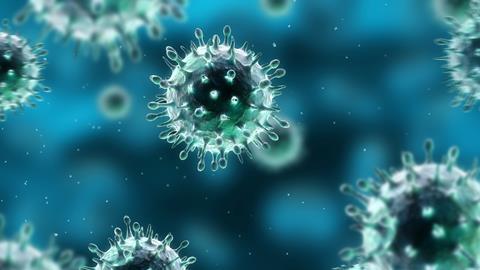
Influenza, or the Flu, is a contagious respiratory infection which can cause mild to severe illness, and in some cases death. Influenza is characterized by some or all of the following symptoms: fever, cough, sore throat, runny/stuff nose, body aches, headaches, fatigue, vomiting or diarrhea. Respiratory droplets can be spread when an infected person coughs talks or sneezes. The World Health Organization (WHO) and the Centers for Disease Control and Prevention (CDC) recommend a yearly Influenza vaccination for individuals over the age of six months, especially high risk individuals. This can include pregnant women, elderly folks, those with certain health issues and healthcare workers.
I have introduced bill A4576, which would mandate the annual flu vaccination for children and students in private and public K-12 schools, preschools, daycares and institutions of higher education. There are certain medical exemptions available for students who are not able to safely receive this vaccine. As we battle the COVID-19 pandemic, it is more important than ever for everyone that can to get their flu shot. COVID-19 symptoms can include fever, cough, difficulty breathing, vomiting and diarrhea. COVID-19 and Influenza are both contagious respiratory illnesses and have similar symptoms. This can make it difficult for health care providers to diagnose and treat patients accurately without further testing. While the flu vaccine will not protect against COVID-19, it is important to note that is possible to get the flu and COVID-19 at the same time. There is currently no evidence that getting a flu vaccination increases the risk of getting COVID-19.
Previously, I sponsored bill A1576 requiring an annual flu vaccination for all healthcare workers, which was signed into law this past January. Healthcare professionals come into contact with ill and compromised patients every day which makes it essential for them to be vaccinated for themselves and their patients. There are still those that are hesitant to get vaccinated based on certain myths and common misconceptions. Only 42 percent of New Jersey adults receive their annual Flu vaccine, with the national target being 70 percent.
These are some common misconceptions about the Flu vaccine debunked:
-
The influenza vaccine will give me the flu: The Flu vaccine is made with inactivated viruses that cannot transmit the infection. It takes up to two weeks to build immunity after a flu shot. If you are exposed to the active virus in that time period or prior to the shot, you may catch the flu.
-
The Influenza vaccine is not effective: The vaccine effectiveness varies from season to season because of how quickly the virus evolves. The level of effectiveness each year depends on how closely the vaccine is a match to the circulating virus.
-
Healthy people do not need to be vaccinated: Healthy individuals put elderly people and those who have chronic conditions at risk by not getting vaccinated. A healthy person may get the flu and experience mild symptoms, however, if they infect a vulnerable individual, the outcome can be deadly.
-
An annual Flu shot is not necessary: The Flu vaccine must be taken every year. A person’s immune protection from the vaccine declines over time, therefore an annual vaccine is necessary for optimal protection. Secondly, the flu virus is constantly mutating meaning the vaccine commonly differs from year to year to match the most common circulating viral strain.
-
The Flu is not a serious illness: Influenza is a serious disease that can lead to hospitalization and death. The CDC estimates that in the previous flu season, there were anywhere between 24,000-62,000 flu deaths in the United States.
According to the CDC, the flu vaccine reduces the risk of flu illness by between 40 percent and 60 percent when most flu viruses are well-matched to the flu vaccine. During the 2018-2019 flu season, the vaccination prevented an estimated 4.4 million influenza illnesses, 58,000 hospitalizations and 3,500 flu-associated deaths. This vaccine can be administered in a doctor’s office, at a local pharmacy or at one of the several flu clinics that are held this time of year. There is no prescription or referral required and with most insurance plans, there is no cost sharing involved. We cannot be 100 percent sure what the next few months will look like, however, taking all known precautionary measures will surely save lives.
|
|
Burlington County Recycling Program |
|
The Burlington County Regional Recycling Program is funded by the Board of Chosen Freeholders and operated out of the Robert Shin Recycling Center in Westampton. This program is operated by the Occupational Training Center (OTC) of Burlington County which is a private non-profit corporation that offers vocational rehabilitation and job placement programs for adults with disabilities in Burlington County. The OTC has a fleet of 22 recycling trucks which collects about 195 tons of recyclables from approximately 175,000 households, across all 40 municipalities. The program is designed to process paper, glass, plastic and metal containers from single family homes, complexes, schools and other municipal drop off sites. The recyclables are brought back to the center, processed and shipped to a variety of markets by the OTC. The cost of this contract is approximately $3.10 per household and saved the county approximately $3.3 million last year in landfill tipping fees for disposal.
Each day, 20 trucks are sent out to collect recycling across the county. The recycling is put into a metering drum that sends an even flow of material to the main conveyor belt. The first step in the sorting process has workers pulling trash, plastic bags and other incorrect items they can spot out of the flow. There are often items pulled out that can damage equipment such as car parts or other heavy metal parts. Large spinning disks help separate glass, large cardboard, paper and whole containers. Aluminum cans are filtered out using a strong magnet that pulls them off the conveyor belt. Once the recycling is sorted, plastic containers are compressed into 1,200 lb. bales. The center compresses 130 bales of paper and cardboard per day. 40 bales of plastic bottles and cans are compressed per day. Once the recycling is collected, sorted, and packaged - it is sent to various locations.
Eighty five percent of Burlington County residents put out their recycling at least once a month. However, 45 percent of residents are putting the wrong items in their bin. Of the over 350,000 pounds of product that arrives for recycling per day, about 40,000 pounds of it is incorrect items. The contamination rate of the current recycling collection is at 10 percent with a future goal of five percent. Incorrect items placed in recycling bins by residents include plastic bags, foam and air packets from packages, syringes, Styrofoam, frozen food boxes and more. Certain items like syringes can jam the sorting machine. This requires the facility to stop the machines and manually unjam them. Plastic bags wrap around and clog sorting disks, which requires workers to pull them out by hand each day. Shredded paper is no longer accepted which has made sorting easier and has reduced the contamination rate of the recyclables. Other commonly received items that are not accepted include light bulbs, hoses, hangers, batteries, plant pots, hardback books and pizza boxes with grease. There are 30 staffers that sort the recycling to remove incorrect items in addition to the machine sorting.
“Recycle Coach” is an app that can be downloaded from the iTunes or Google Play app store and offers recycling information specific to the Burlington County Program. It provides information on the pickup schedule, other recycling events, information on accepted recycling materials and more. It also allows users to set alerts and reminders for pick up days and send questions and concerns directly to the office for a prompt response. For those without a smartphone, there is a PC/laptop friendly version available as well. Recycling is required by law. It saves the municipalities money because less waste needs to be sent to landfills. It also reduces trash which keeps our landfills emptier and conserves natural and nonrenewable resources.
|
|
Assemblyman Herb Conaway Jr. |
|
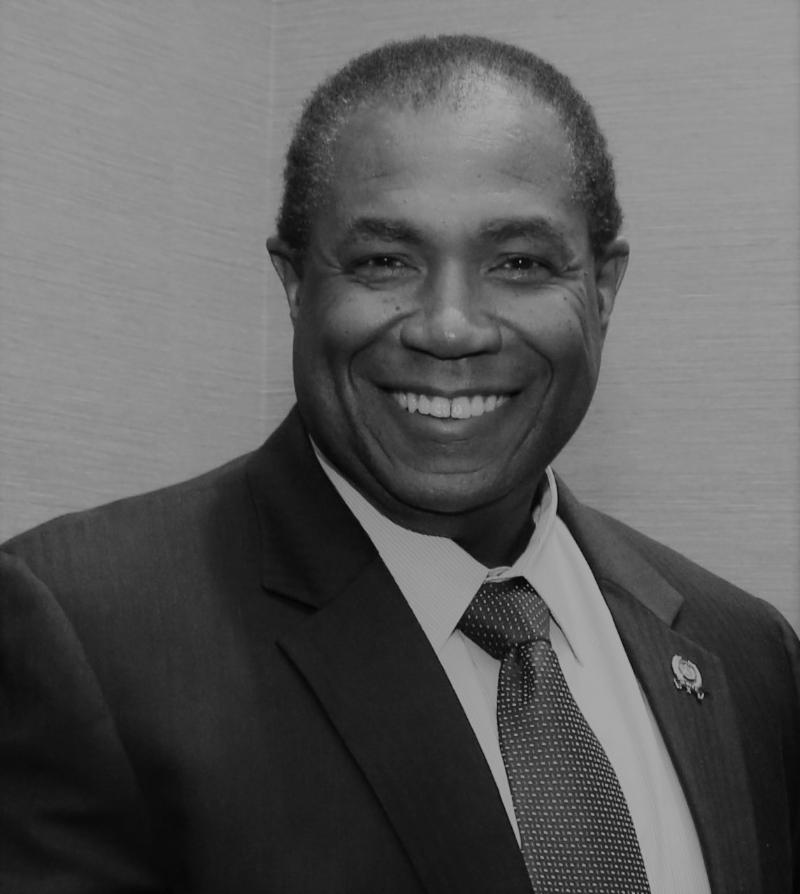
The Honorable Herb Conaway, M.D., elected for an 12th term, has been serving New Jersey’s 7th Legislative District as its assemblyman since 1998. In the 219th Legislature, Conaway is a leader in the democratic majority, Chairman of the Health and Senior Services Committee, member of the Appropriations Committee and member of the Science and Technology Committee.
Conaway is the only member of the State legislature with both a medical and law degree. He specializes in internal medicine and practices in Trenton, New Jersey. He earned his bachelor’s degree in politics from Princeton University, his medical degree at Jefferson Medical College and his law degree from Rutgers Law School, Camden. Conaway also served as a U.S. Air Force Captain in the Medical Corps at McGuire Air Force Base, as a general medical officer and as an assistant director of the primary care clinic for the base.
In addition to playing a leading role in most of the major health legislation signed into law during his 13-year tenure as health chair, Conaway sponsored New Jersey’s school funding formula, increased fiscal accountability within school districts, added technology to core curriculum standards and modernized nutritional standards in public schools. He has also sponsored successful legislation advancing environmental protection, property tax relief, veterans services and public safety.
|
|
Office of Assemblyman Conaway
856-461-3997
Asmconaway@njleg.org
|
|
|
|
|
|
|
|