Elmo Peeler Note-for-Note Piano Transcriptions
|
|
|
Today is the first day of August and time again for my monthly newsletter to keep you informed of recent transcriptions and other news of the last month.
|
|
 |
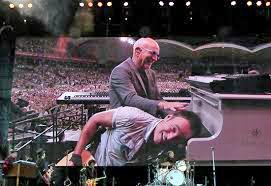
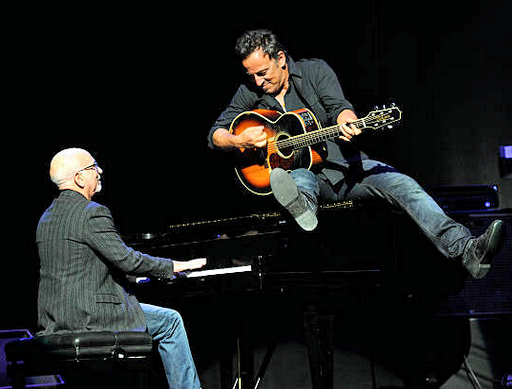
Bruce Springsteen & Roy Bittan in concert
|
|
If Roy Bittan, pianist for Bruce Springsteen's E Street Band, could play only one more Springsteen song, what would it be?
"Jungleland", the last track on the
Born To Run album, was his answer. This month we'll take a closer look at Bittan's piano Interlude right after Clarence Clemons' sax solo.
Also new this month is an exercise that clarifies the basic elements in 'Swamp Rock', a style that Leon Russell and Dr. John were quite at home with.
BTW, to make sure that my email doesn't end up in your Spam folder, please add me to your Contact list and/or mark my email as "Not Spam".
Note that every Title Heading is clickable.
Elmo Peeler
|
|
|
ALL of the Sheet Music listed on my website has been personally transcribed by me, and guaranteed to be note-for-note perfect.
Whether you:
-
have a cover band and want to get your keyboard parts exactly correct,
-
are a professional who wants to study the styles of rock's greatest keyboard players, or
-
are a hobbyist that wants to learn how to play pop/rock and great piano music,
...these note-for-note transcriptions will prove extremely helpful.
And as always, if you ever need any help, just drop me a note at: elmo@manymidi.com
|
In the News!
- Bruce Springsteen & Roy Bittan
The E Street Band's Pianist
|
|
|
Roy Bittan & Bruce Springsteen
|
|
Born in 1949 in Queens, New York City, Roy Bittan said that music first entered his life when, as a child, he saw an accordion player, Dick Contino, on the Ed Sullivan Show.
"I said, 'I want to play that.' He was pre-Elvis; from like 1949 to 1952, he was one of the biggest entertainers in the U.S. - very Italian-looking guy, muscular. Women in those days would throw their hotel room keys at him. I was too little to understand that part, but I loved the instrument, so I wanted to take accordion lessons, and my parents indulged me. I studied the accordion.
"The two sides of the accordion are broken up, the right hand being the melody and the left hand being sort of chordal. I suppose you could say the same thing about the piano, but it's not really the same on the piano, because when you play the accordion, you tend to play melody with a harmony of thirds and maybe sixths, and it's a very, very melodically evocative instrument. The accordion also has a sense of pathos, as well as a sense of joy. I mean, it's a woodwind. It's wind blowing over a reed. And it can be very expressive when played properly. So I think the training I had on the accordion gave my playing an expressiveness.
|
|
|
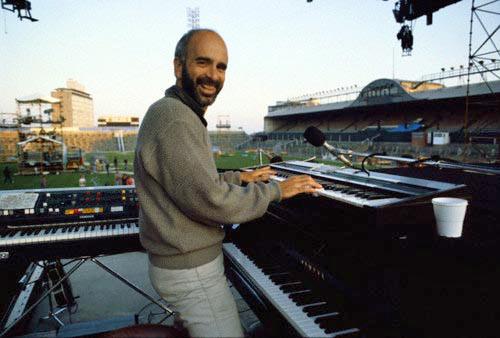
Roy Bittan - E Street Band pianist
|
"Also, when I studied the accordion, I had a teacher who gave me the pop songs of the week to write out a chord chart, which is basically the melody of the song and then a symbol above it of what the chord is underneath it. You have to figure out how to play the song. So, that sort of extemporaneous, spontaneous training of taking a melody and then embellishing the accompaniment gave me a leg up on those who took piano lessons and maybe just studied classical music. I was trained early on in expressing myself and getting the most out of a particular piece of music."
Roy first met Bruce Springsteen in 1974 at Max's Kansas City, a nightclub in NYC where Springsteen and his E Street Band were sharing the bill with Bittan's band. "So for a few nights, our bands would trade sets, and we would pass in the hall. I would go, 'Ah, man, you're so great,' and he would go, 'Hey you played really great.' We would pat each other on the back: 'Hey, have a good set.' There was no question in my mind that he was going to break through."
|
|
|
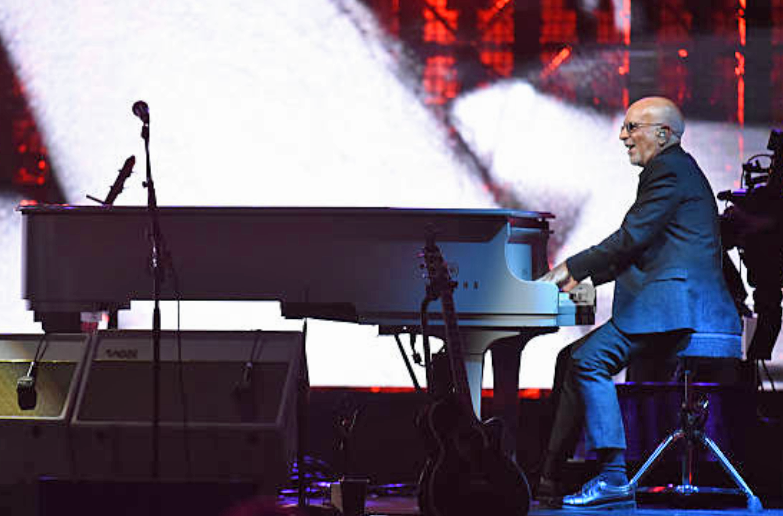
Roy Bittan - a Grand Style
|
|
Bittan's first album with Springsteen's E Street Band was
Born To Run. "We spent a good bit of time working on the arrangements. We would labor over, 'Well, what do we do with the ending of 'Thunder Road'?' And 'Jungleland', my God, it was like, 'How do I connect all this stuff?' My classical training helped me connect all the sections and sort of make them flow together. Then we had to play it like it was a real piece of music. Bruce didn't want to just splice the song together; we would perform it from beginning to end and try to get one great take - not easy to do. So there was a lot of rehearsal involved, a lot of construction. The songs needed tight structure, and I think I was able to distill them and work up piano parts to highlight what he was doing. Using so much piano on the album gave it a certain gravitas rather than just maybe doing it all with guitars."
When told that Keith Richards had said that his last request would be to play "Jumpin' Jack Flash" one final time, and asked what song would that be for him, Bittan replied, "That would be the longest song we ever recorded, which is 'Jungleland'."
Here are my Roy Bittan transcriptions:
Here are my transcriptions of other E Street Band members:
|
August's New Transcription
- "Jungleland" Piano Interlude
On "Jungleland" Clarence Clemons takes a great sax solo. After it's over but before Bruce Springsteen resumes singing, pianist Roy Bittan plays a solo Interlude. In live performances this piano Interlude varies from the album version, and one of the best performances was "Live at the Nassau Coliseum" on December 29, 1980.
This month I've transcribed Roy Bittan's 28-second, 16-bar solo piano Interlude as played Live on 12-29-1980. Although brief, it incorporates some nice pianistic techniques to wind down from the preceding intense sax solo, setting the stage for the return of the lead vocal: octaves, cascading 16th-note arpeggiated runs, alternating 3/4 and 5/4 meter, plus rubato.
If you'd like to play this brief but important part of "Jungleland" exactly as Roy Bittan has performed it, this is just what you need.
-
(
click here to hear Bittan's "Jungleland" Interlude)
|
August's New Exercise - 'Swamp Rock'
The Basic Elements: 4ths, 6ths & Tritones
|
|
|
| Leon Russell's hands - lots of Swamp Rock |
|
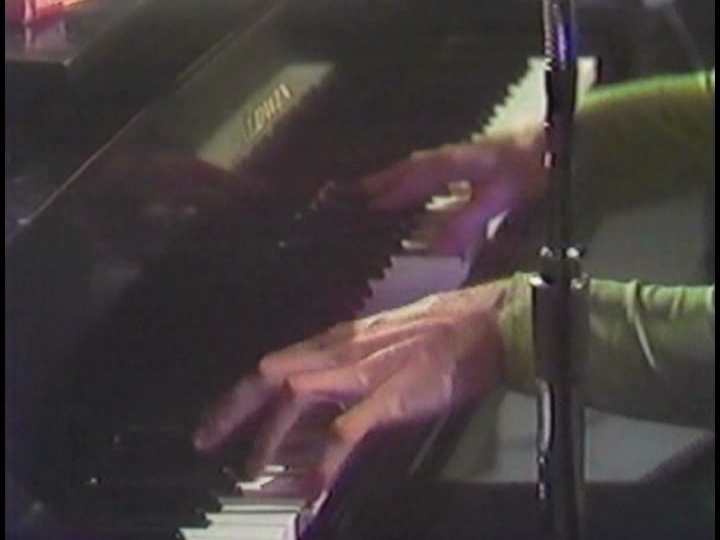
"Swamp Rock" is an atmospheric piano style with roots in the Louisiana bayous, but an Oklahoman, Leon Russell, played it as well as anybody. This exercise helps clarify some of the basic elements that give it its colorful 'sound':
1)
4ths - good for fills over the I chord
2)
6ths - good for fills over the IV chord
3)
Tritones - right-hand voicing for dominant 7th chords
This is an 8-bar phrase that introduces the player to these three important elements of the "Swamp Rock" style. The Performance Notes explain the music theory underlying this style.
(BTW, if you need other good, effective technical exercises, please check out the other 65 exercises available.)
(click here to hear it on a honky-tonk piano)
(click here to hear it on a grand piano)

Since Leon Russell was the master and leading exponent of 'Swamp Rock', here are my actual Leon Russell transcriptions (not exercises but pieces that are great to learn from):
Bobby 'Boris' Pickett - "Monster Mash" - Leon Russell, piano
|
'Crowdfund' a Transcription - "Tell Her No"
Rod Argent in the Zombies' classic
'Custom' (to-order) transcriptions can be expensive because of the time required. And when a recording is particularly long and/or complex, the expense can be too much for one person.
|
|
|
| The Zombies |
|
Fortunately, "CrowdFunding" (I use the term generically) has now succeeded four times with important transcriptions: first Ethel Caffie-Austin's "Amazing Grace", then Don McLean's "American Pie", then Johnny Rivers' "Rockin' Pneumonia". and most recently, Chuck Berry's "You Never Can Tell". Thanks very much to everyone that contributed.
The way it works is simple: Drop me a note and let me know how much you'd like to contribute.
No contributor will b
e allowed to pay in advance, but only after the transcription is finished and distributed to all the contributors and everyone is happy with it.
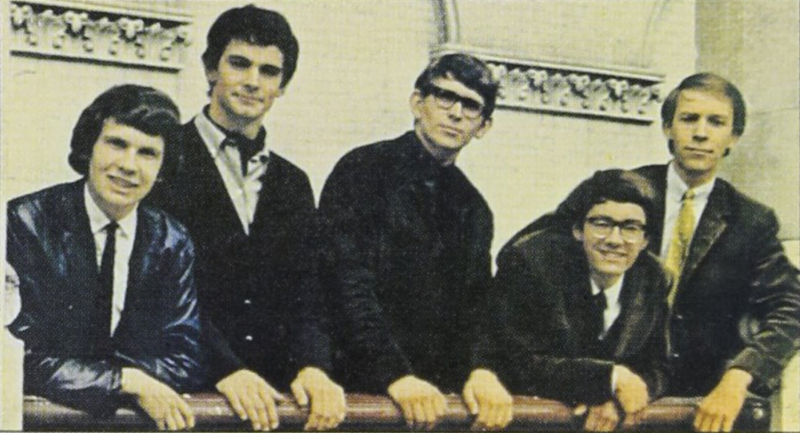
An historically important keyboard track that needs to be transcribed note-for-note is Rod Argent's electric piano part on the Zombies' 1965 classic "Tell Her No".
Click here to hear
"Tell Her No", which Argent composed. What a creative keyboardist he was even as a young man, and has always been.
if you'd like to participate in 'crowdfunding' a note-for-note transcription of Rod Argent's classic electric piano part in the Zombies' "Tell Her No"... or, if you have other suggestions.
My 'CrowdFunded' transcriptions to-date:
|
It's remarkable what the human mind can achieve when one makes a commitment to oneself. If you're considering professional guidance, feel free to call me (323-650-6602) and let's talk about it on the phone for a few minutes. There's no charge.
I've
toured the world playing keyboards and arranging/conducting for these Rock and Roll Hall of Fame Artists:
- The Beach Boys
- Ricky Nelson - Stone Canyon Band
- Rod Stewart - All 'Unplugged' concerts
I've also won classical piano competitions performing Beethoven, Rubinstein and Saint-Saens' Piano Concerti. See me playing here. "Josie's Boogie" is quite the virtuoso dramatic minor-key showpiece; check out the ascending double-octave run at the ending... :)
Thanks to the internet, I can help you play piano better - rock or classical, by ear or by note.
Perhaps all you need is just an hour or two on Skype discussing rock keyboards.
If you're serious about wanting to improve, drop me a note at info@manymidi.com. Tell me three things:
1) Your musical background
2) Where you are currently, musically-speaking
3) Your musical goals
My students include members of:
- Weezer (Rivers & Brian)
- Vampire Weekend (Ezra & new addition, Greta)
- Incubus (Mike)
- The Strokes (Nick)
- Rooney (Robert)
- Jason Schwartzman ("Mozart in the Jungle")
- Courteney Cox
- Sasha Spielberg
|
|
|
|
|