THE ISLAND GARDENER
October ~ 2026
| | |
|
- Leadership Smoothie
- Garden Club Program
- What's Coming into Bloom
- Cultivating Friendships
- Embrace the Seasonal Rhythm
- Garden-Speak
- Rainy Day Reads
- Reflecting on Fall Activities
- Discovering Local and Global Gardens
- Ms. Gardenia - Out of the Shed, Into the World
- Meeting Door Prizes & Member Raffle
- Made You Smile
- Membership - Join Us This Year!
| | |
Welcome to another flavorful smoothie! You'll hear not only from the presidents but also other leaders within the club. They'll share their personal stories, values, perspectives or updates. We don't know what to expect but like a smoothie, these messages will be a delicious concoction of random ingredients that surprisingly work together. We hope you find these articles to be satisfying, healthy and rejuvenating. We hope to be that positive element that boosts your mood! Are you ready? Grab your favorite morning beverage and settle in for some delightful reading!
| | |
A Message from our Communication Leader, Kristin Tolle
Fall Food Gardening on Orcas
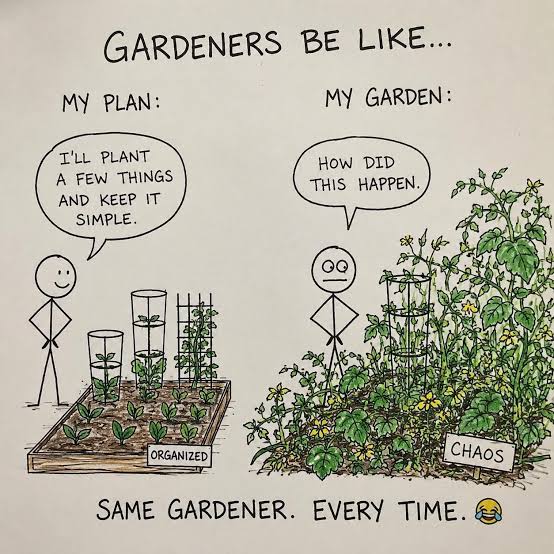
As we gardeners know, Fall is a great time to be on Orcas. What my garden lacks in beautiful flowers—ignoring the rhododendrons—it makes up for in food production. Sometimes too much food production.
Over the years I’ve learned what to plant less of (cucumbers and squash); I also learned what to plant more of (tomatoes and peppers). This year I grew 7 varieties of tomato and still feel a bit jilted. Meanwhile my plums that usually only produce bi-annually, provided me with another bumper crop this year in addition to last.
It’s funny how surprised people who don’t plant food gardens react when I tell them, planting and protecting is the easy part. It’s the harvest when the real work starts. I find it to be challenging to keep ahead of the ripening fruit to make sure none of it goes to waste—even though I share liberally, like it or not, with the local fauna.
| |
This is why I love planting a Fall garden. It gives me a break from slicing and dehydrating apples and pears, chopping and freezing plums, and making dropoffs to the foodbank. To say nothing of the foisting the overabundance on friends.
We are lucky to live in such a temperate climate. I take advantage of that by planting winter hardy root vegetables: carrots, onions, potatoes, garlic, etc. If I really want these to come ripe in early summer, it’s best to get them in the ground now. I don’t water them—at all. I let our Fall rains do all the work.
Pretty much any food plant that can winter over is fair game for putting in the ground now. I encourage you to give it a try!
| | Garden Club Program ~ October 21st | | |
Orcas Island Garden Club
presents
Barb Faville
and Tristan Levine
Meerkerk Rhododendrons Come to Orcas
at the Orcas Center and via zoom
Presentation starts at 10:00 am
REMEMBER TO BRING SOMETHING FOR THE SHARING TABLE
| |
| Learn about Meerkerk’s history and the distinguishing characteristics of rhododendrons which will increase your appreciation of the vast variety of these plants. You’ll receive guidance on pruning rhododendrons to get the most out of your plants. Fall is a great time for planting! Come early at 9:30 for coffee and socializing. | |
- October 20, 22, 27, & 29: SJC, WSU Master Gardener Workshop Series
- October 21: Meerkirk Gardens presents to the Garden Club
- October 22: Needle Felted Pumpkin Workshop
- October 24: Native Pollinators of SJI with Russel Barsh
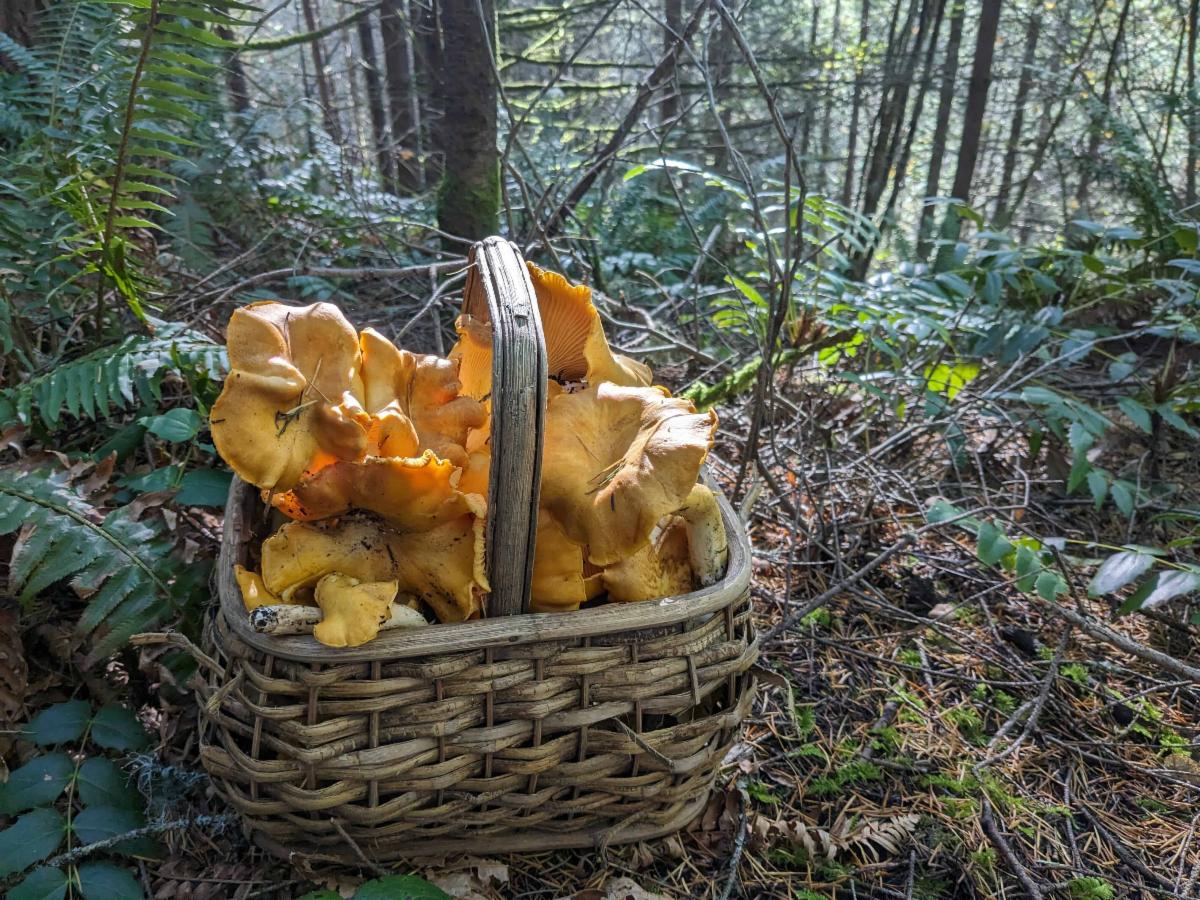
- October 24: Mushroom Talk at the Library
- October 25: Mushroom Walk at Moran State Park
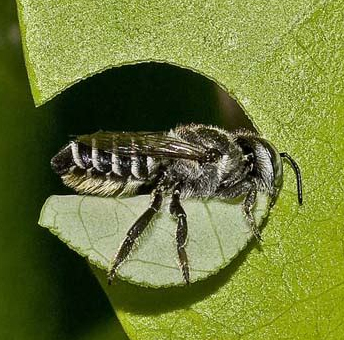
- October 30: Mason and Leaf Cutter Bee Workshop
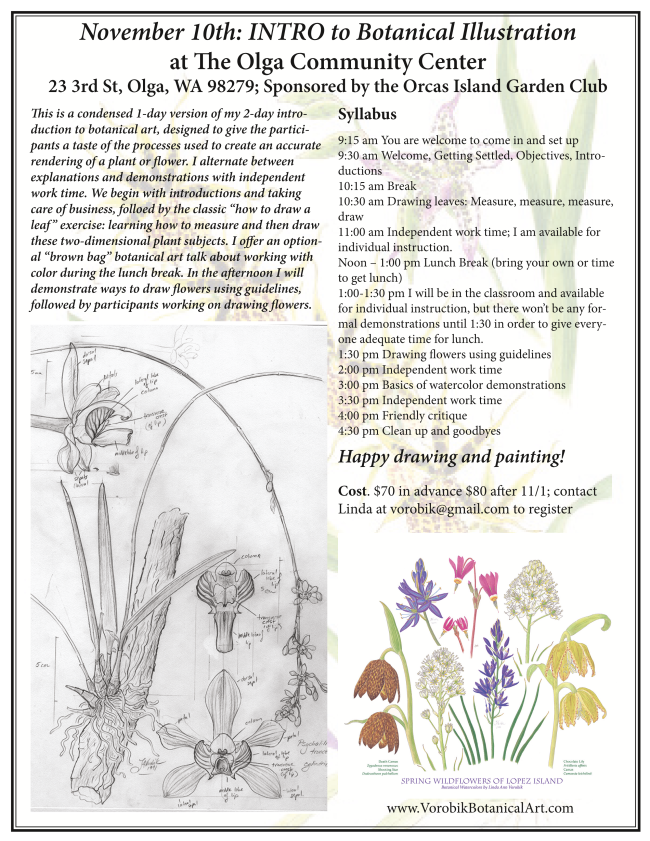
- November 10: Intro to Botanical Art Workshop with Linda Vorobik
- November 13: OIGC Bookclub ~ Fire Weather by John Vaillant
Join us for these and many other exciting events!
More details can be found on our new Club Calendar!
| | |
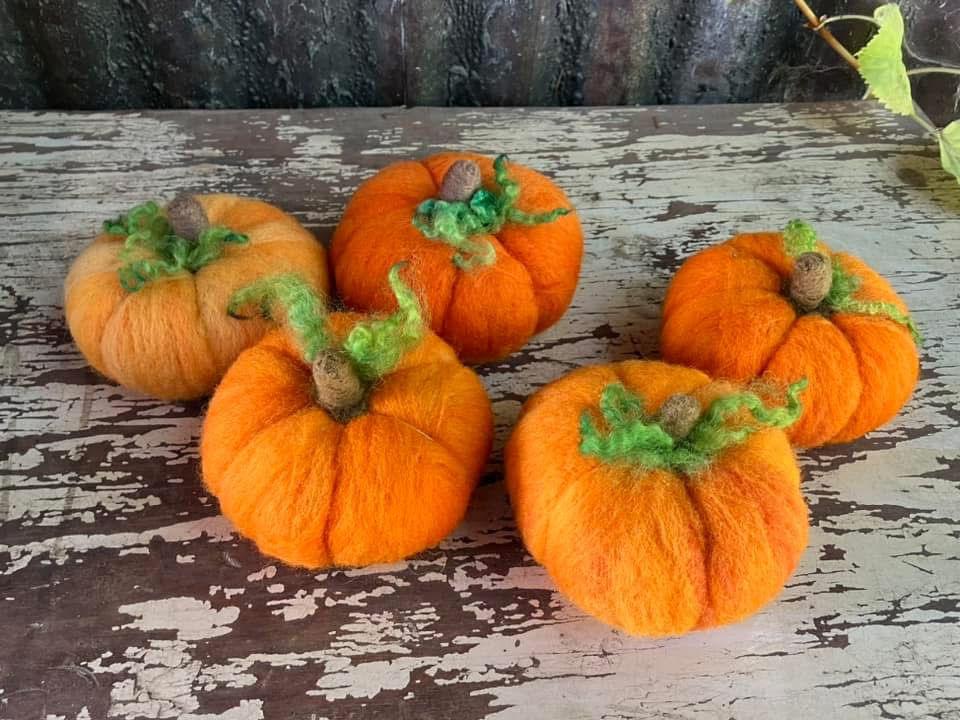
Needle Felted Pumpkin Workshop Thursday, October 22 from 4 - 6 pm
Come learn from Mandy Troxel, Felting Artist Extraordinaire. A Seasonal Favorite! She's been leading Pumpkin workshops for years, and they never cease to be fun and surprising.During this 2-hour workshop you will complete one pumpkin (or squash of your choosing), perfect for celebrating the Autumn Harvest season!
| |
This class takes place in the rennovated 1880's log cabin, "the wooly homestead", at 4th Seed Farm. The class will include:
- A short introduction to wool and its versatility as an art and craft medium
- All the wool and felting tools you will need to finish one Pumpkin (or other squash)
- And yes! There will be pumpkin bread - yum!
RSVP HERE
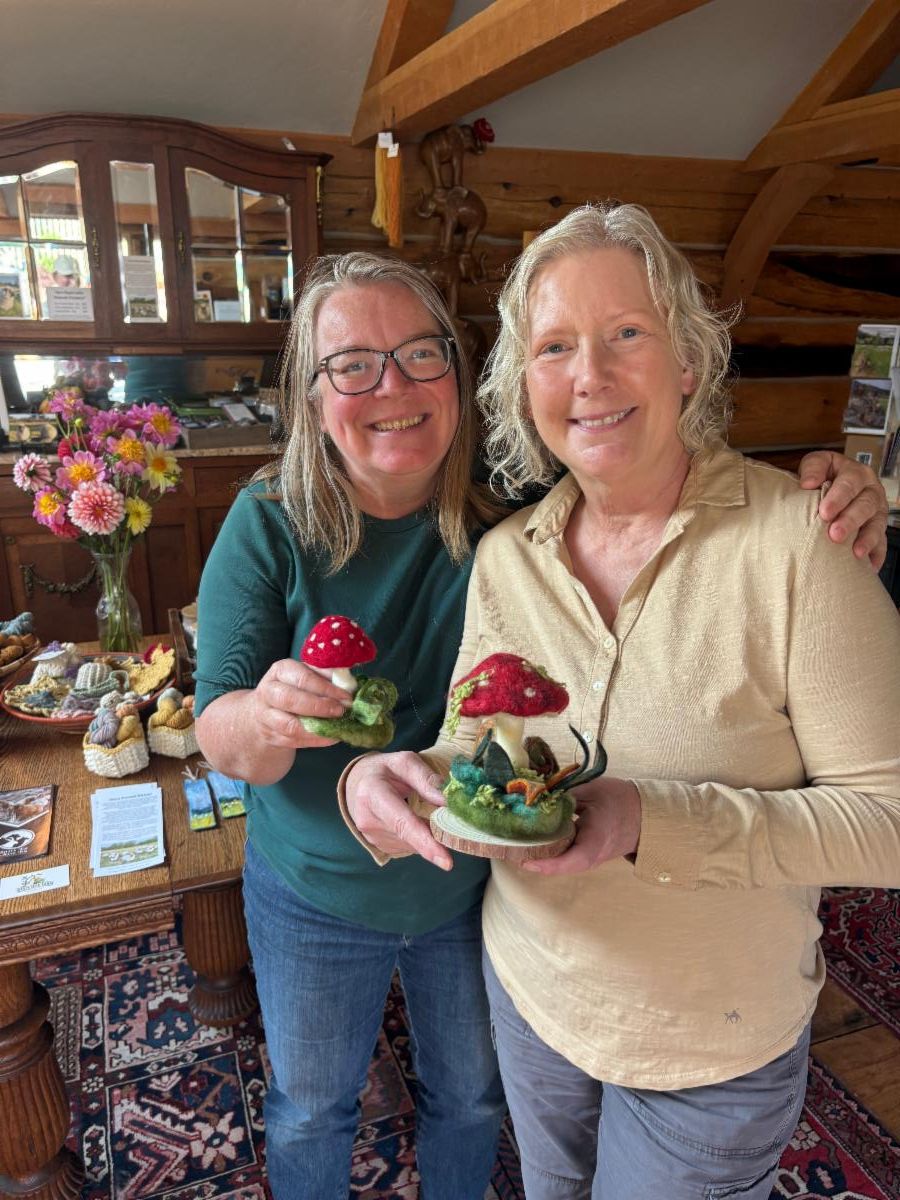
Pictured is Mandy and Laura following the September mushroom felting class. It was so much fun and Mandy is such a talented and patient teacher. All levels of experience are welcome.
| |
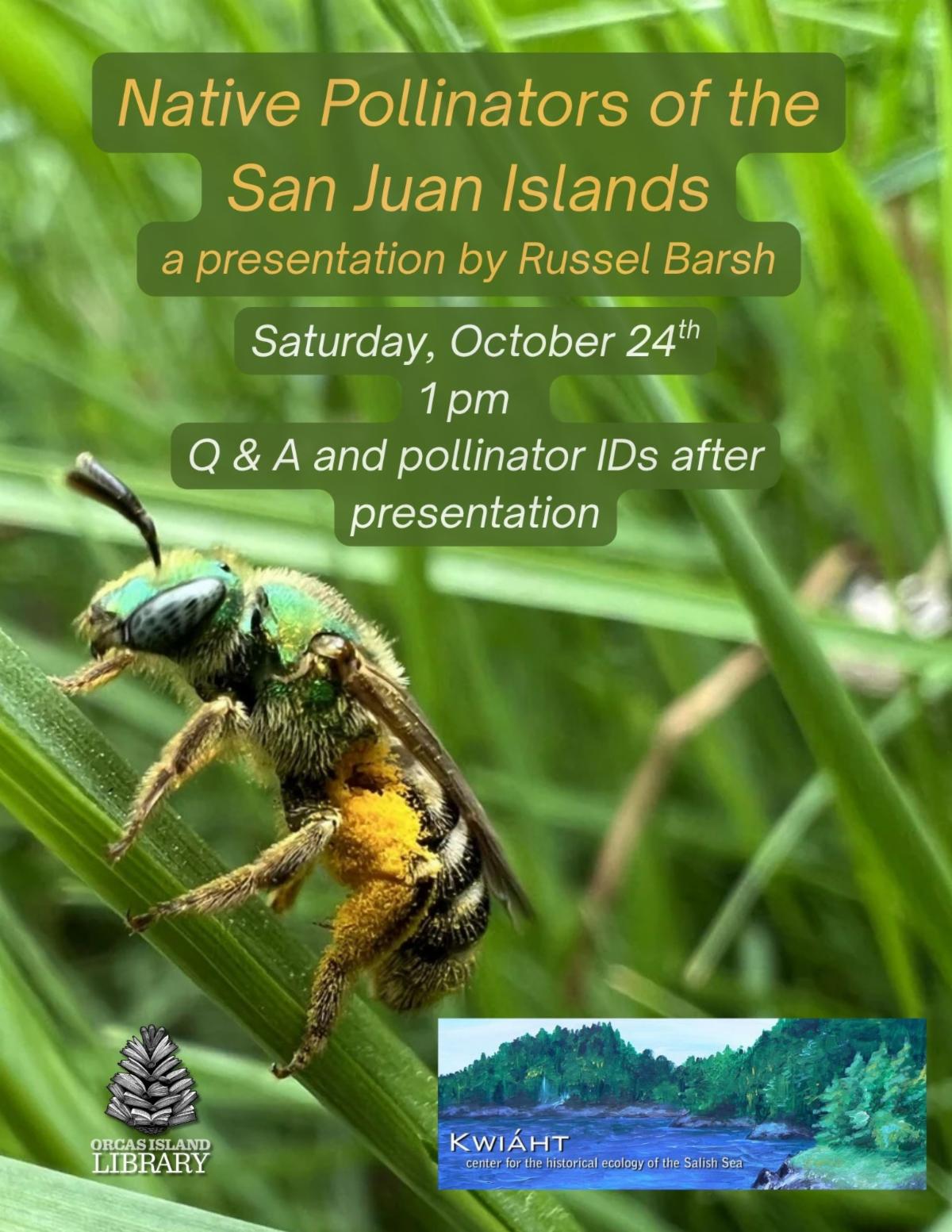
Native Pollinators of the San Juan Islands
Saturday, October 24 at 1 pm
More than 200 wild bees and flies are native to the San Juan Islands, but many are threatened by pesticides, loss of nesting habitat, competition with introduced non-native bee species, and the spread of parasitic flies, mites, and viruses. Learn to identify, protect, and provide appropriate habitat for the most important native pollinators of island gardens and wildlands, including bumblebees, wild solitary bees, and hover flies, from Kwiaht ecologist Russel Barsh.
Since 2011, he has been identifying, monitoring and photographing pollinators in gardens, farms, conservation lands and small uninhabited islands of the archipelago.
Russel is the author of the Kwiaht field guide to Butterflies of the San Juan Islands, and co-author of Kwiaht’s 2026 illustrated book, Naming and Knowing Indigenous Plants of the San Juan Islands.
| | |
Mushroom Talk and Walk
Saturday, Oct 25 10 am - 11 am
& Sunday, Oct 26 10 am - 1 pm
Join mushroom enthusiasts Rachel Factor & Jeremy Berglund in a two part fungi fest! First learn about mushrooms—how they live and grow—in an informational session. The following day, we'll head to Moran State Park to forage and identify mushrooms in situ. Up to 3 miles of walking on uneven but flat terrain. Come for one or both sessions. Beginners welcome! Come dressed for rain or shine.
FYI We're planning to walk from Mountain Lake parking lot up to Twin Lakes and back, but folks can turn around at any point. We'll be going pretty slowly, as mushroom foragers do!
| |
Mason and Leaf Cutter Bee Workshop
Friday, October 30 from 2:30 – 4 pm at the Orcas Library Community Room
In this free, hands-on workshop, participants will review a variety of mason and leaf cutter bee nesting materials and an illustrated guide to common pathogens and parasites of these bees. Mason and Leaf Cutter bees nest in cavities. They are active in the Spring and Summer, placing eggs and nutrient materials into hollow objects such as reeds. Following the showing of an Oregon State University extension video on how to harvest and clean mason bee cocoons, participants will open and clean phragmite reed nesting tubes from the Master Gardener demo garden at the Orcas School and from selected local gardens. In past workshops, most of the cocoons were from mason bees along with a few of the larger leaf cutter bee species such as alfalfa bees. After storage in a suitable environment, the cocoons will be placed out to hatch in April at the Orcas School Garden and at other sites.
The program will conclude with a raffle for a "Cabana" bee home from Crown Bees.
Space is limited to 20 attendees. Please register with treasurergarden@gmail.com to reserve your space.
| |
Intro to Botanical Art Workshop with Linda Vorobik
Tuesday, November 10 from 9:30 – 4:30 at the Olga Community Center
This is a condensed 1-day version of my 2-day introduction to botanical art, designed to give the participants a taste of the processes used to create an accurate rendering of a plant or flower. I alternate between explanations and demonstrations with independent work time.
After introductions and taking care of business, the workshop begins with the classic “how to draw a leaf” exercise by learning how to measure and then draw these two-dimensional plant subjects. I will offer an optional “brown bag” botanical art talk about working with color during the lunch break. In the afternoon I will demonstrate ways to draw flowers using guidelines, followed by participants working on drawing flowers. I provide a demonstration on the basics of watercolor, and participants may continue with any of the workshop exercises through the end of the day. We conclude with a friendly “critique”, where each participant shows the work they have done, and shares one thing that works about their art, and one thing that didn’t work.
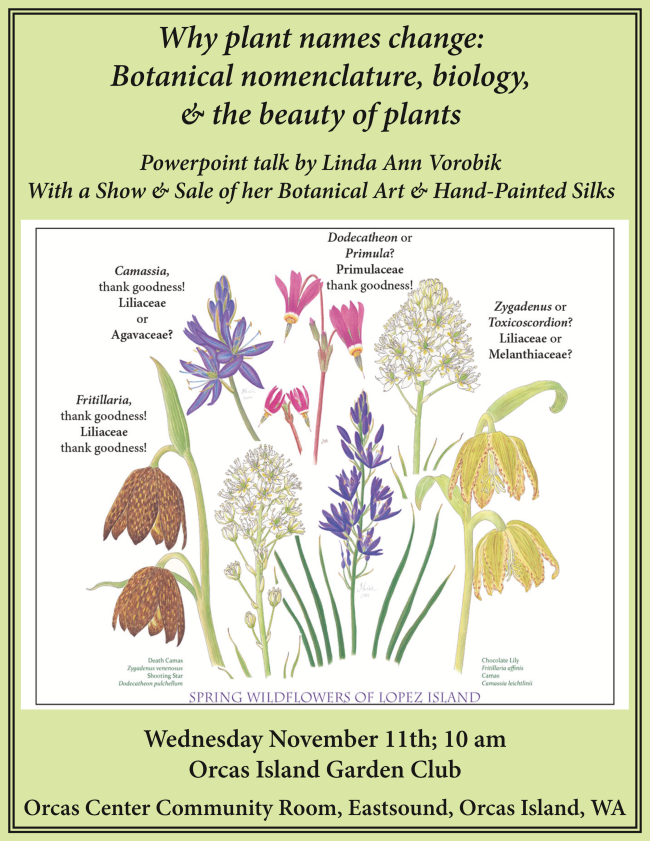
The cost is $70 in advance. To sign up or for more information contact Linda at vorobik@gmail.com. Linda will be presenting on the topic 'Why Plant Names Change" as our program speaker on Wednesday the 11th, the following day.
| | |
A Haven for Haven
by Perri Gibbons
I got to know Haven DePietro when we worked together for the 2026 Garden Tour. Her upbeat attitude and can-do spreadsheet abilities were tremendously helpful in solving volunteer scheduling complexities. Even though she’s returned to her California home, I’m glad for the opportunity to get to know her better.
Haven’s first haven was her big family garden in New Hampshire. They grew both vegetables and flowers and she remembers hot humid summers wearing a black suit and mesh headgear to protect herself during the dreaded 'black fly season’. Flowers were and continue to be a favorite plant, when she gained a sense of accomplishment collecting the statice plants for flower arrangement sales.
Haven eventually relocated to the Sacramento area for a law clerk position where she’s developed a passion for constitutional law and mental health care in the prisons. Her move also resulted in marriage and big zone change adjustment. She’s acclimated to the Californian region after 4o years but still has fond memories of the fall leaf change. Her burgeoning awareness of climate change and the water challenges in California life encouraged her to reduce her lawn to allow for more diverse planting,
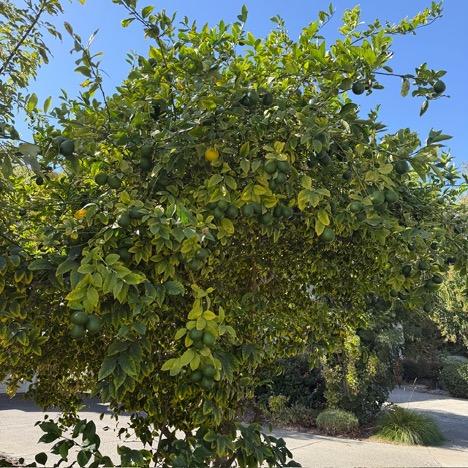
| Her California haven includes three distinct areas: New England Garden with plants she remembers fondly from her early life such as lilacs and forsythia. | | Forsythia Meadow garden with native plants, lavender and grasses | | Fruit trees like mandarin, lemon, peach, peach, plum, apricot and kumquat | | Gorgeous and prolific meyer lemon | | |
Haven and her husband, Joe, began visiting Orcas nine years ago in increasingly longer stays until they bought a house. After joining the OIGC two years ago, she started volunteering for the garden tour to meet people and get involved with the community. Haven says she loves the spirit of the club and the warmth of its members. We love you too, Haven! May I venture a prediction that Orcas may be Haven’s last and best haven?
BTW, Haven is also an avid knitter and has held a workshop for likeminded new to experienced yarn groupies.
If you’d like to learn more, please contact: havendp@gmail.com
| | Embrace the Seasonal Rhythm | | |
No Plant is an Island: The Interconnectedness of Life, Native Plants, and YOU!
Weaving Connections
by Cat Dewlen
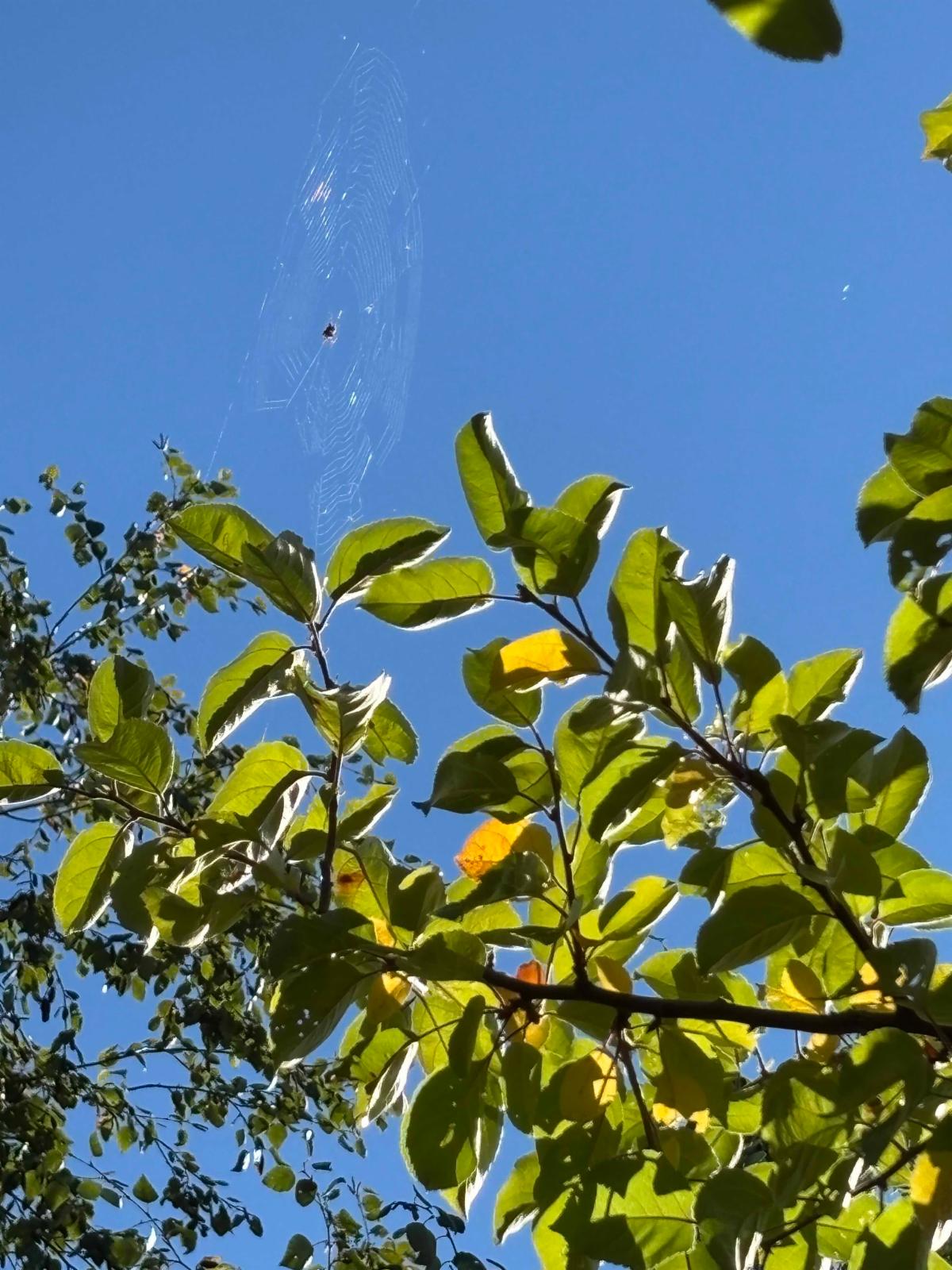
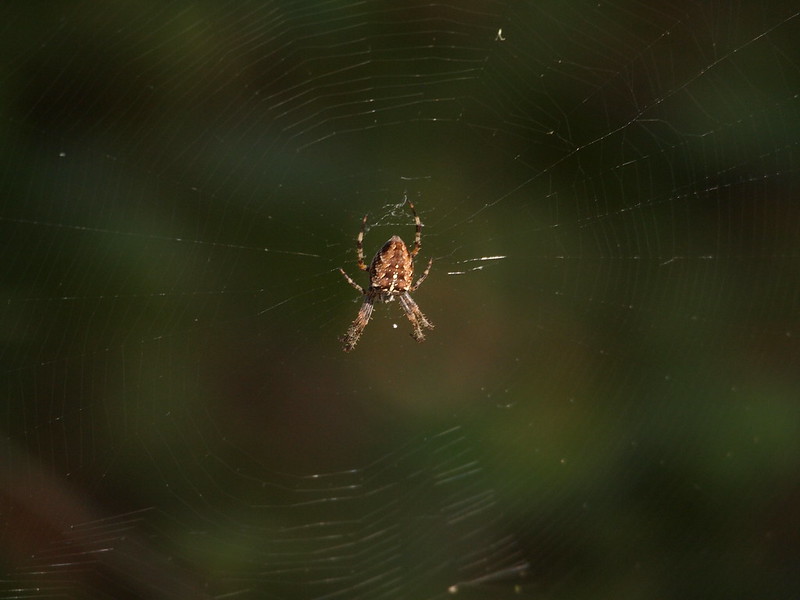
Autumn brings an abundance of changes to the island, among those changes are the spiders that seem to be weaving webs around every corner. Living on Orcas has challenged me to embrace these silk weaving arthropods, mostly due to the fact that there always seems to be a few that make their home in out of reach places where I can observe from a comfortable
distance.
Of course, accommodating spiders does not require co-habitating. There's plenty we can do in our gardens to support the important niche that spiders fill. The role of spiders is often relegated to simply"pest control." However, a healthy spider population supports many native birds like the Ana hummingbird, which is known to gather insects directly from a spider's web and even will forage the silk of an old web to use in their nest.
In "Bringing Nature Home" by Doug Tallamy, he notes the study "Nonnative plants reduce
population growth of an insectivorous bird". Researchers concluded that when there are more non-native plants, native insect population decline can lead to reduced bird populations. Tallamy also mentioned that when the insect population is suffering, spiders made up more of the bird's diet. The study re-enforced the benefit of having a high percentage of native plants available for insects and wildlife to be supported.
| |
As orb-weaving spiders become more visible in the fall, it's a good reminder that our gardens are providing an important habitat that is supporting the overall food web (pun intended!) When you plant native plants and leave foliage and debris in the fall, you are providing crucial overwintering habitat for many spiders and insects. Noticing the spider’s web can serve as a reminder of the many interconnections that are spun throughout every corner and crevice of our gardens.
Credit for the close-up photo of orb-weaver : "Cross Orb-weaver, Araneus diadematus" by J. Maughn is licensed under CC BY-NC 2.0.
Credit for other photo: Cat Dewlen
| | |
An October Garden
by Christina Rosetti, 1830-1894
In my October garden I was fain
To mourn among my scattered roses
Alas for that last rosebud which uncloses
To Autumn's languid sun and rain
When all the world is on the wane!
Which has not felt the sweet constraint of June
Nor heard the nightingale in tune
Broad-faced asters by my garden walk
You are but coarse compared to roses
More choice, more dear the rosebud which uncloses
Faint scented, pinched upon his stalk,
That least and last which cold winds back
A rose it is though least and last of all,
A rose to me though it be fall.
Submitted By Mary Nash
| | |
Wild & Timely Recipes
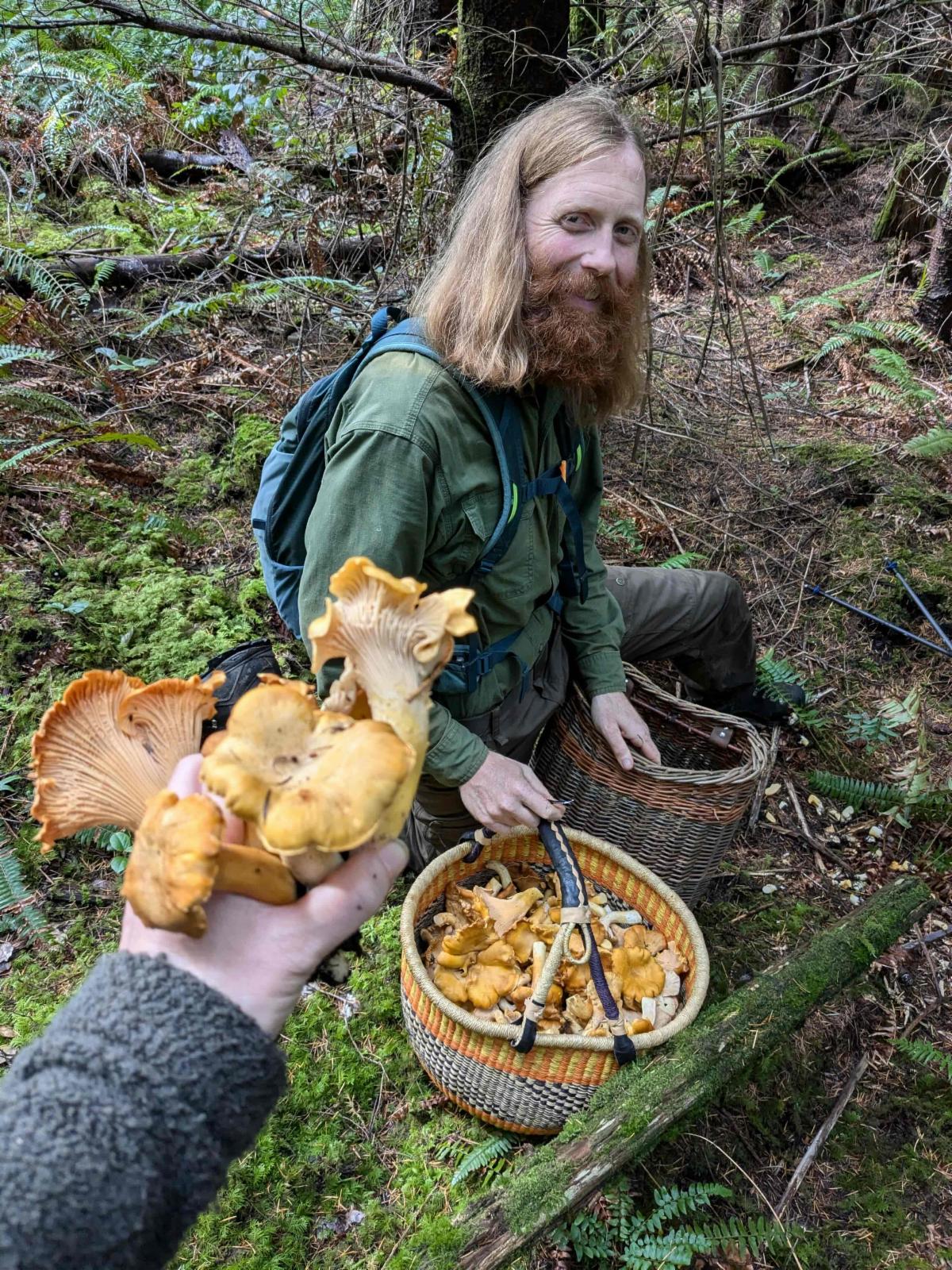
Mushroom Gravy
by Rachel Factor
Welcome to second article in this new series authored by Rachel Factor who is an avid forager on Orcas. Rachel spent 9 years traveling full-time as a digital nomad in 72 countries before settling on Orcas Island in 2023. Drawn to that natural world, she spends much of her time outdoors, hiking and foraging. When indoors, cooking and experimenting with new ingredients is a top priority! Each month she'll be sharing ideas for what might be growing in abundance.
It's mushroom season! Whether you find wild mushrooms in the woods or buy them at the grocery store, making them into a gravy is one of my favorite ways to celebrate this time of year. This gravy is perfect for holidays, for a weeknight poutine or drinking it straight from the boat. Enjoy!
Ingredients
• 2 lbs chanterelle mushrooms (baby bellas can be substituted)
• 1/4 cup butter (vegan butter works too)
• 1/4 cup all-purpose flour (cornstarch can be substituted for GF version)
• 4 cups vegetable stock
• Sprigs of thyme
• Italian parsley
• Salt & pepper to taste
1. Cut mushrooms into 1cm pieces and sauté in a saucepan until all water has evaporated
2. Add butter to the dry mushrooms, allow to melt and then sauté mushrooms until browned
3. Add flour (or cornstarch) and cook for 2-3 minutes until browned and flour taste is gone
4. Slowly add vegetable stock, about 1/2 cup at a time, to cooked flour and mushrooms and whisk until smooth. Add more stock to your desired consistency, it will continue to thicken, so you may need to add more liquid before serving.
5. Add chopped Italian parsley, thyme, and salt & pepper to taste.
This recipe can be made ahead of time and warmed immediately before serving, just reheat on the stove and add more stock or water to thin.
|
| |
Are you a mushroom fan and want to learn more? Meet Rachel and Jeremy in person on Saturday the 24th for a mushroom talk and the following day the 25th for a mushroom walk in Moran State Park! | |
And for even further inspiration and gorgeous photographs, check out Taylor Lockwood's TOP 100 MUSHROOM PHOTOS and other captivating time lapsed videos on his website. Read the fascinating NPR interview featuring Lockwood, the photographer that helped rediscover a mushroom that hadn't been seen in the United States for more than a century.
Submitted by Tony Suruda
| |
Backyard Villians - The Scourge of Spurge
by Kristin Tolle
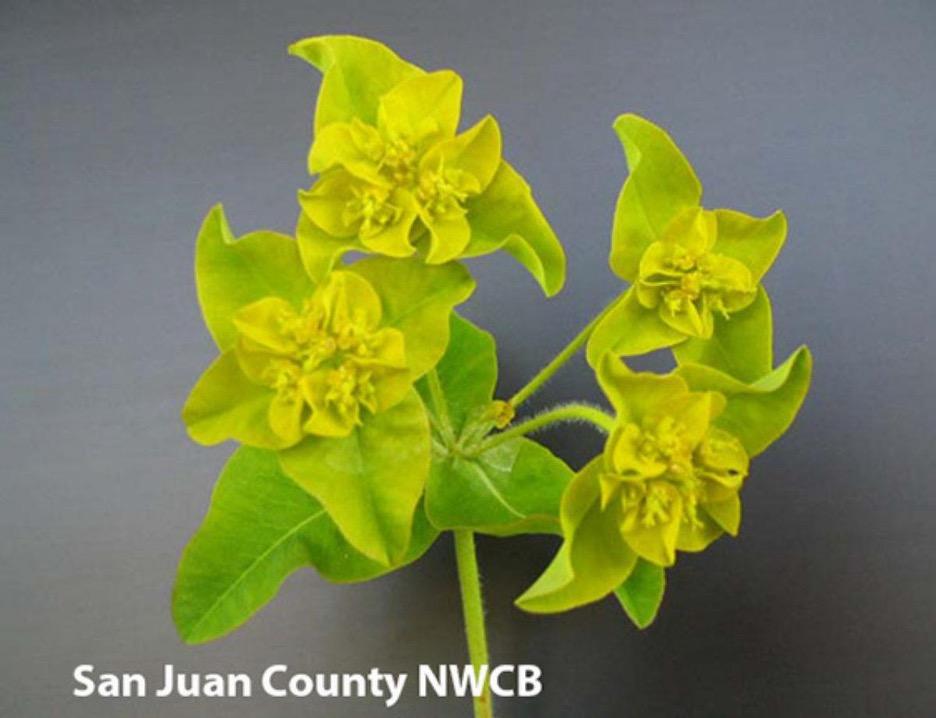
“Oh, so pretty!” we think when we see a plant at a nursery. So, we buy it and take it home and plant it. If it stayed in our backyards, it wouldn’t be a problem. Unfortunately, many escape and cause serious harm in a broader environment. This is true of eggleaf spurge, a Balkan native plant that has made a very successful break for it in the PNW.
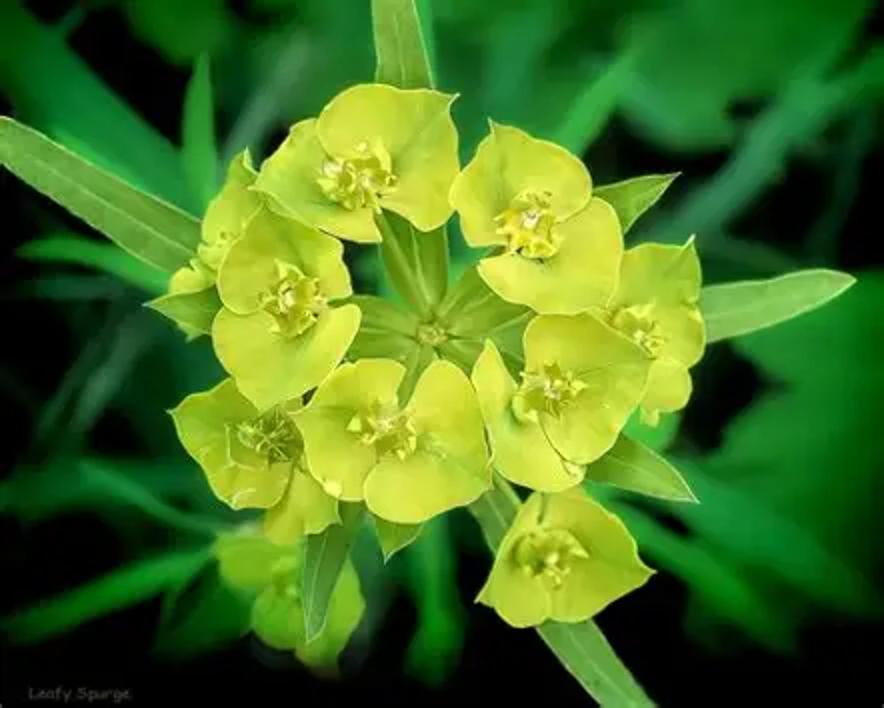
Eggleaf Spurge (euphorbia oblongata) is a very pretty plant! But it is also a “Class A” weed: quarantined and illegal to sell in the state of Washington. Not only is it toxic for animals to eat, its milky sap is a skin irritant—so wear gloves if you plan to eradicate it by hand. Like Creeping Thistle from last month’s column, cutting it down only encourages spread—it must be poisoned or pulled to get the taproot.
You might also keep an eye out for its cousin, leafy spurge (euphorbia virgata) which is estimated to cost the US beef industry $35-45 million dollars a year in lost range land.
| |
Foraged Seasonal Botanical Arrangements!
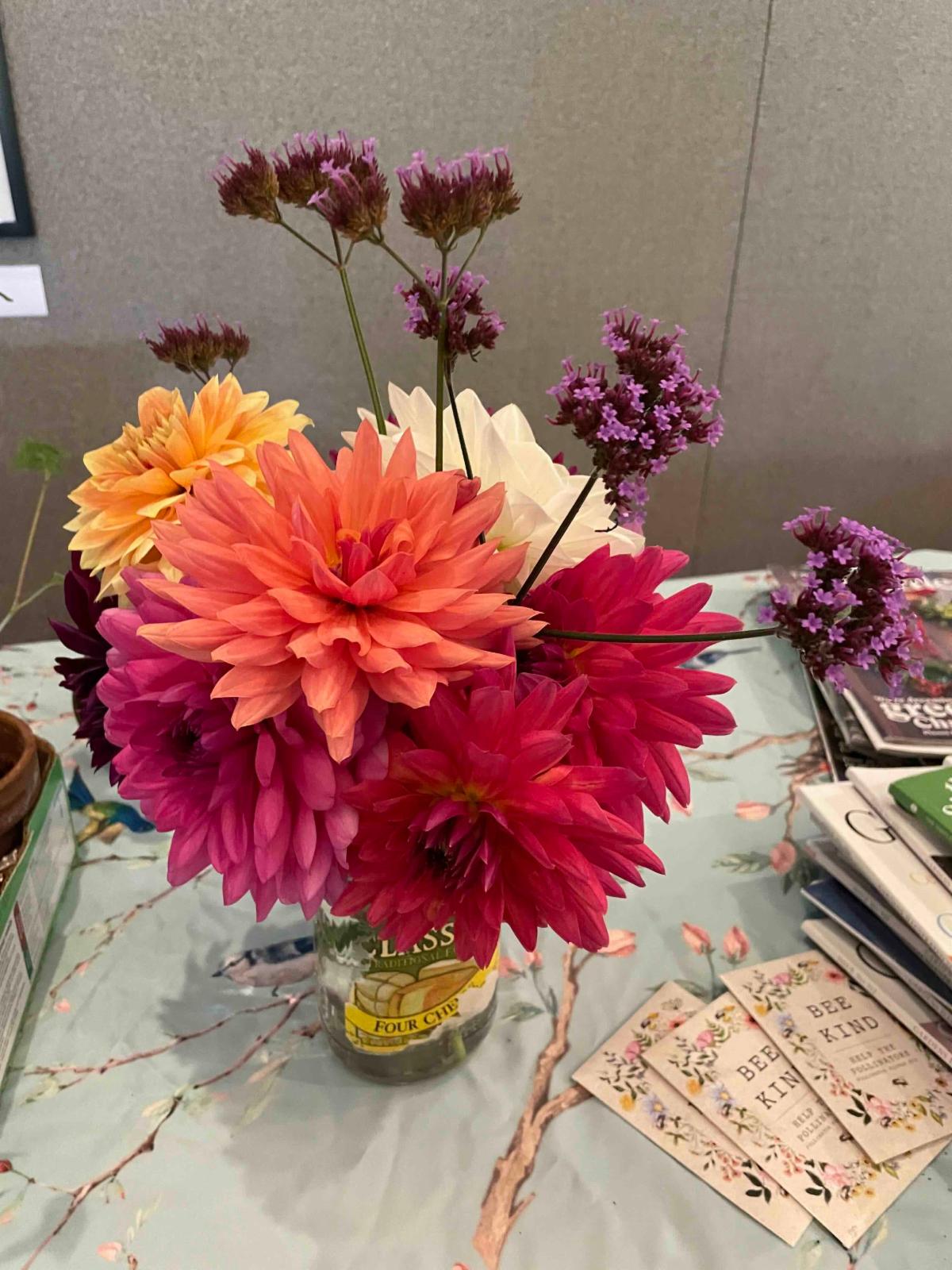
This month we are lucky to have two featured homemade seasonal botanical arrangements along with a curated list of materials made with only items available in a backyard or by foraging. We hope this series inspires you to make arrangements year round in creative ways! Contact oigcnewsletter@gmail.com if you'd like to submit your own playful design!
The first is an arrangement Nuna Malaspina who was kind enough to bring her bouquet to share at the September member meeting.
Nuna's flower arrangement includes:
- Various Dahlia Types
- Statice
- Verbena bonairensis
Designed and created by Nuna Malaspina
| |
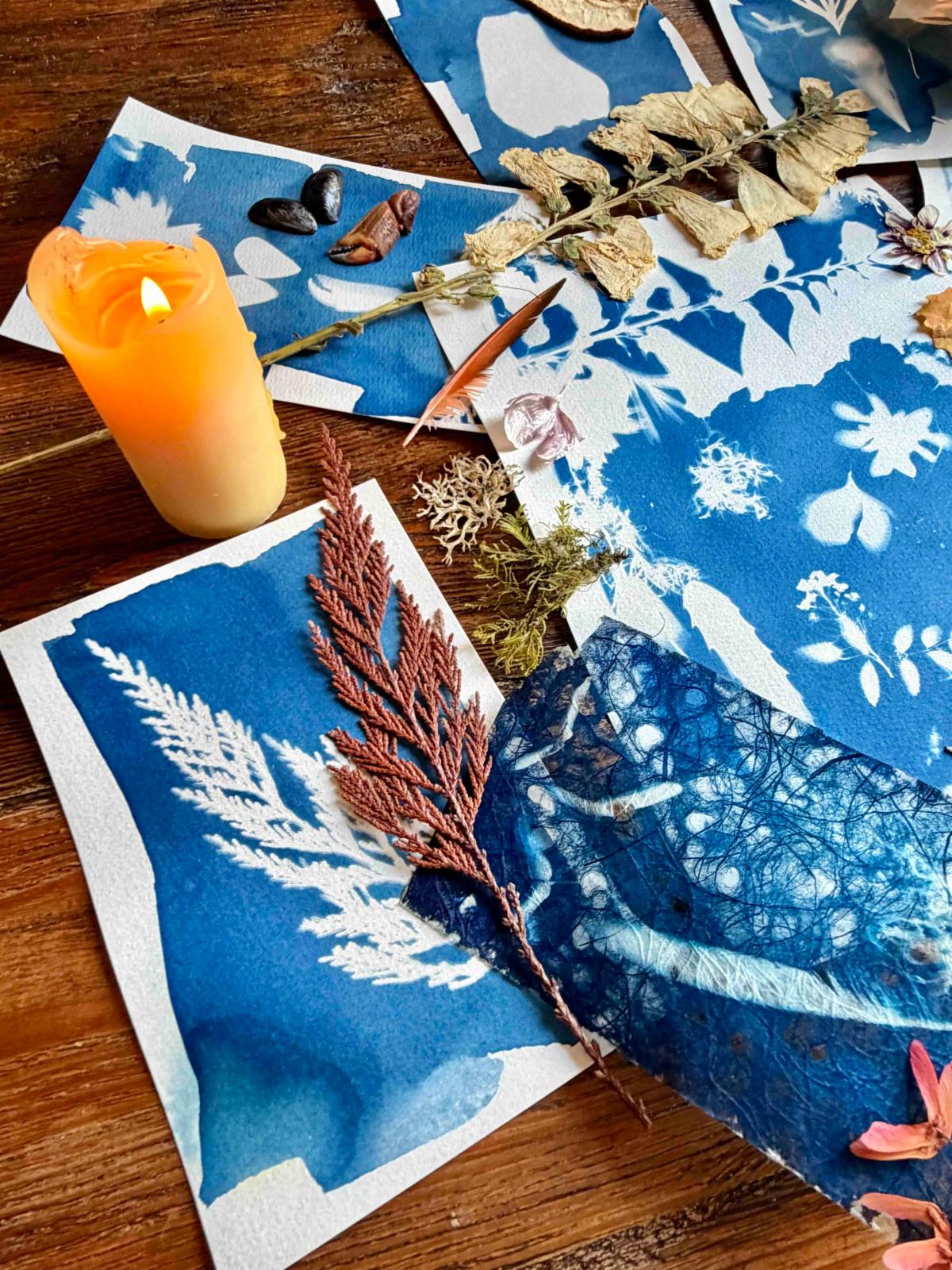
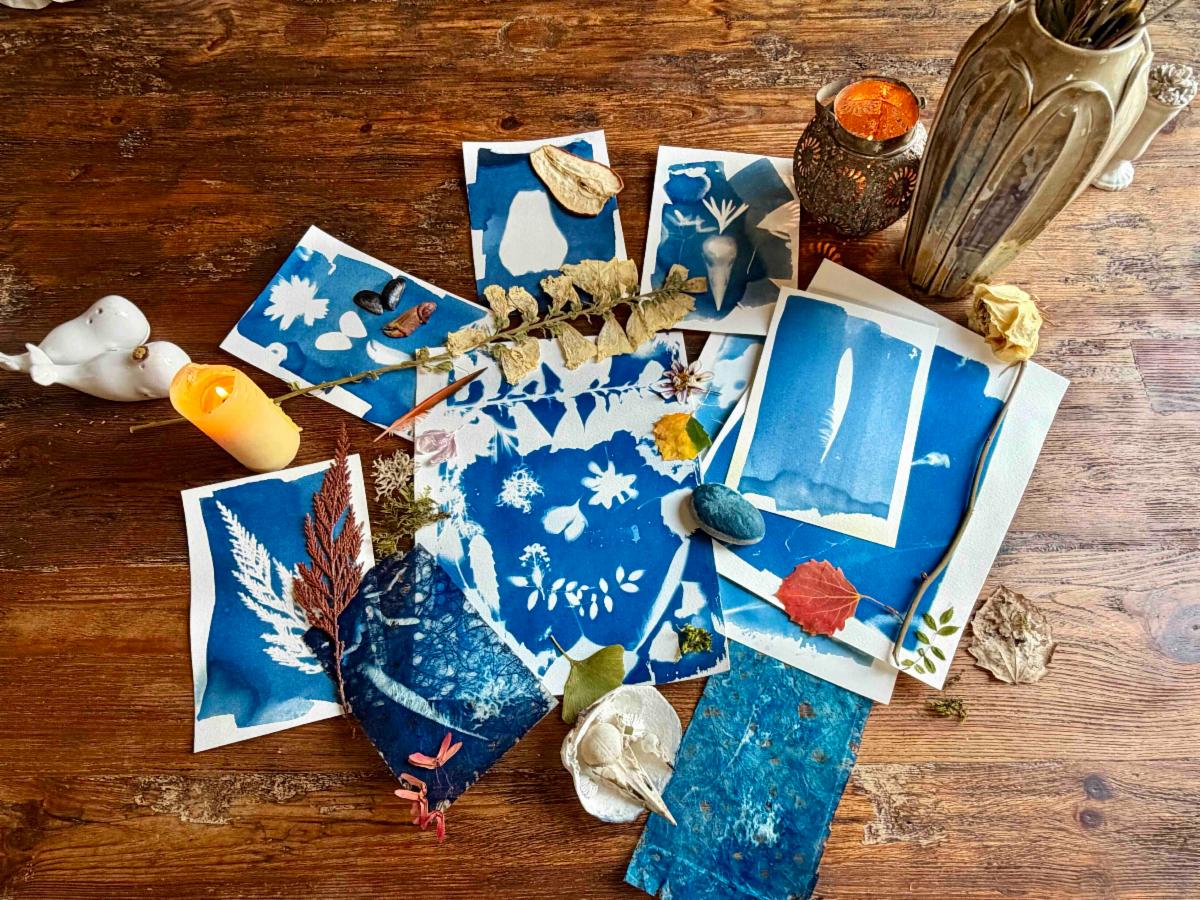
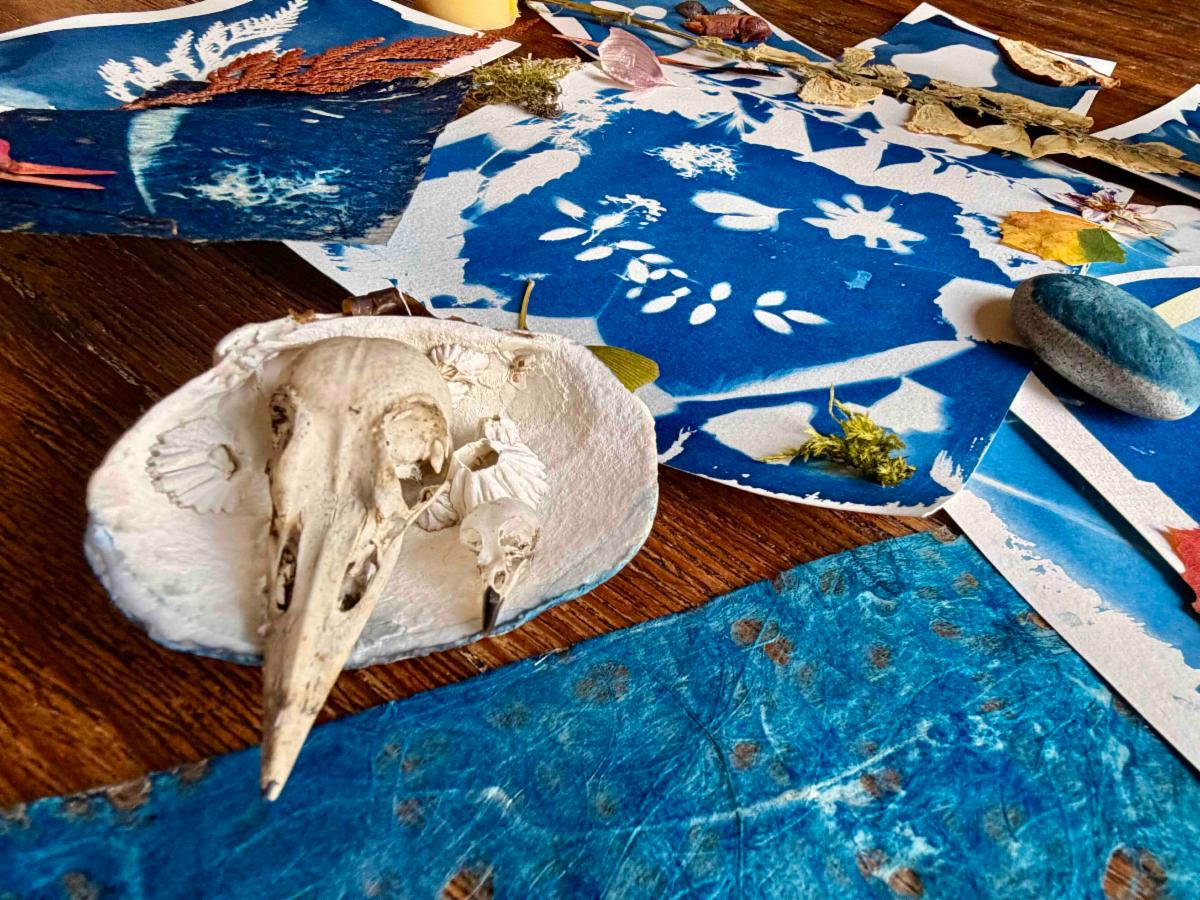
Our second seasonal arrangement comes from local naturalist and artist, Lee Rome who branched out for her garden art project and learned cyanotype printing, something she's always wanted to try.
Lee explains more...
"Objects I used to make the prints: pressed flowers from my garden, a dried pear from my tree, moss, fallen leaves, cedar, madrone bark, feather, two bird skulls I found on my land , perfect for an October/ Halloween vibe.
I tried it on rocks (which I’m still experimenting with), this beautiful Japanese paper I had on hand, and water color paper which was the easiest to work on. Possibilities for the base are really limitless. I had so much fun doing this!"
Lee's Material list includes:
- Imagination & willingness to experiment
- Cyanotype kit for $15
- Watercolor paper
- Found and foraged objects
- 8x10 picture frame glass to press flat objects to the coated paper
Designed and created by Lee Rome
| | |
Gardener-speak, is a series on common but often mysterious terms gardeners use to describe growing techniques.“Gardenerspeak” (or garden speak) refers to the specialized jargon, technical terms, and colloquial idioms used by gardening enthusiasts and horticulturists. While these terms help seasoned growers communicate efficiently, they can easily confuse beginners.
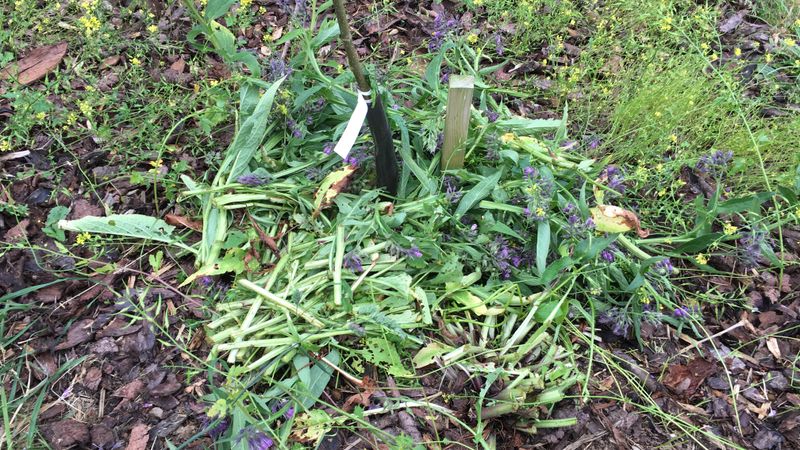
What is 'Chop and Drop?'
| | |
Ancient farming societies and traditional cultures across Central America and other global regions practiced slash-and-mulch methods long before modern terminology existed. The "chop and drop" technique—also known as slash and mulch, cut and drop, or composting in place—is an old practice rooted in traditional indigenous and pre-industrial farming cultures. It is a simple gardening and permaculture technique where you cut back or prune plants, weeds, or cover crops, chop the green waste into smaller pieces, and leave them right on the soil surface instead of hauling them away.
Key Benefits:
-
Free Mulch: The dropped plant parts form a protective layer that blocks sunlight to stop weeds and keeps the soil moist.
-
Nutrient Cycling: As the material rots away, it feeds the soil and returns the exact nutrients the plants took out.
-
Natural Habitat: Provides an ideal environment for our garden friends during fall and winter - but beware that that the cozy piles offer ideal nesting/hiding for voles.
-
Saves Time: It cuts out the hard work of bagging yard waste or walking it to a separate compost pile.
Submitted by Mary Nash
| | |
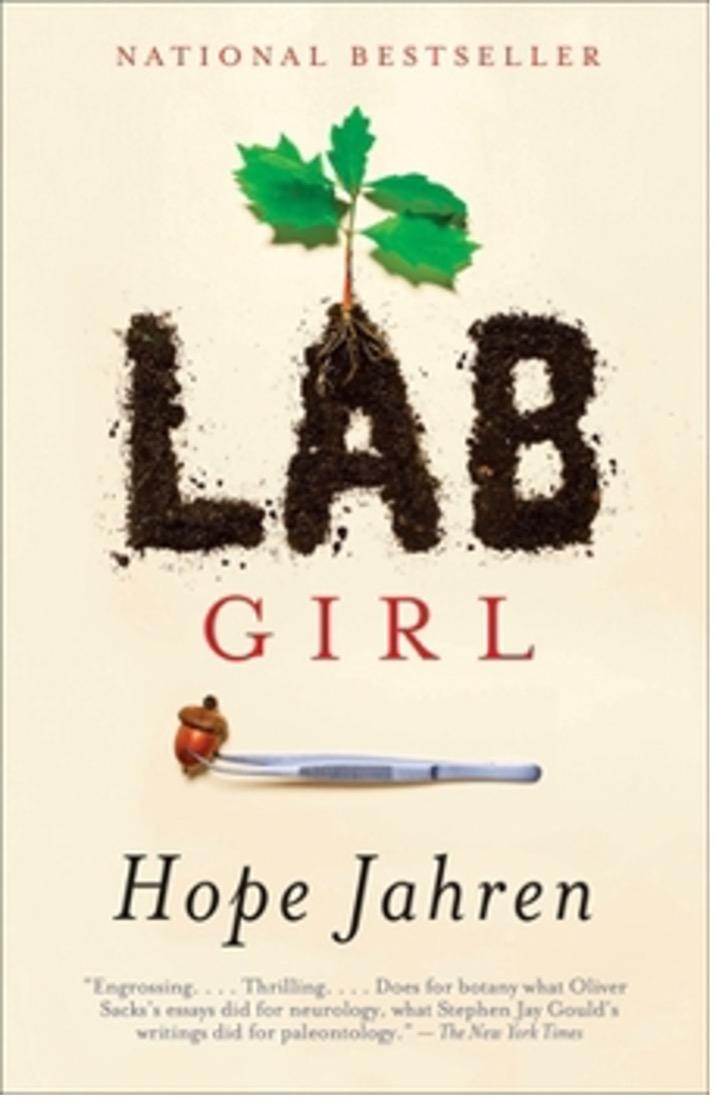
'Lab Girl' by Hope Jahren ~ A Book Review
by Adrienne Walker
According to the United Nations, only 35% of graduates from science, technology, engineering and math (STEM) fields are women. Maybe that’s why I love reading books by women scientists, especially when their focus is on something I also love: plants.
The author, Hope Jahren, grew up in the laboratory of her science teacher father, and as she tells it, never considered being anything other than a scientist. Her award-winning book “Lab Girl” chronicles the difficulties of being not only a woman in a largely man’s world, but also a woman with a long-undiagnosed bipolar disorder.
I love the way she uses the book to show similarities between plants and humans, whether it be how we live our lives or interact with each other. Early in her career after a particularly frustrating summer with no data to show for a lot of hard work, she had a breakthrough: “I’d been so focused upon what the trees weren’t doing that I hadn’t made any observations of what they were doing…A new mind-set became imperative: perhaps I could learn to see the world as plants do, put myself in their place, and puzzle out how they work.” (pg 76)
| |
“Each beginning is the end of a waiting…Each of us is both impossible and inevitable.”
- Hope Jahren
| |
Her sense of delight and awe, (not to mention unexpected comparisons), is really what makes this book enjoyable: when talking about how hard it is for a deciduous tree to grow from a tiny seed to a little decorative maple tree on a city street, she points out that even that small maple tree has leaves that weigh thirty-five pounds, and “they actually contain enough sucrose to make three pecan pies”. (pg 121) I may not remember the thirty-five pounds, but I know the next time I see a Japanese maple on a city street I’m going to think of pecan pie!
Mostly, she wants us all to look at the world from the plant’s perspective. Maybe we would be more careful about how we treat the environment, of how much waste we produce and how seriously we take the current threats to nature. In talking about the wood in your house, whether it be a table or a windowsill, she reminds us “If you know how to listen, each ring describes how the rain fell and the wind blew and the sun appeared every day at dawn.”
Happy reading! Adrienne
| | For those interested in learning more about the book or in joining the book club, Adrienne welcomes inquiries and is happy to provide additional information directly. | | Reflecting on Fall Activities | | |
Sticker Contest Results are in!
by Kristin Tolle and Evangeline O'Sullivan
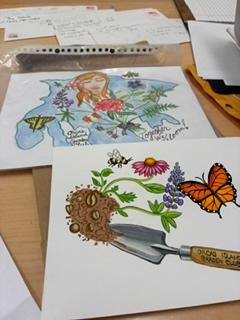
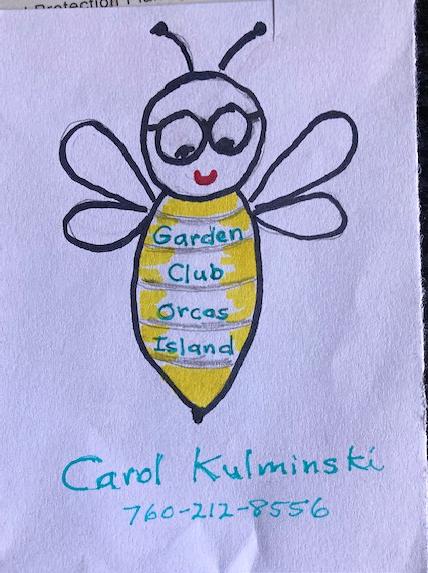
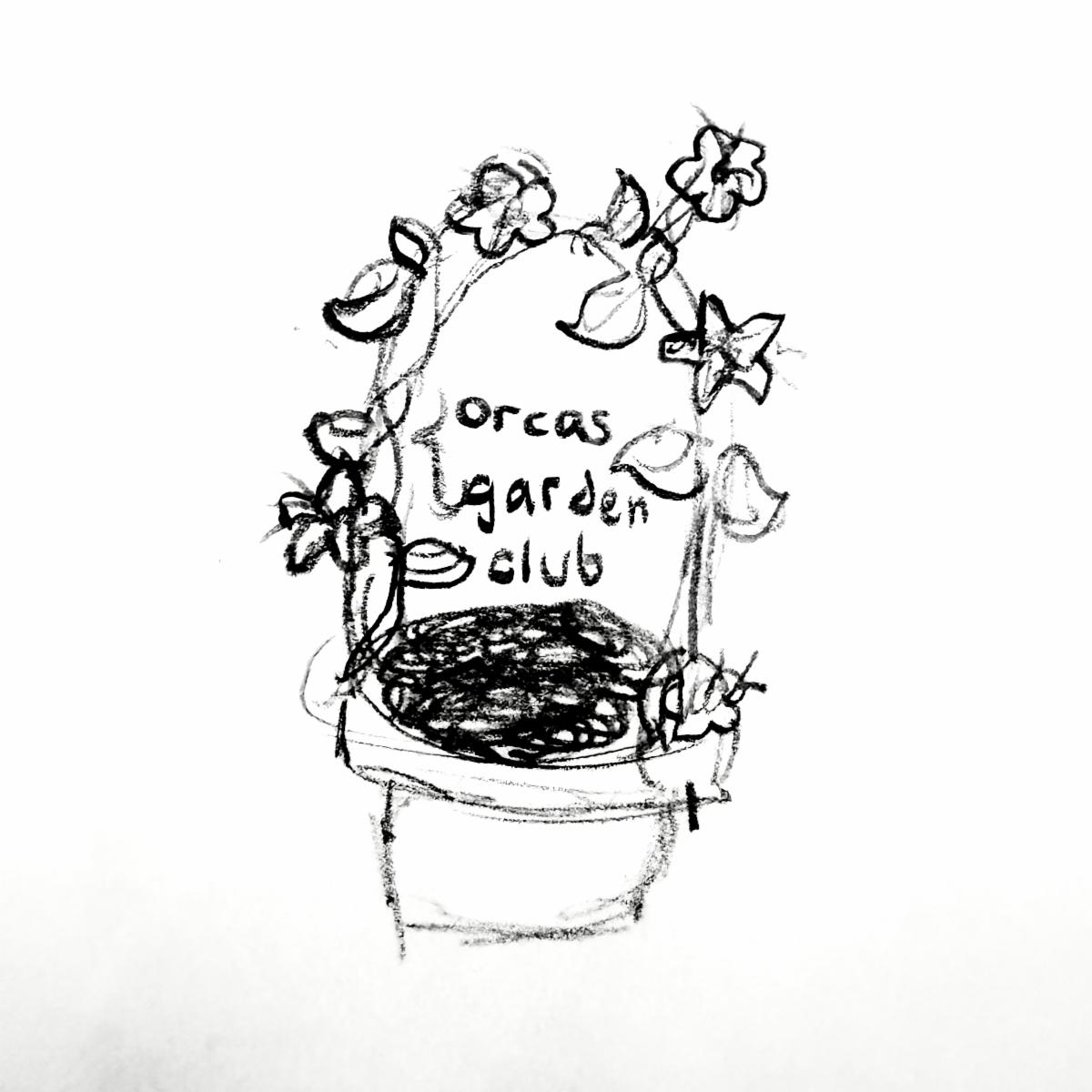
In April 2026 the Orcas Island Garden Club announced a contest to create a new sticker logo that could be used for various publications for the OIGC. Individuals of all ages were invited to submit entries. It didn't matter if the person was a seasoned designer or someone who just loved to doodle. The only requirement was that a design celebrated the club’s mission to cultivate a love of gardening through education and hands-on experiences, to inspire and empower our community to create beautiful and sustainable gardens, and to protect as well as conserve the land as entrusted stewards.
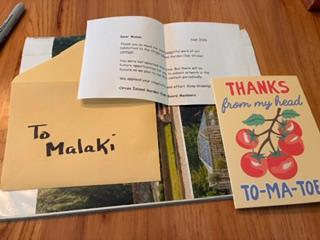
Some children of the FOREST SCHOOL submitted entries. Although no one at the school was selected as a winner, the OIGC Board acknowledged the children's submissions by giving them a display scroll that showed their work as a THANK YOU for participating in the contest and presented them with a bag of organic apples!
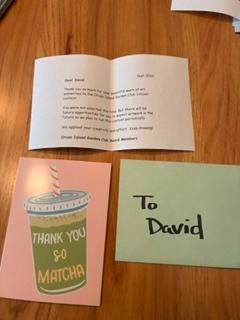
We also received entries from the ORCAS ISLAND CHRISTIAN SCHOOL. Evangeline O'Sullivan and Kristin Tolle created personalized thank you cards and hand delivered them to the children on October 1 that participated in the sticker contest. They also received a bag of organic apples to share among the group.
As the thank yous were presented, the children were encouraged to keep coloring, drawing, gardening and were praised for being a good steward of the earth. We are pleased to announce that the overall winner was Luke, a student from the Orcas Island Christian School Elementary Class.
Congratulations to Luke and all of our adult winners: Carol Kulminski, Robin Latham and Dray Longdon. All winners received a gift certificate to the Market Garden Nursery.
| | Our Three Adult Award Winners | | Thank you cards to the students personally made by Evangeline & Kristin | | |
“A life outdoors is a life well lived.”
- REI slogan, Jerry Stritzke 2015
| | |
Coffee, Conversation & Connections
by Robin Sullivan
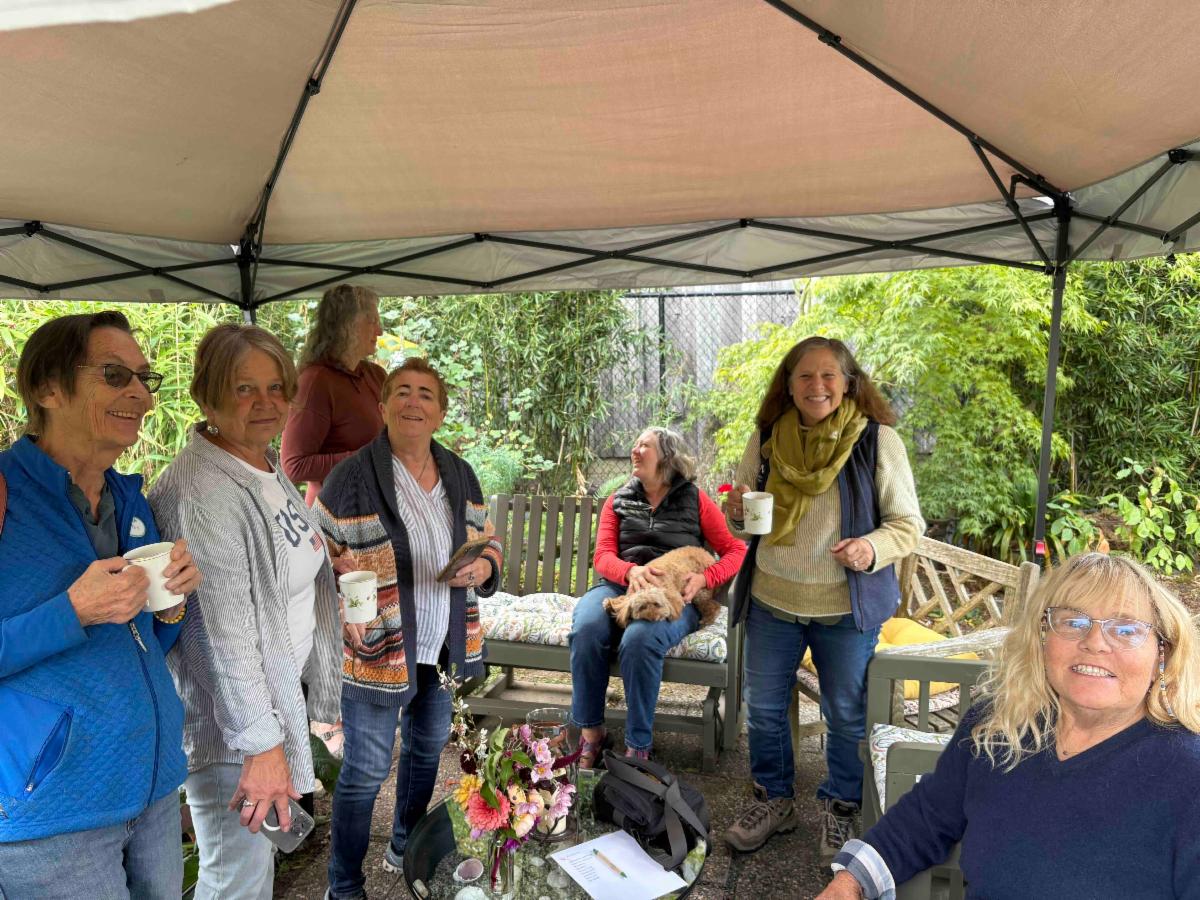
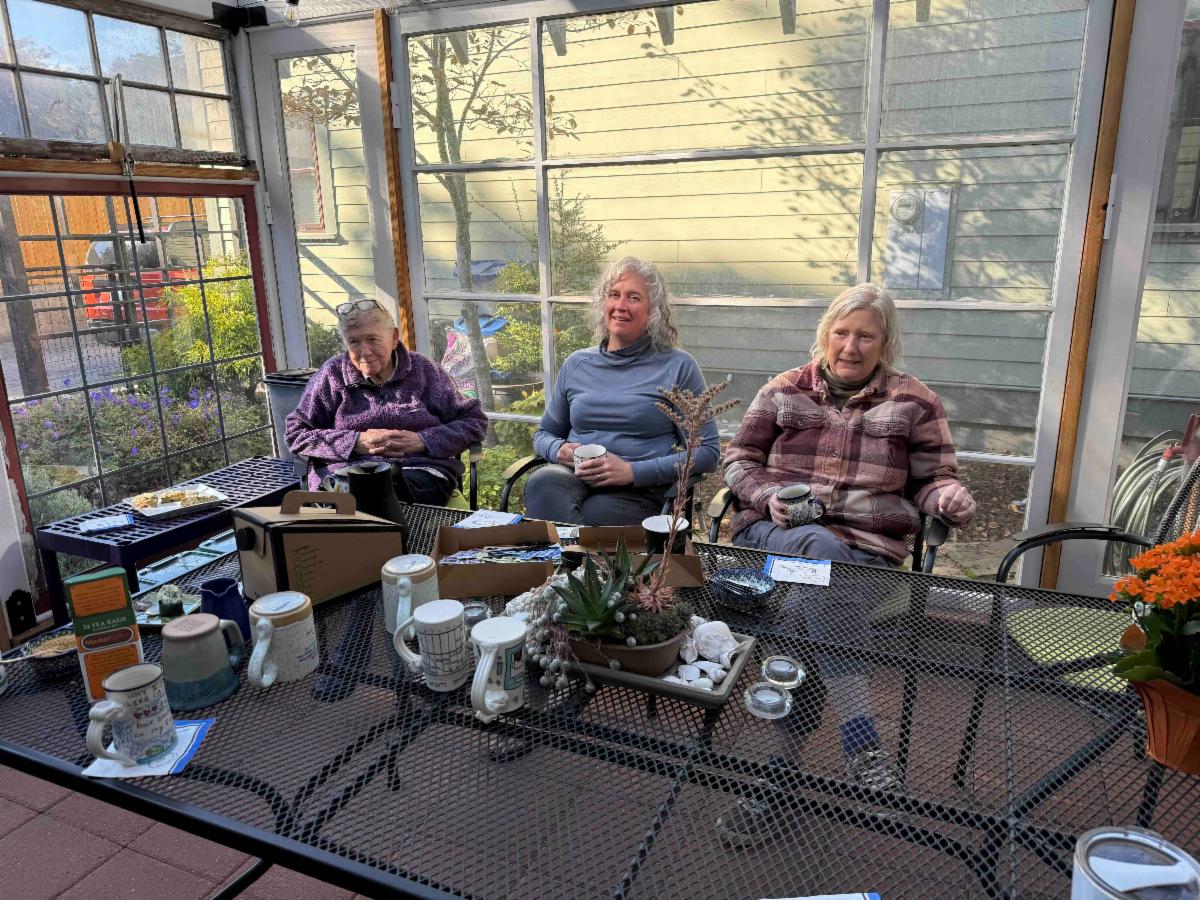
It’s fall, and that means the Garden Club is in full swing again! We kicked off our September coffee gathering with a wonderful morning at Leith Templin’s Garden.
About nine of us gathered around the garden, some meeting for the first time and others catching up with familiar faces. We shared stories about gardening, life, and the simple joy of getting to know one another. The time flew by...and when it was finally time to leave, none of us really wanted to go home!
| | |
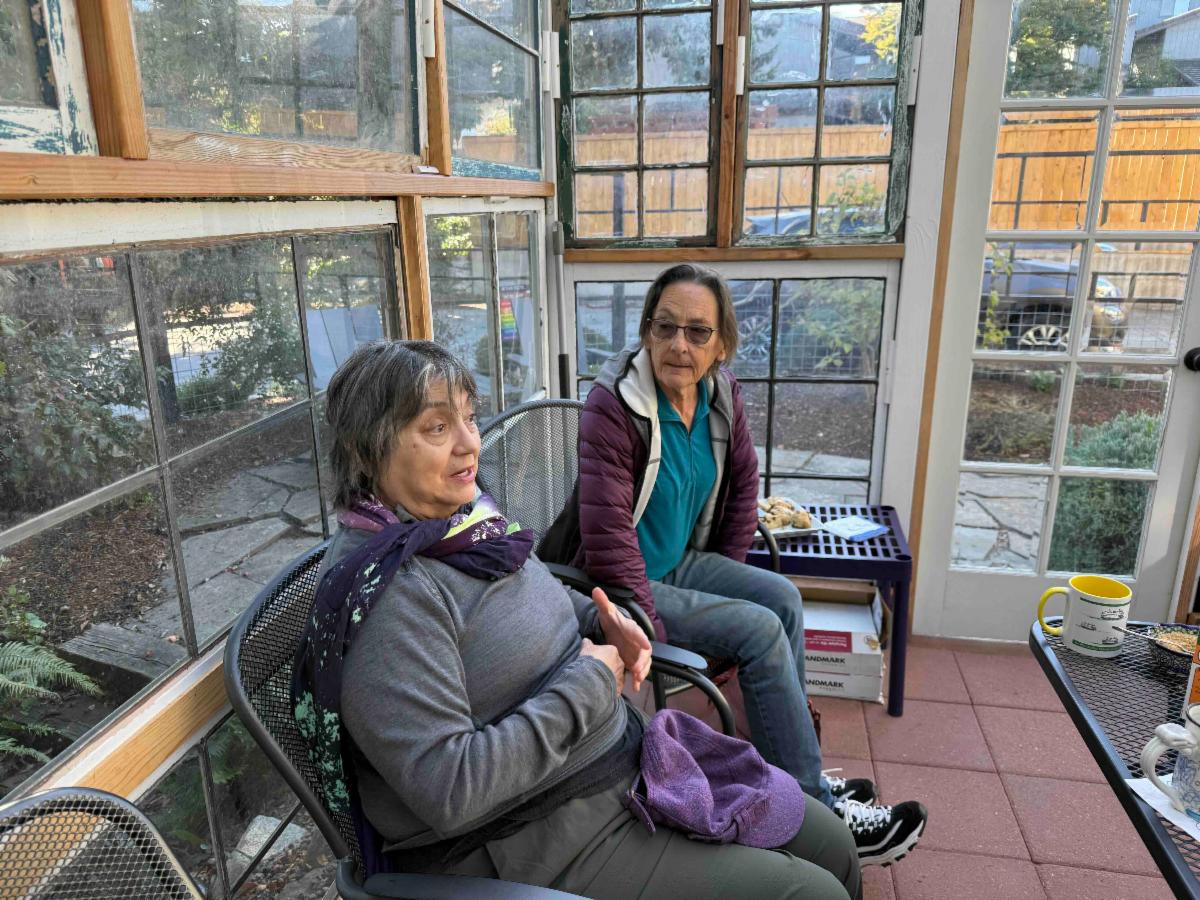
Then in October, we met at Kristi Fountain's fabulous little greenhouse. We started out with sweaters and before long, the sun was shining and it was a beautiful morning with a walk about her fall foliage and engaging conversation.
We’re continuing this lovely monthly gathering, but we think our gathering deserves a name that reflects what it’s really about, the connections between our members. “Coffee with the Presidents” got us started, but this is so much more than coffee—and it certainly isn’t about the presidents! Perhaps Common Grounds, The Garden Table, or Plantophiles Gather? Or maybe you have an even better idea. Send your suggestions my way oigccoprez@gmail.com — we’d love for the name to come from all of you.
| | |
If you haven’t joined us yet, we’d love to see you. Come as you are, no need to bring anything, enjoy a cup of coffee, and spend a little time getting to know some of the wonderful members who make up our Garden Club. You never know when a casual conversation might turn into a new friendship.
Sometimes the best things in life happen simply because we show up. Thank you Leith and Kristi for your gracious hospitality!
We hope you will all join us next month, Monday, November 16, from 10:00 – 11:30 am, when Laura Walker will be our host. (Please check the calendar on the website for exact location.)
| | |
The Garden Club Helps Olga Clean Up
by Uuva Sauga
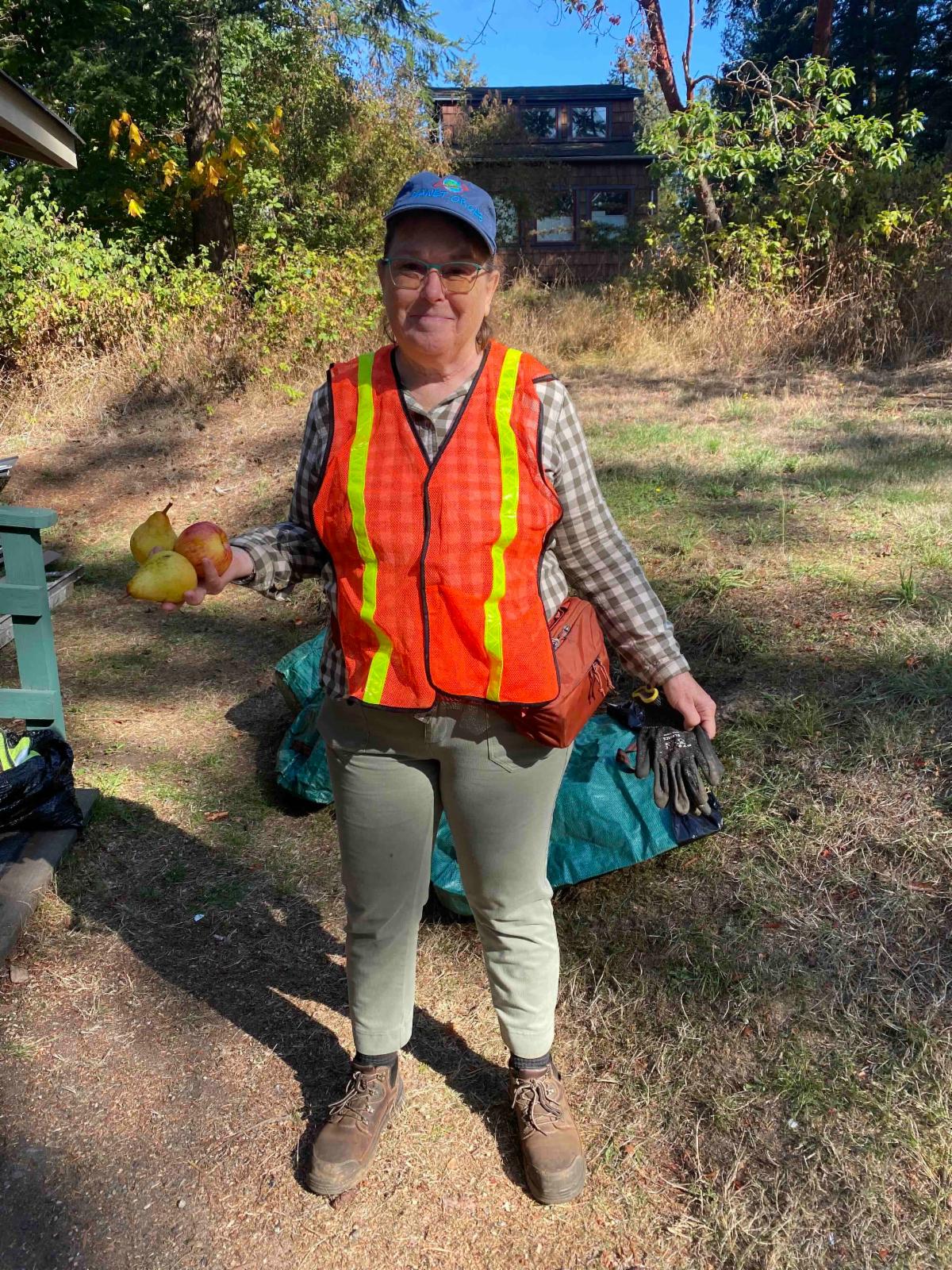
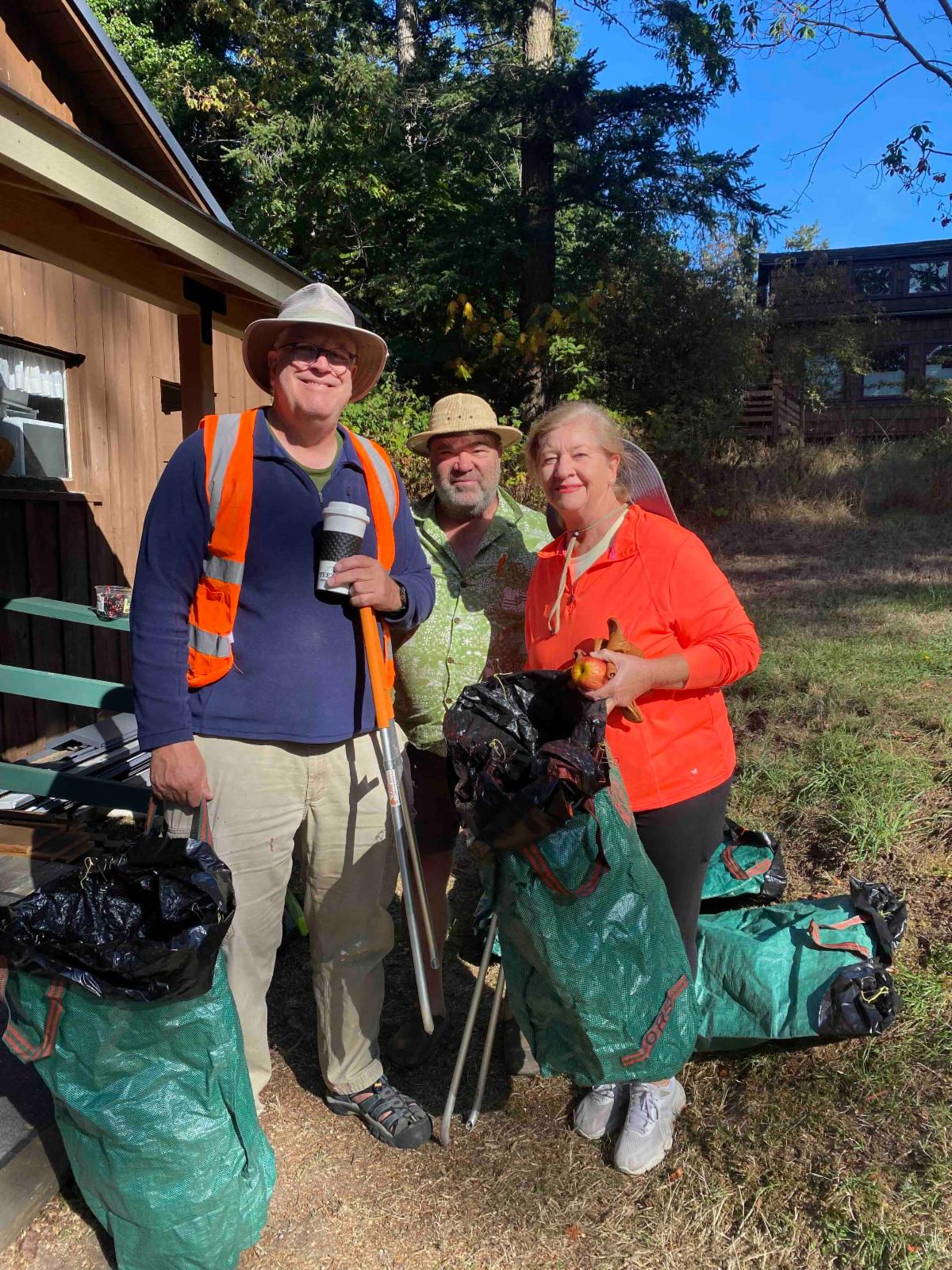
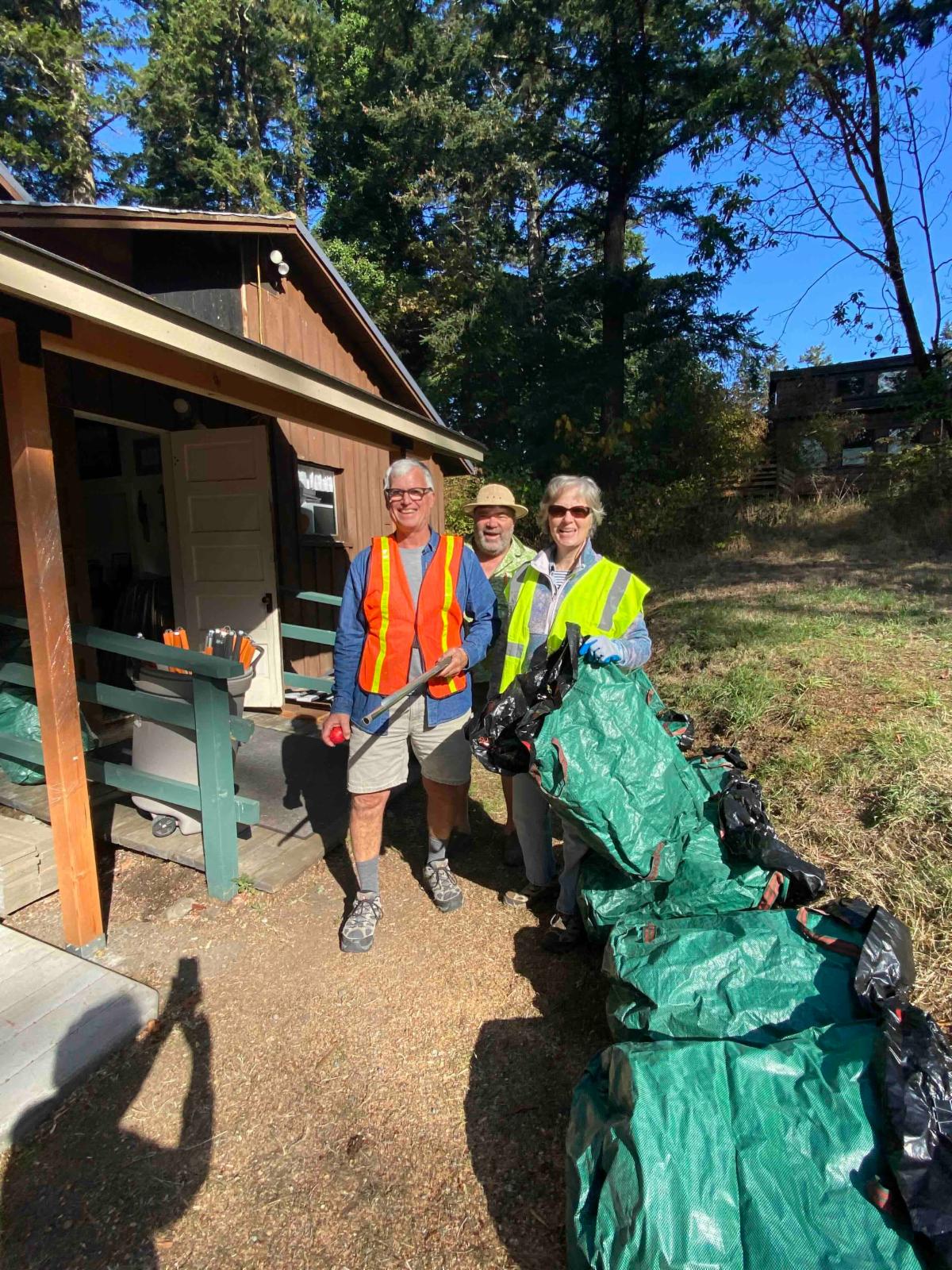
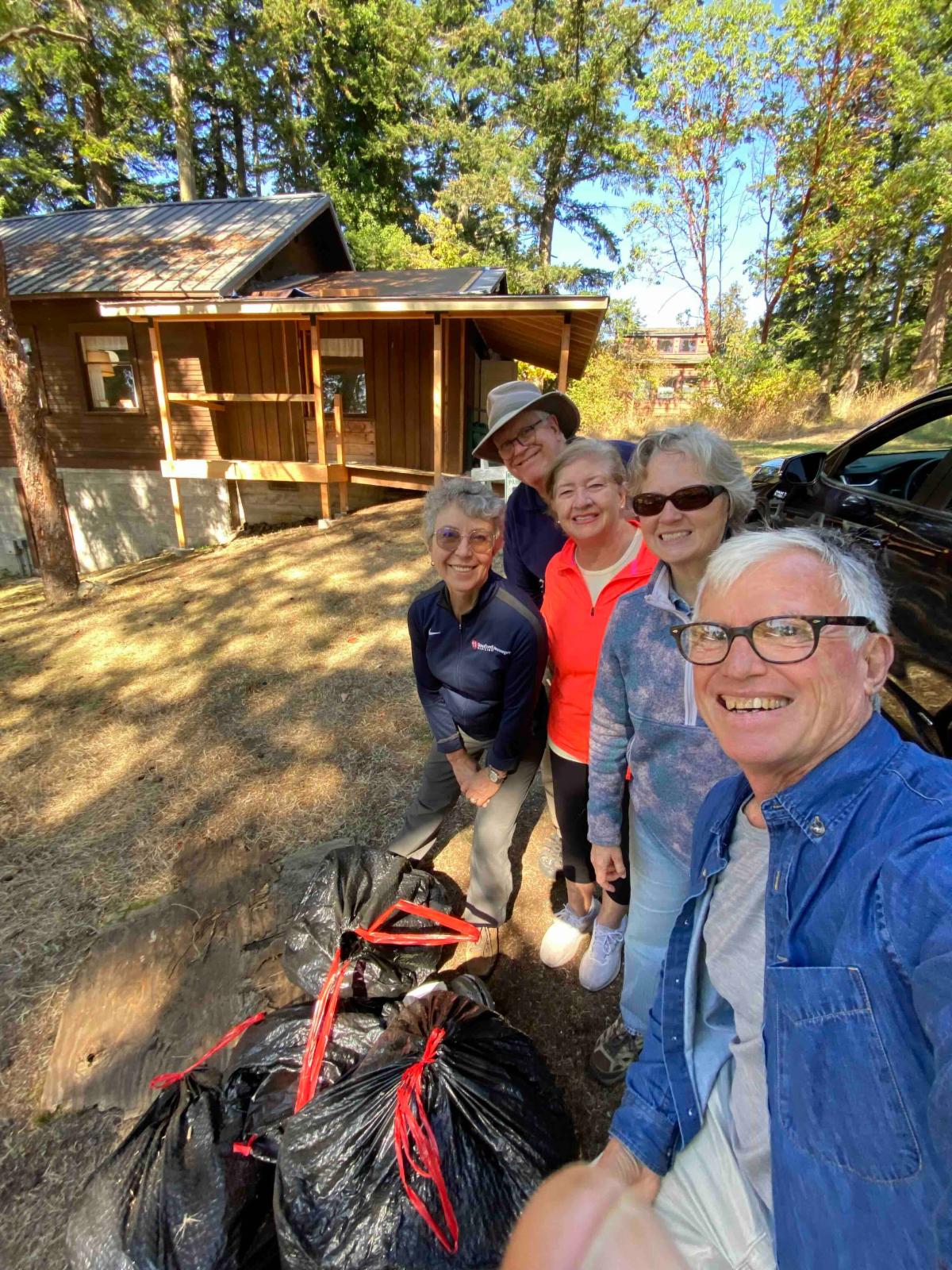
Nine cheerful volunteers gathered at the Olga Community Center on September 20, 2026, fueled up with coffee and cake, then grabbed their gear for the Great Islands Cleanup. Together they covered 7 miles of roadway — sweeping Olga Road from Moran Park to Artworks and into the Olga hamlet, sparkling up Point Lawrence Road from Artworks to the Doe Bay bridge, and clearing the entire length of Obstruction Pass Road.
Big thanks to The Exchange for providing equipment and hauling away the garbage, and to the Great Islands Cleanup team for their support. Olga’s roadsides are noticeably tidier thanks to this small, committed crew! The Olga cleanup is organized as part of GICU every spring and fall, so mark your calendar and join in next time.
Special thanks to club member, Uuva Sauga who led the Olga clean up as well as our sincere appreciation to many other garden club members that have led various neighborhoods over the years in their clean up efforts. Nancy Schafer, Ginger Moore, and Geri & David Turnoy have made such a positive impact on our communities by organizing clean ups, recruiting volunteers and training them. Thanks for all you do!
| | |
The OIGC at the 2026 Fall Festival
by Perri Gibbons
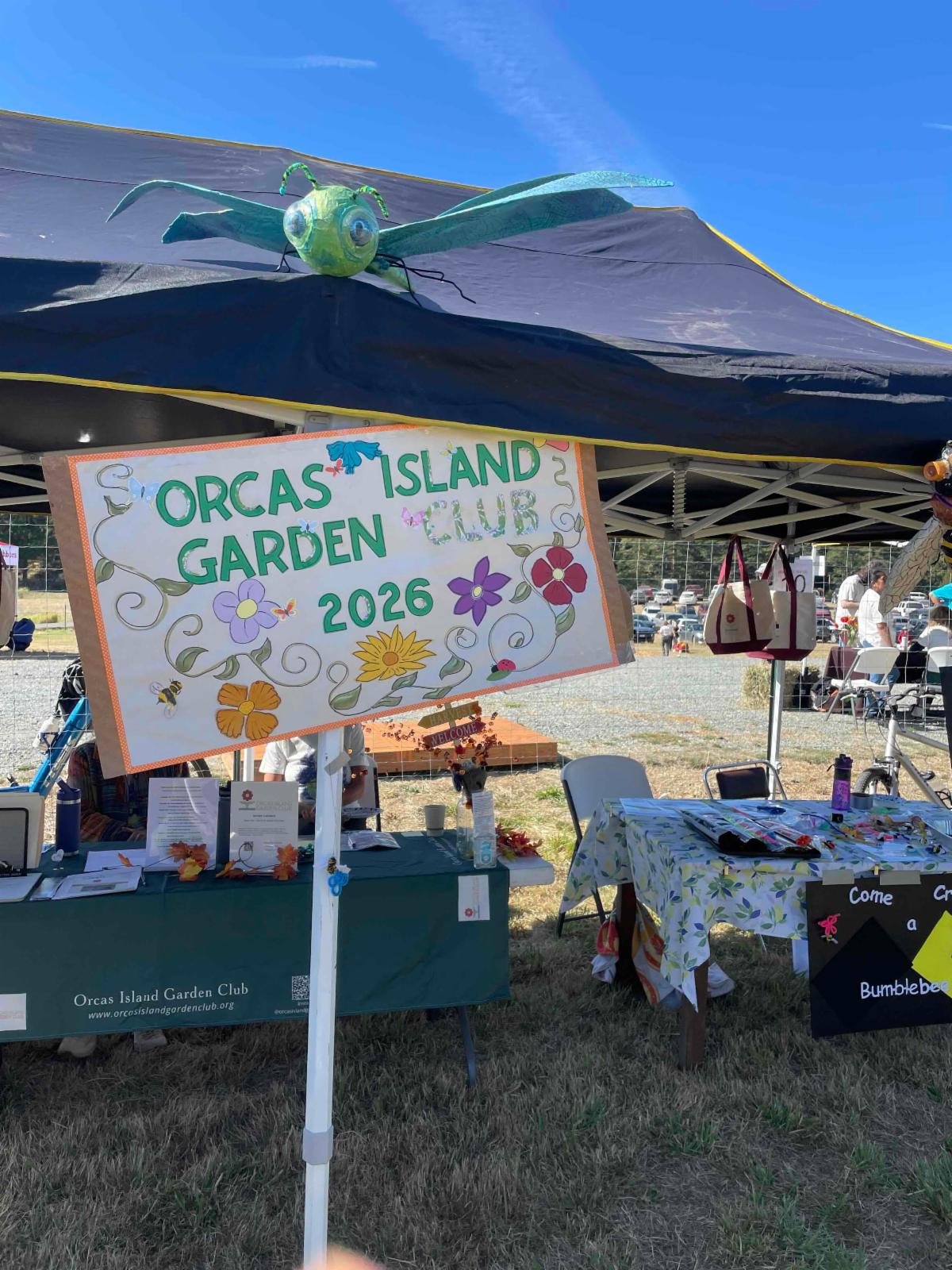
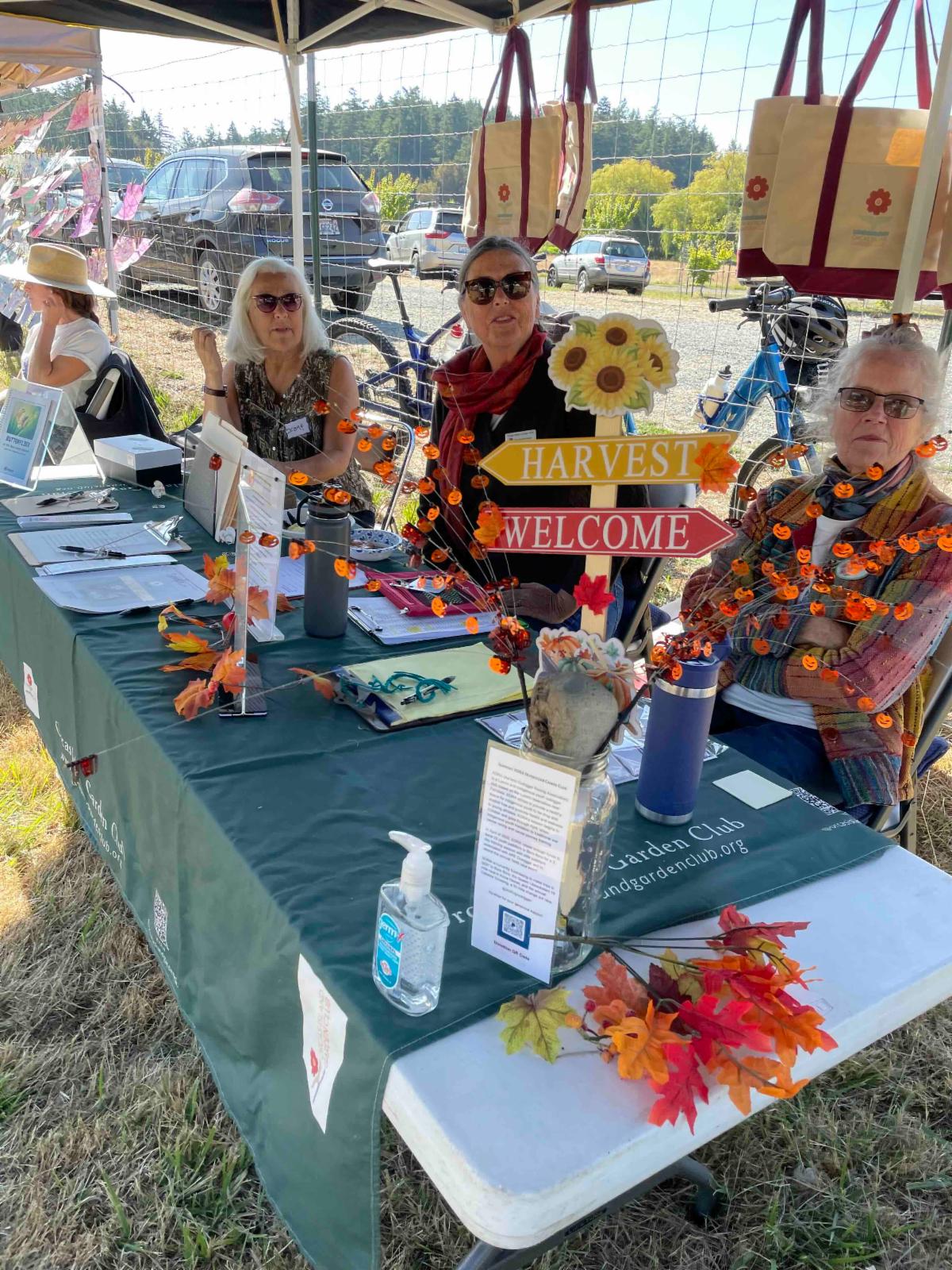
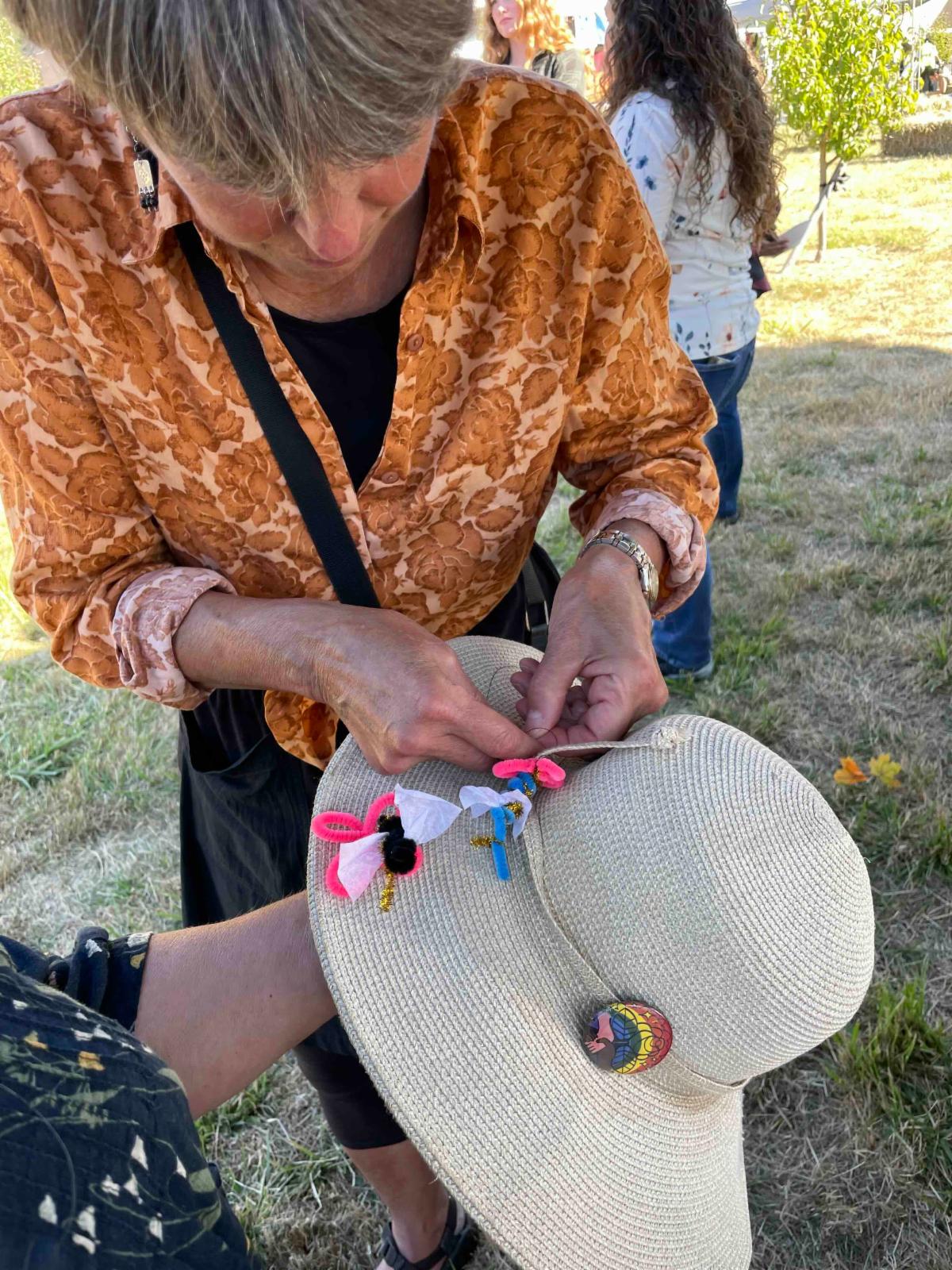
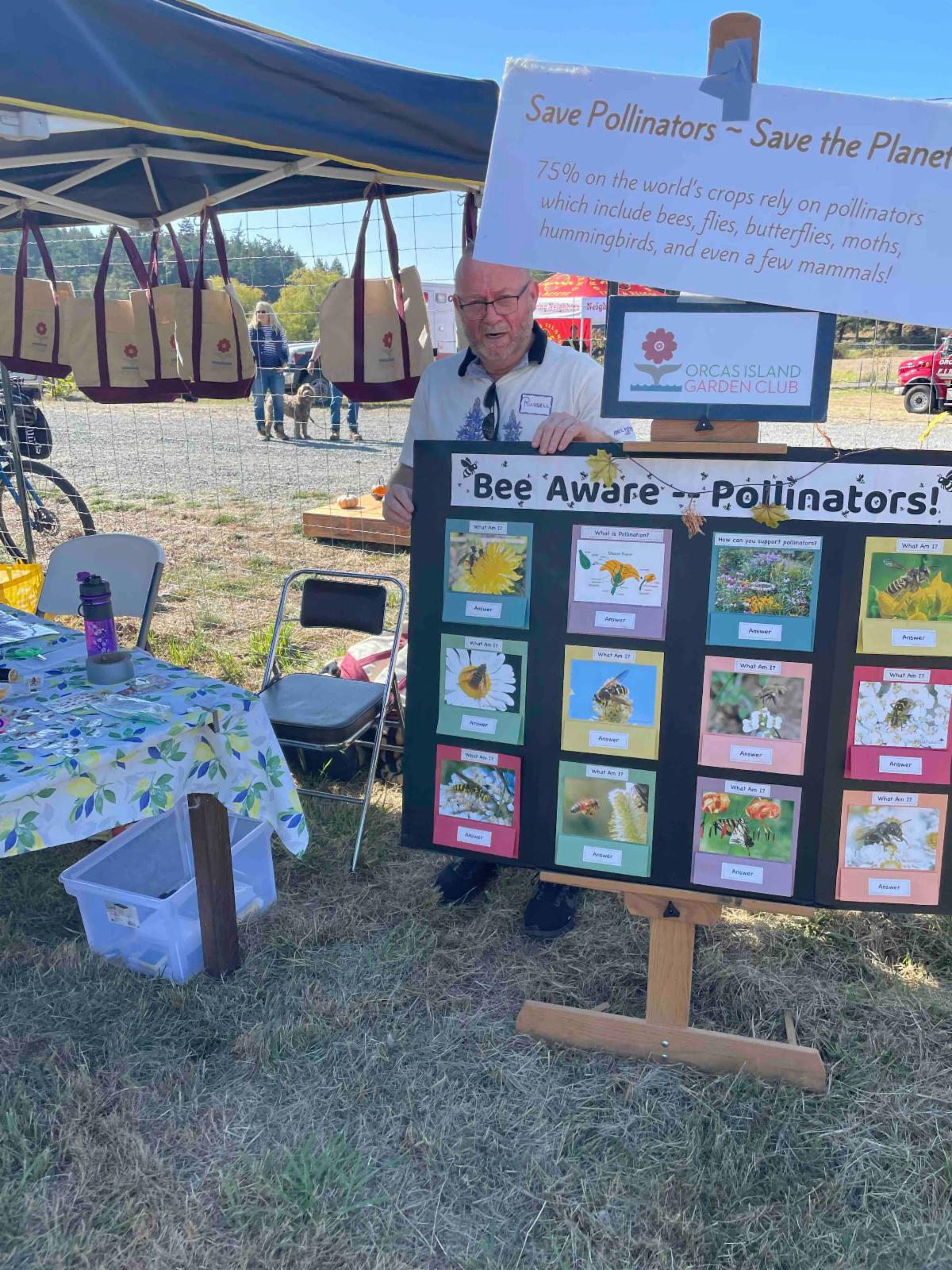
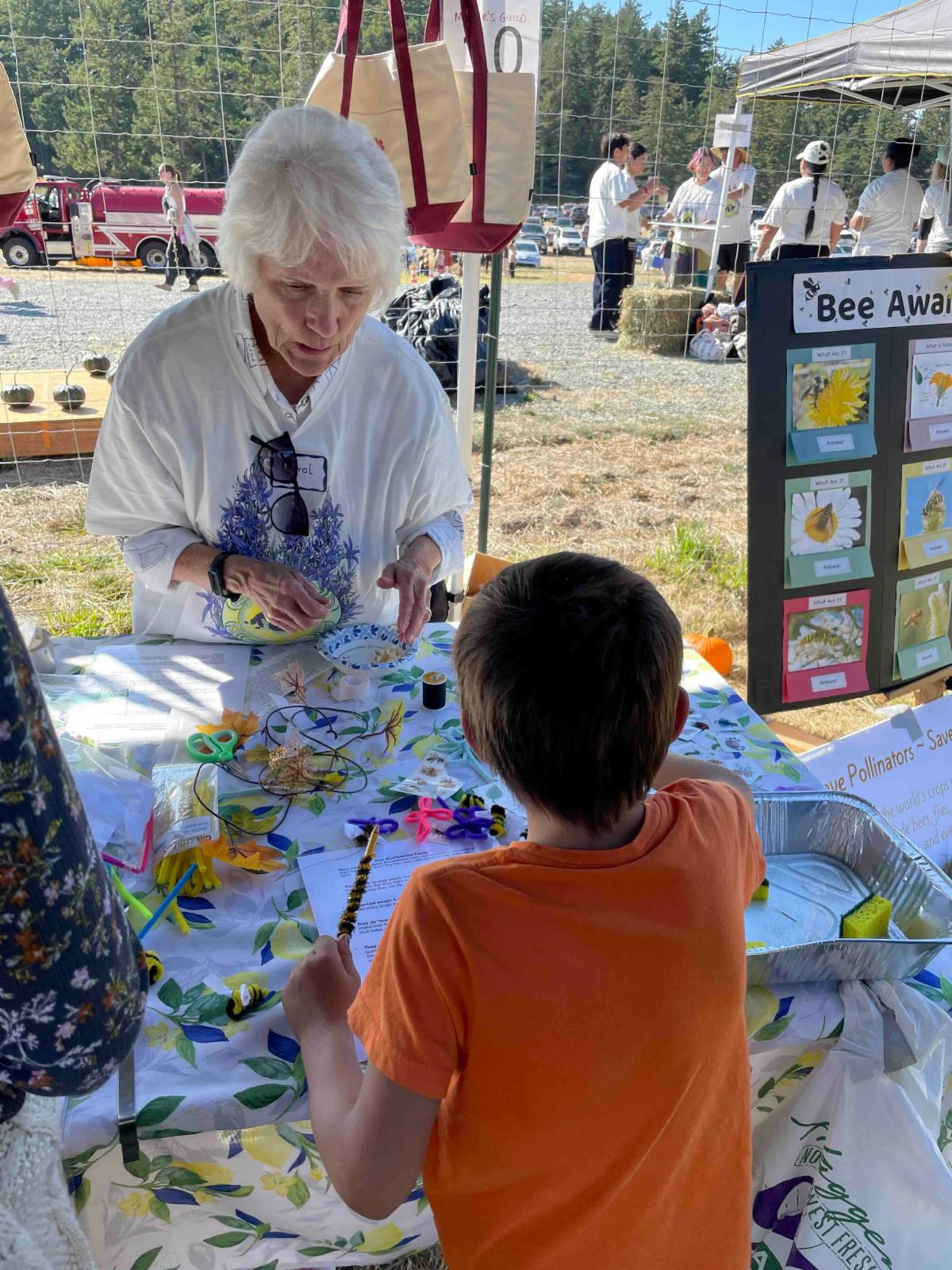
The Orcas Island Garden Club gathered at Family Tides Farms for the annual Fall Festival on September 20th. Our goals were to educate the public about pollinators and share information about the club. The bonus for us was great fellowship, food and fun!
Photos show our amazing morning crew of volunteers that came out to spread some joy - Debra Madan, Cindy Woods and Ginger Moore. Notice Carol Kulminski helping a youngster craft a bumblebee and Russell Vanderpool becoming a pollinator expert on the fly. Not pictured, but much appreciated were volunteers, Aimee Beveridge and Michelle Zjhra. (Also let's not forget to thank Perri Gibbons for being our leader for this community outreach event too!)
A beautiful day to engage with the coummunity and stay club strong!
Poster and craft supplies generously shared by Julia Turney, Kate Yturri, Tony Suruda and the San Juan Master Gardners. Plus a big shout out to Jason Ontjes for the Interisland ferry poster transport.
| | |
Feeling Crafty?
by Ingrid Mattson, Orcas Library Director
Thanks to a partnership with San Juan Island Library, Orcas Island Library patrons now have access to Creativebug. Creativebug provides a huge variety of crafting guides and videos available for free to library patrons.
The login is similar to Kanopy: patrons need to use their library barcode to create a Creativebug account. From that point forward, you just use your Creativebug account to login. Call the library at (360-376-4985) if you need your library barcode. To get started from the library's home page, select Library Collection --> Digital Resources on the homepage and look for "arts and crafts." Here's a direct link if you want to check it out. This sounds like an opportunity for a club event!
| | |
Speaking of crafts...are you interested in plants used for dye projects? Let us know!
by Laura Walker
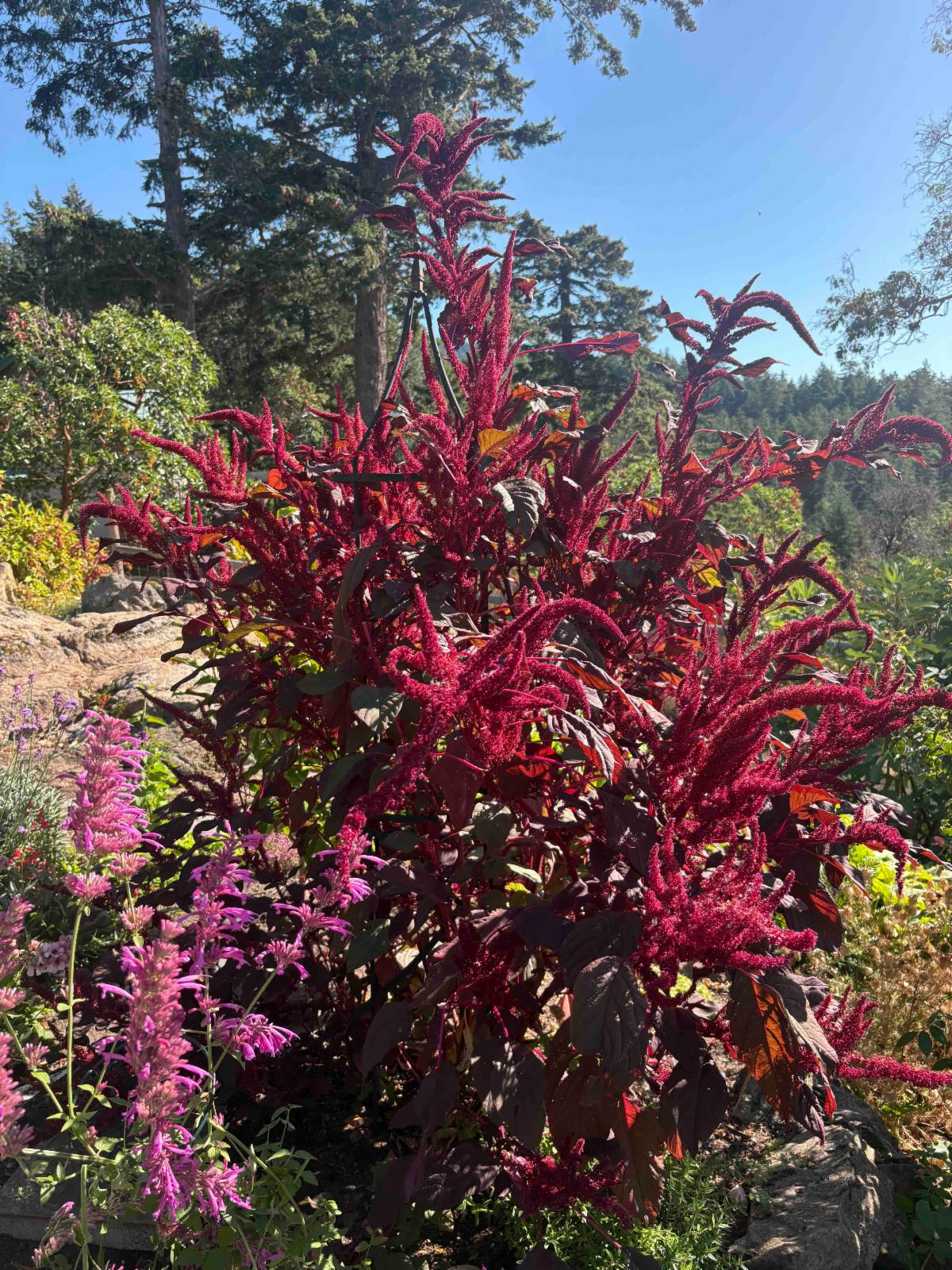
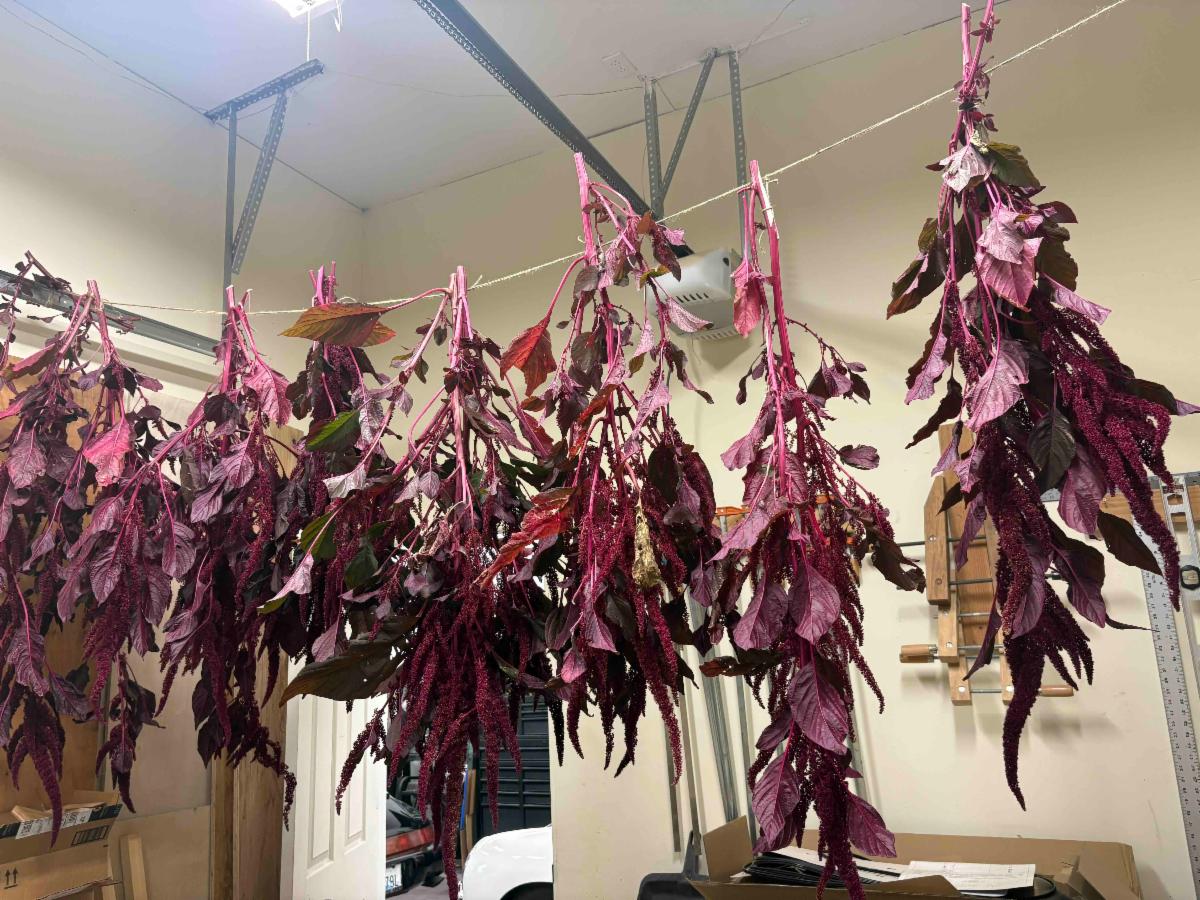
Over the past years, I have become fascinated with plants that can be used in multiple ways. In fact, that's become the new rule for my garden. My goal is that each plant that takes up residence should have at least two functions besides beauty - food for me or my animal friends, medicine or herb, fragrance, dye properties, shelter or soil health.
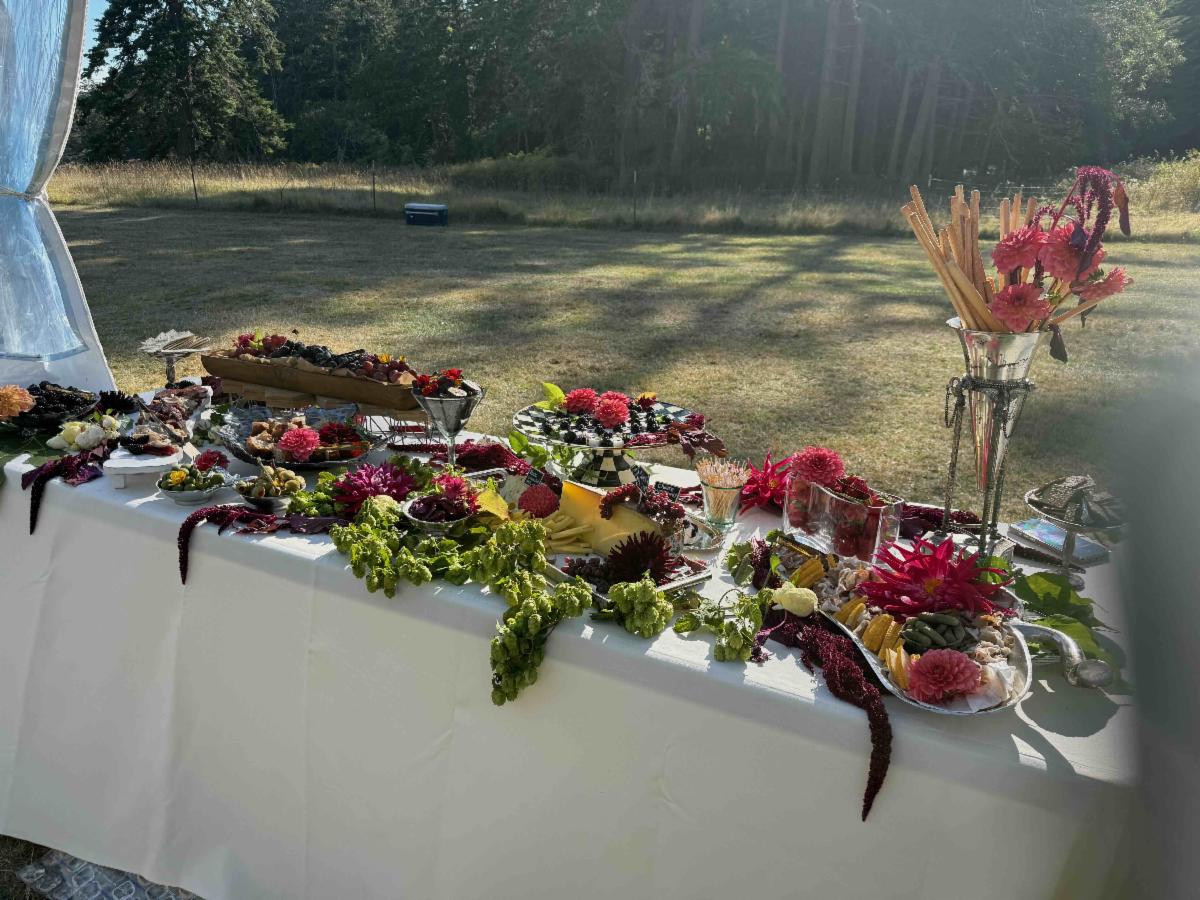
I have come to adore Amaranth which clicks most of these boxes and it grows like a untamed weed here. It is a long lasting bloomer that supports bees, butterflies and skippers. The seeds can be cooked, popped or baked. We can use it dramatically in floral arrangements and layed on tables. I discovered in my recent visit to Austria, we can even make eye pillows out of it due to it's natural cooling sensation. We can alwso use it effectively as a dye material. These pictures show the stages and uses of this amazingly versatile plant.
Recently, a few of us ventured to the San Juan Island Alchemy Center to learn what we could about the world of creating color with natural plant dyes. We were pretty inspired and hope to share the love of this art with the club.
Picture of table arrangement from Robin Sullivan
| | Discovering Local and Global Gardens | |
Italian Alfresco with Deb Exton and Sarah Jones
by Perri Gibbons
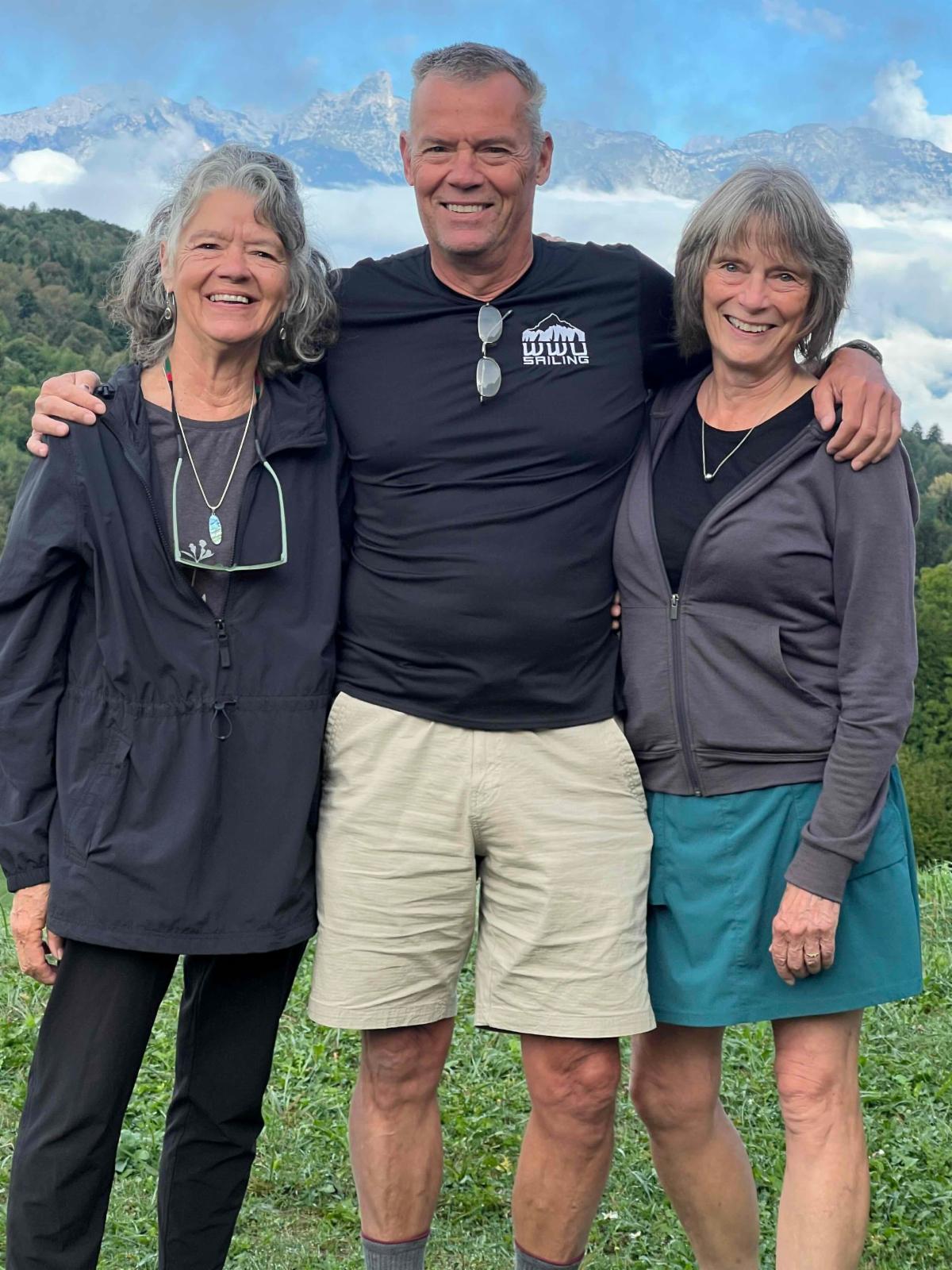
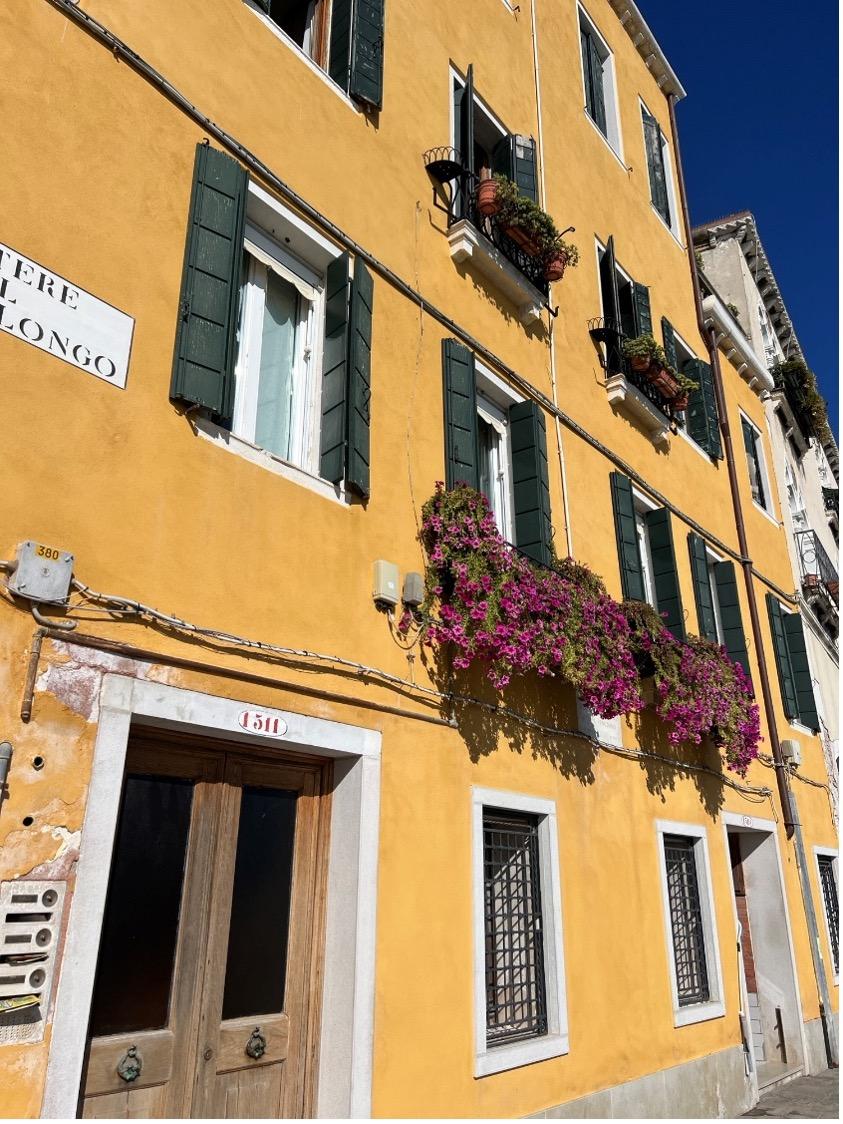
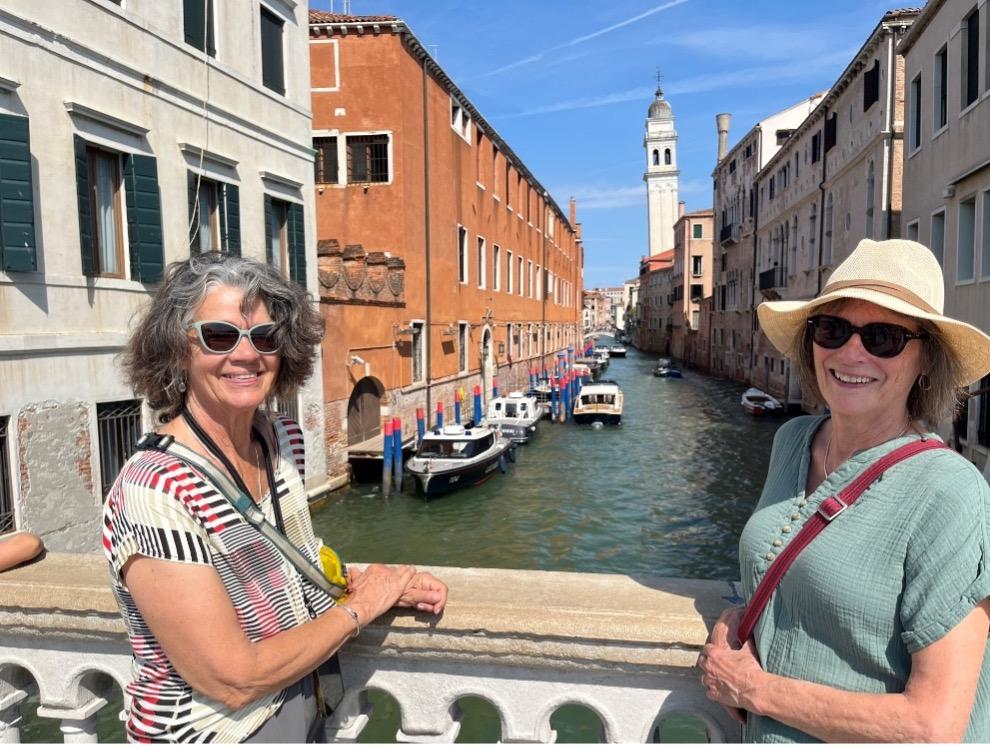
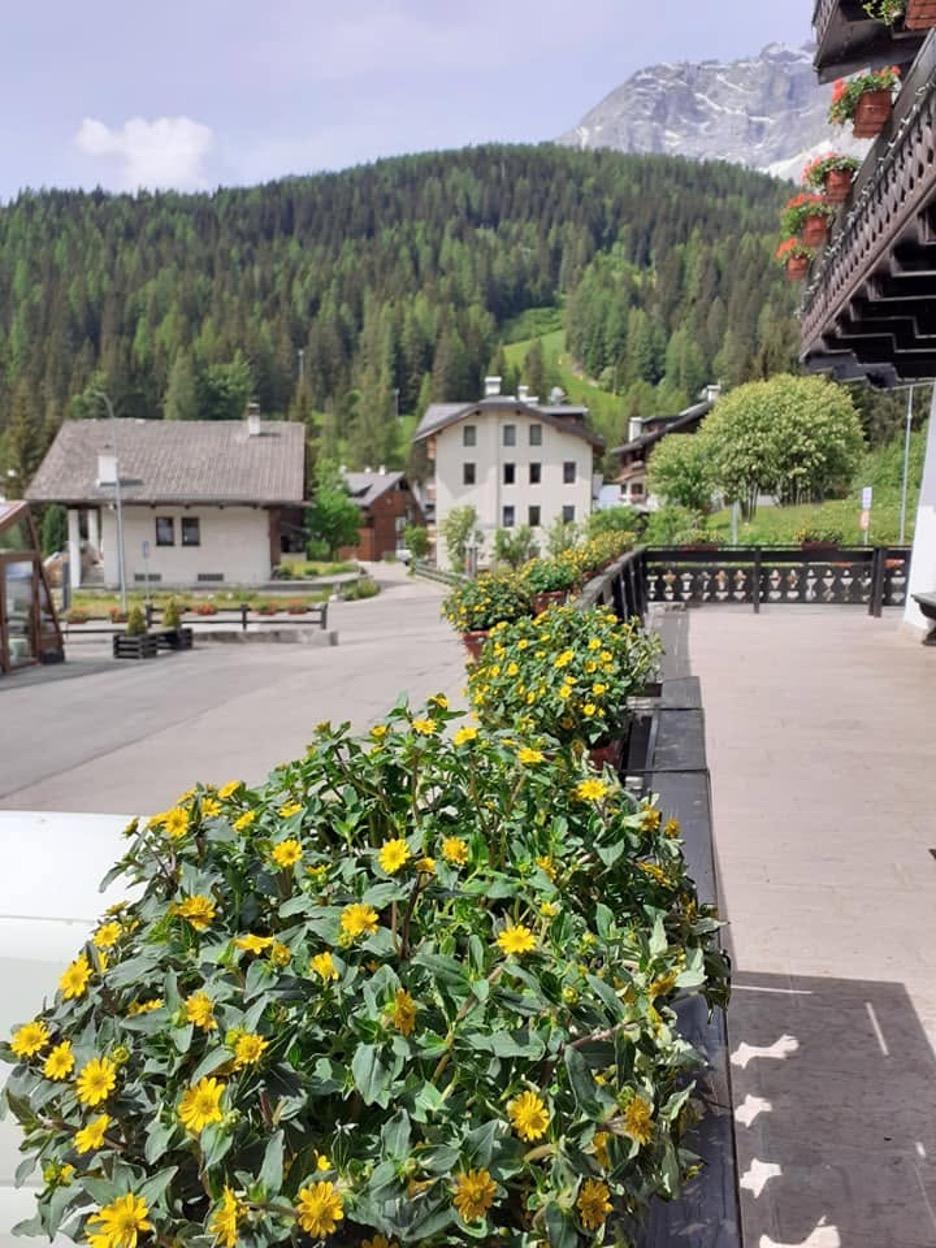
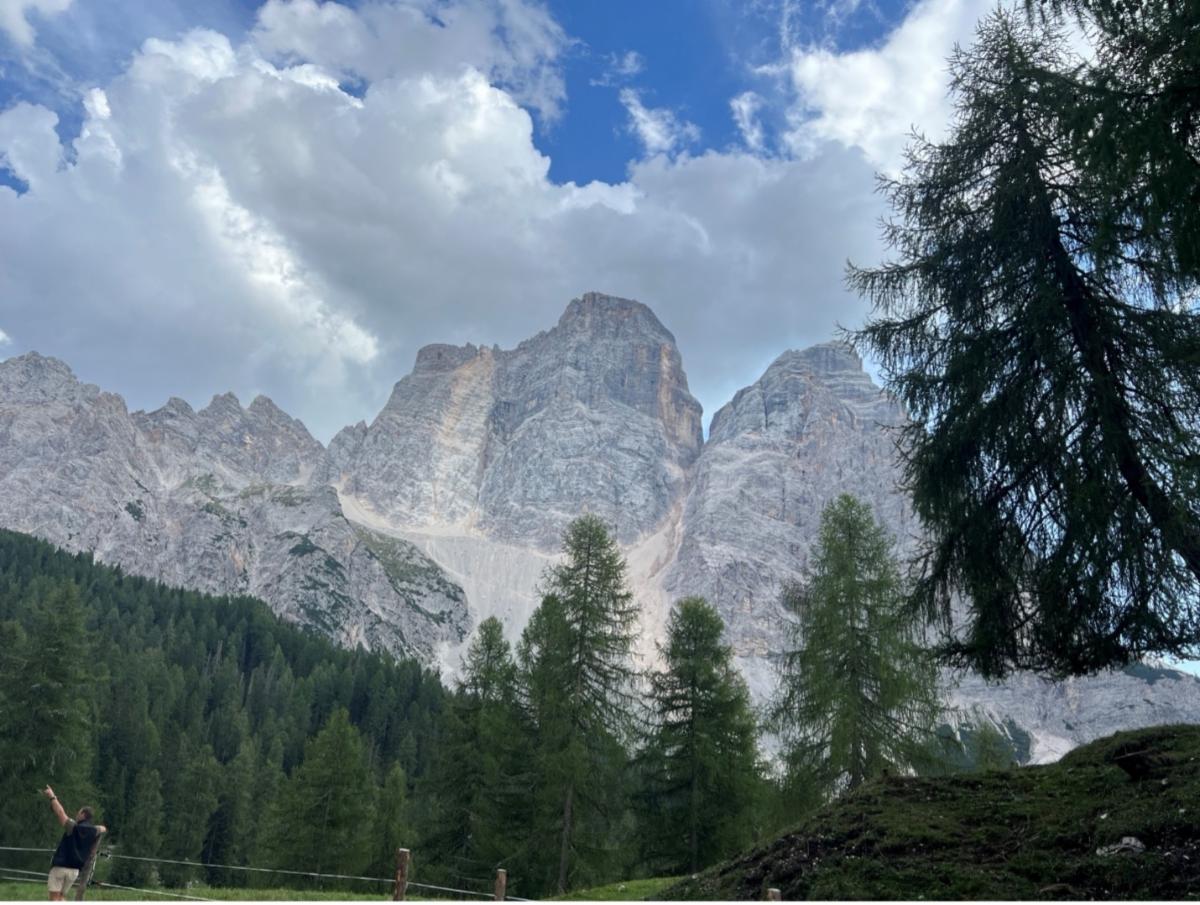
Garden Club Members and sisters, Sarah Jones and Deb Exton, recently took a trip to Northern Italy to hike, explore nature and soak in the culture. We’re delighted Sarah was willing to share some of their experiences there.
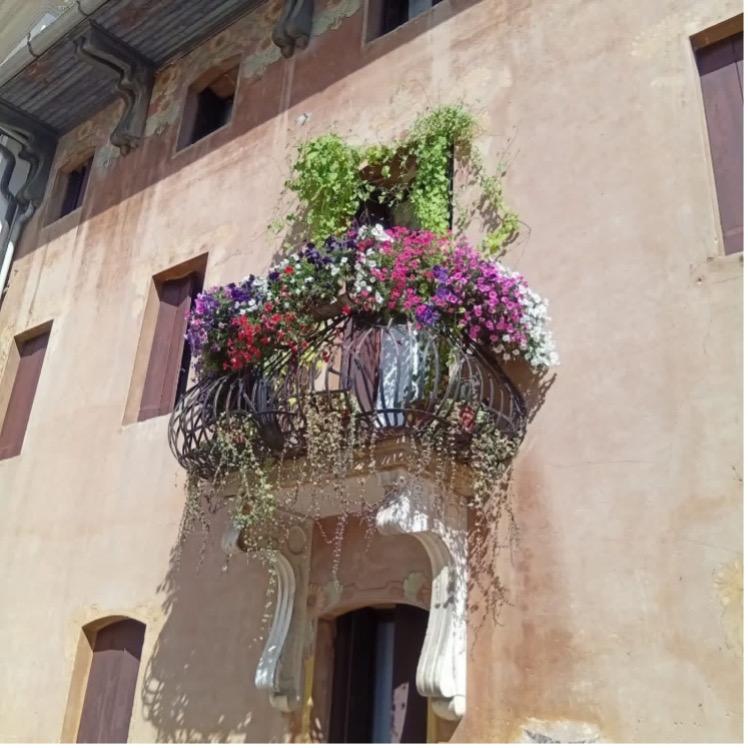
| Our trip to this area of northern Italy was amazing! Deb and I found beautiful window boxes in Venice and the villages. We were amazed at how exuberantly they were blooming this late in the season. It might have been thanks to the rain that sometimes came at night. We experienced a doozy of a thunderstorm! | | Our hikes took us to various elevations between 1200' to 7000’, and each area offered something different. The forests were primarily made up of beech and spruce trees and didn't have the salal, ocean spray, roses and snowberry in the understory like we do. The forest floor was very clean. | | September wildflowers popped up occasionally and consisted of some cool thistles (Stemless Carline Thistle), lots of different Gentian, goldenrod, hillsides covered in crocus and occasional Shooting Stars. Ferns were abundant and in large variety. We saw lots of nettles too! We highly recommend hiking in this area of Italy! | | Ms. Gardenia - Out of the Shed, Into the World | | |
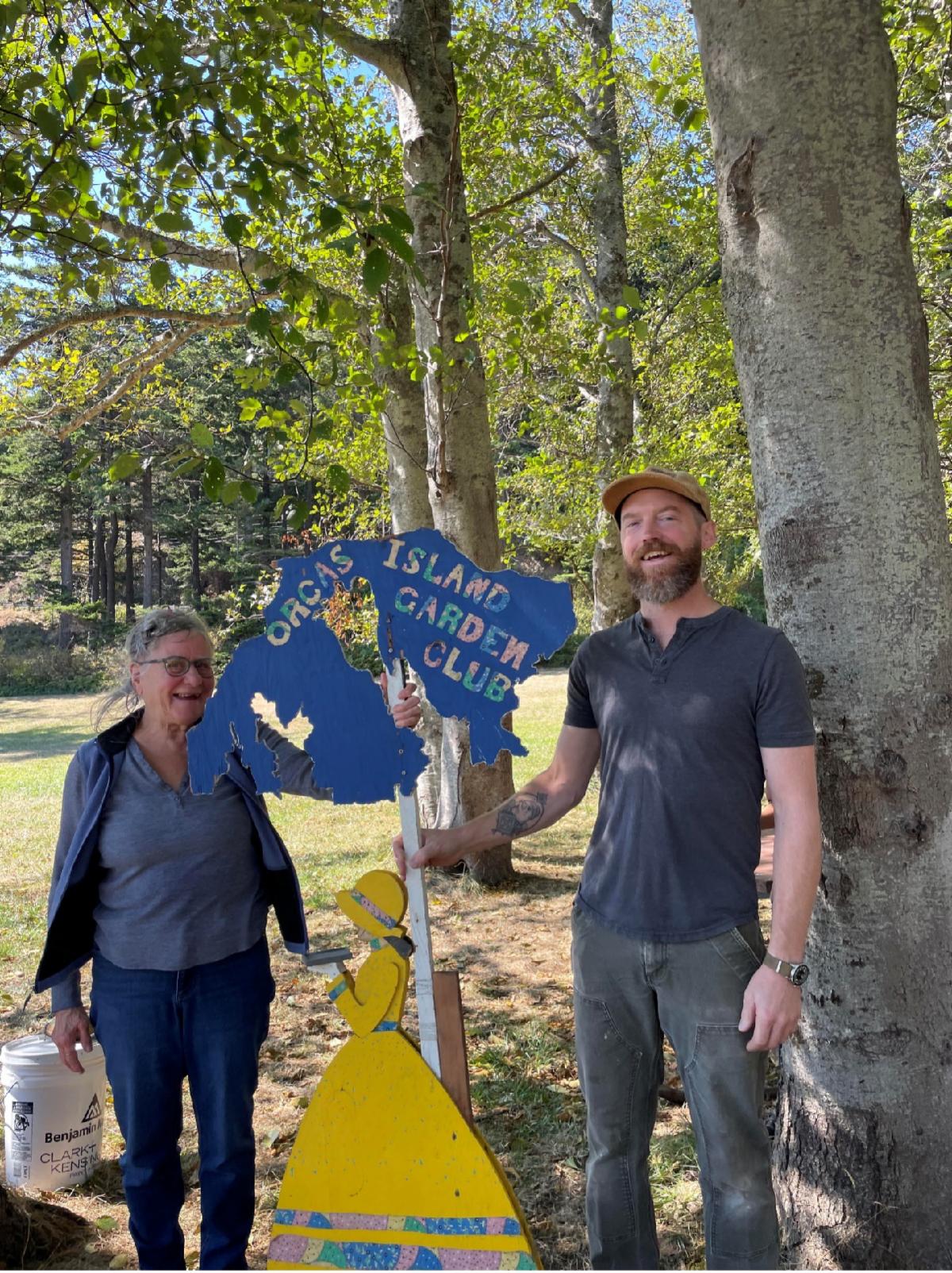
Attends a Mushroom Class
by Perri Gibbons
Encouraged by her growing popularity and many fans, Ms. Gardenia is starting a monthly series travelling out and about on Orcas.
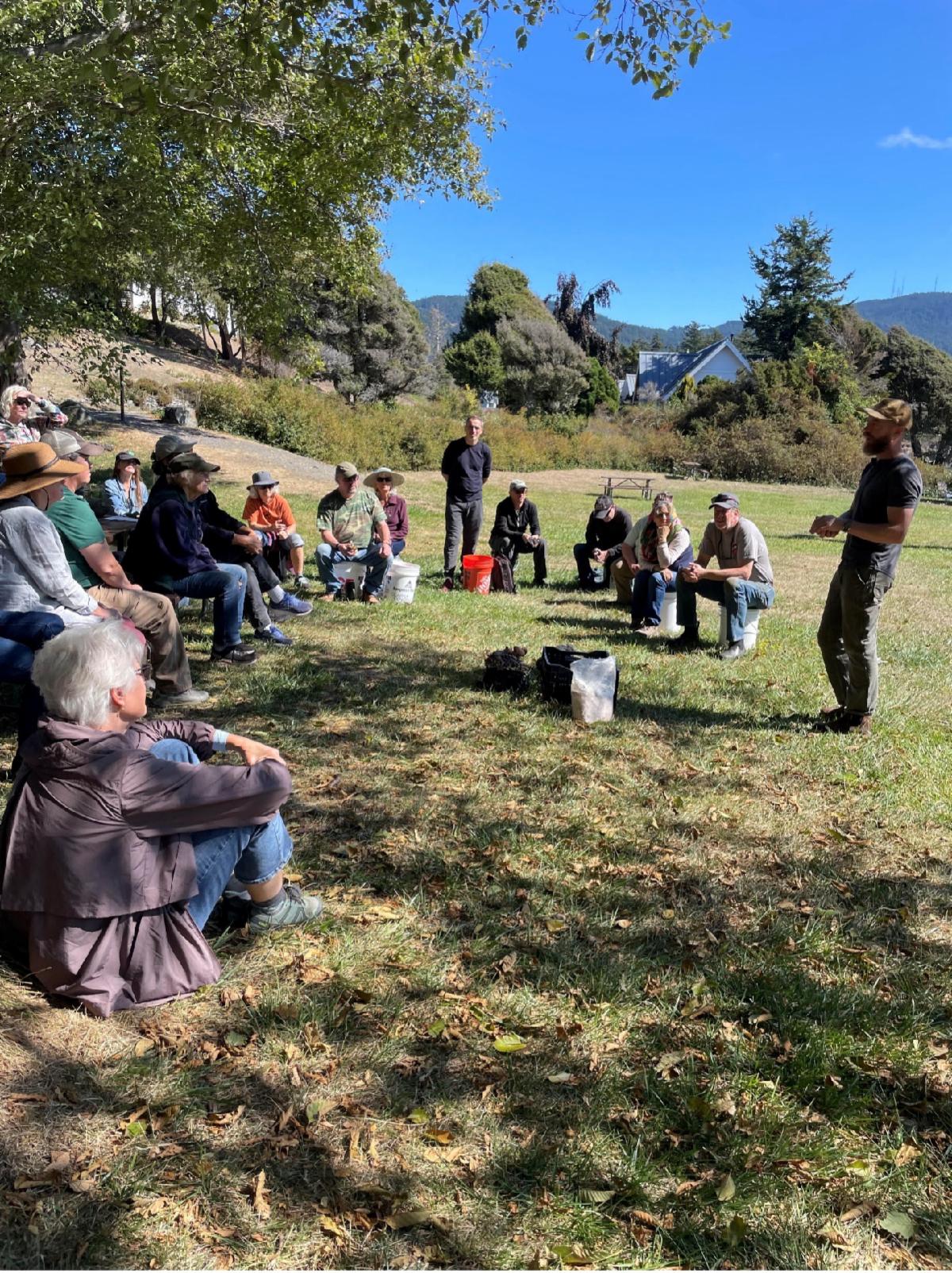
Ms. Gardenia happily accepted an invitation to the OIGC Hands - On Event: Growing Mushrooms in 5 Gallon Buckets held Sept 8th at the Eastsound Waterfront Park. Here’s what she has to say:
“Alex Winstead, owner of Cascadia Mushrooms in Bellingham sure knows his stuff! Here, Margaret, Alic and I weigh the pros and cons of Oyster or Winecap Mushrooms. Both are easy to grow candidates for a beginner project, but I tend to favor the Wine cap as a companion plant."
| | |
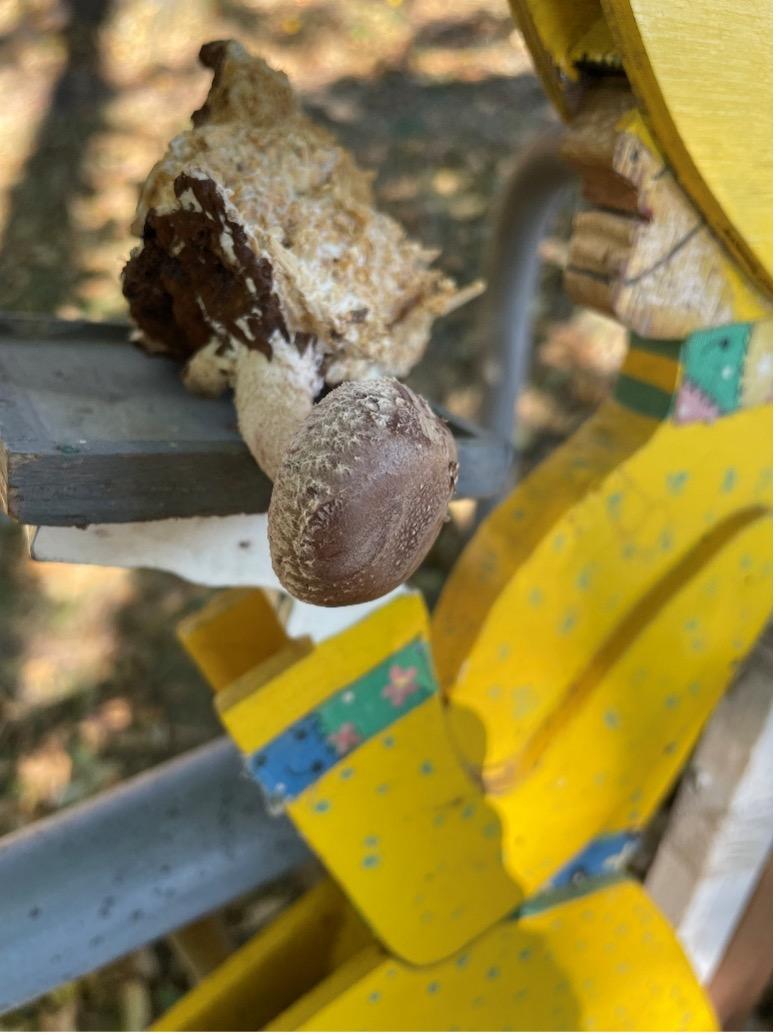
"The Spore Corp and I listened attentively as Alex demonstrated the bucket method as a simple, low-cost way to grow mushrooms at home. In case you missed the class, here's a link to the growing instructions found under Resources on the OIGC website!
This event really took me back to my roots! What a great day to be out learning and growing with my Garden Club friends.”
Ms Gardenia is available for special engagements and appearances.
To schedule, contact her representative, Perri GIbbons, at Orcaspear@gmail.com
| | Meeting Door Prizes and Member Raffle | | At each monthly meeting, all members and guests joining us in person are entered for a chance to to win a door prize! | | Thank you Market Garden for your generous donation of the plant and the fertilizer. Browse their beautiful plant selection, visit Market Garden across from the Island Market. | | |
Thank you Alex Winstead, owner of Cascadia Mushrooms for an educational and lively talk about mushrooms and donating a mushroom kit for our door prize.
Click HERE if you want to buy your own Cascadia Mushroom Grow Kit
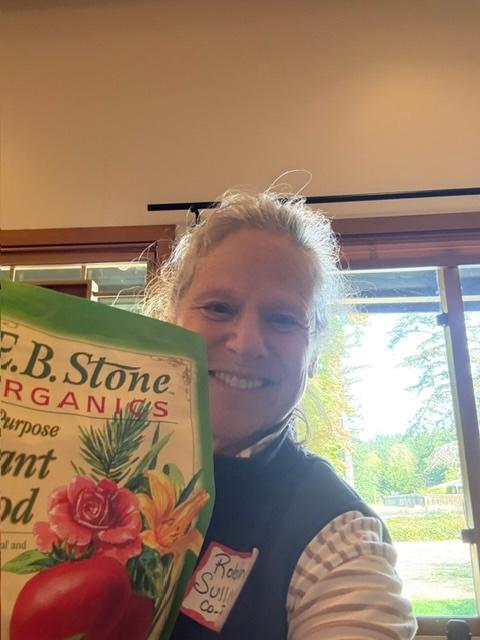
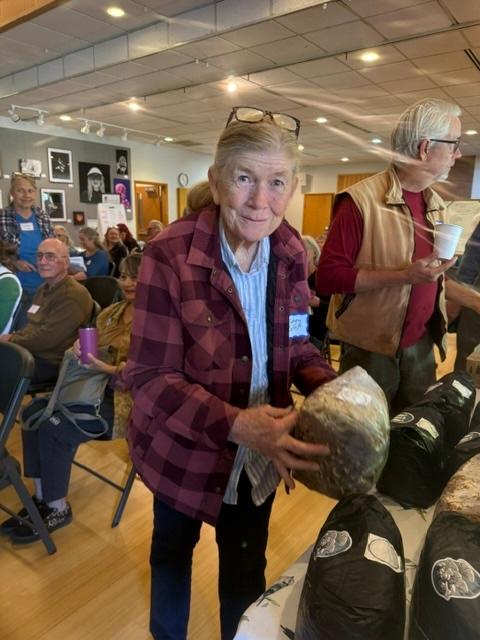
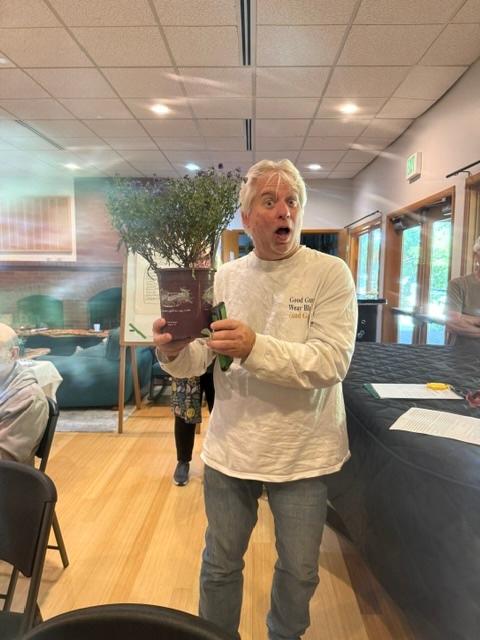
| | | Robin Sullivan is excited about her bag of fertilizer. She needed that! | | Sidney Coffelt is the proud new owner of a mushroom grow kit! | | This mystery man showed signs of surprise and joy at winning his new little plant. | | Did you know??? We hold a special monthly Member-Only raffle? Winners are chosen at random from a list of current garden club members? Remember to renew or join the club to join in this fun contest! | | Congratulations to our October Member Only Raffle Winners: Brenda Johnson and George Zwiebel who won this month's book. | | |
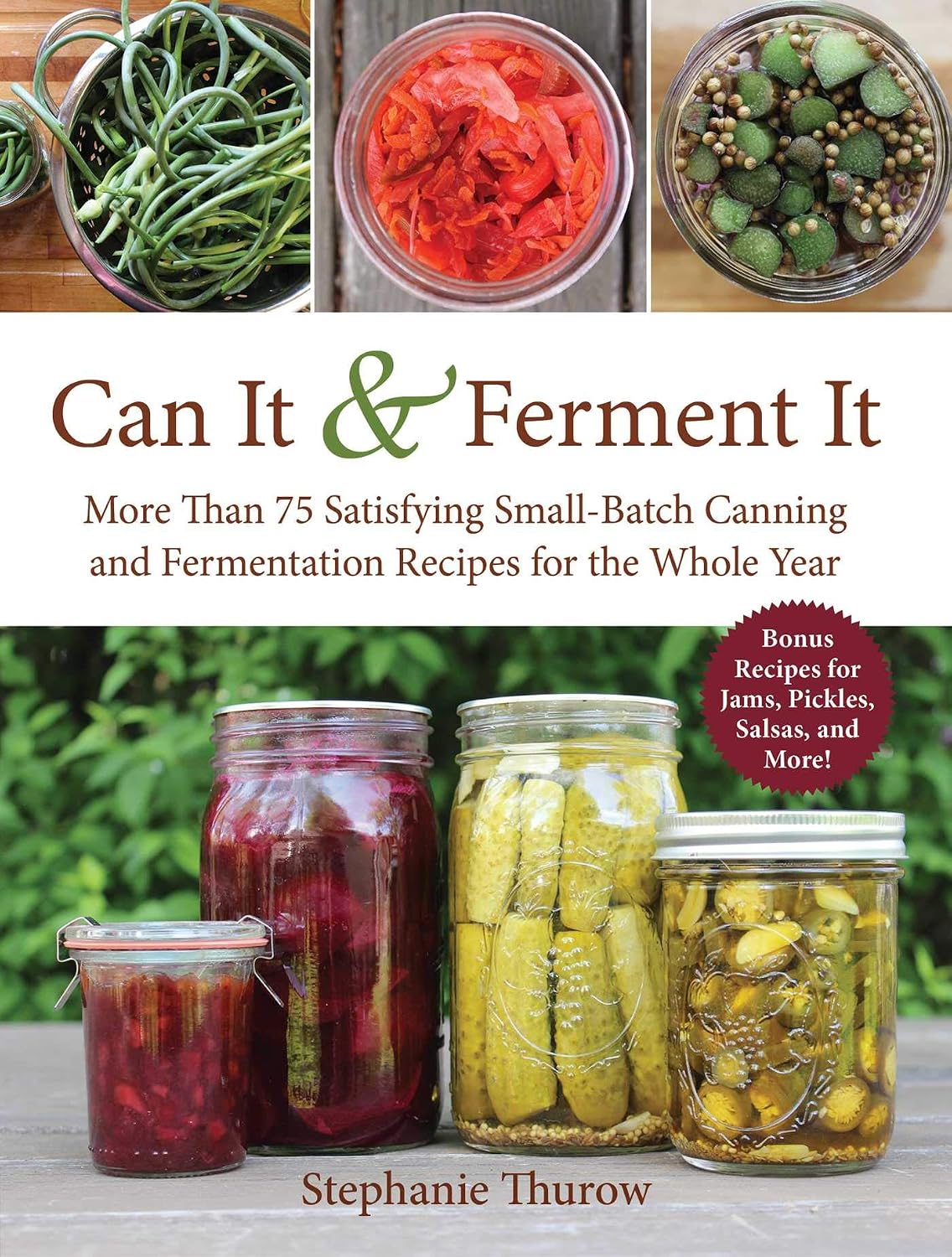
"Can It & Ferment It: More Than 75 Satisfying Small-Batch Canning and Fermentation Recipes for the Whole Year" by Stephanie Thurow
About the book:
Recipes in this helpful, full color book include strawberry chutney, the perfect garlic dill pickle, spring onion kimchi, cinnamon-honey apple butter, and more! Perfect for fall food preservation!
Book generously donated
by Tony Suruda ~ Thank you Tony!
| | Membership - Join Us This Year! | | Now is the time to support one of your favorite non-profits! | | |
Membership Fees:
Individual: $25 / year
Couple: $35 / year
| |  |
| This year, we have a few free memberships available to those in financial need. Please reach out to our membership and we would love to help you. | | | | |
Do you enjoy reading the monthly OIGC newsletter?
How can we make it even better?
We'd love to hear your feedback, comments and suggestions.
Thank you in advance!
| | |
PRESIDENTS: Robin Sullivan & Laura Walker
PRESIDENT ELECT: Michelle Zjhra
MEMBERSHIP: Karen Hiller & Perri Gibbons
GARDEN TOUR: Kristi Fountain, Laura Walker, Sally Hodson
| | | |
TREASURER: Tony Suruda
PROGRAMS: Jenny Pedersen
COMMUNICATIONS: Kristin Tolle
SECRETARY: Adrienne Walker
| | Please contact oigcnewsletter@gmail.com if you encounter any technical issues regarding accessing the newsletter. Thank you! | | | | |