Weekly Digest Number 44 - November 2nd, 2021 |
|
(Editor's Note: It is a beautiful sight to see the unions of the operating crafts in lockstep on this issue of crucial importance. Their actions bring us one step closer to a strike, a strike that we can and WILL win!) |
|
Unions File for Injunctions Against Norfolk Southern |
|
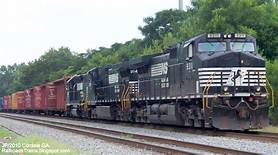
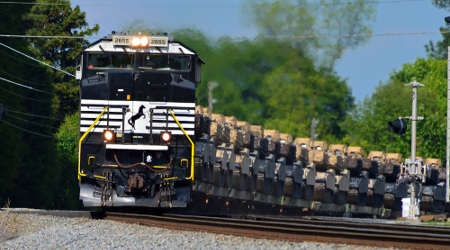
The SMART Transportation Division (SMART–TD) and Brotherhood of Locomotive Engineers and Trainmen (BLET) escalated their fight against Norfolk Southern Railway (NS) to stop the railroad from forcing locomotive engineers to work as conductors, and for disciplining those who don’t. The two unions each filed motions for preliminary injunctions yesterday against NS in the United States District Court for the Northern District of Ohio, Eastern Division.
SMART–TD seeks an injunction ordering NS to return to the status quo that existed prior to the dispute, which would require that the railroad use only SMART–TD-represented train service employees to fill jobs in those crafts and classes.
The BLET seeks an immediate injunction forbidding NS from forcing engineers to work as conductors, including disciplining members for failing or refusing to comply with directives to work as conductors, and requiring that NS immediately reinstate BLET members who were disciplined as a result of the dispute, expunging all discipline records, and making each engineer whole.
Following a hearing on the motions, the court will issue its decision. If the court grants the motions and issues the requested orders, any continued misconduct by the carrier could trigger a strike.
“This situation is identical to the September 2013 dispute that led to a BLET strike on the Wheeling and Lake Erie,” said SMART–TD President Jeremy R. Ferguson and BLET National President Dennis R. Pierce. “The Sixth Circuit Court of Appeals, which also has jurisdiction here, held that the 2013 dispute was, indeed, a major dispute. Multiple ground employees on NS have sustained injuries in switching operations in recent weeks. We have made it clear to NS that forcing engineers to work ground assignments that they are not currently qualified on or familiar with is an invitation for more incidents.
|
|
(Editor's Note: One might suspect that upwards of 90% or more of union railroad workers are in support of striking American workers.) |
|
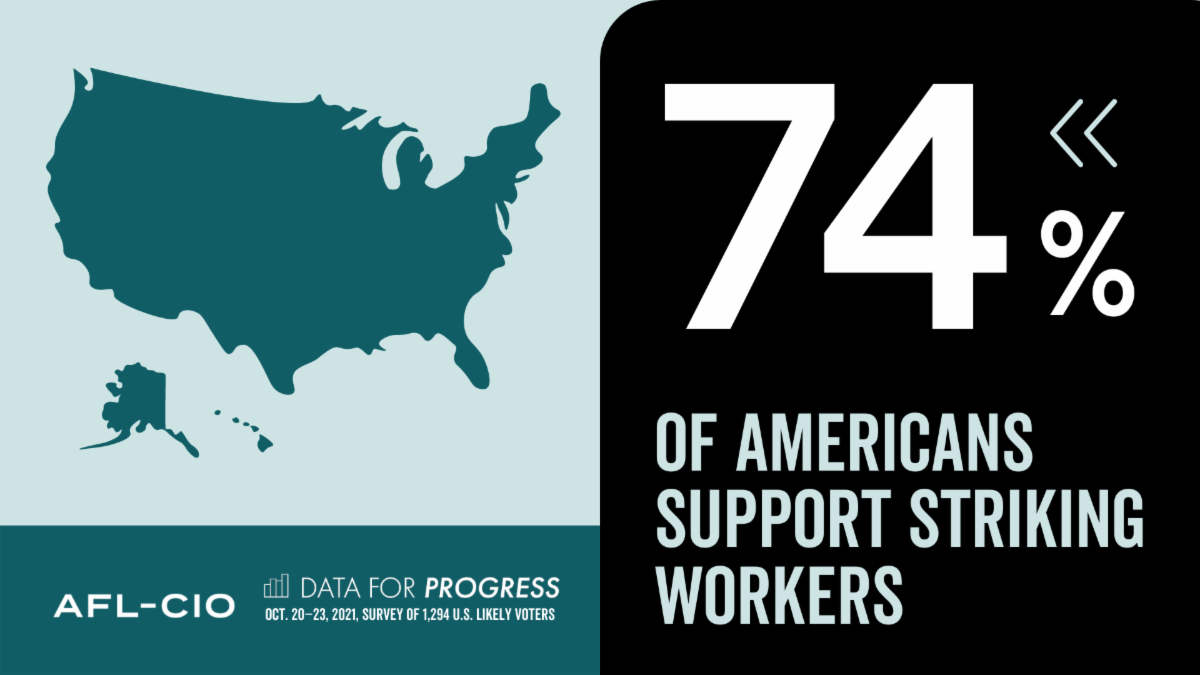
74% of Americans Support Workers on Strike. Are You One of Them? |
|
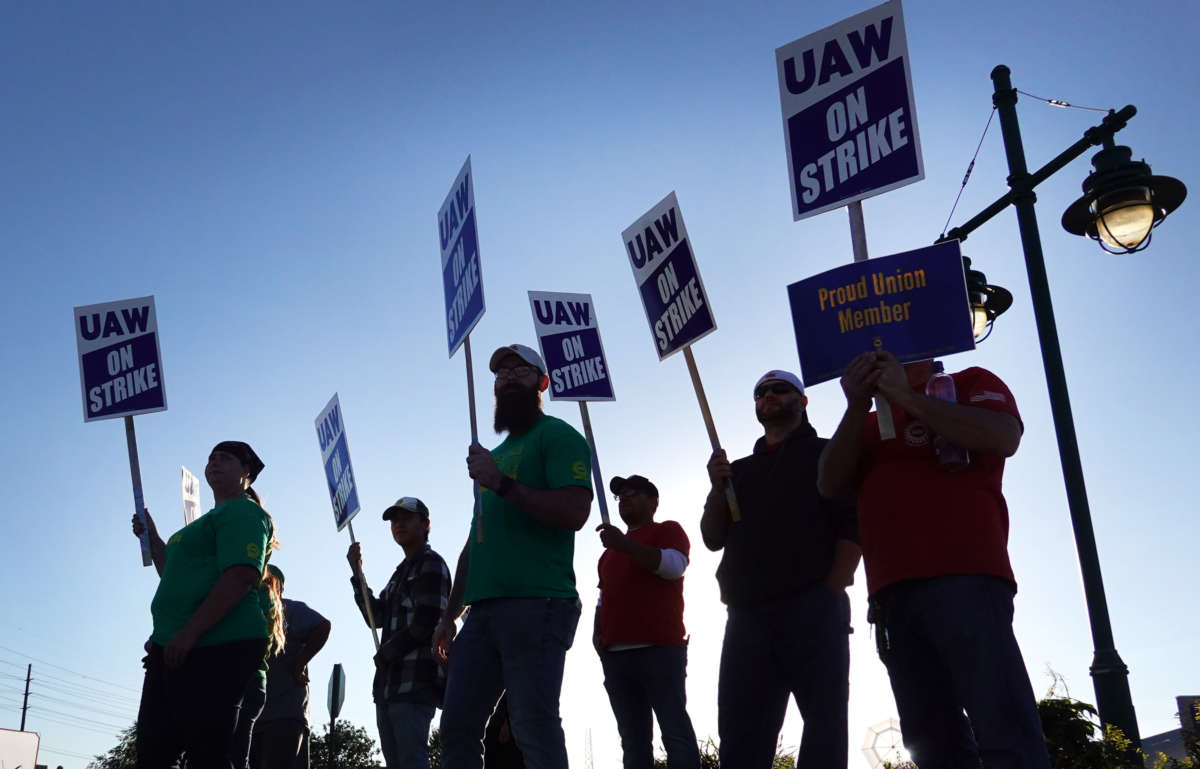
Right now, thousands of workers are on strike for better wages and working conditions. Seventy-four percent of Americans support employees going on strike. Are you one who does? Add your name if you support workers on the picket line!
“Strikes are leading indicators that our country is heading in the right direction — a healthy response to imbalances of power created by employers who believe they should be able to squeeze more and more out of the workers who make their companies profitable,” said AFL-CIO President Liz Shuler. Americans were asked whether we approve of the employees on strike, and 74% of us said we approve. Across party lines, race and age, people approve of the worker uprising happening right now during Striketober. If you think employees are right in striking for better wages and working conditions,add your name now.
In Solidarity,
Team AFL-CIO
|
|
Rail Workers' Right to Choose Medical Network Upheld |
|
In early July 2020, just over eight months after the current round of national bargaining had begun, the carriers’ representative — the National Railway Labor Conference (NRLC) — proposed reconfiguring the National Plan’s network structure in a way that would force many railroad workers into the cheapest area medical network immediately and then on a continual 3- to 5-year schedule without formal bargaining.
The Cooperating Railway Labor Organizations (CRLO), which is the rail labor umbrella group that oversees plan administration in concert with the NRLC, rejected the proposal, stating that this was an issue for negotiations and pointing out that the carriers had made an identical proposal at the bargaining table. In late July, the NRLC demanded that the unions agree to the proposal and threatened to use the binding deadlock neutral process found in the 1991 National Agreement settlement to resolve the dispute.
This threat led 12 unions in the CRLO to file suit against the nation’s Class I railroad carriers in the United States District Court for the District of Columbia, asking the court to force the carriers to bargain in good faith with the unions over mandatory subjects of bargaining, such as their network structure proposal. The carriers’ defense was that this was a “minor” dispute under the Railway Labor Act, as it involved an administrative matter under the National Plan and, therefore, could be resolved by the “deadlock neutral” process that was included in national agreements for all unions that were imposed by Congress — and signed into law by President George H. W. Bush — in order to stop a national strike in 1991.
|
|
(Editor's Note: With the burgeoning support for strike activity across the country, national rail negotiations at a standstill, supply chains in tatters, a shortage of rail workers in the field, and a fired up pissed off rank & file, this may well be the best opportunity in decades for rail workers to carry out a successful nationwide rail strike.) |
|
New Poll Finds Broad Support for Strikes Across the Country |
|
New polling finds that a majority of likely voters across parties are supportive of recent major labor actions as a strike wave sweeps the U.S. and the labor movement shows signs of a resurgence amid the pandemic.
The survey, conducted by Data for Progress on behalf of the American Federation of Labor and Congress of Industrial Organizations (AFL-CIO), asked nearly 1,300 respondents if they approve or disapprove of workers striking for better wages. The one-question survey references the John Deere, Nabisco and Kellogg strikes.
Among all respondents, 74 percent of likely voters say that they either strongly or somewhat approve the strikes, with only 20 percent disapproving — a 54-point margin. Support was strongest among Democrats, where 87 percent of respondents said they approved of the strikes. Still, a majority of Republicans also approved, with 60 percent saying as such and only 30 percent disapproving of strikes.
Get our free emails
The survey results suggest that Americans are largely supportive of the current moment in the labor movement, colloquially known as Striketober, as more workers grow tired of working in poor conditions with little pay and few benefits.
This month, over 10,000 union workers for manufacturing company John Deere began striking, objecting to being forced to work long hours as demand for the company’s products soared during the pandemic. The union workers have also rejected proposals to create a tiered system that offers fewer benefits to workers who are newer to the company.
The John Deere workers joined over 90,000 other workers from various industries like health care, food manufacturing and film who voted to authorize a strike recently. Earlier this year, Nabisco workers kicked off a wave of major strikes in the U.S., with hundreds of workers drawing on “the radical energies of a recently resurgent labor movement in the United States — a momentous upswell in a key vector of working-class power,” wrote Tyler Walicek for Truthout.
The labor movement revival is happening against a backdrop of skyrocketing wealth inequality exacerbated by a deadly pandemic that has killed over 700,000 people and counting. In August, as COVID surged due to the Delta variant, and as labor was criticized for being unwilling to work for stagnant and low wages, workers quit their jobs in record numbers. The number of resignations surged to 4.3 million in August — the highest since agencies began recording data on quits in 2000.
The data suggested something that economists and labor advocates have been indicating in recent years: The U.S. is ripe for a major transformation in how workers are treated and compensated, which has been highlighted by the pandemic.
|
|
(Editor's Note: As a segue from the last article, here is just one example of that "skyrocketing wealth inequality." ) |
|
NS Posts Q3 Records for Income, Earnings, Operating Ratio |
|
Norfolk Southern Corp. today reported third-quarter 2021 financial results, which included Q3 records for net income, diluted earnings per share, income from railway operations and operating ratio.
Third-quarter net income was $753 million, diluted earnings per share was $3.06, income from railway operations was $1.1 billion and the operating ratio was 60.2%.
Railway operating revenue increased 14% to $2.85 billion compared with Q3 2020.
Railway operating expenses during the quarter rose 3% to $1.7 billion. Last year’s results included a $99 million impairment charge related to an equity method investment. Excluding the impairment charge, operating expenses were up 10% compared with adjusted operating expenses in Q3 2020, driven by higher fuel, purchased services and compensation and benefits expenses.
The $1.1 billion in railway operations income was a 35% increase on a year-over-year basis. Excluding the effect of the impairment charge in Q3 2020, income from railway operations was up 21%.
The operating ratio of 60.2% was an improvement of 630 basis points over Q3 2020. Excluding the effect of last year’s impairment charge, the operating ratio improved 230 basis points over the adjusted results for Q3 2020.
|
|
Two Takes on Health Care Arbitration: NRLC, Unions |
|
The National Railway Labor Conference on Oct. 26 announced that an arbitrator has ruled that U.S. Class I freight railroads “may advance all but one aspect of a proposal to make network changes to the national railroad health plans.” Union leadership involved in collective bargaining with the NLRC put a different spin on it, saying, in part, “An arbitrator has rejected the railroad industry’s attempt to utilize a never-before-used contract clause imposed by Congress 30 years ago to reduce the healthcare networks available to over 250,000 railroad workers and family members on the National Healthcare Plan for Railroad Employees.”
The NRLC is an association of all U.S. Class I freight railroads and many smaller freight and passenger lines. Through its National Carriers’ Conference Committee (NCCC), the NRLC represents most of its members in national negotiations with the 12 major rail labor organizations. The current round, which began Jan. 1, 2020, covers more than 30 railroads and approximately 125,000 employees. The NCCC includes the senior labor relations executives of BNSF, CSX, Kansas City Southern, Norfolk Southern, Union Pacific, and CN’s U.S. properties.
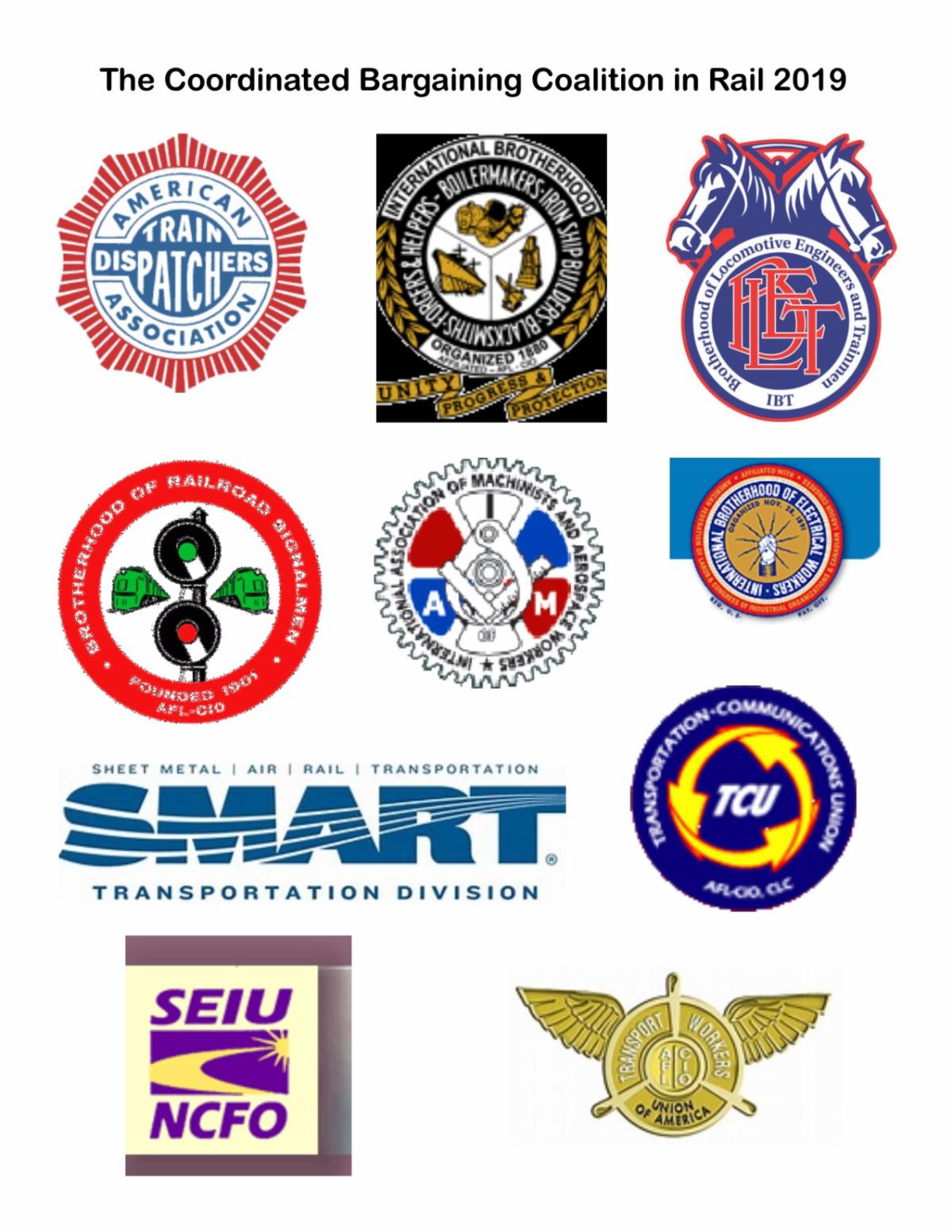
The unions involved in collective bargaining are the American Train Dispatchers Association (ATDA); the Brotherhood of Locomotive Engineers and Trainmen (BLET); the Brotherhood of Maintenance of Way Employes (BMWE); the Brotherhood of Railroad Signalmen (BRS); the International Association of Machinists and Aerospace Workers (IAM); the International Association of Sheet Metal, Air, Rail and Transportation Workers, Mechanical Division and Transportation Divisions (SMART-MD and SMART-TD); the International Brotherhood of Boilermakers; the International Brotherhood of Electrical Workers (IBEW); the National Conference of Fireman & Oilers District, Local 32BJ, SEIU; the Transportation Communications Union (TCU)/IAM; and the Transport Workers Union (TWU).
Railway Age reproduces these two very different interpretations. We note that network healthcare is complex, with probably a dozen or more networks used by railroads, in some cases hospital associations, in others, physician networks, and varying by geography—rural vs. non-rural, and legacy railroad vs. current railroad. Management and labor each depend on outside consultants in this area because of the complexity.
First, NRLC’s interpretation:
“These health plans—which provide among the most generous health care benefits in the nation—are administered by joint labor-management committees that have a legal obligation to properly administer the plans and to control costs and preserve resources. When these committees are unable to agree on a matter related to how the plans should be administered, the parties’ agreements provide for binding arbitration....
Second, union leadership’s interpretation:
“The decision is a major victory for railroad workers covered by national agreement health care plans, as their bargained-for right to choose their own medical network remains intact. In early July of 2020, just over eight months after the current round of national bargaining had begun, the NRLC proposed reconfiguring the National Plan’s network structure in a way that would force many railroad workers into the cheapest area medical network immediately and then on a continual 3- to 5-year schedule without formal bargaining. The Cooperating Railway Labor Organizations (CRLO), which is the Rail Labor umbrella group that oversees plan administration in concert with the NRLC, rejected the proposal, stating that this was an issue for negotiations and pointing out that the carriers had made an identical proposal at the bargaining table.
|
|
(Editor's Note: If you have yet to place an order, now is the time! We especially encourage those on the NS property to order some. Help to Build the momentum!! We are all in this together!) |
|
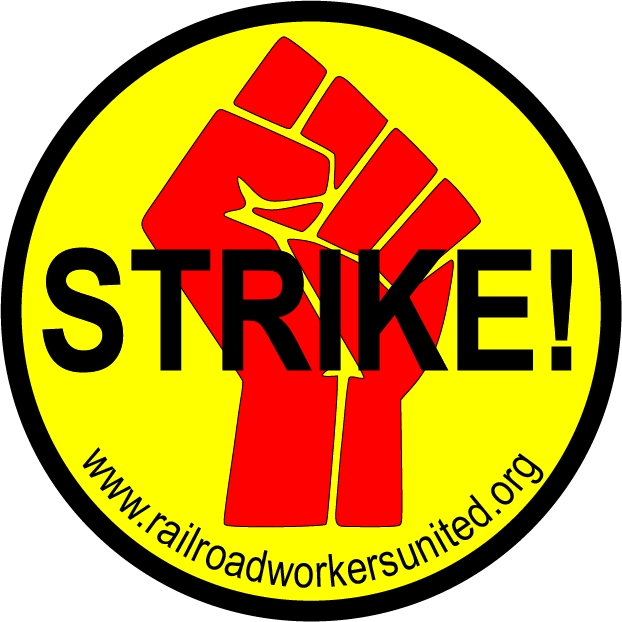
RWU Offers STRIKE! Buttons and Stickers, Slightly Above Cost, to All Railroad Workers Who Want Them |
|
Last week, RWU announced an unlimited supply of strike stickers and buttons to be made available to all North American rail workers. Below is the text of the Bulletin announcing the sale....
The Norfolk Southern (NS) is running roughshod over trainmen and engineers, flagrantly violating the union contract. The unions of the operating crafts are united in solidarity, both seeking authorization to take strike action under the Railway Labor Act.
Meantime, in national handling, the rail carriers are playing hardball, as contract negotiations have come to a standstill. While the carriers chalk up record profits, U.S rail workers have now gone more than 2 years without a raise. To add insult to injury, the carriers demand a reduction in crew size from 2 to 1, which would further decimate our ranks, compromising the safety and efficiency of the railroad.
Union Pacific (UP), Norfolk Southern (NS), and CSX were recently rated as three of the top 5 worst corporations to work for among those with 10,000 or more employees (UP #1, NS #2, and CSX #5). Every one of the Class One carriers are having trouble recruiting and retaining employees.
All of this takes place against a backdrop of a national workforce in a state of revolt, quitting jobs in record numbers across all industries, and engaging in strike activity nationwide, the likes of which we have not see for decades.
|
|
(Editor's Note: Labor Notes is a staunch ally of RWU. And they know their stuff. We can guarantee that these workshops are top notch and well worth taking part in.)
|
|
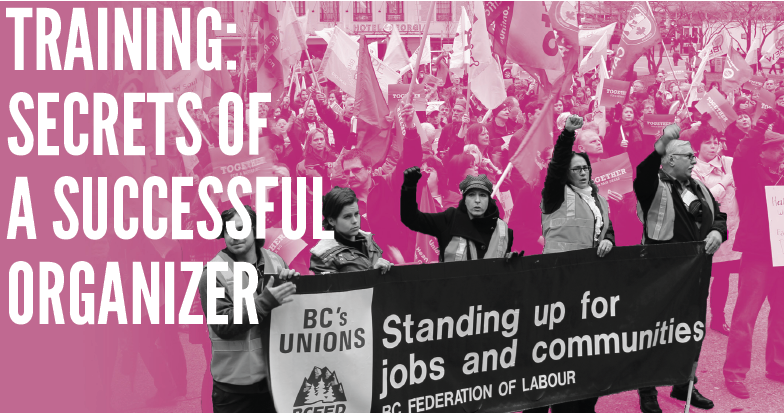
Secrets of a Successful Organizer: November
Training Series
|
|
Inspired by October's wave of strike authorizations and worker actions? Want to get together with other troublemakers to learn how to build stronger unions? Join our organizing series to talk about how to rekindle the flame of rank-and-file militancy.
Our Secrets of a Successful Organizer training series has three parts:
- Beating Apathy
- Assembling Your Dream Team
- Turning an Issue into a Campaign
Where: Online
When: Mondays, November 15, 22, and 29.
7:30 to 9:30 p.m. ET (4:30 to 6:30 p.m. PT)
Details: Once you register, you will receive a link. We will also send emails with links to the sessions weekly and on the day of the event. Be sure to check all of your email folders, including your spam folder, for the session links and to download Zoom beforehand.
Cost: $15 for the whole series. No one will be turned away due to lack of funds.
Also available: registration plus 50% off a one-year subscription to the Labor Notes magazine - $30! (Subscription offer valid only for U.S. addresses. Click here to purchase an international subscription.)
|
|
(Editor's Note: Given that these carrier vaccine mandates are in response to federal order, this makes for a complex conflict indeed. Whatever the case, the how and when of their implementation is - like any other change in conditions of employment - a mandatory subject of bargaining with the union!) |
|
Unions Counter Norfolk Southern COVID Vaccine Mandate |
|
The Transportation Division of the International Association of Sheet Metal, Air, Rail, and Transportation Workers (SMART-TD) and the Brotherhood of Locomotive Engineers and Trainmen (BLET) have responded to the suit Norfolk Southern Railway (NS) filed against them on October 21, 2021, in the United States District Court for the Northern District of Illinois, Chicago Division. The two Organizations not only answered NS' allegations, they also filed Counterclaims challenging NS actions in implementing their vaccine policy without the bargaining mandated by the Railway Labor Act.
The railroad has taken the position that it has the right to implement and enforce a COVID vaccination mandate among its employees, and requests the court to issue a declaratory judgment holding that the dispute between the railroad and the unions is a "minor" dispute, which must be arbitrated if the parties cannot come to a satisfactory settlement.
The unions have countered that NS has no such authority, and their actions in failing to negotiate terms of implementation violate the status quo requirement of the Railway Labor Act, thus engendering a major dispute.
SMART-TD President Jeremy Ferguson and BLET National President Dennis Pierce issued the following joint statement regarding their action:
"NS has ordered all employees to report that they are fully vaccinated by December 8th, or they will be unable to continue working. And, instead of negotiating with us as the law requires, the Carrier is directly dealing with its employees by offering a payment for compliance with its unilateral mandate.
"We generally support our members getting the vaccine. However, we have several objections to NS's unilateral implementation of their policies mandating them and illegally dealing directly with its represented employees.
|
|
NTSB Issues Preliminary Report on Amtrak Train Derailment |
|
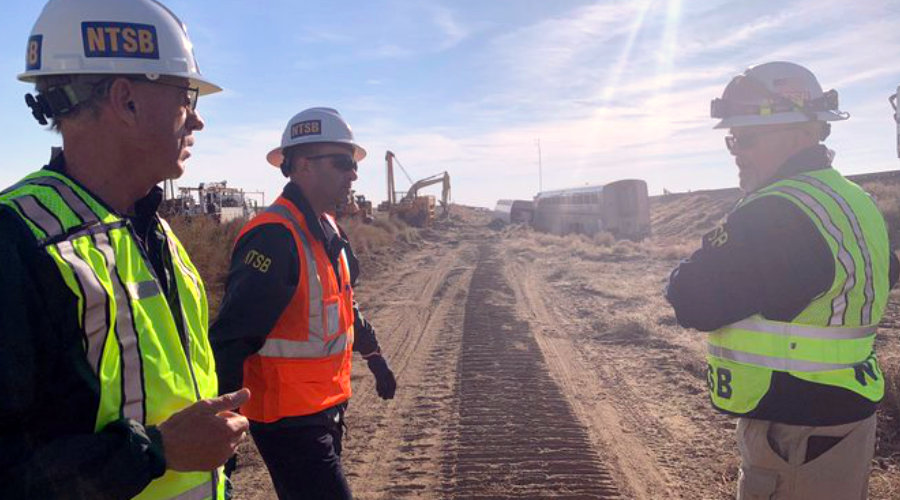
The Amtrak Empire Builder train was carrying 154 people when it derailed at 3:47 local time in a right-hand curve on the BNSF Railway Co. Hi Line Subdivision near Joplin. As a result of the derailment, three passengers died and 44 passengers and crew with injuries were transported to hospitals.
Amtrak estimated the damage to be over $22 million, according to the NTSB report.
The train consisted of two locomotives and 10 rail cars. Eight of the 10 cars derailed with four derailing on their sides.
Train movements on the line are coordinated by a BNSF train dispatcher. The maximum allowable speed on the section of track is 79 mph for passenger trains. A positive train control (PTC) system was enabled and operating at the time of the derailment.
Preliminary data from the leading locomotive’s event recorder showed that the Amtrak train was traveling between 75 and 78 mph when its emergency brakes were activated. The locomotives and the first two rail cars remained on the rail. The weather on that day was clear with no precipitation at the time of the accident.
NTSB investigators conducted track and equipment inspections, reviewed signal and train control data logs, obtained data from the lead locomotive’s forward-facing image recorder and event recorder and conducted interviews.
The agency’s investigation is ongoing, with future activity focused on track and engineering, equipment, survival factors and passenger rail-car crashworthiness, the report stated.
|
|
Week 42: Intermodal Volume Reflects Ongoing Supply Chain Issues |
|
U.S. railroads hauled 510,762 carloads and intermodal units for the week ending Oct. 23, a 2.3% decrease compared with the same week last year, according to Association of American Railroads (AAR) data.
Weekly intermodal rail volume continues to reflect the nation’s ongoing supply chain backlog. Total intermodal volume for the week was 271,567 containers and trailers, down 8%, while total carloads for the week were 239,195 units, up 5.1%.
Seven of the 10 carload commodity groups posted an increase for the week. They included coal, up 8,175 carloads to 65,712; metallic ores and metals, up 2,537 carloads to 23,192; and miscellaneous carloads, up 1,537 carloads to 11,036.
Commodity groups that posted decreases during the week were motor vehicles and parts, down 2,057 carloads to 13,403; petroleum and petroleum products, down 623 carloads to 9,544; and grain, down 138 carloads to 25,857.
Meanwhile, Canadian railroads reported 78,908 carloads for the week, down 2%, and 70,889 intermodal units, down 11.1%. Mexican railroads reported 19,781 carloads for the week, down 10.2%, and 15,645 intermodal units, down 1.3%.
|
|
(Editor's Note: By playing the strike card skillfully, the RMT union in Scotland was able to back the company down and win a victory. The very real threat of a strike can often bring a corporation to heel and pave the way for a victory, without actually going on strike.) |
|
RMT Pay Deal Ends Threat of Strike Action at COP26 |
|
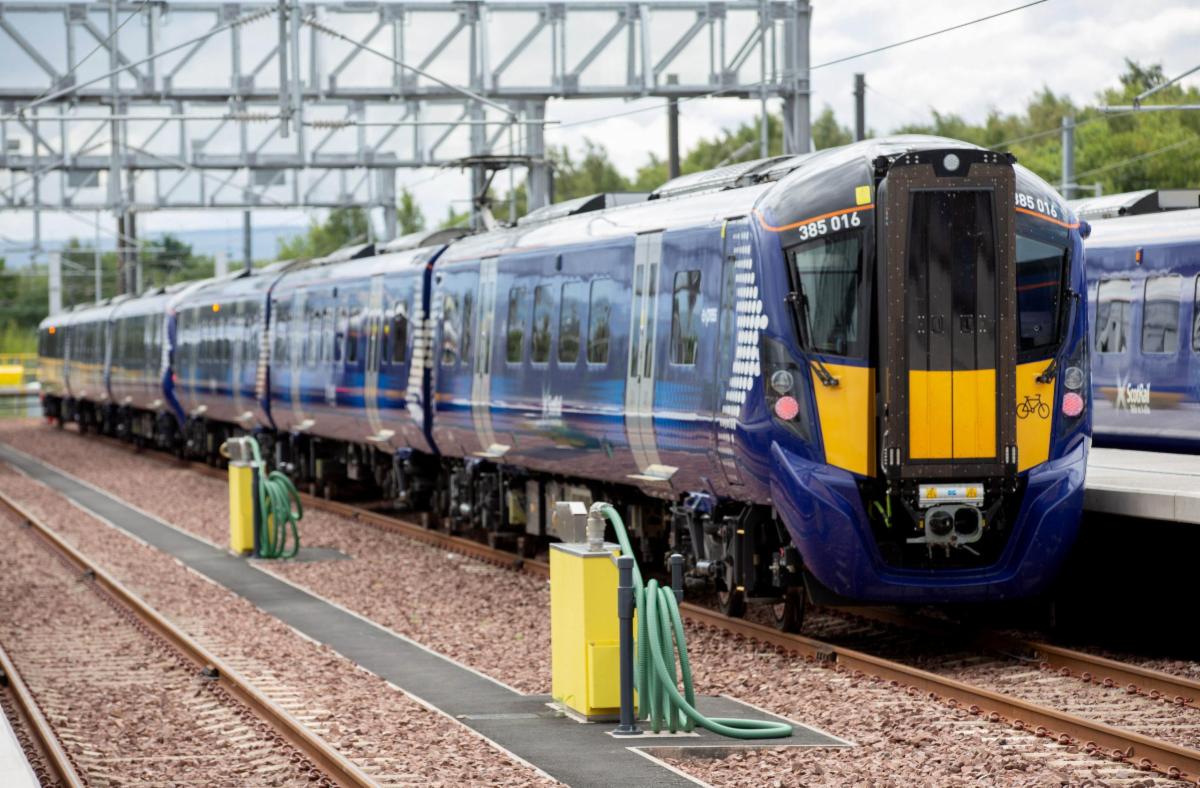
A deal has been agreed between the RMT and ScotRail to avoid further strike action.
In a joint statement from ScotRail and RMT, it says the following agreement was reached:
- A one year pay deal comprising of a 2.5 per cent pay increase backdated to 01 April 2021.
- A payment of £300 to all staff ensuring COP26 is fully supported (separate agreement with full details on commitments is to be signed).
- A 3 hour book-on allowance applied to each rest day worked, applicable for 12 months from the date of this agreement.
By accepting this offer, it is agreed that all current disputes between RMT and ScotRail will be resolved and that all current and planned Industrial Action will be withdrawn immediately.
|
|
|
|
|
|
|