The Tri-State Development Regional Report
news & updates
| | Telling the Story of our Rural Regional Assets | | While every town has its own story, regional data offers a broader lens on the strengths we share. Pulled from the Tri-State Development Community Data Dashboard and other relevant sources, these statistics and insights serve as a complement to the local narratives that make Midwest rural life so desirable, like the hometown festivals, one-of-a-kind businesses, arts and crafts shows, and the kind of charm that can’t be manufactured. Together, data and storytelling help us showcase the full picture of who we are. | | |
|  | |
STRONG EDUCATIONAL FOUNDATIONS
With a regional high school graduation rate of 91%, exceeding the national average, families can feel confident in the strength of local schools and the foundation they provide for success in college, careers, and beyond.
LOW COST TO LIVE
With a location affordability index of 62%, our region offers a lower cost of living than most other places around the U.S. without sacrificing livability.
UNEMPLOYMENT RATE
With a regional unemployment rate of 3.7%, compared to the national average of 4.0%, our region demonstrates a strong labor market, where workers have greater access to job opportunities and employers benefit from a ready and engaged workforce.
SMALL BUSINESS SUCCESS
An impressive 73% of businesses in our region are non-employer establishments, small enterprises run by solo entrepreneurs who rely on a network of service providers to get the job done. From graphic designers and web developers to bookkeepers, local suppliers, and independent contractors, these business owners are deeply connected to the broader regional economy. Their success highlights the adaptability and resourcefulness that define our rural entrepreneurial landscape.
REGIONAL WORKFORCE
With 4.87% of our workforce crossing state lines for employment, it's clear that our region operates as a shared labor market where employers draw talent from a wide geographic area and workers benefit from diverse job opportunities across borders.
REMOTE WORKER FRIENDLY
While our region’s internet access rate of 87% trails the national average, it outpaces rural benchmarks in Missouri and Illinois and is steadily gaining ground on rural Iowa. As access continues to expand, our region is becoming increasingly competitive in attracting remote workers, entrepreneurs, and modern industry, all sectors that depend on reliable connectivity.
FULL TABLES
With the average cost of a meal at $3.44, 10 cents below the national average, our region demonstrates how affordability and access go hand in hand. This small difference adds up, contributing to a lower cost of living and supporting families, community organizations, and local food-based businesses alike.
QUALITY OF LIFE
With 18 state parks, more than 3,000 people employed in the arts and recreation sectors, and over 15% of the region located within one mile of green space, the Tri-State region offers both natural beauty and cultural vitality. These assets not only enhance quality of life for residents but also serve as a powerful draw for visitors, remote workers, and businesses seeking a vibrant and balanced place to grow.
| | Access the Data You Need—When You Need It | |
THE COMMUNITY DATA DASHBOARD
IS AVAILABLE!
Tri-State Development at Culver-Stockton College invites you to explore the Community Data Dashboard, your essential tool for accessing valuable insights about our region, your county, or your town. Developed to support your community efforts, the dashboard is intuitive, user-friendly, and packed with data to help you make informed decisions, access data for grant applications, and share valuable insights with others. Whether you're a community leader, business owner, or resident, you’ll find the information you need right at your fingertips.
The Community Data Dashboard can be found on the Tri-State Development website on the Resources tab, or just click HERE.
| | | | ADDITIONAL RESOURCE FOR ECONOMIC INSIGHT | |
ECONOMIC POLICY INSTITUTE: FAMILY BUDGET MAP
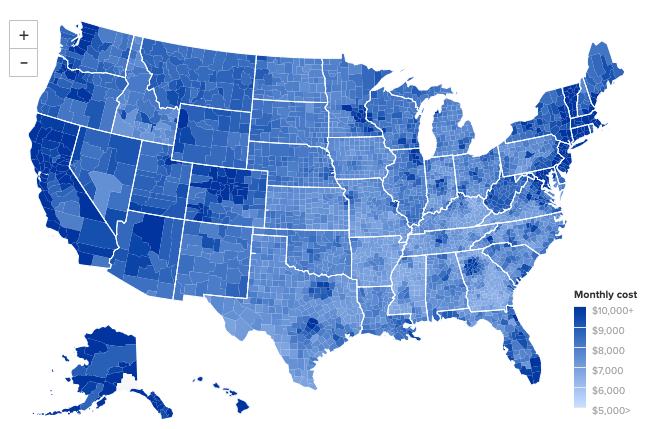
| For those seeking a deeper understanding of what it truly costs to live and work in our region, the Economic Policy Institute’s Family Budget Map is an excellent resource. Unlike federal poverty measures, this tool offers a more in-depth picture of the income a family needs to afford a modest but adequate standard of living, accounting for housing, food, transportation, childcare, healthcare, and other essentials. | | | NEW LEADERSHIP AT TRI-STATE DEVELOPMENT | | |
Please join us in welcoming Sean Freeman!
We’re excited to welcome our new Director of Tri-State Development, Sean Freeman, who joins us with a strong background in community engagement and a deep commitment to regional collaboration. With experience in both economic development and higher education, Sean is well-positioned to build on our momentum, advancing strategies that support and strengthen our rural communities. We look forward to the leadership, insight, and partnerships Sean will bring to this role.
| A Note From Our New Director | |
I'm honored to have been chosen to serve as the new Director of Tri-State Development at Culver-Stockton College. I know I have big shoes to fill, and I intend to rise to the occasion.
I wanted to briefly introduce myself and share how excited I am to be in this role. I come to this work with experience in higher education and economic development, and I see this position as the best of both worlds - supporting our region through relationships, shared ideas, and purposeful collaboration.
| |
Sincerely,
Sean Freeman
Director, Tri-State Development
| | |
Sean Freeman
sfreeman@culver.edu
| |
I didn't come from a rural background, but I chose one. My family and I made the intentional decision to put down roots in the Tri-State area, and I can't imagine being anywhere else. I'm not here by accident, and I'm committed to serving the region with energy and diligence.
One of my top priorities right now is to listen. I want to hear from you - about what matters, what's working, and what's possible. I hope we'll connect soon. I'm excited for what's ahead and ready to get to work!
| | |
| |
Grant Funding Opportunities
We’ve gathered the latest grant funding opportunities available to stakeholders in our region, and we’re excited to share them with you. Click the link below to access the comprehensive list and find the support you need for your projects.
| | | | EARLY SUPPORT : LASTING IMPACT | | |
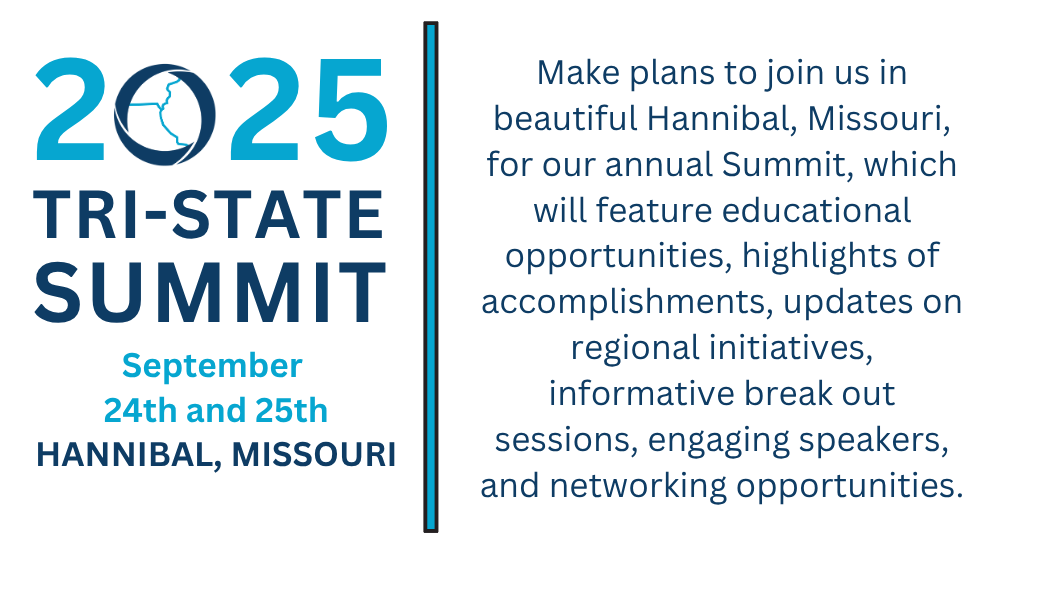
We extend our heartfelt gratitude to the sponsors who have already stepped forward to support the 2025 Tri‑State Development Summit. Your investment is more than just financial, it fuels year‑round programs, workshops, and tools that advance progress across our 42‑county region.
Join the growing list of supporters who believe in bold ideas and regional progress. There’s still time to make your mark, please consider becoming a sponsor today.
| | |
COMMUNITY PARTNERS
$500
Lewis County Industrial Development Authority
Moberly Area Community College
Tigerhawk Technologies
| | |
|
SUSTAINING PARTNERS
$250
Great River Economic Development Foundation
Klingner & Associates
Michelmann Steel Construction
Two Rivers Regional Council of Public Officials
| | | | | | |
CATCH UP
on the newsletters you may have missed.
Visit the RESOURCES page
on our website.
Scroll to the bottom.
They are all there!
| | | |
Tri-State Development at Culver-Stockton College supports the region by cultivating collaborative relationships, promoting interdisciplinary problem-solving, fostering the expansion of academic-organization-industry initiatives, and developing an environment for collective impact to address the current and emerging economic, and social challenges in the region.
| | |
Tri-State Development Culver-Stockton College | culver.edu/tsd
Leslie Sieck, Executive Director lsieck@culver.edu]
| |
| | | |