The American Society of Le Souvenir Français Inc.
Monthly Bulletin - Vol. III. No 1 - January 2023
|
|
Cover photo:
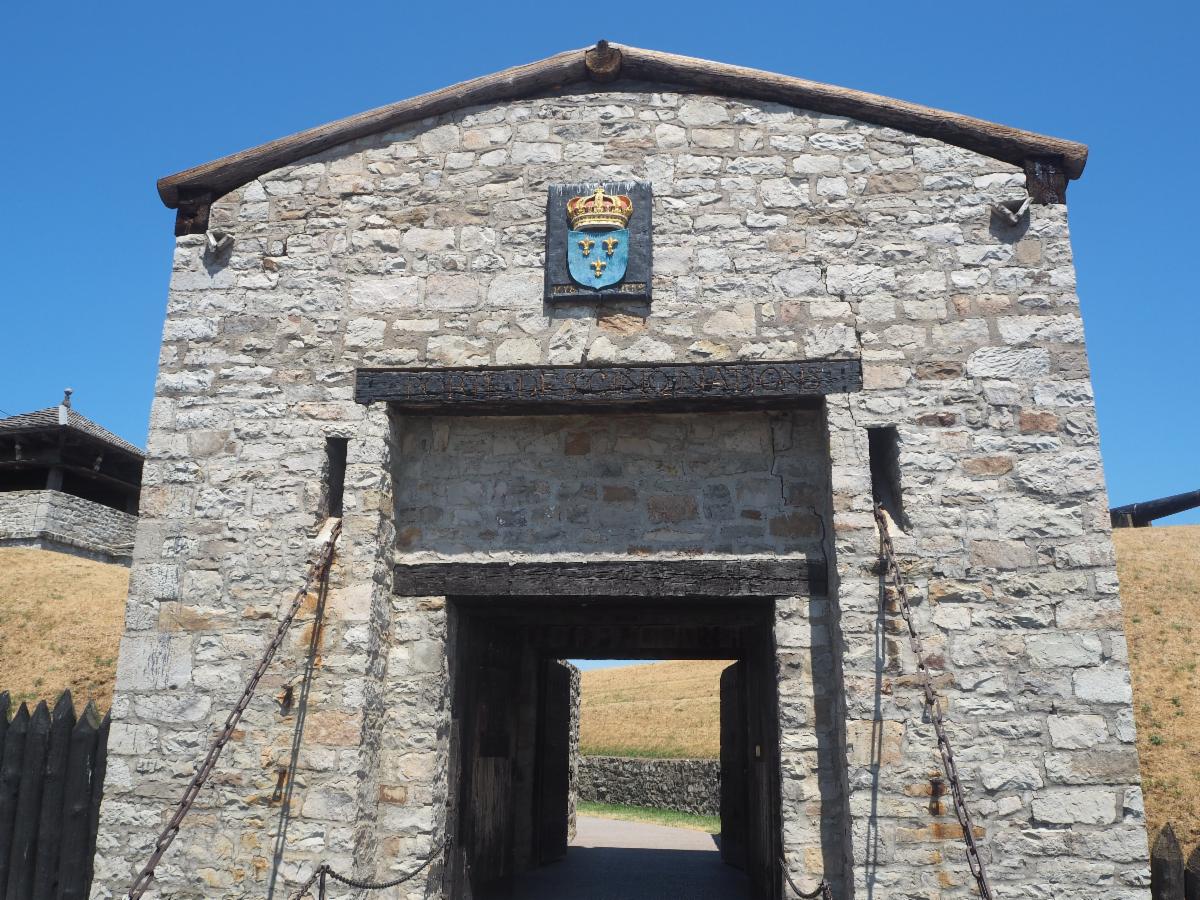
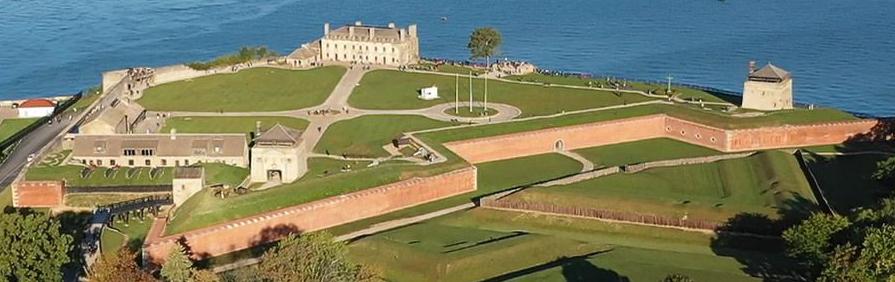
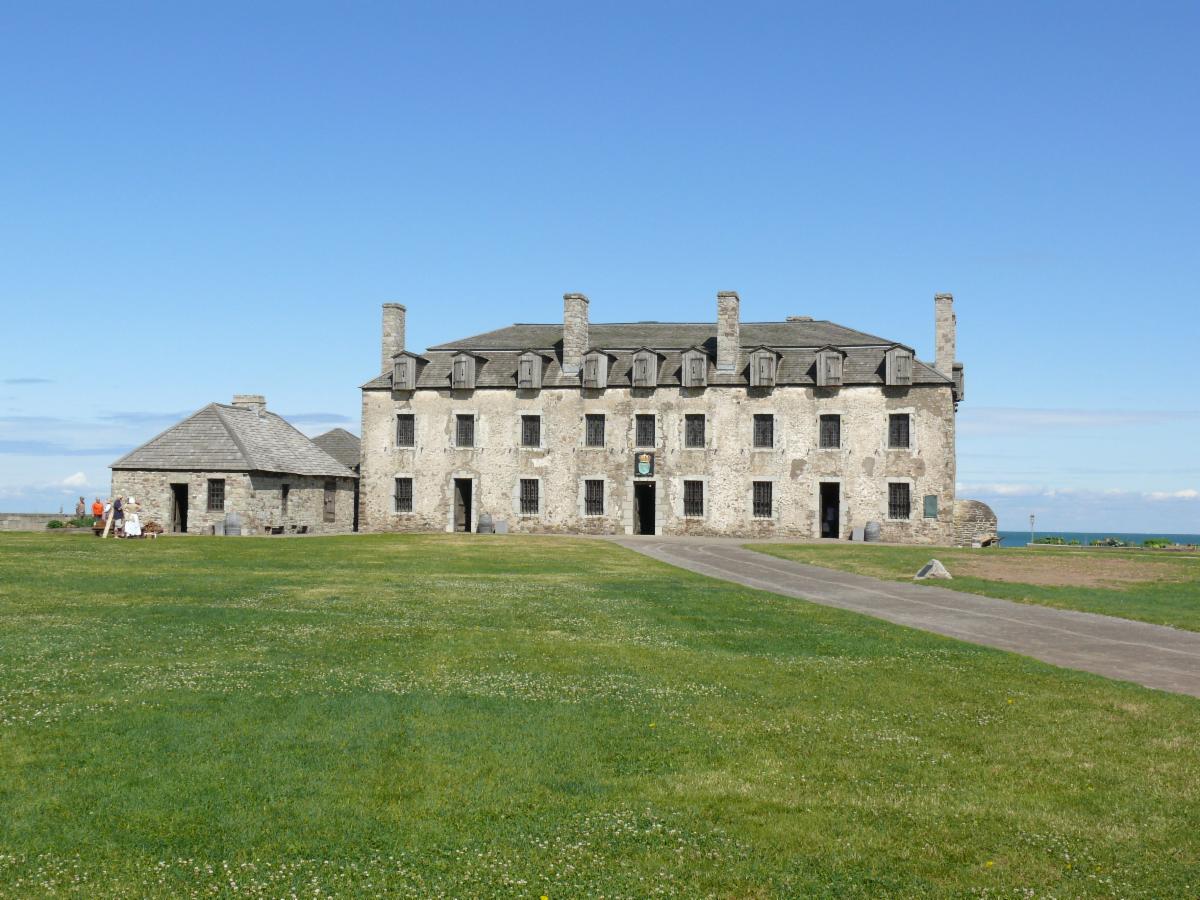
Porte des Cinq Nations, Old Fort Niagara, Fort Niagara State Park, 102 Morrow Plaza, Youngstown, NY 14174
Beginning in 1756, the main entrance to Fort Niagara was established at the southern bastion, on the side of the Niagara River. The French named this gate the Porte des Cinq Nations, ("Gate of the Five Nations"), in honor of the Five Nations of the Iroquois Confederacy.
|
|
EDITORIAL
We hope you enjoyed a wonderful Holidays with family and friends. Again, all our best wishes for a happy, healthy and prosperous New Year 2023.
We are looking forward to the next twelve months with several exciting projects. You will find an updated calendar in the pages of this January bulletin.
We hope you will join us at several events and commemorations, and, as importantly, spread the word. Everything we do, we do it to pass the torch of remembrance to the younger generations. As the adage says, ignoring history means repeating the mistakes of the past...
It can also be fun to learn history through anecdotes and illustrations, and this is what we strive to do with these monthly bulletins! So, if you are in a position to share these bulletins and invitations to elementary and high school students (and their history professors), please do.
In this month's bulletin, we will explore several French forts in the State of New York. In future issues, we will explore other French forts, from the far reaches of Wisconsin all the way south to Louisiana, over a vast empire that stretched from Canada to the Gulf of Mexico. In so doing, we will pay tribute to soldiers, explorers and missionaries who left an imprint throughout vast portions of the continent.
We will also continue to accompany the Marquis de Lafayette in his triumphal tour of the United States, following him on some of his foot steps during the month of January 1825.
After the bulk of the French armed forces re-embarked in Boston in December 1782 to sail to the French West Indies, a small but potent military force stayed behind in the young Republic while peace negotiations with Britain started. We will therefore extend our series devoted to the Rochambeau's Army by staying a bit longer along with the Duc de Lauzun and his Legion of Hussars, and highlight some of their whereabouts in January 1783.
Finally, as always, we will announce some upcoming events from like-minded sister organizations that are of great interest.
At the American Society of Le Souvenir Français, we never forget what we owe to our forebears who fought side by side for the freedom of both the United States and France. Count on us to continue honoring their deeds in the months and years to come!
Thank you as always for your remarks and suggestions.
On behalf of the Board of Directors.
Thierry Chaunu, President,
American Society of Le Souvenir Français, Inc.
|
|
OVERVIEW OF FRENCH FORTS IN NEW FRANCE |
|
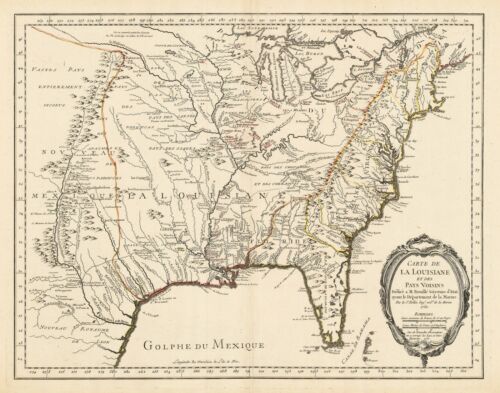
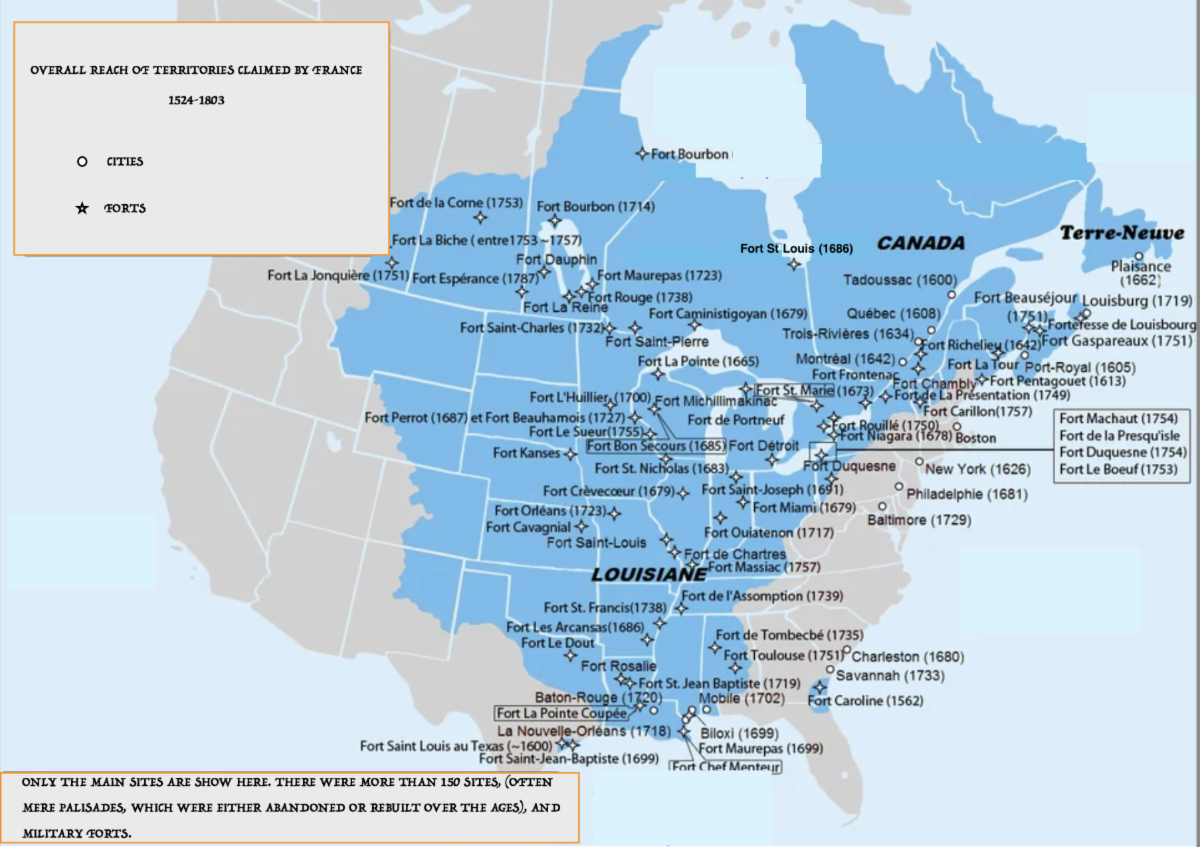
Top: "Carte de La Louisiane et Des Pays Voisins Dédiée à M. Rouille Secrétaire d'Etat ayant le Département de la Marine", 1755, Jacques Nicolas Bellin, ingr.
Middle: overall view of the vast network (more than 150 French fortifications over several centuries) throughout territories claimed by France.
|
|
A VAST NETWORK OF FRENCH FORTS
STRETCHED ALL OVER NORTH AMERICA
In a competition with the Spanish, Dutch, and English to establish footholds in North America, the French built a significant presence over several decades since the first visit by Jean de Verrazane in 1524 and Jacques Cartier in 1534 .
Forts were essential to secure a long chain of communication. They were initially mere palisades, abandoned and rebuilt, isolated outpost in a vast wilderness, eventually evolving into real stone fortresses at key strategic sites.
Forts established in Kingston, Ontario (1673), Saint Joseph, Michigan (1679), Fort Saint Louis and Fort Crèvecoeur in Illinois (1680–1682), Fort Biloxi in Mississippi (1699), Mobile in Alabama (1702), and New Orleans (1717) were key links. Between 1701 and 1721, the French occupied strategic points at Fort Pontchartrain in today's Detroit, Fort Michilimackinac (Michigan), Fort de Chartres (Illinois), and Fort Niagara (New York).
The Ohio Valley became a point of friction with the ever expanding and much more populated British colonies of the East coast. Competing alliances with Native Americans were forged by both sides. England built several forts as well. The vast and underpopulated French side was doomed to fail eventually. Conflict between two empires was inevitable and the relative disinterest of the French court for very remote possessions, as well as a strategic focus on European continental competition were certainly key factors in France's final loss of its North American empire.
As Voltaire quipped, "As you know, the two countries are at war over a few acres of snow on the Canadian border, and they are spending rather more on their lovely war than the whole of Canada is worth"...
French frontier forts passed into English hands or into oblivion. Still, many of these forts were seeds for large cities: Pittsburgh, Detroit, Saint Louis, New Orleans... In this Bulletin we will turn our attention to some of the key figures, "builders of an empire", and several Forts in the State of New York, which are today visited by thousands of tourists.
|
|
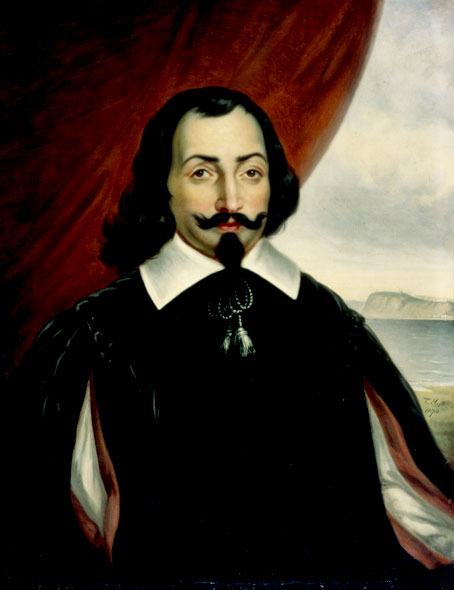
Inauthentic depiction of Champlain, by Théophile Hamel (1870), after the one by Ducornet (d. 1856), based on a portrait of Michel Particelli d'Emery (d. 1650) by Balthasar Moncornet (d. 1668) — No authentic portrait of Champlain is known to exist. Possibly from the Collection of the Governor General of Canada, La Citadelle, Québec, Public Domain. https://commons.wikimedia.org/w/index.php?curid=525161
|
|
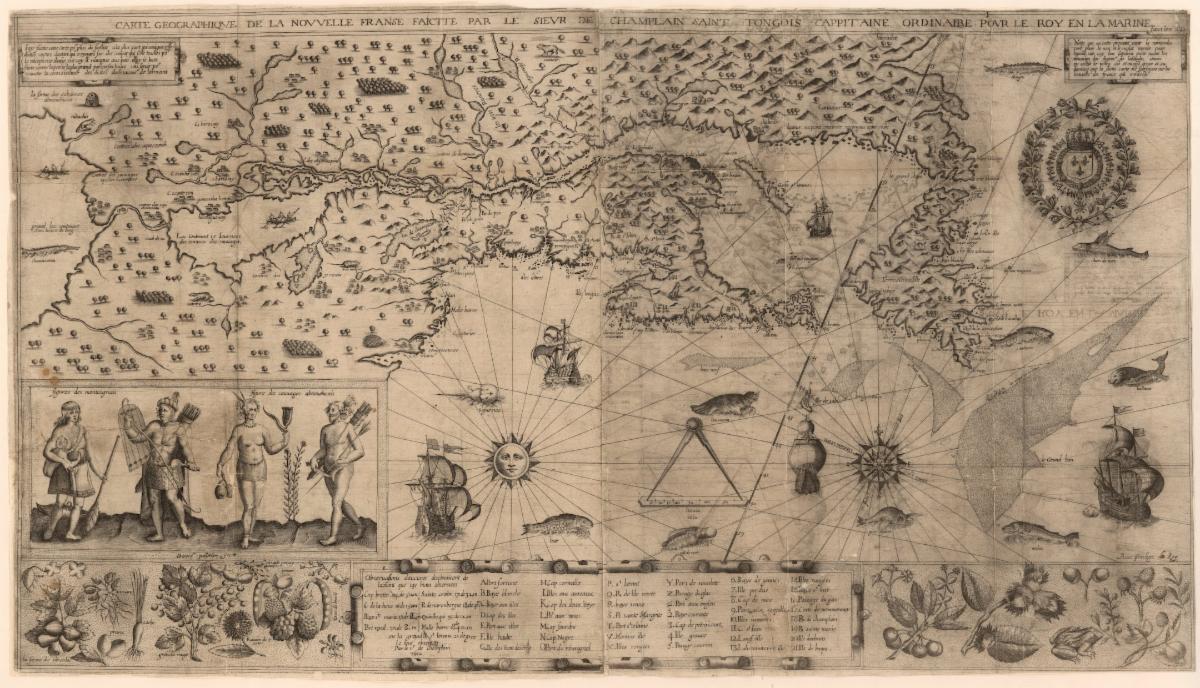
Geographical map of New France: 1612 (first published map by Champlain:
"CARTE GEOGRAPHIQVE DE LA NOVVELLE FRANSE FAICTTE PAR LE SIEVR DE CHAMPLAIN SAINT TONGOIS CAPPITAINE ORDINAIRE POUR LE ROY EN LA MARINE" ("Geographical map of Nouvelle France made by Sieur de Champlain Saint Tongois, Cappitaine ordinaire pour le Roy en la Marine.") The map integrates explorations and cartography de Champlain until 1611. The map incorporates the 1607 chart and probably the lost maps of the St. Lawrence (1603) and the west coast from La Hève to Canso (Canseau) (1607). Public Domain.
|
|
Samuel de Champlain (c. 13 August 1567 – 25 December 1635) was a French colonist, navigator, cartographer, soldier, explorer, geographer, ethnologist, diplomat, and chronicler. He crossed the Atlantic Ocean at least two dozens times. He is the founder of Quebec and New France.
• He began exploring North America in 1603. He created the first permanent European settlement north of Florida, Port Royal, Acadia (1605), then Quebec City in 1608. He was the first European to map the Great Lakes, and encouraged by his example other French colonists to live among the Natives, learning several of their languages. • Allied with northern Indian tribes, he defeated the Iroquois on Lake Champlain. That and a similar victory in 1610 enhanced the prestige of the French among the allied tribes, and fur trade between France and the Indians increased.
• His book Voyages et Decouvertes faites en la Nouvelle France, depuis l’année 1615 published in 1619 is one of the first ethnographic work of modern times.
• Champlain established trading companies that sent goods, primarily fur, to France, and oversaw the growth of New France in the St. Lawrence River valley until his death, in 1635.
• He died of a stroke in 1635 and the exact place of burial is not known with certainty.
• Champlain is memorialized as the "Father of New France", "Father of Acadia", with many places, streets, sculptures in northeastern North America bearing his name, most notably Lake Champlain, and Champlain Mountain, in Acadia National Park, Maine.
|
|
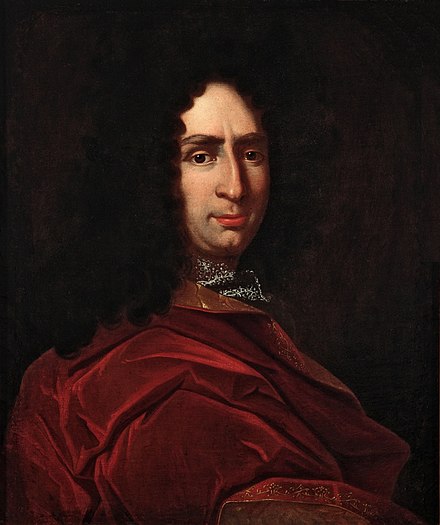
Jacques-René de Brisay de Denonville, Marquis de Denonville |
|
Jacques-René de Brisay de Denonville, Marquis de Denonville (10 December 1637 – 22 September 1710) was Governor General of New France from 1685 to 1689.
• The French were generally seeking good relations with most Natives, trading with them and oftentimes living in their midst. Relations with the Iroquois Confederacy were more conflictual with periods of intense fighting and fleeting truces.
• In June 1686, after capturing the English trading sites of Hudson Bay, Denonville met with 50 Iroquois chiefs under the lull of signing a truce agreement nearby Fort Frontenac, but made them his prisoners, and sent them to Marseilles, France to serve in the gallows.
• In 1687, he launched another expedition with Indian allies against the Senecas, another hostile tribe. After ravaging several villages, he built Fort Denonville at the site where the Niagara River meets Lake Ontario to replace Fort Conti built by La Salle, before eventually becoming Fort Niagara, which still exists (see below).
• In 1689, he was relieved from his post to be replaced by Frontenac, who had the wisdom to bring back some of the captured Iroquois Chief as an attempt to bring back some stability to the region.
• Denonville retained the confidence of the king and was appointed a tutor to the royal children.
|
|
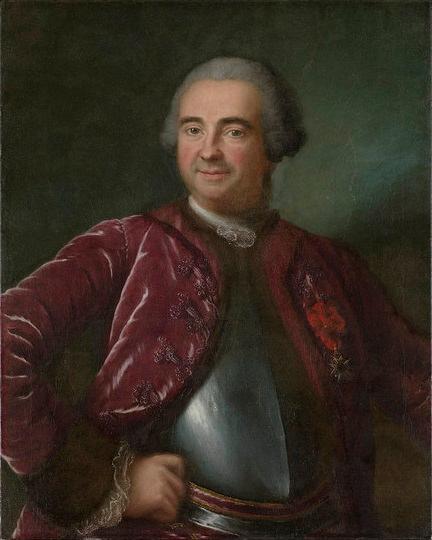
Gaspard-Joseph Chaussegros de Léry |
|
Gaspard-Joseph Chaussegros de Léry (July 20, 1721 – December 11, 1797), was, like his father, a military engineer. In recognition of his military service, in 1759 he was made a Chevalier of the Order of Saint Louis.
• He joined the Troupes de la Marine in 1733 and became an assistant engineer in 1739.
• Could it be that this compliment made him switch allegiances? H e returned to Quebec in 1764 to be named chief road commissioner and also served on the Legislative Council and Executive Council of Quebec.
• He died in Québec in 1797.
|
|
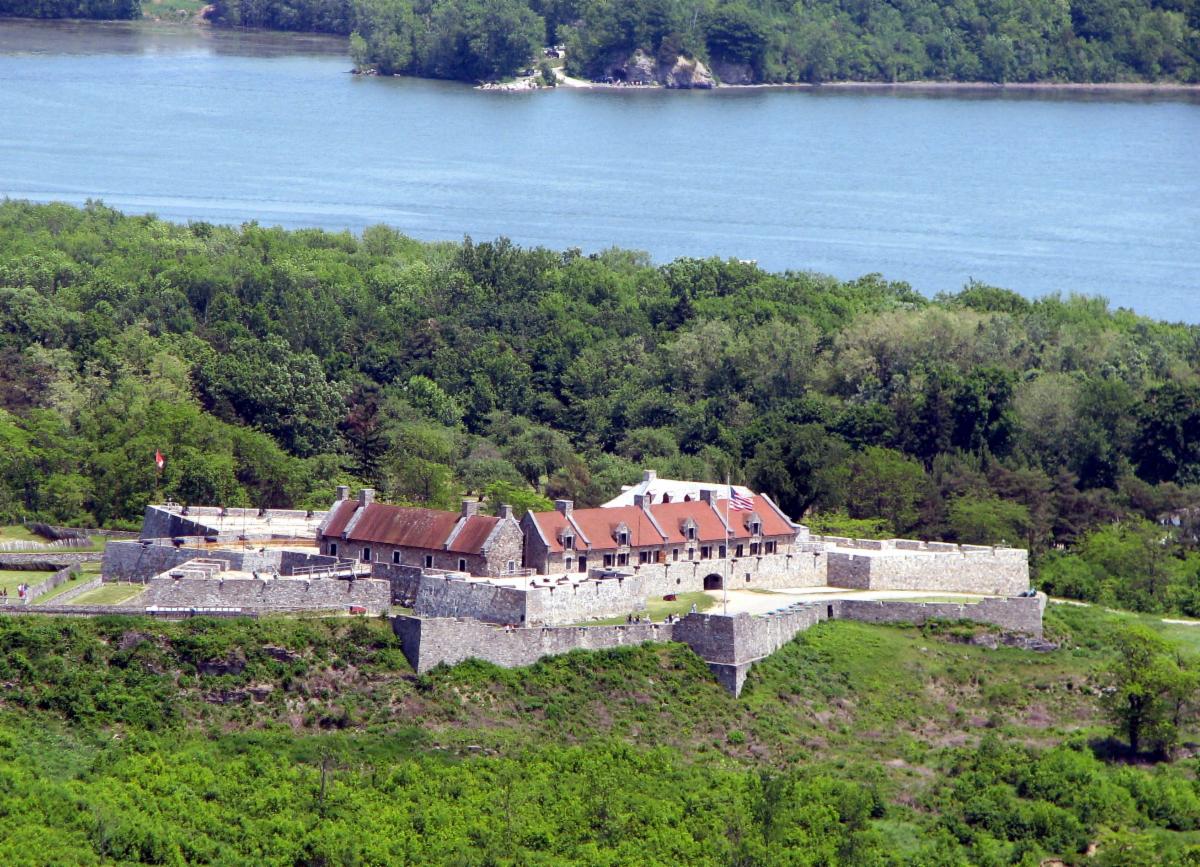
Aerial view of Fort Niagara, Fort Niagara State Park, 102 Morrow Plaza, Youngstown, NY 14174
By Pierre5018 - Own work, CC BY-SA 4.0, https://commons.wikimedia.org/w/index.php?curid=50567949
|
|
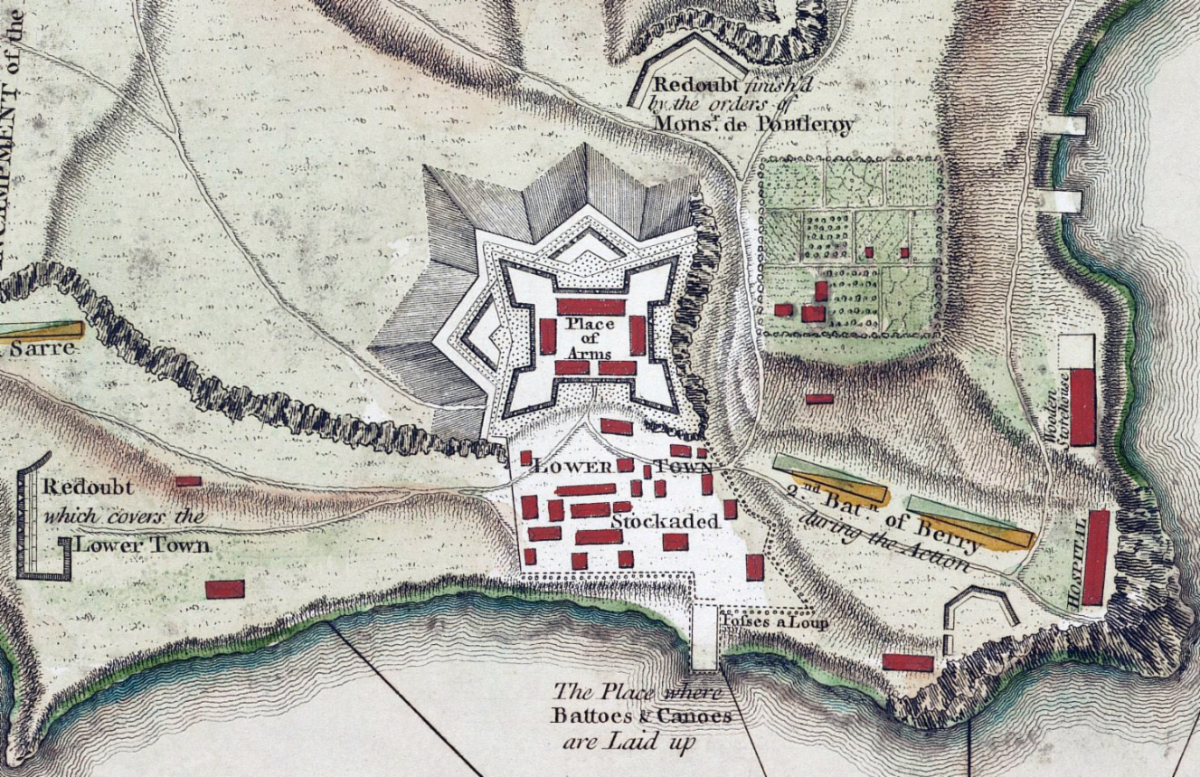
• Fort Niagara is a fortification originally built the French to protect the interests of New France in North America, specifically control of access between the Niagara River and Lake Ontario.
• René-Robert Cavelier, Sieur de La Salle (1643-1687) built the first fortified structure here, called Fort Conti, in 1678. In 1687, the Governor of New France, the Marquis de Denonville, replaced that with a new fort. He named it Fort Denonville and posted a hundred men as a garrison
• The fort is located on the eastern bank of the river at its mouth on Lake Ontario. Youngstown, New York, later developed near here.
• The fort was taken over by the British in 1759.
|
|
Plaque, “La Salle, 1643-1687, Cleric, Soldier, Explorer”
Fort Niagara, NY
|
|
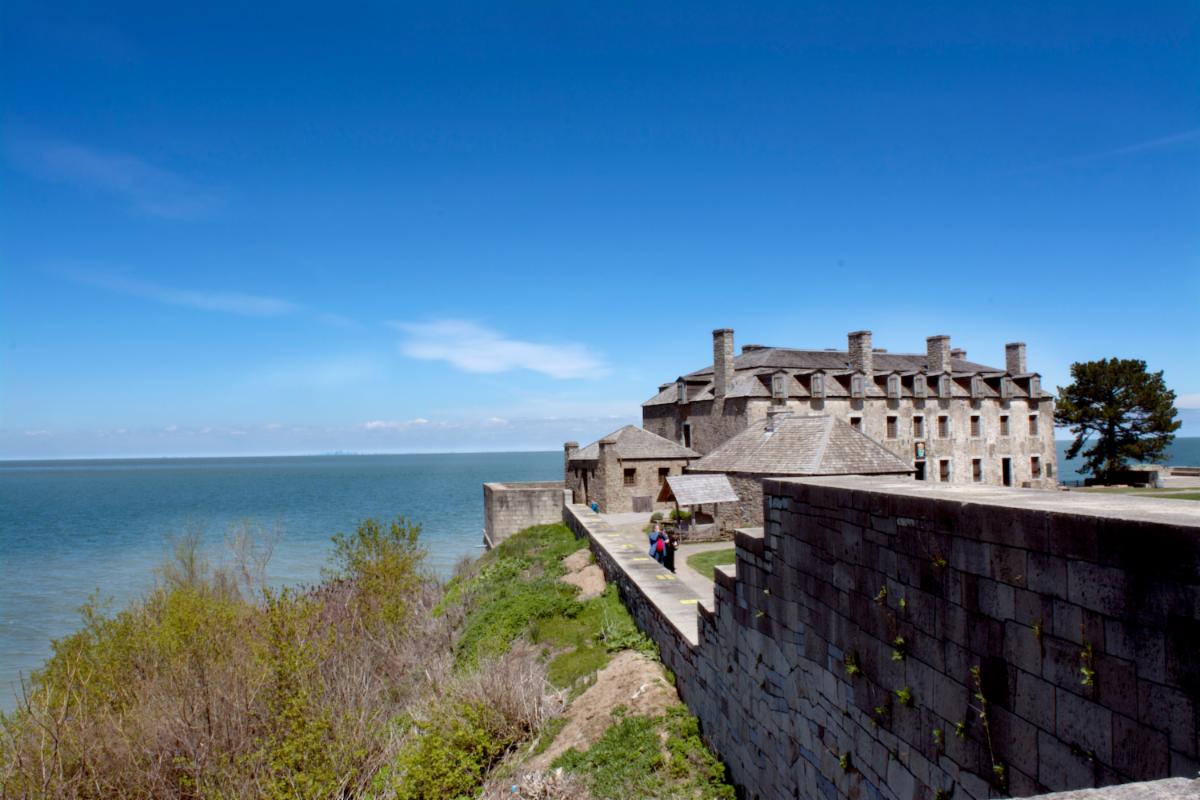
French castle at Old Fort Niagara, Fort Niagara State Park, 102 Morrow Plaza, Youngstown, NY 14174
The plaque is located on a boulder, by the sea wall, to the left of “The Castle”
By Ad Meskens - Own work, CC BY-SA 3.0, https://commons.wikimedia.org/w/index.php?curid=7820678
|
|
• Inscription:
"Here at the mouth of the Niagara
Rene-Robert Cavelier,
Sieur De La Salle
raised the first rude palisades
of a fort and from this base began
his far voyaging in exploration
of Mid-America
the Ohio, the Great Lakes and the
Mississippi to the Gulf of Mexico
Author of Great Beginnings
Dreamer of Great Dreams
Through His Courage
Suffering and Endurance
Came Christianity and Civilization”
Erected 1934 by the State of New York.
|
|
Marker, “Old Fort Niagara, Historic New York”
|
|
Lake Ontario and Old Fort Niagara, Fort Niagara State Park, 102 Morrow Plaza, Youngstown, NY 14174
|
|
• Inscription:
“ The promontory at the outlet of the Niagara River into Lake Ontario was a strategic point for controlling the route to the interior Great Lakes region. The French early recognized its importance, and LaSalle, in 1678, and Jacques-René de Brisay, Marquis de Denonville, governor of New France, in 1687, erected temporary fortifications.
In 1726 Gaspard-Joseph Chaussegros de Léry built, for the fur trade, Fort Niagara, an imposing structure with massive stone walls. Resembling a French chateau, it was called "The Castle." The fortification irritated the British as rivalry with France for control of North America intensified. Captain Pouchot, a French engineer, strengthened the fort in anticipation of a British attack. British troops, with colonials and Indians, assaulted it, and, after an 18-day siege, Sir William Johnson forced the French to surrender, July 25, 1759.
The British improved Fort Niagara, used it for fur trading, and, during the American Revolution, made it their base for raiding the New York frontier. They did not relinquish it until 1796. Following an American invasion of Canada in the War of 1812, British forces again captured Fort Niagara on December 19, 1813. The peace treaty of 1814 returned the fort to the United States.
Old Fort Niagara stands today as a memorial to soldiers who served here under three flags.”
Erected 1987 by New York State Education Department.
|
|
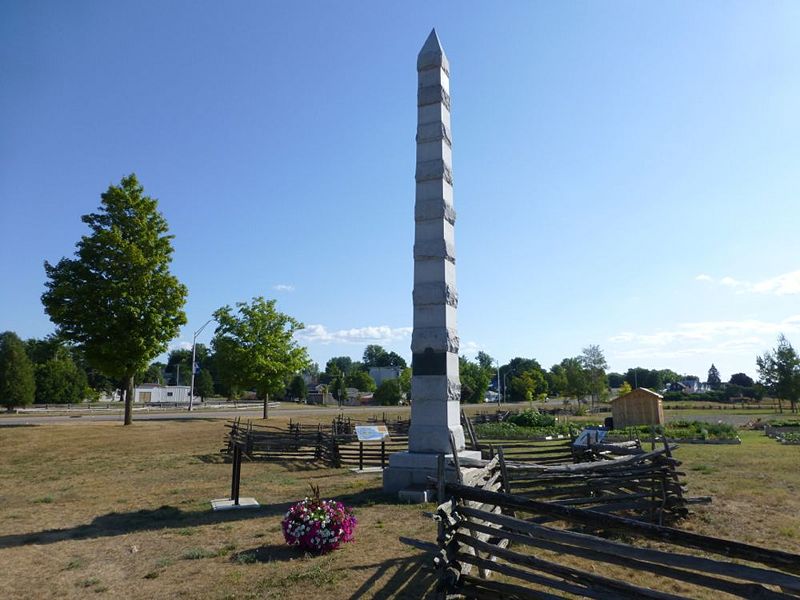
Obelisk & Marker, “Fort de la Présentation” |
|
Fort La Presentation Monument “Outpost on the Oswegatchie”
Rte 68, Downtown Arterial Hwy, Ogdensburg, NY, 13669
Photo by John Stanton 29 Jul 2012, http://www.fortwiki.com/Fort_La_Presentation
The Fort de La Présentation Site is an archaeological site located on Lighthouse Point, near Ogdensburg, St. Lawrence County, New York. It encompasses the remains of at least eight different and discrete potential components, as identified in 1987–88. These include four contributing components: remains from French and Native American occupation during the period 1749 to 1760; remains from English and Native American occupation during the period 1760 to 1796; remains from American settlers in Ogdensburg during the period 1796 to 1812; and remains from American military occupation during the War of 1812.
|
|
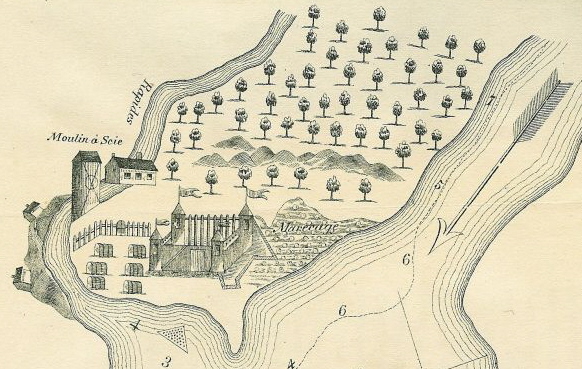
• The Fort de La Présentation was built in 1749 and so named by the French Sulpician priest, Abbé Picquet who became its first commander . It was also sometimes known as Fort La Galette.
• The French wanted to strengthen their alliance with the powerful Iroquois, as well as convert them to Catholicism, in a context of increasing tensions with neighboring British colonies. • Picquet actively encouraged Iroquois war party raids on English settlements. He was so popular with the Native that they petitioned for his return after he was replaced by a military commander.
• In 1759, during the "French & Indian War" (known in France as the Seven Years War), French military forces abandoned the fort to move to Fort Lévis.
• After France ceded its North American possessions, the British renamed it Fort Oswegatchie, eventually becoming part of the United States.
• Inscription:
“This monument marks the site of Fort de la Présentation erected in 1749 by Abbé François Picquet for the protection of his mission among the Indians of the Five Nations.
The fort was occupied in 1760 by the British and evacuated by them June 1st, 1796 under the provisions of the Jay Treaty
It was the first building erected where now stands the city of Ogdensburg
———————
1749 - 1969
The Abbe Francois Picquet Monument on the site of Fort la Presentation
erected in 1749 which is now known as the city of Ogdensburg is herewith
re-dedicated in year 1969 in honor of Father Francois Picquet, the founder of the community.”
|
|
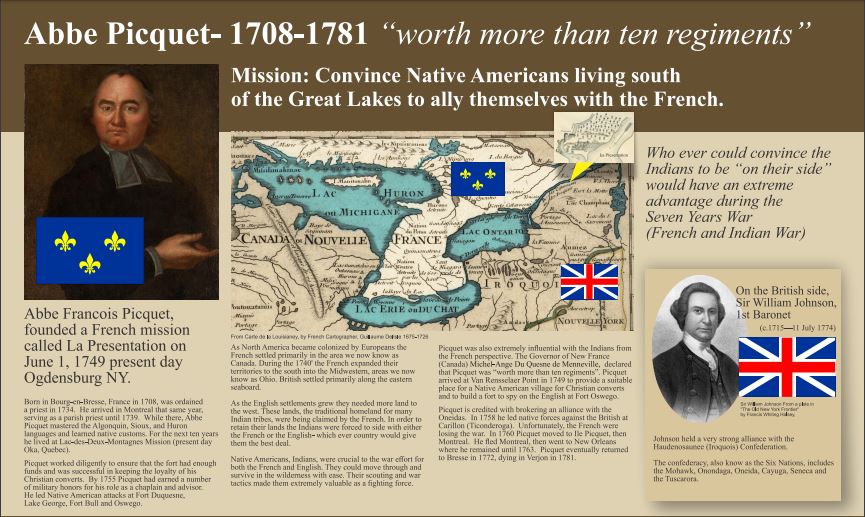
Marker, “Abbe Picquet 1708 -1781”
"worth more than ten regiments"
|
|
329 Main St, Ogdensburg NY 13669
|
|
• Excerpts:
“Who ever could convince the Indians to be “on their side" would have an extreme advantage during the Seven Years War (French and Indian War)”
“Abbé Francois Picquet, founded a French mission called La Présentation on June 1, 1749, present day Ogdensburg, NY”
“Born in Bourg-en-Bresse, France in 1708, he was ordained a priest in 1734. He arrived in Montreal that same year, serving as a parish priest until 1739. While there, Abbe Picquet mastered the Algonquin, Sioux, and Huron languages and learned native customs”....”By 1755 Picquet had earned a number of military honors for his role as a chaplain and advisor. He led Native American attacks at Fort Duquesne, Lake George, Fort Bull, and Oswego”...”
"Picquet was also extremely influential with the Indians from the French perspective. The Governor of New France (Canada) Michel-Ange Du Quesne de Menneville, declared that Picquet was "worth more than ten regiments".
"Picquet arrived at Van Rensselaer Point in 1749 to provide a suitable place for a Native American village for Christian converts and to build a fort to spy on the English at Fort Oswego...”Picquet is credited with brokering an alliance with the Oneidas. In 1758 he led native forces against the British at Carillon (Ticonderoga). Unfortunately, the French were losing the war."
"In 1760 Picquet moved to Ile Picquet, then Montreal. He fled Montreal, then went to New Orleans where he remained until 1763. Picquet eventually returned to Bourg-en-Bresse in 1772, dying in Verjon in 1781.”
|
|
Michel Chartier de Lotbinière, Marquis de Lotbinière |
|
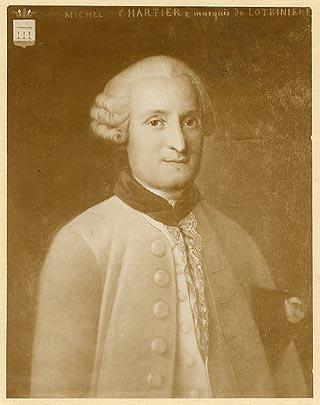
• Michel-Alain Chartier de Lotbinière, 1st Marquis de Lotbinière (1723, Québec – 1798, New York, NY), was a trusted military aide to Marquis de Montcalm, the French commander during the French & Indian War.
• As second ensign he earned the reputation of "a capable and courageous officer".
• Starting in 1755, he spent several years there overseeing the construction of Fort Carillon (later renamed Fort Ticonderoga by the British).
• Although promoted to captain in 1757, but couldn't succeed his father-in-law's functions due to intrigue.
• In 1757, the French successfully attacked Fort William Henry. In 1758, Lotbinière again advised Montcalm at the victory at Fort Carillon (which he had built).
• The loss of Canada was a catastrophic event. He lost all his land, returned to France, (leaving his wife and daughter behind...), tried to resume a military career, hoping that the British crown would recognize some of his claims in lands falling in the side of New York, briefly lived in London as a British subject, but after finding out that he was been shunned, decided to offer his services back to France.
• In 1776, French Minister Vergennes sent him to Boston as an observer with instructions to remain discreet. Hoping that France would soon reclaim its lost colonies (and for him to regain his vast land possessions) his zeal and agitation proved soon counterproductive and he was recalled.
• He eventually regained favor with his military engineering skills, and was made a marquis by Louis XVI in 1784 the only French Canadian to ever reach that title, and the last such act from the French monarch.
• In 1787, he returned to the United States to once more attempt to recover his lands in Canada, was forbidden by the British to enter Canada, did so anyway, tried to reunite with his wife and family, to no avail.
• He ended his days alone in New York. He died of yellow fever in October 1798, at the age of 75.
|
|
FORT CARILLON (LATER RENAMED TICONDEROGA) |
|
102 Fort Ti Rd, Ticonderoga, NY 12883
|
|
• Fort Ticonderoga formerly Fort Carillon, is a large 18th-century star fort built by the French at a narrows near the south end of Lake Champlain, in northern New York.
• It was constructed by French military engineer Michel Chartier de Lotbinière, Marquis de Lotbinière between October 1755 and 1757. The fort was of strategic importance during the 18th-century colonial conflicts between Great Britain and France, and again played an important role during the Revolutionary War.
|
|
Fort Ticonderoga
Marker, “The Carillon Battlefield”
|
|
To the right of the entrance road to Fort Ticonderoga, Ticonderoga NY 12883
|
|
• Inscription (excerpts):
“In the mid-18th century, this battlefield was a focal point in the Seven Years’ War, a world war between France and Great Britain. Here the two super-powers struggled for control of the Lake Champlain Lake George water highway, the strategic communication link between New York and Montréal [...] In July of 1758, the British commanded by General James Abercromby, launched an attack on For Carillon (Ticonderoga), the newest French fort in New France. The British mustered an army of 16,000 British regulars and American provincials, the largest ever assembled to date in North America."
"Louis-Joseph de Gozon, the Marquis de Montcalm, led the French defense of Carillon. In less than 48 hours, Montcalm’s 3400 French regulars and a handful of Canadians constructed defensive earthworks, the “French Lines,” across the Heights of Carillon.
"In a bloody day of fighting on 8 July 1758, the British lost nearly 2000 troops. The Highland Regiment suffered nearly 2/3 casualties [...] Here Montcalm had won the greatest French victory of the Seven Years’ war, although he was outnumbered 5 to 1. He gave thanks to God by creating a red-painted cross at the center of the Lines”...
|
|
Marker, “A Soldier of France” |
|
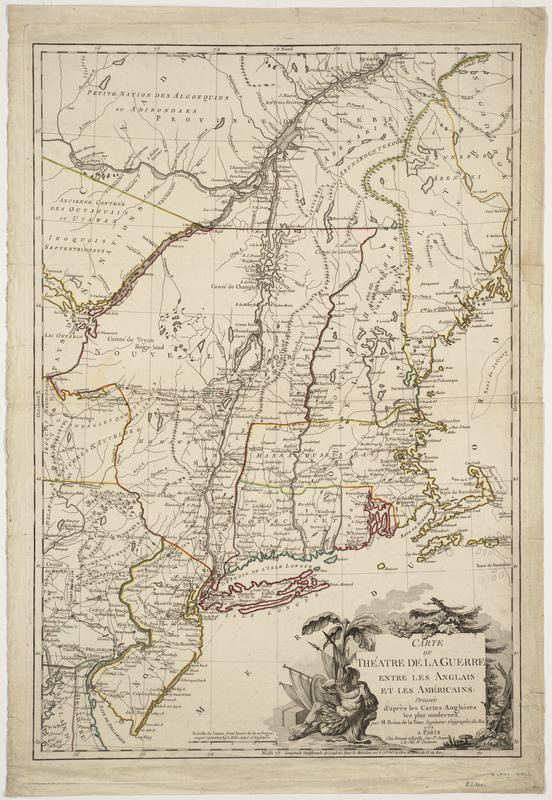
"Carte du théatre de la guerre entre les Anglais et les Américains dressée d'après les cartes anglaises les plus modernes", par M. Brion de la Tour, ingénieur-géographe du roi 1777" ("Map of the theater of the war between the English and the Americans, drawn up according to the most modern English maps") by M. Brion de la Tour, engineer-geographer to the king 1777, Louis, Esnauts et Rapilly, Paris, éditeurs.
Public Library, Norman B. Leventhal Map Center, Public Domain
Location of Marker:
Sandy Redoubt, Garrison Cemetery, to the right of the entrance road to Fort Ticonderoga, Ticonderoga NY 12883
|
|
• Inscription:
“ Here lie
the bones of
a soldier of France
found under the
Northwest Bastion
of the Fort in
November 1900"
"Rest in Peace”
|
|
Marker, “Fort St. Frédéric”
“Welcome To Crown Point State Historic Site”
" Bienvenu [sic] Au Site Historique De Crown Point
Dans L'Etat De New York "
|
|
Adirondack Park, Crown Point, NY 12928
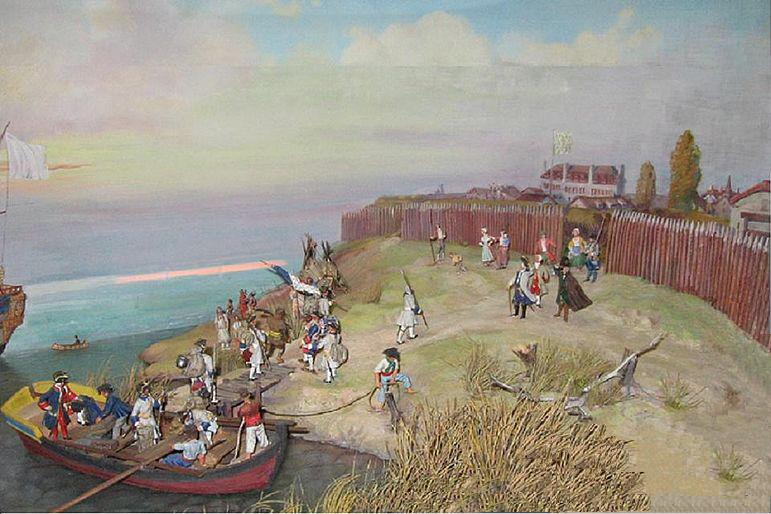
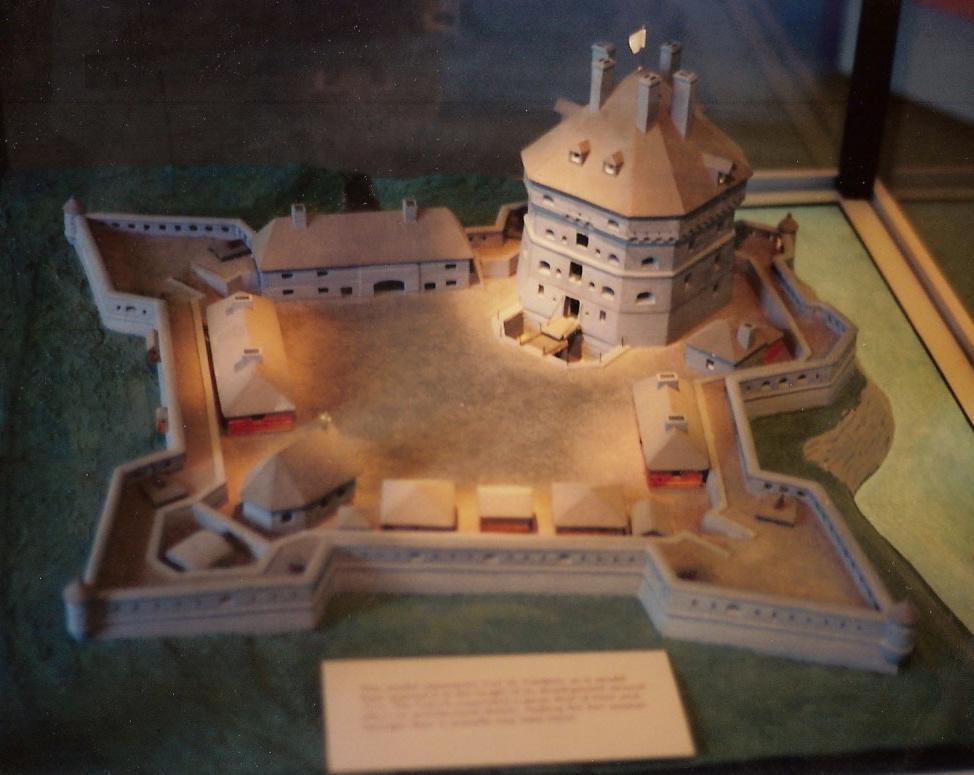
Bottom: model of Fort St Frédéric
By Charny - Own work, CC BY-SA 3.0, https://commons.wikimedia.org/w/index.php?curid=17854970
|
|
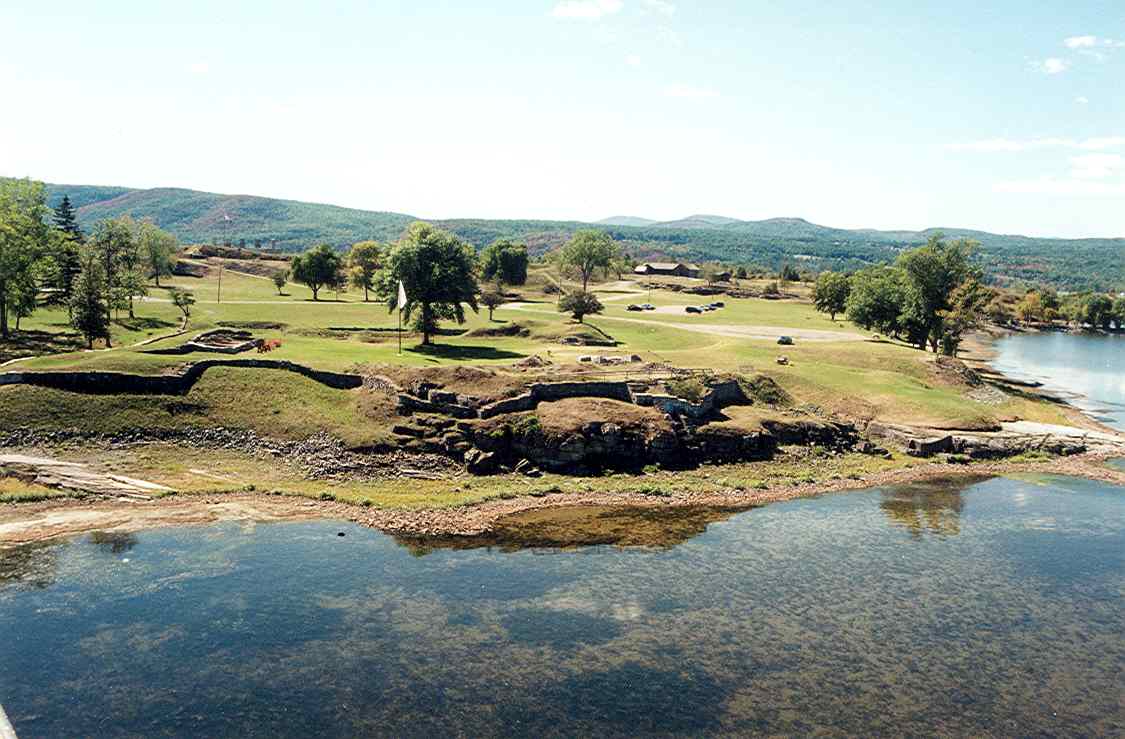
• Fort St. Frederic (1735-1759) - A French Colonial fort established in 1735 in present-day Essex County, New York. Named for the French Count Maurepas (Jean-Frederic Phelypeaux) who was the French minister of the colonies, the navy, and seaborne trade. The fort was blown up by the French and abandoned in 1759.
• The fort gave the French control of the frontier between New France and the British colonies to the south. As the only permanent stronghold in the area until the building of Fort Carillon at Ticonderoga starting in 1755, many French raids originated there and it was a target of British operations in the French and Indian War. Constructed on the tip of a strategic peninsula at a narrows in the lake, the cannons of Fort Saint-Frédéric and the later British Fort Crown Point were capable of halting all north-south travel on the lake.
• The fort, whose construction began in 1734, was never attacked, and was destroyed in 1759 before the advance of a large (more than 10,000 man) British army under General Jeffery Amherst.
• Excerpts:
“ Crown Point is the site of two major 18th-century fortifications: France's Fort St. Frédéric and Great Britain's fort at Crown Point. The ruins of these forts have survived substantially unchanged since the late 18th century and have been separately designated National Historic Landmarks by the U.S. Department of the Interior”...”Lakes and rivers were the highways of colonial North America. The Richelieu River, Lake Champlain, Lake George, and the Hudson River formed a nearly perfect line of water- ways from Montréal to New York City....
...”Chaussegros de Léry, the king's engineer in New France France, drew plans for Fort St. Frédéric that included this image of the beautiful stone fort. Between 1734 and 1738, the French built an awe-inspiring stone fortress at Crown Point called Fort St. Frédéric. French settlers created a thriving community around the fort that they were forced to abandon in 1759 because of the approach of a large British army. Rather than allow the fort to fall into British hands, the French blew up the fort, leaving it a ruin”...
...”Built on the site of the present-day Champlain Memorial Lighthouse, Fort St. Frédéric's windmill ground wheat into flour and helped support the burgeoning French community.”
|
|
Marker, “Fort St. Frédéric” |
|
Crown Point State Historic Site, 21 Grandview Drive, Crown Point, NY 12928
|
|
• Inscription:
“ Fort St. Frédéric consisted of an outer, bastioned limestone wall enclosing the Citadel, a four-story, eight-sided tower with walls twelve feet thick at the base. Cannon were mounted on each floor of the Citadel, and entry was gained by a drawbridge over a dry ditch. This fortress-within-a-fort contained living quarters for officers and men, a bakery, armory, and storerooms. Swivel cannon were mounted around the perimeter of the fort’s walls."
"British expeditions led by General William Johnson (1755) and General James Abercrombie (1758) attempted to capture Fort St. Frédéric without success. Finally, in 1759, the French garrison partially demolished the fort before retreating in the face of an overwhelming force of British and provincial troops under the command of General Jeffrey Amherst."
Erected by Crown Point State Historic Site.”
|
|
Epilogue: Last French victory
Marker, “War for Empire”
“A fight for control”
|
|
Fort Oswego, Along the O & W Railroad Pedestrian Promenade & Bikeway.
152 East 1st Street, Oswego NY 13126
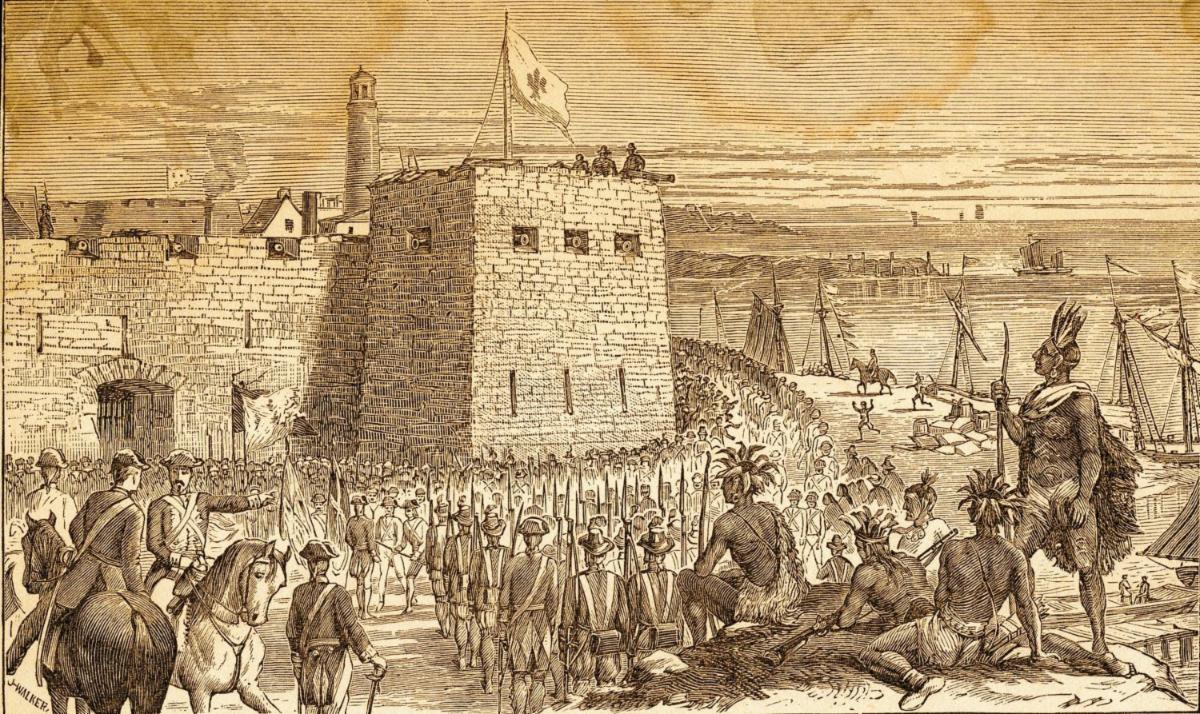
Top illustration: Capitulation of Fort Oswego, August 1756By John Henry Walker (1831-1899) - Journal de Montréal, Public Domain
|
|
• Excerpts of marker:
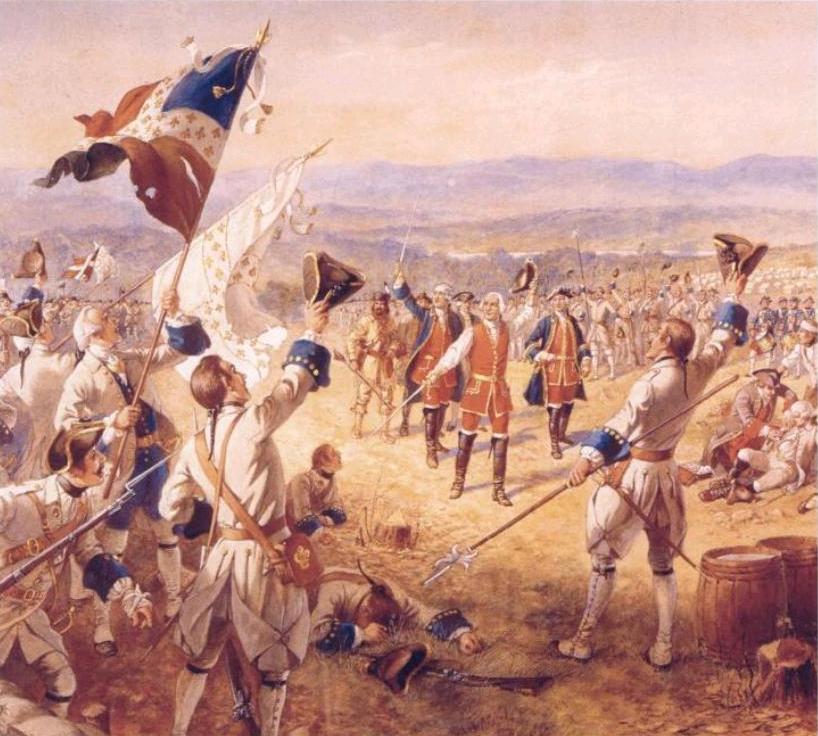
“ Oswego was a strategic spot in many military campaigns. Control of the river, an important military route, changed many times. The loss of Oswego in August, 1756 was viewed as a triumph by the French and as a national misfortune by the English as it was the loss of their most important frontier post.
A Military Route
This 18th century map of central New York shows the military transport route that connected the Mohawk Valley to the Oswego River. This route allowed war material and troops to travel from the Atlantic to the western frontier, through Oswego.
Fort Ontario
The original Fort Ontario was built during this struggle between the English and French, and it was held by each at different times.
The Fall Of Oswego
The Marquis de Montcalm, commander of the French forces in North America, takes the surrender from the English officers who had defended Oswego in the three day battle which ended August 14, 1756. Notice old Fort Oswego in the background.
Louis XV Medal
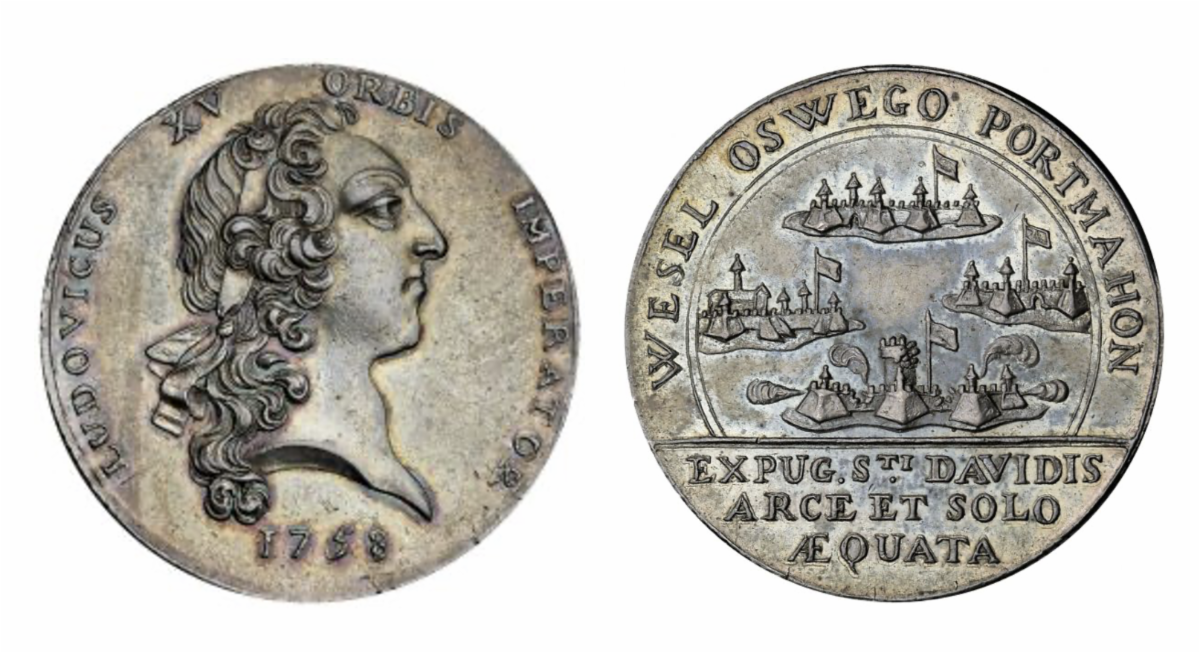
A special medal issued by Louis XV in 1758 shows the importance attached in France to the capture of Oswego. Oswego is one the places named on this rare medal, as furnishing the foundation for the French monarch's claim of universal dominion. One of only two of these medals ever issued is on display here in Oswego at the Richardson-Bates House Museum.
Erected by Seaway Trail, Inc.”
|
|
PART SIX OF THE SERIES
"LAFAYETTE, GUEST OF THE NATION"
If you missed the episodes from our past Bulletins...
• President James Monroe invited Lafayette, the last surviving major general of the American Revolutionary War, to tour the United States, officially to celebrate the nation's 50th anniversary but also to instill the "spirit of 1776" in the next generation of Americans at a time of great political divide. His tour drew large crowds and sparked a renewal of patriotism.
• From July 1824 to September 1825, Lafayette made a tour of all 24 States in the United States. He was received with a hero's welcome everywhere he stopped. Immense crowds, children, old veterans would come from miles away and wait hours to have a chance to see him, approach him, touch him. Many honors and monuments were presented to commemorate and memorialize the visit.
• The 24 states visited were: Alabama, Connecticut, Delaware, Georgia, Illinois, Indiana, Kentucky, Louisiana, Maine (ex-Massachusetts / North part), Maryland, Massachusetts, Mississippi, Missouri, New Hampshire, New Jersey, New York, North Carolina, Ohio, Pennsylvania, Rhode Island, South Carolina, Tennessee, Vermont, Virginia, Washington D.C.
• The main means of transportation were stagecoach, horseback, canal barge, and steamboat.
• Throughout the years 2024 and 2025 each city will celebrate this most illustrious Frenchman, ranked alongside the Founding Fathers, practically on a par with George Washington. If anyone harbors any doubt about it, one only needs to read the some of the hundreds of local newspapers articles and the accounts or memoirs of contemporary witnesses accounts.
|
|
• Several of his stops are memorialized with markers and plaques, some decades-old, and an increasing number of brand new ones, thanks to the energy and enthusiasm deployed by Julien Icher, president of the LafayetteTrail.org, whose goal is to dedicate all 175 markers by 2024.
• These new markers from the LafayetteTrail.org are all made in the same distinctive blue and red cast metal and signed by the William C. Pomeroy Foundation which is generously funding this gigantic project.
• The American Society of Le Souvenir Français Inc. is honored to partner with these two like-minded organizations, all well as all other American patriotic associations and volunteers who are participating in these celebrations, under the umbrella of America250
|
|
As we started with August 2022 Bulletin, we will narrate every month some of the most salient episodes of this remarkable journey of the corresponding month 199 years ago, while keeping you abreast of the many celebrations planned by the local committees of the American Friends of Lafayette in 2024 and in 2025.
For this series we will also borrow from the testimonies of a privileged close witness, Auguste Levasseur, Lafayette’s personal secretary, who traveled along with the Marquis and his son, George Washington Lafayette, and who published his extensive daily journal: “Lafayette en Amérique 1824-1825, ou Journal d'un voyage aux Etats-Unis" (Published by the Librairie Baudoin, Paris, in 1829), as well as other well-documented sources, such as Samuel Lorenzo Knapp. “Memoirs of General Lafayette : with an Account of His Visit to America and His Reception By the People of the United States; From His Arrival, August 15th, to the Celebration at Yorktown, October 19th, 1824”(Published in November, 1824)
|
|
- January 1 – Attends a banquet hosted by Congress
- January 19 – Visits Baltimore and leaves January 20 on a steamboat bound for Norfolk, on his way to visit the legislature of Virginia at Richmond
- January 31 – Visits Perseverance Lodge #21 Harrisburg, Pennsylvania
|
|
Lafayette at a banquet hosted by Congress
January 1, 1825
|
|
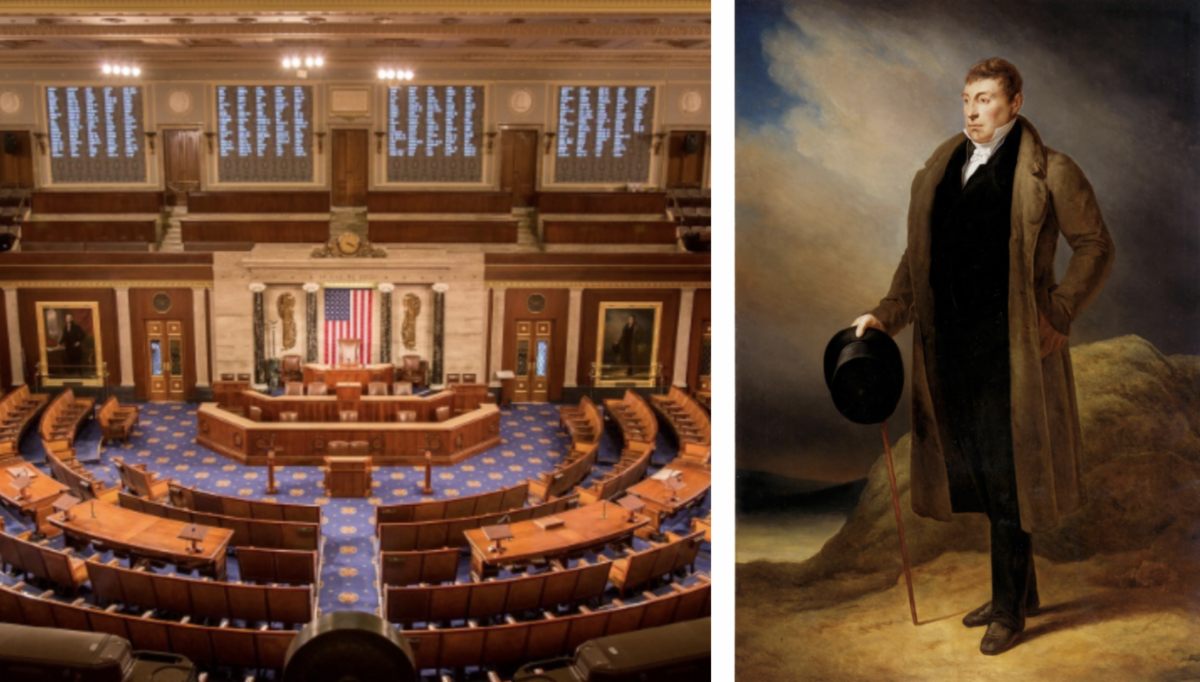
House of Representatives, US Capitol, Washington DC
Left: The House Chamber. Both portraits of Washington & Lafayette surround the rostrum.
Right: Oil painting of Lafayette by Dutch-French artist Ary Scheffer (1795-1858), gift of the artist to Congress - Collection of the U.S. House of Representatives, Public Domain
George Washington is to the right of the Speaker of the House, the marquis de Lafayette to the left.
|
|
• "The first of January was fixed upon by the two houses, for a grand dinner to General Lafayette. The representatives of the people wished to consecrate American hospitality, by seating the guest of the nation at a table at which the whole people could be present in them.
Mr. Gailliard, president pro tempore of the senate, and Mr. Clay, speaker of the house of representatives, presided at the dinner. Mr. Gailliard had General Lafayette on his left, and Mr. Monroe the president of the United States on his right; who, overlooking on this occasion the rule he had made of never attending any public dinner, had accepted the invitation; Mr. Clay had on each side of him, the secretaries of the different departments. Among the guests, were General Dearborn, minister of the United States to the court of Portugal; Generals Scott, Macomb, Jessup, and our worthy countryman Bernard, by whose side I had the honour to be placed; Commodores Bainbridge, Tingy, Steward and Morris, as well as many other public officers of highest rank.
Among the guests, General Lafayette had the pleasure of finding some of his old companions in arms. Captain Allyn of the Cadmus, who had recently arrived from France, was also present. The hall was decorated with great splendour, and the guests were animated by a feeling of union, which demonstrated how completely they considered this ceremony as a family festival.
It is in such assemblies, that the public feeling of a people can be studied, particularly where its representatives, chosen freely, and having no reason to flatter those in power, or to dissimulate, give a free vent to all their sentiments. After a variety of toasts, highly complimentary to the general, and to which he replied with great felicity, the entertainment was concluded with a universal wish of the guests that all the American people could have been present at it."
Auguste Levasseur, “Lafayette en Amérique 1824-1825, ou Journal d'un voyage aux Etats-Unis" , Carey and Lea, Philadelphia, 1829, Vol II, p.56
|
|
Lafayette addresses the Legislature of Virginia
January 19, 1825
|
|
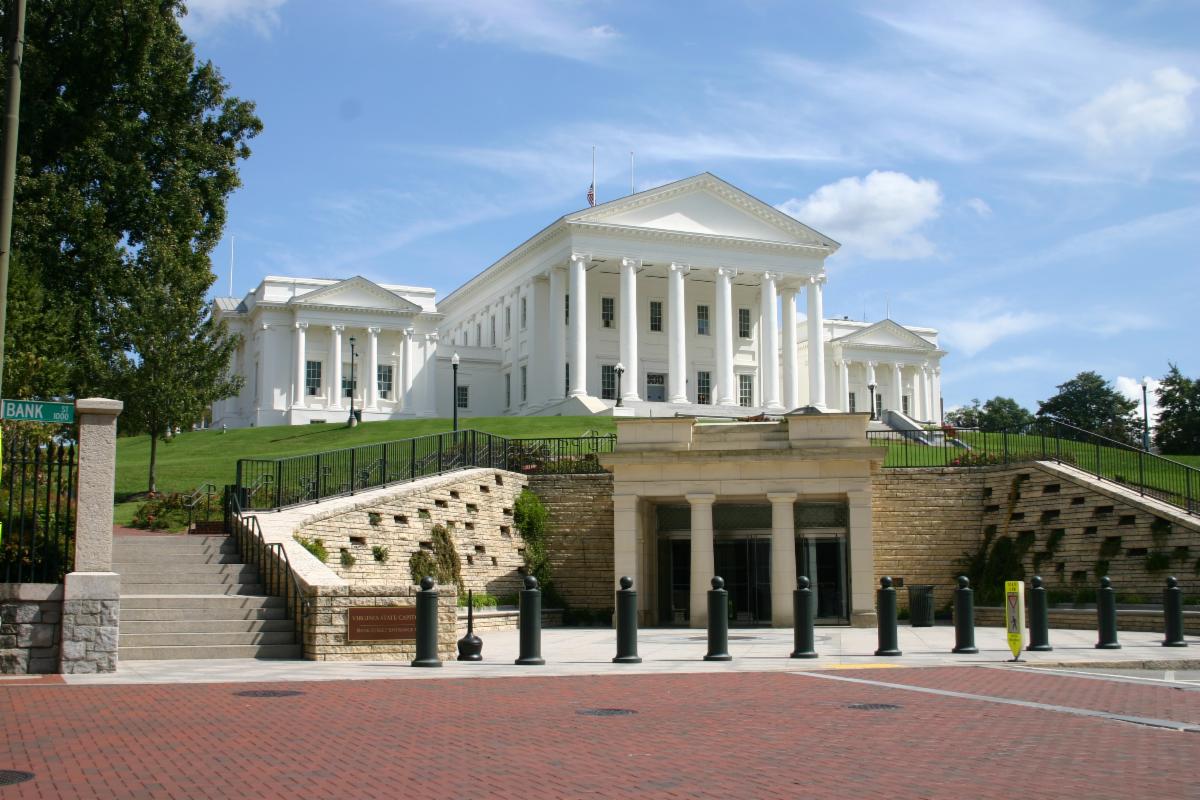
The Virginia State Capitol was designed by Thomas Jefferson, the third President of the United States. Thomas Jefferson modeled the Capitol after the Maison Carrée, an ancient Roman temple in Nîmes, France (the two wings are later additions).
|
|
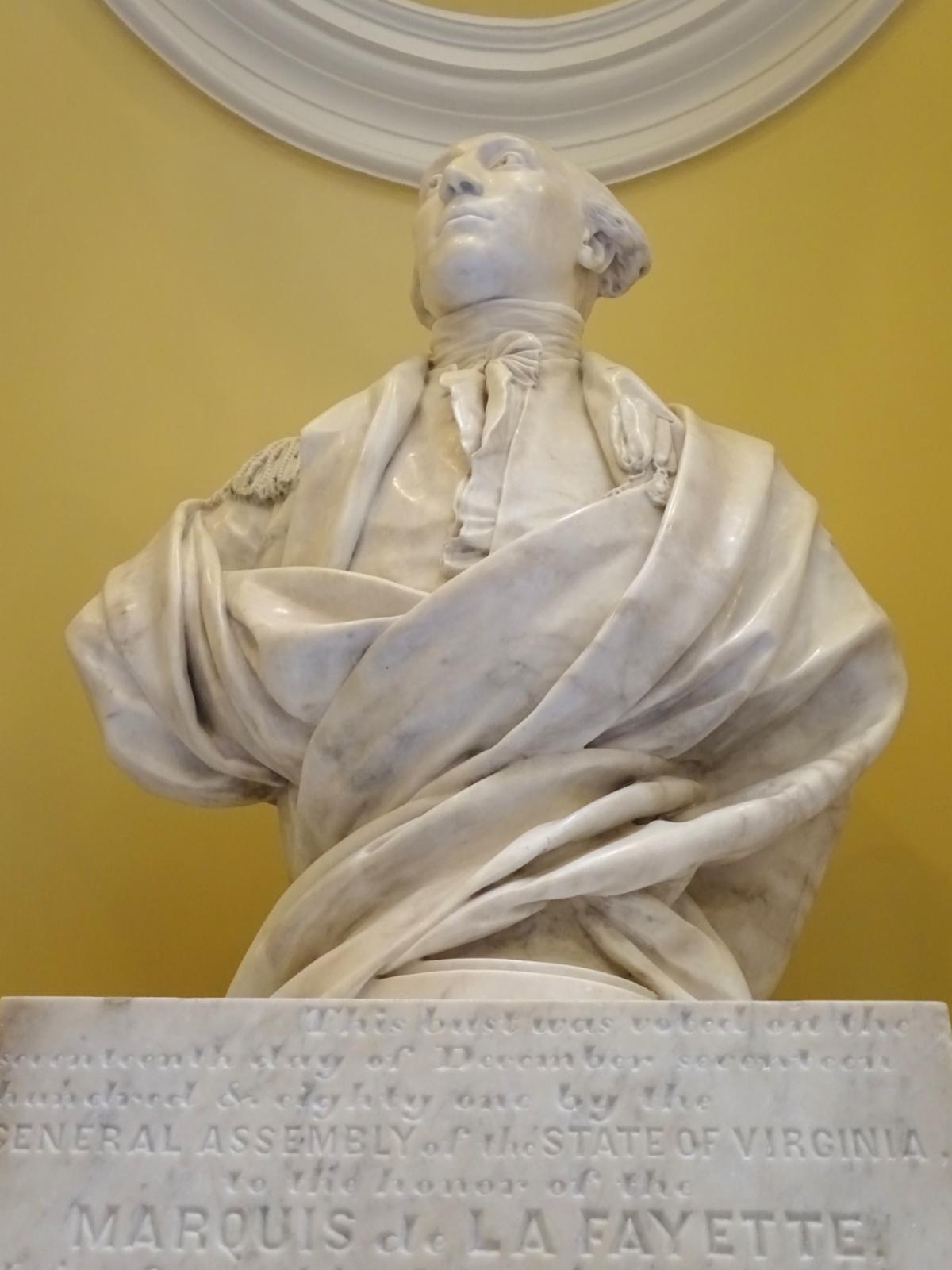
Lafayette bust by Jean-Antoine Houdon, Virginia State House - Richmond - Virginia
|
|
• In 1784, the General Assembly commissioned a marble bust of Lafayette and a marble statue of the Marquis de Lafayette, with the intent that the statuary would be placed in the new Capitol as symbols of public virtue from the Old and the New Worlds. These two statues were done from life by renowned French sculptor Jean-Antoine Houdon. Lafayette was voted a citizen of Virginia by an "act of assembly" in 1785 for his valuable services on behalf of the Commonwealth during the American Revolution. His bust was received from France in 1789 and Washington's statue was put into place in 1796.
|
|
Lafayette Freemason
Perseverance Lodge #21 Harrisburg, Pennsylvania
January 31, 2825
|
|
Lafayette is portrayed at the top of this lithograph.
Print of "Distinguished Masons Of The Revolution, Library of Congress Prints and Photographs Division Washington, D.C. 20540 USA
This lithograph features the portraits of ten Masons who played important roles in the period leading up to and immediately following the American Revolutionary War. "President and General George Washington is the focal point of the artwork and his portrait occupies the central position. Surrounding him are nine additional portraits. Starting directly above his head and moving clockwise, those portraits include: Marquis de La Fayette; Dr. (and General) Joseph Warren; James Otis, Jr.; Peyton Randolph; General David Wooster; General Richard Montgomery; Chief Justice John Marshall; Benjamin Franklin; and General Israel Putnam.
"There is a variety of masonic symbols and icons scattered throughout the print.
"At the bottom center, between Montgomery and Wooster, is a plate bearing an inscription that includes the signature of George Washington. This quote constitutes a powerful endorsement of masonic traditions. It reads:
"Being persuaded that a just application of the principles on which the Masonic Fraternity is founded, must be productive of private virtue and private prosperity, I shall always be happy to advance the interests of the society, and to be considered by them as a deserving brother. A society whose liberal principles are founded in the immutable laws of truth and justice - The grand object of Masonry is to promote the happiness of the human race. So far as I am acquainted with the principles and doctrines of Freemasonry, I conceive them to be founded on benevolence, and to be exercised only for the good of mankind."
|
|
From Perseverance Lodge No.21 F. & A.M. Harrisburg, Pennsylvania:
" In January, 1825, the Nation's guest, General Lafayette — a name dear to the American heart — was to visit the Seat of Government of the Commonwealth of Pennsylvania. Being a prominent Mason, the Fraternity in every section of the country took perchance greater interest in his reception.
Lodge No. 21, at a "Meeting of Emergency," held on 19th January, A. L. 5825, in view of the speedy visit of the illustrious patriot to Harrisburg, passed the following:
''Resolved, That Brothers Douglas, Wood, Jacobs, Day, Brenizer,
Stehley, and Gleim, be a Committee of arrangement for the pur-
pose of receiving our distinguished Bro. General Lafayette."
It is proper in this connection to give the minutes of the "Meeting of Emergency, January 31st, A. L. 5825," in full.
There were present : ...(list includes General Lafayette)...
"On motion, Resolved, That Brothers James Roberts, Ethan Baldwin and Joel Bailey be a Committee to wait on Brother Lafayette and son, and conduct them to the Lodge.
"On motion, Resolved, That Bro. General Lafayette and George W. Lafayette be admitted Honorary Members of this Lodge.
"On motion, Resolved, That this Lodge meet on to-morrow at two o'clock, and then form a procession to conduct Bro. Lafayette to the Capitol.
"On motion, Resolved, That Bro. S. D. Franks, S. Douglas and W. G. Scott be a Committee to wait on the Officers of the Volunteer Corps of this Borough, and invite them and the men under their command, to form a part of the procession.
"Lodge closed. "
|
|
WE WILL CONTINUE TO TRAVEL WITH LAFAYETTE
OVER THE NEXT 8 MONTHS!...
|
|
CONCLUSION OF OUR SERIES
THE FRENCH ARMY IN THE USA
|
|
MISSION ACCOMPLISHED
After the victory in Yorktown, the war was not officially over. It would take several more months before England would recognize the independence of the United States and sign the Treaty of Paris on September 3, 1783.
During that time, British forces were still in control of cities such as New York.
Some French units stayed behind, such as the famous Lauzun Legion of hussards, who kept watch during the winter of 1782-1783.
The last French forces in America, (Lauzun's Legion and the siege artillery), embarked at Wilmington (Delaware) on 11 May 1783 on the frigates Astrée, Danaé, and Gloire, and the transports Saint James and Duc de Lauzun (the latter was a transport ship of the US Navy)
Support the Washington-Rochambeau Revolutionary Route (W3R-US)!
|
|
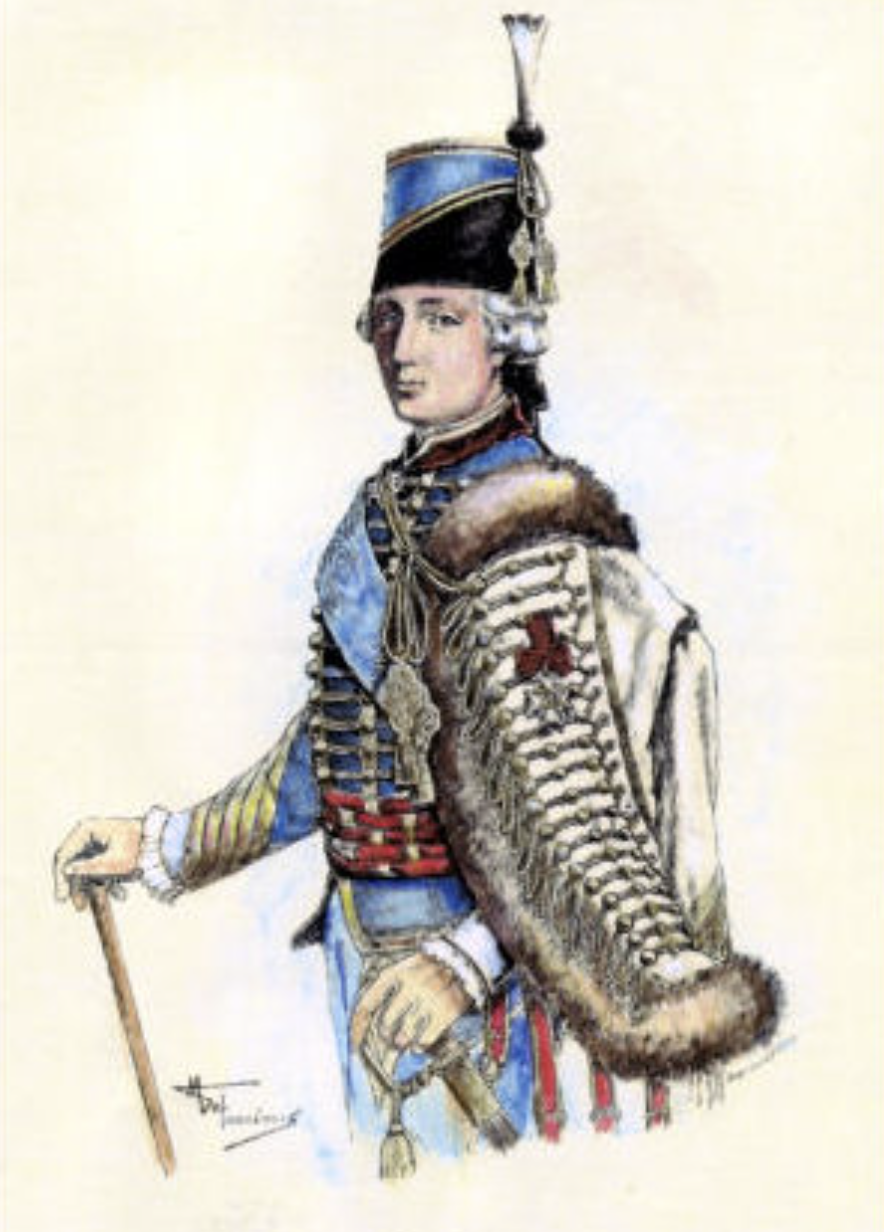
Armand Louis de Gontaut, duc de Lauzun, later duc de Biron, (13 April 1747, Paris – 31 December 1793, executed by guillotine in Paris) was a French soldier and politician, known for the part he played in the American War of Independence and the French Revolutionary Wars.
• He served in the guards as early as 1761, and in 1767 made the expedition of Corsica. On 29 June 1769, he was made chevalier of the order of Saint Louis.
• Traveling throughout Europe, he liked to publicize his numerous love affairs with lavish expenses.
• Queen Marie-Antoinette was extremely fond of him, leading some to say that they had an amorous relationship, which is doubted by most historians.
• Around that time he attracted attention by an essay on the military defenses of Great Britain and her colonies ("État de défense d’Angleterre et de toutes ses possessions dans les quatres parties du monde").
• He led an expedition to Senegal and other coast possessions of the English, sseizing Senegal in January 1779.
• Lauzun received the title of colonel of hussars, and became proprietor colonel of a foreign regiment named after him. Appointed brigadier on the first of March, 1780, Lauzun enthusiastically took part in the War of American Independence.
• He arrived with 600 of his men in Rhode Island; the remainder were in France, prevented from leaving. Lauzun's Legion spent their winter quarters in Lebanon, Connecticut and left on 9 June 1781 to Yorktown along the "Washington-Rochambeau Revolutionary Route". Their main function was to be an advance party but also to remain ten to fifteen miles south of the main army to protect its flank against any British attack.
• He engaged in several active combats, including one near Gloucester, Virginia on 4 October 1781, when he successfully beat back the British led by the infamous Tarleton and effectively consolidating the siege of Lord Cornwallis.
• On 24 October 1781, after the Siege of Yorktown, Lauzun delivered the news of the victory to Louis XVI. He had a hero's welcome and was made maréchal de camp.
• After yet another crossing and with the mission to protect the young republic while peace negotiations were under way, De Lauzun finally received the order to sail for France for good on 11 March 1783.
• On the death of his uncle, Louis Antoine de Gontaut de Biron, in 1788, he took the title of the duke de Biron. In 1789 he was returned as deputy to the States General by the noblesse of Quercy and attached himself to the revolutionary cause.
• In 1791, he was sent by the National Constituent Assembly as commander of the Army of Flanders.
• In July 1792 he was named commander of the Army of the Rhine.
• In May 1793, he was transferred to the command of the French Revolutionary Army on the La Rochelle front to fight the "Vendéan insurgency" loyal to the King. He gained several successes but the insubordination of his troops and the suspicions of his political supervisors led to his resignation on 16 July 1793.
• He was accused by the notorious Jean-Baptiste Carrier of incivisme ("lack of civic virtue", the equivalent of treason under the Reign of Terror) and undue leniency to the insurgents.
• The public prosecutor Antoine Quentin Fouquier-Tinville accused him of "having conspired against the unity and indivisibility of the Republic and the tranquility of the interior security of the French Empire and betraying the interests of the Republic ("conspiré contre l'unité et l'indivisibilité de la République et la tranquillité de la sûreté intérieure et extérieure de l'Empire français et trahir les intérêts de la République en abusant de sa qualité").
• Imprisoned in the Abbaye, sentenced to death by the Revolutionary Tribunal he was sent to the guillotine. His wife, Amélie de Boufflers, was herself executed six months later.
• The day of his execution, he ordered a dozen oysters and served a glass of white wine to his executioner, telling him, "I am sorry for you that you have such a ghastly occupation"...
• An American warship was named after Armand Louis de Gontaut: USS Duc de Lauzun.
• P Street Bridge, a bridge over Rock Creek Park in Washington, D.C., was renamed Lauzun's Legion Bridge in 2006.
|
|
Marker” A French Legion Kept Watch Here”
Winter 1782-1783
|
|
Portrait of the Duc de Lauzun in his uniform of hussards
Marker located at: 818 N Market St, Wilmington, DE 19801
|
|
• Excerpts:
“ During the American Revolution Lauzun's Legion spent the winter and spring of 1782-1783 in Wilmington to help guard Philadelphia and Baltimore from British attack. The troops were housed in the Wilmington Academy, located where the Grand Opera House stands today. The Legion protected the region, enriched the town, and gave us many new citizens.”... “In August 1782 Rochambeau and his troops passed through Delaware going north to Boston. But in October of 1782 — a full year after the siege at Yorktown — the British army still occupied New York City and Charleston, South Carolina.”
Wilmington is Host to 600 French Soldiers
“Lauzun's Legion of Foreign Volunteers was sent to Wilmington, from where it could rapidly move to defend the U.S. capital city of Philadelphia or the French siege artillery, which had been left at Baltimore. From December 1782 to May 1783 some 280 hussars (mounted infantry — see figure at left) plus 100 grenadiers, 100 chasseurs (light infantry) and 100 artillerymen lived in Wilmington Academy and vacant houses in the city.”
The Legion's Economic and Social Legacy
“The French helped the local economy recover from war taxes by paying for their food and lodging using silver coins — "real money". The French paid local carpenters to build a stable for 280 horses behind the academy and held military drills several times a week. The officers stayed with local families and attended meetings of the local masonic lodge.”
Erected by Delaware State Society, Daughters of the American Revolution; National Society Sons of the American Revolution."
|
|
END of our SERIES
ROCHAMBEAU'S EXPÉDITION PARTICULIÈRE
IN THE UNITED STATES 1780-1783
|
|
PAST MONTHLY BULLETINS
OUR GOAL: turn the spotlight on a famous, or less famous, episode or historical figure during the long shared history between France and the United States, with illustrations and anecdotes.
You can have access to all our past Monthly Bulletin
since February 2021 by visiting our website:
You can click on the photos throughout our bulletins and also on the links indicated in blue for more information and direct access to sources.
|
|
Next month we will turn our attention to the history of The Engineers of Louis XVI in the service of Washington, with a monograph by Prof. Desmarais on Lieutenant-Colonel Le Bègue by Presle Duportail at Valley Forge.
The series on French forts in the 17th and 18th century will resume in March, this time focusing in the Midwest.
|
|
2023 promises to be a busy year with several projects and events!
List is not exhaustive and is subject to change - Dates will be reconfirmed
• Kick-off national fund-raising in partnership with other US patriotic and cultural organizations to help the frigate Hermione sail again and participate in US ceremonies in years to come (February)
• Memorial Service in honor of our dear friend Frédéric Vigneron, who passed away in 2021, at Trinity Church, Lower Manhattan, followed by tribute at Fraunces Tavern (in March - details will be forthcoming in February).
• Support of the exhibition “Our Battlefields” by French artist Elo de la Ruë du Can and American Veterans in New York and other American cities
• Ceremony to honor the memory of 8 French Soldiers who are buried by Old St. Peter's Church in Old Hillside Cemetery, Cortlandt, NY
• Dedication of the Memorial to 4 soldiers from the Royal-Deux Ponts regiment who are buried in the vicinity of the Odell House – Rochambeau Headquarters.
• Celebration of French Alliance Day at Washington Memorial Chapel, Valley Forge, PA, May 7
• Memorial Day, May 29
• Annual wreath laying ceremony in front of the Statue of Rochambeau in Newport, R.I. July 14-15
• La Pérouse Memorial restoration in Maui, HI and dedication (September)
• Installation of 4 commemorative plaques in honor of the 4 American “Companions of the Libération”: General Dwight D. Eisenhower, John Hasey, James Worden, Jacques Tartière
• Inauguration of the sculpture The Little Prince at the Villa Albertine – Cultural Services 5th Avenue New York around September 15
• Marker "Duc de Lauzun & Marquis de Choisy, Battle of the Hook, Gloucester, VA (October 3)
• “Sailors missing at sea” bronze plaque at the French Memorial in Yorktown (October 19)
• Veterans Day / Armistice Day Parade, 5th Avenue, NYC, November 11
• US Unknown Soldier exhibition in Paris (November - December)
Help us make these a reality with your tax-deductible financial support!
You are welcome to specify the project(s) you wish to help:
Un grand "Merci"!
|
|
ERRATUM
In our bulletin last December, a link wasn't functional.
The page for André Scheinmann, French Resistance hero is at:
“Agent André: The German Jew at the Heart of the SIS and the French Resistance’" based on his memoirs, will be published in 2023 by the History Press.”
|
|
ANNOUNCEMENT FROM
THE SOCIETY OF THE HONOR GUARD, TOMB OF THE UNKNOWN SOLDIER
|
|
The Society of the Honor Guard, Tomb of the Unknown Soldier invites you to join us in our national campaign to observe Memorial Day in the way it was intended per the National Moment of Remembrance Act.
Inspired by the excellent Memorial Day programming during the Centennial of the Tomb of the Unknown Soldier (1921-2021) we ask that 2023 Memorial Day programming include the dramatic reading of “In Arlington” by Treehouse Dream Films which is introduced by acclaimed actor, humanitarian, and advocate for the American veteran: Gary Sinise.
We also ask the playing of “Journey Home”, the original score written by Dr. Sara Corry and recorded by The United States Army Band (TUSAB), be played at 3:00p.m. as further implementation of the National Moment of Remembrance Act.
This campaign will be known as “Operation Pass the Torch”, taking its name from the iconic poem of World War I, “In Flanders Fields”, and its inspiration from America’s sacred duty to never forget all those that have served and sacrificed on behalf of America in times of war or armed conflict, and their families.
It is our vision that the dramatic reading of “In Arlington” will provide tone setting and substantive content to that iconic day’s media programing. “In Arlington” is both large and substantive enough to stand on its own, yet manageable enough to supplement or “stage set” other Memorial Day programming. That it will include all of America in a singular way for individual participation and expression.
Further that playing of “Journey Home” at 3:00p.m. by individuals, in groups, or public announcement systems on their electronic device, all of America will be engaged in this single act: Giving full voice to their love of country and profound respect and gratitude to those whose service and sacrifice have and will keep us free. This is an opportunity to unite the country by reuniting America with all those that have given all so that the promise of America would endure.
Below are the elements of Operation Pass the Torch:
• Participation in this moment helps reclaim Memorial Day for the noble and sacred reason for which it was intended –to honor those who died in service to our Nation.
• Americans of every age are invited to participate.
• One may pause for the moment wherever they happen to be, whether alone of with others.
• Participation is voluntary and informal. You may observe in your own way a Moment of remembrance and respect, pausing from whatever you are doing for a moment of silence or listening to “Taps” or we hope, listening to “Journey Home”.
• However, one may organize the observance more formally at such places as your neighborhood, local pool picnic grounds, etc., for that moment of remembrance. One could ring a bell to signify the beginning and the end of the Moment or many tune into a local radio station, website, Facebook, or other social media that is observing the Moment with the playing of “Taps” or “Journey Home”. If you are driving a vehicle, you may turn on your headlights.
• We do this to remind all Americans of the importance of remembering those who sacrificed for their freedom and what it means to be an American, and to provide Americans throughout the world the opportunity to join this expression gratitude, in an act of unity and make Memorial Day relevant especially to younger Americans.
“Soldiers never die until they are forgotten, Tomb Guards never forget.”
Please click to go to the links below:
“Operation Pass the Torch” can be the “electric cord” that connects our generation and those who will follow us and to all those that have served and sacrificed on behalf of America in times of war or armed conflict. In doing so, we can, in a muscular way, preserve and keep relevant the higher meaning of the Tomb of the Unknown Soldier and our nations support for and all those that have and will serve to keep our country safe. And in a very meaningful way help America observe Memorial Day as intended.
Thank you in advance.
Lonny LeGrand, Jr.
SHGTUS President President249@tombguard.org
|
|
Battle of Rhode Island Association Announces Partnership with The Redwood Library & Athenæum
The Battle of Rhode Island Association (BoRIA) is pleased to announce that the Redwood Library & Athenæum has become a partner in documenting, telling, and celebrating Rhode Island’s role in the Revolutionary War. Dr. Benedict Leca, Executive Director of the Redwood, commented “We are pleased to join this much needed effort. In our initial project we will jointly be conducting research on Rev. Roderick Terry. He generously served as Board President of the Redwood for a decade, revitalized the Newport Historical Society, and saved the lands at Butts Hill Fort and Fort Barton”. Burton Quist, Director at BoRIA, remarked, “It is significant that we have representation from this nationally recognized institution located in Newport that was a major center in the Revolutionary War”.
The Redwood Library & Athenæum is America’s first purpose-built library (1747), and the oldest continuously operating in its original location. As such, it is the only remaining secular public cultural institution in this country with an unbroken link to the colonial period and the Nation’s founding. Housed in the earliest public Neoclassic building in the U.S., and containing Rhode Island’s first art gallery (1875), it has functioned for nearly three-hundred years as Newport’s intellectual core, a humanities center, and civic learning hub styled after ideals of ancient Athenian culture and philosophy. It was designated a National Historic Landmark in 1960.
The Battle of Rhode Island Association is a registered 501(c)(3) non-profit committed to raising awareness of Rhode Island’s role in the War for Independence. Donations may be made payable to “BoRIA” at PO Box 626, Portsmouth, RI 02871.
|
|
FROM OUR MEMBER AND FRIEND PATRICK SALIN
LIVE FROM QUÉBEC:
|
|
OUR MISSIONS:
• To preserve the memory of the French soldiers, sailors and airmen who gave their lives for freedom, and who are buried in the United States.
• To honor French Citizens who did great deeds in the United States, or with a strong connection with the United States,
• To promote the appreciation for French culture and heritage in the United States, and the ideals that unite our two nations, in order to pass the torch of memory to younger generations.
• To strengthen the long-standing traditional bonds of friendship between the American and French peoples, and to this end: erect or maintain memorials and monuments and encourage historical research, public presentations and publications in the media.
We are looking to complete our geographic coverage with Regional Delegates for the SouthWest in cities such as Austin, or Houston, and Louisiana, in cities such as New Orleans or Baton Rouge.
The American Society of Le Souvenir Français, Inc. is an independent American corporation, apolitical, established in 1993 in NY, with 501 (c) 3 non-profit status.
|
|
Did you know that a portion of every purchase you make on Amazon can benefit American Society of Le Souvenir Francais Inc, at no cost to you?
Simply go to: smile.amazon.com, designate American Society of Le Souvenir Francais Inc. as your beneficiary, and shop away
|
|
Help us implement several historic commemorative projects celebrating the 244-year-old Franco-American friendship and alliance! |
|
The American Society of Le Souvenir Français, Inc. is a registered NY State non-profit corporation and has full IRS tax exempt 501(c)3 status. All donations are tax deductible.
Copyright © 2022 The American Society of Le Souvenir Français, Inc.
All Rights Reserved
Merci de nous contacter si vous souhaitez recevoir ce bulletin dans sa version traduite en français.
Contact: Thierry Chaunu, President
697 Third Avenue #341 New York, NY 10017
|
|
|
|
|
|
|