|
Dear Health Gap Community:
The next couple of weeks bring incredible opportunities to positively impact the quality of life for the people you care most about.
- TUESDAY, NOV 3: Election Day! Let's embrace the power we have to vote – and to vote for the people who will protect our healthcare.
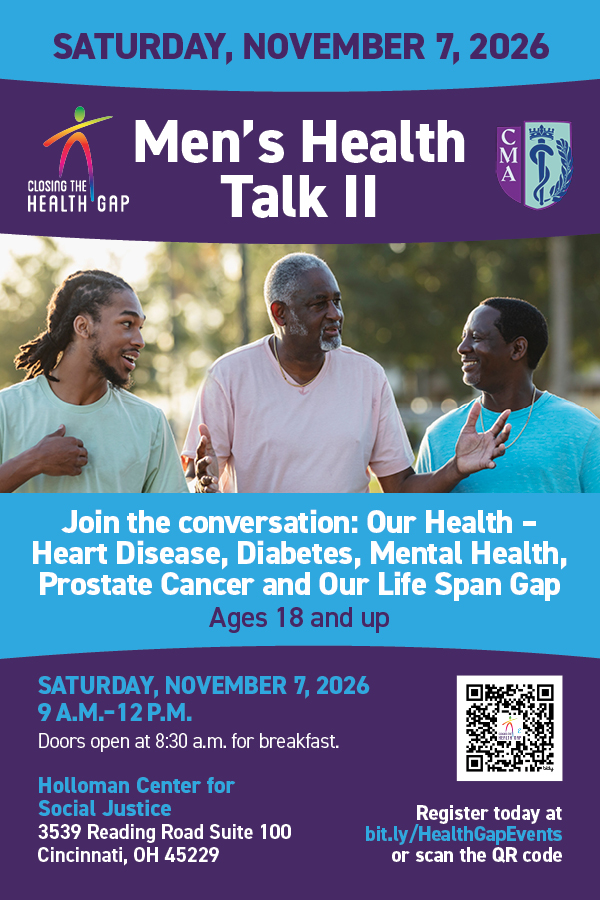
- SATURDAY, NOV 7: Men's Health Talk at the Holloman Center. Talk to the men in your life and let them know.
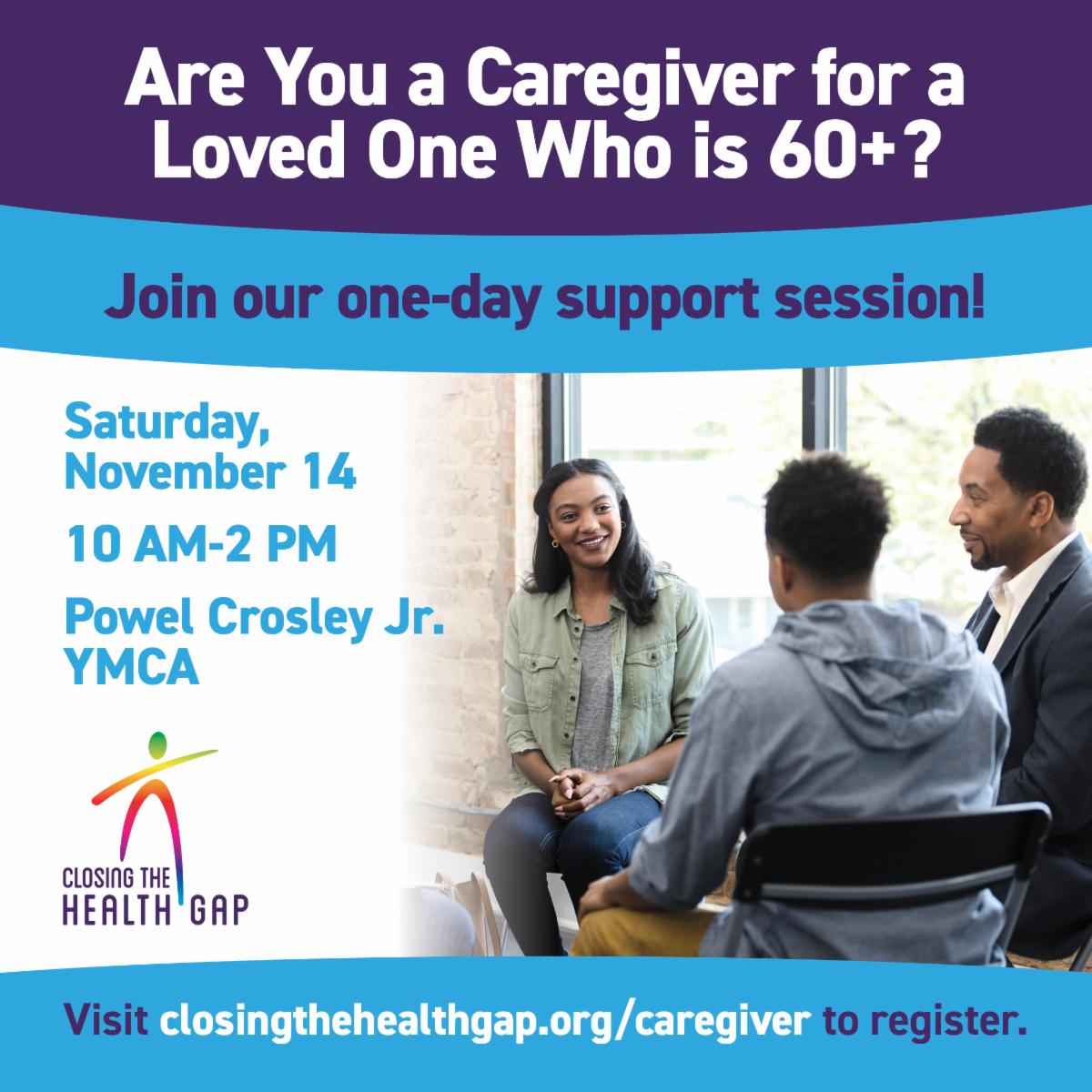
- SATURDAY, NOV 14: Caregivers one-day support session at the YMCA. Talk to the people you know who are caring for older loved ones.
We Must Save Us! Blessings to you for a safe and healthy week ahead.
Renee Mahaffey Harris, MPH
President & CEO
| | |
Men's Health Talk on November 7, Featuring Dr. Alvin Jones
On November 7, the Health Gap is hosting Men's Health Talk II. Joining us will be Dr. Alvin Jones, orthopedic surgeon, who shares three important reminders:
- Men need space to talk openly about their health
- Knowing your personal risk can help guide your care
- Building a relationship with health care providers makes it easier to ask questions and get support
Join the conversation on November 7!
| | |
Cincinnati Public Library Events Next Week
The Black Experience in 19th Century Cincinnati
Monday, November 2, 2026, 6:30pm–7:30pm
Pleasant Ridge Branch Library
Learn about the Black citizens who made a difference for all citizens in 1800s Cincinnati. Hear the stories behind some of Cincinnati’s landmark churches, schools, social organizations, Civil War sites and art legacies. Appropriate for junior high school students through adults. Click here to learn more.
Healthy Moms and Babes Mobile Van Onsite
Thursday, November 5, 2026, 10:00am–1:00pm
Price Hill Branch Library
Healthy Moms and Babes will be onsite with their Mobile Van Outreach Program, which is designed to connect women and children in the community with resources, referrals, and education. Click here to learn more.
| |
Healthcare discrimination may silence diabetes conversations among Black men
Managing Type 2 diabetes requires more than occasional visits to the doctor’s office. Much of the work happens between appointments, making communication and support from others an important part of managing the condition. But for Black and African American men, experiences of discrimination in healthcare settings may be associated with fewer conversations about their diabetes, even as they remain socially connected, according to research from Texas A&M University.
Black and African American adults are diagnosed with Type 2 diabetes at higher rates than non-Hispanic white adults and face higher rates of serious complications. In two related studies drawing on a national survey of 1,225 Black and African American men with Type 2 diabetes, the study examined how social networks relate to diabetes outcomes and how experiences of discrimination are associated with communication, mental health and self-care.
The findings suggest that diabetes-specific conversations are strongly associated with self-care behaviors, but men reporting more healthcare discrimination also reported talking less about their diabetes, despite communicating more frequently with people in their social networks overall.
| |
How the legacy of slavery shapes health disparities today
A new study co-authored by UC Berkeley Psychology Professor Manuel Galvan found that modern-day Black Americans have higher mortality rates in counties that had greater proportions of enslaved people in the 19th century. The opposite was true for White Americans: counties with a greater historical reliance on slavery had lower mortality rates among White residents.
The study, "Historical slavery predicts contemporary disparities in mortality between Black and White Americans," was published in Proceedings of the National Academy of Sciences of the United States of America. It estimated that for every 10% increase in a county’s enslaved population in 1860, there were about 22 additional deaths per 100,000 among Black Americans relative to White Americans from 2010 to 2020.
These results show how racial inequality is deeply embedded in the social and economic conditions that shape health, according to the researchers.
|
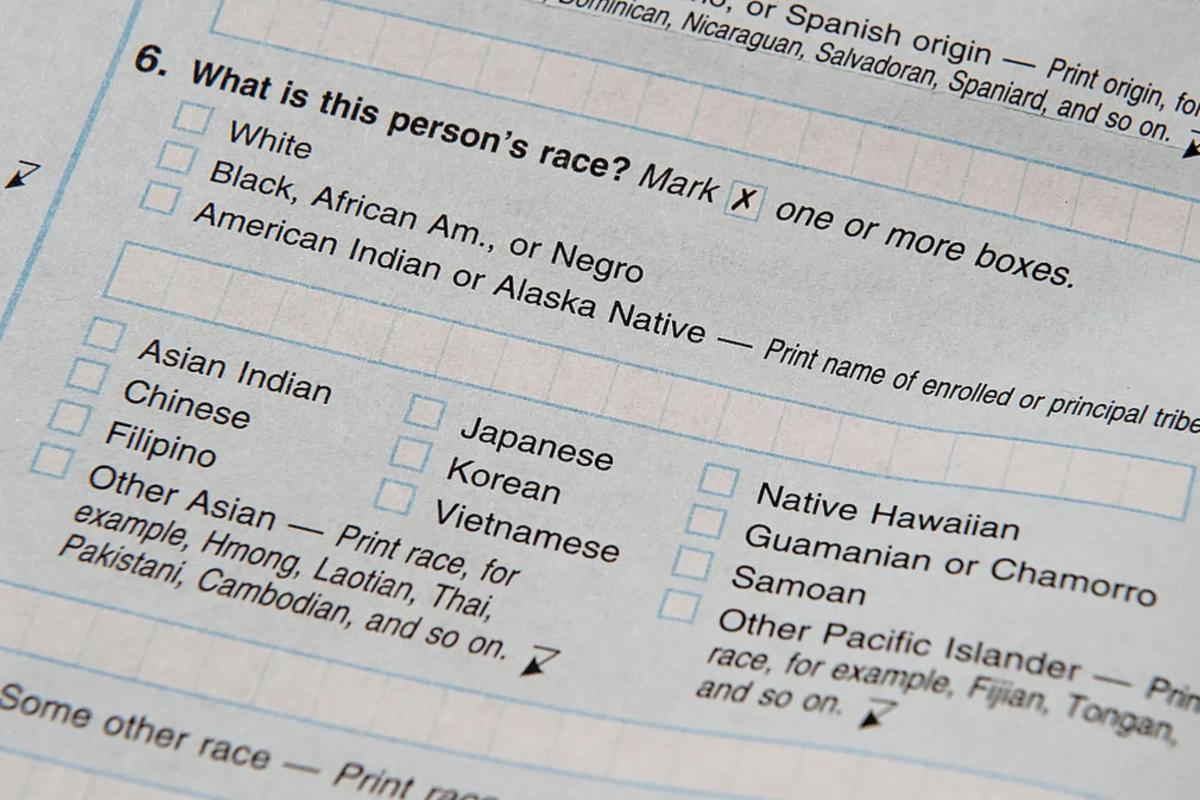
TIME MAGAZINE: The Public Health Consequences of an Inaccurate Census
by Julie Morita and Richard Besser
Census data informs every aspect of our nation’s public health system. As former leaders of local and federal health agencies, we have seen this firsthand. Unfortunately, the Trump Administration has proposed radical changes to the census that would make our country less healthy, less safe, and less fair.
The public comment period on this proposal closes on Nov. 2. Health leaders must move quickly to oppose these deeply misguided changes. It is clear to us that these changes would amount not only to an assault on our public health system but also on the U.S. Constitution.
|
New NAACP Analysis Reveals Asthma Hotspots Nationwide, Black Americans Twice as Likely to Die from Condition
The NAACP today unveiled a new national analysis highlighting the impact of asthma in cities on communities across the United States, revealing how varying air quality leads to persistent respiratory health outcomes. Through an interactive StoryMap, the Association is calling attention to asthma hotspots in major metropolitan areas with significant Black populations and urging policymakers, health leaders, and communities to take action to create healthier environments where everyone can breathe clean air.
The analysis underscores a troubling reality: Asthma outcomes are often shaped long before a patient enters a doctor's office. The ZIP codes where residents flagged an air problem average a 12.4% adult asthma rate, 2.3 percentage points above the average adult asthma rate (10.1%).
Black Americans are five times more likely to end up in the ER for asthma and die at twice the rate of white Americans due to asthma.
|
Study examines racial disparities in unemployment, hypertension risks
Jobless workers are at greater risk of being diagnosed with hypertension, and the risks are similar for those who experience long-term joblessness, regardless of their race. However, because Black workers experience disproportionately longer periods of unemployment, the racial health disparities that have been found in prior hypertension research point to structural mechanisms rather than differing biological or psychological responses, University of Illinois Urbana-Champaign scholars say in a new study.
Doctoral candidate Sohee Shin and sociology professor Tim Liao said the findings, published in the journal Social Sciences, show that unequal exposure to prolonged unemployment and labor market discrimination are driving greater incidence of hypertension among Black workers. Although prior studies consistently found links between unemployment and higher hypertension rates among Black workers, the source of the disparities was unclear.
|
Central Appalachia Through the Eyes of a DrPH
by Jen Hammons
I have lived all of my life in Central Appalachia. Long before I had a Doctor of Public Health degree, I knew what health disparities looked like. I just didn’t call them health disparities.
I knew what it looked like when someone waited too long to see a doctor because there wasn’t one nearby. I knew people who stretched medications, skipped appointments, drove ridiculous distances for healthcare, or simply went without. I knew families who had to decide which bill got paid that month. I knew communities where everybody could tell you who was on dialysis, who had cancer, who had lost someone to an overdose, and who was struggling to breathe after a lifetime underground.
Later, public health gave me words for all of it.
| | |
More Articles of Interest
Cureus, October 23, 2026
Canadian Medical Association Journal, October 19, 2026
| | | | |