Rail & Labor News from RWU
| |
Weekly Digest Number 13 - March 26th, 2024 | |
Welcome to the RWU Rail & Labor News! This news bulletin is produced and emailed out each Tuesday morning. We hope you find each week's news and information useful. If so, please share with co-workers, friends, and colleagues. If you like, you can sign them up to get all the news from RWU HERE. Or forward them the link. Got a hot tip? Please forward the article and a link to raillabornews@gmail.com. Note: If you read over this news bulletin each week, you will be sure to never miss the important news of what is going on in the railroad world from a worker's perspective! | |
Editor's Note: As the private rail industry continues to fail its shippers, passengers, trackside communities, and most of all, its workers, more and more organizations are stepping up and supporting the idea of public ownership and operation of the nation's railroads. You are invited to attend this upcoming discussion of how public rail ownership can facilitate a passenger rail revival in the U.S. RWU has been invited to serve on the panel. | |
|
Hosted by the Labor Working Group of the Socialist Party USA
As Railroad Workers United pushes for a new public ownership future for rail in the United States, the opportunity for a massive reinvestment in publicly owned passenger rail presents a promise of sustainable mobility in the face of climate change disaster. Join labor activists, socialists, and Greens in a free online discussion about the viability and pathways towards a new rail future for the working class.
| |
Editor's Note: One of the problems of post-accident drug/alcohol testing is that if/when there is a wreck, and if a worker involved has any trace of alcohol or drugs in their blood/urine, then the focus immediately switches to the individual, rather than on the rail carrier's policies, procedures and operations. | |
Trains Staff / March 19
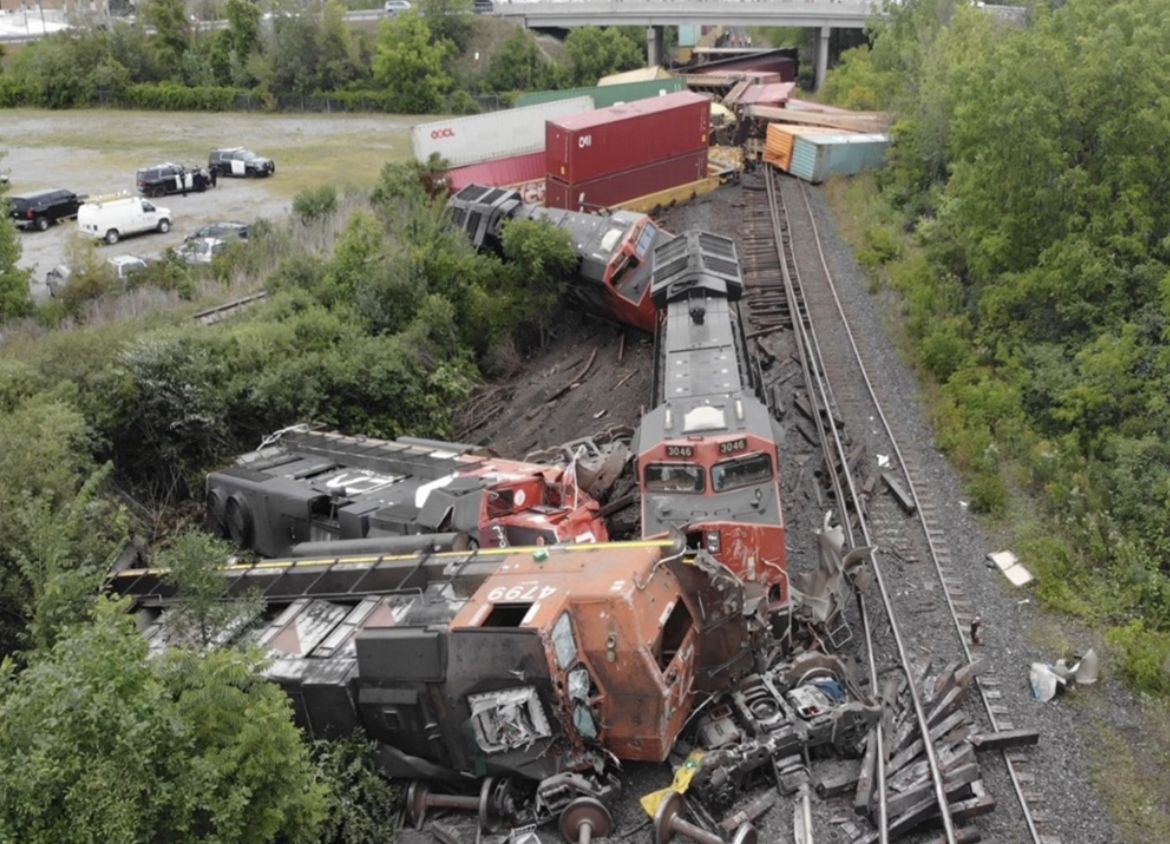
The union representing rail traffic controllers and Canadian National Railway have both taken issue with a report by the Transportation Safety Board of Canada citing alcohol use by a controller as a factor in a September 2021 collision involving two CN trains. The report issued March 13 called for regulation of the period between consumption of alcohol and work for those “safety-critical” positions as a result of the Sept. 2, 2021, collision that injured three crew members, one seriously. An intermodal train was sent through an incorrectly lined switch and collided with a local; the report determined the controller on duty was “likely affected by the persistent effects of alcohol consumption” that had occurred the morning of or night before his shift. A Morrisburg Leader report under the Local Journalism Initiative says Teamsters Canada, which represents CN’s rail traffic controllers, feels the report ignores existing safety factors, particularly the lack of electronic locks, which the union says could have prevented the accident.
| |
Editor's Note: Just like on the Class One systems, there is no excuse for failing to properly protect track workers against being struck by train movements. | |
Evan Simko-Bednarski / March 23
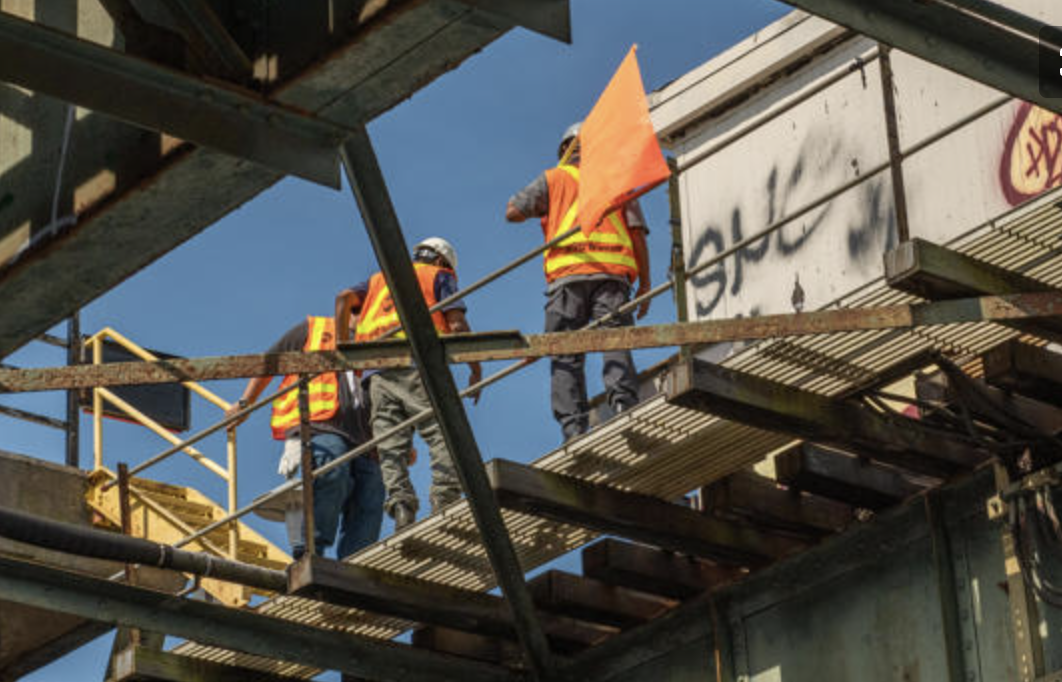
Federal transit officials are set to put stronger protections in place for track workers on the nation’s subway systems, a move that comes less than six months after a New York City Transit employee was fatally struck by a train. rule would require mandatory safety briefings, the reporting of near-miss incidents, and training. It would also federally protect the right of workers to refuse to work in unsafe conditions. “This rule will ultimately save lives,” Veronica Vanterpool, the FTA’s acting administrator, said in a statement. “Once this rule is finalized, it will support safer conditions for workers who perform critical tasks that keep transit operating efficiently and safely.”
|
|
Editor's Note: From the looks of this report, this is an incredible contract, with better than a 10% wage increase per year for the life of the contract. Perhaps BLET (and other craft workers) should be asking for the same when national freight master contract "Section 6 notices" are exchanged later this year. | |
BLET / March 22
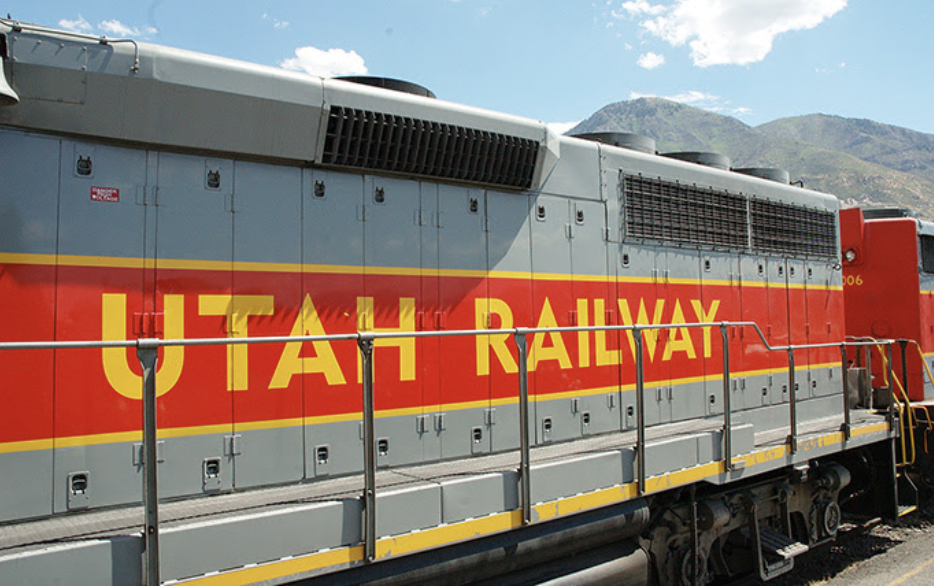
BLET members ratified a new five-year contract with the Utah Railway on March 20. The agreement was ratified by a vote of 30-6. It governs rates of pay, benefits and work rules for approximately 42 operating employees. General wage increases will total 41% (46.7% compounded) over the life of the contract (23% at signing; 5% in 2025; 4% in 2026; 4% in 2027; and 5% in 2028). Signing bonuses will be paid to employees based on length of service (10+ years of service will receive $19,000; 4+ years of service will receive $7,500; 1+ year of service will receive $1,500). Prior to this agreement, the last effective wage increase was January 1, 2015.
| |
BLET / March 22
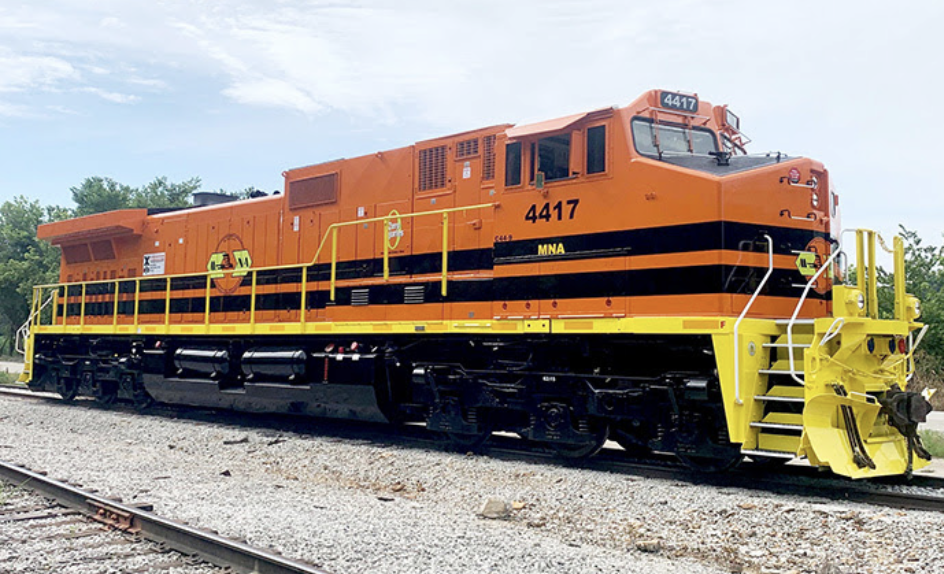
On March 20, a majority of BLET members ratified a new contract with the Missouri & Northern Arkansas Railroad (M&NA) by a vote of 42-10. The on-property agreement governs rates of pay, benefits, and work rules for approximately 57 operating employees. The five-year deal runs through January 1, 2028, and provides general wage increases of 25% (27.5% compounded) over the life of the contract (7% at signing in 2024; 5% in 2025, 5% in 2026, 4% in 2027, and 4% in 2028).
| |
Editor's Note: The "zero emissions" demands might be tough for short line and regional railroads with limited capital. The last thing we want to see is demands that damage a small railroad and cause it to shut down. The result would only be more trucks on the highway and even more greenhouse gasses. | |
|
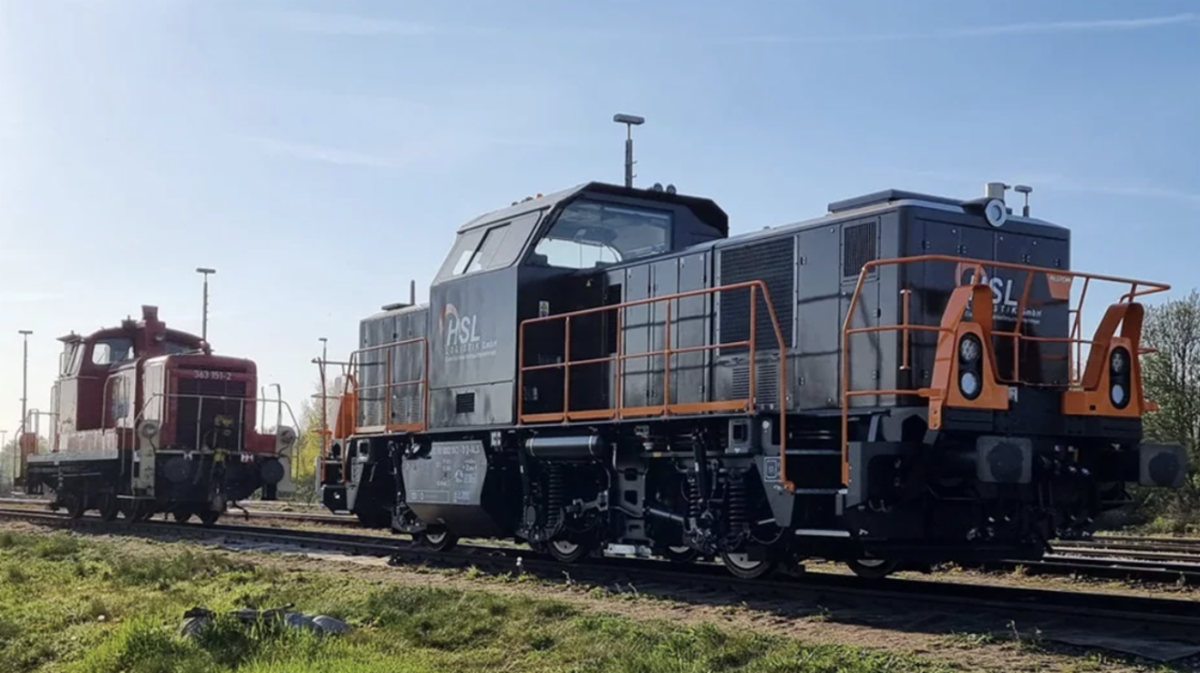
The requirement of the Paris Climate Accord to prohibit locomotives that emit harmful substances after 2050 has worried the short line industry. Short lines typically do not purchase new locomotives, and instead look to the secondary market [used Class I locomotives]. It is unclear whether or when Class I’s will start using ZE locomotives on a large scale, though most experts are confident that this will happen by 2050. Short lines have been concerned that prices for ZE locomotives will not begin to decline until a few years after 2050 at best, and as such, fleet replacement with ZE units will be costly.
| |
Editor's Note: While many countries across the globe have forged ahead in passenger rail development over the last half century, the U.S. has lagged far behind. We still have the biggest network of railroad right-of-way in the world. Rather than spend hundreds of billions on high-speed adventures that might take decades to realize any benefit, let's get to work improving our existing rail network to better handle conventional freight and passenger needs. | |
Joe Matthews / March 19
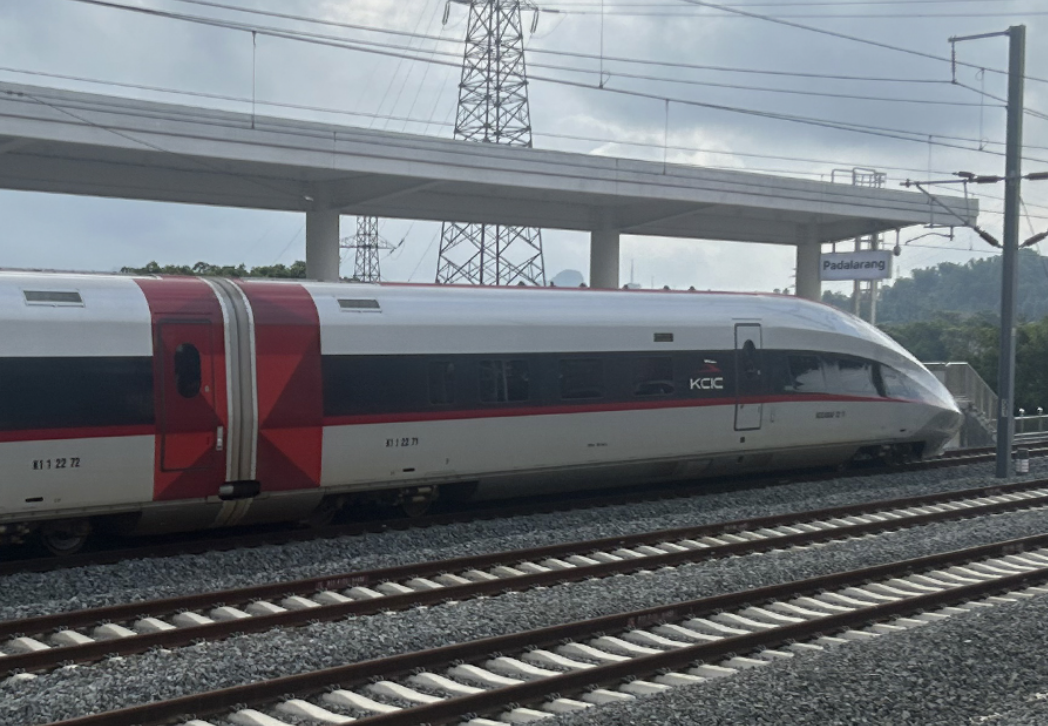
"The good news is that California will almost certainly have a high-speed rail line someday. The bad news is that it may look a lot like “Whoosh.” Whoosh is the name of the new high-speed rail line that opened last October on the Indonesian island of Java. I rode Whoosh during a reporting trip to Java in February. It was disappointing, in ways that may preview how Californians are likely to feel about the high-speed rail we eventually get."
| |
Editor's Note: RWU is formally signing on as a partner in this network. It is important that private industry be held accountable for these major breaches of safety and resultant catastrophes like what happened at East Palestine, OH last year. | |
Max Alvarez / March 20
[Last] Saturday, March 23, unionists and labor leaders, environmental justice groups, community organizers, community members from other “sacrifice zones,” and supporters from around the country [came] to East Palestine to join residents as part of the newly formed Justice for East Palestine Residents and Workers coalition. The coalition has come together in recent months and mobilized around the core objective of pressuring President Biden to invoke the Stafford Act and issue a major disaster declaration for East Palestine.
| |
Editor's Note: The "civil war" that is raging within the management ranks at NS is a conflict between "activist investors" and "institutional investors," neither of which are interested in serving the needs of workers, shippers, communities or anyone at all but stockholders. Whatever the outcome of this management spat, we as railroad workers will be - as always - in for a fight. Our interests are diametrically opposed. | |
|
John Kingston / March 25
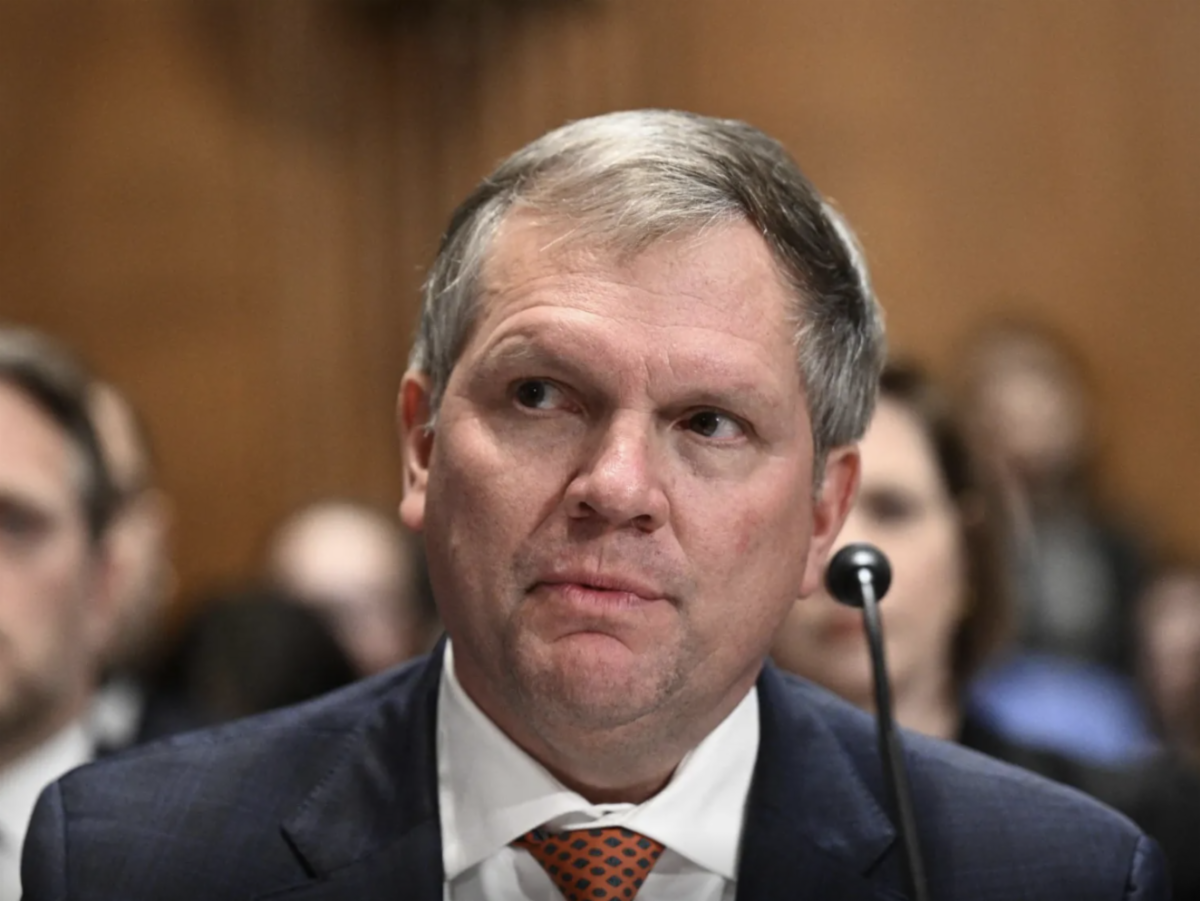
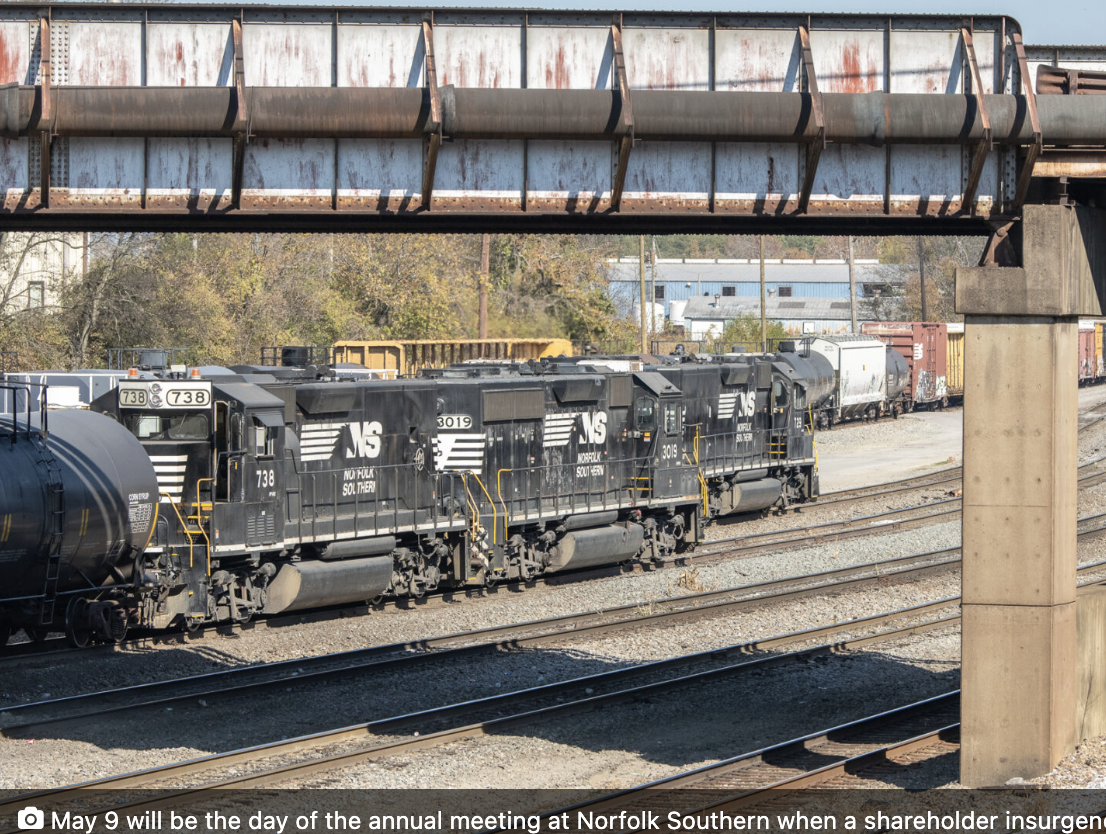
Norfolk Southern has set May 9 as the date for its annual meeting, when an insurgent campaign to put outside directors on the company’s board and a new CEO in place will come to a head. Shareholders will determine whether the various entities that operate under the name Ancora Catalyst Institutional will prevail in its effort to place eight candidates chosen by the investor group on the company’s board.
| |
NEWS FROM AROUND THE LABOR MOVEMENT | |
Editor's Note: Last year we saw the west coast Longshore union (ILWU) take on the west coats stevedore companies. Now it is the the turn of the east coast longshore workers (ILA). Perhaps both need to negotiate common contract expiration dates and take action together. And perhaps they can work alongside the rail unions whil at it! | |
Ian Putzger / March 18
Cargo owners have been advised to make contingency plans for a strike at US east and Gulf coast ports that could hit traffic flows as early as 1 October, right in the peak shipping season. The six-year labour contact between the International Longshoremen Association (ILA) and United States Maritime Alliance (USMX), covering ports on the eastern US coastline, is set to expire on 30 September. The ILA represents about 45,000 port workers, while the USMX speaks on behalf of the terminal operators at 46 ports from Maine to Texas.
| |
Editor's Note: Sadly, many workers do not know our own history, largely because it is not taught. For those who want to better understand where this thing called "The Labor Movement" came from, please sign up for this course. | |
New Brookwood Labor College
Working Class History course on Zoom: Thursdays 6-8 pm, April 4, 2024- June 6, 2024, led by Peter Rachleff, Emeritus Professor of history, Macalester College.
This course is designed not only to fill in the blanks of historical information – to tell the untold stories – but also to encourage forms of thinking that are historical and critical. We will explore such questions as: How was the past shaped by the organizations and actions of working people? What choices, decisions, and actions did working people take at key points in history, and with what consequences? How have those past struggles shaped our present situations? How can we use our deepening knowledge of the past to help us think about bringing about the future in which we want to live?
| |
Editor's Note: This looks very promising. If the Auto Workers union (UAW) can win here, the floodgates might just open for victory across the south at non-union auto plants. They deserve the support of every rail worker. | |
Jamie L. LaReau / March 18
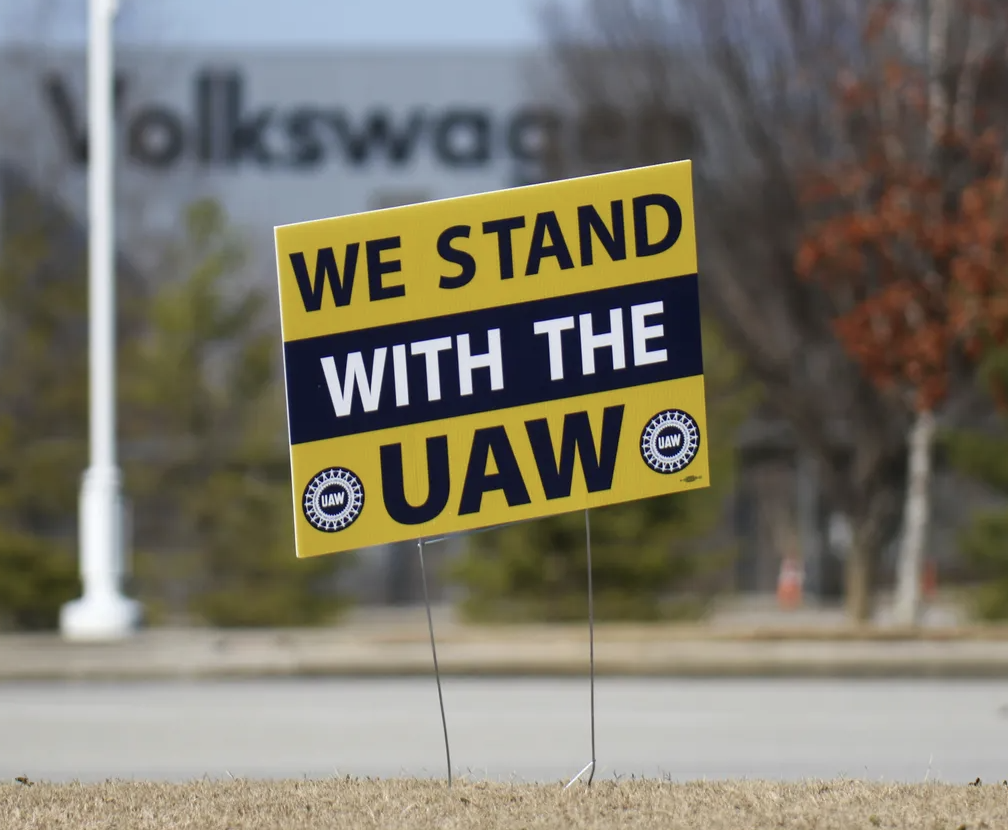
The United Auto Workers union hopes the third time's a charm as the workers at Volkswagen Chattanooga in Tennessee filed Monday for a union election with the National Labor Relations Board. The move comes about three months after workers at the plant launched a public campaign to organize, which was promoted in part by the UAW's big contract wins against the Detroit Three last fall following a 46-day strike.
| |
Editor's Note: Boeing is a corporation - and an industry - out of control, spiraling downward in an orgy of profiteering, stock buy-backs, and declines in both service and safety. This might sound familiar to railroad workers. The union hopes to add some "correction," just as rail labor had hoped to provide some correction in Fall of 2002, before being denied the right to strike by the U.S. government. | |
Don McIntosh / March 19
A lot of eyes will be on the International Association of Machinists and Aerospace Workers (IAM) this year as it takes part in one of the most significant labor negotiations of recent times. Between its image problems and production delays that followed a disastrous decision to globalize and outsource production of its 787, Boeing has been losing market share to Airbus, its principal competitor. “We need to bargain and save them from themselves,” said Brandon Bryant, directing business representative at Machinists District Lodge W24 in Gladstone, Oregon.
| | | | |