News and information to help journalists serve the public and stay safe.
|
|
White House seeks to move CNN to back of briefing room, says Yahoo reporter
|
Yahoo News' White House correspondent
Hunter Walker
said Friday evening on Twitter that the White House sought to move a print reporter who represents a "pool" of publications to the front of the briefing room in CNN's place, moving the cable network to the back of the room. The White House Correspondents Association (WHCA) assigns seats in the briefing room, not the White House. Walker
reported about 20 minutes
later that the seats were not moved.
|
|
Explore how truth-telling in tough times creates community, with syndicated columnist and author
Connie Schultz
, and journalist and author
Jon Mooallem
.
They will discuss their experiences in “
Resilience and Community
,” from 11:30 a.m. to noon Wednesday, April 29, on Zoom.
|
|
U.S. journalists – reeling from furloughs, layoffs, even a major bankruptcy – can meet the challenges of the COVID-19 pandemic if they are led with honesty, optimism and appreciation, two veteran editors said in a conversation Friday about resilient newsrooms.
Robyn Tomlin
, McClatchy Southeast regional editor, and
Mike Wilson
, editor of The Dallas Morning News, shared their experiences in an online program organized by the National Press Club Journalism Institute and moderated by
Jill Geisler
,
Bill Plante Chair in Leadership & Media Integrity and Loyola University Chicago Freedom Forum Fellow in Women’s Leadership.
Among their insights: Be optimistic and honest about what you know for certain.
Wilson
: There's a balance to be struck here between being genuinely optimistic and sounding optimistic in the face of difficult things, which I am. I tend to believe that things are going to come out okay by and large. I think we're going to win this fight that we're in.
At the same time, if we're cutting people's salaries as we did a couple of weeks ago, I can't go to my staff and have any credibility if I say, you know, it's not a big deal. I need to say I understand this is how you prepare for your future, and feed your families, and pay your bills, and that this is a terrible time for this to happen. So, just having the credibility as a leader that you speak the truth in hard situations, I think is really important.
Tomlin
: The only thing I can do is tell people the things that I know for sure that are certain, that are going to affect them, and then try to be honest about the things that either I don't know, or the questions I would be asking if I were in their shoes.
Wilson
: I knew that there was a discussion. … about the possibility of salary cuts and how those might be apportioned. I don't think anybody asked me directly during that period, ‘Are you guys thinking about salary cuts?’ But I think I would have felt comfortable saying, ‘Listen, we're looking at a lot of options and I'll let you know more when I can.’
Read on
for ways to show gratitude, focus on the mission and remind people what matters.
|
|
By
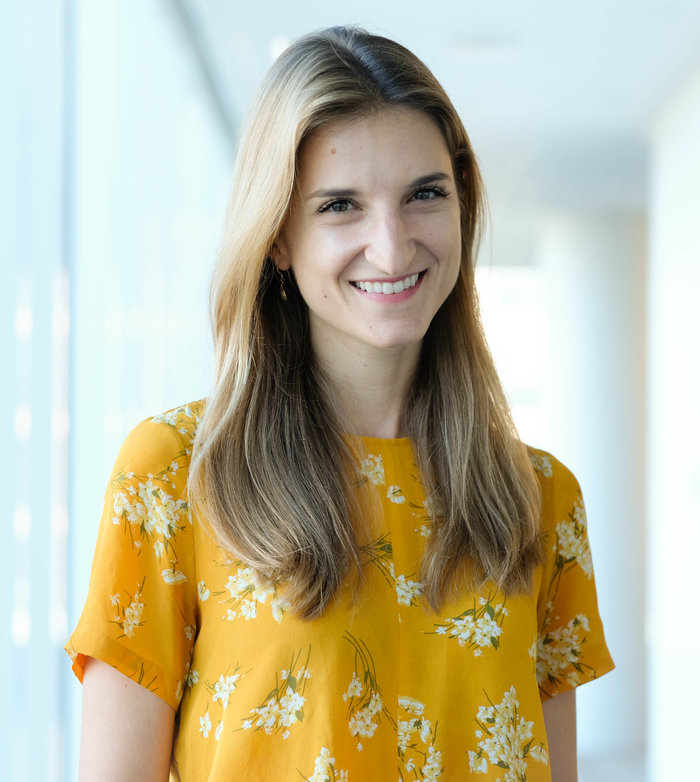
Kat Lonsdorf
,
producer for All Things Considered
(Photo by Wanyu Zhang/NPR)
So you’re graduating into a recession. It’s scary, but it doesn’t have to be SO scary.
I graduated from college in 2009. This is a slightly different time -- you’ve got a pandemic on top of everything else -- but a lot of the feelings are the same. Uncertainty. Wondering if your family and friends are going to be okay. Realizing that there are a lot of more experienced people also looking for work and often applying to the same jobs you are. It’s daunting, I know.
I remember that sinking feeling as graduation approached: I was happy to be done with college, proud of my accomplishments, but didn’t have any plan for afterward. Newspapers were folding. People were being laid off en masse. None of my friends in my graduating class had jobs.
I decided to apply for restaurant jobs, something I realize isn’t even an option for the class of 2020. I applied for dozens of serving and bartending jobs before eventually landing a very low-level job at a winery, and then a brew pub in Los Angeles later. Pretty soon, my resume was full of restaurant work, not journalism work. I remember wondering if I’d ever make it into a newsroom.
But then I decided that for every restaurant job I took, I wanted to also make sure I was also adding a journalism-related activity -- something that kept me writing or making videos or learning a new skill. I had to get creative, and I often had to work for free. I wrote copy for a travel website. I volunteered at the local public television station. I took on-camera hosting classes in Hollywood.
Read on
to learn how not landing her dream job helped Kat find the right career path.
|
|
|
The National Press Club Journalism Institute is spotlighting
the next generation of journalists
, students graduating from college or Master’s programs this spring into
a challenging job market
, in hopes they’ll meet future bosses and colleagues here, who will reach out and support them in building journalism’s future together.
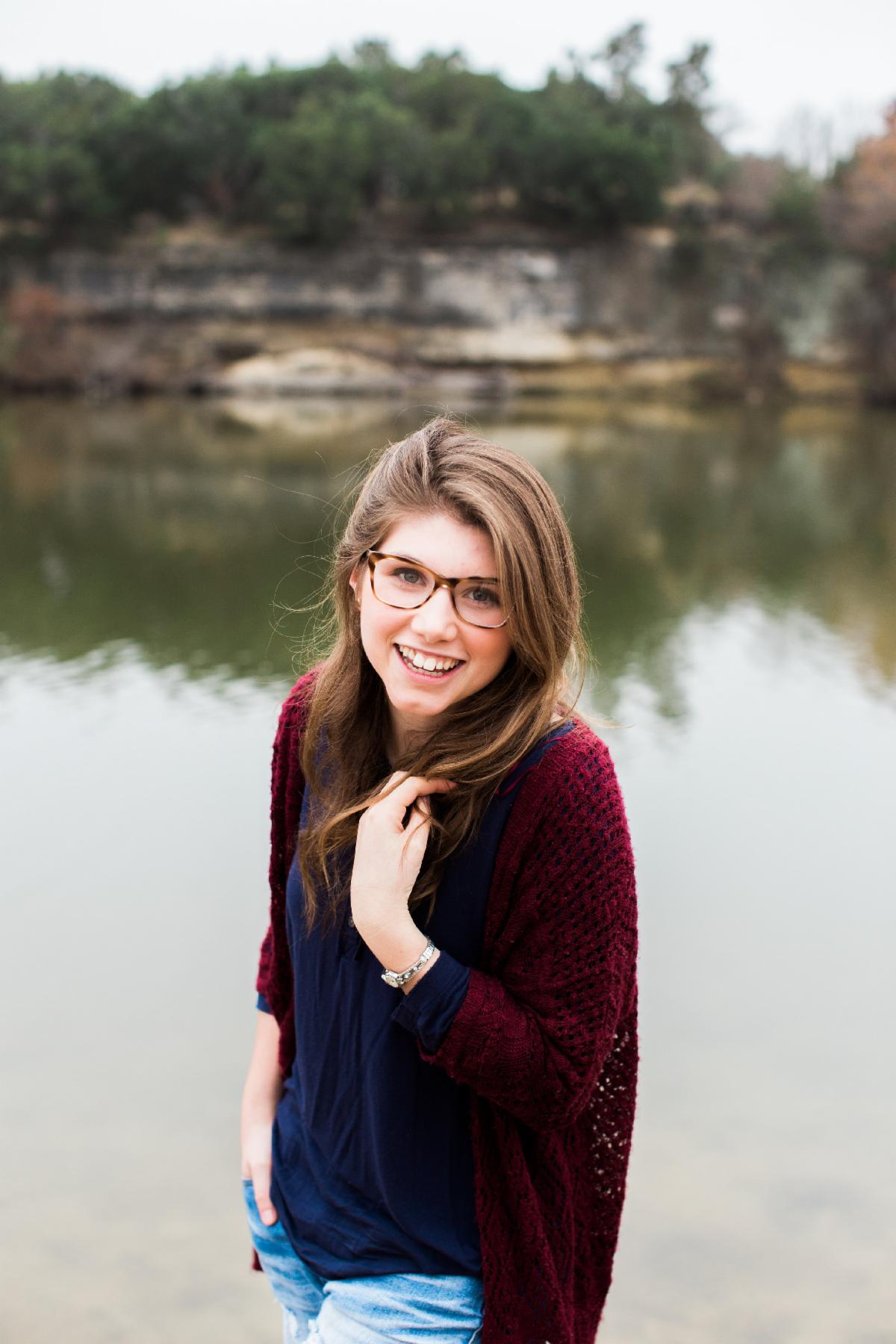
School
: Texas A&M University
Location
: College Station, Texas
What's been your best moment in journalism?
Turchi
: This past semester I was lucky enough to work on a story about an organization which helps North Korean refugees make a dangerous journey out of China where they can be forcibly repatriated after escaping North Korea. After networking with some sources, I was able to schedule an interview with Joseph Han, the first North Korean defector to earn a Ph.D. in natural sciences or engineering in the United States. Han undertook a dangerous journey to escape North Korea to arrive in South Korea and eventually come to the United States with his family. I felt so fortunate and honored to hear and
share his story through the article
. Many sources and readers thanked me for taking interest in the story.
If you could meet any journalist and ask for her/his advice, who would it be and why?
Turchi
: I would ask NPR’s Kat Lonsdorf if she had any advice for how she effectively made good relationships with sources and discovered interesting, creative stories while a fresh reporter outside of her native country.
Kat Lonsdorf
responds: My advice would be to do as much research as you can before you go somewhere new. Make as many phone calls as possible, talk to local reporters, read all the books you can get your hands on, and ask people who have been to the area before what they thought was interesting. Before I went to Fukushima, I became obsessed with it – I spent hours just poking around on Google maps, for example, so I was familiar with the area before I got there. People will appreciate the work you’ve done once you’re in the new place. And then once I was there, I was curious about everything. Talk to everyone you meet – servers at restaurants, shop keepers, hotel staff. Ask them what they think. Spend time with people and really get to know them, if you can. Show them that you care, and then let them lead you to the hidden stories.
|
|
Bill Plante Chair in Leadership & Media Integrity, Loyola University Chicago
Freedom Forum Fellow in Women’s Leadership
I had a Zoom huddle with broadcast and digital news managers of the TEGNA stations group this week. This was an open forum for all who wanted to offer ideas, ask questions, and share status reports about leading during pandemic times. The company offered it for both the learning and the camaraderie. Attendance was voluntary.
One hundred managers showed up. One hundred -- all of whom are leading their remote news teams from home. Their apartments and houses have become the nerve centers for newscasts and websites.
They’re making it work, but it’s demanding. And they’re struggling with an uncomfortable reality: They now feel tethered to their desks.
It’s more than a feeling. Consider this: Their desks are where they now lead and attend meetings, review rundowns, create schedules, write memos, manage budgets, monitor news developments, post to social media, edit stories, provide feedback, review their product, conduct research, interview job candidates and manage relationships with the public, vendors and colleagues.
If they were at their TV stations, they’d be at their desks a fraction of the time. The rest would be spent walking the newsroom to visit with staff, sitting at news meeting tables and in conference rooms, visiting colleagues’ offices, connecting in break rooms, and even taking people out to lunch. (What a concept.)
They know they need breaks, but they’re reluctant to step away. They fear letting people down, or missing important information, or setting a bad example by their absence.
And they know it’s not healthy. So we talked about solutions, because they need to get up, move around, stretch, clear their heads, get fresh air, school their kids, walk their dogs and have a meal away from their keyboards.
Read on
to see the remedies for busy editors.
|
|
|
Self-Care:
Smiling Shoulders, Happy Hips — videos aim to help journalists
|
“As journalists and camera operators and photographers, our shoulders are doing a lot of work,” says
Kimina Lyall
, the deputy director for the
Dart Center for Journalism
, Asia Pacific. That can leave journalists carrying a lot of tension and stress in the shoulders, she explains in a new yoga video put out by the center.
“One of the traps of anyone that works in a kind of deadline-based environment is that we forget to take those kind of quick little breaks to kind of, you know, loosen ourselves up,” she says.
|
|
And then there were eight.
The National Press Club Journalism Institute’s
2020 Book Bracket
has been narrowed to eight titles vying to be dubbed the best journalism book, determined by your votes. The winner, along with the runners-up, will be featured in the Eric Friedheim National Journalism Library when it reopens.
Titles facing off during this round of voting, which is open until midnight Monday, are:
- She Said (Jodi Kantor & Meghan Twohey) v. Personal History (Katherine Graham)
- The Boys on the Bus (Timothy Crouse) v. Front Row at the White House (Helen Thomas)
- On Writing Well (William Zinsser) v. The Press (A.J. Liebling)
- All the President’s Men (Bob Woodward & Carl Bernstein) v. The White Album (Joan Didion)
Vote
in these face-offs through midnight Monday, even if you haven’t yet participated. The winner will be determined next week.
Contact Beth Francesco, the Journalism Institute’s senior director, at
bfrancesco@press.org
.
|
|
This newsletter is written & edited by the National Press Club Journalism Institute staff: Beth Francesco, Holly Butcher Grant, Jim Kuhnhenn, and Julie Moos.
Send us your questions and suggestions
for topics to cover.
|
|
The National Press Club Journalism Institute promotes an engaged global citizenry through an independent and free press, and equips journalists with skills and standards to inform the public in ways that inspire civic engagement. Support our important work with a tax-deductible contribution today.
|
|
|
|
|
|
|