|
Hello St. John’s Family,
Early this week I stumbled across an interesting historical tidbit. While this may fall squarely into the category of “factoid only interesting to me,” I found it fascinating that this past Monday was historically known as “Plough Day” in the UK. And what exactly is Plough Day? Medieval historian Eleanor Parker writes:
“From the fifteenth century onwards, the early days of January were marked in England by a variety of traditional customs involving a plough, usually on 'Plough Monday’, the first Monday after Twelfth Night. This might include, for instance, a plough being blessed in church, decorated and paraded around the village by ploughboys, who would dance, sing or perform plays…”
Parker also notes how “Plough Monday” was traditionally the first day back to work after the Christmas season, and wonders if the practice was equal parts blessing tools of work to start the new year off well and a nice excuse to prolong Christmas revelry. I sense there’s likely truth to both!
That concept of blessing, or consecrating, tools of work has stuck with me all week. It seems we have a strong tendency to isolate our “work” – the “secular” labor we give to support ourselves and family – from “sacred” effort given in service to God. Our secular work is often viewed as a necessary (bordering on burdensome) requirement of life; efforts dedicated to God are viewed as “higher” or better. The more I reflect, though, the more I sense God never intended that sharp distinction. Recalling how vocation, what the late author and minister Frederick Buechner defines as “the work a person is called to by God” originated in Eden before the fall (Genesis 2:15), we see how all work that God calls us to is sacred. Does that require us to be discerning in the work we engage in, ensuring the responsibilities and the way we fulfill them aligns with God’s ways? Absolutely. Yet it’s God’s calling, and not the effort being completed, that renders work sacred.
I don’t think the unintended, sharp distinction between sacred and secular/ordinary is limited to work. As I look around at the conflict and deep dissention that fractures our country and world, I see distinctions being used to isolate, separate, and often, oppress. So often one “side” is viewed as higher, right, or good, and a differing “side” is viewed as less than, wrong, even evil. In that process, people created in God’s image and beloved by God are reduced to pawns: useful if they support a desired position or reflect a desired attribute but discarded as less than or unworthy if they do not. A reality that must grieve God’s heart.
Perhaps we need to revive Plough Day. OK, maybe not the ploughboys dancing… rather the concept of acknowledging and consecrating our God-inspired vocations – and even the tools of our vocations – on a regular basis. I sincerely believe we need to recover God’s sense of sacredness in us and our efforts throughout our everyday lives. We need to intentionally acknowledge the image of God in others: those who we naturally align with and those we do not. We need to pray over each other and the work we all offer as an extension of our worship; to bless all the efforts that contribute to our collective good. Maybe then we’ll begin to more fully grasp God’s message to Peter that we heard last Sunday: What God has made clean, you must not call profane (Acts 10:15).
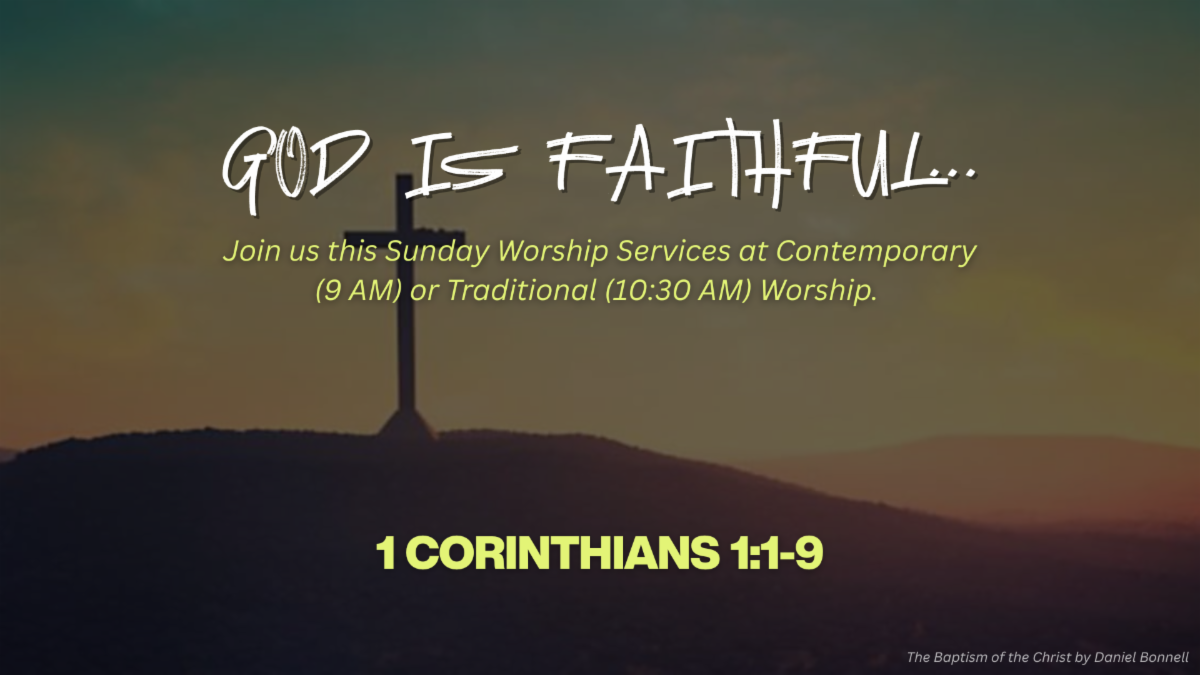
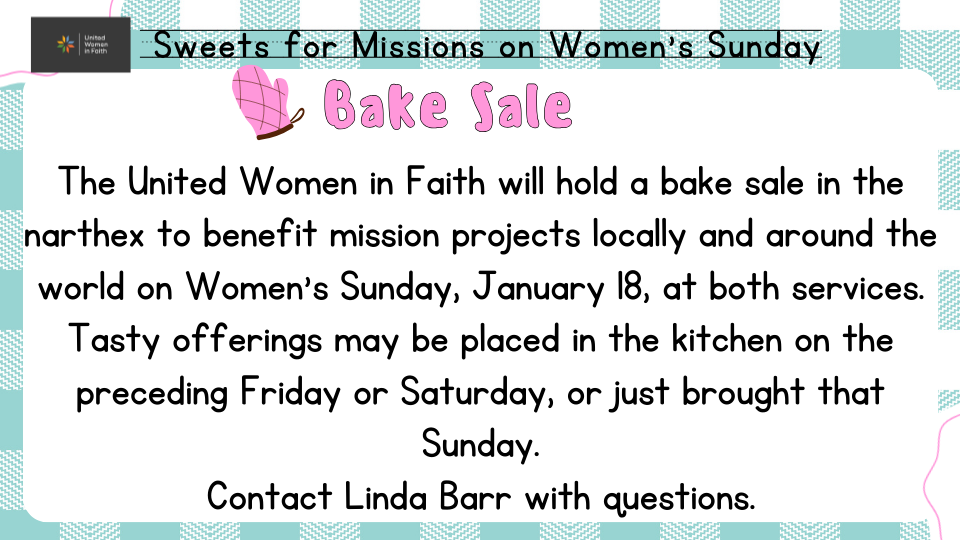
I’m looking forward to worshipping with you this Sunday, as we’ll celebrate and consecrate the good work offered in service to God by our United Women in Faith. We’ll also hear a prayer the Apostle Paul prayed over the Corinthian church, expressing joy and thanksgiving for God’s work through them, and see how that prayer extends to us today. Check out I Corinthians 1:1-9 and Psalm 40:1-8, then join me in worship on Sunday!
Grace and Peace,
Pastor Brad
|