|
Changes Loom in Washington,
Threatening Equity in Schools
| |
|
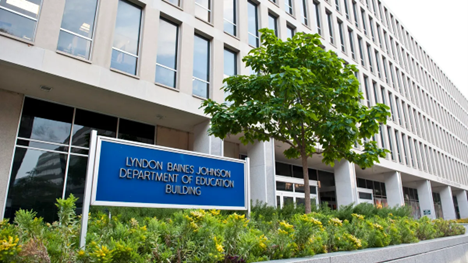
U.S. Department of Education building in Washington, D.C.
Image by U.S. Dept. of State (IIP Bureau) licensed under CC BY 2.0
ELC is preparing to take action to protect and support the students we serve and the civil rights we uphold as plans unfold in Washington.
While much education policy is dictated at the state and local level, federal policy changes under discussion threaten to have a profoundly negative impact on students and schools in Pennsylvania and nationwide.
We will join with others in strong opposition to the proposed rollback of rights and dismantling of the U.S. Department of Education, which would undermine critical civil rights enforcement protecting against discrimination based on race, national origin, disability, and sex (this includes sexual orientation and gender identity/expression). For decades, the federal government has monitored and enforced the civil rights of students through the department’s Office of Civil Rights and monitored the Individuals with Disabilities Education Act (IDEA) by the Office of Special Education Programs.
We need this enforcement to combat an escalation in bullying and harassment of students on the basis of race, disability, and LGBTQ+ identity, spurred by hateful political rhetoric, creating hostile learning environments that undermine students’ ability to learn.
Still, today all federal civil rights laws and regulations remain intact. Moreover, Pennsylvania has robust state laws that similarly protect students against discrimination. We also know we are not alone: There is a deep commitment among Pennsylvania educators and many elected officials to making schools safe and affirming places where all students can thrive. In the days ahead, schools will play a critical role as communities of care for our students.
| |
Federal Funding of Schools Endangered | |
|
The U.S. Department of Education provides vital funding through the Title I program to schools serving low-income students (for example, the School District of Philadelphia projects $250 million in Title I funding this year) and students experiencing homelessness, as well as millions more to support students with disabilities under the IDEA and Title III funding for education of migrant students. The schools that depend most on these federal funds already have the biggest underfunding challenges — schools found across the state, in rural and suburban as well as urban communities.
A federal budget for 2025 has not yet been adopted, and in the new year, the new Congress is expected to propose cuts. Proponents of closing the Education Department and budget-cutting say they oppose a federal role in education.
But some of the same elected officials are advocating a massive federal tax credit voucher program for scholarships for private and religious schools. So what is their real goal here? At least for some, the real goal may be to starve public schools.
In Pennsylvania, public schools are where 88% of students are enrolled — about 1.7 million students. These students have a fundamental right to education. And we know they can succeed when their schools are well-funded.
| |
|
Tell Your Story:
How Funding Is Making a Difference
| |
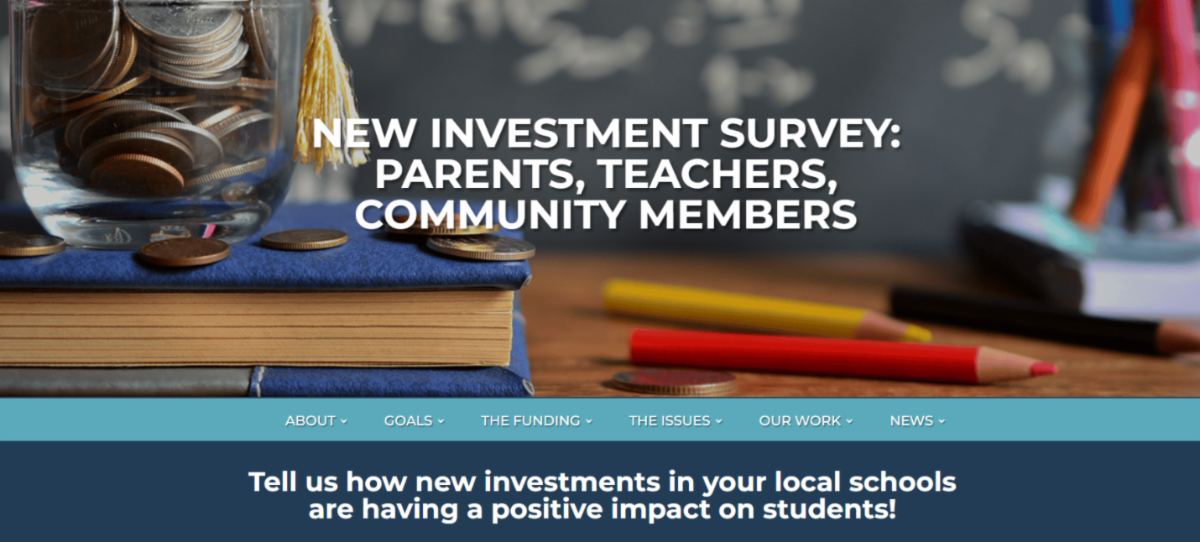
Along with our PA Schools Work coalition partners, we are collecting stories this fall from across Pennsylvania about the critical new resources and improvements that have been made possible by the state’s $1.1 billion increase in education funding this year. | |
You can help! If you have a story to share about a school, please take a few minutes to respond to this survey, seeking stories from educators, families, and community members. How are new state investments making a difference in your school? What additional resources are still needed? These stories will provide important information to legislators, reminding them of all the reasons to fully fund our schools. | |
No Pittsburgh School Closures Next Fall | |
|
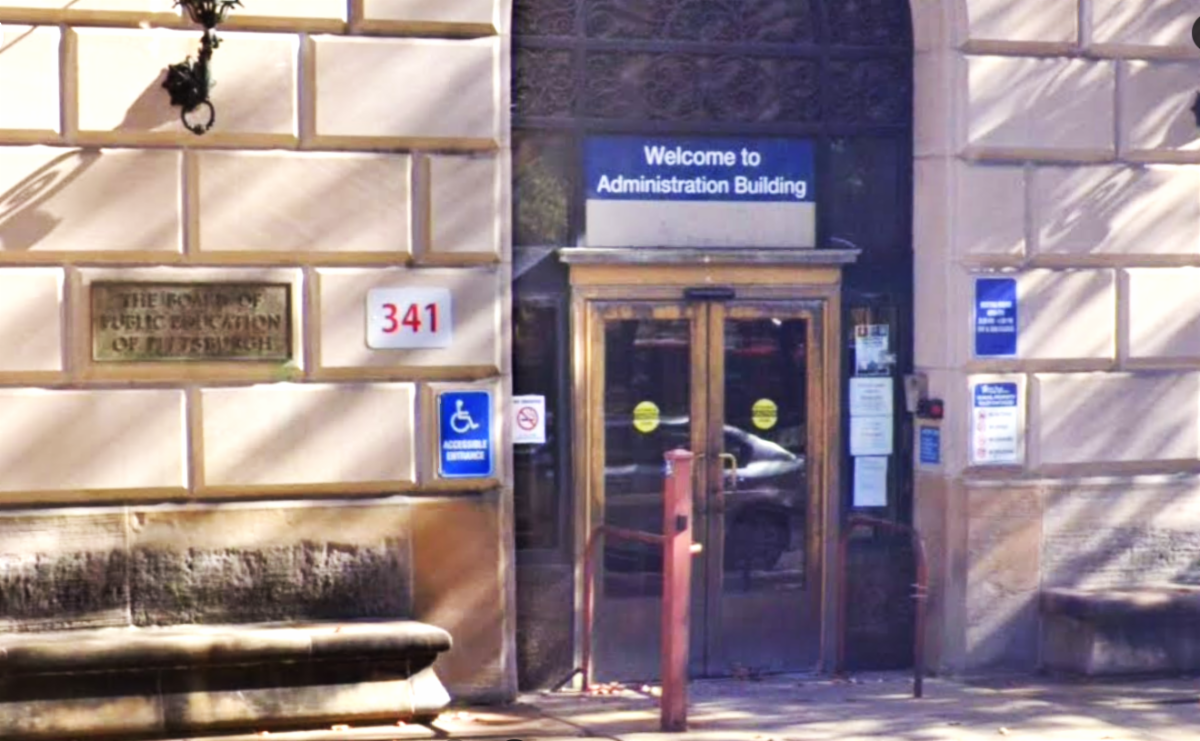
Pittsburgh Public Schools officials announced the pause.
Photo: Google Earth
Pittsburgh Public Schools recently announced that no school changes are planned for the 2025-2026 school year. In the next year, the district intends to evaluate proposals to close schools and conduct a feasibility study on factors such as attendance zones, educational supports, and financial feasibility.
We support the district’s decision to pause any school changes for the next year. Along with other community partners, we will continue to speak out for increased community input throughout the decision-making process. Importantly, when considering school consolidation and closures, PPS must ensure that the impact on students with disabilities is minimized and that Black students and communities are not disproportionately harmed by school closures as they have been in the past.
| |
|
Hearing Officer Upholds
Child's Right to Return to School
| |
|
ELC filed for an expedited due process hearing in November, challenging the unilateral, indefinite exclusion of a fifth-grade student with mental health disabilities in Shamokin Area School District. The district barred our eleven-year-old client from returning to school based on a discipline incident and forced her to remain on an ineffective, asynchronous cyber platform at home without any due process.
But the hearing officer found that the district “adhered to no IDEA-compliant process or procedure to support this unilateral decision,” denying her a legally required education. After preventing her from returning to school for nearly two months, the district must now allow her back to school and conduct a functional behavior assessment to identify and address her behavioral needs.
This case is emblematic of longstanding, discriminatory exclusion of students with disabilities from schools, including a long-ago overturned law in Pennsylvania that relieved schools of an obligation to enroll students deemed “uneducable” or “untrainable.” In enacting the Individuals with Disabilities Education Act nearly 50 years ago, Congress included several important protections that stripped schools of their unilateral authority to remove students with disabilities. Unfortunately, ELC still encounters egregious situations where these protections are flouted, violating students’ rights.
ELC’s success in cases like this sends an important message to other school districts to comply with federal and state laws that ensure equal access to learning for students with disabilities.
| |
|
Opposing Proposed Anti-LGBTQ Policies
in Lancaster County District
| |
|
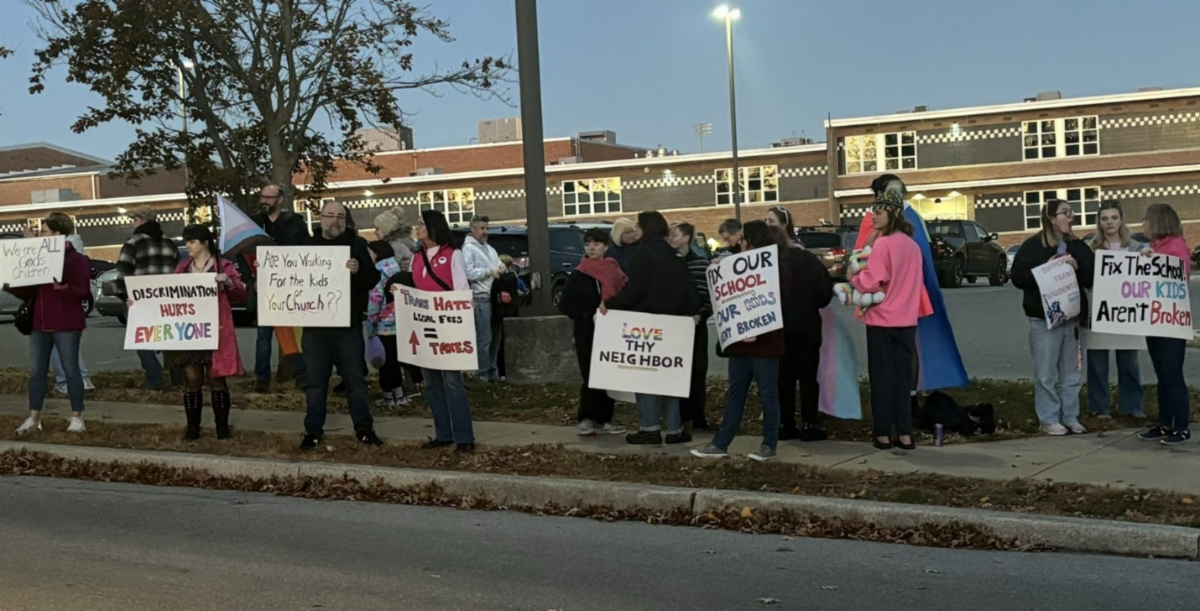
Elizabethtown Area students and parents protest proposed policies outside a school board meeting Nov. 26.
Photo: James Corrigan, Fox 43
Elizabethtown Area School District in Lancaster County is the latest Pennsylvania district to take up discriminatory policies that would exclude transgender students from sports participation and restrict students’ right to have their correct name and pronouns used at school.
The board was greeted by student and parent protesters opposed to the policies at the school board meeting Nov. 26. And at the request of parents, ELC sent board members a letter demanding that they uphold their nondiscrimination obligations under the law and reject these proposed policies, which were drafted by the Independence Law Center, a religious extremist, anti-LGBTQ group.
As our letter points out, “The U.S. Supreme Court and many federal courts have consistently affirmed that discrimination on the basis of sexual orientation, transgender status, gender identity, or gender expression is unlawful discrimination ‘on the basis of sex,’ and preventing LGBTQ+ students from accessing programs and facilities in schools violates Title IX and other civil rights laws.” The proposed policies also violate state antidiscrimination laws.
Following the protest and our letter, the school board deferred action on the policies, likely to its January meeting.
| |
Guidelines Changed, but Teachers Still Need Skills in Culturally Relevant Education | |
|
A lawsuit by an ultraconservative group, the Thomas More Society, has led to a paring down of Pennsylvania’s guidelines intended to ensure that educators identify and address discrimination and create inclusive learning environments for all students.
But schools in Pennsylvania still have clear responsibilities under state law to provide training to teachers on professional ethics and culturally relevant and sustaining education competencies, including training that ensures schools are free from racial discrimination and bias.
The Pennsylvania Department of Education wrote a new Common Ground Framework to replace the more robust “Culturally-Relevant and Sustaining Education Program Framework Guidelines” that were challenged. ELC cautions that the approach in the framework, which is not race-conscious and ignores the realities of historical and contemporary of racism, causes harm. Most educators do want training to ensure they are creating supportive classroom environments where students can learn and grow.
The task now falls more squarely on school districts to train and support teachers in rectifying the long history of systemic discrimination in our schools. ELC urges districts and charter schools to continue to utilize race-conscious materials in teacher training, which they are free to do. Teachers must be empowered to confront and debunk racism and other forms of discrimination in the classroom. They must uplift the experiences and identities of Black, Brown, Asian, and Indigenous students — creating affirming learning environments where all members of the community are respected and can thrive.
| |
Challenging Exclusionary Uniform Policies | |
“Taylor” is a middle school student who loves school and is eager to learn. This year, Taylor's school adopted a new, punitive uniform policy that required families to purchase multiple expensive items. Students who do not comply face daily afterschool detention.
Taylor was given more than a month of daily afterschool detentions simply for not having the means to obtain a uniform. Taylor's mother requested support from the school in obtaining a complete school uniform due to ongoing financial hardship, but the school refused to provide any support. After Taylor's mother contacted ELC through our Helpline, we were able to ensure that Taylor received support to obtain a uniform, and all of the afterschool detentions were removed from school records.
ELC challenges such policies so that no child is punished or excluded because they can't afford a school uniform. We urge schools to adopt affirming uniform policies. ELC also works for enforcement of current laws that provide specific protections in the school uniform context for children who experience homelessness and those in the foster care and juvenile justice systems who experience "educational instability" and qualify for this support under Pennsylvania’s Act 1.
| |
|
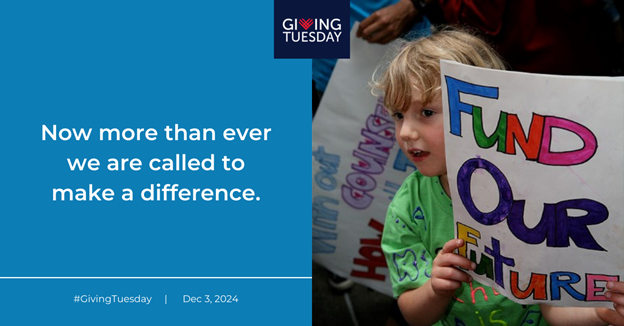
Celebrate #GivingTuesday with the Education Law Center on Tuesday, Dec. 3! Please consider participating in this global day of giving by supporting ELC with a gift of any size.
As we look forward to 2025 and our milestone 50th year of ensuring all children in Pennsylvania have access to a quality public education, we hope you will lend us a hand.
We can’t do this work without you. Not only do we need your support, but we also need your help to spread the word. Please take the opportunity to tell your friends and family why you believe in ELC’s work and encourage them to support us too!
And please donate on Giving Tuesday … or whenever is convenient!
| |
|
A Retirement Announcement
and a New Job Posting
| |
Paul Socolar, who has managed ELC’s communications since 2017, has announced his plan to retire in spring 2025. Paul, an award-winning journalist/editor with deep knowledge of education policy, will be wrapping up more than three decades of dedicated work on issues of educational equity in Philadelphia and Pennsylvania. | |
|
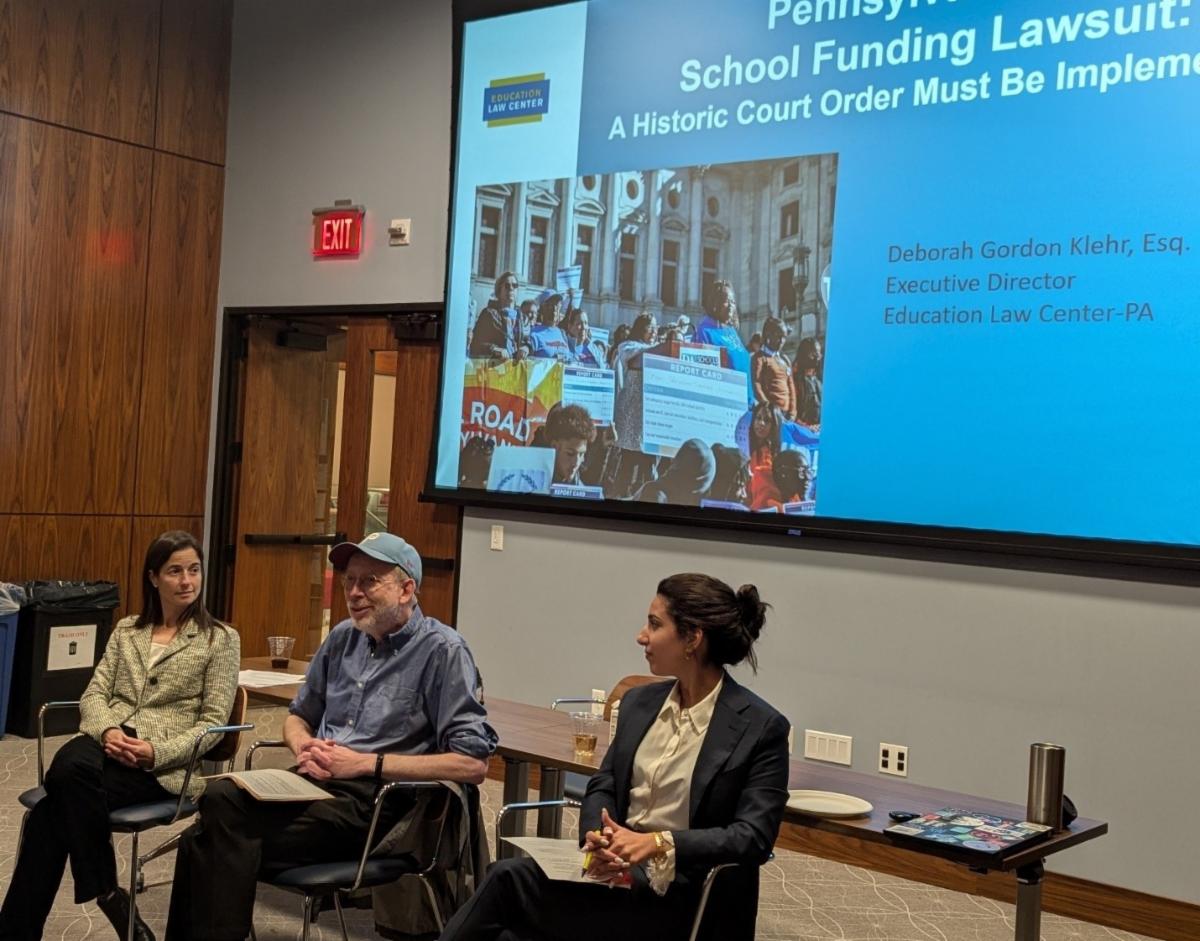
Paul Socolar, with ELC executive director Deborah Gordon Klehr (left), presents at a recent forum about school funding in Pennsylvania at Haverford College.
We won’t enumerate his accomplishments here just yet, but Paul’s contributions to our school funding case in particular have been a fitting capstone to a career devoted to educational justice. We are grateful for Paul’s incredible work at ELC. He has been an integral part of the ELC team who will be sorely missed.
We are pleased to announce that we are seeking a communications professional for a full-time position as ELC’s communications director based in our Philadelphia office. Please review the position description and encourage highly qualified communications professionals who share our commitment to educational equity, civil rights, and racial justice to apply.
Check out our other job postings here.
| |
Education Law Center | 215-238-6970 (Philadelphia) | 412-258-2120 (Pittsburgh)
| |
A copy of the official registration and financial information of the Education Law Center may be obtained from the Department of State by calling toll-free, within Pennsylvania, 1-880-732-0999. Registration does not imply endorsement. | | | | |