RETIREMENT SECURITY MATTERS
A forum for retirement innovation information sharing focused on
states, supporters, and service providers.
September 24, 2020
|
|
Greetings! welcome to Retirement Security Matters – where we talk about retirement readiness innovation by states, supporters, and service providers.
|
Hello Fall! We hope it's off to a great start for you. Looks like we are going to be doing this quarter pandemic-style. You can handle it! But let's kick you off with some good news:
|
-
California– Executive Director Katie Selenski shares what it’s like rolling up to CalSavers’ first deadline -- coming September 30
-
Updates from Colorado, Vermont, and Delaware
-
Grant’s Best Practices – Identifying your most important Stakeholders
-
And, because you've earned it, Pix of the Week
|
Surfin' USA? Retirement Readiness, CalSavers Style |
|
 |
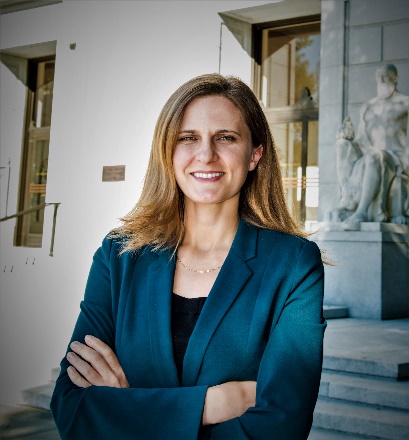
Katie Selenski,
Executive Director, CalSavers
|
|
|
|
CalSavers is both new, and a program with the longest history among the state programs. This history is a testament to grit and dedication. To long hours and a plethora of idea-sharing discussions, and the willingness to work hard and make things happen. Advocated and launched during the tenure of Assemblyman and Senate President Kevin de Léon and Treasurer John Chiang, the program is growing strong under the leadership of Treasurer Fiona Ma. We talk today with Executive Director Katie Selenski, one of the hardest-working ED's in the country. Highlights below -- and read our full chat here.
|
|
|
|
Welcome, Katie! California is home to the largest workforce in the US, by our math about 18 million workers. Is that close?
Yes, 18 million workers is about right. And our best estimate is that between seven and eight million of those folks are not covered by a retirement plan at work. It’s a big number.
And so - you are a few days away from your first official deadline. You've had good engagement and advance enrollment by employers -- how does it feel to be where you are now?
Despite all these challenges, it is an absolute thrill. There are so many people who have been working on this project for so long -- over the last decade and long before I got here. It’s really gratifying to be seeing the program come to life and grow.
And it's not just the numbers. We’re starting to hear the stories that are part of having access to CalSavers from both savers and employers. From the truck driver in Bakersfield who daydreams about retirement but never had an action plan before he joined CalSavers, to the janitor in Oakland who told me she never thought she’d be the “type” to have a retirement account until now, we’re hearing stories every single day about brand new savers. It gives me chills to see the program making a difference for these workers.
It’s exciting on the employer side, too. In the last week, we've seen a handful of job recruitment ads pop up out in the wild where employers are including “access to the CalSavers program” as a way of attracting applicants. Last week, we saw it in ads for daycare workers and fast food cooks.
Wow! You opened the program to pilot entrants in November 2018, with your first employer deadline in 2020. We have to ask - how has the pandemic shifted your approach this year?
It's an interesting time to be launching a big, bold new statewide program with an employer requirement; overall the pandemic underscores the urgency of financial resiliency and how too many workers have been left out and need more tools.
We know retirement security matters – what is unique about what you’re facing in California?
There are a couple of ways that California is unique. Just yesterday I saw new analysis from the latest US Census data showing that California has the highest poverty rate in the country when you adjust for cost of living. That's astounding when you consider we're the fifth largest economy in the world. We are the home of Silicon Valley, big agribusiness, other successful industries generating so much wealth, and yet nearly half of our workers are on a trajectory to retire into economic hardship.
From early days California has been viewed as a land of opportunity – a place people move to.
Yes, the other aspect that makes California unique is that we are a highly multicultural state and we're very proud of that. In terms of that uncovered population that we talked about -- those 7 to 8 million people -- our best estimate is that two thirds are people of color, and almost 49% are Latino.
Everything we do here is aimed to meet our savers where they are – in their language and in culturally relevant ways. And we're proud of the strides that we've taken so far.
We remember seeing early survey work in California where lower income families said “they want to save, they could save and they would save” if it were made just a little bit easier.
Yes, absolutely. And interestingly we have reason to believe that a substantial portion of CalSavers participants are engaging with the financial services industry for the first time. It may be the first time that some of our folks even have a financial account. One of the beauties of this program is that you don't need to have a bank account to have an IRA with us. So you could think of this as an on-ramp to financial services in America.
We’ve got more nuggets! … Don't miss 'em - click here.
|
|
State Facilitated Retirement Programs in Rollout and Study Mode |
|
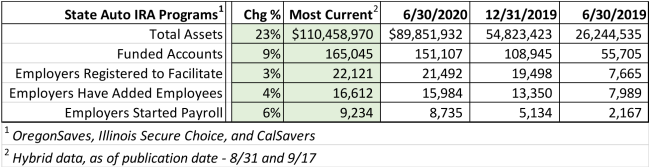
Total assets are $110 million going into the September 30 first deadline for CalSavers, and up 23% from June 30 to ~about now. Programs in total have added 6% more facilitating employers since the end of June. Funded accounts are up 9% to over 165,000. Average account balances were $500 at the start of the year, $600 at the end of June, and are approaching $670. Keep in mind this average is across both longstanding and brand new accounts, meaning that longstanding savers have significantly higher balances. Average contributions are at or above $100 a month.
|
|
California (workforce 17.9 million) -- The September 30 deadline for California employers with more than 100 employees to register with or certify exemption from CalSavers is fast approaching. The initial June 30 deadline was extended to provide more time for employers who are facing challenges due to the COVID-19 pandemic. The deadlines for employers with more than 50 employees and five or more employees are June 30, 2021 and June 30, 2022, respectively.
As of August 31, 2,249 employers had already registered with CalSavers and the program had just over 22,000 funded accounts with combined assets of $8.7 million. With an estimated 8,000 California employers who employ more than 100 workers (and who do not currently offer a retirement plan), we can’t wait to see how these program numbers grow after the deadline.
CalSavers’ outreach efforts have been in high gear to educate and prepare employers, with frequent webinars replacing in-person seminars due to the pandemic. CalSavers maintains an employer resources page with program details, sample communications to employees, and account setup resources.
|
|
Colorado (workforce 2.5 million) -- On September 18, Governor Jared Polis completed appointments to the Colorado Secure Savings Plan Board, chaired by State Treasurer Dave Young, interviewed here in April. The Board expects to meet for the first time in October.
You may recall that Colorado’s retirement security legislation was signed into law in July by Governor Polis. The legislation calls for establishment of an auto-IRA program that will cover workers in the state whose employers don’t offer plans. Employers with five or fewer workers will be exempt.
|
|
Vermont (workforce 280,000) – Since our recent interview with Treasurer Beth Pearce, the Green Mountain Secure Retirement Plan (GMSRP) Board met in August and approved a contract with TAG Resources to serve as its plan administrator, working with recordkeeper Aspire. The Board and TAG Resources have agreed on a timeline that would achieve full implementation of the voluntary open multiple employer plan (MEP) by September 2021.
The approach will include a development phase through the end of 2020 to complete program development and to engage with necessary subcontractors and partners. A plan administration phase is anticipated to begin early in 2021 with the enrollment of “early adopters” who will work with GMSRP to refine the program prior to full implementation.
PS - nice new logo, GMSRP Team!
|
|
Grant's Best Practices: Identify Your Key Stakeholders |
|
We concluded the last best practices piece by highlighting the importance of planning for engagement with stakeholders. The first step in developing a stakeholder engagement plan is to identify who are the stakeholders – groups or individuals who have an interest in your proposal or program and/or the ability to influence outcomes.
Today we cover:
-
How to identify stakeholder that are likely to play an active role in the development of state-facilitated retirement savings program proposals;
-
The importance of actively soliciting stakeholder participation; and
-
Prioritizing engagement efforts based on how stakeholders vary in terms of their levels of influence and interest as well as the different roles they might play.
Identify the likely stakeholders
For those who are in the early stages of proposal development, perhaps the best way to identify the range of likely stakeholders is to simply contact colleagues in states that have successfully moved to the implementation stage and ask. A bit of online research may also be helpful. … More great bits ahead - read on here.
|
|
Coming Up! On September 17, Delaware State Treasurer Colleen Davis announced the first episode of “Treasury Talks,” a video series featuring people from around the state and the country discussing financial information important to residents of the state. The Treasurer covers retirement security in Delaware as part of the series.
“’Treasury Talks’ gives me the opportunity to share not only the work of the Treasurer’s Office, but lots of information about economic matters that impact Delawareans,” Davis said. “I hope to provide a lot of insight into how we’re working for you, investing your tax dollars, and securing the State’s finances, especially during these turbulent times.” Check out the start of the series here.
|
|
... Please - give us those Pix of the Week! |
|
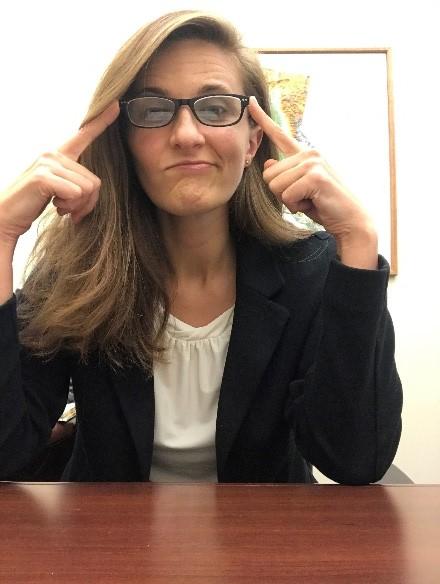
Yes! Here they come. Katie sez: In telling me I needed glasses this summer, my eye doctor said I’ve “reached the age where all hell breaks loose.” Thanks, Doc!
Great glasses – you’re in good company Katie!
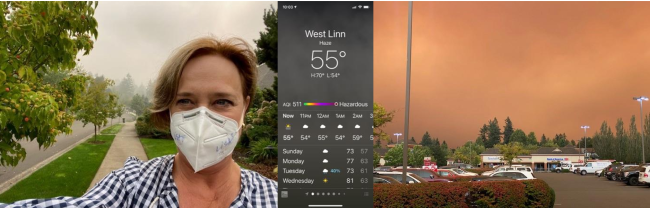
All hell was breaking loose elsewhere on the West Coast, too. We pride ourselves on the purity of our air here – but notice the fine print, AQI 511. You could cut that air with a knife! Thank goodness it did rain – things are a lot better – at least in the Northwest. We won’t be taking our outdoor time for granted any time soon. 🌳
|
|
|
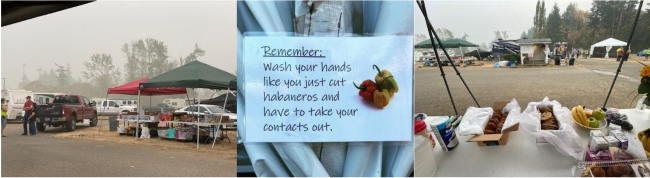
Folks evacuated from Level 2 and 3 areas found themselves hunkering down at a campground near us so we had a chance to help out. (#washyourhands!) Gladstone offered a real sense of community: three meals a day, a donation station, a snack tent, and a range of services for families figuring out what to do next.
|
|
|
|
|
On a happy note, we got some blue sky and there’s more rain on the way. We like rain here! Need a gratuitous squirrel video? This little guy hopped in the bird feeder and made himself very comfortable over lunch.
|
|
|
|
OK, that's a wrap. Thank you for joining us! ❤
If you like this piece, please stick with us. We’ll be back in about two weeks. If you don’t like it, please unsubscribe. Comments for us? Please let us know. Want your own subscription? Request one here. All information shared is from public sources or used with express permission. |
|
Looking for another great retirement savings innovation resource? Led by Dr. Alicia Munnell, the Center for Retirement Research at Boston College develops and hosts terrific content and proprietary research related to states, financial security, social security, and more.
Pew’s Retirement Savings Project studies the challenges and opportunities for increasing retirement savings and is another great resource - check out the work of John Scott and his terrific team.
We talked recently with the articulate, thoughtful Delaware State Treasurer Colleen Davis about the issues facing state treasurers today, including retirement security. We're pleased to be of support. Watch this space for more information and a link. |
|
|
|
|
|
|