Dear Angelenos,
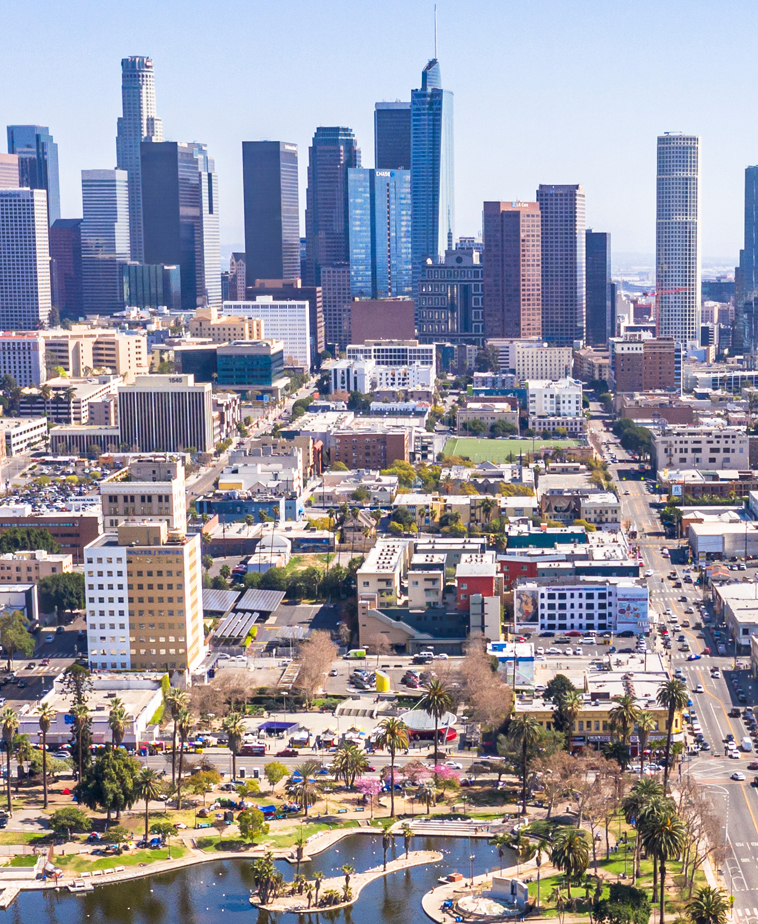
At the beginning of May, the City Council voted to adopt our updated Community Plans for Downtown and Hollywood. Both plans are the result of extensive engagement with the Angelenos who live and work in these areas, and I want to congratulate the teams and communities that have been working so hard for the last few years to get these projects across the finish line.
While each plan reflects its neighborhood’s local priorities and character, both share a focus on our top citywide issue, housing. In Hollywood, the plan identifies opportunity areas for multi-family residential housing, concentrating development in high intensity commercial and mixed-used corridors. It also fosters infill housing development consistent with the character of local surroundings. The Downtown Community Plan envisions denser development that will accommodate the area’s projected growth of 125,000 residents and 70,000 new housing units by 2040. Both plans encourage the construction of affordable housing near transit, and both support the development of permanent supportive housing, senior housing, and transitional housing.
Every day, City Planning works to protect the existing housing supply and add to it through adaptive reuse and new construction. I invite you to read more about our citywide strategy for meeting the City’s state-mandated housing obligations on our website.
Together, we are Planning4LA.
Sincerely,
|
|
Vince Bertoni,
Director of Planning
|
|
|
|
City Council Adopts Downtown and Hollywood Community Plan Updates and New Zoning Code |
On May 3, the City Council voted to adopt updated Community Plans for Hollywood and Downtown, as well as the City’s new Zoning Code. The planning tools created by the new Code will see their first use Downtown.
Both plans seek to address the acute housing crisis in Los Angeles while promoting access to transit, supporting job creation, and mitigating the effects of climate change. The Hollywood Community Plan establishes an affordable housing incentive program to encourage the production of mixed-income and 100% affordable units within Central Hollywood, while also expanding historic preservation tools. The Downtown Community Plan envisions a high concentration of housing in the City’s dense core while taking steps to prevent displacement of existing communities and jobs. The new Zoning Code, adopted with the Plan, introduces new planning tools that will make their debut in Downtown.
Adoption culminates years-long processes of outreach and consultation to bring these plans up to date. City Planning began gathering input for the Downtown Community Plan Update in 2014, and the initial rounds of outreach and environmental review for Hollywood started in 2016.
The implementing ordinances for both plans are currently undergoing form and legality review in the City Attorney’s Office to ensure the regulations are clear and consistent with State law. When this review, which takes approximately six months to a year, is complete, the City Council will vote to make the plans effective.
|
|
|
|
Housing Solutions:
Executive Directive 1
|
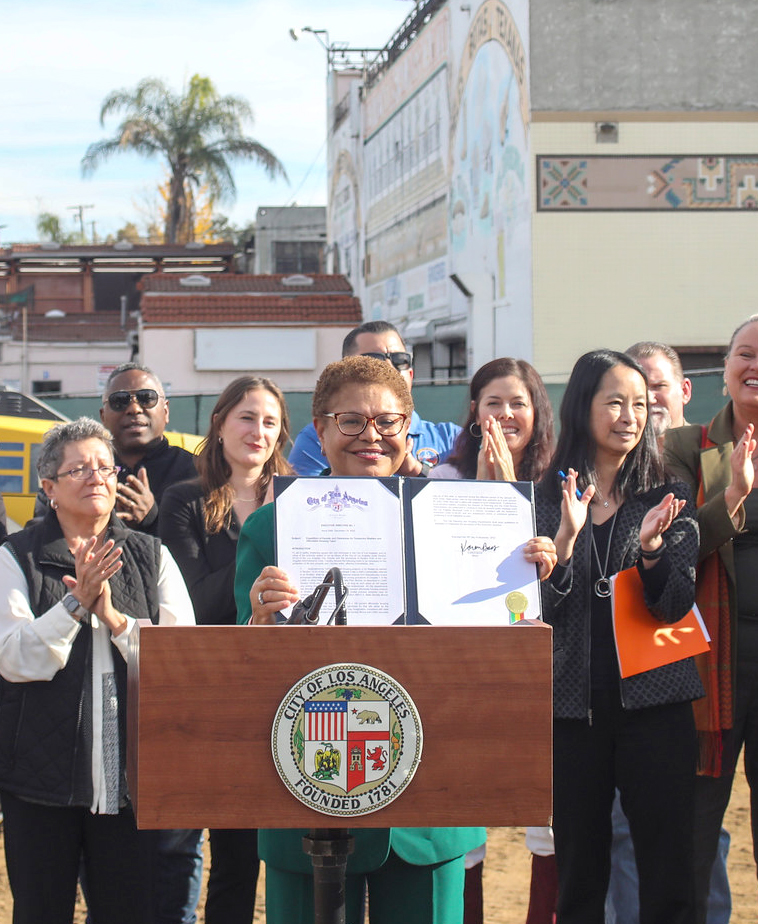
There are 40,000 Angelenos who go to sleep every night without a roof over their heads, and nearly four unhoused Angelenos die every day. To address this dire issue, Mayor Karen Bass’ Executive Directive 1, signed in December 2022, accelerates the processing of shelters and 100% affordable housing projects in Los Angeles. Eligible projects receive expedited processing, clearances, and approvals through the new ED1 Ministerial Approval Process.
Since the Mayor issued her directive in December, as of mid-May 2023, there have been 53 ED 1 projects submitted to City Planning. That translates to 3,374 proposed affordable units. Right now, there have been approximately 1,379 affordable housing units approved thanks to 18 of the 47 approved projects.
These streamlining measures are critical to providing housing for vulnerable Angelenos who are most susceptible to becoming homeless. As one of the lead agencies identified in the Mayor’s directive to address homelessness, City Planning will be responsible for the review and approval of qualifying housing projects. The Department’s recently published website offers plenty of information about the executive directive, including an overview, procedures, development standards, resources, and who to contact with questions.
|
|
|
|
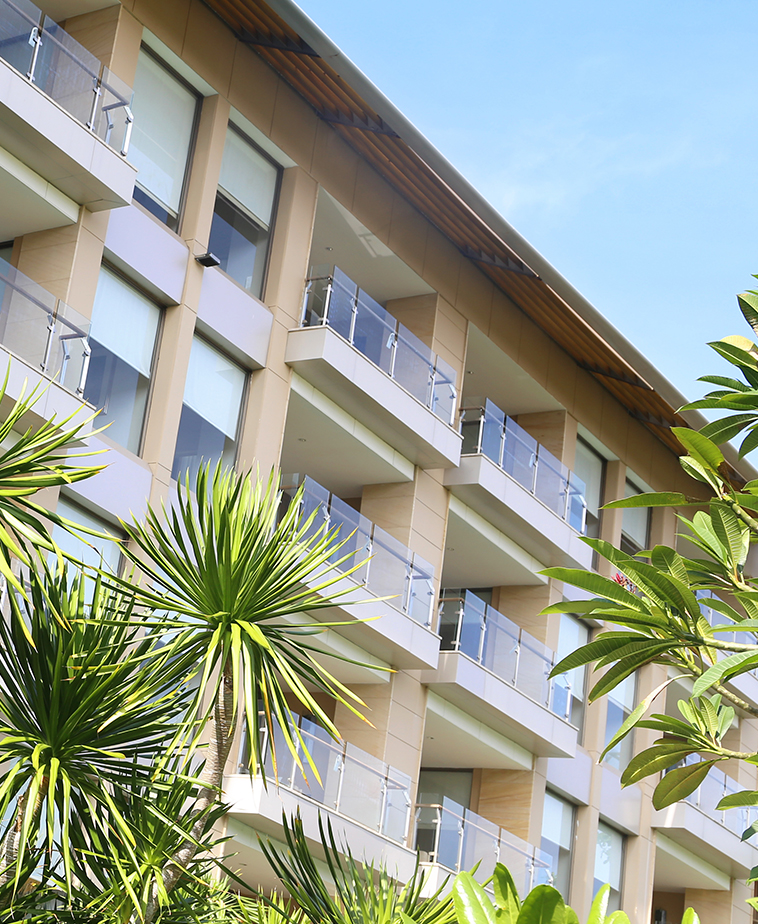
This month, City Planning released the initial draft of an amendment to the City’s Adaptive Reuse Ordinance (ARO). Originally adopted in 1999, the City’s current ARO has enabled the creation of more than 12,000 housing units in Downtown alone and led to economic regeneration, housing opportunities, and preserving and reinvigorating the City’s architectural legacy. Nearly a quarter-century later, with a different set of challenges now facing Los Angeles, including a housing emergency and post-pandemic economic recovery, City Planning proposes to expand the ARO as one of the six key strategies of the Citywide Housing Incentive Program to expand housing availability and meet the City’s Housing Element obligations under State law.
Proposed revisions to the ARO would incentivize the conversion of existing commercial buildings to housing by providing a faster review process for older buildings, allowing for flexible unit sizes, and allowing buildings to retain their building shell while the interior may be converted to housing. The ordinance aims to reduce vacant space, extend the life of buildings, lower carbon emissions, and revitalize historic structures, all while creating new housing opportunities.
On June 6, 7, and 8, City Planning staff will host webinars to provide an overview of the amendments and receive community input. Over the next several months, City Planning will take part in a comprehensive outreach approach, offering multiple opportunities for stakeholders to learn more about the proposed Adaptive Reuse Ordinance and share feedback. Please submit questions and comments on the proposed Adaptive Reuse Ordinance to housingelement@lacity.org.
|
|
Westside Community Plans Outreach at Palms Neighborhood Council Community Block Party and Pick Pico |
|
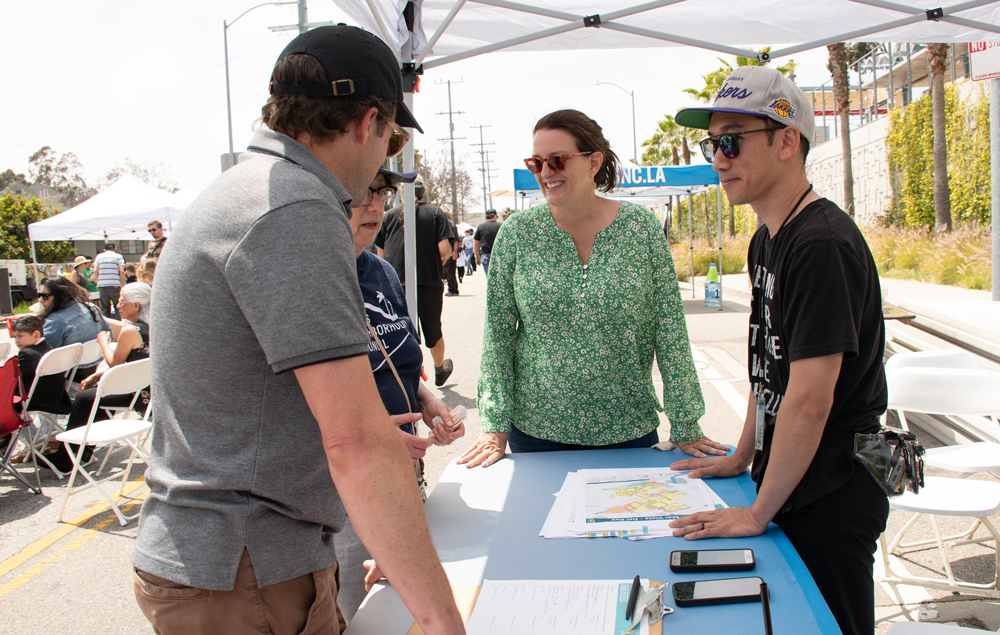
During the third weekend in May, the Westside Community Plan Update team attended local events to conduct outreach. On May 20, the team took part in the Palms Neighborhood Council Community Block Party, engaging attendees in discussions about the proposed Community Plan Updates. On May 21, the team set up a booth at the Pick Pico street fair at the corner of Pico and Overland. During the first Pick Pico since before the pandemic, City Planning staff members talked with fairgoers about visions for the future of Westside communities. |
|
Earlier this month, Senior City Planner Conni Pallini-Tipton, AICP and Certified Urban Ecologist Kat Superfisky wrote a guest post for the American Planning Association (APA) regarding City Planning’s sustainability efforts in the face of climate change. The article shows how the proposed Wildlife Ordinance demonstrates a commitment to striking a balance between urban development and wildlife conservation. By implementing regulations that govern zoning, land use, and development, planners can create opportunities for habitat preservation and wildlife movement within the city.
The ordinance includes standards that regulate various aspects of development, such as grading, lot coverage, vegetation and landscaping, height, lighting, and more. The City of Los Angeles aims to improve wildlife health and movement, mitigate the risk of natural hazards, and enhance ecosystem services such as carbon sequestration, flood mitigation, and reduction of the heat island effect.
Urban planners are prioritizing biodiversity, habitat preservation, and wildlife connectivity, so that cities can create resilient ecosystems, mitigate climate change impacts, and cultivate a harmonious coexistence between humans and nature. City Planning’s efforts pave the way for a future where cities become vibrant and sustainable habitats for all residents, be they two-legged or four-legged, rooted or winged. For more information visit the American Planning Association’s blog. |
|
OFFICE OF RACIAL JUSTICE, EQUITY, AND TRANSFORMATIVE PLANNING |
|
The Office of Racial Justice, Equity, and Transformative Planning (ORJETP) pays homage to Gloria Molina, a celebrated political figure with a career that includes being the first Latina elected to the California State Assembly, the Los Angeles City Council, and the County Board of Supervisors. Often described as a trailblazer, Molina is remembered for her early involvement in the Chicano movement, her support of community-led social justice and equity causes, and her adamant rejection of political corruption. She died at the age of 74 after battling cancer. Molina’s legacy serves as an example of how political figures can leverage their influence to advance community-led causes and produce tangible change.
Influential figures like Molina inspire the ORJETP to continue to push the needle towards racial equity and reshape institutions that maintain racial inequalities, particularly when it comes to issues such as environmental justice, access to mobility opportunities, and housing. The establishment of the ORJETP in the Department is a testimony to the sacrifices of leaders like the late Gloria Molina.
In support of this goal, the ORJETP has hired a full-time city planner and two supporting staff members to advance the development of its Strategic Framework Plan, which aims to address racial disparities that affect the planning workplace as well as zoning and land use policies that have created geographic disparities across Los Angeles. In the near future, the Office will be developing an outreach strategy to engage the public in discussions of how City Planning can center equity and racial justice in its policies and process.
|
|
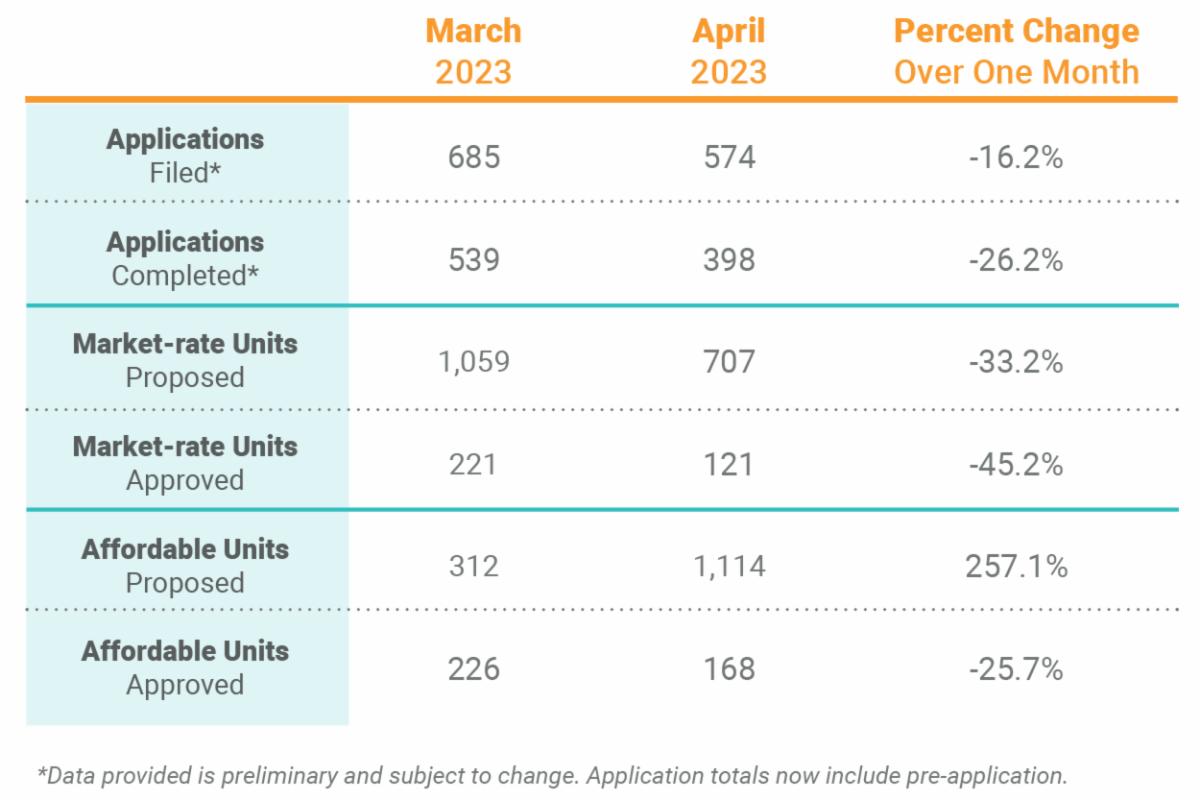
Between March and April, applications submitted and approved declined by 16% and 26%, respectively. These trends were mirrored by declines in market-rate units proposed and approved, as well as affordable units approved. Bucking this generally downward trend, the number of affordable units proposed increased by 257% month-over-month, adding more than 1,000 units to the development pipeline. |
|
|
|
-
Proposed Plan was unanimously approved by City Planning Commission on April 20, 2023
- Held a public hearing on the Draft Community Plan text, zoning regulations, Draft Land Use Map, and Draft Community Plan Implementation Overlay (CPIO) on October 27, 2022
- Published Draft EIR on July 28, 2022, and the EIR comment period ended on October 11, 2022
- Released an updated four-part video series in fall 2022 providing an overview of the Boyle Heights Community Plan Update process and policies
|
|
|
|
- On May 3, 2023, the City Council voted to adopt the Plan. The Plan is now undergoing form and legality review in the City Attorney’s Office to ensure new regulations are clear and consistent with State law.
- The Planning and Land Use management (PLUM) committee recommended approval of the Community Plan with amendments on April 24, 2023, Transmitted Director of Planning's Memo to PLUM in September 2022, and a Director of Planning's Supplemental Memo to PLUM in March, 2023 describing a few amendments to the CPC Recommended draft
- Transmitted Letter of Determination, Final EIR (FEIR), and CPC's recommended Community Plan to the Mayor and City Council for adoption on September 27, 2022
- City Planning Commission recommended the plan and new zoning for approval in September 2021
- Released revised materials in advance of City Planning Commission hearing, including Zoning, Plan Text, Land Use Map, and Community Benefits Program, in June 2021
|
|
|
|
- Finalizing Draft Zoning and Publishing Draft EIR for the Harbor LA Community Plans Update by mid-2023
- Harbor LA Plans Virtual Outreach and Public Hearing anticipated in mid-2023
- Released informational New Zoning code video in November 2022 and held Planning Harbor LA Plans Virtual Office Hours Outreach in December 2022
- Released the Preliminary Draft Plans (updated policy documents) for Harbor Gateway and Wilmington-Harbor City in May 2022
- Released Harbor LA StoryMap with new zoning information in December 2021
|
|
|
|
- On May 3, 2023, the Los Angeles City Council unanimously adopted the Hollywood Community Plan Update. The City Council also recommended an amendment requested in the motion from Council District 13 (Soto-Martinez) and a follow up report requested in the motion from Council District 4 (Raman). Additional information about the requested amendments is summarized here.
- The implementing ordinances will now be reviewed and finalized by the City Attorney, to ensure clarity of regulations and consistency with state law, which can take approximately six months to a year. After this process is complete, the Plan will be brought into effect by the City Council.
|
|
|
|
- Working toward releasing draft General Plan Land Use Map in winter 2023
- Conducted outreach for Ventura-Cahuenga corridor in summer/fall 2022
|
|
|
|
- Preparing draft Zoning, draft Plan Text, and draft EIR for the Southwest Valley Community Plans Update
- Held Virtual Office Hours in June 2022
- Released General Plan Land Use Designations and informative StoryMap with proposed zoning in May 2022
|
|
|
|
- Preparing revised General Plan Land Use (GPLU) Maps, Storymap, Plan Policy Documents, and New Zones to showcase at a general informational open house in Fall 2023
- Preparing to host WCPAG second meeting on June 5, 2023
- Hosted WCPAG first meeting on April 3, 2023 focused on residential General Plan Land Uses and Zoning options
- Announced the formation of the Westside Community Plans Advisory Group(WCPAG) through a letter in November 2022
|
|
Hung Sa Dahn Headquarters
3412 S. Catalina Street
|
|
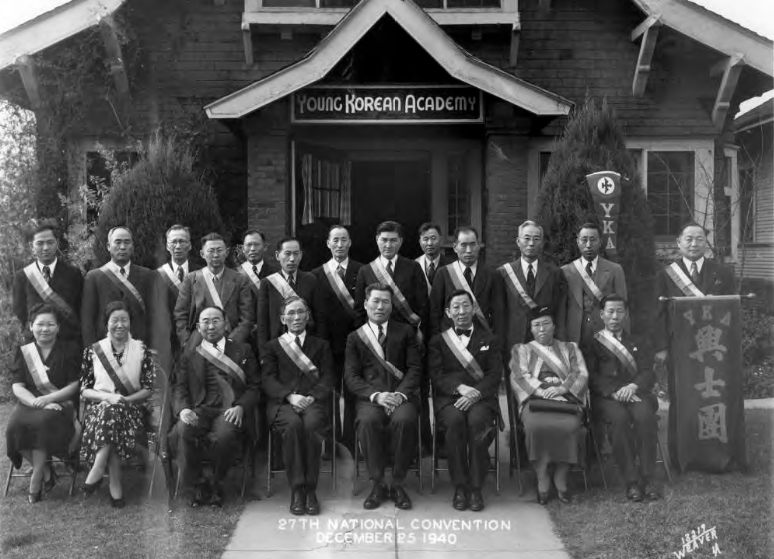
In a quiet residential neighborhood in South Los Angeles stands an unassuming 1910 Craftsman house and a 1958 duplex that represent a significant piece of Korean and Korean American history. From 1929 to 1979, the property served as the headquarters of the Young Korean Academy, or Hung Sa Dahn, a civic organization founded in 1913 by the renowned Korean independence activist Dosan Ahn Chang Ho (1878-1938). Hung Sa Dahn played a critical role in the liberation of Koreans from Japanese colonial rule (1910-1945). With the Japanese occupation of Korea, much of the work towards independence was conducted abroad, and the United States became one of the key bases for the Korean independence movement. The property on Catalina Street served as the first standalone and permanent headquarters of Hung Sa Dahn. It became a part of an early concentration of Korean American residences, businesses, and civic and religious institutions that had emerged in South Los Angeles in the early 1920s to serve the growing Korean American immigrant community. Beyond its civic functions, Hung Sa Dahn became an important social and cultural hub for the Korean American community, in part by providing critically needed housing for its members who faced discrimination in housing and employment. Designated as a Historic-Cultural Monument in March, Hung Sa Dahn serves as a rare example of an early institutional property associated with the Korean Independence Movement, as well as Korean American immigration, settlement, and development in Los Angeles. To learn more about other places associated with the Korean American community in Los Angeles, explore the Korean Americans in Los Angeles Historic Context. |
|
3412 S. Catalina Street, 1940. Hung Sa Dahn 27th Annual Meeting. Courtesy USC Korean American Digital Archives. |
|
1436-1450 West Jefferson Boulevard
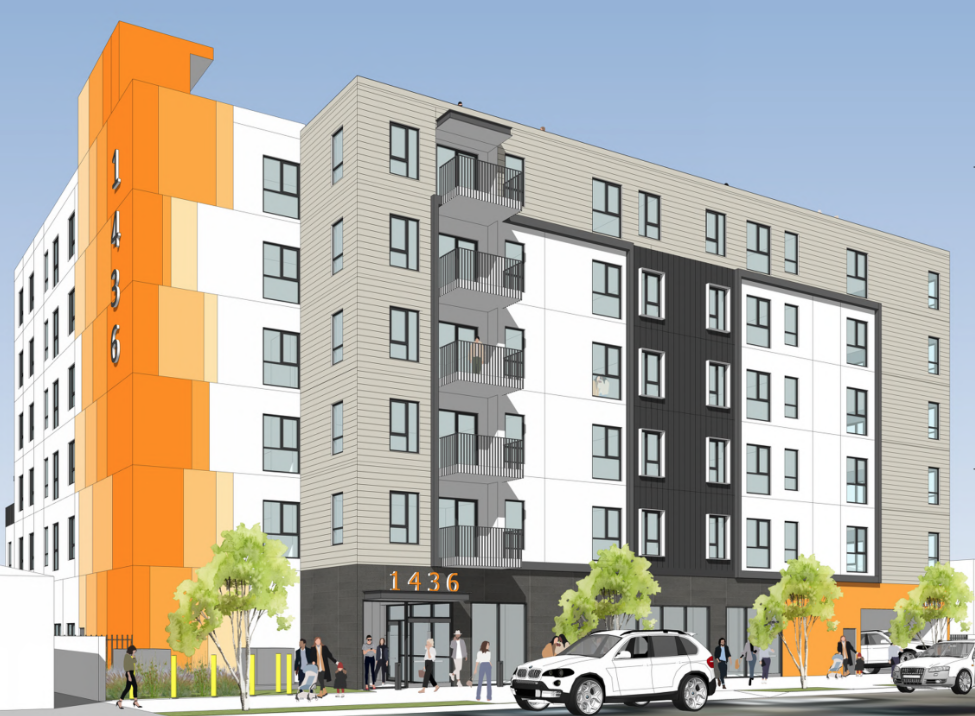
This month the City Planning Commission (CPC) approved the construction of a six-story residential building located in the South Los Angeles Community Plan Area and Council District 8. The new building, proposing a total of 60 dwelling units, includes six units that will be set aside for Very Low-Income households. The building will be broken down into 13 one-bedroom units, 40 two-bedroom units, and 7 three-bedroom units. Residential amenities will be provided in the form of multiple recreation rooms, business centers, a roof deck, and landscaped rear yard, and several units will have private balconies. The new building was entitled through the City’s Density Bonus Ordinance, whereby the developer will set aside 10 percent of its base allowable 46 dwelling units as affordable for a period of 55 years in exchange for a density bonus and two development incentives related to additional floor area and allowable building height.
|
|
June City Planning
Commission Meetings
|
|
|
June Area Planning
Commission Meetings
|
|
Central: June 13, 27
South Los Angeles: June 6, 20
South Valley: June 8, 22
West: June 7, 21
East: June 14, 28
Harbor: June 6, 20
North Valley: June 1,15
|
|
June Cultural Heritage
Commission Meetings
|
|
|
LOS ANGELES
CITY PLANNING
|
|
Sign up to receive citywide planning updates by email
|
|
|
|
|
|
|
|
|