Sasakawa USA Newsletter December 29, 2022 | |
|
Included in this issue of the newsletter:
- Message from Sasakawa USA's Chairman Satohiro Akimoto
December Activities
- US-Japan NEXT Alliance Initiative: Shaping the Pragmatic and Effective Strategy toward China
- US-Japan NEXT Alliance Initiative: US-Japan Task Force on Command Relationships for New Challenges
- Japan US Military Program (JUMP): JUMP Pensacola
Recaps
- US-Japan NEXT Alliance Initiative: Fostering Democracy in Southeast Asia with Mr. Keiichiro Nakazawa
External Engagements
- Mr. James Schoff Speaks at event on “More Tech to Friends that Tighten Exports to Enemies” by the Hudson Institute
Publications
- US-Japan NEXT Alliance Initiative: Economic Security and Emerging Technology: Japan’s Perspective for Pursuing a Technology Alliance (Mr. Kazeki)
- Japan Political Pulse: 2022: A Year of Major Political Advancement in Japan's National Security (Dr. Akimoto)
Upcoming Activities
- Pacific Islands Maritime Domain Awareness Program: Roundtable in Honolulu, HI
Announcements
- Japan Political Pulse Research Trip: 2023 Recipient Dr. Daniel M. Smith
- NEXT Alliance Conference Webpage Launch
Featured Staff
| |
Message from Sasakawa USA's Chairman Satohiro Akimoto | |
|
2022 might be remembered as a transformative year for the U.S.-Japan security alliance.
Russia’s naked invasion of Ukraine on February 24 was a staggering reminder that a major country with a merciless dictator can attack a neighboring nation with a brutal and devastating military force without provocation. The Western democracies led by the U.S. quickly reacted to the complete overturning of the post-war international order by quickly imposing severe economic sanctions and providing massive military assistance to Ukraine to defend against Russian attacks.
Japan has often been criticized for lukewarm reactions in joining Western economic sanctions against countries, particularly those with large-scale energy resources. However, Prime Minister Kishida acted in an out-of-character way with regards to national security. Japan quickly and decisively joined the U.S. led efforts to support Ukraine and isolate Russia.
Japan, which has been known for highly restrictive acceptance of foreign refugees, has even accepted more than 2,000 evacuees from Ukraine to take refuge from the war in their homeland. According to Nippon Foundation’s online survey of 750 Ukrainians aged 18 and over conducted between November 28 to December 12, about 41% of respondents said they want to stay in Japan until the situation in Ukraine subsides and about 25% said they want to stay in Japan for as long as possible.
In my latest Japan Political Pulse article published this month, I survey the tremendous political advancements that Prime Minister Kishida’s administration has made since the beginning of the year, such as joining the U.S. led sanctions against Russia, enacting the “Act on Promotion of Economic Security by Integrated Implementation of Economic Measures,” and publishing the National Security Strategy together with the National Defense Strategy and the Defense Buildup Program.
With that backdrop, I expect the U.S. and Japan to make significant advancements in terms of command and control, interoperability, and joint operations between the two allies in 2023. I saw a large Ukrainian flag on the U.S. embassy building on my way back to my hotel in Tokyo at the end of the year. There are many values, which the U.S. and Japan share with the rest of the free world. These values cannot be taken granted for.
| 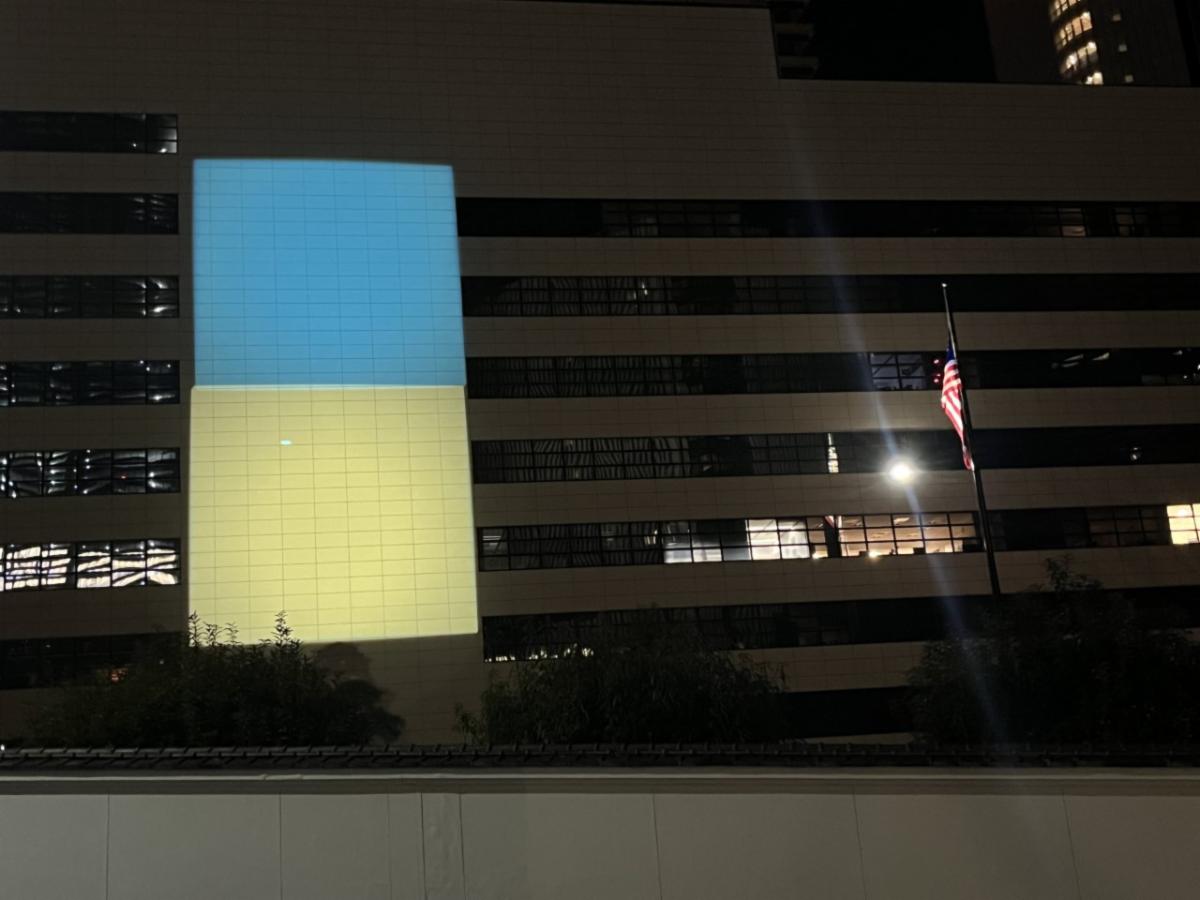 | Photo: Ukrainian flag light display projected on the US Embassy in Tokyo on December 29, 2022. | |
US-Japan NEXT Alliance Initiative: Shaping the Pragmatic and Effective Strategy toward China | |
|
The NEXT Alliance Initiative co-hosted a roundtable workshop with Sasakawa Peace Foundation Research Fellow Tsuneo Watanabe and his team on December 19. Mr. Watanabe is leading a Sasakawa Peace Foundation research project entitled “Shaping the Pragmatic and Effective Strategy toward China II.” The project has already published several research papers that suggest different practical strategies proposed by security and economic experts from Japan and the United States in order to maintain stability and economic prosperity in the Indo-Pacific, while inducing China to comply with the international rules-based order. The dozen American and Japanese participants at the workshop proposed actionable recommendations to support alliance policy coordination to counter China’s expanding military, political, and economic influence in the region.
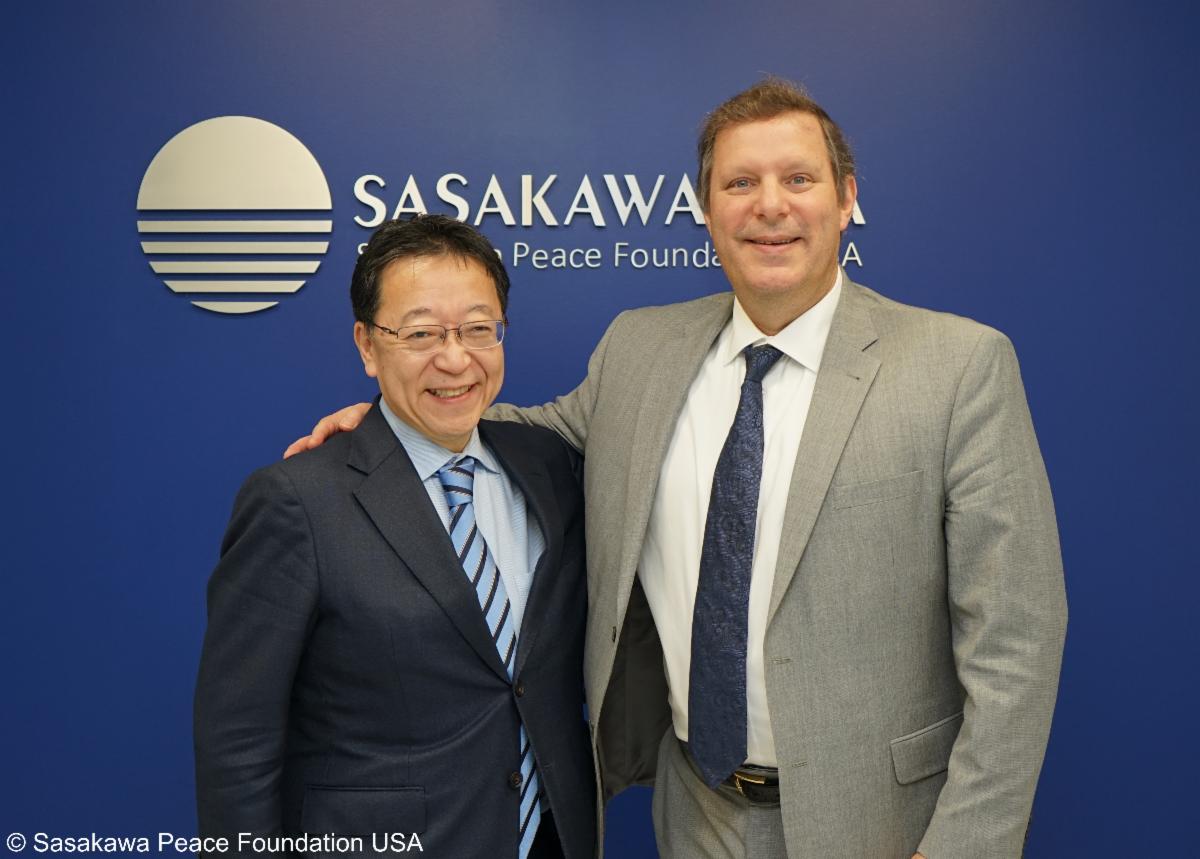
Photo: Mr. Tsuneo Watanabe and Mr. James Schoff
| |
US-Japan NEXT Alliance Initiative: US-Japan Task Force on Command Relationships for New Challenges | |
|
The NEXT Alliance Initiative hosted a bilateral Track 2 hybrid roundtable dialogue on command and control (C2) relationships for new challenges facing the U.S.-Japan alliance on December 21. This event was the third in a series of C2 dialogues this year. The event was attended by 22 former government officials, former military officers, and think tank scholars from both countries. This conversation is timely as Japan focuses on improving military jointness and moves toward establishing a permanent joint headquarters. The task force considers possible practical and useful adjustments to the Self-Defense Force’s connections with U.S. Forces Japan and Indo-Pacific Command, so that bilateral arrangements can align with national reforms. The project is working toward a bilateral Track 1.5 Tokyo workshop in March 2023.
| |
Japan US Military Program (JUMP): JUMP Pensacola | |
|
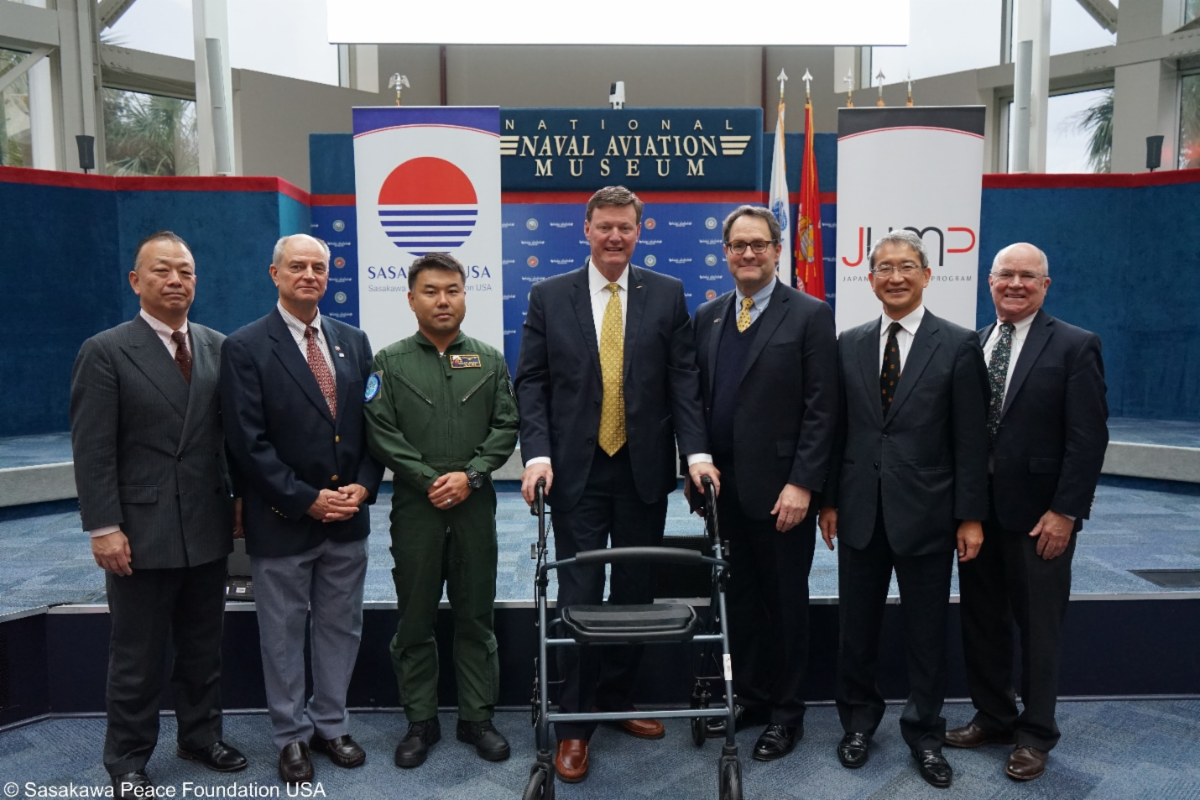
On December 3, Sasakawa USA’s Japan US Military Program (JUMP) held an event, "The Eighth Annual Japan US Military Program: U.S.-Japan, A Strategic Alliance for Ensuring Regional Peace and Security," at the National Naval Aviation Museum in Pensacola, FL, in partnership with the Japan-America Society of Northwest Florida, the National Association of Japan-America Societies, and the Embassy of Japan. This event featured remarks on the U.S.-Japan security alliance from Vice Admiral John Bird (USN, Ret.), Rear Admiral Kyle Cozad (USN, Ret.), Captain Hiroyuki Sano (JMSDF), and the Hon. Kazuhiro Nakai, Consul General of Japan in Miami. An exciting taiko drumming performance closed out the event. JUMP continues to serve as a national program to connect past and present service members, families, and government civilians who have served in Japan through social networks and grassroots events. JUMP is the only national program to do so, providing a powerful foundation for sustaining the alliance between the United States and Japan.
Photo: (L-R) Dr. Satohiro Akimoto, CAPT Bill Cuilik (USN, Ret.), CAPT Hiroyuki Sano (JMSDF), RADM Kyle Cozad (USN, Ret.), VADM John Bird (USN, Ret.), the Hon. Kazuhiro Nakai, Mr. Peter Kelley.
| |
US-Japan NEXT Alliance Initiative: Fostering Democracy in Southeast Asia with Mr. Keiichiro Nakazawa | |
|
The NEXT Alliance Initiative hosted a lunch roundtable dialogue on fostering democracy in Southeast Asia with Mr. Keiichiro Nakazawa, Senior Vice President of Japan International Cooperation Agency (JICA). The October 13 event involved 14 participants from think tanks, non-profit organizations, and a representative from USAID. Mr. Nakazawa provided his experience and observations related to fostering democratic development in Southeast Asian nations like Vietnam, Cambodia, and Myanmar. In the subsequent group discussion, participants showed insights from various judicial and good governance capacity-building programs they were involved with in the region. The recap of this event is available here.
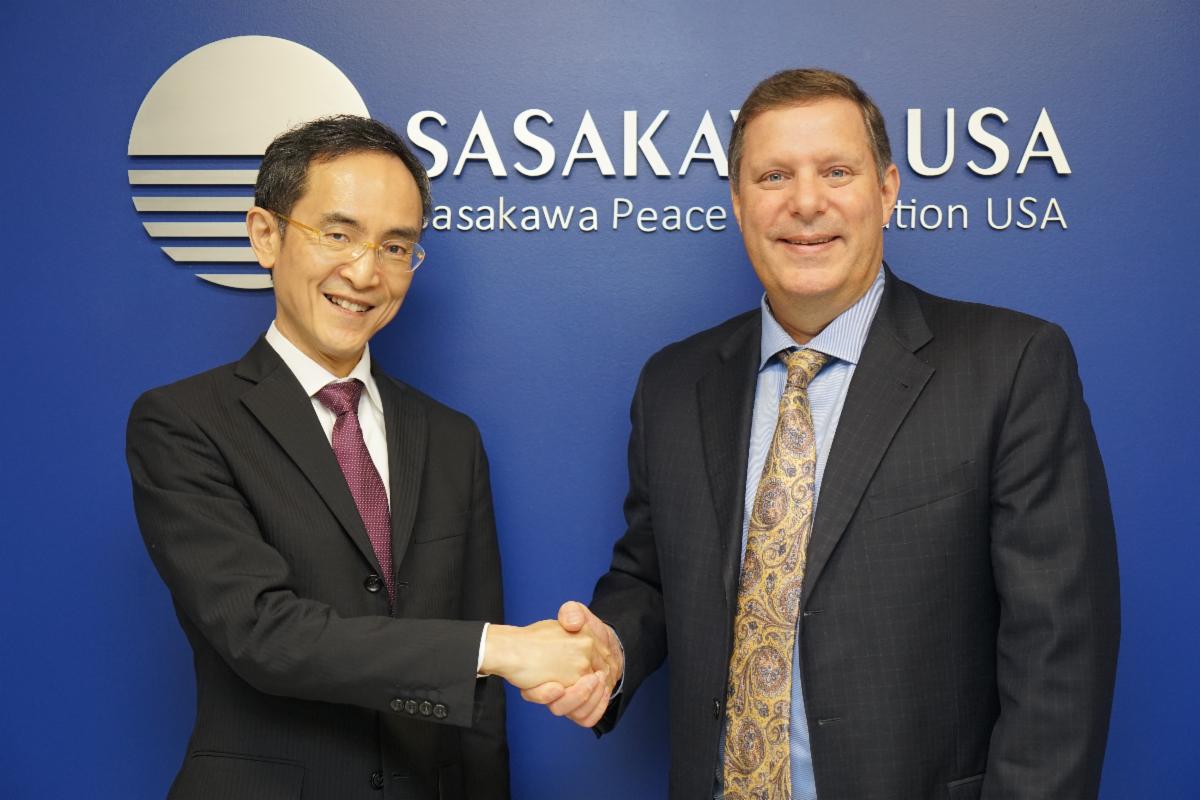
Photo: Mr. Keiichiro Nakazawa and Mr. James Schoff
| |
Mr. James Schoff Speaks at event on "More Tech to Friends that Tighten Exports to Enemies" by the Hudson Institute | |
|
Sasakawa USA Senior Director James Schoff joined Nonresident Senior Fellow Bill Greenwalt of the American Enterprise Institute to kick-off discussion at a private, virtual workshop entitled “More Tech to Friends that Tighten Exports to Enemies,” organized by the Hudson Institute and the Nonproliferation Policy Education Center (NPEC) on December 13. The 37 attendees included representatives from private industry, academia, non-profits and officials from six different countries including the United States and Japan. The workshop was one of several being organized by Hudson and NPEC, and the discussion covered how best to balance the requirements for increased U.S.-allied defense technology collaboration while maintaining effective technology controls.
Photo: Mr. James Schoff
| |
US-Japan NEXT Alliance Initiative: Economic Security and Emerging Technology: Japan’s Perspective for Pursuing a Technology Alliance (Mr. Kazeki) | |
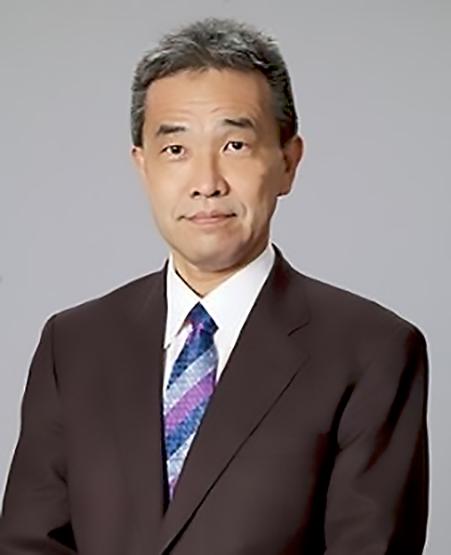
NEXT Alliance Conference attendee and Executive Advisor at Japan’s National Graduate Institute for Policy Studies Jun Kazeki published a conference paper on U.S.-Japan cooperation in economic security. Mr. Kazeki was an opening presenter for the “Pursuing a Technology Alliance” session of the NEXT Alliance Conference held in early November. The article discusses challenges and opportunities related to economic security policy and emerging technology by reviewing policy developments in Japan, including the research and development of emerging technology within the framework of Japan’s Economic Security Promotion Act of 2022. Mr. Kazeki’s paper also explores possible next steps for pursuing a technology alliance. The paper is published on the NEXT Alliance Conference page, click here.
Photo: Mr. Jun Kazeki
| |
Japan Political Pulse: 2022: A Year of Major Political Advancement in Japan's National Security (Dr. Akimoto) | |
|
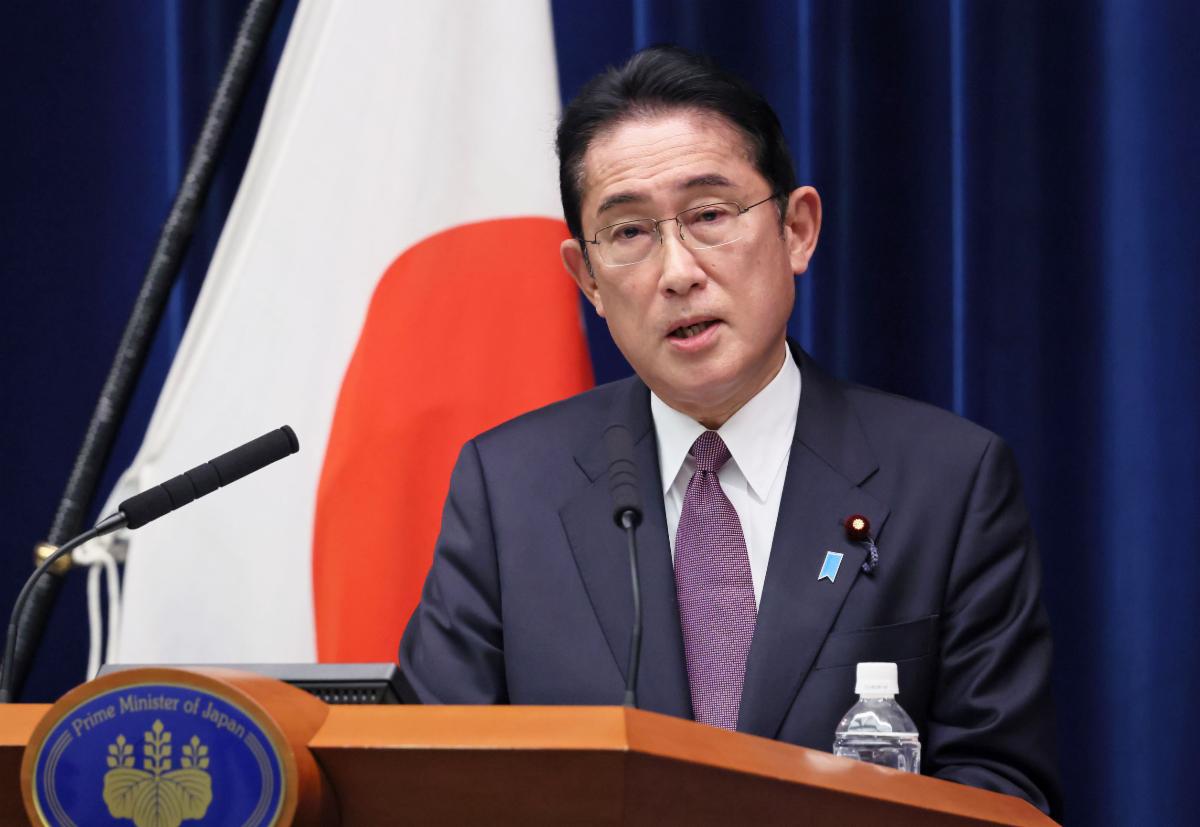
In his new Japan Political Pulse article “2022: A Year of Major Political Advancement in Japan’s National Security,” Dr. Satohiro Akimoto, Chairman and President of Sasakawa USA, surveys the progress which PM Fumio Kishida has made this year. In fact, it is remarkable how much the administration has been able to achieve despite serious difficulties, which deeply troubled PM Kishida, such as opposition to the state funeral for late PM Shinzo Abe, criticism over the relationship between LDP lawmakers with the Unification Church, and declined approval ratings of his cabinet. There is much to expect of PM Kishida’s possible trip to Washington next year. You can read Dr. Akimoto's article here.
Photo: Prime Minister Kishida at a press conference regarding Japan’s new national security strategy on December 16, 2022. (Official Website of the Prime Minister of Japan and His Cabinet)
| |
Pacific Islands Maritime Domain Awareness: Conference in Honolulu, HI | |
|
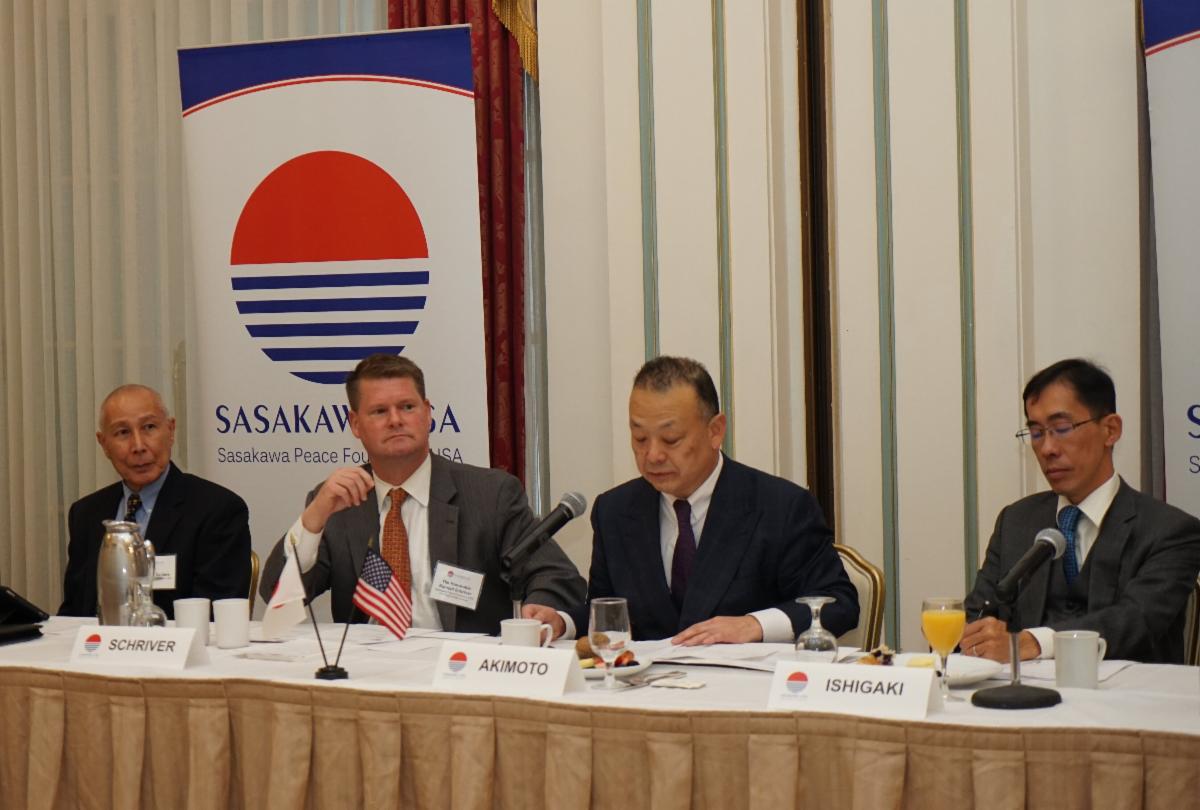
In January, Sasakawa USA’s Pacific Islands Maritime Domain Awareness (MDA) Program led by the Hon. Randall G. Schriver, Director of the Pacific Islands Program at Sasakawa USA; and Chairman of the Board at Project 2049 Institute, will host a conference in Honolulu, HI, to bring together current and former U.S. government officials, military, academics, and experts from Japan, Pacific Islands, and other partnering nations. They will discuss issues of importance such as views from the Pacific Islands, understanding toolkits available in the Pacific region, and possible initiatives and programs to further bolster cooperation among partnering nations.
The program was borne out of a strong conviction that the Freely Associated States (FAS) are critical allies and partners to the United States and Japan, vital to ensuring a regional liberal order rooted in universal values such as freedom, democracy, and the rule of law in the Pacific. The program aims to make policy recommendations to the U.S. and Japan on MDA and related issues vis-à-vis the FAS.
Photo: (L-R) Dr. Alfred Oehlers, Advisor of Pacific Islands MDA Program; the Hon. Randall G. Schriver; Dr. Satohiro Akimoto; and Min. Tomoaki Ishigaki, Embassy of Japan.
| |
Japan Political Pulse Research Trip: 2023 Recipient Dr. Daniel M. Smith | |
|
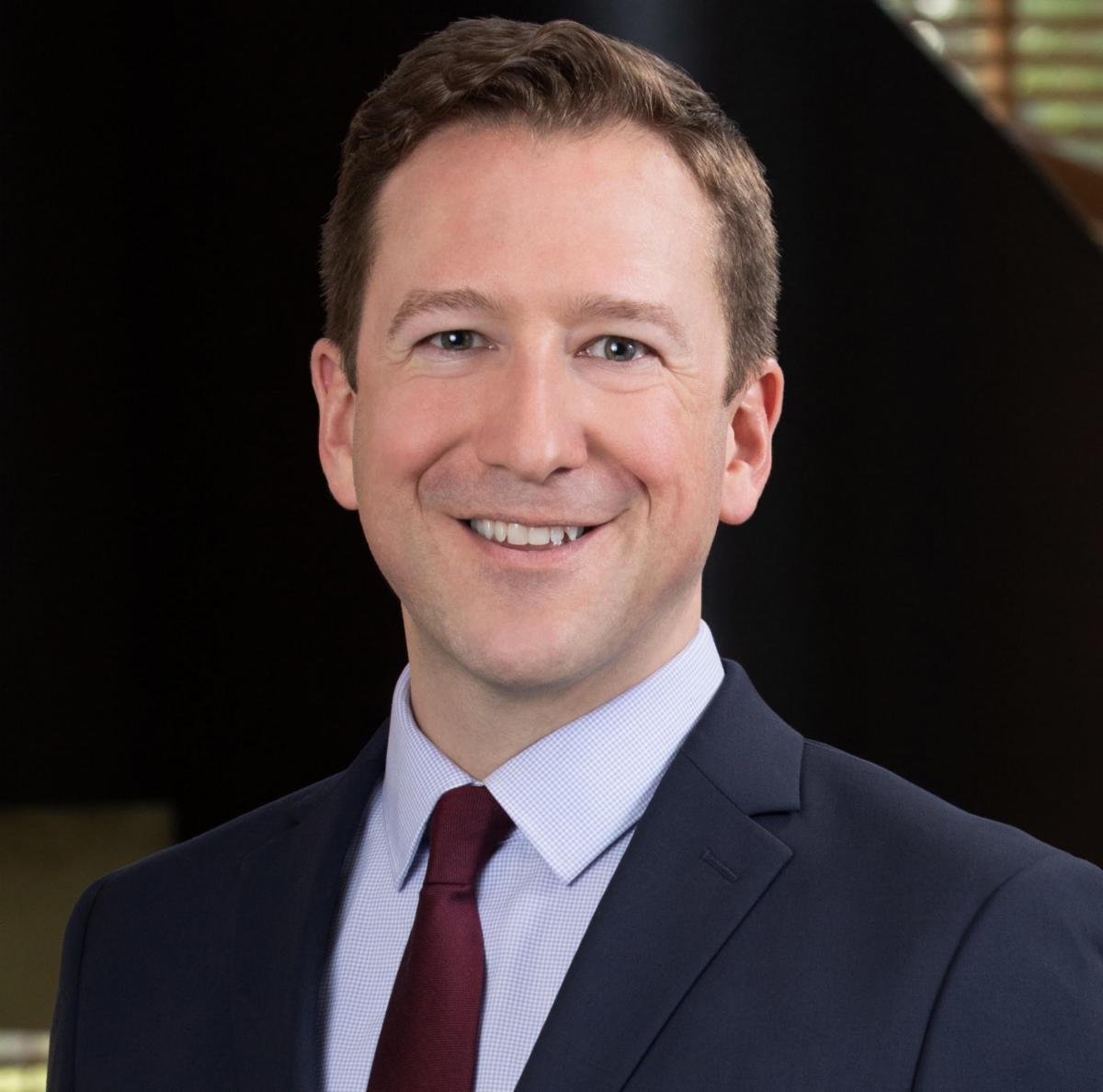
On January 7, Dr. Daniel M. Smith, the Gerald L. Curtis Visiting Associate Professor of Modern Japanese Politics and Foreign Policy at Columbia University, will embark on his one-week Sasakawa USA Japan research trip. Dr. Smith’s research will focus on coalition management between Japan’s governing parties, the Liberal Democratic Party and Komeito, and his meetings in Japan will include visits with significant lawmakers. In February 2023, Dr. Smith will publish a Japan Political Pulse analysis of his findings which will be available on our website. Japan Political Pulse is a resource for American media, policymakers, academics, and the public on trends in Japanese politics with regular and reliable insight and analysis of the state of Japanese politics.
Photo: Dr. Daniel M. Smith
| |
NEXT Alliance Conference Webpage Launch | |
|
Sasakawa USA is pleased to announce that the NEXT Alliance Conference (NAC) website has been published. Our US-Japan NEXT Alliance Initiative will convene two offsite “retreats” annually dedicated to emerging priority issues for the alliance: one in the area of technology and innovation and the other on foreign policy and security challenges. To learn more about the inaugural conference on economic security policy coordination, visit NAC Fall 2022, Annapolis, MD, where you will find a summary of discussion topics, a list of participants publications, and a photo showcase of the conference.
| |
|
初めまして。My name is Isabelle Burke, Associate Program Officer at Sasakawa USA. I currently work on the Policy Briefing Series, In-Depth Research Trip, our grant partnership with the U.S. JET Alumni Association, and the Sasakawa USA Women’s Advancement Network. I joined Sasakawa USA in June 2021 after earning my bachelor’s degree from the University of Virginia, where I double majored in public policy and Japanese language and literature studies.
After graduating in 2020, I was admitted to the Japan Exchange and Teaching (JET) Program and planned to teach English in Niigata Prefecture. Unfortunately, my departure for Japan was continually delayed by the COVID-19 pandemic (I like to call myself “a JET who never left the runway”), so I decided to seek opportunities closer to home where I could remain involved in U.S.-Japan relations… which is how I came to join Sasakawa USA!
My work at Sasakawa USA has introduced me to the huge variety of organizations in Washington, D.C. and across the country which strive to build deep and lasting relationships between the United States and Japan. I feel very fortunate to have opportunities through my work on the SWAN program to meet female leaders from academia, government, nonprofits, media, and the private sector whose work contributes to strengthening coordination between Japan, the United States, and regional partners and allies. Through my work with the JET alumni network, I’ve also seen firsthand how grassroots exchange programs can foster lifelong bonds of friendship and mutual understanding, which ultimately serve as the bedrock for alliance cooperation. While I still intend to go to Japan sometime in the future, right now I am excited to continue supporting the cultivation of strong U.S.-Japan ties from this side of the world through my work here in Washington, D.C. with Sasakawa USA.
Photo: Ms. Isabelle Burke
| |
|
Sasakawa Peace Foundation USA
1819 L Street, NW
Suite 300
Washington DC 20036
202.296.6694
www.spfusa.org
| | | | |