|
|
Partner with the Foundation for Talent Transformation to help people build the skills for lasting employability. Our nonprofit provides evidence-based psychometric assessments and AI powered coaching that strengthen self-awareness, communication, adaptability, courage, and confidence.
Together, we will help you improve participation, completion, job readiness, placement, retention, and advancement, while gaining insights to strengthen program delivery and participant success.
| |
September 2026 Edition
Welcome to the September 2026 Edition of the MUS Connector!
September marks Workforce Development Month, an opportunity to share a story most Americans have never truly heard. While many know what schools or libraries do, fewer realize there's a public workforce system helping people build careers, supporting employers, and strengthening local economies. For those facing barriers to employment including reentry, financial hardship, disability, or other life challenges, the system serves as a bridge, providing not only career training, but also the support needed to achieve lasting economic mobility and greater opportunity.
Yet, this system remains one of America's best-kept secrets. Imagine if it wasn't. What might change if every U.S. taxpayer and voter understood how their public investment creates opportunity, strengthens businesses, and builds thriving communities?
The more people understand the public workforce system, the better equipped they are to engage in conversations about the public investments and policies that shape opportunity in their communities. At its core, the public workforce system creates pathways for Americans to build skills, support their families, strengthen local economies, and pursue their own version of the American Dream.
In this special edition, our authors will share stories that demonstrate how the public workforce system creates opportunity, expands access, strengthens communities, and changes lives every day.
| |
Flat MUS Reporting In:
It's Our Month!
Friends, it’s our month! Workforce Development Month is here, and you know what that means. It’s time for the workforce community to shine, celebrate the work we’re doing, brag a little (we’ve earned it!), and show people what WorkforceWorks!! looks like in communities across the country.
I’ve traveled to MUS member communities, attended convenings, visited programs, met workforce professionals, and gotten a front-row seat to some pretty incredible work. So believe me when I say there is plenty to celebrate.
All month long, we’re turning up the spotlight on our members and partner organizations, and the people, partnerships, and programs behind their work.
Because that’s really what WorkforceWorks!! is all about: telling the stories of the work happening in our communities and recognizing the people making it happen.
And this month, we have something new to add to the conversation.
As part of WorkforceWorks!! 2026, Midwest Urban Strategies has created Understanding America’s Public Workforce System, a Civic Guide that offers an accessible look at how the public workforce system works and the important role it plays in communities across the country.
Consider it a resource for anyone who wants to better understand the system behind the stories we’ll be sharing throughout Workforce Development Month. It explores WIOA, Workforce Development Boards, American Job Centers, employer engagement, local leadership, public investment, and the partnerships that bring the system together.
And speaking of stories, there are plenty more to come.
Keep an eye on MUS on LinkedIn throughout September as we celebrate our members and partners, spotlight their work, share stories from the field, and show off some of the incredible things happening across the MUS network.
Workforce Development Month only comes around once a year, friends. We’re going to make the most of it. Celebrate your work. Tell your stories. Brag a little. You’ve earned it.
I’ll keep traveling and telling the stories. You keep making WorkforceWorks!!
Read More
| | REGISTRATION NOW OPEN! Register: HERE | | SPONSORSHIPS AVAILABLE! Learn more: HERE | | |
MUS Policy Perspective
In mid-August, the US Department of Labor finalized its rulemaking that would remove the State merit staffing requirement for Wagner-Peyser Employment Service services. This Final Rule will become effective on October 19, 2026.
State and local workforce agencies have experienced ‘whiplash’ when it comes to Wagner-Peyser staffing over the last six years. In 2020, during the first Trump Administration, the U.S. Department of Labor finalized a similar Final Rule. However, that Rule was only in place for through late 2023 when the Biden Administration reversed course and reinstated the State merit staffing requirement.
Despite this regulatory uncertainty, three states have operated with flexibility in the Merit staffing requirement – Colorado, Michigan, and Massachusetts (a portion of the local boards in the state). These flexible delivery models, emphasizing local staff to deliver Wager-Peyser services, should be studied and considered as the workforce development community grapples with these new flexibility options. Read More
| |
Strengthening the System Behind the Work
September is Workforce Development Month, a time to recognize the people, partnerships, and programs that connect individuals to opportunity, help employers find the talent they need, and strengthen communities across the country. It is also an opportunity to look at the system behind that work.
Our ability to serve people and communities depends on strong organizations. It depends on our ability to manage public resources responsibly, understand changing federal requirements, maintain strong internal controls, make sound procurement decisions, and prepare our teams for what comes next.
And right now, what comes next is changing quickly.
Workforce Development Boards and their partners are operating in an increasingly complex federal funding environment. Guidance is evolving. Expectations around compliance and accountability continue to grow. Funding opportunities are becoming increasingly competitive, and organizations are being asked to demonstrate not only strong outcomes, but the systems, policies, and organizational capacity necessary to manage federal awards successfully. Read More
| |
Built for Change: Celebrating the Resilience of America’s Public Workforce System
Workforce Development Month is a time to celebrate the people, partnerships and programs that connect individuals to opportunity and employers to talent. But this year, it may also be a good time to remember something else: the public workforce system has been adapting to change for a very long time.
In fact, change may be one of the few constants in our history.
The roots of today's public workforce system stretch back more than 90 years. In 1933, during the Great Depression, the Wagner-Peyser Act established a nationwide system of public employment offices to connect people looking for work with employers looking for workers.
Think about how much has changed since then. The economy, technology, industries, and even the meaning of work have transformed dramatically. Legislation and programs have evolved from earlier employment and training programs to the Workforce Investment Act and today's Workforce Innovation and Opportunity Act.
Yet the fundamental mission remains remarkably familiar: help people find opportunities, help employers find talent, and help communities respond to economic change. Read More
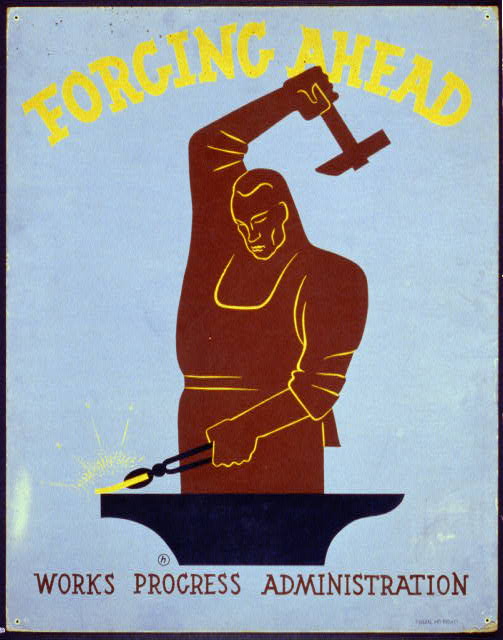
Image credit: “Forging Ahead,” Harry Herzog, Federal Art Project, 1936–1941. Library of Congress, WPA Poster Collection.
| | |
The Workforce Behind the Workforce: Celebrating Registered Apprenticeship Graduates
Earlier this summer, I highlighted the development of the Willamette Early Learning Apprenticeship program and the strong partnership between Mid-Willamette Valley Community Action Agency’s (MWVCAA) workforce system partners and employers committed to strengthening Oregon's early learning workforce - the workforce behind the workforce. Today, that partnership is already producing results. More than a year after launching the innovative Registered Apprenticeship (RA) program, MWVCAA celebrated an important milestone: the graduation of the program's first cohort of apprentices.
MWVCAA received assistance from the Early Childhood Workforce Connector (ECWC), a national independent ECE apprenticeship intermediary co-founded by Midwest Urban Strategies, to develop, launch, and implement its successful RA program. ECWC's Kimberly Farris recently attended MWVCAA's graduation celebration, which recognized 14 apprentices from the program's inaugural cohort. The event honored their dedication, perseverance, and commitment to building careers in early childhood education while underscoring the value of apprenticeship as a workforce development strategy. Read More
| |
Member Spotlight
Organization Name:
The Council for Adult and Experiential Learning (CAEL)
Executive Leader:
Earl Buford
President
Website:
www.cael.org
About the Organization
Recognizing that adult learners are the backbone of the U.S. economy, CAEL, a national nonprofit membership organization established in 1974, helps forge a clear, viable connection between education and career success, providing solutions that promote sustainable and equitable economic growth. CAEL opens doors to opportunity in collaboration with workforce and economic developers; postsecondary educators and trainers; employers and industry groups; and foundations and other mission-aligned organizations, engaging with these stakeholders to foster a culture of innovative, lifelong learning that helps individuals, and their communities, thrive.
CAEL Builds Bridges Between Education and Work
For more than 50 years, the Council for Adult and Experiential Learning (CAEL) has challenged a familiar idea: that education and employment belong on separate tracks.
Founded in 1974, the national nonprofit membership organization works at the intersection of education, workforce development, and economic development, helping create stronger connections between what people learn, the skills they gain through experience, and the careers they pursue. At the center of that work is a belief that has shaped CAEL from the beginning: academic and vocational learning do not have to compete. Neither do college and career training, education and employment, or short-term opportunity and long-term advancement.
Instead, CAEL works to build bridges between them.
That philosophy can be seen across the organization's work, from career pathway development and credit for prior learning to industry-education partnerships, research, tools, and capacity building. CAEL works with educators and trainers, employers, industry groups, workforce and economic development organizations, foundations, and other partners to make lifelong learning more accessible and career pathways easier to navigate. Read More
Learn more about CAEL visit their website: HERE
Read CAEL's Member Spotlight on the MUS Website: HERE
| | MUS and Workforce Development Month | |
Using Member Stories From the Field to Tell America's Public Workforce Systems Story | |
Gary Residents Graduate from Work B.I.G. Program:
Advancing Careers Through Blight Elimination and Workforce Development
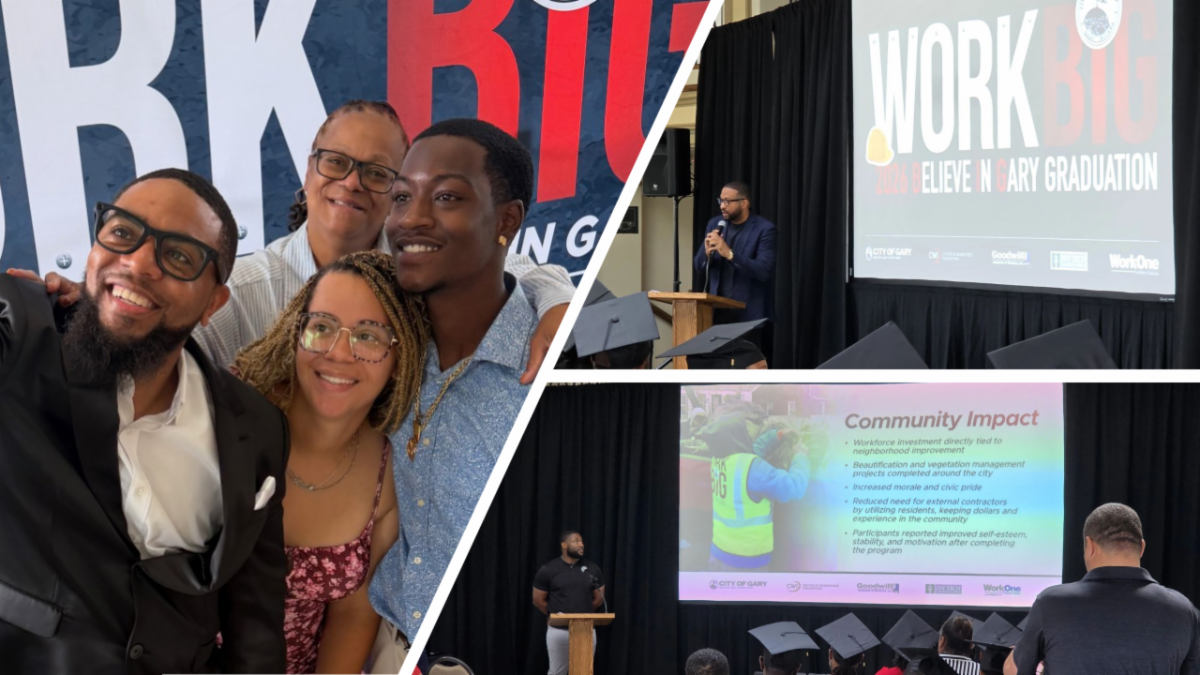
Center of Workforce Innovations (CWI), in partnership with the City of Gary, Goodwill Industries of Michiana, Ivy Tech Community College — Lake County, and WorkOne Northwest Indiana, proudly celebrated the graduation of 40 Gary residents from the third cohort of the Work B.I.G. (Believe in Gary) program on July 31 at Marquette Park Pavilion. The milestone marks another major step forward in connecting Gary residents to meaningful employment while improving neighborhoods throughout the city.
Work B.I.G. is an innovative workforce development initiative that combines paid skills training, career readiness, and hands-on work experience with blight elimination efforts across the City of Gary. Through the program, participants gain valuable industry knowledge, professional skills, and real-world work experience while contributing to community revitalization efforts. Read More
| |
ASPYR Celebrates 10 Years
This year, Aspyr proudly celebrates its 10th birthday as an organization dedicated to strengthening Central Ohio’s workforce ecosystem. What began as a commitment to better connect people, employers, education, training, and community resources has grown into a regional force for collaboration and innovation. Over the past decade, Aspyr has remained focused on a simple but powerful belief: when individuals have access to opportunity and employers have access to talent, our entire region becomes stronger.
Through changing economic conditions, evolving employer needs, and a rapidly shifting labor market, Aspyr has continued to adapt, lead, and convene. Read More
| |
SLATE Celebrates Prison to Prosperity Graduates
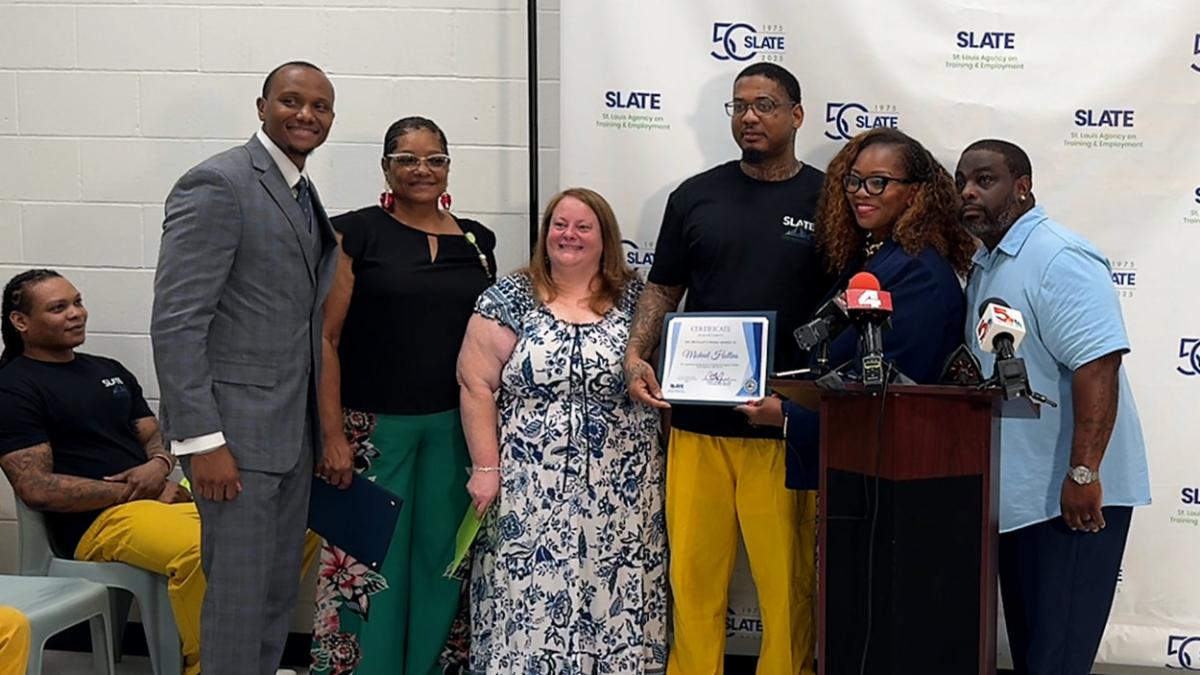
Saint Louis Agency on Training and Employment (SLATE) held a graduation ceremony at the City Justice Center (CJC) to honor 14 detainees that completed SLATE’s Prison to Prosperity program, a 10-week training on life skills and workforce development.
“Jail has changed,” said Nate H
ayward, Commissioner of Corrections. “We don't just warehouse guys anymore. We’re trying to make sure that they can get the programs that they need and also that they can be successful once they get out.”
Hayward mentioned when he first became the commissioner, there were only four programs available for detainees and now there are 16. Read More
| |
EmployIndy Achieves
Builds Pathways
from Education to Careers
In Indianapolis, MUS member EmployIndy is demonstrating what the public workforce system looks like in action through Indy Achieves, an initiative that brings together workforce development, local government, higher education, employers, and community partners to help students complete their education and prepare for careers.
On August 12, EmployIndy and Indianapolis Chief Deputy Mayor Chris Bailey welcomed Indy Achieves scholars from Indiana University Indianapolis to the 2026 Leadership Summit. The one-day professional development event connected students to an internship fair, career-readiness workshops, and local entrepreneurs and leaders from the public and private sectors.
Led by EmployIndy, Indy Achieves provides students with coaching and support designed to increase postsecondary completion and strengthen Indianapolis' talent pipeline. Read More
| |
WorkforceWorks!!
From Training to
Healthcare Careers:
A Partnership in Action
What does it look like when workforce development works?
In Dallas, it looks like 15 individuals beginning a journey toward a new career in healthcare, 14 completing their training, a 93% completion rate, and the first 12 students to sit for their national Certified Clinical Medical Assistant (CCMA) certification exam achieving a 100% pass rate.
Today, all 14 program completers are participating in healthcare externships, putting their new skills into practice and taking the next step toward employment.
These outcomes are the result of a collaborative workforce initiative bringing together Workforce Dallas, Goodwill Industries of Dallas, Texas Woman’s University (TWU) Ventures, and Skilltrade to create an accessible pathway into one of the region’s critical workforce sectors: healthcare.
Building a Pathway, Not Just a Training Program
The 20-week hybrid Medical Assistant program was designed to provide participants with more than classroom instruction. Students completed flexible online coursework, hands-on clinical skills labs, national certification preparation, career-readiness activities, and employer-connected externships. Read More
| |
|
From Job Skills to Employability:
The Expanding Role of Workforce Development
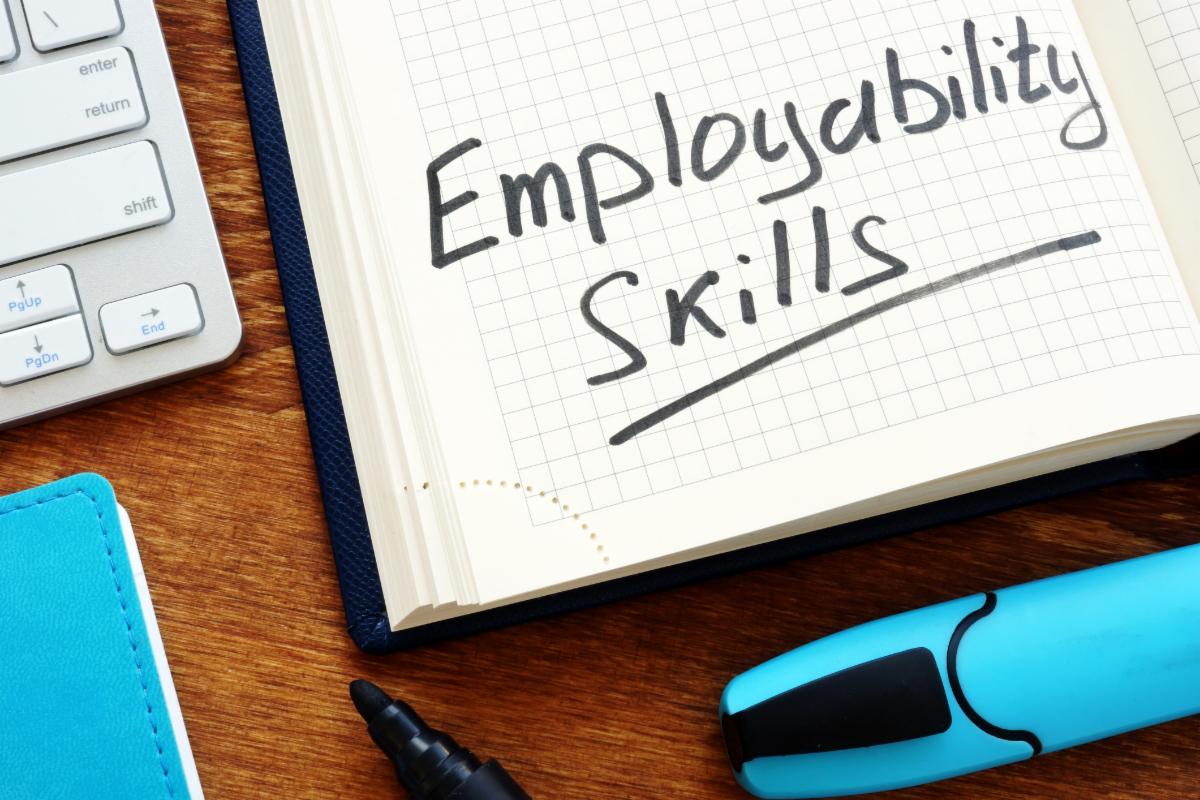
For many years, America’s public workforce system has helped people gain technical skills, earn credentials, connect with employers, and prepare for in demand occupations. This work is still essential. Employers need people who can operate equipment, deliver healthcare, manage technology, build infrastructure, and complete the specific tasks required by their industries.
However, being ready for work now means more than having technical skills.
Technical skills help people qualify for jobs, and employability skills help them succeed after they are hired. Long term success also depends on how well that person communicates, works with others, solves problems, manages responsibilities, adapts to change, and responds to feedback. Workforce development is therefore helping people build employability skills alongside their job specific skills.
From Technical Skills to Employability
Job skills allow a person to complete the technical duties of a specific role. Employability is broader than getting hired. It is the ability to find meaningful work, meet workplace expectations, contribute to a team, remain employed, continue learning, and advance over time. Read More
| | |
From an Idea to a
National Celebration:
The Story of
Workforce Development Month
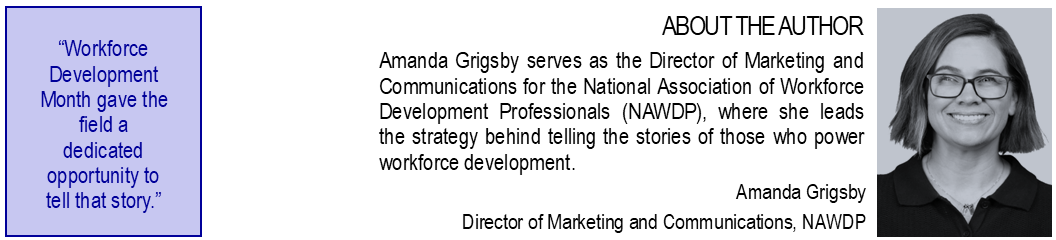
Every September, workforce development organizations across the country share success stories, recognize the professionals behind programs, engage community leaders, and shine a light on the work that connects people with opportunity.
But Workforce Development Month did not simply appear on the calendar.
It began with the National Association of Workforce Development Professionals® (NAWDP) and a belief that the people and programs strengthening America’s workforce deserved greater recognition.
Creating a Month for Workforce Development
In 2005, NAWDP® created Workforce Development Month with a clear purpose: to raise awareness about the importance of the workforce development industry to a growing national economy.
The idea addressed a challenge that remains familiar to many workforce professionals today. Workforce development touches nearly every community and plays an essential role in connecting jobseekers, employers, education, training, and support services. Yet much of that work happens outside the public spotlight.
Read More
| | |
Making Workforce
Services More Accessible
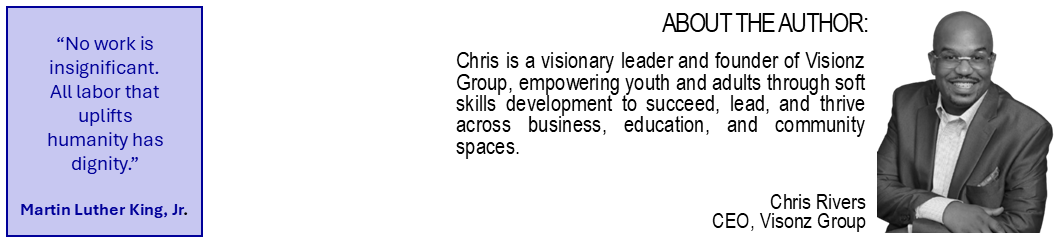
At Visionz Group, improving access to workforce services has never been about creating another program. It has been about understanding where people face barriers, listening to what those barriers reveal, and building practical solutions that help individuals move forward with clarity, confidence, and efficiency.
Through our work alongside the public workforce system, we saw a challenge that is both common and often overlooked: resources may exist, but access to them can still be fragmented. For dislocated workers and other jobseekers, navigating workforce services can be overwhelming. Finding support for training, employment, transportation, housing, childcare, and other needs often requires moving across multiple websites, agencies, and systems. At the moment people need help most, the process of finding it can feel like a second full-time job.
That is where the real gap appears. The issue is not always the absence of resources. Often, it is the lack of a clear, connected pathway to them. Read More
| | |
The Need for Humanized
AI in Workforce Development
Workforce Development Month is a time to celebrate the people and organizations committed to helping individuals create better futures through opportunity, training, education, and employment. But it is also a time to think about where our industry is headed.
One of the most significant opportunities—and challenges—we face is Artificial Intelligence.
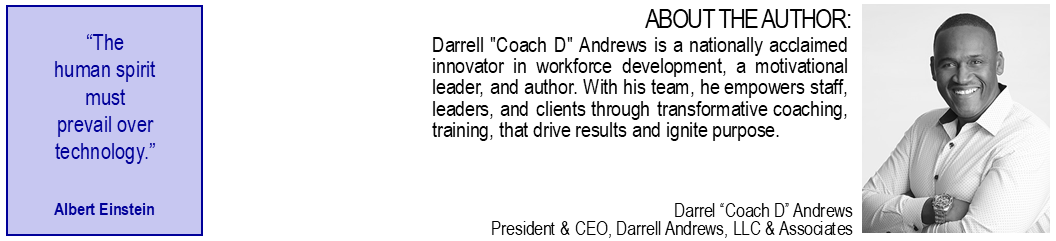
As a consultant, coach, and motivator to the workforce development industry, I have spent years communicating the importance of culture and leadership to overall client success. We can have the best technology, systems, assessments, and resources available, but if the people delivering those services aren't equipped to connect, communicate, coach, and lead, our clients ultimately feel the impact. That is why I believe the future of workforce development requires Humanized AI. AI should not replace the human connection that makes workforce development powerful. It should strengthen it.
We should be asking how AI can help our staff become more effective, help our leaders lead better, and help our clients move closer to their goals. Read More
| | |
The Invisible Infrastructure: Validating the "Glue Work"
of Workforce Development
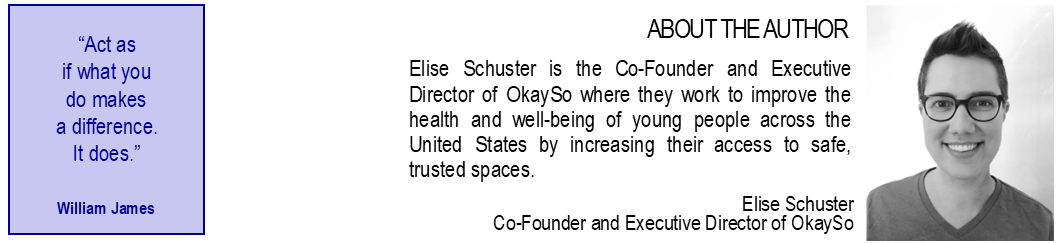
When we talk about the public workforce system, the conversation often shifts toward the high-level indicators of success: job placement rates, credential attainment, and employer engagement statistics. These are the metrics we report to stakeholders, and they are essential. But as practitioners on the ground, we know that these outcomes aren’t generated in a vacuum. They are the result of an invisible infrastructure—the “glue work” that keeps the system from fracturing under the weight of the challenges our participants face every day.
For those of us working directly with young people, the real work often happens in the margins. It’s the behind-the-scenes coordination that happens before a participant even reaches the interview stage. It’s the time spent troubleshooting a transportation barrier that threatens a training placement, or the quiet, persistent effort of aligning education providers with local employers so the pipeline actually reflects the regional economy.
When we talk about “integrated systems”, we aren’t just talking about org charts or MOUs. We are talking about the reality of what it takes to support a young person through transitions. Read More
| | |
The System
Belongs to you
If America's public workforce system remains one of our best-kept secrets, that is not simply an outreach challenge. It is a communication challenge. As workforce professionals, we have a responsibility to own our part of that challenge.
Strengthening workforce outreach takes more than distributing flyers, posting on social media, or announcing that a program is enrolling. Targeted communication is an art. It requires us to understand the people we serve, how they receive information, whom they trust, what language resonates with them, and what they need to hear before they will act. And that looks different in every community.
The message that connects with a young adult searching for their first career opportunity may not resonate with a system-impacted person returning home and asking an employer to see beyond a conviction. Communities that have experienced generations of disinvestment may also respond differently to institutions promising opportunity.
That context matters.
For system-impacted individuals, employment can mean far more than a paycheck. It can mean stability, dignity, reunification with family, meeting supervision requirements, and establishing an identity beyond the justice system. Read More
| | |
More Than Jobs:
Telling the Story
Behind America’s Workforce Success
If you ask the average person what a Workforce Development Board does, you may get a blank stare.
There is greater uncertainty about where someone should go after losing a job, needing new skills, wanting to earn a high school equivalency, looking for career training, or trying to hire qualified workers.
Yet every day, across communities throughout America, the public workforce system is working behind the scenes to connect people, businesses, education, and opportunity. The problem isn't that the workforce system isn't doing important work. The problem is that we don't always tell the whole story.
For many people, when they hear the term “workforce development,” they think of job placement. But landing a job is often just one chapter in a much larger story. Workforce development is about helping people build skills, navigate barriers, access opportunities, and move toward greater economic mobility. It is also about helping employers find and develop talent and helping communities build stronger economies. Read More
| | |
How Local Workforce Boards Make the System Work
Imagine you've just moved to a new community. You're looking for a better job, but you're not sure where to start. A local manufacturer is hiring, but they need workers with technical skills. The community college offers training, but you don't know which program leads to a real job. The employer needs qualified employees, the college wants students who will succeed, and you need a clear path to a good career. Everyone has a piece of the puzzle—but no one is connecting the pieces.
That's where a local workforce board comes in.
A local workforce board is the community's convener, strategist, and problem solver for workforce challenges. It brings together employers, educators, economic development organizations, community nonprofits, labor partners, and government agencies to make sure people can find meaningful careers and businesses can find the talent they need.
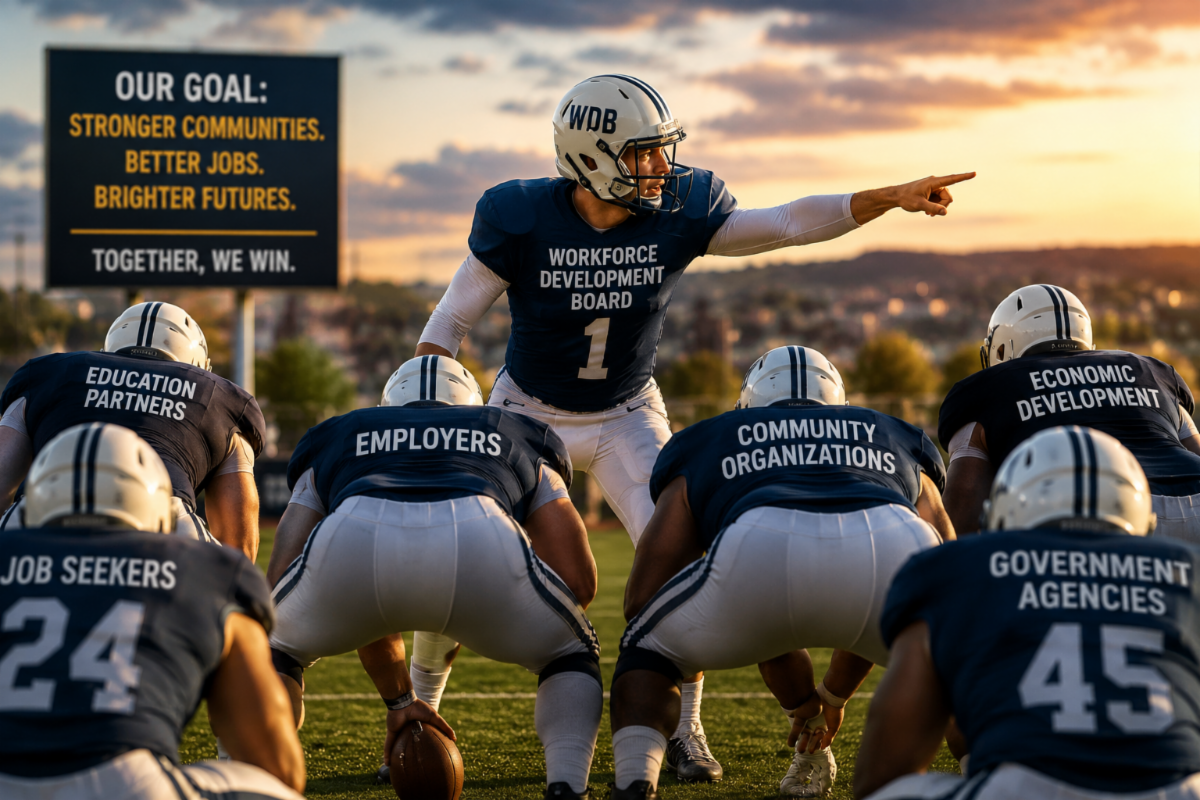
Think of a local workforce board as the quarterback of a team. The quarterback doesn't catch every pass or make every tackle, but they help everyone work together toward the same goal. In the same way, local workforce boards don't replace schools, colleges, employers, or job centers. Instead, they align these partners around a shared strategy, so the entire workforce system works better. Read More
| | |
Lab Instruction and Apprenticeships
This article focuses on an instructional topic that hasn’t been discussed sufficiently in the apprenticeship literature, which is unfortunate. That is, the instruction that occurs in a lab setting. For one reason or another, we focus more on what occurs in classrooms, while the lab has been overlooked, even though it’s likely that apprentices spend more time learning in a lab than a classroom setting. As the name implies, labs are controlled learning environments, located in a school, union training center, or company-sponsored training center, that provides trainees a hands-on learning experience. When considering labs, simulators and similar devices that represent real situations to trainees should be included in this definition.
Today, with the increased emphasis on skills development, lab instruction has become even more important when planning and delivering apprenticeship programs, especially when considering a competency-based approach. The lab is where skills are first developed. My first experience in developing lab instruction was in a university-based school of technology, involving a lecture/lab course on using the PDP-8 computer which, at one point, was the most advanced 12-bit minicomputer on the market. I realized early on that effective lab instruction depended on considering the classroom and lab objectives as being complementary parts of the same overall lesson. Otherwise, what is learned in each setting becomes disjointed and likely confusing to the student. Read More
| | |
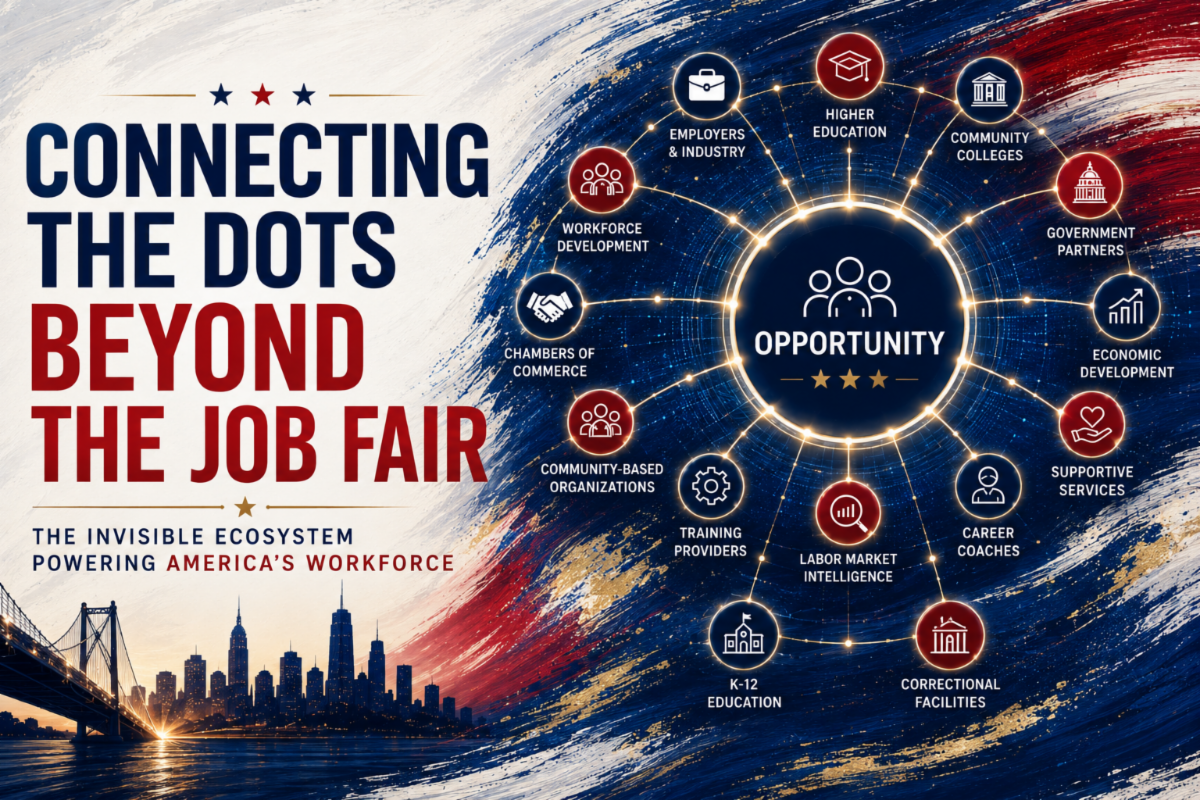
The Invisible Ecosystem Powering America's Workforce
When I experienced being laid off after more than two decades in the private sector, I did not immediately enter the public workforce system.
Instead, I became an entrepreneur. For more than two years, I worked to build and sustain my own small business. That experience taught me a great deal about resilience, risk, and the realities of creating economic opportunity for yourself. But eventually, the business was not generating enough income, and I had to begin looking for employment again.
I updated my résumé, submitted applications, and tried to make sense of how my years of private-sector leadership and entrepreneurial experience fit into a changing labor market.
What ultimately changed my trajectory was not another online application. It was a conversation. A career coach at my local workforce development organization took the time to understand the full arc of my experience—not only my previous career, but also what I had learned through entrepreneurship, the challenges I had faced, and the value I could bring to a new opportunity. She helped me recognize transferable skills, reconsider how I positioned myself, and see possibilities I had not been able to see alone.
Years later, after joining the public workforce system myself, I understood that she was the human face of something much larger: an entire ecosystem working behind the scenes to connect people, resources, and opportunity. She was the visible face of an invisible ecosystem. Read More
| | |
Community Spotlight Advertisements
The Community Spotlight is open to any organization, employer, or partner that wants to share programs, services, events, or solutions with a national audience of workforce leaders and practitioners.
Created by workforce development stakeholders for workforce development stakeholders, the MUS Connector provides a respected platform for those contributing to workforce innovation, talent development, and system strengthening to connect with peers across the country.
Community Spotlight advertising also serves as a meaningful way to support the ongoing work of Midwest Urban Strategies as a 501(c)(3) nonprofit. To learn more about placement options or request a rate card, please contact Casandra.
Please Note: For your convenience, all advertisements are clickable links.
Learn more about our Authors by clicking on their headshots.
Explore and Connect Today!
734-331-8604
| |
Next month’s newsletter theme
will focus on:
Digital Literacy and Workforce Readiness Through
AI and Technology
Questions about article submission?
We are happy to help!
262-794-3019
casandra@midwesturbanstrategies.com
| | |
PARTNER WITH MUS
THROUGH SPONSORSHIP!
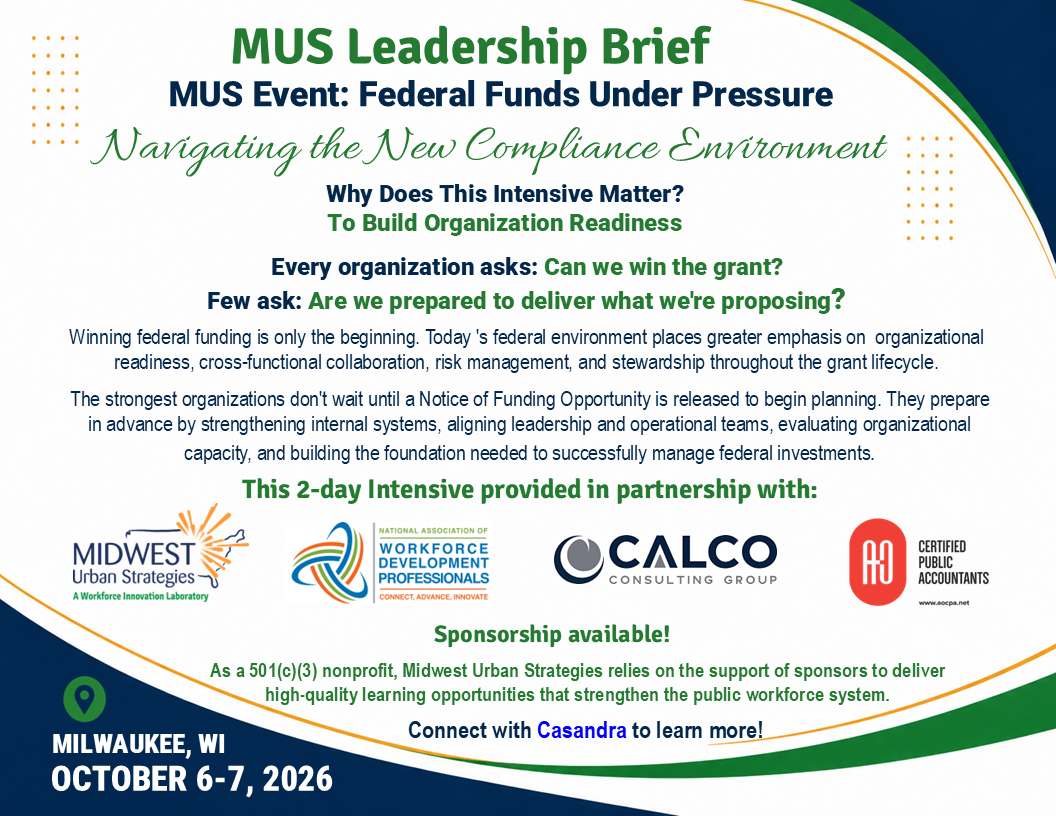
Partner with Midwest Urban Strategies to support a timely training experience helping organizations strengthen compliance, accountability, and stewardship of federal funds. Your sponsorship connects your organization with workforce, nonprofit, finance, grants management, and executive leaders navigating today’s changing federal funding environment.
Learn how you can get involved : Here
| | | |
CLASSIFIED SECTION:
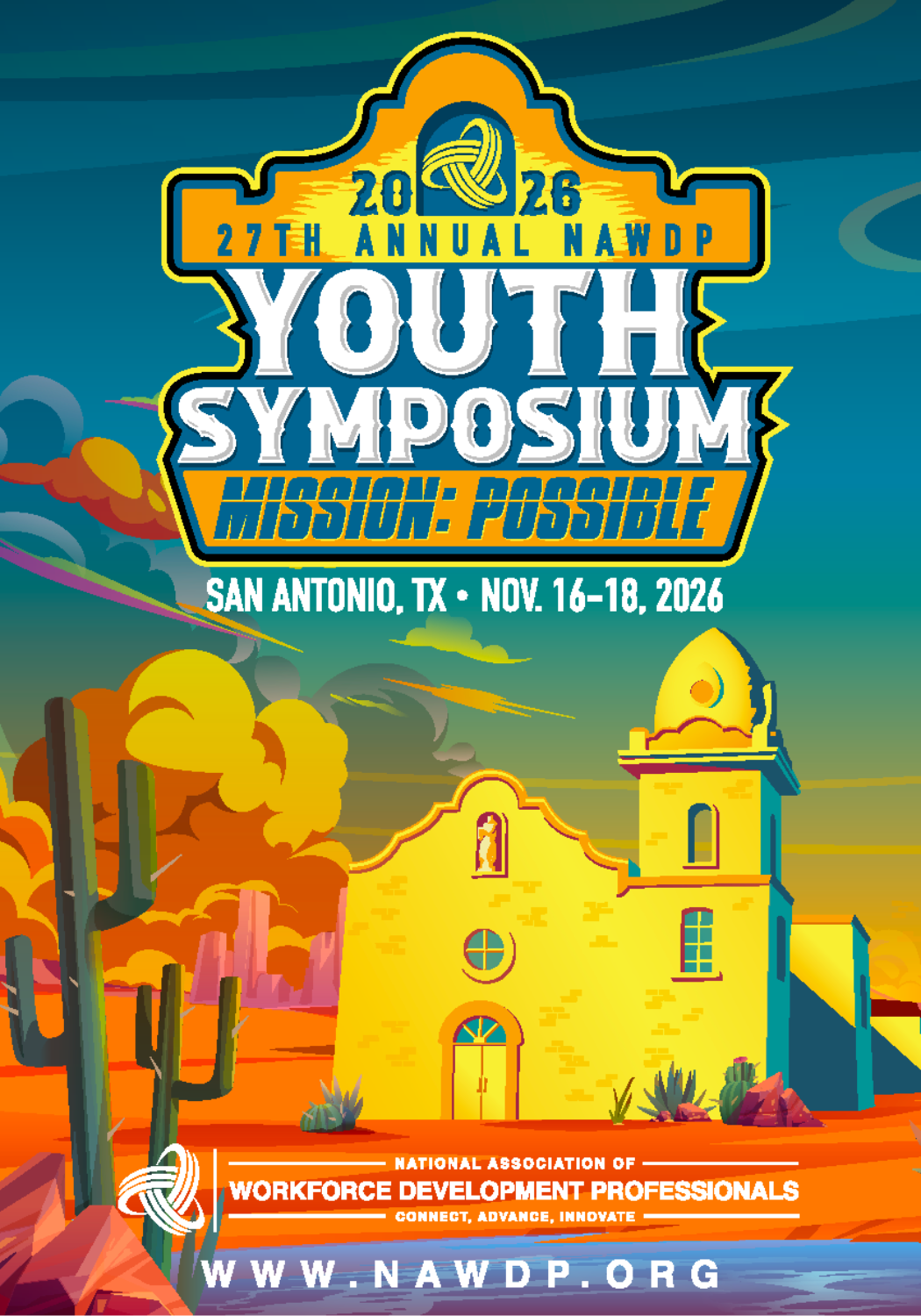
EVENT: NAWDP Day of Learning: The Resilient Workforce Professional, September 29, 11:00 am – 2:30 pm CDT | Join NAWDP for this Day of Learning event designed to help you build the habits and confidence to succeed in your career while continuing to make a difference in the lives of others. Through four interactive sessions, you’ll discover practical strategies to recharge your energy, manage your time with purpose, embrace new opportunities for growth, and recognize the leader within you. Register: Here
MUS EVENT: October 6–7, 2026.Federal Funds Under Pressure: Navigating the New Compliance Environment. Join Midwest Urban Strategies for a two-day intensive designed to help workforce organizations, nonprofit leaders, grant managers, finance professionals, and compliance teams prepare for the evolving federal funding landscape. Strengthen organizational readiness, reduce compliance risk, and build confidence before the next funding opportunity. Register: Here
Sponsorships are available for this event, view packages: Here
EMPLOYMENT: Open positions for the OhioMeansJobs Cincinnati-Hamilton County Center in Cincinnati, Ohio The Workforce Council of Southwest Ohio is contracting with DB Grant Associates, Inc. to operate the job center and provide RESEA, WIOA adult and WIOA dislocated services (as of July 1). We are looking for workforce development professionals who are committed to serving the community, innovative, and future-focused! Grant Associates anticipates filling 15 – 20 roles. Visit their website to see open positions: Here
ANNOUNCEMENT: Sponsor MUS. Our sponsors receive red carpet treatment! Supporting MUS comes with plenty of benefits and opportunities to build strong connections and partnerships. Inquire within to learn more: Here
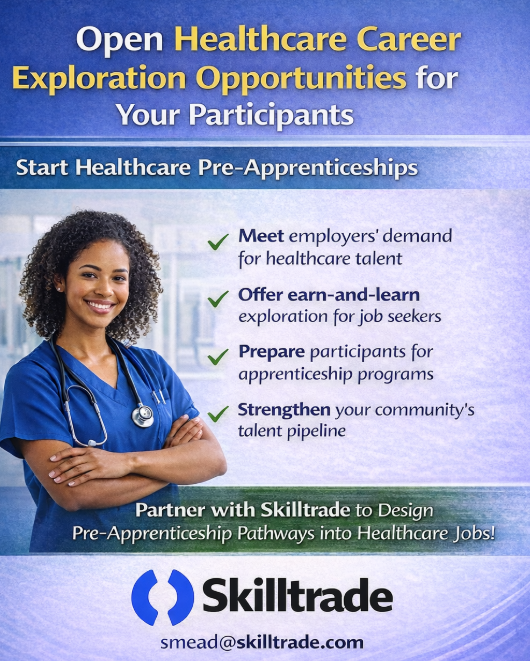
ANNOUNCEMENT: Skilltrade seeks partners to launch new Clinical Medical Assistant Career Training Pilot Programs across the country. Contact Sandy Mead to collaborate and learn more: Here
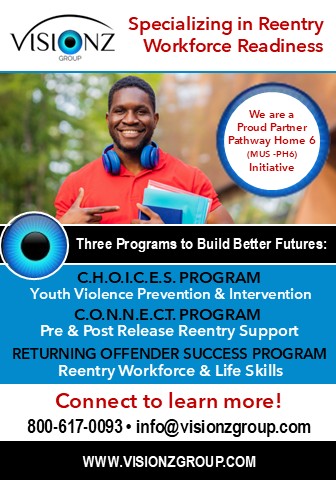
ANNOUNCEMENT: Visionz Group seeks partners to collaborate on expanding workforce readiness and reentry training programs in communities nationwide. Organizations interested in strengthening youth intervention, pre- and post-release support, and returning citizen workforce development are encouraged to connect and learn more: Here
ANNOUNCEMENT: The Foundation for Talent Transformation introduces its Well-being Framework in a comparative study of global models. More About Well-being Framework: Here
ANNOUNCEMENT: MUS Learning Labs are open to all, especially our readers. These online, expert-led sessions bring together professionals from various fields to explore key topics such as labor market statistics, early childhood education, workforce development programs, apprenticeships, and more. The best part? Learning Lab topics are selected by you—our readers and members—ensuring they remain timely and relevant.Sign up to receive an invitation to all MUS Learning Lab: Here
ANNOUNCEMENT: The MUS Connector would like to feature your success stories! Share your impact and inspire others. Submit your story: Here
ANNOUNCEMENT: MUS Wants to Hear About Your Workplace Wellbeing Initiatives! We are gathering insights on how our partners support well-being in the workplace. Do you offer initiatives that help employees thrive? Share your strategies and inspire others. Submit your workplace well-being initiatives: Here
| | Disclaimer: The views and opinions expressed in the author’s articles featured in this newsletter are those of the individual authors and do not necessarily reflect the official policy or position of Midwest Urban Strategies nor do they represent the views of any federal funding agency. Inclusion of these articles does not imply endorsement by Midwest Urban Strategies. | | | | |