¡Versión en español a seguir! |
|
This month at QSLA, we focus on supporting young children and families' mental health by promoting mental health awareness and strategies. |
|
|
What types of Family Engagement resources in our newsletters are most useful for you?
|
|
|
|
Community Partnerships
Use Community Resources to Strengthen Program Quality
|
|
NAMI Urban Los Angeles
Resources and Support Groups
|
|
The National Alliance on Mental Illness (NAMI) Urban LA chapter offers a variety of supports around mental health, including educational programs, resources and family support groups (in both English and Spanish) for individuals and family members of those living with mental illness.
- NAMI Family Support Groups are free, confidential and safe groups of families helping other families who live with mental health challenges - offered either in-person or on Zoom.
- NAMI also offers free educational classes, school-based programs, and presentations focusing on sharing research-based information for individuals and families to support them with mental health symptoms.
|
|
Knowing and using these community resources will support PAS: Item 17- Family Support Involvement, BAS: Item 8-Community Resources, and NAEYC Accreditation: Standard 7-Families |
|
Welcoming Environment
Ensure Your Program Feels Inviting
|
|
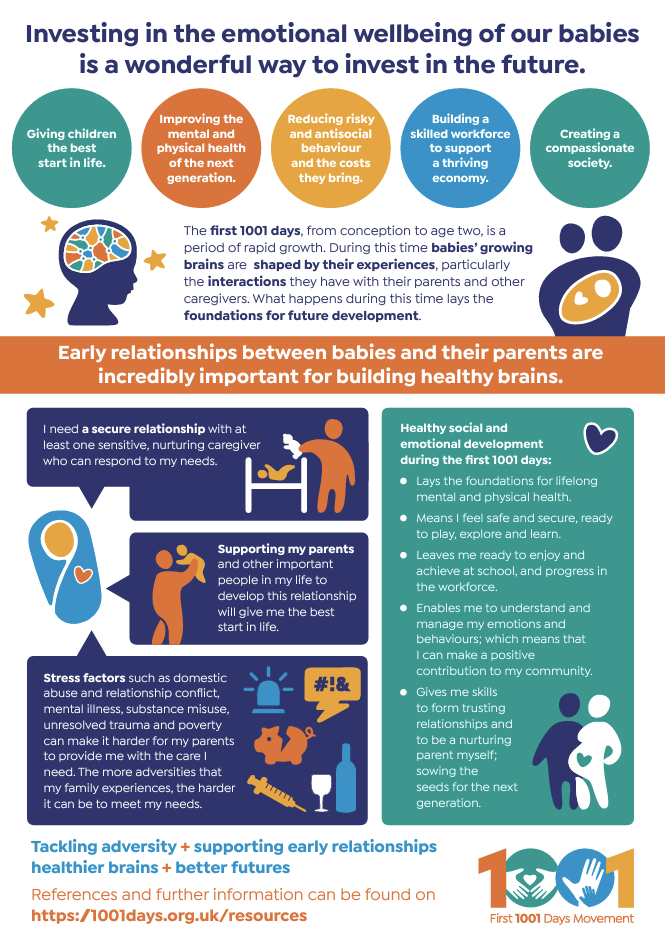
The First 1001 Days of Infant Mental Health |
|
Created by the Parent-Infant Foundation in the UK, these robust infographics highlight key facts and reasons as to why the relationship between parents and their babies are so vitally important! These infographics make it clear that BOTH tackling adversity AND supporting early relationships are important in giving children the best start in life. Check out these two infographics below!
|
|
|
This resource will support ECERS-R: Item 9 and FCCERS-R: Item 35- Provisions for Parents, PAS: Item 16- Family Communications, and BAS: Item 7- Provider Parent Communications. |
|
Staff Development and Support
Enhance Your Family Engagement Knowledge and Skills
|
|
Trainings to Support Self-Care |
|
Connections for Children: Module 7 - Self-Care for Providers
2 hour training that builds on the concept of trauma-informed care by helping providers understand how self-care impacts daily interactions with a child. By attending, you will receive stress reducing strategies as well as more ways to help you navigate the impact of working with children and families!
|
|
Wednesday, May 31st
6:00 - 8:00PM
|
|
The Cost of Caring: Compassion Fatigue and the Importance of Self-Care
The Child Care Resource Center is offering this training, where providers will learn about the types of stress encountered in the work they do as Early Childhood Educators. As a participant, you will take a deeper dive into what is stress and will have a better understanding of your own levels of stress and what causes it. As an educator, you will take away valuable self-care techniques and strategies you can use in a moments time to self-regulate and achieve calm.
|
|
Thursday, May 18th
6:00 - 8:00PM
|
|
Creating More Mindful Family Engagement Practices
In this 1-hour self-paced course, you will explore mindfulness and the value it brings to our relationships with ourselves and the families we serve. Check it out to explore how to incorporate mindfulness into our family engagement practices, how to hold space for ourselves and others, and for it's valuable resources!
|
|
|
These trainings support ECERS-R: Item 43- Opportunities for Professional Growth, PAS: Item 3- Staff Development, FCCERS-R: Item 37- Opportunities for Professional Development, and BAS: Item 1-Qualifications and Professional Development |
|
Family Partnerships
Work with Families to Build a Stronger Program
|
|
Sesame Workshop: Emotional Well-Being |
|
Sesame Workshop (formerly Sesame Street in Communities) offers this marvelous "Emotional Well-Being" resource page focusing on supporting children's mental health. Sesame Workshop designs their offerings to be family-friendly, making these resources powerful and accessible tools to work alongside families in support of their child's well-being! Curious about where to get started? Check out this highlighted resources!
-
"Me and My Grown-Up" - Video and Lyric Page
-
"The Feelings Garden" - Video and Handout
-
"Tuning In" - Explore ways to notice, recognize, and respond to children's needs. (Article)
|
|
|
This resource will support ECERS-R: Item 38 and FCCERS-R: Item 35- Provisions for Parents, PAS: Item 16- Family Communications, and BAS: Item 7- Provider Parent Communications. |
|
Equitable Approaches to Supporting Children and Families
|
|
Pathways to Mental Health, Wellness, and Healing |
|
Created by Head Start, this 20-minute video "Pathways to Mental Health, Wellness, and Healing" offers perspectives on mental health support and healing within historically marginalized communities. In the face of adversity and exclusion, these populations have created and sustained strategies to promote mental health and healing that can be applied in Head Start and other early learning programs to support staff, children, and families.
|
|
|
If you would like to share some inspiring words, click here! To see more provider perspectives, field related news, and early learning resources follow our social media accounts.
*These quotes have been edited for grammar and clarity.
|
|
Are you looking for support in another area?
|
|
Check out our QSLA pages below! |
|
Were you forwarded this email?
Would you like to sign up to receive our Family Engagement Newsletters?
|
|
|
|
|
|
|