|
|
Explore the most-watched on-demand trainings of 2025, chosen by hundreds of professionals who turned to Safer Society to enhance their skills in clinical practice. These trainings offers current insights and evidence-informed approaches in treating individuals with problematic sexual behaviors.
From group therapy for people who have sexually offended to understanding ADHD in adolescents who engage in harmful behaviors, each session is designed to provide high-quality training that supports you in doing your work more effectively and efficiently.
| | |
Top Viewed On-Demand Trainings from 2025
| |
Free Training! Current Insights and Effective Approaches in Treating Adults Who Have Sexually Offended | Staying current with best practices is essential for professionals working with adults involved in sexual offending. This free training provides an overview of advances in the field over the past half century, offering participants practical knowledge needed to prevent further offending and support clients in building lives where abuse is unnecessary and undesirable. The presenters—Katie Gotch, Seth Wescott, and David Prescott—draw on current research, practical experience, and the collective expertise of leaders in the field. Participants have the opportunity to reflect on evolving standards and consider how these changes can inform their daily practice. | | | |
The Fundamentals of Sex Offense-Specific Treatment | |
Effective sex offense-specific treatment programs consider their participants’ risk for re-offense, the treatment needs that will mitigate this risk, and each individual client’s ability to respond to treatment. It is now standard practice to assess dynamic risk to improve the overall accuracy of risk assessments. This training will provide vital information about how treatment providers can help their clients understand and address their dynamic risk factors and manage their sexual impulses and arousal.
This training offers practical guidance for using treatment to change dynamic risk factors in ways that can significantly help to reduce risk for future offending. It focuses on developing positive “approach goals” that build protective skills and address deficits. It further explores integrating information from a dynamic risk assessment tool (the Violence Risk Scale: Sexual Offense Version) into treatment planning.
| | | |
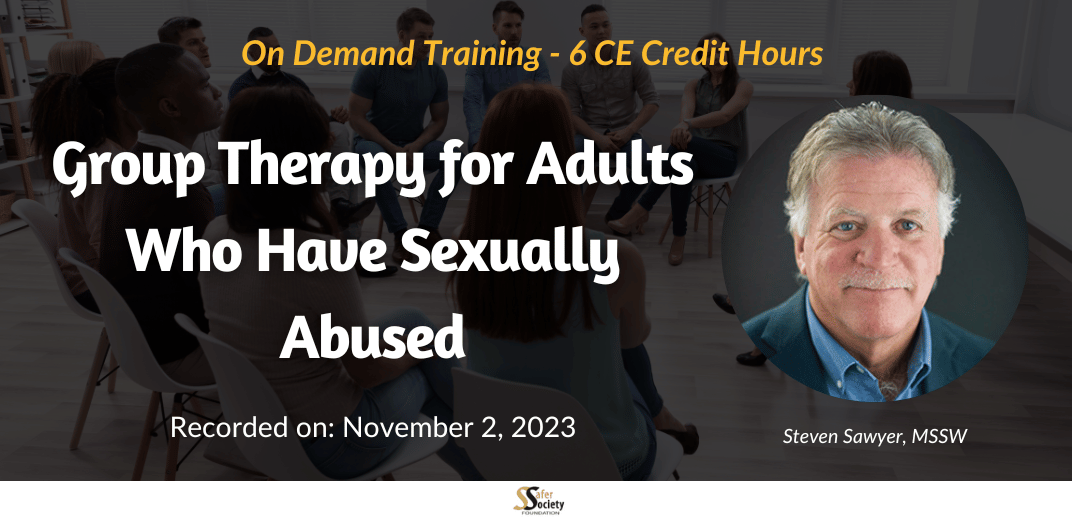
Group Therapy for Adults Who Have Sexually Abused | |
For many years, group therapy has been the preferred mode of treating adults who had sexually abused, quite simply because it is more efficient—in terms of both time and cost—than individual treatment. Today, however, we know that group treatment is about so much more than treating many clients at once.
This online training focuses on how treatment providers can create and facilitate high-functioning treatment groups that benefit clients and improve treatment outcomes. It outlines what works in group treatment and what the research evidence has shown. Areas such as group cohesion, the therapeutic alliance, and how member interactions deepen the group’s impact on each group member form the center of this training’s discussions.
| | | |
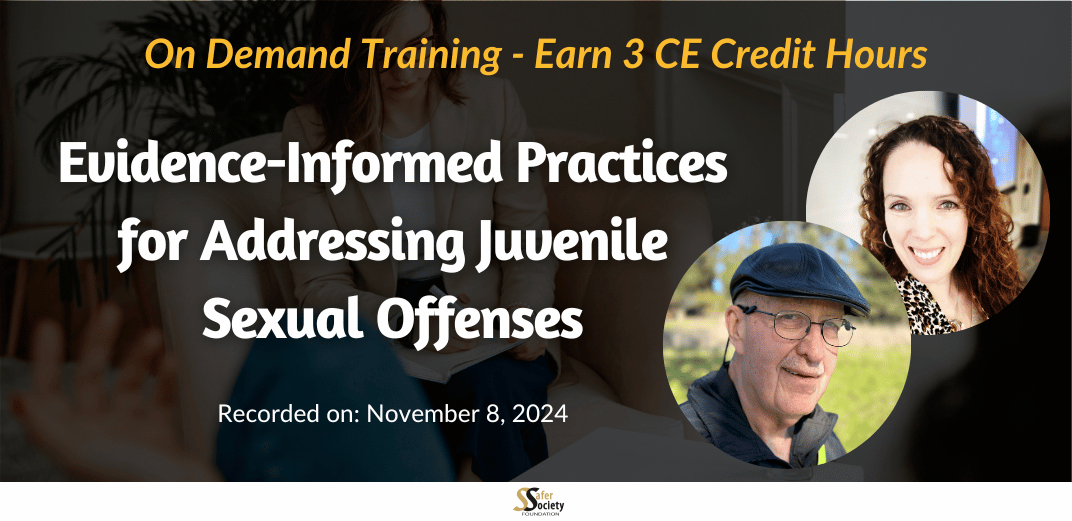
Evidence-Informed Practices for Addressing Juvenile Sexual Offenses | Staying informed about the latest research and practice innovations is essential for practitioners working with juveniles who have sexually offended. This training is designed to equip professionals with the knowledge and resources necessary to understand, assess, and treat adolescents who have sexually abused. By delving into emerging research findings and best practices, this training addresses the complexities faced by practitioners striving to implement the most effective policies and programs. | | | |
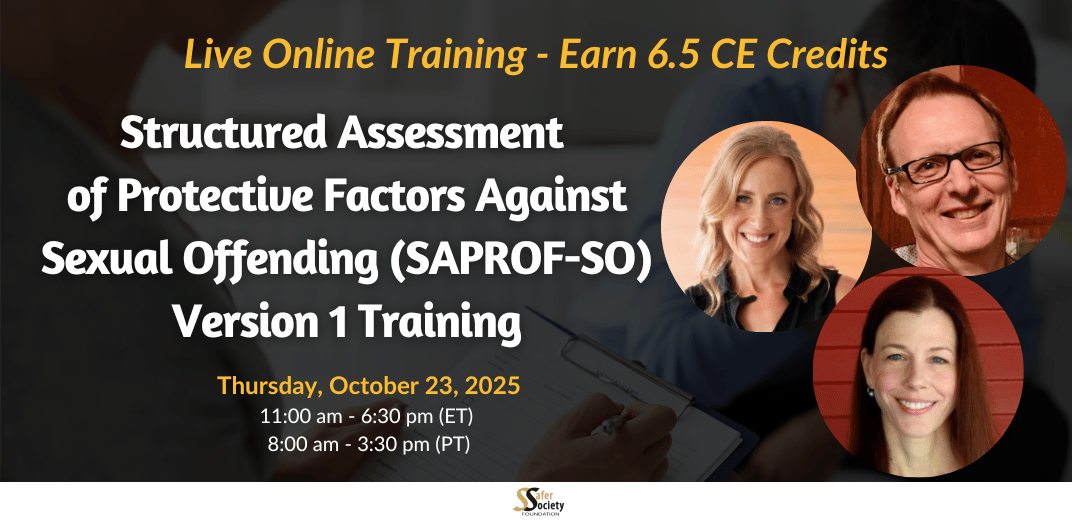
Structured Assessment of Protective Factors Against Sexual Offending (SAPROF-SO) Version 1 Training - October 2025 | |
The SAPROF-SO is a tool for assessing protective factors for individuals with a history of sexual offending, integrating with strengths-based therapeutic approaches. This tool comprises 14 items across three key subscales: Resilience, Adaptive Sexuality, and Prosocial Connection & Reward, with an optional fourth subscale, Professional Risk Management.
Renowned for its strong reliability and predictive validity for reduced sexual recidivism (e.g., Nolan et al., 2023; Willis et al., 2020), the SAPROF-SO is instrumental in guiding therapy planning and risk management strategies (Kelley et al., 2022). This workshop, presented by Gwenda Willis, David Thornton, and Sharon Kelley, offers a training opportunity for clinicians interested in learning how to score and interpret the SAPROF-SO.
| | | |
Understanding ADHD in Adolescents Who Display Harmful Sexual Behavior | |
Research shows that 30-50 percent of adolescent males who have exhibited harmful sexual behavior (HSB) have ADHD. The core traits of attention-deficit/hyperactivity disorder (ADHD)—such as impulsivity, inattention, emotional dysregulation, and executive functioning deficits—can significantly contribute to the risk of engaging in further harmful behaviors. However, when understood and managed appropriately, ADHD can also foster strengths that contribute to recovery and future success. Therefore, the implementation of effective interventions is essential.
In this training, Jonny Matthew, a social worker and criminologist with more than 30 years of experience, underlines the necessity of trauma-informed approaches and explores methods for making treatment more effective, such as compassionate engagement and creating a safe environment. He also describes how medication, cognitive-behavioral therapy, and dialectical behavior therapy can be tailored to meet the needs of these youths. Drawing from his own experiences with ADHD, Matthew offers insights that help practitioners support these young people in ways that reduce risk, promote recovery, and foster long-term well-being.
| | | |
Preventing Abuse and Neglect: Free Training Orientation for Organizational Safety | |
Addressing sexual violence is a complex and challenging endeavor, but it remains our shared responsibility to take every reasonable step to prevent it. No organization is immune to the risks of abuse or neglect. This universal vulnerability emphasizes the importance of proactive measures across all sectors.
As part of our ongoing public service efforts, David Prescott, our Director of the Continuing Education Center at Safer Society, produced a series of educational videos. These two videos deliver a clear message to staff across all youth-serving organizations: abuse is preventable. The first covers the basic fundamentals. The second extended version covers these and then goes into more depth.
The videos were created to enhance your staff training programs and optimize your organization’s safety protocols. We are confident these free resources will prove invaluable in your ongoing efforts to create and maintain safe environments. Thank you for your dedication to fostering a society free from the harmful effects of sexual and social violence.
| | | | | | |