|
Across the world, communities are experiencing the escalating impacts of climate change, pollution, and biodiversity loss, while the solutions and leadership needed to respond are increasingly clear. What remains urgently lacking is the political will and funding needed to move beyond commitments to address the systems of extraction and implement meaningful action to address the climate and biodiversity crises now. The 2026 State of Biodiversity Action report makes this gap clear: while engagement in the negotiations has been significant, collective implementation remains off track, with gaps in ambition, finance, participation, and policy coherence threatening progress toward the 2030 targets.
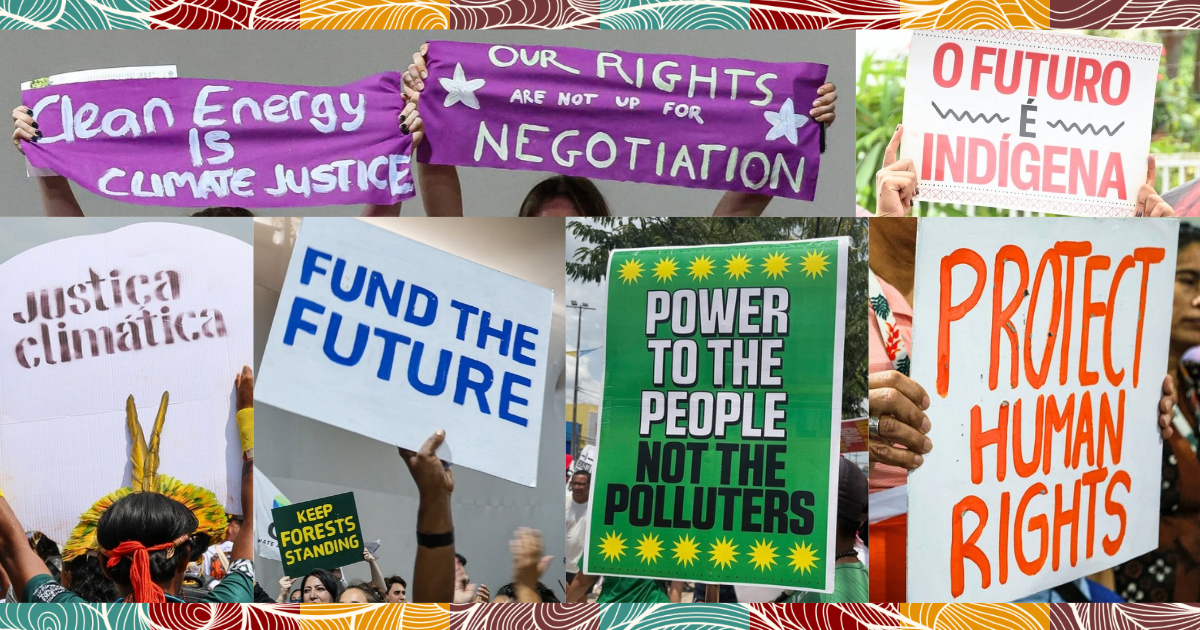
From the Pre-COP 31 climate negotiations in the Pacific earlier this month to the UN Convention on Biological Diversity negotiations happening this week in Armenia, women in all their diversity and frontline communities are showing what this action can look like. Pacific feminists and women leaders are calling for climate policy rooted in justice, care, community leadership, and protection of the living world through the 17 Urgent Demands for Defending the Living Planet. At CBD COP17, the CBD Women’s Caucus (which WECAN is honored to be a member of) is similarly calling for gender-responsive, rights-based implementation that centers the meaningful participation, leadership, and rights of women and girls in all their diversity, Indigenous Peoples and local communities, and youth. These calls and demands remind us that effective climate and biodiversity action must be shaped by those impacted by these crises and their lived realities.
Yet the gap between these demands and government action remains significant. Fossil fuel expansion and harmful subsidies continue, biodiversity financing remains far below what is needed, and communities on the frontlines continue to face barriers to resources, decision-making, and protection. As the world confronts the growing reality of 1.5°C overshoot and accelerating biodiversity loss, the solutions and leadership are already here. What is needed now is the political will to act.
“Subsidizing fossil fuels is subsidizing suicide...I urge governments everywhere to end these handouts once and for all, and to use the savings for people and planet instead.”
- UN Secretary António Guterres
In this newsletter, we share our reflections and plans on the path to COP31; key policy developments on gender-responsive climate action, biodiversity, and carbon markets; news from the growing Rights of Nature movement and our forest campaigns; and opportunities to connect with WECAN in the months ahead.
| | |
WECAN Will Be At COP31
Antalya, Türkiye
| | |
Building upon years of engagement in the United Nations Framework Convention on Climate Change (UNFCCC) climate negotiations process, the Women’s Earth and Climate Action Network (WECAN) will be in Antalya, Türkiye for COP31 from November 7–23, 2026. At this pivotal moment for international climate action, WECAN will continue advocating for a Just Transition, a fair and fast transition away from fossil fuels, gender-responsive climate policy, Indigenous rights and leadership, Rights of Nature, robust and just climate finance, and implementation that keeps 1.5°C within reach.
As the world faces the growing reality of 1.5°C overshoot, WECAN will highlight the urgent need to address the lack of political will driving continued fossil fuel expansion and climate inaction, while advancing the leadership and solutions of women, Indigenous Peoples, and frontline communities. Our advocacy will include engagement around the Gender Action Plan, Just Transition Mechanism, Fossil Fuel Treaty, Transitioning Away from Fossil Fuels, Rights of Nature, climate finance, forest protection, and Article 6 of the Paris Agreement, as well as tracking key government positions and developments across the negotiations and broader COP31 political agenda.
During the two weeks in Antalya, WECAN will also host and participate in several formal side events, press conferences, policy roundtables, and the People’s Climate Summit, connecting with women leaders in all of their diversity, frontline communities, policymakers, civil society partners, and movements from around the world. We will share policy analysis, research, reports, community-led solutions, and strategies grounded in a climate justice and feminist framework, while working alongside partners to strengthen collective action and accountability. As governments gather to negotiate next steps for global climate action, WECAN will continue to call for commitments to move beyond announcements and into meaningful, equitable climate action.
For our COP31 Events, visit our website page here. We will be updating this page frequently over the next two weeks. In our next newsletter, we will share information about our COP31 delegation and more about our advocacy work and events.
| | Save the Dates for Our COP31 Events | |
We’re excited to share two confirmed WECAN events at COP31, bringing together women leaders, frontline communities, health advocates, and climate justice partners to highlight women-led solutions and advance climate action rooted in justice, rights, and wellbeing.
Women Leading Climate Solutions on the Frontlines of the Climate Crisis
Monday, November 16 | 11:30–13:00 TRT
Side Event Room 9 – Safranbolu
At this side event, we will highlight women worldwide as innovators and agents of change in forest protection, climate solutions, women’s leadership, just transition, and mitigating and adapting to climate change and environmental degradation. The presentations will demonstrate the efforts women are making towards ambitious climate action in response to the Paris Climate Agreement with a gender lens while also uplifting progress in the Gender Action Plan, and Just Transition Work Program.
Frontline Women’s Health in the Climate Crisis
Wednesday, November 18 | 10:30–11:30 TRT
WHO Pavilion, Blue Zone
During this panel, frontline community leaders, health advocates, and leaders from climate justice organizations will delve into the toll the climate crisis and fossil fuels are taking on women’s health, and the subsequent impacts, including increased economic and caretaking strains. Simultaneously, panelists will share how women are taking action in their communities to restore traditional health practices, ensure food security, and protect the health of the planet, which is essential to the health of their communities.
| | Supporting Gender-Responsive Policy at the UN Convention on Biological Diversity COP17 | |
The Convention on Biological Diversity (CBD) COP17 is underway in Yerevan, Armenia, where governments are conducting the first global review of collective progress since adopting the Kunming-Montreal Global Biodiversity Framework in 2022. Biodiversity loss, climate change, and pollution are interconnected crises that require both government and financial leadership, yet governments continue to fund the fossil fuel industry that drives environmental destruction.
WECAN is honored to be a member of the CBD Women’s Caucus, the women’s constituency within the CBD, and to join partners in calling for gender-responsive and rights-based implementation of the global biodiversity framework. The CBD Women’s Caucus Policy Recommendations call for meaningful participation and leadership by women in all their diversity, Indigenous Peoples and local communities, and youth; stronger gender-responsive approaches to resource mobilization and monitoring; and implementation of the Gender Plan of Action.
| Challenging False Solutions in Carbon Markets Ahead of UNFCCC COP31 | |
As Article 6 of the Paris Agreement becomes an increasingly important topic in the UNFCCC process ahead of COP31, WECAN is closely tracking developments in international carbon markets and their implications for climate justice, Indigenous rights, and frontline communities. Article 6.4, which establishes a UN-supervised mechanism for trading carbon credits, is receiving growing attention as the mechanism moves into implementation.
WECAN participated in an open letter calling on the Article 6.4 Supervisory Body to address serious concerns regarding the integrity and safeguards of carbon credits under the Paris Agreement’s Article 6.4 mechanism. Our concerns reflect a broader issue we continue to track: carbon market mechanisms can risk shifting the burden of climate mitigation onto Indigenous territories and frontline communities while allowing continued emissions and fossil fuel extraction elsewhere.
WECAN firmly stands against carbon markets and avoidance credit schemes which undermine Indigenous Peoples’ territorial rights, weaken self-determination, and exclude women and traditional authorities from decision-making and benefit-sharing. Meaningful climate action must instead prioritize direct emissions reductions, secure Indigenous land rights, community-led solutions, and approaches that uphold self-determination and ecological integrity.
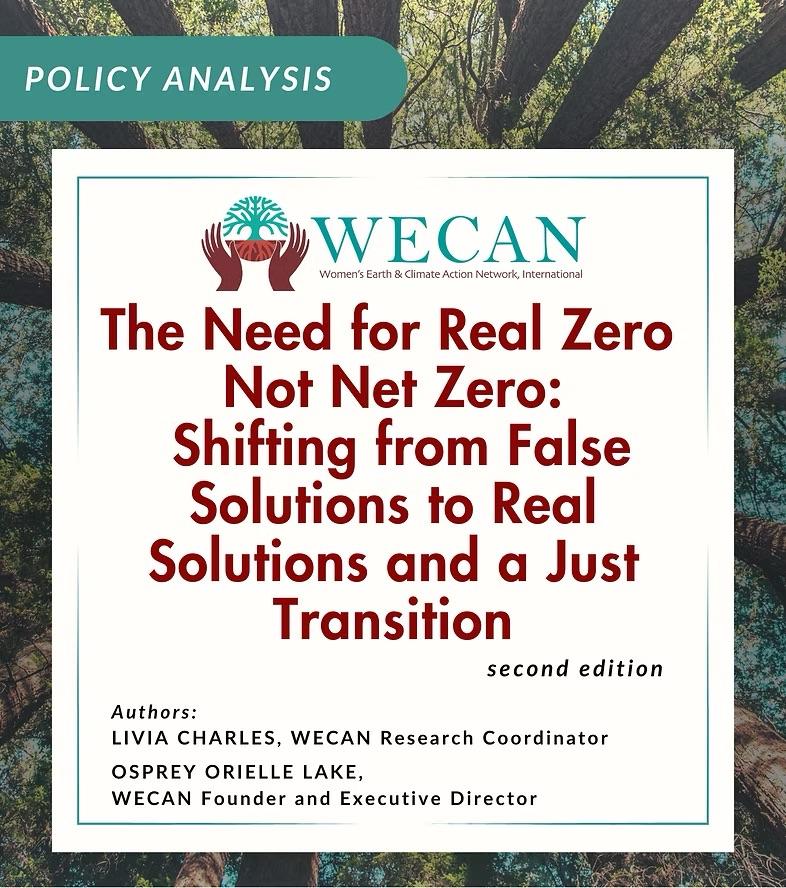
Read more about our analysis of carbon markets as false solutions in our Real Zero vs. Net Zero report.
| |
Over 99% of Public Comments Stand Up for Forests!
Comment Period to Protect Roadless Rule Now Closed
| |
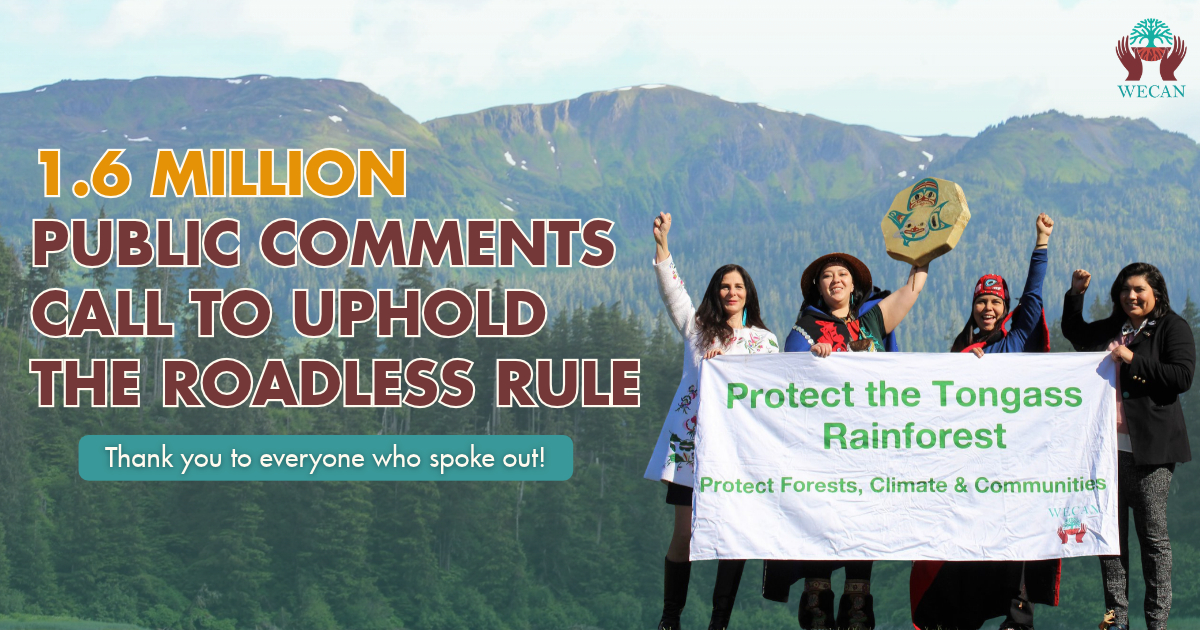
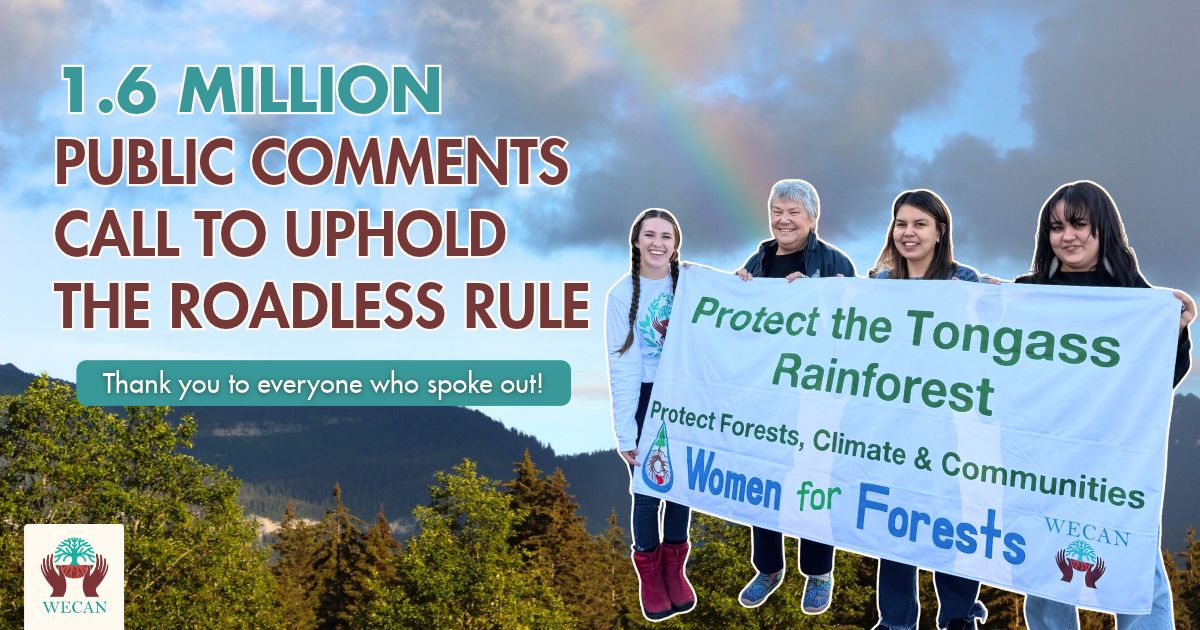
We are celebrating the tremendous outpour of public support for the protection of the 2001 Roadless Area Conservation Rule! Over 1.6 million submitted public comments have opposed repealing the Roadless Rule! This is in response to the United States Department of Agriculture’s Draft Environmental Impact Statement (DEIS) and Notice of Intent (NOI) to eliminate Roadless Rule protections for forestlands nationwide, including for the Tongass National Forest.
The public's priorities are clear. For two years in a row, the near-unanimous opinion is to protect national forestlands under the Roadless Rule, as more than 99% of comments posted to regulations.gov opposed repealing the Roadless Rule in August 2026 and September 2025.
Within the recent 45-day DEIS comment period, more than 1 million comments were submitted calling to uphold the Roadless Rule. This powerful outpouring of voices standing up for national forests, Indigenous lifeways, and global climate health reflects the enormous public support behind upholding the Roadless Rule—despite challenges of a short response period and only four opportunities nationwide to participate in a formal public hearing. This recent digital turnout adds to the over 625,000 pro-Roadless Rule comments submitted in 2025 in response to the Forest Service’s Notice of Intent.
We thank everyone who spoke out to protect these vital forests for current and future generations. Against several attempts to weaken or repeal this bedrock policy, the Roadless Rule continues to receive tremendous public support. Right now, the Roadless Rule safeguards more than 58 million acres of national forest lands, including 9.2 million acres in the Tongass Forest, from destruction by extractive industries. Keeping it in place allows the Tongass Forest to heal from aggressive and controversial commercial logging that clear-cut large areas of the forest beginning in the 1950’s.
For over 8 years, WECAN has worked with Indigenous women leaders in Alaska to protect the Tongass. Alongside Indigenous and local communities, businesses, and environmental groups, we continue resisting attempts to repeal this critical policy. We will continue to defend these vital forest protections as we await the USFS’s Final Environmental Impact Statement (FEIS) and Record of Decision (ROD). Continue to follow our social media and newsletters for updates to this campaign!
| | News from the Growing Rights of Nature Movement | | The Waccamaw Tribe Passes a Rights of Nature Resolution for the Yadkin-Pee Dee Watershed | |
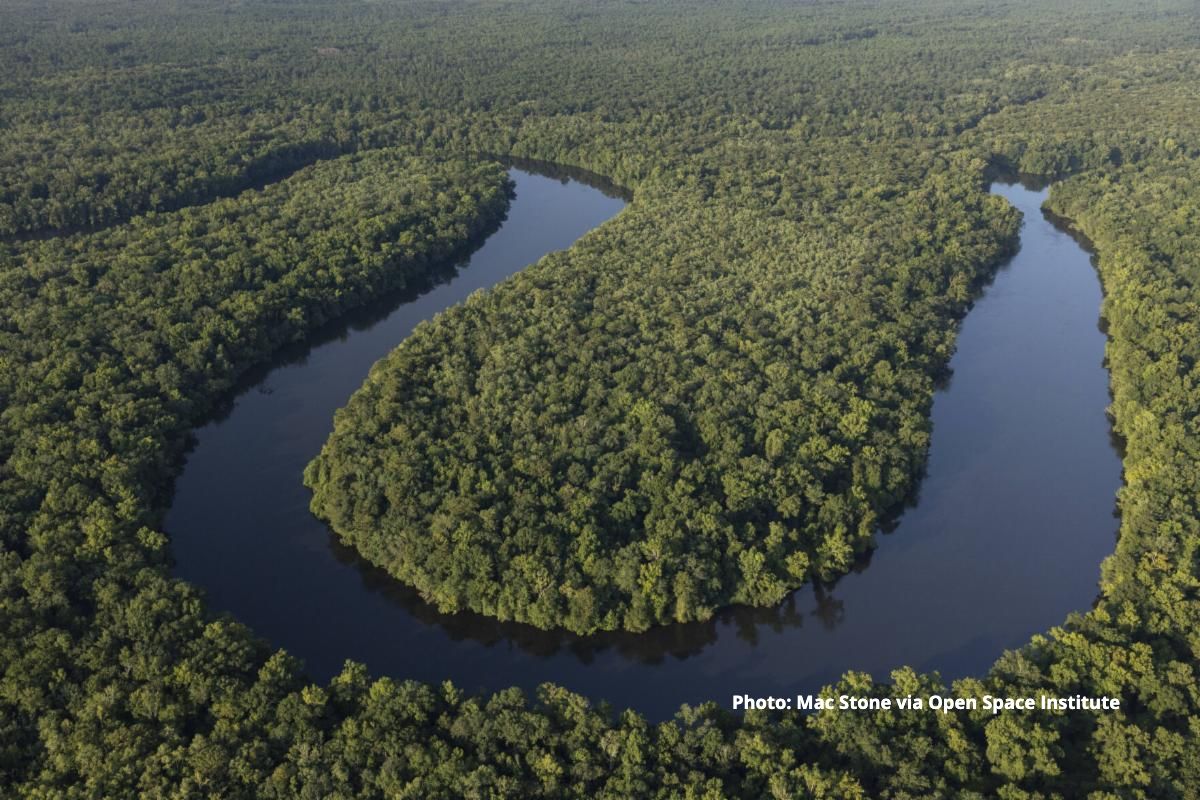
The Waccamaw Indian People have made history as the first governmental body in South Carolina to recognize the Rights of Nature. The tribe has extended to the Yadkin-Pee Dee Watershed and its neighboring ecosystems the rights to exist, flourish, and regenerate; be free of contamination; be restored; and be respected as a living community. The historic resolution joins over 700 legal initiatives across 67 countries in the growing global Rights of Nature movement, and honors the Waccamaw teachings that humans are part of nature and have a sacred responsibility to live in harmony with and care for our Earth.
“The policies that currently exist don't consider the impacts to nature, the water, the land…we need to be operating in a way that will be in conjunction with nature.”
– Chief Cheryl Cail of the Waccamaw Indian People
| | In Solidarity with Indigenous Communities and Partners in Brazil | | |
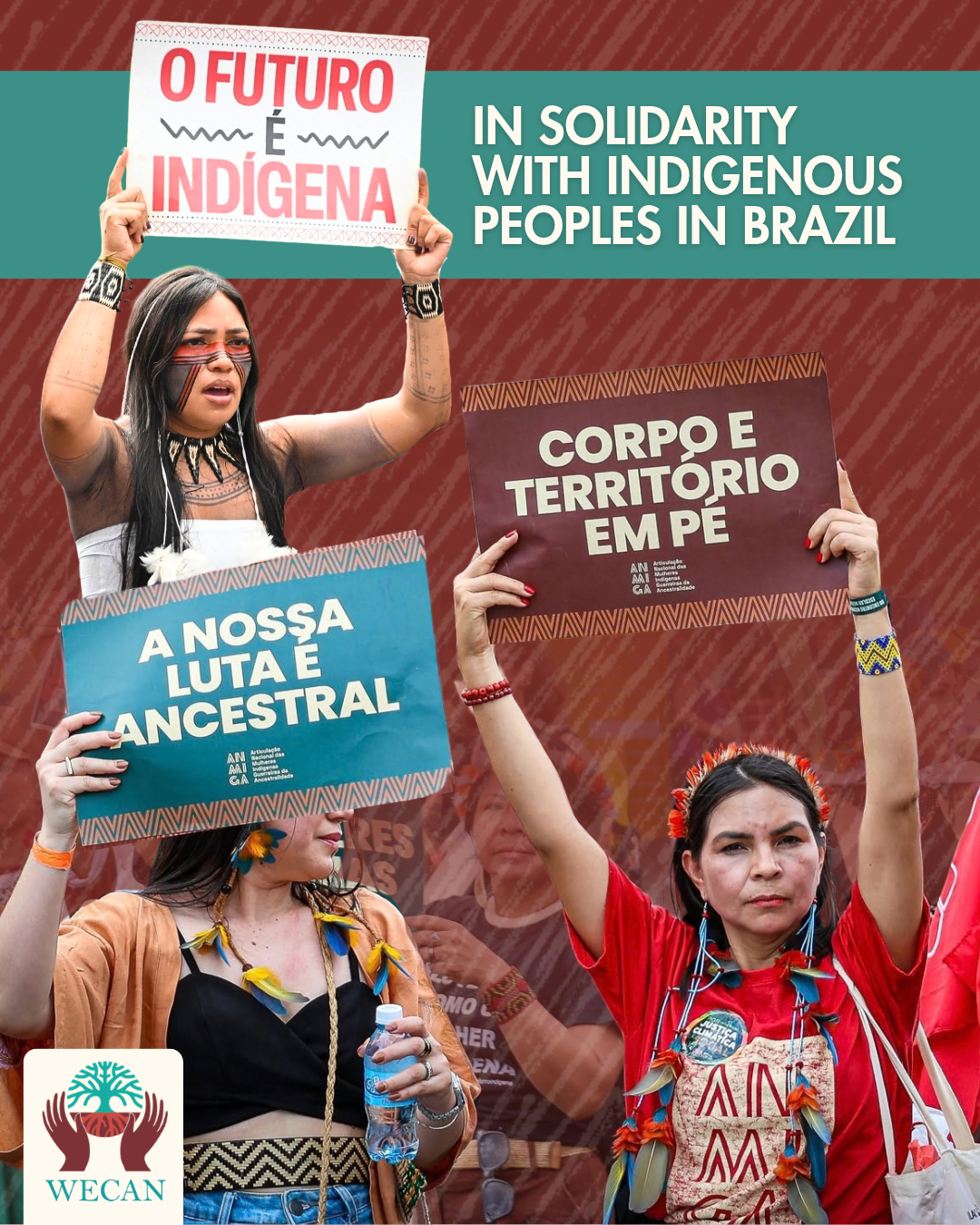
Brazil’s October 4 elections brought serious challenges for Indigenous Peoples and environmental protections for the Amazon. Right-wing parties made significant gains in Congress, with the far-right Liberal Party becoming the largest party in both chambers and now holding 35% of Senate seats beginning in 2027. Together with other right-wing parties, the Liberal Party will hold a Senate majority. Indigenous leaders have warned that this new political landscape could bring renewed efforts to weaken constitutional protections for Indigenous Peoples, expand extractive activities, and undermine territorial and environmental protections. As Dinamam Tuxá, Executive Coordinator of the Articulation of Indigenous Peoples of Brazil (APIB), told Mongabay, the results represent a “bleak moment” for Indigenous Peoples.
This election marked many landmark moments and strengths in the movement to uplift Indigenous voices and priorities in decision-making spaces. A record 79 Indigenous people ran for Congress in 2026, with three elected: Juliana Cardoso, Paulo Guedes, and longtime WECAN partner Sônia Guajajara, former Minister of Indigenous Peoples. Sônia’s reelection preserves an important Indigenous voice in Congress, while Indigenous campaigns across Brazil have continued to center land demarcation, self-determination, climate protection, and the defense of Indigenous territories. It is important to uplift that Indigenous political power extends far beyond elections, rooted in the organizing and leadership of communities defending their territories and the Amazon every day. In response to Brazil's general elections, Indigenous communities and movements for the protection of rights and the environment are strengthening resistance and building power in and out of elected government positions. Brazil’s presidential election will now move to a second round on October 25, with the outcome still to be decided.
WECAN supports the work of our Indigenous partners, and we stand in solidarity with Indigenous communities and movements across Brazil as they continue defending their rights, territories, and the living Amazon.
| | Please consider supporting WECAN as we continue to uplift the leadership and solutions of women worldwide fighting for climate justice and the defense of the planet for current and future generations. | |
For the Earth and All Generations,
Women's Earth and Climate Action Network
(WECAN) International Team
| | S T A Y C O N N E C T E D | | | | |