Highlights of Outreach and Collaborative Efforts of the
Beneficiary and Family Centered Care - Quality Improvement Organization (BFCC-QIO)
|
|
Improving Access and Health Equity: The Critical Role of Critical Access Hospitals |
|
According to the U.S. Government Accountability Office (GAO), over 100 hospitals in rural areas closed between 2013 and 2020. COVID-19 exacerbated this issue, as the public health emergency contributed to the closure of at least 21 rural hospitals since the beginning of the pandemic. Why are these hospitals closing? According to the Rural Health Information Hub (RHIhub), many rural hospitals have reduced patient volumes, low reimbursement rates, uncompensated care, and increased regulation, making it financially difficult to survive.
Despite this concerning picture, many hospitals continue to serve rural and underserved areas. In fact, some of these facilities, critical access hospitals, or CAHs, occupy a unique place in the country’s healthcare infrastructure. RHIhub’s website states that there were more than 1,300 CAHs throughout the U.S. as of July 16, 2021. This issue of The Livanta Compass examines CAHs and other lesser-known designations of acute-care settings and describes the role of each in the Medicare community.
GAO, “Rural Hospital Closures: Affected Residents Had Reduced Access to Health Care Services”
RHIhub, “Rural Hospitals”
|
|
What is a Critical Access Hospital? |
|
A CAH is an acute-care medical facility that provides healthcare services for rural populations who otherwise would not have access to the healthcare services they need. Given the location in rural communities or sparsely-populated areas, the existence of these facilities is considered “critical.” To become designated as a CAH by the Centers for Medicare & Medicaid Services (CMS), these facilities must be situated in a rural area and meet certain conditions, such as bed size, average length of stay, and other factors. During the COVID-19 public health emergency, CMS waived some of the criteria for CAH designation.
What are some of the other differences that set CAHs apart from their urban counterparts? Besides a small number of acute-care beds, CAHs frequently lack specialty medical care that might be found on an urban hospital campus. Many CAHs also have what are known as “swing beds,” which means that the hospital can use its beds, as needed, to provide either acute care or skilled nursing facility (SNF) care. Swing beds are particularly useful if the local community does not have sufficient numbers of SNFs or if the existing SNF providers are operating at capacity.
CAH designation also allows for more flexible reimbursement from CMS for services rendered to Medicare beneficiaries. In some states, the CAH designation accommodates flexibility for staffing levels, which is rigidly enforced in traditional hospitals. Additionally, CAH designation provides certain reimbursement accommodations for capital projects, education, technical assistance, and grants.
CMS, “Critical Access Hospitals”
|
|
According to the U.S. Department of Agriculture (USDA), 46 million Americans, or 14 percent of the population, are rural. Of those 46 million, about 8 million residents are over 65. In fact, a higher percentage of older adults live in rural counties than in metropolitan counties (19 percent and 15 percent, respectively). Rural living has become more attractive to older adults after retirement because of the scenic and recreational opportunities.
With so many older adults living in rural areas, the need for CAHs is as important as ever. For example, an individual living in a rural area could be more than a 30-minute drive to the nearest emergency facility. For an individual who suffers a heart attack or other life threatening situation, a 30-minute delay in accessing emergency care could mean the difference between life and death.
First created by Congress in 1997, the CAH designation has evolved and been supported over the recent decades. In 2011, Congress passed legislation for payment incentives for CAH facilities to invest in electronic health record (EHR) infrastructure as a means of encouraging CAHs to move away from paper-based health records. Improvements to modernize care such as the EHR incentive allows CAHs to invest in their facilities despite not having financial assets comparable to their urban peers.
RHIhub, “Critical Access Hospitals”
American Hospital Association, “Critical Access Hospitals”
USDA, “Rural America at a Glance”
|
|
Other CMS Hospital Designations |
|
In addition to critical access hospitals, CMS has designations for other hospitals with unique operating needs: sole community hospitals (SCH), Medicare-dependent hospitals (MDH), and rural referral centers (RRC). Beginning in January 2023, rural emergency hospitals (REH) will become a new CMS designation.
Sole community hospital. Established in 1982, the SCH designation is one of CMS’s oldest special categories of hospitals. CMS recognizes the important role of SCHs in their local communities and the significance of maintaining access to quality care for rural Americans. SCHs qualify for higher reimbursement than their urban peers but not for the other programs and benefits offered under the CAH designation. Read more at the Rural Health Research Gateway, “The Financial Importance of the Sole Community Hospital Designation,” available at https://bit.ly/3baYjyo.
Medicare-dependent hospital. In 1989, Congress recognized the need to maintain healthcare access for rural Medicare beneficiaries and created this special designation. An MDH must demonstrate that it is in a rural area, has less than 100 beds, and Medicare patients make up at least 60 percent of its inpatient stays or discharges. Like SCHs and CAHs, MDHs are eligible to receive higher reimbursement than their urban peers, since without it, they would become financially unstable and vulnerable to closure. Read more about Medicare-dependent hospitals from the GAO at https://www.gao.gov/assets/gao-20-300.pdf.
Rural referral center. Any hospital can qualify as an RRC upon meeting specific criteria, such as receiving a certain minimum number of referrals from rural hospitals. Other eligibility requirements include location and bed size. RRCs can be located in rural areas or urban areas that are near a rural area and can also be designated as SCHs or MDHs. Read more about RRCs at https://www.ruralhealthinfo.org/topics/hospitals#designations.
Rural emergency hospital. Beginning in January 2023, REHs will be a new CMS-designated provider type. Small rural hospitals, including current CAHs, will be allowed to convert to the REH designation, provided they meet the eligibility criteria. These hospitals will be reimbursed at a higher rate for emergency and outpatient services. However, hospitals designated as an REH cannot provide inpatient services. Read “Rural Emergency Hospitals Proposed Rule Making,” from CMS at https://www.cms.gov/newsroom/fact-sheets/rural-emergency-hospitals-proposed-rulemaking.
|
|
Did you know that Livanta works with healthcare providers, patient advocacy groups, state and local government offices, and other Medicare stakeholders in some of America’s most rural areas? To advance health equity for rural-dwelling Medicare beneficiaries, Livanta has engaged in extensive outreach and education efforts in rural areas. With the focus of advancing health equity and meeting the special needs of rural audiences, Livanta recently launched an innovative outreach project featuring its Medicare helpline video. Targeting Medicare beneficiaries, family members, and caregivers, the video promotes Livanta’s Medicare Helpline and the LivantaCares smartphone application. The video also makes brief statements about beneficiary rights to appeal discharges, raise concerns regarding quality of care, and obtain access to advocacy services.
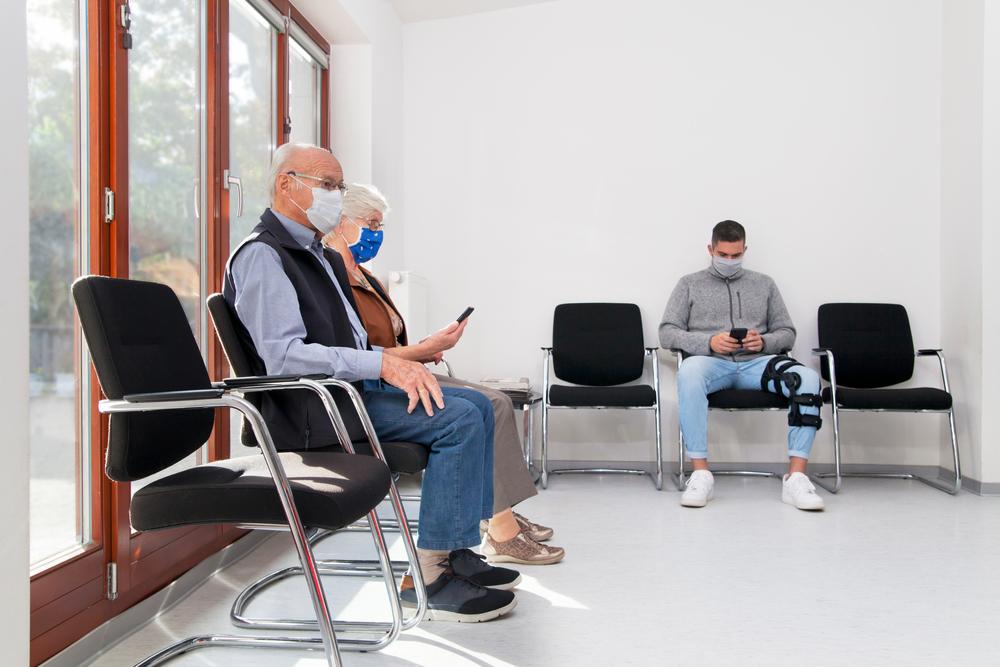
Livanta aired this 30-second video in waiting rooms and lobbies of primary care physician offices through a partnership with an external vendor. The targeted physician offices were in rural communities in the four states comprising the CMS Region 7—Iowa, Kansas, Missouri, and Nebraska.
Livanta’s outreach initiative resulted in its helpline video being broadcast more than 132,000 times across 199 unique physician offices and in 150 unique rural ZIP codes. In addition to being shown in primary care practices, the video was aired in specialists’ offices, including cardiology, rheumatology, and dermatology practices. The video was estimated to have reached nearly one million people, including beneficiaries, family members, friends, or other caregivers who accompanied the patients to their appointments. Playing for a total of six weeks in Fall 2021, the timing of the project coincided with Medicare’s Open Enrollment period and flu season, a time when many patients seek primary care.
Are you an advocacy organization working with rural populations? Contact Livanta’s Communications team to discuss opportunities to collaborate regarding BFCC-QIO messaging and outreach campaigns. Email us at Communications@Livanta.com.
|
|
Coronavirus Disease 2019
(COVID-19) Resources
|
|
Additional CMS Resources
COVID-19 Vaccine Policies and Guidance
Coronavirus (COVID-19) Partner Resources
Renewal of Determination That A Public Health Emergency Exists (7/15/22)
|
|
Additional CDC Resources
Risk for COVID-19 Infection, Hospitalization, and Death By Age Group
Operation Expanded Testing
Omicron Variant: What You Need to Know
|
|
12-SOW-MD-2022-QIOBFCC-CP219
|
|
|
|
|
|
|