|
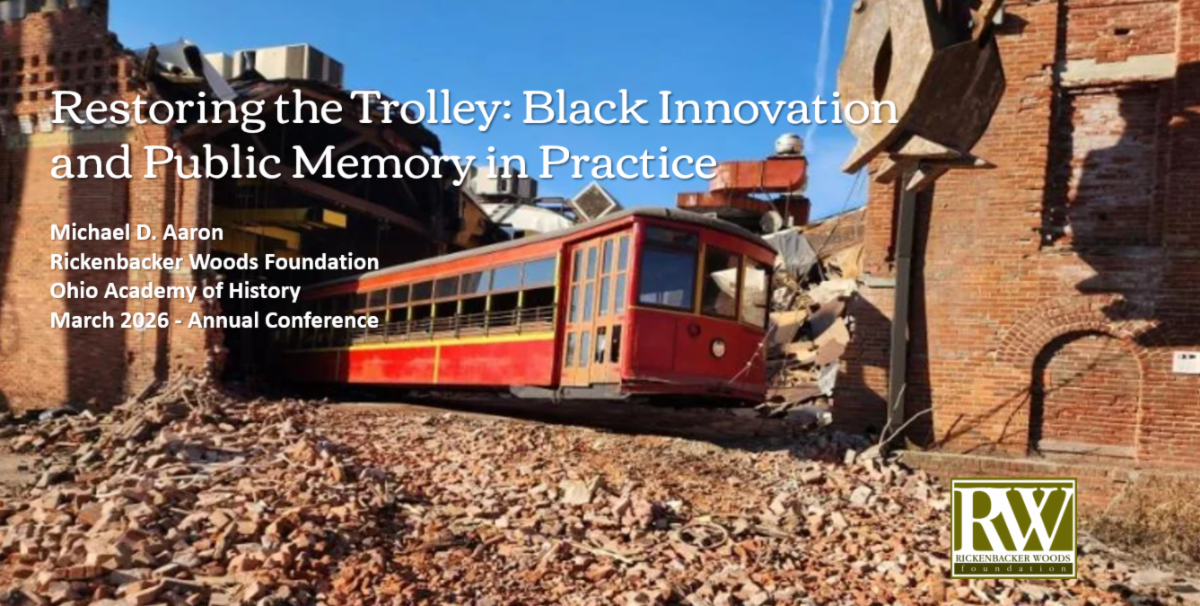
| Slide 1 from “Restoring the Trolley: Black Innovation and Public Memory in Practice,” Ohio Academy of History, March 2026 |
From the Academy to the Work Ahead |
| This past weekend, I had the opportunity to present at the Ohio Academy of History. The presentation was well received, but more importantly, it affirmed something that has been building for some time—what we are doing at Rickenbacker Woods is not operating on the margins. It is part of a broader shift in how history is interpreted, positioned, and made visible in the public landscape. |
|
|
Not Just an Artifact |
| My talk, “Restoring the Trolley: Black Innovation and Public Memory in Practice,” focused on a question that continues to guide our work: how do physical objects shape what the public comes to understand as history? In academic spaces, knowledge is often preserved in archives—documents, patents, records that tell a story but remain largely out of sight. What we are doing in Columbus is moving that knowledge into place. The historic streetcar we have preserved is not simply an artifact; it is an opportunity to translate history into something people can encounter directly. That translation is where meaning is made. |
|
|
Black Innovation, Made Visible |
| Without intentional interpretation, objects are easily absorbed into nostalgia. They become aesthetic rather than instructive, detached from the systems of innovation and labor that produced them. At the center of this work is Granville T. Woods. His contributions helped shape the infrastructure that made modern cities function, yet his name is rarely present in the spaces where that history is encountered. Closing that gap requires more than acknowledgment. It requires presence. |
|
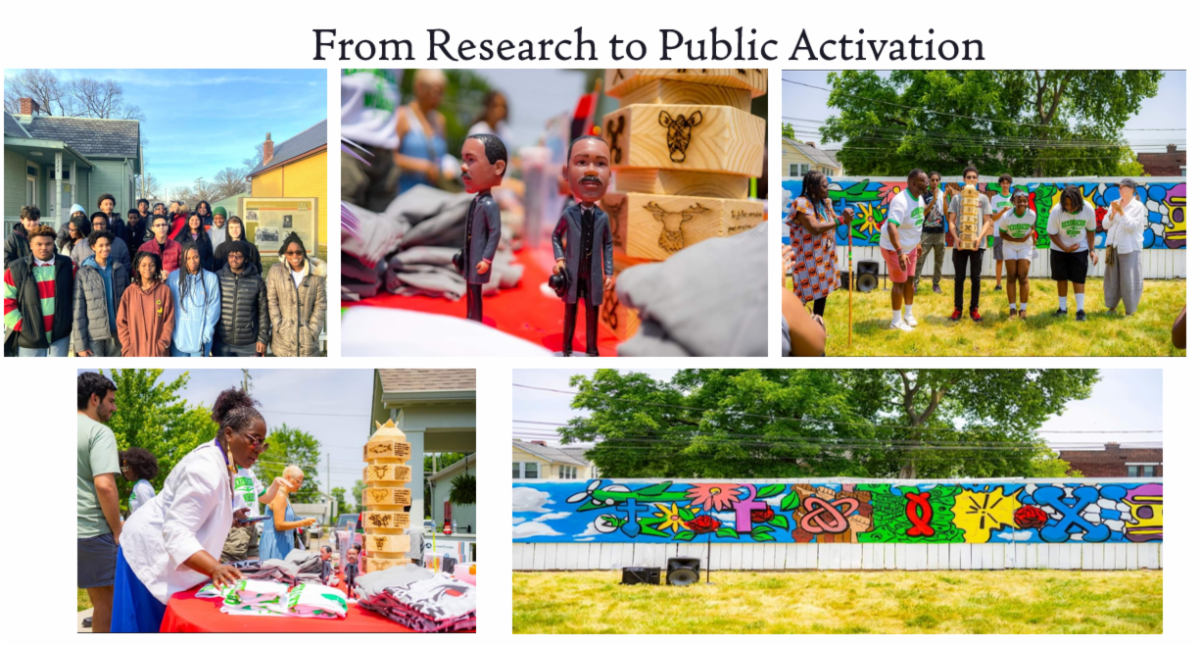
| COITWI interns activating Granville T. Woods Day, including the unveiling of the Sankofa mural—designed by interns to reflect unity, self-determination, and collective responsibility. |
|
|
From Validation to Momentum |
| What was most encouraging about the Ohio Academy of History was not simply the response—it was the alignment. There is a growing recognition, including within academic spaces, that this work matters and that it must be done with both rigor and intention. That affirmation matters. It strengthens the foundation of the work and signals that what is being built at Rickenbacker Woods carries both credibility and staying power. |
|
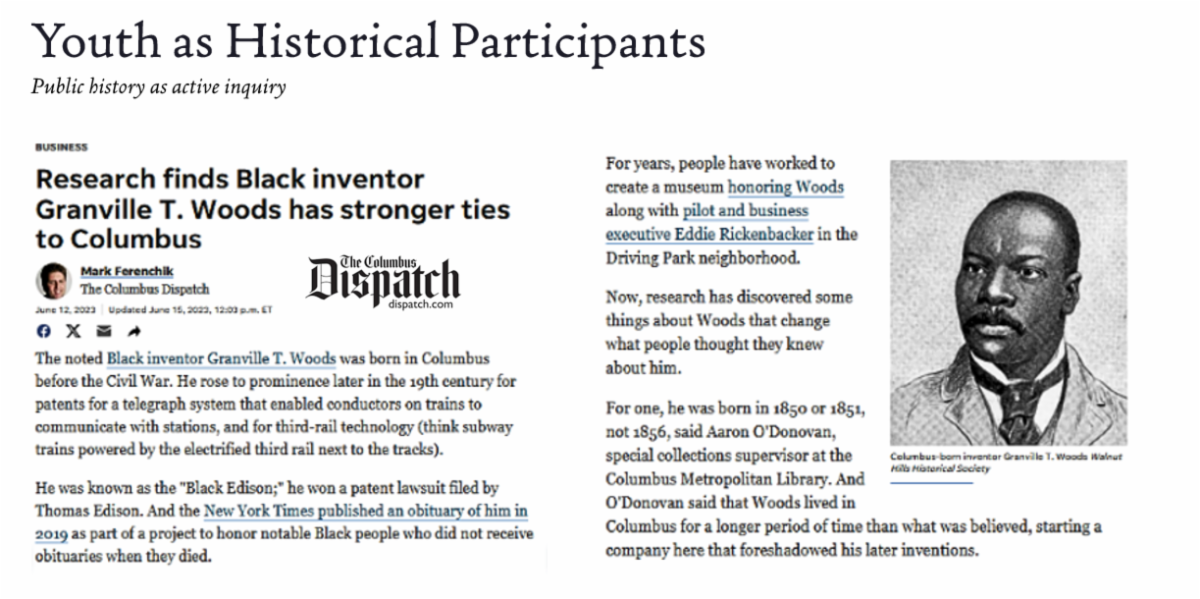
| Columbus Dispatch coverage highlighting COITWI interns, in partnership with Columbus Metropolitan Library, identifying that Granville T. Woods was born in 1851—not 1856—correcting the historical record. |
|
|
Granville T. Woods Week |
| We are now carrying that momentum forward into Granville T. Woods Week. This is not simply a series of events. It is a continuation of the work—an opportunity to bring together educators, historians, institutions, and community partners who recognize the importance of elevating this history in a meaningful and lasting way. We are welcoming new partners into this space—individuals and institutions prepared to help us advance the legacy of Granville T. Woods and ensure that his contributions are properly represented, understood, and preserved. |
|
|
Moving Forward |
|
Our role is to help lead this effort with clarity and purpose—to ensure that the historical record is not only acknowledged, but protected and positioned where it can endure.
The work continues with stronger footing, broader support, and a clear path forward.
Onward. |
|
Michael D. Aaron President & Executive Director Rickenbacker Woods Foundation |