The American Society of Le Souvenir Français Inc.
Monthly Bulletin - Vol. IV. No 1 - January 2024
|
|
Early French missionaries in the United States
(Part 1 of a series)
New York, Maine, Vermont
|
|
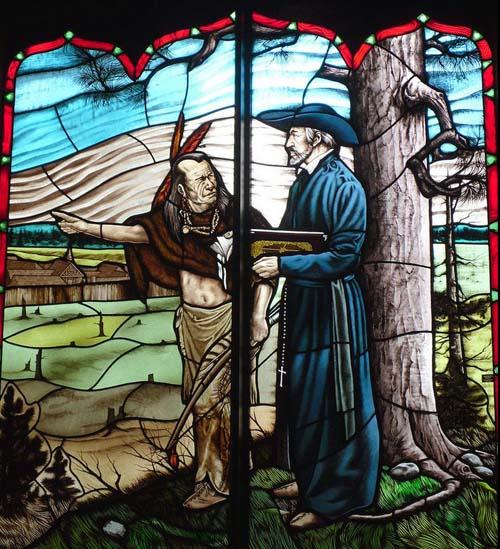
Cover photo:
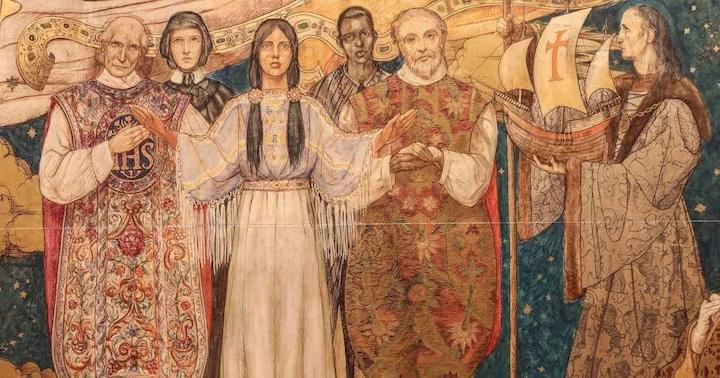
St. Jean de Brebeuf and Joseph Chiwatenhwa are depicted in a stain-glass window at the Martyrs’ Shrine in Midland, Ontario
|
|
EDITORIAL
Happy New Year! We hope you enjoyed a relaxing and joyful Holidays Seasons. We are glad to resume our monthly Bulletins, covering five centuries of French presence in our country.
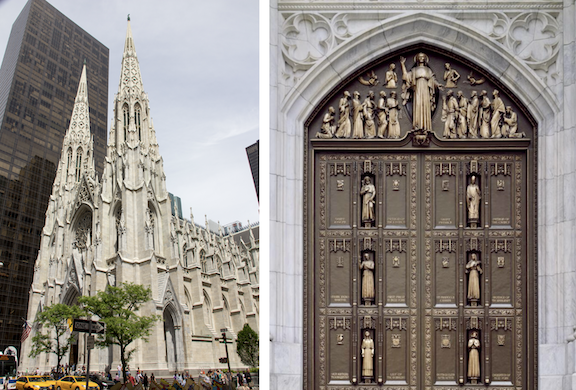
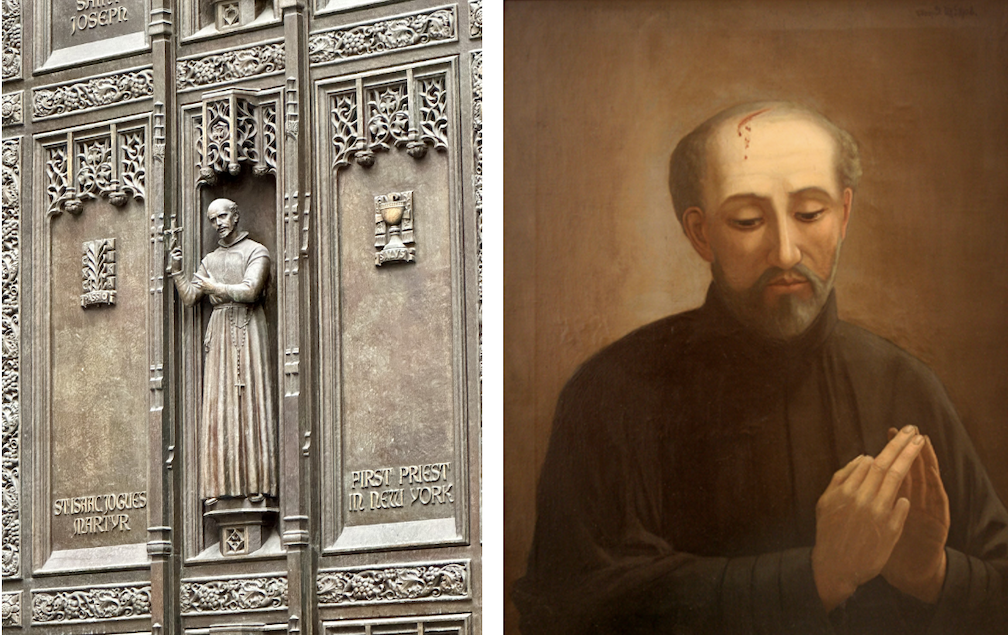
We are starting 2024 with the very early years of the French presence in our country. If you happen to walk in front of St Patrick's cathedral on Fifth Avenue in New York, take a moment to observe the huge main entrance front doors in bronze. On it you will notice a sculpture with the inscription: "St Isaac Jogues, First Priest in New York". Who was Father Jogues? In this Bulletin we will narrate his incredible story, as well as those of several other missionaries who are collectively honored at the National Shrine of the North American Martyrs in upstate New York.
Their stories are ones of indomitable devotion to "civilize" (at least in the eyes of the missionaries) the native Indian populations, of inimaginable courage, and of almost suicidal resilience (even the worst scenes of torture would not deter them to go back and seek conversions). Unlike other European nations, the French did not resort to physical brutality or outright slavery. Evangelization and assimilation were the ultimate goals, as numerous reports and books published at the time can attest.
Their legacy continued far beyond the French North American colonial empire which ended in 1763. Well into the 1900's, a long cohort of French missionaries, nuns, priests and prelates, helped shape the spiritual identity of the fast-growing United States and its millions of new catholic immigrants. From Michigan, Minnesota, Illinois, Wisconsin, Missouri, Louisiana, as far as New Mexico or Hawaii, their work is still remembered and honored, as we will see in future bulletins.
This year 2024 is also the year of the Bicentenial of the triumphal "Farewell Tour" of the Marquis de Lafayette. It is also the 75th anniversary of the "Train de la Reconnaissance Française", also known as the "Merci Train". We will include in this Bulletin several announcements, as there are many events which will be held in several States.
We thank you for your numerous comments and suggestions. We invite you to share this Bulletin with friends, associates, and most importantly, the education community: nothing is more important than passing the torch to younger generations!
On behalf of the Board of Directors.
Thierry Chaunu, President,
American Society of Le Souvenir Français, Inc.
|
|
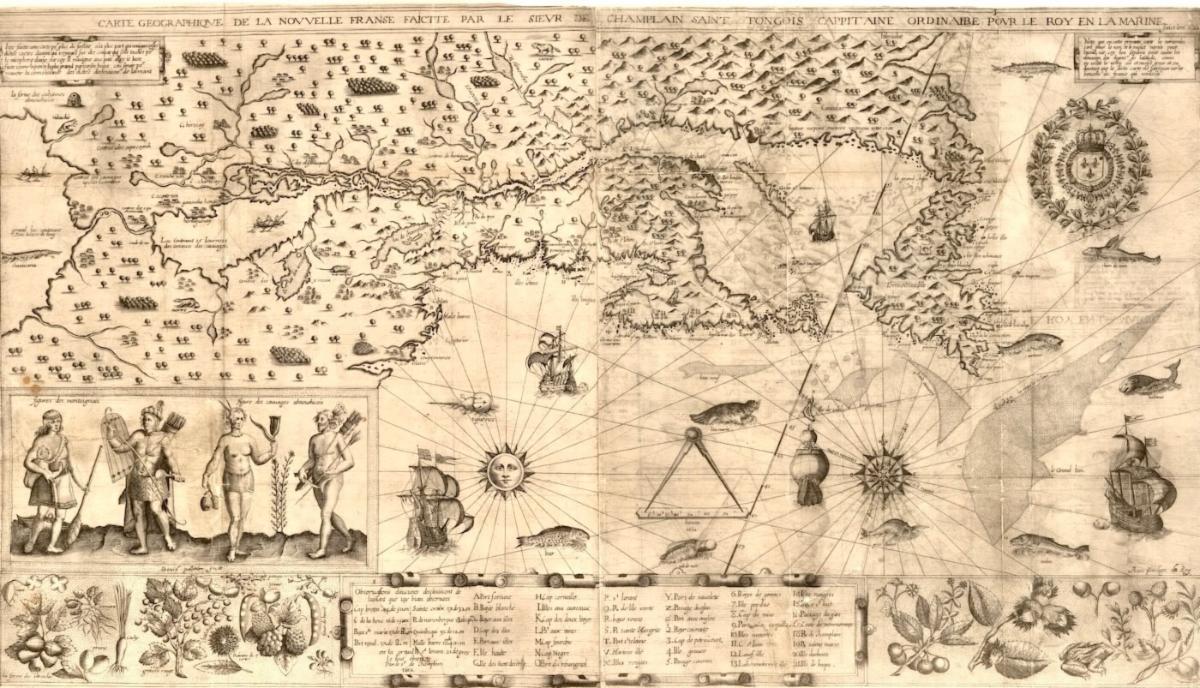
"Carte géographique de la Nouvelle Franse faictte par le sieur de Champlain Saint Tongois cappitaine ordinaire pour le roy en la marine. Faict len 1612" (sic) - "Geographic map of New France made by the sieur de Champlain Saint Tongois, ordinary captain for the king in the navy. Made in 1612", Public Domain, https://en.wikipedia.org/w/index.php?curid=11830966
|
|
Empire-building:
Reliance on Native Americans
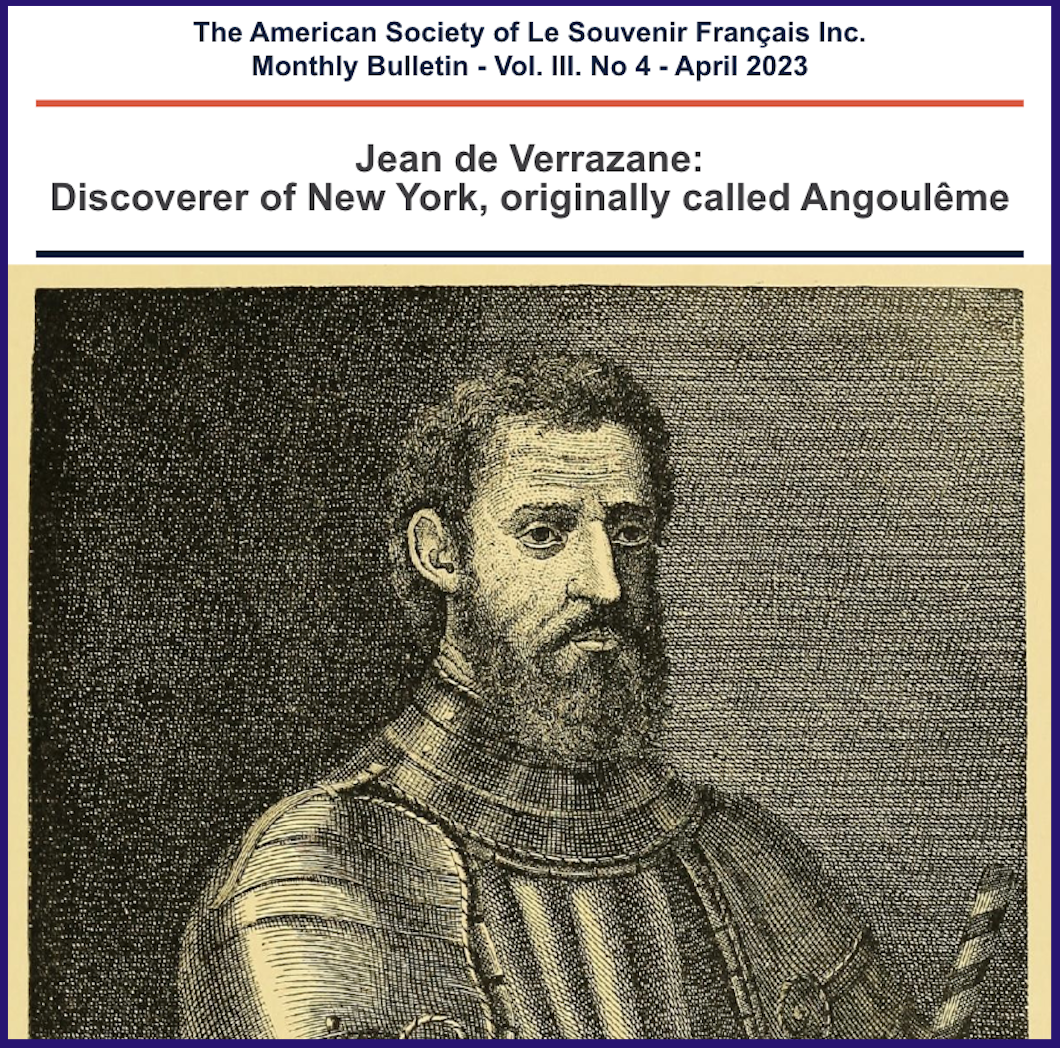
As we narrated in our April 2023 Bulletin, Jean de Verrazane's expedition in 1524 allowed French king Francis I to assert territorial claims in certain regions of North America. However, unlike Spain, France faced delays in its colonization efforts in the New World due to its internal religious conflicts of the 16th century. Similar to Spain and England, France also aspired to establish a vast colonial empire in North America, with the expectation of reaping economic benefits for the mother country. From 1534 to 1542, Jacques Cartier embarked on multiple voyages to North America, conducting extensive explorations with the intention of establishing a permanent French settlement. Following Cartier's initial voyage, Francis I issued a royal commission for the establishment of a lasting colony, with the conversion of the indigenous population being cited as a significant motivation. Unfortunately, this initial endeavor to establish a French colony came to an unsuccessful end in 1542 due to the resumption of hostilities between Francis I and Holy Roman Emperor Charles V, King of Spain.
• Twenty years elapsed before a second attempt took place. As we narrated in our September 2022 Bulletin, Jean Ribault planted a Huguenot settlement (1562) on the present Parris Island, S.C., but it was shortly abandoned in favor of Fort Caroline, near present-day Jacksonville in Florida. In 1565 a Spanish contingent from St. Augustine under Pedro Menéndez de Avilés destroyed the fort. In 1605 a colony in Maine, originally established the year before on Saint Croix Island, was moved to Port Royal, Acadia (today's Nova Scotia).
• The French settlers in North America were determined to convert the native people to Christianity, which they considered to be a very important goal. Samuel de Champlain, who was very religious, believed that saving even one soul was more valuable than conquering a whole empire. He actively supported the presence of missionaries.
• The initial missionaries to arrive in Quebec were the French Franciscans (Récollets) in 1615, who ministered to the Montagnais, Wyandots Hurons, and the Micmacs. Abbé Jessé Fleché, who went to Port Royal in Acadia (today's Nova Scotia) in 1610, carried on mission work among the Micmac tribes.
In 1613, Fleché was succeeded by Jesuits Pierre Biard, Ennemond Massé, Jacques Quentin and Gilbert du Thet, who establish a new mission near present-day Bangor, Maine, but they never reached their goal. In a surprise attack by Captain Samuel Argall of Virginia, Du Thet was killed and the others taken prisoner.
In 1625, six Jesuits, including Charles Lalemant, Massé, and Jean de Brébeuf arrived in Quebec. The colonies faced disruptions and intermittent warfare due to conflicts between England and France, which further complicated the missionaries' efforts. In 1629, Quebec was captured by the English and was only returned to the French in 1632. It was during this year that the Jesuits were entrusted with the North American missions by the Company of One Hundred Associates, a French trading and colonization company chartered in 1627 to capitalize on the North American fur trade.
• Despite possessing education, refinement, and cultural knowledge, these Jesuits willingly chose to live in indigenous villages, enduring discomfort and isolation. They committed themselves to learning the native languages, spreading the gospel, caring for the sick and dying, and enduring the hardships of challenging journeys. Constantly exposed to danger, many suffered from declining health, while others endured unimaginable tortures that ultimately resulted in their martyrdom.
• Thus, between 1611 and 1764, a total of 320 Jesuits were sent from France to North America.
These missionaries in black robes worked tirelessly with unwavering courage and patience among the native tribes for many years to come. They traveled across the entire country, from the Atlantic coast to the western prairies, and from Hudson Bay to the Gulf of Mexico. The Jesuit priests were always there with the explorers and fur-traders. The tale of the Jesuit missions in America serves as a testament to extraordinary bravery and unwavering dedication.
• To contend with England in North America, the French heavily relied on their military and trading alliances with Indigenous peoples, especially the Wyandots (also known as Hurons), the Iroquois' traditional ennemies. The Jesuits played a significant role in fostering these partnerships, going as far as organizing military gatherings in their mission stations, which they referred to as "fortresses." The cooperation between Indigenous and Métis Catholics, along with their relatives, proved vital in securing numerous French military triumphs until the Seven Years War. However, despite their support, it ultimately proved inadequate in the large-scale conflict of the mid-eighteenth century, resulting in the loss of New France to Great Britain.
|
|
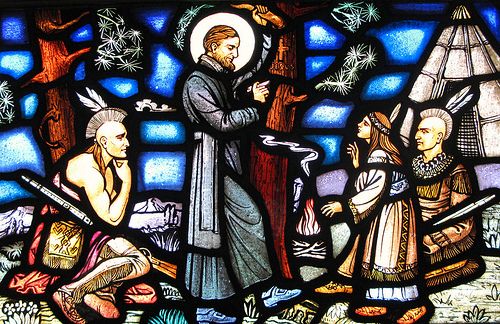
Conversion, the ultimate goal |
|
Stain-glass window at the Martyrs’ Shrine in Midland, Ontario |
|
A different approach
• In general, the French had much better relationships with Native Americans compared to other European groups upon their arrival in America. This was due to several reasons.
• Unlike their European counterparts, the French took a different approach upon their arrival in the Americas during the 1530s and 1540s for fur trading. Rather than attempting to change or compete with the Native Americans, they opted to form strong trading alliances with the local tribes. These tribes were already involved in fur trading, and the French actively engaged with them by joining hunting expeditions and seeking guidance on where to find animals with high-quality fur. Additionally, the French made efforts to comprehend the languages and customs of the Native Americans, which played a crucial role in establishing friendly relationships with all the tribes in the region.
• In the early 1600s, the French started staying in America year-round and established their first permanent settlement in Quebec in 1608, just one year after the English founded Jamestown in Virginia. The French did not displace any Native Americans during the establishment of their settlement and continued to collaborate closely with them in the fur trade. They respected Native American territories, traditions, and treated them as equals. In return, the Native Americans regarded the French as trusted friends. This led to intermarriages between French settlers and Native Americans.
• Still, the act of conversion in Indigenous communities, even those that were initially friendly towards the French, often resulted in significant tensions and, at times, even violence within their kinship networks. Many Indigenous nations remained unconvinced that their religious traditions and worldviews required any modifications in the directions advocated by the French. As time passed, the longstanding Catholic-Protestant rivalries, which had long dominated European society, further exacerbated the existing intertribal tensions and conflicts between Indigenous peoples and Europeans. This situation was particularly pronounced in the borderlands between New England and French Canada in the years leading up to the Seven Years War (called here "The French & Indians War").
• The Iroquois, forming the Haudenosaunee or Five-Nations, (the Mohawk, Oneida, Onondaga, Cayuga, and Seneca), demonstrated remarkable resilience throughout history. The Iroquois conflict with outsiders, notably during the 1640s, led to the tragic deaths of eight Jesuit missionaries, including Isaac Jogues from Orléans. These individuals were swiftly revered as "martyrs" by their fellow Jesuits, who sought to promote their mission by encouraging devotion to them in Europe. However, it was not until 1930, several centuries later, that these "North American Martyrs" were officially canonized as saints.
|
|
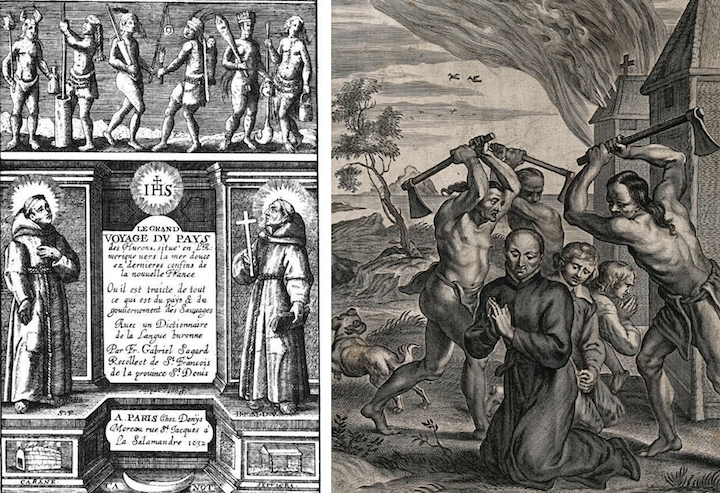
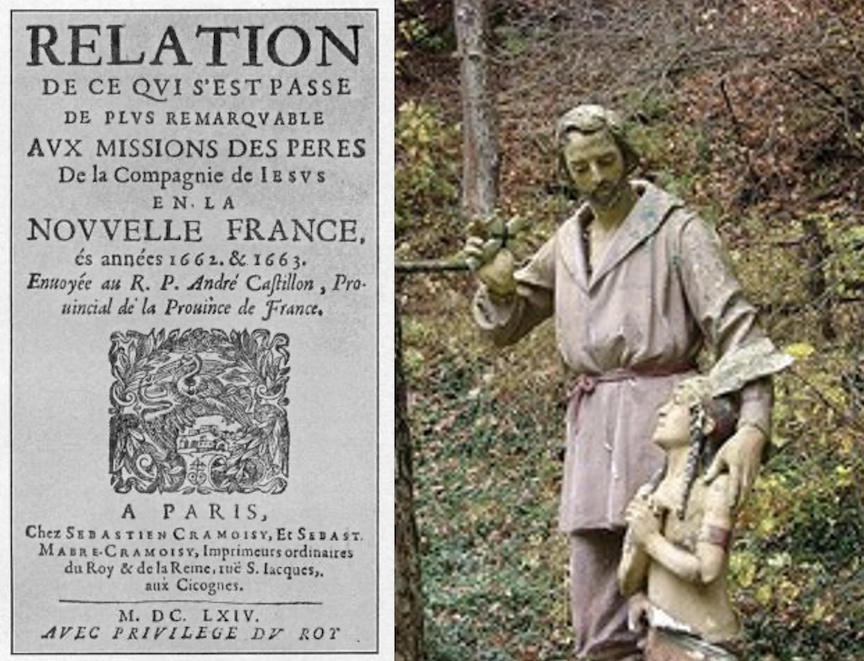
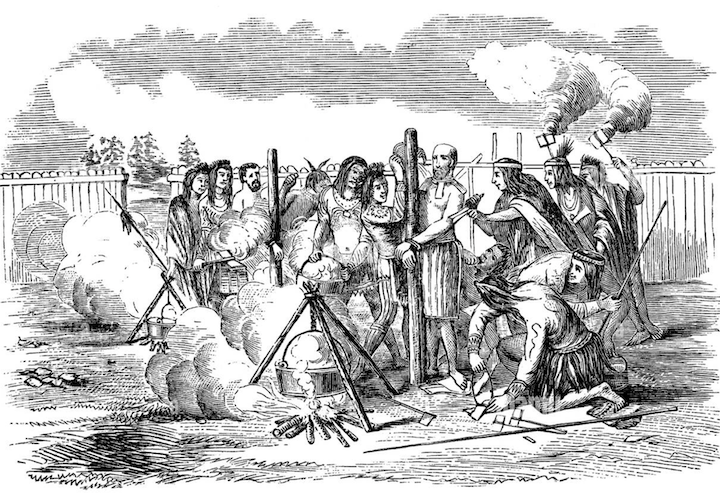
Illustrations from Left to Right, Top to Bottom:
The massacre of R.P. Isaac Jogues
Gabriel Sagard, O.M.R., (fl. 1614–1636) was a French lay brother and Recollect friar, belonging to a reform branch of the Order of Friars Minor known for their strict poverty. He was among the first Christian missionaries to New France, and is notable for his writings on the colony and on the Hurons (or Wendat).
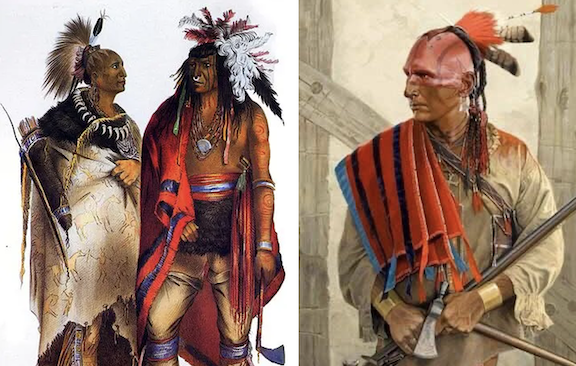
An Iroquois warrior and a Huron warrior
|
|
There are hundred of accounts and anecdotes that circulated widely in Europe as missionaries sent monthly reports to their hierarchy over several decades.
We choose start our story with Father Isaac Jogues "the First Priest in New York", before introducing the other French martyrs, called "The Magnificent Eight" by the Catholic Church. "The North American Martyrs" in history books.
|
|
Saint Isaac Jogues
"First Priest in New York"
Main door, St Patrick's Cathedral, NYC
|
|
St Patrick Cathedral (main entrance door, middle left sculpture)
Fifth Avenue between 50th/51st Street, New York, NY 10022
From top to bottom, left to right:
St Patrick Cathedral, New York By Photograph by Mike Peel (www.mikepeel.net)., CC BY-SA 4.0, https://commons.wikimedia.org/w/index.php?curid=6004585
Door: Library of Congress Prints and Photographs Division Washington, D.C. 20540
Main entrance door of St Patrick (detail) photo by Thierry Chaunu © ASSFI 2024
St. Patrick’s main doors are made of bronze and each weigh 9,200 pounds. They were officially dedicated and blessed by Cardinal Spellman on December 23, 1949. The doors, containing standard images of Jesus, Mary, Joseph, St. Patrick and St. John the Baptist, were designed so perfectly that one person can open them with a single hand...
|
|
"First Priest in New York"
"Apostle of the Iroquois"
"Apostle of the Mohawks"
• Révérend Père Isaac Jogues, SJ (10 January 1607 – 18 October 1646) was born in Orléans and was a French missionary and martyr who traveled and worked among the Iroquois, Huron, and other Native populations in North America.
• At the age of 17, encouraged by his mother, he commenced his spiritual education by joining the Jesuit Novitiate in Rouen, then went to the prestigious Royal College of La Fleche and to Clermont College (later known as Louis-le-Grand) in Paris. Hearing about the formation of missions to evangelize indigenous peoples in America, he and fellow Jesuits arrived in Quebec in 1636. Undeterred by the obstacles that lay ahead, Father Jogues embarked on a challenging expedition spanning over 900 miles, encompassing both land and water, in order to reach Huronia. During his time in Huronia, Father Jogues fully immersed himself in the customs and language of the indigenous people. In just 6 months he acquired the ability to communicate effectively with the local Indians, establishing a profound understanding and connection with them.
• He was the first European to name Lake George, calling it Lac du Saint Sacrement (Lake of the Blessed Sacrament).
• Father Jogues and a young lay missionary fell victim to a tragic event when they were unexpectedly attacked and taken captive by Mohawk Indians during their journey between villages. Over the course of several excruciating days, they were subjected to unrelenting torture, resulting in the unfortunate death of Father Jogues' companion. Despite the immense suffering he endured, Father Jogues remained resilient and unwavering in his faith, finding solace and strength in the darkest moments. Eventually, with the assistance of Dutch traders, Father Jogues was able to break free from his captors and was granted a safe return to France via New York.
• His indomitable spirit and unwavering commitment to his faith earned him the admiration of even the Pope Innocent X, who recognized him as a living martyr. Despite the mutilation of his hands during his torturous ordeal, Father Jogues was granted a dispensation to continue celebrating Mass.
• Jogues was thus the first Catholic priest to visit Manhattan Island. He was able to sail back to France in 1644 to visit his mother in Orléans but within a year...
• ...He pleaded with his superiors to allow him to convert the Mohawk Indians and chose deliberately to go back to America knowing full well that they could again inflict upon him more torture. Indeed, this is what happened: in 1646, Jogues was martyred by the Mohawk at their village of Ossernenon, near the Mohawk River, after he faced blame for the hardships they endured that year, including crop failures and disease. Tragically, Father Jogues was once again subjected to torture, along companions Jesuit lay-brother René Goupil and Jean de Lalande, and ultimately met his martyrdom at the hands of those he sought to help.
• He was canonized on June 29, 1930 by Pope Pie XI.
|
|
Other statues, monuments, and markers dedicated to
Father Isaac Jogues
in Upstate New York
|
|
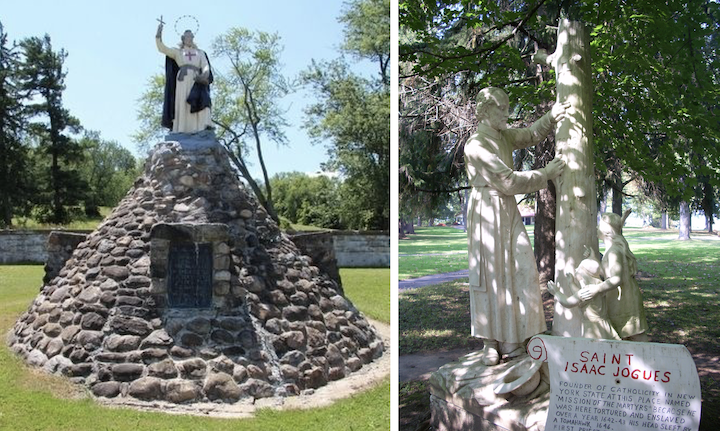
Left: Monument, Father Isaac Jogues, “Apostle of the Mohawks”
Our Lady of Martyr’s Shrine, 136 Shrine Rd #2, Fultonville, NY 12072
Right: Statue, Saint Isaac Jogues, shown teaching two Mohawk Indian children, located on the grounds of the National Shrine of the North American Martyrs.
Our Lady of Martyr’s Shrine, 136 Shrine Rd #2, Fultonville, NY 12072
|
|
• Inscription on the monument:
• Front plaque (North):
“Isaac Jogues Apostle of The Mohawks At Their Castle Ossernenon On This Site A.D. 1642-1646 Born at Orleans, France A.D. 1606”
• Right plaque (West):
“Led Captive Here For Long and Cruel Torture A.D. 1642 Freed by the Dutch at Fort Orange (Albany) Escorted to New Amsterdam (New York) By Domine Megapolensis, Protestant Minister A.D. 1643”
• Left plaque (East):
Sent here as Envoy of Peace from Quebec June, 1646
Missionary October, 1646
Tomahawked for the Faith on the hill above October 18, 1646”
• Back plaque (South):
“Erected By Order of the Alhambra A.D. 1922”
• Inscription of plaque next to the statue:
“Saint Isaac Jogues”
“Founder of Catholicity in New York State at this place named “Mission of the Martyrs” because he was here tortured and enslaved over a year 1642-43, his head sleft by a tomahawk, 1646”
|
|
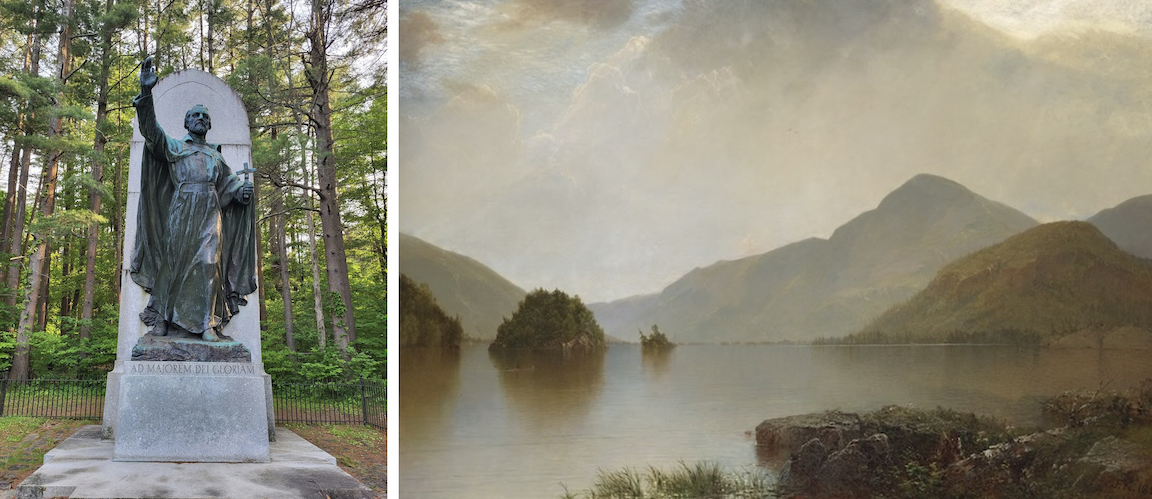
Father Isaac Jogues, "The discoverer of Lake George" |
|
Monument & Statue, Father Isaac Jogues, S.J.
Lake George Battlefield State Park, Fort George Road and, Beach Rd, Lake George, NY 12845
Illustration: Lake George c. 1869
Marker "Lake George"
1 Beach Rd, Lake George, NY 12845
Marker "Lake George, Historic New York"
Sabbath Day Point Overlook, Silver Bay NY 12874
|
|
- This bronze statue commemorates the life of Father Isaac Jogues, French jesuit missionary born in 1609, in Orleans, France. He was captured by the Mohawks in 1642, and tortured when several of his fingers were gnawed off by his captors. He eventually escaped and returned to France. Jogues then came back to New France (Canada) and departed south into New York, where he was again captured by Mohawks, then tortured and killed when they blamed him for their crop failure.
- Jogues named the lake, Lac Du Saint-Sacrament (Lake of the Saint Sacrament), when he saw the lake, probably in 1646
- In 1930, Jogues was canonized a saint by the Roman Catholic Church. This monument by New York city sculptor Charles Keck (1875-1951) was erected by the State of New York on July 3, 1939
• Inscription on pedestal:
"Ad Maiorem Dei Gloriam"
(For the greater glory of God)
• Inscription of marker "Lake George":
"It Was In 1646
Father Isaac Jogues First Glimpsed The Body of Water He Called
"Lac Du St. Sacrement."
• Inscription of marker "Lake George, historic New York":
"The natural route by water and portage between the St. Lawrence River and the Hudson River traversed Lake George. Christened Lac du Saint Sacrement in 1646 by the Jesuit missionary, Isaac Jogues, it was renamed in 1755 by Sir William Johnson to honor King George II. Above the outlet of Lake George, over-looking Lake Champlain, the French in 1755 built Fort Carillon (Ticonderoga), which became a military objective during the colonial conflicts between the English and the French. Fort William Henry, built at the southern end of Lake George to check the French, was destroyed by French and Indians in 1757. In 1758 General James Abercromby led a large force northward to attack the French at Ticonderoga and was repulsed, but General Jeffery Amherst was successful the following year. With the outbreak of the American Revolution, Ethan Allen and Benedict Arnold took Fort Ticonderoga. Abandoned in 1777 to General John Burgoyne's invading army, it remained in British hands until 1782. From earliest times, the singular beauty of this forest-bound lake has charmed visitors. Sportsmen, artists, and nature-lovers have been drawn to its shores. Boating and fishing have made it a popular recreation area. State-owned campsites and beaches today preserve some of its pristine charm. Erected 1961 by State of New York."
|
|
Who were the other martyrs? |
|
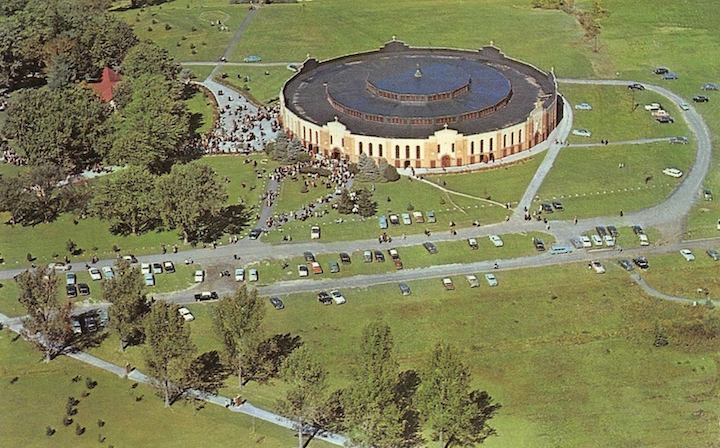
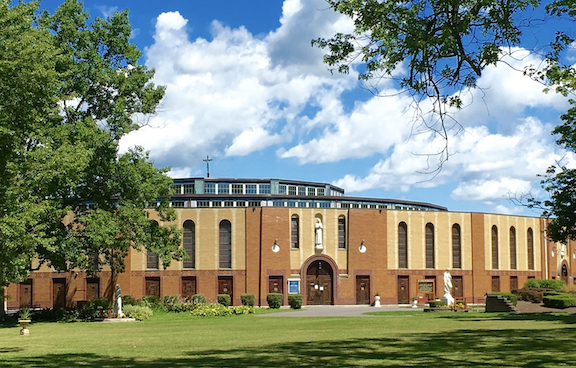
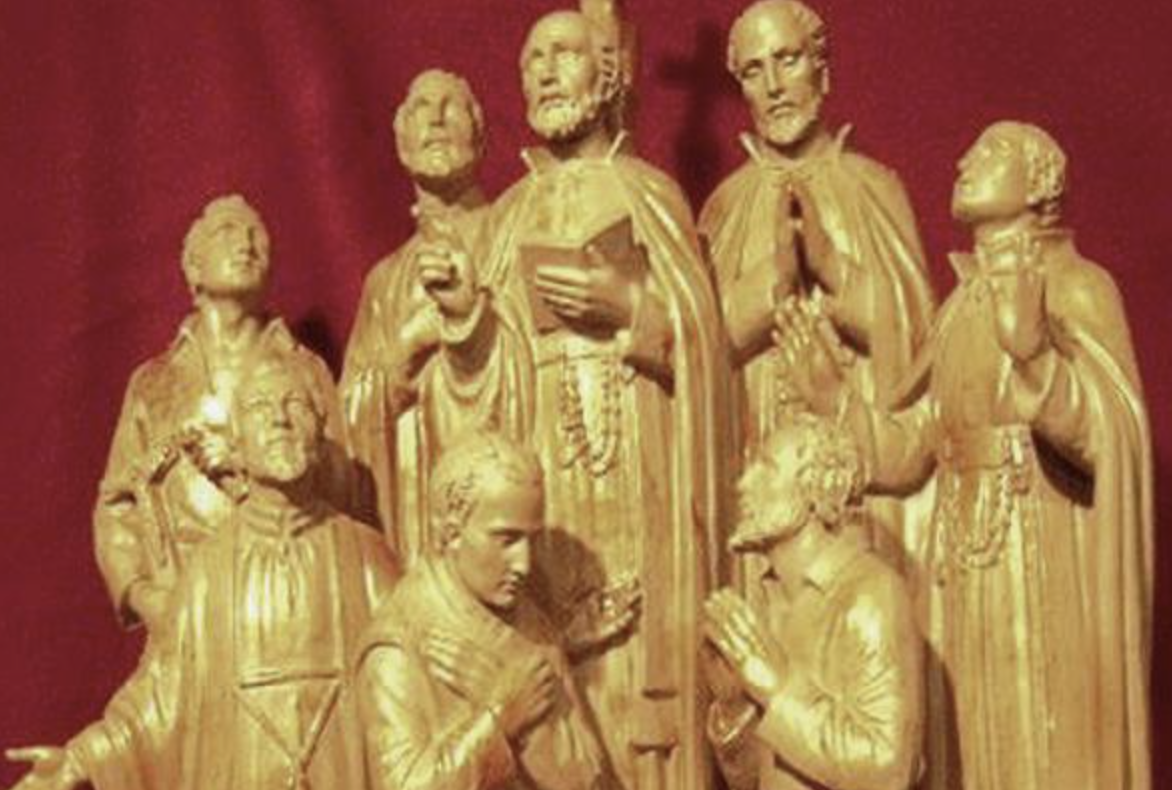
Saint Isaac Jogues was not alone, nor even singular in his accomplishments. We must also pay tribute to his companions and thus introduce the National Shrine of North American Martyrs in upstate New York, about 3 hours drive from Manhattan. At Auriesville, located in the town of Fultonville, one can visit a gigantic shrine with gardens and statues, built on the site of a terrible massacre.
|
|
National Shrine of North American Martyrs
Auriesville, NY
|
|
National Shrine of the North American Martyrs
Our Lady of Martyr’s Shrine, 136 Shrine Rd #2, Fultonville, NY 12072
|
|
• The Shrine of Our Lady of Martyrs is located in the hamlet of Auriesville in Fultonville, NY. at the site of the 17th Century Mohawk Village of Ossernenon, it is now a Roman Catholic shrine dedicated to three Jesuit missionaries who were martyred here, and to St. Kateri Tekakwitha, a Mohawk/Algonquin woman who was born here.
• For over 130 years, the Shrine was under the ownership and direction of the Society of Jesus (Jesuits), but is now owned and operated by the Friends of Our Lady of Martyrs Shrine, a board of volunteers dedicated to maintaining both the sanctity and viability of these holy grounds.
• Inscription of Plaque:
“It was here that America’s only Canonized Martyrs the Jesuit priest Father Isaac Jogues, the Jesuit lay-brother René Goupil and John Lalande shed their blood for Christ in 1642 and 1646. Here also, in this Indian village of Ossernenon the Lily of the Mohawks, Kateri Tekakwitha was born in 1656.
Built in 1930, this Coliseum of Our Lady of Martyrs has been a place of spiritual refreshment, light and peace for the many thousands who have come to pray here where the Martyrs died. We appreciate your visit to Auriesville, dear Friend. May you find peace and blessing in this beautiful and holy place.”
|
|
Illustrations: Top: The 8 Martyrs sculpture, Our Lady of Martyrs' Shrine
Bottom: Statue and shrine, Saint René Goupil and Indian Boy, Ravine, Our Lady of Martyrs' Shrine
136 Shrine Rd #2, Fultonville, NY 12072
|
|
• Saint René Goupil (15 May 1608 – 29 September 1642), was born at Saint-Martin-du-Bois, near Angers, France. Initially, he became a surgeon, devoting himself wholeheartedly to the noble cause of helping others. However, he eventually came to the realization that he longed for a deeper sense of meaning in his existence - to embrace the calling of becoming a Jesuit priest. However, he had a hearing impairment. Nonetheless, undeterred by this setback, Rene generously extended his assistance as a lay volunteer to the Society of Jesus.. (French: donné, "given" or "one who offers himself”, i.e. a volunteer).
• His offer was accepted, and he subsequently traveled to Quebec with the intention of providing healthcare to both French settlers and the indigenous Algonquin people residing in the region. After spending two years in Quebec, Rene crossed paths with Isaac Jogues, who had recently returned from France.
• He volunteered to attend the Hurons at Sainte Marie, a mission far beyond the frontiers, along with Father Isaac Jogues and another lay Frenchman, Guillaume Coûture. René's canoe party was ambushed. He was captured by the Mohawks and endured eight weeks - - not a typo: indeed, eight weeks!! of cruel torture before being killed on September 29, 1642.
His blessing a Mohawk child with the sign of the cross had been interpreted as something evil...
• It was during this harrowing ordeal that Rene expressed his desire to be accepted as a Jesuit by Father Jogues. Consequently, René made his vows and officially became a member of the Society of Jesus. Father Jogues buried him in an unmarked grave in the Ravine, which is considered a reliquary since it contains the relics of the martyr
• He was the first of the eight North American Martyrs of the Roman Catholic Church to receive the crown of martyrdom and the first canonized Catholic martyr in North America.
• Saint René Goupil is one of the Patron Saint of Canada and in 1951 the American Association of Nurse Anesthetists chose St. René Goupil as their patron... when one thinks about it... eight weeks of torture...
|
|
Saint Jean de Brébeuf
• Saint Jean de Brébeuf, born in Condé-sur-Vire, (near Bayeux in Normandy) in 1593, was a dedicated Jesuit missionary who played a significant role in the early missions in Canada. After completing his college studies at Rouen, he joined the Society of Jesus at the age of 24. In 1624, he eagerly volunteered to be one of the first Jesuits to embark on a mission to the territory that is now Canada.
• Arriving in Quebec in the summer of 1625, Father Brébeuf and four other Jesuits faced initial challenges in their interactions with the Huron people due to his imposing stature. However, his physical strength proved to be an advantage when it came to navigating the difficult terrain and transporting canoes and supplies through the cascades encountered during water travel to Huronia.
• During his time living among the natives, Father Brébeuf dedicated himself to learning their language and customs. However, due to the temporary English takeover of Quebec from the French (1629-1632), all the missionaries from France were forced to return to their homeland. It took two years of waiting for an opportunity, but in 1633, after the French took control of Québec again, Father Brébeuf and his companions were able to return to North America.
• The missionaries encountered growing difficulties despite their relentless endeavors to enhance the well-being of the indigenous population. The native villagers endured diseases unknowingly spread by traders and other Europeans, which caused them to hold the missionaries responsible for these ailments. Being the sole foreigners residing among them, the missionaries became the targets of blame. Consequently, only a relatively limited number of villagers embraced Christianity. Moreover, the Iroquois Indians posed a continuous menace by assaulting Huron villages and subjecting Christians and missionaries to savage acts of violence.
• Father Brébeuf, along with all the Jesuits in Huronia, ultimately met a tragic fate between 1641 and 1649. Captured in an Iroquois raid, Father Brébeuf endured extensive torture over several days before succumbing to death on March 16, 1649, having been scalped while yet alive, and died after suffering additional torture of three hours.
• His martyrdom stands as a testament to his unwavering dedication to his faith and mission, and was canonized on June 29, 1930 by Pope Pie XI.
Saint Gabriel Lalemant
• Saint Gabriel Lalemant (October 3, 1610 - March 19, 1649) a native of Paris, was deeply influenced by his uncle's missionary work in New France and his stories about the ministry. Despite concerns about his health, Gabriel joined the Society of Jesus after completing his studies at a Jesuit College, driven by a strong desire to serve in the missions. However, he was initially assigned to teach and guide students in his homeland for a period of seven years. It was only in 1646 that he was finally sent to the Huron missions.
• Upon arriving in Quebec, Gabriel dedicated two years to studying the language and culture of the region before settling in the village of Sainte Marie. From there, he embarked on weekly visits to the Huron missions, accompanying fellow Jesuit missionary Jean de Brébeuf. Despite having only six months of ministry experience among the Huron people, Gabriel and Jean were relocated to the mission of Saint-Louis. Tragically, this mission was attacked and overrun by Iroquois warriors. Both priests were captured and subjected to unimaginable tortures before ultimately being killed. Gabriel's torture lasted seventeen hours.
• He was canonized on June 29, 1930 by Pope Pie XI
Saint Jean de La Lande
• Saint Jean de La Lande, or de Lalande (1619 – 1646) was born and raised in Dieppe and a Norman like Saint Jean de Brébeuf. In about 1642, he accompanied Saint Isaac Jogues at first as a lay volunteer to the mission in New France, where they served the Huron people.
• In 1646, he and Saint Isaac Jogues left Quebec with some Hurons; they were soon captured by war-making Mohawks. Shortly before his martyrdom by tomahawk at the hands of Mohawks, John was accepted into the Society of Jesus as a Jesuit Brother.
• He was canonized on June 29, 1930 by Pope Pie XI.
Saint Antoine Daniel
• Saint Antoine Daniel, born in Dieppe, France in 1601, initially pursued a career in Law. However, he soon discovered his true vocation as a Jesuit priest. In Rouen, he joined the Society of Jesus and learned about the Jesuit missions in New France from a young Huron native who was studying at the college there.
• After becoming ordained as a priest and teaching at a Jesuit college, Father Daniel's passion for the missions grew stronger when he met Father Jean de Brébeuf, who had temporarily returned from his work among the Huron people.
• In 1632, Father Daniel traveled to Québec, where he spent two years learning the language of the people he would serve. In 1634, Father Daniel reunited with Father Brébeuf in Huronia, as he had returned from France. Together, they began their work in the mission villages.
• Father Daniel excelled at teaching children by incorporating music into their catechism lessons. He also earned the trust of skeptical Huron adults by providing care to the sick during a smallpox epidemic, going from cabin to cabin. For over fourteen years, Father Daniel lived among the native people, tending to their needs.
• By 1647, Father Daniel had achieved remarkable success in his mission among the Hurons. However, the Iroquois Indians posed a serious threat to the missions. Shortly after returning from his annual retreat, the mission village where he resided was attacked and overrun by the invading Iroquois.
• Father Daniel fearlessly confronted the warriors on behalf of the villagers who had sought refuge in the church. Tragically, he lost his life, the church was set on fire, and his body was thrown into the burning building.
• He was canonized on June 29, 1930 by Pope Pie XI.
Saint Charles Garnier
• Saint Charles Garnier, born into a prosperous Parisian family in 1606, made a significant decision at the age of eighteen when he joined the Society of Jesus.
• Following his ordination as a priest in 1635, he developed a fervent desire to serve as a missionary among the Huron Indians in New France. Initially, his father strongly opposed this aspiration, causing Charles to postpone his departure for a year. However, after successfully persuading his father of his deep calling to missionary work, Charles embarked on his journey to Québec in April 1636.
• St. Charles went to the Hurons in their homeland, known as Huronia. Within a span of two years, he acquired proficiency in the Huron language and commenced an extensive period of ministry, residing in various native villages for different durations.
• Unfortunately, in the winter of 1649, just as he was experiencing remarkable achievements, it became evident that Iroquois warriors were preparing to launch an attack on the village where he was stationed. In response to the imminent danger, Charles sent his younger Jesuit companion, Noel Chabanal, back to Quebec for safety, while he chose to remain with his people. Tragically, on December 7, during the brutal assault, the saint was killed as he was quickly baptizing the catechumens before they were assaulted. As he was still moving amongst them, the Iroquois warriors struck him twice on the head.
• He was canonized on June 29, 1930 by Pope Pie XI.
Saint Noël Chabanal
• Saint Noël Chabanal, born in Sauges, Southern France in 1613, embarked on a path of religious devotion at a young age. At the age of seventeen, he joined the Society of Jesus in Toulouse, where he devoted himself to the teachings of the Jesuit order. Following his ordination as a priest, Noel spent several years imparting knowledge at the Jesuit college in Toulouse.
• In 1643, driven by an ardent desire to propagate the teachings of Christianity, Noel embarked on a voyage to Quebec with the intention of becoming a missionary among the indigenous people of Canada. During his time in Québec, he sought guidance from the experienced Jesuit missionary Jean de Brébeuf.
• However, unlike his mentor, Father Chabanal discovered that he held a strong aversion towards the language and customs of the native peoples. Recognizing this, his superior offered to repatriate him to France. Despite this opportunity, Father Chabanal made a firm decision to remain among the natives for the rest of his life.
• Tragically, his stay among the indigenous tribes was abruptly cut short due to the relentless attacks launched by the Iroquois on the villages where the missionaries resided. Shortly after joining Father Garnier among the Petuin people, the destruction of their village by the Iroquois was imminent. In an effort to ensure his safety, he was sent back by Father Garnier to Quebec. However, during his journey, Father Chabanal became separated from the group of natives he was traveling with.
• Fate took a cruel turn when he encountered a former Christian native who had developed a personal vendetta against the missionaries. In a brutal act of violence, the Indian ended Father Chabanal's life with a fatal blow from a tomahawk.
• He was canonized on June 29, 1930 by Pope Pie XI.
|
|
These 8 French Saints are honored at several sites
across the USA
|
|
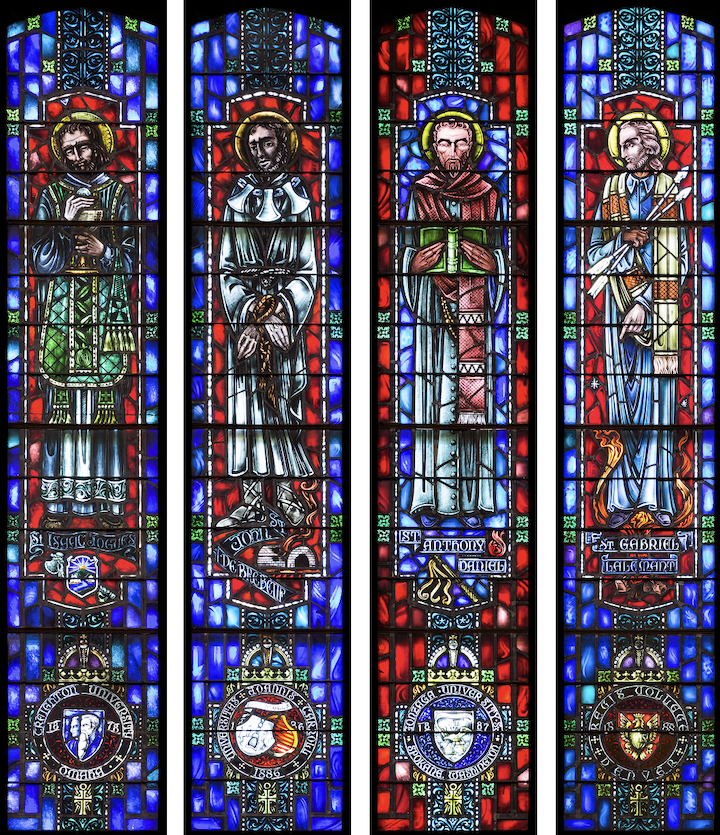
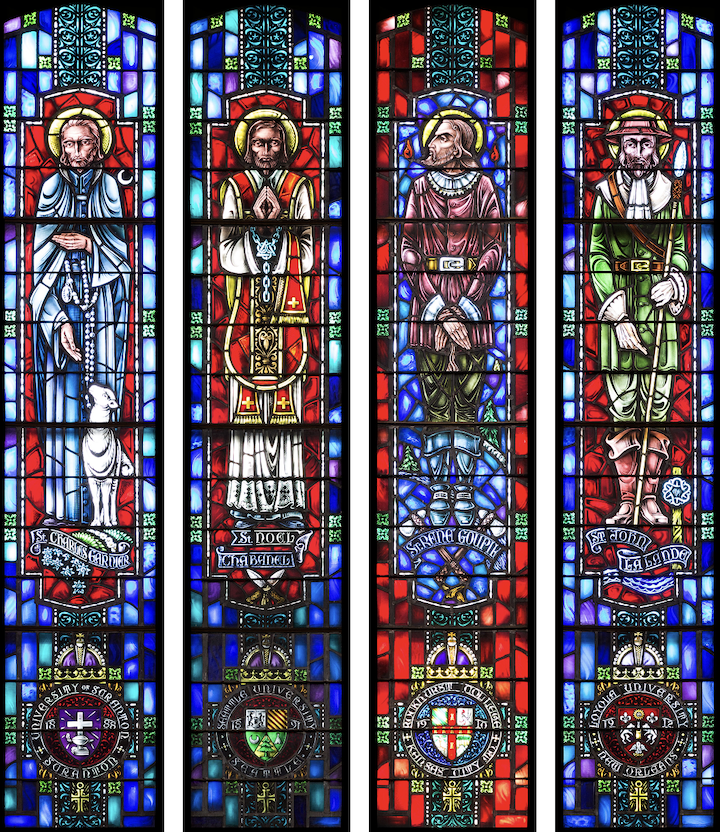
From top to bottom, clockwise:
Stained Glass windows, Sacred Heart Chapel, located on the campus of Loyola Marymount University
1 Loyola Marymount University Dr, Los Angeles, CA 90045
|
|
The windows were designed by Richard Jung and fashioned at Cummings Studio, San Francisco. The first of the windows was installed in 1954, the year the chapel was dedicated. They are shown above associated with the following colleges:
• St. Isaac Jogues, Creighton University, 1878 Omaha, Nebraska
• St. Jean de Brébeuf, John Carroll University, 1886, Cleveland, Ohio
• St. Antoine Daniel, Gonzaga University, 1887 Spokane, Washington
• St. Gabriel Lalemant, Regis College, 1888, Denver, Colorado
• St. Charles Garnier, Scranton University, 1888, Scranton, Pennsylvania
• St. Noël Chabanel, Seattle University, 1891, Seattle, Washington
• St. René Goupil, Rockhurst College, 1910, Kansas City, Missouri
• St. Jean LaLande, Loyola University, 1912, New Orleans, Louisiana
|
|
Memorials to other Jesuit Missionaries in New York |
|
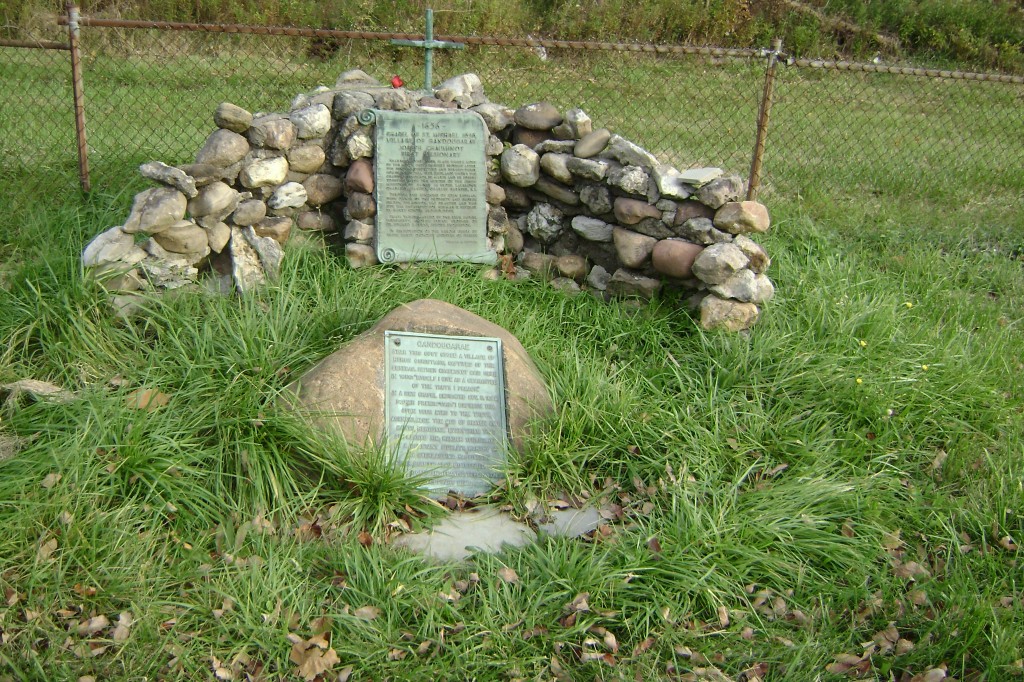
Memorial, "1656 Chapel of St. Michael 1656
Village of Gandougarae - Joseph Chauminot First Missionary"
6370 North Bloomfield Road, Bloomfield NY 14469
https://en.wikipedia.org/wiki/Pierre-Joseph-Marie_Chaumonot
|
|
• Father Pierre-Joseph-Marie Chaumonot (aka Joseph Marie Chaumonot) (March 9, 1611 – February 21, 1693) was a French priest and Jesuit missionary who learned and documented the language of the Hurons.
• Father Jacques Frémin (12 March 1628, in Reims - 21 July 1691, in Québec), a French Jesuit missionary in North America founded the first Catholic settlement in Vermont, on Isle La Motte, in 1667.
• Inscription of 1st bronze plaque:
"Nearby this very spot. Place where most of the Huron captives were brought after the Senecas destroyed and burned their homes in Huronia, 1649. (Midland)
Where the chapel of St. Ignace, St. Marie and St. Joseph together with the murder of the Jesuit missionaries Saints De Broug, Lalemont, Chabanel, Daniels, Charles Garnier, S.J. Through the kindness of John Redman, then owner of the property and George Selden, permission was granted and this site was excavated for Herman G. Hetzler by Harry Schoff, archeologist. Small tablet marked by the Revs. Father Dougherty, Andrew Byrne, Brother of Dr. Edward J. Byrne, before excavation. In perpetuation of the heroic deeds of these early Catholic apostles of Christ. Erected by Herman G. Hetzler."
• Inscription of 2nd bronze plaque:
"Near this spot stood a village of Huron christians, captives of the Senecas.
Father Chaumonot said here in 1656: "Myself I gave as a guarantee of the truth I preach."
In a new chapel, dedicated Nov. 3, 1669, Father Fremin said, "I beseech you, open your eyes to the truth, acknowledge the God of heaven and Earth, renounce everything that displeases him, render yourselves by a constant fidelity, worthy of an everlasting happiness.
Father Garnier also ministered here. James Atondo and Francis Tehoronionga
were exemplary members of St. Michael's flock"'
|
|
Father Hennepin and the Niagara Falls |
|
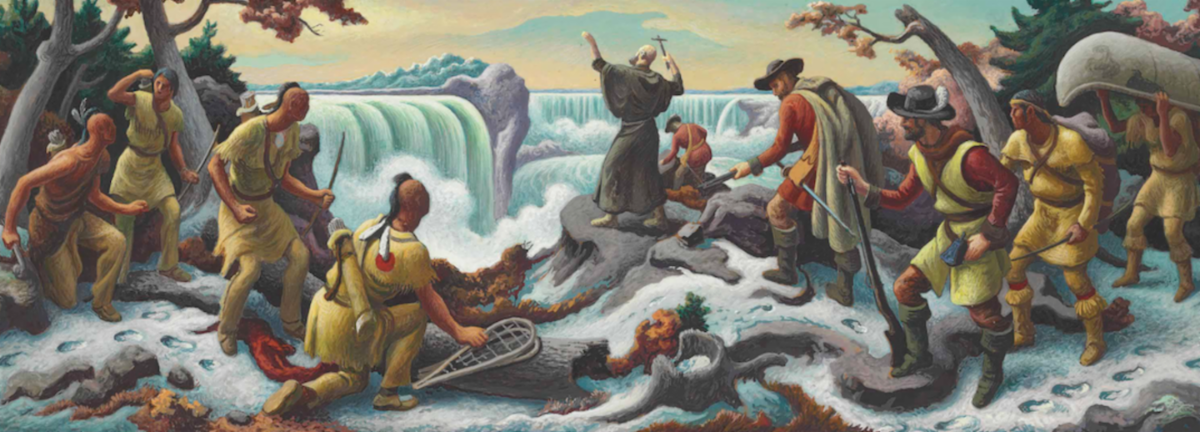
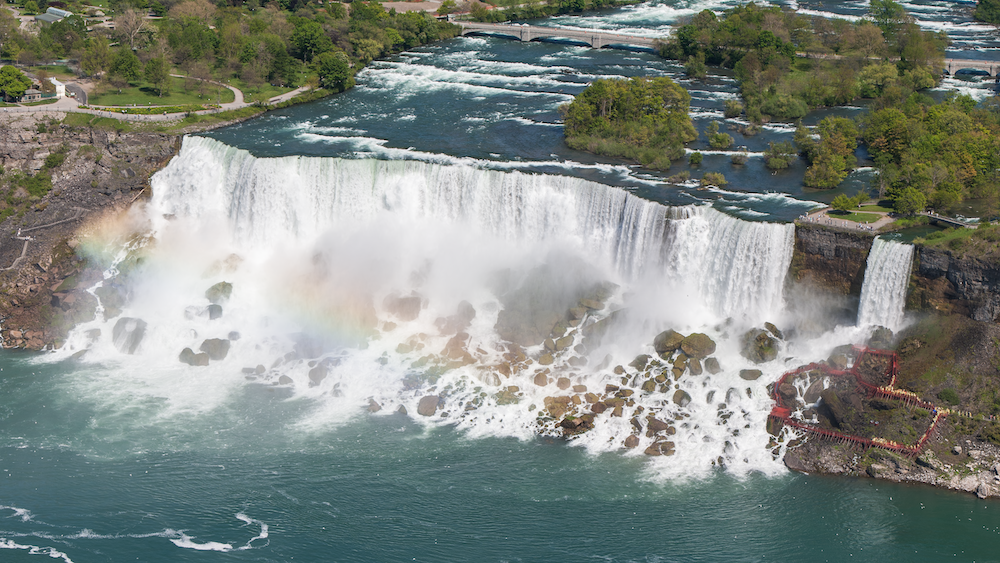
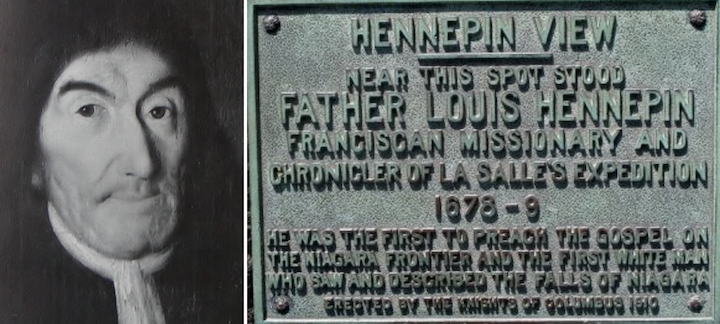
Illustrations, top to bottom, left to right:
Mural, “Father Hennepin at Niagara Falls” by Thomas Hart Benton (1889-1975), installed 1961
Niagara Power Vista Visitors Center, above the escalators
5777 Lewiston Rd, Lewiston, NY 14092
American Falls (large waterfall center-left) and Bridal Veil Falls (right)
By Robert F. Tobler - Own work, CC BY-SA 4.0
Marker, “Hennepin Park”, Niagara Falls
Corner of 4th Street and Center Street, 100 S. 4th Street, Lewinston, NY 14092
Marker, “Hennepin View”, Niagara Falls
Marker, “Louis Hennepin 1626 - c. 1705”
Niagara State Falls Park, Near Observation Deck, 151 Buffalo Ave, Niagara Falls, NY 14303
|
|
• In 1697, Hennepin published Nouvelle découverte d'un très grand pays situé dans l'Amérique entre le Nouveau-Mexique et la mer glaciale, which was translated from French to English a year later under the title "A New Discovery of a Vast Country in America". He writes, “Betwixt the Lake Ontario and Erié there is a vast and prodigious Cadence of Water which falls down after a surprising and astonishing manner, insomuch that the Universe does not afford its Parallel.”
• In describing what are known today as the American and Horseshoe Falls, Hennepin continues, “This wonderful downfall is compounded of two great Cross-streams of Water, and two Falls...The Waters which fall from this vast height, do foam and boil after the most hideous manner imaginable, making an outrageous Noise, more terrible than that of Thunder; for when the Wind blows from off the South, their dismal roaring may be heard from above fifteen Leagues off.”
• Inscription:
“Near this spot stood
Father Louis Hennepin
Franciscan Missionary and
Chronicler of La Salle's Expedition
1678 - 79
He was the first to preach the gospel on the Niagara frontier and the first white man who saw and described the falls of Niagara.
Erected 1910 by Knights of Columbus.”
• Inscription (The west/city marker side, in English) :
“Born and educated in Belgium, Hennepin was ordained a Recollet (Franciscan) friar in France. He was an adventurer at heart and undertook priestly duties in several European countries before being sent to New France as a missionary in 1675. In 1679-80 he accompanied Cavelier de La Salle on his exploration of the Mississippi River. Back in France, Hennepin published a lively account of his travels, Description de la Louisiane (1683), which enjoyed widespread popularity in Europe. Hennepin provided a striking account of 17th-century North America and his book contains the first recorded description of "the Wonders of that prodigious Cascade", Niagara Falls.”
“Ontario Heritage Trust, and agency of the Government of Ontario”
• Excerpts of second marker:
“This park is named after Father Louis Hennepin (1626-1704), a walloon missionary who accompanied the French explorer Sieur de La Salle to this area in 1678. Hennepin, a Recollect priest, was not the first European to see Niagara Falls, but his colorful written accounts provided an opportunity for Europeans to read about Niagara Falls for the first time.”
“Long before there was a United States, the French called their North American territory New France. Many French explorers visited this area, but the first was Etienne Brule who is believed to have come here in 1615 when he was only 23 years old. He was a scout for French explorer Samuel de Champlain who sent him into the wilderness to learn about the Native Americans...
The first permanent settlement in the Western New York region was Frenchman Chabert de Joncaire'sTrading Post, which was built in 1720 and located at present day Artpark. It was called Magazin Royale, or "The King's Store." Joncaire was earlier taken captive by the Senecas, and was going to be executed. But they admired his bravery so much, they adopted him in the tribe. He also was involved in building the "House of Peace," today known as the French Castle at Old Fort Niagara, in 1726 at the mouth of the Niagara River.”
“Etienne Brule. First European to explore this area in 1615. Chabert de Joncaire (1670-1739) obtained permission from the local Seneca tribe to build a trading post in Lewiston in 1720. It burned down in 1740. Hennepin Arrives Here in 1678. Hennepin kept a journal of his adventures, and arrived in Lewiston on December 6, 1678, and visited the Falls the next day. This is the first image of Niagara Falls that Europeans saw in 1697. It was based on Hennepin's written description.”
|
|
Father LeMoyne, S.J.
The discoverer of Salt Springs (Syracuse), NY
|
|
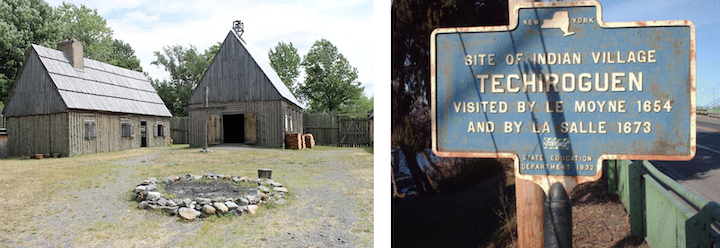
Marker, “Jesuit Mission, French Fort, Jesuit Well”
6680 Onondaga Lake Pkwy, Liverpool NY 13088
Marker, "Techiroguen"
5449 Bennett St, Cicero, NY 13029
|
|
- Father Simon Le Moyne, S.J. (22 October 1604 - 24 November 1665), sometimes spelled Simon Le Moine, was born in Beauvais and was a French Jesuit priest who became involved with the mission to the Hurons and Iroquois in the Americas.
- Le Moyne was the first explorer from Europe to discover the Salt Springs of Onondaga, near what is today Syracuse, New York. It is here where he set up his mission, Sainte Marie de Gannentaha.
- Le Moyne College is a Jesuit college located in Syracuse, New York and named after Simon Le Moyne. The Le Moyne College seal includes downturned arrowheads which symbolize his work on behalf of diplomacy and peace. It also depicts flowing waters, to symbolize both the ritual of baptism and Father Le Moyne's discovery of the value of the Onondaga salt springs.
• Inscription:
“Jesuit Mission"
" The salt springs at Onondaga Lake were visited by Father LeMoyne, August 16, 1654. The following year Fathers Chaumonot and Dablon made a settlement here and on 1656 founded the mission of Ste. Marie of Ganentaa which was abandoned in 1658 because of the hostility of the Indians.
French Fort: Frontenac erected a palisaded enclosure August 3, 1696, before attacking Onondaga, then situated south of present Jamesville.
Jesuit Well was situated on the site of the mission and fort near this point.
Col. Van Schaick and his expedition encamped on the shore of the lake near here, April 21, 1779, after their attack on the villages of the Onondagas.”
Erected 1930 by Syracuse Chapter, Sons of the American Revolution, and New York State.”
• Inscription:
"Site of Indian village
Techiroguen
visited by Le Moyne 1654
and by La Salle 1673
Erected 1932 by New York State Education Department."
|
|
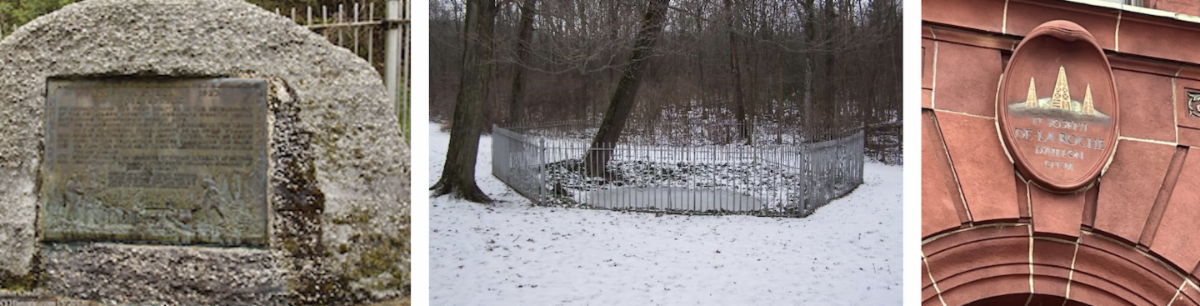
Father Joseph de la Roche Daillon
and the discovery of oil
at Seneca Oil Spring
|
|
Marker “1627 Seneca Oil Spring 1927”
Oil Springs Road (across the bridge from parking), Seneca Oil Spring, New York 14727
|
|
• Joseph de La Roche Daillon (born in Anjou, date unknown, died 1656 in Paris) was a French Catholic missionary to the Huron Indians and a Franciscan Récollet priest. He spent time with the Hurons and the Neutrals (so called because they were neutral between the Hurons and the Iroquois. In 1627 he visited the Wenrohronon tribe, which no longer exists, and was among the first Europeans to see Niagara Falls, after Etienne Brûlé, and Father Hennepin. He returned to France in 1629 and wrote an account of his trips among the Indians.
• He gained the trust of the Wenrohronons (an Iroquoian-speaking tribe that no longer exists). Souharissen, a chief of the Neutral Indians, led him to a spring in what is now up-state New York (near the town of Cuba, New York). The spring was sacred to both the Neutral and the Seneca, who used the oil to treat wounds, cure illnesses, body paint, and light torches. Father d'Aillon blessed the spring and wrote about it in his letters.
• However, the tribe decided to abandon the area in 1639 due to the ongoing attacks from their eastern neighbors, the Seneca of the Iroquois Confederacy. The Seneca, along with the Mohawk and other three nations of the Iroquois Confederacy, were aggressively expanding their territory to secure more hunting grounds for the fur trade. Their aim was to dominate the lucrative fur trade with the French in this particular region.
• It was the first account of oil in America and Father Daillon is still remembered in the oil industry as the first discoverer of oil.
• De La Roche Hall, the main science building at St. Bonaventure University, is named for the friar.
• Oil Springs Reservation or Oil Spring Reservation is an Indian reservation of the federally recognized Seneca Nation.
• Inscription (excerpt):
“1627 Seneca Oil Spring 1927: Forms the first chapter in the development of the petroleum industry in America - a gigantic world enterprise transforming modern life.
1627 Oil in American continent first recorded in this region by the Franciscan Friar, Joseph de La Roche D'Allion...”
|
|
Father Pierre Millet's cross |
|
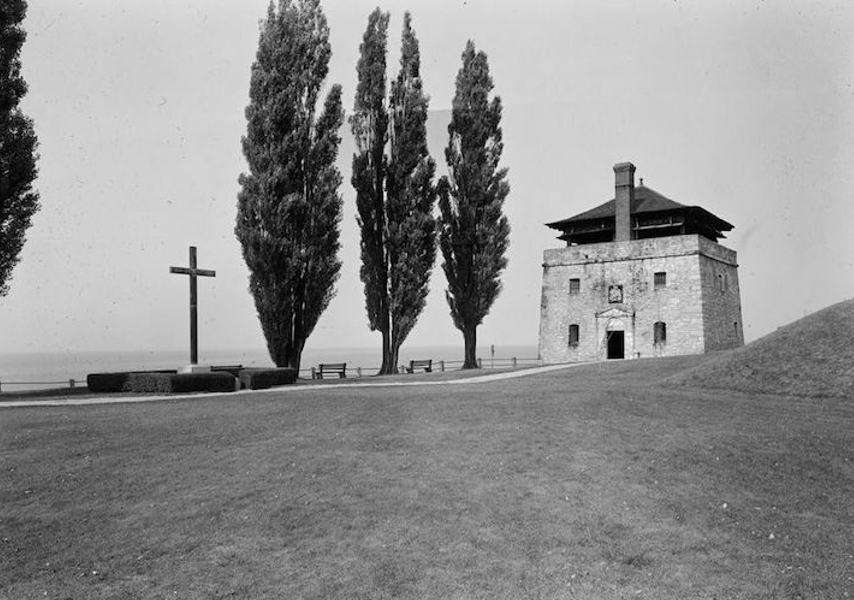
Cross & Marker, “Father Pierre Millet”
Fort Niagara State Park, Youngstown NY 14174
Father Millet Cross and North Redoubt, 1967, By J. Carl Burke, Jr. - United States Library of Congress, Prints and Photographs division Public Domain
|
|
• This bronze cross, standing at 18 feet tall, replaces the original wooden cross that was erected by Pierre Millet at the New French Fort Denonville in 1688. The fort's garrison, consisting of one hundred men, faced a harsh winter and suffered from disease and starvation. Fortunately, a rescue party managed to save only twelve of them, with Father Millet, a Jesuit missionary, being part of the group. On Good Friday, April 16, Father Millet celebrated Mass and erected a cross to symbolize God's mercy for the men who were afflicted by the plague. On September 5, 1925, Calvin Coolidge designated an 18-foot square section of Fort Niagara Military Reservation specifically for the construction of a new cross to commemorate the original one blessed by Father Millet. This section of land, measuring 324 square feet or 0.0074 acres, became the smallest national monument in the history of the United States. In 1926, the New York State Knights of Columbus dedicated the memorial cross not only to Father Millet but also to other priests who demonstrated heroism in bringing Christianity to the wilderness and aiming to establish a new France in the New World.
• Inscription:
“To
Father Pierre Millet,
French Jesuit Priest
Missionary to the Iroquois and Chaplain at Fort Niagara
Who, Here, on Good Friday 1688
Erected a Cross
Invoking God's mercy for the plague-stricken garrison.”
Erected by Knights of Columbus Fourth Degree, Sixth New York District, Calvert Province.”
|
|
Fathers Joseph Chaumonot and René Menard
First house of Christian worship in western New York
|
|
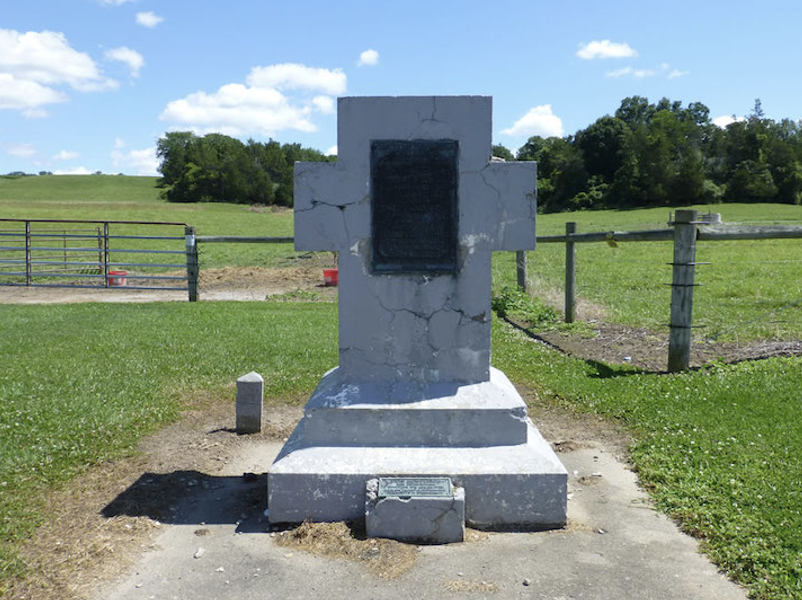
Mission Cross
New York State Route 90, Union Springs, NY 13160
|
|
• This mission cross is situated on the east side of Rt. 90 just north of Great Gully Brook, and commemorates a former Jesuit mission at the Goiogouen village. This is believed to have been the site of the first Christian church built in all of Western New York. The chapel of St. Joseph was dedicated here on Sep. 6, 1656 by Fathers Joseph Chaumonotand Rene Menard. A second chapel, possessing the same name, was completed Nov. 9th, 1668.
• Inscription:
“This valley was the site of the principal Cayuga Indian village”
“To the brave French Jesuit missionaries whose heroism was almost without parallel Joseph Chaumonot and René Menard who as guests as of Chief Saonchiogwa built here in 1656 the first house of Christian worship in western New York. Stephen De Carheil who for nine years ministered here and his co-labourer Peter Raffeixthis memorial is respectfully erected”
Dedication Plaque:
This monument was dedicated on Columbus Day Oct 12, 1911 under the auspices of Auburn Council Knights of Columbus
Erected 1911 by The Auburn Council of the Knights of Columbus.”
|
|
Father Sébastien Rasle, S.J.
Founder of the first Native American School in Maine
"The Apostle of the Abnakis"
|
|
Ilustrations:
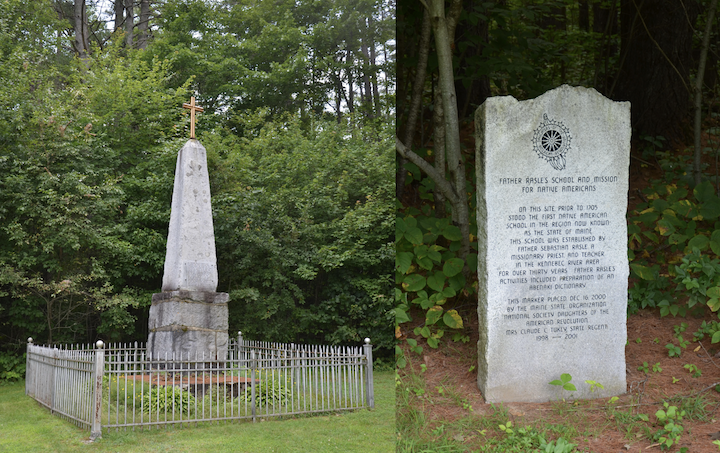
Top: Memorial and stele, Father Sébastien Rasle
Saint Sebastian Cemetery, on Father Rasle Road, Madison, ME 04950
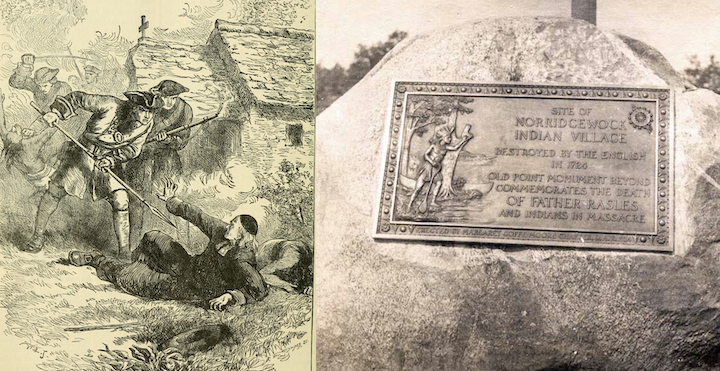
Bottom: "Cruel murder of Father Sebastien Rasle" by Northrop, Henry Davenport, 1836-1909, Library of Congress, Public Domain,
|
|
• Sébastien Rasle (also Racle, Râle, Rale, Rasles, and Sebastian Rale (January 20, 1657 – August 23, 1724) was born in Pontarlier. He was a French Jesuit missionary and lexicographer who preached amongst the Abenaki and encouraged their resistance to British colonization during the early 18th century. This encouragement culminated in Dummer's War (1722–1725), where Father Rasle was killed by a group of New England militiamen. Rasle also worked on an Abenaki-French dictionary during his time in North America.
• In 1833, Bishop Fenwick dedicated an 11 foot tall obelisk monument, erected by subscription, over his grave at what is today St. Sebastian's Cemetery at Old Point in Madison.
• Inscription of memorial stele:
“On this site, prior to 1705 stood the first Native American school in the region now known as the State of Maine. This school was established by Father Sebastian Rasle, a missionary priest and teacher in the Kennebec River area for over thirty years. Father Rasle's activities included preparation of an Abenaki dictionary. This marker placed Dec. 16, 2000 by the Maine state organization National Society Daughters of the American Revolution. Mrs. Claude C Tukey, State Regent, 1998-2001."
• Inscription of plaque:
“Rev. Sebastian (sic) Rasle, a French Jesuit missionary, for many years the first evangelist among the Illinois and the Hurons, and afterwards for thirty-four years a true apostle in the faith and love of Christ among the Abenakies, unafraid of dangers, and giving witness that he was prepared for death, this most excellent pastor, on the 23rd day of August, 1724, fell in this place, at the time of the destruction and slaughter of the town of Norridgewock to him, and his children, dead in Christ, Benedict Fenwick, Bishop at Boston, has erected and dedicated this monument, this 23rd of August, A.D. 1833”
|
|
Other missionaries activities are remembered
in Maine and Vermont
|
|
Photos from top to bottom:
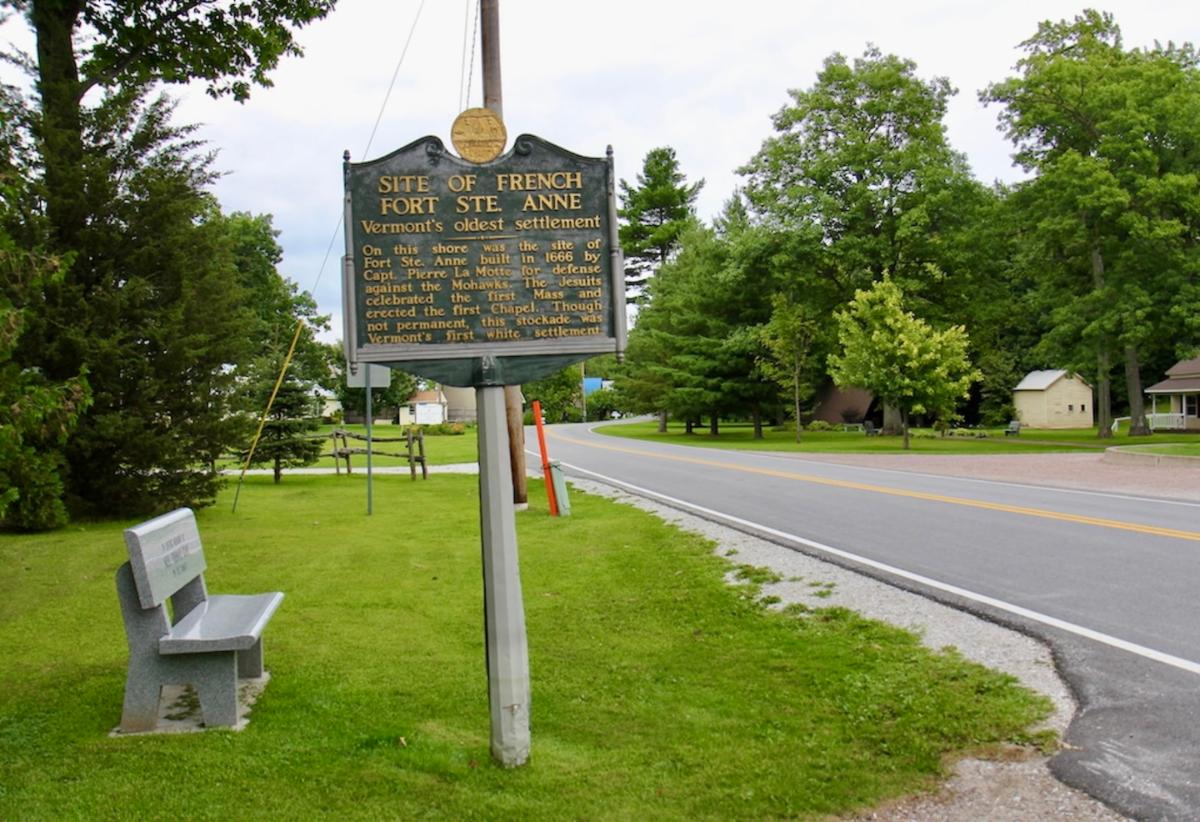
Marker, « Site of French Fort Ste. Anne”
“Vermont's oldest settlement”
1011 Shrine Rd, Isle La Motte, VT 05463
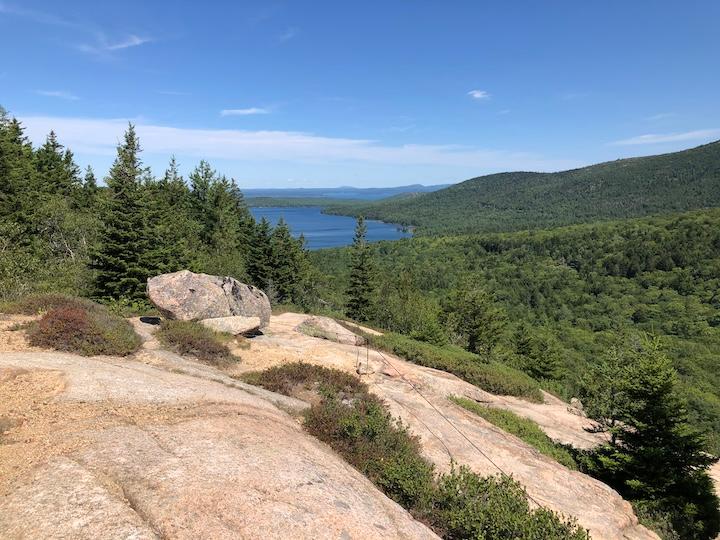
View of Mount St Sauveur, photo by Thierry Chaunu (c) ASSFI 2002
Marker, “St. Saviour's Episcopal Parish Welcomes You”
26 High St, Bar Harbor, ME 04609
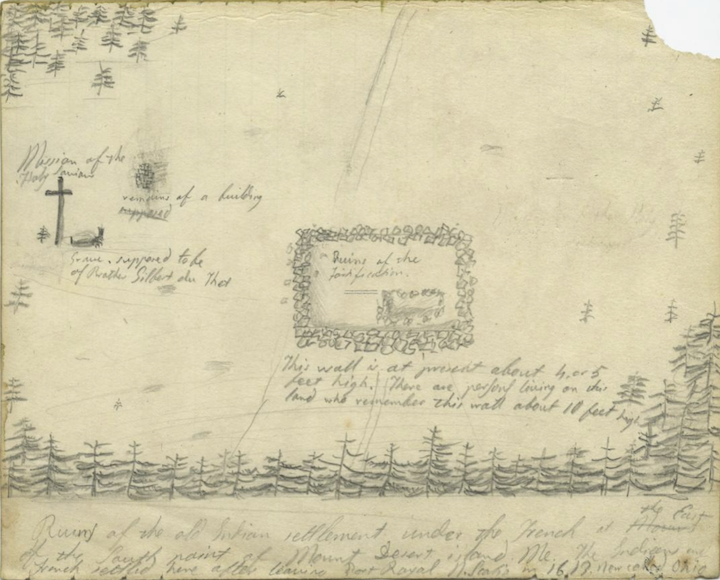
St. Sauveur mission, Mount Desert, ca. 1866
Eugene Vetromile papers, circa 1866, Pencil on paper, Coll. 114, Box 1/18, Hancock County, ME. Maine Historical Society, Portland, Maine
This sketch is from Eugene Vetromile's (1819-1881) personal collections, and marks the grave of Brother Du Thet and the perimeter walls of the mission. Vetromile was an Italian Jesuit missionary who ministered to Penobscot and Passamaquoddy communities in Maine from 1858 to 1881.
|
|
• In 1666, the French built a fort, on Isle La Motte, to protect Canada from the Iroquois. The fort was dedicated to Saint Anne. Fort Sainte Anne was the most vulnerable to attacks by the Iroquois, because it was the last of five forts stretching along the Richelieu River going south. The other four were Fort Richelieu, Fort Chambly, Fort Sainte Thérèse and Fort Saint-Jean (all situated in Québec). Alexandre de Prouville de Tracy had the forts built by four companies of the Carignan-Salières Regiment. The first three forts were built in 1665, and the other two in 1666. By the end of 1665, three of the five Iroquois Nations made peace in Quebec City. The Canadien Governor, Daniel de Courcelle, sent de Tracy in the Fall of 1666 with 1,200 men, along with Hurons and Algonquins to attack the two Iroquois Nations resisting, the Mohawks and the Oneidas. The Mohawks ran away into the forest, and the following year, peace was made with the two Nations. The peace continued for seventeen years.
• Inscription:
“On this shore was the site of Fort Ste. Anne built in 1666 by Capt. Pierre La Motte for defense against the Mohawks. The Jesuits celebrated the first Mass and erected the first Chapel. Though not permanent, this was Vermont's first white settlement.”
“Erected 1949 by Vermont Historic Sites Commission”
• The establishment of the first French mission in America took place in 1613 on Mount Desert Island, thanks to the efforts of the Jesuits. Their primary objective was to convert and provide spiritual guidance to the Wabanaki Indian people residing in the area. Unfortunately, the exact location of this mission remains unknown to this day. However, there is a belief among some that it could be situated at Jesuit Spring in Southwest Harbor. Brother Gilbert Du Thet (1575-1613) embarked on a journey from Port Royal, Nova Scotia, and upon reaching the shores, he erected a cross, symbolizing St. Sauveur. The construction of the mission had only been underway for two months when English captain Samuel Argall (ca. 1572-1626) stumbled upon it, considering the territory to be under British control. Argall launched an attack on the mission, ultimately destroying it and causing the loss of numerous lives, including that of Du Thet.
The island is high and notched in places so that from the sea it gives the appearance of a range of seven or eight mountains. The summits are all bare and rocky . . . I named it “L’ Ile des Monts-deserts.” Samuel Champlain, 1604 “
• Inscription (excerpts):
“History:
The founders of this parish named their congregation in honor of the Holy Saviour, Jesus, and in recognition of the first Christian mission, St. Sauveur, on the island by French Jesuits in 1613” [...] “
|
|
Saint Kateri Tekakwitha
"The Lily of the Mohawks"
|
|
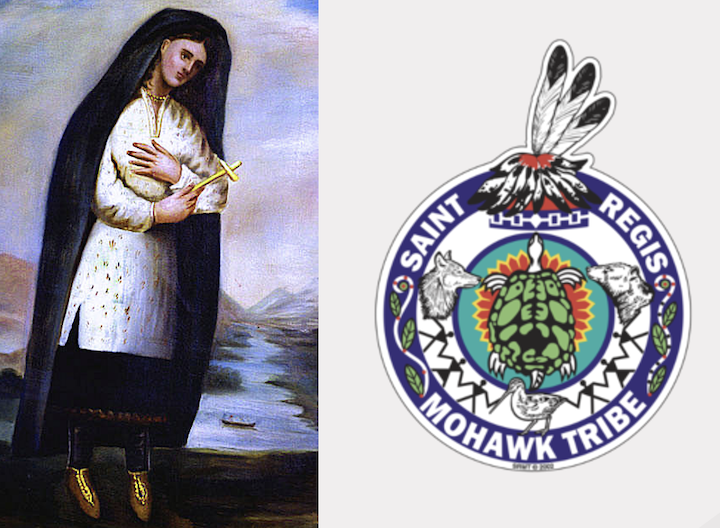
Illustrations: Top: "Saint Kateri, the lily of the Mohawks" by Jan Henryk de Rosen, United States Conference of Catholic Bishops, USCCB building, 3211 4th St NE, Washington, DC 20017
Seal of the Saint Regis Mohawk Tribe
|
|
An attempt to plant a French colony among the Onondagas near Lake Onondaga in 1656 ended in failure within the year because of Iroquois unrest. The next ten years witnessed intermittent warfare between the French and the five Iroquois nations, and it was not until 1668 that a mission could be established in the five cantonments of the Iroquois Confederacy. In the succeeding decade some 2,000 converts were made, among them Katharine Ganneaktena of the Erie tribe and Kateri teka kwitha of the Mohawks.
• Kateri Tekakwitha, born to an adopted Algonquin mother, spent her childhood in Gandouagué. Unfortunately, she contracted smallpox during her early years, which left her with scars, poor eyesight, and fragile health. When she reached the age of eighteen, Father Jacques de Lamberville, a Jesuit missionary crossed paths with her, and their conversations eventually led to her baptism during Easter in 1676.
• As part of her baptism, she received the name Catherine, but a later white author bestowed upon her the name "Kateri" to make it sound more Indigenous. The following year, she relocated to Kahnawake. While the missionaries primarily focused on their sacramental duties, they provided minimal pastoral or spiritual guidance. Instead, Kateri's spiritual life was nurtured by a close-knit circle of female friends who gathered together. Among these friends, she confided in a young Oneida widow, sharing her innermost thoughts and feelings.
• During her brief time in Kahnawake, Kateri's reputation as a saintly figure grew, earning recognition from both Indigenous Christians and the Jesuits. Following her passing, she was immediately revered for her sanctity, although there was significant resistance to acknowledging an Indigenous saint. Ultimately, she was canonized in 2012.
• Saint Kateri Tekakwitha has been given the affectionate name, “Lily of the Mohawks.”
|
|
LEGACY, END OF PART 1...
• The enduring consequences of the initial English settlement in southern and western Maine are evident when examining the geographical distribution of present-day Wabanaki communities. The indigenous inhabitants of the region that came under the earliest English colonization experienced higher mortality rates, endured prolonged conflicts resulting in fatalities, or were forcibly uprooted and assimilated into Wabanaki communities located in areas such as Quebec and Indian Island along the Penobscot River. The existing reservations and tribal headquarters in Maine are all situated within the boundaries of what was referred to as Acadia during the 17th century, where the predominant interactions occurred with the French.
In the English colonies:
• Following the 1665 grant of New Netherlands by Charles II of England to his brother James, duke of York, the deep and lasting rivalry that developed between England and France ended only with the cession of New France to England at the end of the French and Indian War (1763). The Jesuit missionaries were looked upon as French agents. Thomas Dongan, New York's Catholic governor (1683–88), afforded the Jesuits a modicum of protection on the northern frontier, but beginning in 1687 he forbade the Jesuits to work among the Iroquois. By 1709 the final chapter in the history of the French Jesuits in New York ended with the departure of Jacques de Lamberville for Quebec and the arrest of Pierre de Mareuil by Colonel Peter Schuyler.
It was a crime for Jesuits to enter colonial Massachusetts, but none were known to be present there. There were about two dozen Jesuits in the Thirteen Colonies in 1760, and they kept a low profile.
Legacy in modern times:
Throughout the twentieth and twenty-first centuries, the Abenaki peoples residing in Vermont have encountered numerous challenges in their quest for acknowledgement and acceptance by both state and federal authorities. These communities, who are descendants of the Abenaki, have utilized the historical presence of Jesuit missions as evidence to substantiate the legitimacy of their current tribal governments. In a passionate defense of his band's application for state recognition, Nathan Pero, the elected chief of the Koasek (Cowasuck) Traditional Band of the Sovereign Abenaki Nation, emphasized the significance of the Jesuit missions during an open meeting of the Vermont Commission of Native American Affairs. He confidently stated, "We have the maps, we have the documents. The Jesuit mission proves we were here".
By highlighting the existence of these missions, the Abenaki peoples effectively dispel the abstract and often derogatory discourse surrounding the intentions and effectiveness of missionary endeavors among Native communities in North America, a topic that persists within academic literature.
|
|
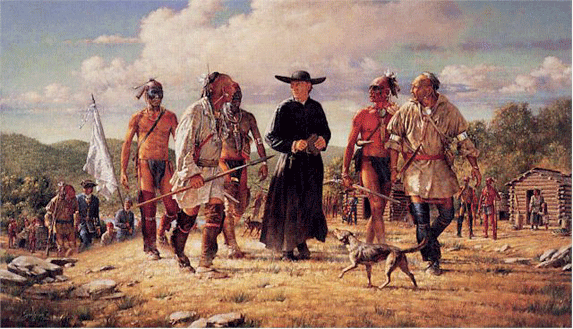
Illustration above: In 1700, two Jesuit priests named Pierre-Gabriel Marest (Marais) and Jacques Gravier embarked on a journey alongside the Kaskaskias and their leader Rouensa. This is how "Des Peres" near Cahokia in today's Missouri was founded.
...TO BE CONTINUED IN FUTURE BULLETINS!...
June 2024 Bulletin:
French Missionaries in New France from the Great Lakes to Louisiana.
October 2024 Bulletin:
French Missionaries in the Far West and Hawaii in the 19th Century.
|
|
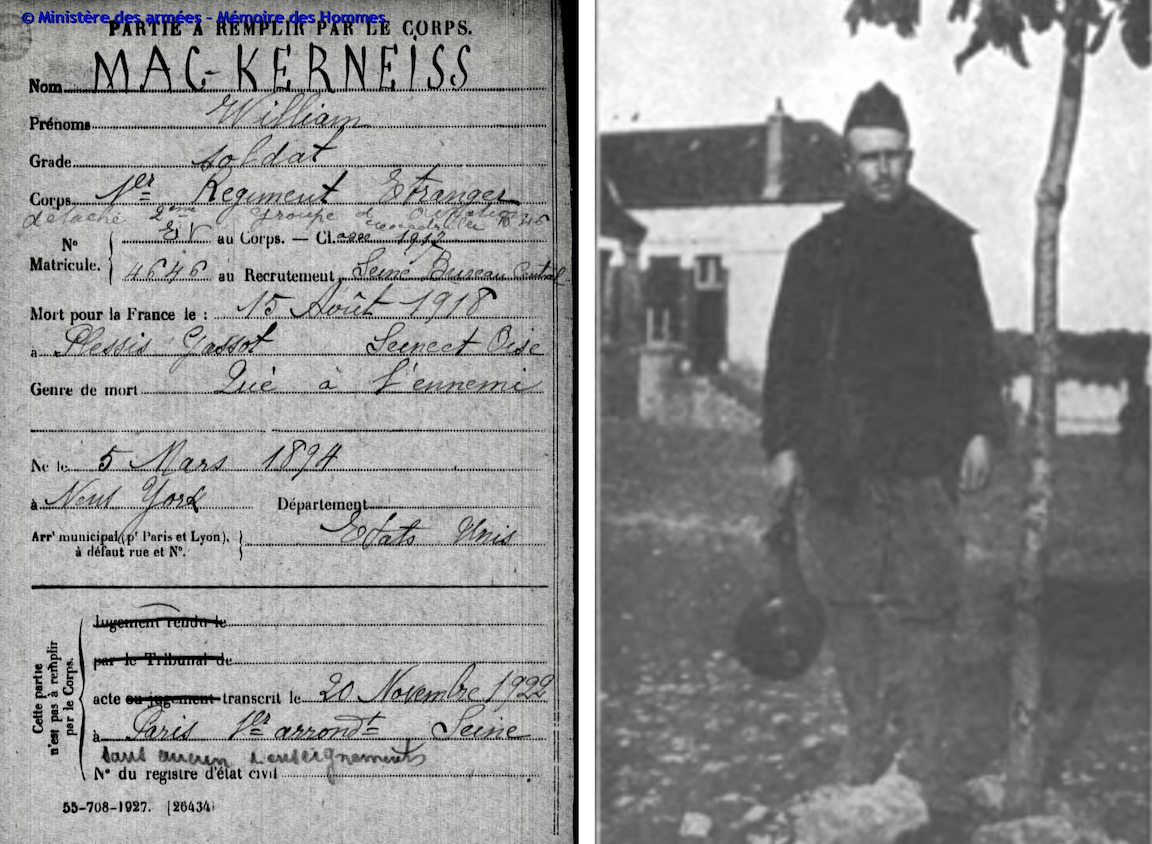
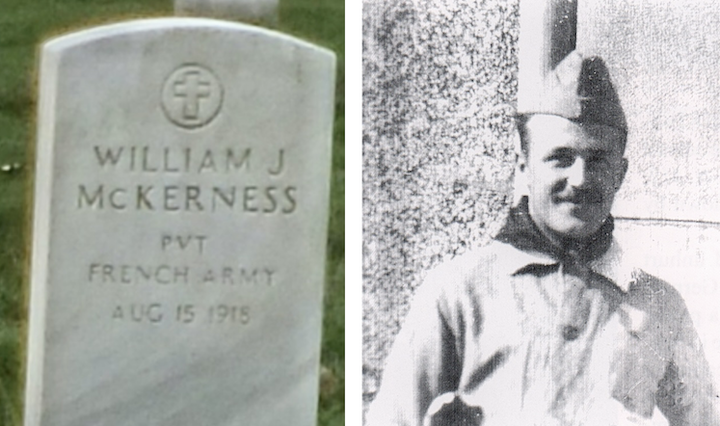
HOMAGE TO SGT WILLIAM JOHN MCKERNESS
LAFAYETTE FLYING CORPS
"MORT POUR LA FRANCE"
August 15, 1918
|
|
Arlington National Cemetery, Virginia
Plot Section 18, Grave 2636
|
|
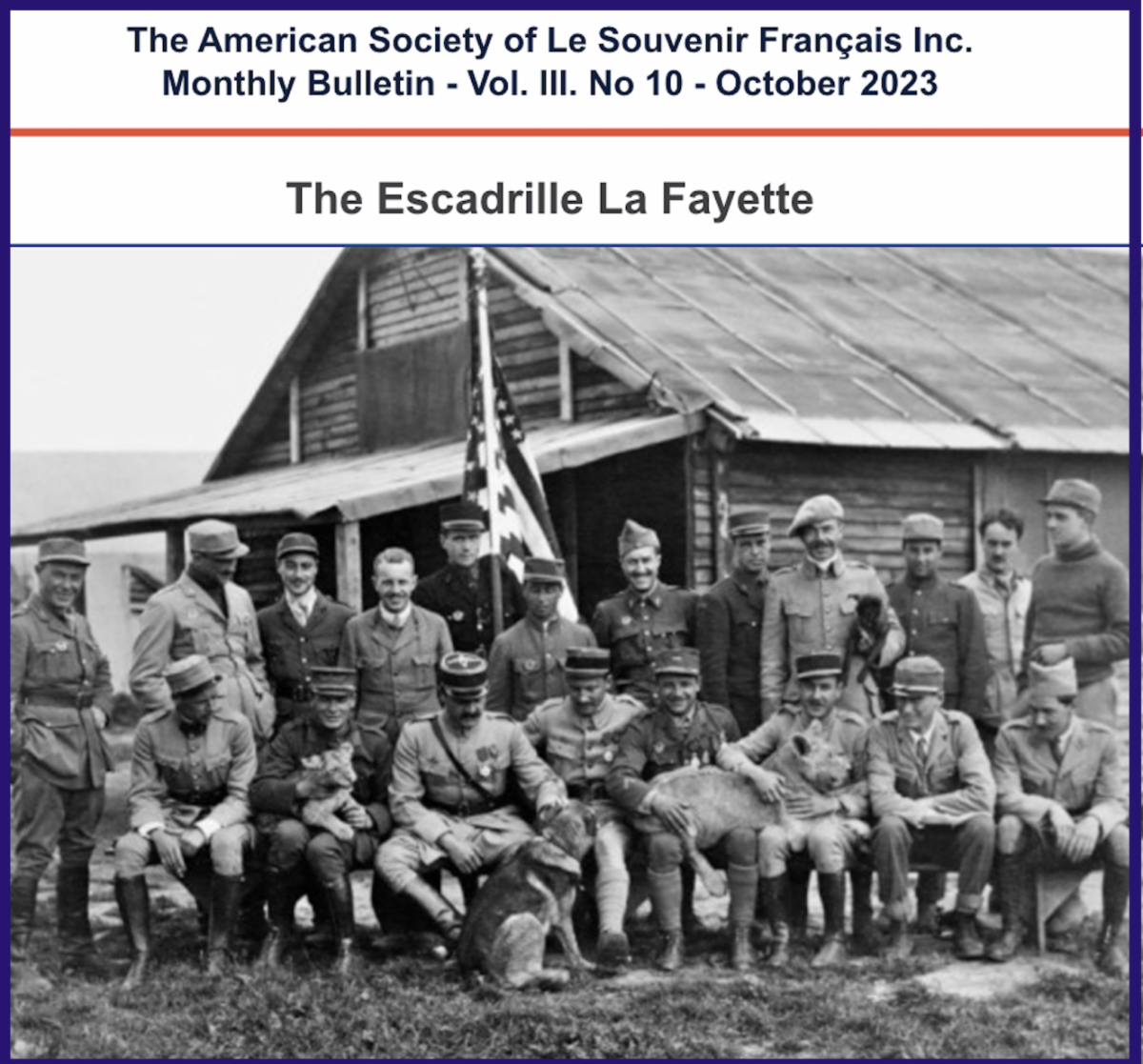
We continue our series started this past October with tributes to members of the Escadrille Lafayette, later part of the Lafayette Flying Corps. For access to our Bulletin dedicated to the Escadrille Lafayette, please click on:
This month, we pay hommage to Sergent William John McKerness, who was born on March 5, 1895 in New York. He received his education in Connecticut and in 1916, he served on the Mexican Border as a member of the Connecticut National Guard. In 1917, he made the decision to participate in the ongoing war in Europe and embarked on a journey to France with the intention of joining the Harvard Ambulance corps. However, fate had a different plan for him as he ended up becoming a member of the Service Aeronautique instead. Eventually, he became an observer and machine-gunner with the Escadrille. In recognition of his bravery, he was awarded the Croix de Guerre with Star after sustaining injuries from German fighters during a mission in 1917. Tragically, a year later, he lost his life when the French pilot of the aircraft he was serving as a gunner in was shot and killed during an attack by German Fokkers. The plane crashed, and at the young age of 22, Sergeant McKerness was laid to rest in a cemetery in Plessis-Gassot, Seine-et-Oise, France.
However, his body was later exhumed and repatriated to the United States, where it was reburied in Arlington National Cemetery on September 8, 1921.
He was officially declared "Mort pour la France" ("Died for France") le 15-08-1918 (Plessis-Gassot (Le), 95 - Val-d'Oise (ex Seine-et-Oise), France.
Service Record:
William J. McKerness, Wallingford, Connecticut
Service in French Aviation
Date of Enlistment: June 13, 1917
Aviation schools: June 20, 1917, to May 10, 1918, Avoid, Cazeaux.
At the Front: Escadrille C.46 (as observer and machine-gunner), May 12 5o August 15, 1918
Final rank: Sergent
Wounded in combat: July 15, 1918
Killed in combat: August 15, 1918, northeast of Ribécourt
Decorations: Croix de Guerre, with Star
French Citation:
"Division Aérienne, Etat-Major, July 31, 1918
The Commanding General of the Air Division
Mentioned in the Division Order:
McKerness, William, Private, Foreign Legion, Aircraft Gunner
Brave, skilful and cool-headed machine-gunner. Attacked on July 15 by a patrol of 15 single-seaters, valiantly engaged the fight, enabling the aircrafts he was protecting to continue their mission. Was wounded in the course of the fight, with his aircraft riddled with bullets, a tank on fire and his rear gunner seriously injured.
The Commanding General of the Air Division
(Signed) M. Duval"
Our Society plans to honor him with a "Never Forget" rose at a ceremony on Memorial Day, 2024 along with the 25 French soldiers buried at Arlington National Cemetery.
|
|
ANNOUNCEMENTS AND SAVE THE DATES |
|
Our Hermione Fund raising appeal continues!
|
|
• In November, our Society kicked-off the US Fund raising campaign to help Save the Hermione and have it sail back in time for the United States Semiquicentennial. This is an ongoing campaign and all donations are tax-deductible.
|
|
LAFAYETTE ESSAY CONTEST
A nationwide contest for 4th & 5th Graders
|
|
An incredible opportunity for 4th and 5th graders!
A message from Chuck Schwam,
Executive Director
Bicentennial Committee Chair
American Friends of Lafayette
- The American Friends of Lafayette is sponsoring the 2024 Lafayette Essay Contest where kids will have the opportunity to learn about General Lafayette, one of America's Revolutionary War heroes and all around fantastic human being.
- Contest winners will receive cash prizes and be invited to present their essays in New York City as part of the launch of the 2024-25 Bicentennial of Lafayette's Farewell Tour.
-
Here is a link to our official Essay Contest Video with a special invitation from General Lafayette himself !!!: HERE
-
Details in English can be found: HERE
-
Details in French can be found: HERE
Learn full details about the contest with the registration form: HERE
- Registration ends on January 18th. Essays are due March 18th
- Please share this exciting opportunity with your kids, grand kids, neighbor's kids, friend's kids...anyone you can think of. This is important. This is our mission. We're asking you to please post social media content about the contest as well.
- We've prepared everything for you to make it easy and quick. Our goal is to have 200 kids enter the contest in honor of the 2024-25 Bicentennial of Lafayette's Farewell Tour. Thank you for sharing the contest with a child to help the next generation learn our history with America's favorite fighting Frenchman!
|
|
SAVE THE DATE
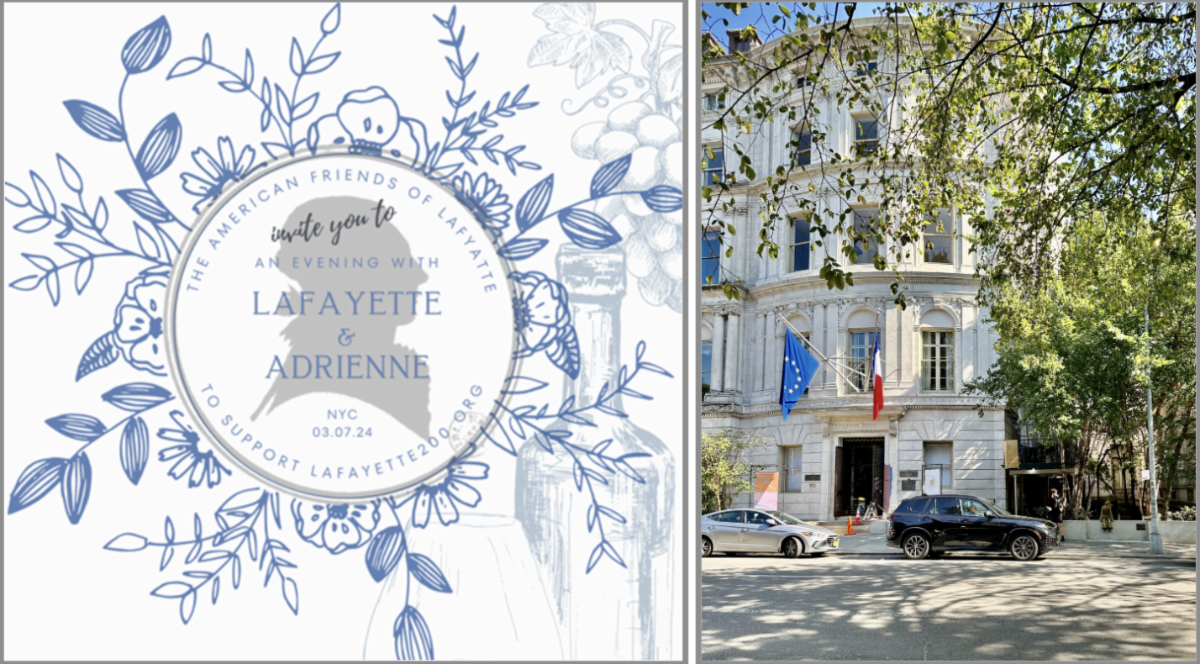
March 7, 2024
Launch of Lafayette's Farewell Tour Bicentennial
|
|
Please join the American Friends of Lafayette for an extraordinary evening filled with elegance, culture, and philanthropy and help RAISE FUNDS for the Lafayette Bicentennial KICK-OFF in August 2024.
Thursday, March 7, 2024 at 7:00pm EST
972 5th Ave, New York, NY
Spend an evening with General Lafayette and his heroic wife Adrienne. Immerse yourself in a journey through time, experiencing the sophistication of French culinary refreshments, while relishing the tastes and aromas that have delighted palates for centuries. This exclusive event offers a unique blend of 18th-century American and French history, coupled with the luxury of the 21st century. From exploring the opulent halls of the Villa Albertine, sampling 18th-century dances and amusements, a chance to take home unique Lafayette merchandise, and indulging in a feast for the senses, this evening guarantees an unforgettable experience.
Highlights of the Evening:
• Indulge in A Culinary Extravaganza: Delight your senses with a curated menu of flavors reflecting the bounty of the French countryside, providing a unique culinary experience.
• Stroll Through History: Wander through the opulent halls of the Villa Albertine a living testament to the elegance of a bygone era.
• Meet General Lafayette and his Heroic Wife Adrienne: Be in the esteemed company of General Lafayette, a figure synonymous with the spirit of liberty, and his heroic wife Adrienne, adding an extra layer of grace and charm to the festivities.
• Immerse Yourself in the Splendor of Historical Dance Presentations: Enjoy the enchanting spectacle of costumed dancers evoking the grace and elegance of the past. Guests are invited to join in the festivities and try their hand (or feet) at these timeless dances adding a dynamic and participatory element to the evening.
• Experience the Charms of 18th Century Gaming: Transport yourself to bygone eras as you participate in classic pastimes such as skittles and whist infusing the evening with a delightful playfulness and offering a charming glimpse into the entertainment of yesteryear.
• Bid on Lafayette Items: The evening will feature special Lafayette items to be auctioned in live and silent format offering you a unique opportunity to take home a piece of history while supporting this noteworthy cause.
Special Access to Villa Albertine:
Situated across from Central Park and on Museum Mile the Villa Albertine boasts an iconic location that seamlessly blends historical significance with modern allure. Immerse yourself in the enchanting ambiance that combines the essence of Renaissance Europe with the sophistication of 21st-century New York. Your attendance not only enhances the grandeur of the evening but also contributes to a noble cause.
Individual tickets will sell for $150. Tickets and sponsorship opportunities will be available soon. Look for an email regarding ticket sales.
Of Note:
-
All proceeds generated from this event will support the August 2024 kickoff events in New York City for the Bicentennial Lafayette Farewell Tour commemorating the General’s 13-month journey through America as the “Guest of the Nation” between 1824 and 1825. For more information on the tour visit www.Lafayette200.org
- A portion of every ticket purchase is tax-deductible, as The American Friends of Lafayette is an IRC 501(3)(c).
We eagerly anticipate the pleasure of your company as we celebrate the iconic General Lafayette and his heroic wife, Adrienne, supporting a worthy cause in an evening that promises to be nothing short of magical.
|
|
From the Merci Train
February 2, 2024
Scottsdale, AZ
|
|
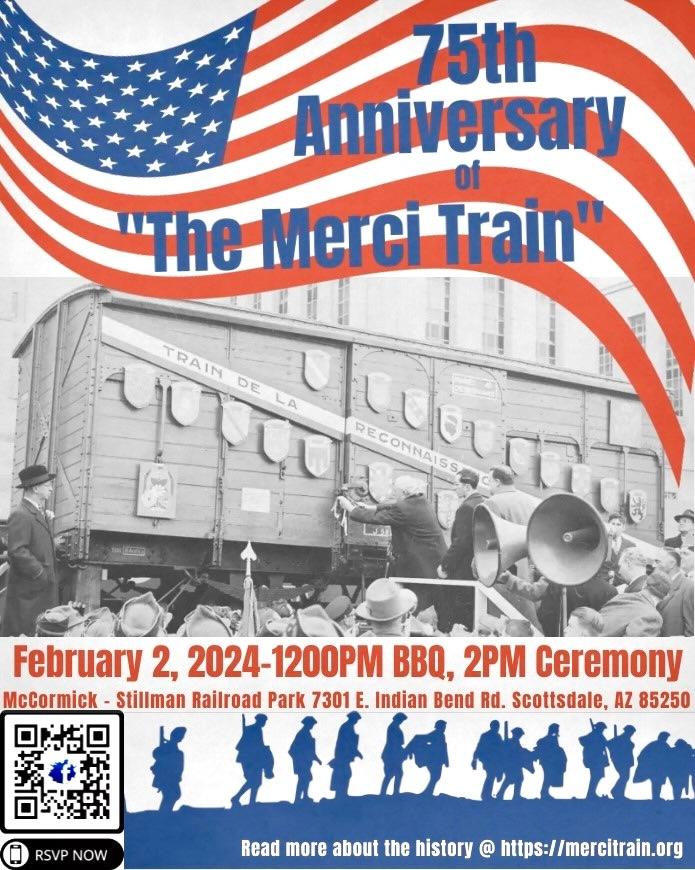
• Our November 2022 narrated the incredible story and ongoing legacy of the "Train de la Reconnaissance Française", affectionately called "The Merci Train" (November 2022: "The Merci Train, 49 boxcars of French gifts"
• 2024 is the 75th anniversary of the "Merci Train", a gesture of friendship and gratitude from the French people to Americans who gave 49 boxcars full of gifts for each State in 1949.
• The "40/8, Grand du Arizona" association is planning a celebration on February 2nd, 2024. The Arizona boxcar (on loan from the AZ Capitol Museum) is on display at the McCormick-Stillman Railroad Park in Scottsdale.
Our Society applauds the dedication and efforts of the American Legion and all the patriotic associations all over the United States who are the custodians of these boxcars. Their preservation work and dedication are admirable.
|
|
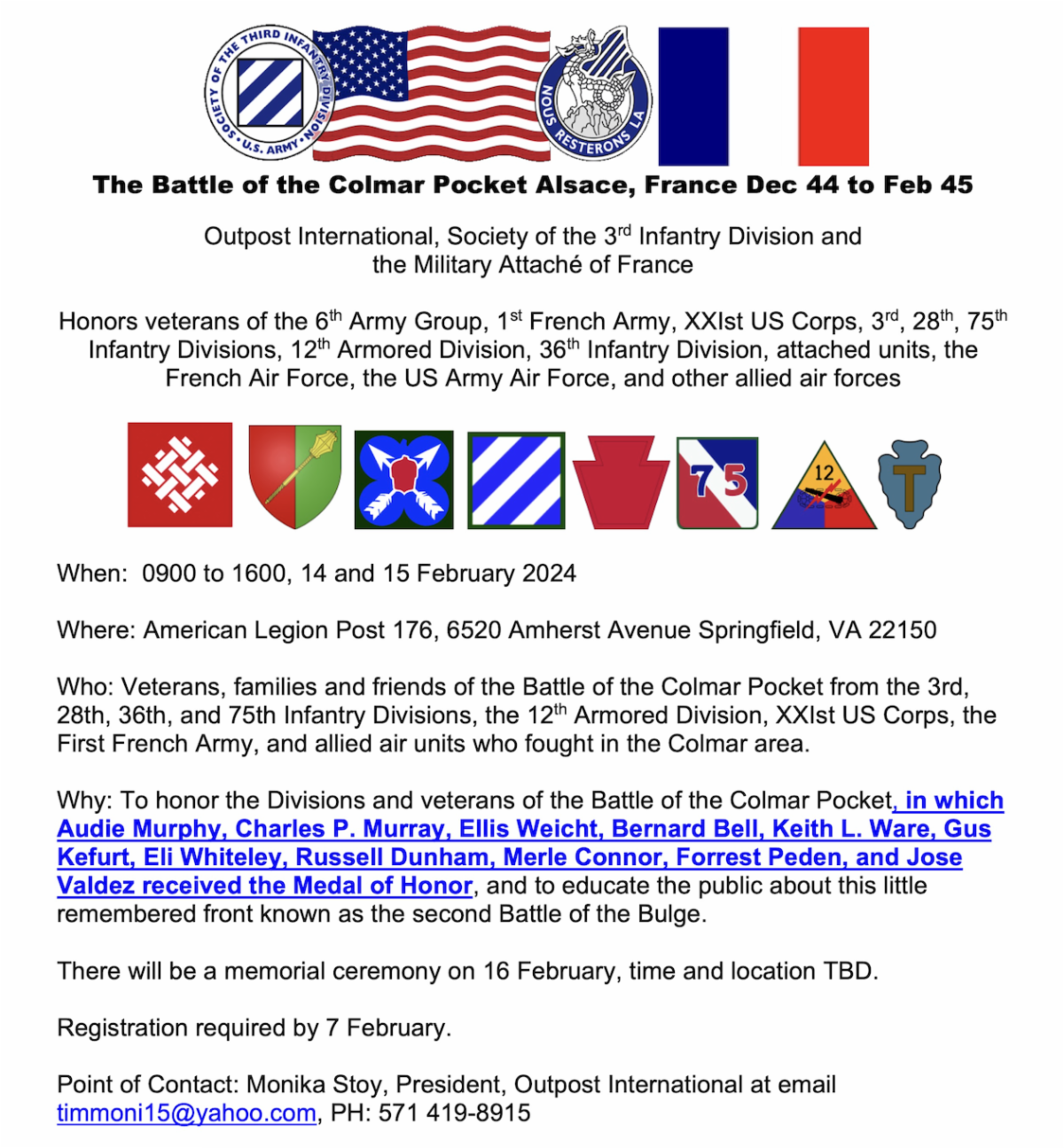
From the Society of the 3rd Infantry Division
14 & 15 February 2024
Springfield, Virginia
|
|
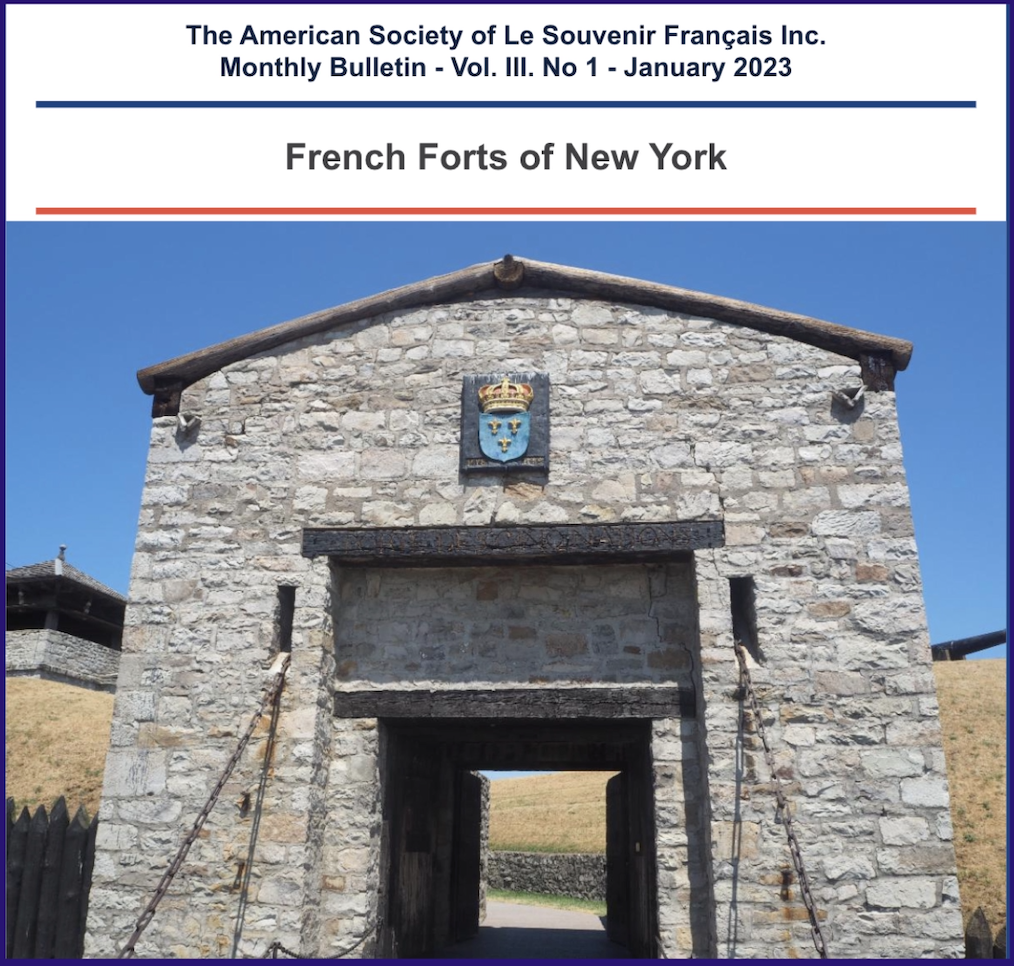
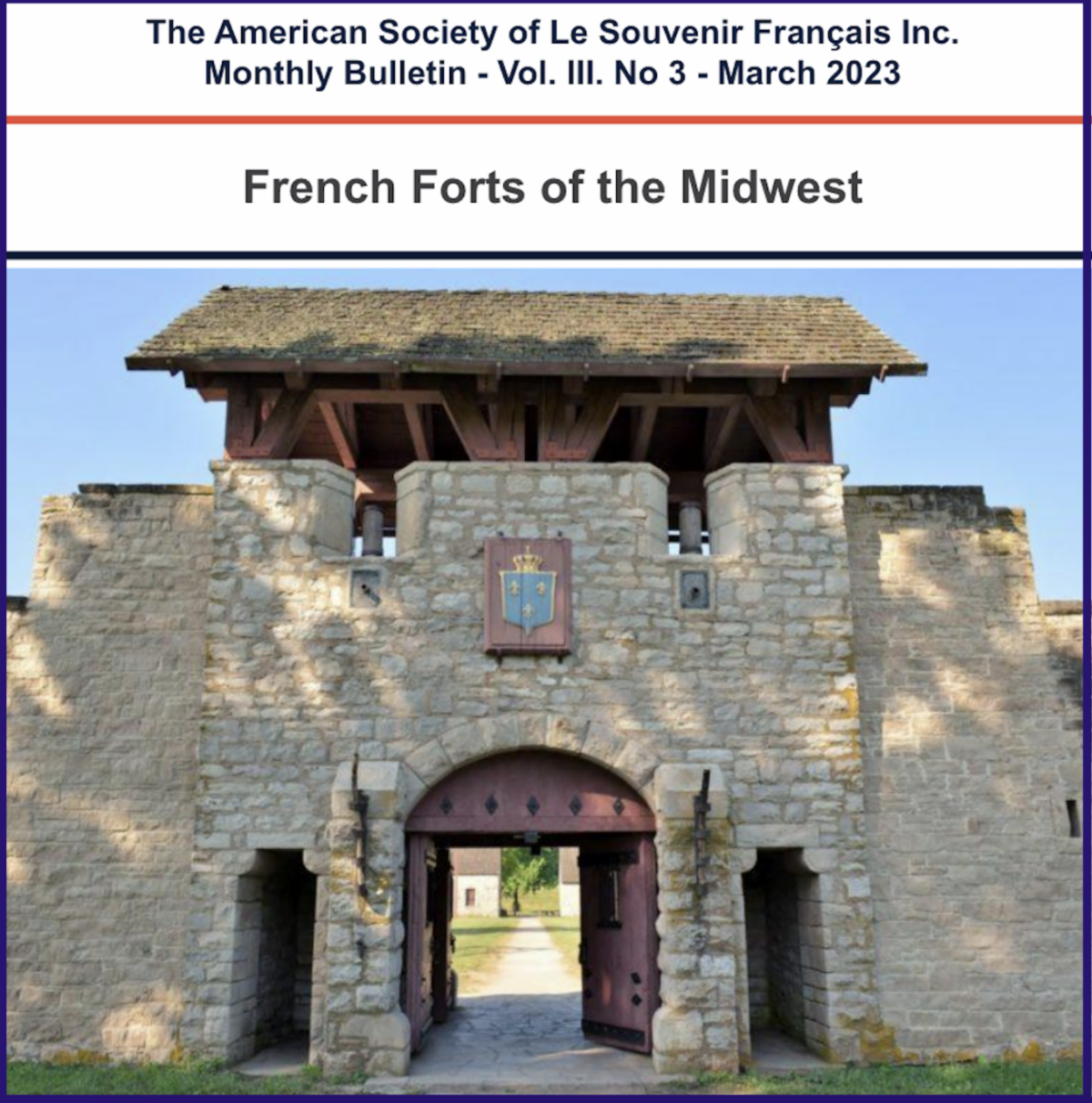
PAST MONTHLY BULLETINS
OUR GOAL: turn the spotlight on a famous, or less famous, episode or historical figure during the long shared history between France and the United States, with illustrations and anecdotes.
You can have access to all our past 2023 monthly Bulletins
(in English and French) by clicking these thumbnails below or by
|
|
CALENDAR OF EVENTS 2024
List is subject to change. All dates to be confirmed
|
|
2024 promises to be a busy year with several projects and events!
It will be the start of the Bicentennial of Lafayette's Farewell Tour with many, many events starting in August, to celebrate his triumphal tour as "Guest of the Nation" throughout 24 States and lasting 13 months! This Bicentennial is organized by The American Friends of Lafayette and we will provide in future bulletins all details.
• March 7: fund raising gala at Villa Albertine, NY by the American Friends of Lafayette
• Sunday, May 5: celebration of French Alliance Day at Washington Memorial Chapel, Valley Forge, PA
• Monday, May 27: Memorial Day
• May 23-25: "Operation Miroir" In honor of the 80th Anniversary of
D-Day: Fifty young French students will carry "La Flamme de la Nation" from the Arc de Triomphe in Paris to Arlington National Cemetery
• Thursday, June 6: D-Day allied landing in Normandy celebration
• Tuesday, June 18: Appel du 18-Juin
• Weekend July 12-13-14: annual wreath laying ceremony in front of the Statue of Rochambeau in Newport, R.I., homage at the tombs of Admiral de Ternay, Chevalier Pierre Rousseau de Fayolle, LT Benjamin de la Villemarais at Trinity Churchyard and "Tribute to France"
• Saturday, July 13: Bastille Day celebration in Central Park
• Thursday, August 15: Allied landing in Provence celebration
• Friday, August 16: Lafayette Farewell Tour Bicentennial Parade on Broadway
• Friday, October 18: stele and boulder with bronze plaque honoring by name the hussars who died at the Battle of Hook, to be installed between our two markers at Abingdon Elementary School park.
• Saturday, October 19: celebration of French-American Victory at Yorktown, dedication of a bronze plaque "Sailors buried at sea” at the French Memorial
• Sunday, November 10: Annual wreath-laying at the 463 "Morts Pour la France", Notre Dame Church in Manhattan
• Monday, November 11: Veterans Day / Armistice Day, 5th Avenue Parade in NYC, Washington DC, Houston, TX
Exact dates to be announced in the future:
• Tribute at Varian Fry's grave, Green-Wood cemetery, Brooklyn, NY (Righteous Among the Nations)
• Tribute at Anna Marly's grave, Pioneer cemetery, Palmer, Alaska (composer of Le Chant des Partisans)
• Ceremony at the Texas "Merci train" boxcar at Camp Mabry, Austin, TX
• Ceremony to honor the memory of 8 French Soldiers who are buried by Old St. Peter's Church in Old Hillside Cemetery, Cortlandt, NY
• Re-dedication: La Pérouse Memorial restoration at LaPerouse Bay, Maui, HI
• Dedication of 4 commemorative plaques in honor of the 4 American “Companions de la Libération”: General Dwight D. Eisenhower, John Hasey, James Worden, Jacques Tartière
• Dedication of a bronze plaque honoring "Le Tigre" French prime minister Georges Clemenceau in New York, where he spent four years as a young journalist from 1865-1869
• Dedication of a bronze plaque at Gramercy Park, New York, honoring Varian Fry who lived in Marseilles in 1940 and 1941 and helped many jews escape to America.
• Dedication of the Memorial to 4 soldiers from the Royal-Deux Ponts regiment who are buried in the vicinity of the Odell House – Rochambeau Headquarters
• Other sites of exhibits in France of the touring US Unknown Soldier exhibition in Paris will be announced as they are confirmed.
• Statue of Alexis de Tocqueville, author of the 1835-1840 classic "Democracy in America" (university site TBD)
• Bronze plaque to the memory of 3 soldiers of the Auxonne, Saintonge and Soissonnais regiments who died at West Point in 1782.
• Bust of Antoine de Saint Exupéry at the Intrepid Pier, New York
• Commemoration at Odet Philippe's monument, Philippe's Park, Safety Harbor, FL (Founder of grapefruit industry in Florida)
• Bust of Jean Ribault, site of the Trinity shipwreck, near Cape Canaveral, FL
• Beautification of "Matanzas" marker at the site of Jean Ribault's colony massacre in 1565, Saint Augustine, FL.
Last but not least, we will pursue our national fund-raising campaign in partnership with other US patriotic and cultural organizations to help the frigate Hermione sail again and participate in the upcoming semiquincentennial (250th anniversary) of the United States.
Help us make these a reality with your tax-deductible financial support!
You are welcome to specify the project(s) you wish to help.
Un grand "Merci"!
|
|
OUR MISSIONS:
• To preserve the memory of the French soldiers, sailors and airmen who gave their lives for freedom, and who are buried in the United States.
• To honor French Citizens who did great deeds in the United States, or with a strong connection with the United States,
• To promote the appreciation for French culture and heritage in the United States, and the ideals that unite our two nations, in order to pass the torch of memory to younger generations.
• To strengthen the long-standing traditional bonds of friendship between the American and French peoples, and to this end: erect or maintain memorials and monuments and encourage historical research, public presentations and publications in the media.
The American Society of Le Souvenir Français, Inc. is an independent American corporation, apolitical, established in 1993 in NY, with 501 (c) 3 non-profit status.
|
|
Board of Directors
American Society of Le Souvenir Français, Inc.
Members (2023):
Françoise Cestac, Honorary President • Thierry Chaunu, President, and General Delegate, Le Souvenir Français in the United States • Yves de Ternay, Treasurer • Patrick du Tertre, 1st Vice President • Henri Dubarry • Francis Dubois • Alain Dupuis, 2nd Vice President & Deputy General Delegate, Le Souvenir Français in the United States • Daniel Falgerho, General Secretary • Pierre Gervois • Caroline Lareuse • Clément Mbom, Education Advisor • Jean-Hugues Monier, Auditor • Harriet Saxon • Nicole Yancey
Regional Delegates:
Jacques Besnainou, Great Lakes and Midwest • Bruno Cateni, South
Prof. Norman Desmarais, New England • Alain Leca, Washington D.C. •
Marc Onetto, West Coast • Brigitte Van den Hove – Smith, Southeast • Nicole Yancey, Yorktown & Virginia, former Honorary Consul of France in Virginia
|
|
Help us implement several historic commemorative projects celebrating the 245-year-old Franco-American friendship and alliance! |
|
The American Society of Le Souvenir Français, Inc. is a registered NY State non-profit corporation and has full IRS tax exempt 501(c)3 status. All donations are tax deductible.
Copyright © 2024 The American Society of Le Souvenir Français, Inc.
All Rights Reserved
Merci de nous contacter si vous souhaitez recevoir ce bulletin dans sa version traduite en français.
Contact: Thierry Chaunu, President
500 East 77th Street #2017, New York, NY 10162
|
|
|
|
|
|
|