Manhattan Transit Authority is broadcasting public service announcements recorded by children with autism for Autism Awareness Month in April. These announcements are sure to brighten your day – even if you don’t take the train to work.  

Quotable & Notable

“If directors could wave a magic wand and fix the childcare structure in the United States, they said they’d band together for purchasing power for insurance, training or supplies. They’d like federal dollars to flow straight to centers, rather than getting stuck in red tape at the state and county level.” 

Who:

Laura Johnston 


Where:  

“Why is childcare so expensive, especially if teachers are paid so little? Rethinking childcare in Cleveland” published on Cleveland.com

Fact of the Week


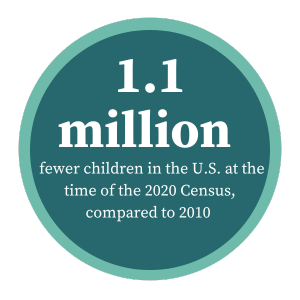
A report from the Annie E. Casey Foundation looks at U.S. Census trends and the falling population of children in 27 states. Ohio is one of these states and is in fact among six states with a child population reduction of 100,000+. There are many important implications to this, e.g., an aging state population means higher Medicare costs, a possibly smaller workforce (and less income tax revenue to draw upon). It also raises critical questions about why families may be choosing to have fewer children. Given the high costs of child care and of raising children, this seems plausible – and worrisome. 

Policy Radar

Ohio budget process

This week, the Ohio House of Representatives voted and passed its version of the state biennial budget bill. The Senate will now deliberate on the bill. We’ll provide more analysis on early childhood and education provisions as we get a chance.


Maternal and infant health

A substitute version of House Bill 7 was adopted with new enhancements for maternal and infant health. Key highlights of the measure include: 

  • New requirements around doula services, including creation of a registry of certified doulas, and program to provide doula services to certain inmates, coverage of doula service through Medicaid; 
  • New investments to create a mobile application that would provide Medicaid-eligible women who are pregnant and postpartum with resources and information 
  • Expanded eligibility for home visiting services; 
  • Continuous Medicaid coverage for children ages three and younger who were previously deemed eligible. 


Note that some of these provisions were moved into the just-passed House budget bill (HB 33), with the budget bill a common vehicle for picking up other legislative proposals along the way to passage. 

Events and Happenings

The CAYL Institute is hosting a panel on Latinx leadership in early childhood education on May 4.  

Beyond the Buckeye State

A pilot program giving cash transfers to home-based early childhood educators and their programs is helping to stabilize this segment of the child care industry. This article describes the pilot’s efforts in Colorado. On a related note, a report by NIEER describes the important role played by family child-care (FCC) providers and important policy considerations for their inclusion in state-funded systems.


South Carolina is making strides in making early childhood data usable and accessible through the creation of an Early Childhood Integrated Data System (ECIDS). The data system collects early childhood data across multiple systems that support children and families in the state. Collecting, storing, monitoring and analyzing the data enables the stakeholders to assess and improve the systems used by families with young children. New America’s blog describes that the system’s success came from four things: dedicated resources via grants; political will and support; dedicated capacity; and existing technical infrastructure in the state.  

What We're Reading

Vanderbilt’s Prenatal-to-3 Policy Impact Center has crafted helpful state checklists that outline best practices in policy design and implementation in five key areas: access to perinatal health insurance, reduced administrative burden for SNAP, paid family leave, minimum wage policies, and state policies for the Earned Income Tax Credit (EITC).


Georgetown University’s Health Policy Institute Center for Children and Families outlines recommendations for states to leverage Medicaid and the Children’s Health Insurance Program (CHIP) to improve maternal health and close racial disparity gaps. Recommendations include expanding income eligibility for all adults, extending coverage to 12-months post-partum, and expanding income eligibility for pregnant women.  

Research Round-Up

A study by MIT researchers published in The Quarterly Journal of Economics examined the long-term effects of public preschool enrollment in Boston. Unlike many studies that compare fundamentally different groups of children – those whose families chose for them to go to preschool vs. those who chose other options – this study capitalized on Boston’s lottery system, which created a natural randomized experiment. Researchers were able to compare children from families who applied and were randomly selected to enroll, and those who applied but did not get in. This makes the research design a rigorous test of causal effects of this preschool program on child outcomes. Specifically, they study measured whether preschool attendance led to better behavioral outcomes, high school graduation, college attendance, and SAT test taking (for the 4,000 students under study who attended between 1997 and 2003). As described in this review of the study, those enrolled in Boston’s public preschool program were more likely to enroll in college after high school and had better college attendance. Researchers also observed a relationship between preschool attendance and fewer behavioral issue problems later on. This point from the study’s lead author is a critical one: “There are probably two broader lessons... We cannot judge the effectiveness of early-childhood interventions by just looking at short-run outcomes, stopping by third grade. You’d get a totally misleading picture of Boston’s program if you did that. The second is that I think it’s really critical to measure outcomes beyond test scores.” 

This edition written by: Jamie O'Leary and Janelle Williamson

• • • • • • •

If you like this newsletter, forward to a friend! Subscribe here.

• • • • • • •

crane.osu.edu

Twitter      Linkedin