The Proactive Technologies Report newsletter is a free service of Proactive Technologies, Inc.
Important stories and information you might have missed
|
|
News from Worker Development, Industry, the Economy, Education, Science, and much more! |
|
Nine Scenarios That Would Make You Wish You Had a Structured OJT System |
by Dean Prigelmeier, President of Proactive Technologies, Inc.
I think one can confidently say that most employer’s focus on training the workers they need - to perform the tasks they were meant to perform - has become detrimentally blurry, counterproductive and often non-existent. There are many reasons for that – some legitimate. But without a deliberate, measurable strategy for quickly driving each worker to mastery of the entire job classification, an employer’s labor costs (not just wages, but opportunity costs and undermined return on worker investment as well) can be substantial and act as a drag on an organization’s performance.
Still, no matter how well or how poorly institutions prepare the workforce for employers, the employer cannot deny their responsibility to continue the training process and train the worker for the organization’s specific use. The degree to which they take this responsibility seriously will determine the success of the institution’s efforts to prepare workers, how much value the worker adds to the operation, and how well the operation performs in the market. Any apprenticeship that lacks an aggressive structured on-the-job training program cannot be the robust experience it is meant to be. By definition, an apprenticeship without structured on-the-job training really isn’t an apprenticeship.
But the success/failure doesn’t stop there. A successfully and fully trained (to the tasks required) staff prepares, and keeps, the organization prepared to seize opportunities, adjust to disrupters and weather unforeseen forces. Failure at preparing and maintaining each worker’s job mastery, as part of system, can exacerbate an organization’s challenges and, potentially, lead to failure or irrelevance of the organization. Read More
|
Retiring Workers and the Tragic Loss of Intellectual Property and Value |
by Stacey Lett, Director of Operations - Eastern U.S. - Proactive Technologies, Inc.
The warnings went out over two decades ago. Baby Boomers were soon to retire, taking their accumulated expertise – locked in their brains - with them. But very little was done to address this problem. Call it complacency, lack of awareness of the emerging problem, preoccupation with quarterly performance, disinterest or disbelief, very few companies took action and the Crash of 2008 disrupted any meager efforts that were underway.
According to Steve Minter in an IndustryWeek Magazine article on April 10, 2012, “Only 17% of organizations said they had developed processes to capture institutional memory/organizational knowledge from employees close to retirement.” Who is going to train their replacements once they are gone? Would the learning curve of replacement workers be as long and costly, repeating the same learning mistakes, as the retiree’s learning curve? Would operations be disrupted and, if so, to what level?
“In our new “outsourcing nation,” a widely held belief is that employees are simply costs to be cut and not assets to be valued.” …. “Manufacturing faces a two-sided problem: it not only has thousands of people retiring, but it does not have the training programs to train skilled workers to replace them.”
A Strategy to Capture Tribal Knowledge
IndustryWeek- Michael Collins 5-23-16
In the last few years, it seems an alternative to the concentration of expertise in a few subject matter experts has become to use lower-wage temporary or contract workers who specialize in smaller quantities of processes, and who can be “traded-out” with a minimum amount of disruption. History will tell us just how costly that approach was and if anything was learned. Read More
|
The Skills Gap Solution; Employers Are Still Reluctant to Commit to Role Only They Can Fill |
by Proactive Technologies, Inc. Staff
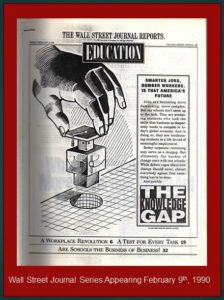
Education cannot, and should not be asked to, close the "skills gap" on their own. Employers have been concerned about the "skills gap" since the 1980's, and the nature and location of the job has continued to change...at an accelerating rate. Employers have convinced themselves to wait for education to close the gap. In the meantime, tremendous resources continue to be expended, but the gap continues to grow.
Educational institutions are not suited, staffed, funded and equipped to train workers for every job, for every employer, nor should they be. Educational institutions do their best work when they build the labor supply with strong, relevant basic and core skills (including STEM), and industry-general skills. Whether those efforts are worthwhile and the resources well-spent depend on two important things: 1) does an employer see value in hiring a graduate, and 2) is there a method in place to ensure those skills are integrated into mastery of the job-tasks the employer needs performed; the value that will influence the employer to retain them.
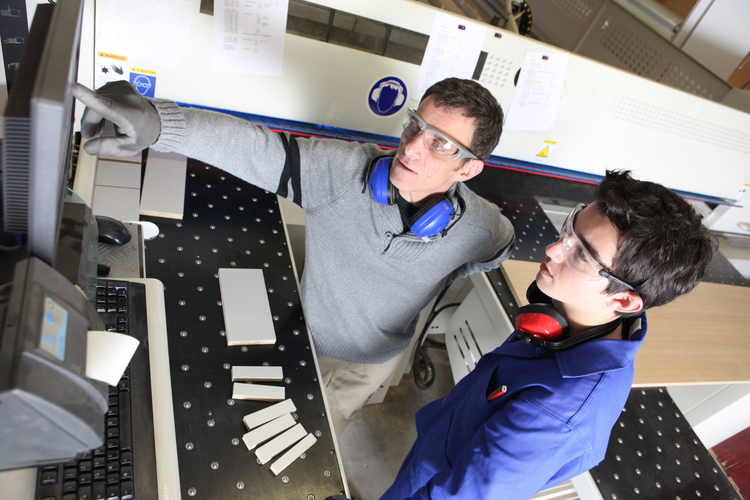
Only employers can train the worker on tasks they need performed and that affect their bottom line. They have the need, the facilities, the most current equipment for their operation and the personnel with current expertise. Yet, in reality most employer's methods amount to hardly more than pairing two people and hoping for the best. This is where the gap is most profound and continues to grow. Read More
|
Costs Associated With Unstructured, Haphazard Worker Training – Part 2 of 2 |
by Dean Prigelmeier, President of Proactive Technologies, Inc.
Last month's issue of Proactive Technologies Report’s Part 1 of “Costs Associated With Unstructured, Haphazard Worker Training,” offered a number of examples of unstructured, haphazard and ineffective worker training that I experienced in my early years in manufacturing. We all have had similar experiences throughout our lives to draw on, I am sure. It is still perplexing that - in view of all of the advanced systems, process controls and metrics that keep an enterprise operating competitively - management would assume that such a “hands-off” approach to developing the critical worker component wouldn’t detract from the other metrics. Why would management expect anything more than skeptical results?
"New equipment that leads to decreased output, more workers added but productivity and capacity falling, or more workers producing product but too much of it going into the scrap or rework bin. All of these counter-intuitive outcomes - signs of inadequate or non-existent task-based training - will eventually grab upper management’s attention!"
It is a given that new technology and equipment are dependent on someone learning to either program, service and/or operate them correctly. The incumbent workers, in the job classification before the transition, are the obvious choices for learning. Conceptually, they were doing the work prior to automation with previous version technology and understand the theory and current best practice of the work to be done. These worker’s attained skills will now be tested against the new skill requirements. Unfortunately, training of current workers for even obvious new technology requirements such as setup, operate and changeover of the equipment, is often overlooked or its significance downplayed. Consequently, often the economic benefits that advances in technology are to provide are marginally, or never, realized despite the costly investment.
Until the processes associated with the new equipment and technology are stabilized for maximum efficiency, learning of the processes - from the each worker’s perspective - is seen as fluid and ambiguous. Even if a noble effort is attempted to indoctrinate the worker in the use of the equipment, the erosion of the worker’s skill base compared to the evolving standard practices and technology is ongoing. Multiply one worker’s learning experience times the number of workers needed to operate the equipment – learning the same tasks in different ways on different shifts from different trainers - the direct costs of training, as well as the opportunity costs of under-utilized “worker capacity,” can be enormous. Calculate this cost for every job classification for which task training is needed and the costs can be “attention-getting.” Read More
|
|
IN THIS ISSUE:
Proactive Technologies, Inc. Worker Development News
Industry News
Financial News
Economics
International News
International Trade News
Education and Workforce Development News
Training and Organizational Development News
Quality News
Science
Cyber and IT News
Human Resources Management News
Environmental, Health & Safety News
|
Proactive Technologies, Inc.™ -
capturing worker expertise to build and support job specific, task-based worker development programs (with metric-based solutions) since 1986.
Experience the power of the
Develop all the expert workers you need in a fraction of the time, with a fraction of the investment! Increased worker capacity, work quality and quantity, and worker compliance (ISO9001:2015, AS9100D, IATF16949, engineering and quality specifications, and safety requirements)."
|
Sign-up for our free monthly newsletter
It's easy. Just click on the "Join Our Mailing List" button below. Scroll down to the "Sign-Up" section on the right.
Make sure you continue to receive news that matters to you, your industry and the world from many credible sources..
|
Proactive Technologies' Publications Archive
While at our website, check out past newsletters, articles and more. Helping employers to unlock worker value since 1986!
|
Free - Live Online Presentation Schedule
If interested in attending one of the presentations below, click on the title, then select a date/time and press "Send." An online presentation invitation and link will be sent to you. On the date and time of the event, just click on link in email invitation and it will connect you to the presentation. No special equipment required.
Click here for descriptions of all of the available presentations. Click on a specific title for that specific description and schedule or to schedule a date and time that works for you.
APPLIES TO ANY ORGANIZATION:
-
PTI Promo - (Recorded - Available Any Time): A Preview of an Upcoming Presentation (13 minutes)
FOR FORMER EMPLOYER CLIENTS:
FOR ANY EMPLOYER:
FOR EDUCATION, WORKFORCE AND ECONOMIC DEVELOPMENT ORGANIZATIONS
If you would like more information or would like to discuss these presentations or anything else, click on the "View Live Upcoming Presentations/Calendar" button below and fill in the "Contact Us" with your request including information specifying an alternative date/time you prefer and how many will be attending. An invitation and link will be sent to you.
|
Onsite and group presentations
are being scheduled for the following states, and a representative will be in your area, in the month of:
May, 2022
Proactive Technologies is currently scheduling stops in the following areas:
ARIZONA
COLORADO
ILLINOIS – Southern, I-80 Corridor
INDIANA
KANSAS – I-70 Corridor, Wichita
MISSOURI
NEVADA
NORTH CAROLINA
OHIO
SOUTH CAROLINA
WISCONSIN - Southern
ONLINE VIDEO PRESENTATIONS -If you are interested in attending one of our regularly scheduled videoconferences, select from the schedule above or visit our website and select a videoconference from the calendar. An email invitation will be sent to you confirming your selection. This videoconference will be to your computer and no other equipment is required. This can be followed by an onsite presentation, at your request.
If you would like more information or would like to schedule a custom onsite briefing and presentation for you and your staff, click on the "contact us" link below.
Contact Us to express your interest in an onsite or group presentation.
|
|
U.S. Department of Commerce - Bureau of Economic Analysis |
Gross Domestic Product, Fourth Quarter and Year 2022 (Third Estimate )
Real gross domestic product (GDP) increased at an annual rate of 2.6 percent in the fourth quarter of 2022 (table 1), according to the "third" estimate released by the Bureau of Economic Analysis. In the third quarter, real GDP increased 3.2 percent. The GDP estimate released today is based on more complete source data than were available for the "second" estimate issued last month. In the second estimate, the increase in real GDP was 2.7 percent. The revision primarily reflected downward revisions to exports and consumer spending (refer to "Updates to GDP"). Imports, which are a subtraction in the calculation of GDP, were revised down. Read Report
Gross Domestic Product, First Quarter 2023 (Advance Estimate)
Real gross domestic product (GDP) increased at an annual rate of 1.1 percent in the first quarter of 2023, according to the "advance" estimate. In the fourth quarter of 2022, real GDP increased 2.6 percent. The increase in the first quarter primarily reflected an increase in consumer spending that was partly offset by a decrease in inventory investment. Read Report
Personal Income and Outlays, March 2023
Personal income increased $67.9 billion, or 0.3 percent at a monthly rate, while consumer spending increased $8.2 billion, or less than 0.1 percent, in March. The personal saving rate (that is, personal saving as a percentage of disposable personal income) was 5.1 percent in March, compared with 4.8 percent in February. Read Report
|
|
|
U.S. Department of Commerce - Bureau of the Census |
Advanced Report on Durable Goods Manufacturers’ Shipments, Inventories, and Orders
New orders for manufactured durable goods in March, up following two consecutive monthly decreases, increased $8.6 billion or 3.2 percent to $276.4 billion. March 2023: +3.2° % Change; February 2023 (r): -1.2° % Change. Read Report
Manufacturers’ Shipments, Inventories, and Orders
New orders for manufactured goods in February, down three of the last four months, decreased $3.9 billion or 0.7 percent to $536.4 billion. February 2023: -0.7° % Change; January 2023 (r): -2.1° % Change. Read Report
Household Pulse Survey
What is the Household Pulse Survey?
The U.S. Census Bureau, in collaboration with multiple federal agencies, is in a unique position to produce data on the social and economic effects of coronavirus on American households. The Household Pulse Survey is designed to deploy quickly and efficiently, collecting data to measure household experiences during the coronavirus pandemic. Data will be disseminated in near real-time to inform federal and state response and recovery planning. Read Data
Small Business Pulse Survey
The Small Business Pulse Survey (Business Pulse) measures the effect of changing business conditions during the Coronavirus pandemic on our nation's small businesses. Business Pulse complements existing U.S. Census Bureau data collections by providing high-frequency, detailed information on the challenges small businesses are facing during the Coronavirus pandemic as well as their participation in federal programs such as the Paycheck Protection Program. Read Report
Monthly State Retail Sales
The Monthly State Retail Sales (MSRS) is the Census Bureau's new experimental data product featuring modeled state-level retail sales. This is a blended data product using Monthly Retail Trade Survey data, administrative data, and third-party data. Year-over-year percent changes are available for Total Retail Sales excluding Nonstore Retailers as well as 11 retail North American Industry Classification System (NAICS) retail subsectors. These data are provided by state and NAICS codes beginning with January 2019. The Census Bureau plans to continue to improve the methodology to be able to publish more data in the future. Access Tables
Economic Indicators
A composite of many of the requested domestic facts and figures. Visit Table
|
|
|
U. S. Department of Labor Statistics |
Consumer Price Index
In March, the Consumer Price Index for All Urban Consumers increased 0.1 percent, seasonally adjusted, and rose 5.0 percent over the last 12 months, not seasonally adjusted. The index for all items less food and energy increased 0.4 percent in March (SA); up 5.6 percent over the year (NSA). Read Report
Producer Price Index
The Producer Price Index for final demand declined 0.5 percent in March. Prices for final demand goods decreased 1.0 percent, and the index for final demand services moved down 0.3 percent. Prices for final demand advanced 2.7 percent for the 12 months ended in March. Read Report
Job Openings and Labor Turnover
The number of job openings decreased to 9.9 million on the last business day of February, the U.S. Bureau of Labor Statistics reported today. Over the month, the number of hires and total separations changed little at 6.2 million and 5.8 million, respectively. Within separations, quits (4.0 million) edged up, while layoffs and discharges (1.5 million) decreased. This release includes estimates of the number and rate of job openings, hires, and separations for the total nonfarm sector, by industry, and by establishment size class. Read Report
Unemployment Rate for States
Unemployment Rates for States, Seasonally Adjusted. Read Report
Civilian Labor Participation Rate
For a 20 year chart of the U.S. Civilian Labor Participation Rate. Read Report
|
|
|
U.S. Private Sector Job Quality Index |
University of Buffalo - School of Management
The U.S. Private Sector Job Quality Index (JQI) assesses job quality in the United States by measuring desirable higher-wage/higher-hour jobs versus lower-wage/lower-hour jobs. The JQI results also may serve as a proxy for the overall health of the U.S. jobs market, since the index enables month-by-month tracking of the direction and degree of change in high-to-low job composition.
By tracking this information, policymakers and financial market participants can be more fully informed of past developments, current trends, and likely future developments in the absence of policy intervention. Economists and international organizations have in recent years developed other, complementary conceptions of job quality such as those addressing the emotional satisfaction employees derive from their jobs.
For the purposes of this JQI, “job quality” means the weekly dollar-income a job generates for an employee. Payment, after all, is a primary reason why people work: the income generated by a job being necessary to maintain a standard of living, to provide for the essentials of life and, hopefully, to save for retirement, among other things. Read Report
|
|
|
Cummins Invests in Upgrading Existing Facilities, Boosting Clean Energy |
IndustryWeek - Staff
The announcements come ahead of President Biden’s visit to Cummins Inc. during his Investing in America tour.
Cummins Inc. will support fuel agnostic engine platforms by investing more than $1 billion in existing Indiana, North Carolina and New York facilities. Additionally, the Fridley, Minnesota, facility will begin manufacturing electrolyzers for hydrogen-fuel-cell systems later this month.
“The electrolyzer production in Minnesota and investment in our Indiana, North Carolina and New York facilities are reflective of our dual path approach of advancing both engine-based and zero-emission solutions – an approach that is best for all of our stakeholders and our impact on the planet,” said Jennifer Rumsey, Cummins president and CEO. Read Article
|
|
|
Job Quality Index Edges Up, High-Quality Job Industries Contract Employment |
Coalition for a Prosperous America
WASHINGTON — The Coalition for a Prosperous America (CPA) today announced that the U.S. Private Sector Job Quality Index (JQI) edged up by 0.17% in February to 83.82, reflecting slightly faster growth in high-quality jobs than low-quality in the month.
Contributing to the rise in the index was an increase of 61,500 jobs in health care and social assistance and 12,000 jobs created in wholesale trade. While health care and social assistance has more low-quality than high-quality jobs overall, the sector created 22,590 high-quality jobs in February. Wholesale trade is predominantly high-quality jobs as the average weekly wage is $1135, above the average weekly wage for production and nonsupervisory employees. Read Article
|
|
|
Mixed Auto Sales in US Paint Murky Picture of Car Consumers |
IndustryWeek - Agence France-Presse
In general, lean vehicle inventories have supported higher prices over the last 18 months or so, with factory shutdowns due to COVID-19 followed by shortages in semiconductors that slowed manufacturing.
Automakers reported mixed first-quarter U.S. car sales Monday as some sedan models saw gains in a sign that vehicle affordability may be shifting consumer behavior.
General Motors, Honda, Hyundai and Nissan all reported higher U.S. sales, while Stellantis and Toyota suffered declines.
The murky picture comes as average prices for new autos linger at around $50,000, a lofty price tag, especially in light of interest rate hikes that lifted the cost of car loans. Read Article
|
|
|
Michigan’s ‘Right-to-Work’ Repeal to Bring Employers, Unions to the Bargaining Table |
HR Dive - Ginger Christ, Reporter
Unions likely will want to add security clauses to their contracts, lawyers say.
Union members protest in Lansing, Michigan in 2012 over right-to-work legislation
As they ready for Michigan’s “right-to-work” repeal to go into effect, employers should prepare for new negotiations with unions representing employees at their workplace, management-side attorneys said.
Under the so-called “right-to-work” law, employees at union sites could decline to pay union dues or fees. Repeal of the 2012 law, which was signed into law Friday by Democratic Gov. Gretchen Whitmer, will allow unions to require workers to pay for the cost of their representation. It is expected to go into effect March 30, 2024. Read Article
|
|
|
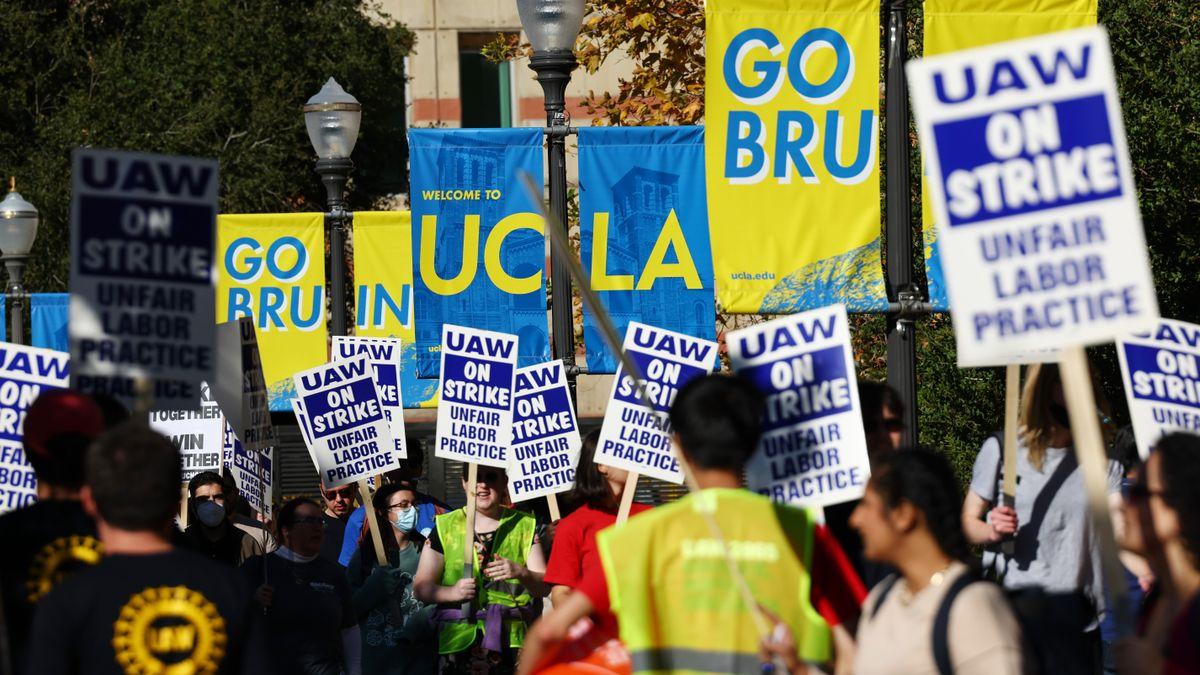
With the UAW’s New Leadership, Automakers Change Tack |
IndustryWeek - Laura Putre
Union president Shawn Fain has toughened up the language while trying to unite a divided membership.
“Let’s get ready to RUM-ble!” shouted Shawn Fain, incoming United Autoworkers president, as he took the podium last week at the 2023 United Autoworkers Special Convention.
“It’s a new day in the UAW,” Fain said to the assembled delegates in a speech lit with battle terms, as well as multiple references to Dr. Martin Luther King Jr. and the civil rights movement (Fain is white, and he squeaked by his Black competitor, incumbent Ray Curry, with 50.2% of the vote). “We’re here to come together to ready ourselves for the war against our only one and only true enemy, multibillion dollar corporations and employers that refuse to give our members their fair share.” Read Article
|
|
|
The Surprising Story of the US Military Supply Chain Under Stress |
Market Moves Manufacturing - Michael Lev for MxD
America is lacking ammunition?!
An American factory is getting attention, though not for anything new. The 115-year-old building in Scranton, Pennsylvania, which once repaired steam locomotives, manufactures something just as old school: artillery shells.
The Pentagon recently invited reporters to the Scranton Army Ammunition Plant to see how 155-millimeter rounds are made and hear a tale both impressive and worrisome. The plant is supporting Ukraine’s brave efforts to repel Russia by producing about 11,000 artillery shells a month. Awesome, but Ukraine is said to be firing as many as 6,000-7,000 shells a day. The US military has delivered more than a million rounds of 155 mm ammunition to Ukraine, significantly shrinking the US stockpile. Read Article
|
|
|
U.S. Domestic Market Share Index Slightly Increases |
Coalition for a Prosperous America
WASHINGTON — The Coalition for a Prosperous America (CPA) today released a quarterly update to the Domestic Market Share Index (DMSI) which measures the market share of U.S. manufacturing producers in the U.S. home market. The DMSI increased slightly to 67.8 in the fourth quarter 2022, up 1.3 percentage points from the third quarter, reflecting a slowdown in imports at the end of the year. For the entire year, the index was 66.9 in 2022, an increase of 0.3 percentage points from the previous year. After imports surged in 2021 and the first three quarters of 2022, imports stabilized in the fourth quarter.
While policy makers often talk of access to foreign markets, the biggest market in the world is the U.S. consumer market where producers have lost market share in the last decades. The U.S. trade deficit in manufactured goods rose 13% to $1.199 trillion last year, an all-time record. The manufacturing trade deficit grew at a faster rate than the overall goods trade deficit in 2022, which increased by 9%. Read Article
|
|
|
Retail and Fast Food Jobs With Rising Pay Lure Older Workers into Roles Once Filled by Teens |
USA Today – Paul Davidson
Key Points:
- Over the past year, average hourly earnings rose 5% in retail jobs and 7.5% in restaurants and bars as those industries hiked pay in response to stubborn labor shortages.
- By comparison, wages rose 4.6% for all industries.
-
The share of 30-and-older job candidates hired in fast food rose from 4% at the end of 2021 to 7% at the end of last year. Read Article and See Video
|
|
|
Is Manufacturing Unionization on the Upswing? |
IndustryWeek - Ryan Secard
Record public support for unions and new priorities of the NLRB have swung the regulatory pendulum towards employee rights.
“We’re just getting started.”
That was the full text of a recent statement from the UAW’s newly elected President, Shawn Fain, announcing (via the subject line) that the UAW added 10,000 new members in 2022.
Fain’s statement is representative of the optimistic attitude of labor organizers throughout the United States today and some notable increases in union activity across the country. According to a Gallup poll published late last year, popular support for unions in the U.S. is at 71%, its highest point since 1965. The NLRB announced April 7 that agency filings against unfair labor practices and petitions to form unions had both increased in both the last six months and in the past few years. The signs point towards a current surge of energy among labor organizers. Read Article
|
|
|
The Chips Act Is Everything Wrong with US Government |
Area Development – Bloomberg, Brooke Sample, Editor for Bloomberg Opinion
Misguided policies are impeding American ambition on all fronts.
$52 Billion Chipmaking Plan Is Racing Toward Failure — Bloomberg’s editorial board
By now it’s clear that the Chips and Science Act — which includes a $52 billion splurge for the semiconductor industry — is unlikely to work as intended. In fact, its looming failure is a microcosm of all that’s wrong with America’s current approach to building things.
Passed last year with bipartisan support, the law was meant to revive US chipmaking capacity. Although America is a world leader in cutting-edge chip design, its share of global semiconductor manufacturing has declined from 37% in 1990 to about 12%. Given the importance of such chips to the economy and especially to national security — the Defense Department needs about 1.9 billion of them a year — a more or less coherent case could be made for subsidies, prudently applied. Read Article
|
|
|
Cadillac’s Difficult Road Ahead |
IndustryWeek - Warren Browne
Several factors, including a weak performance on the West Coast, do not bode well for the brand's all-electric-by-2030 vision.
Everything starts in California. That has been a catchphrase among marketing executives for decades. From the introduction of hula hoops to skateboarding to McDonalds, the catchphrase has a basis in fact. While the electric vehicle did not start in California, sales have really taken off there. Registrations of battery-electric vehicles in California and the West Coast are the highest in the nation by a significant margin. California’s clean-air legislation, incentives and climate make it a natural high-volume market for electric vehicles. Read Article
|
|
|
Proactive Technologies' Project Partners |
|
Proven Solutions for Employers and Education
- Apprenticeship Program Design and Technical Implementation Support
- Employer - Educational Institution - Community Partnership Program Development and Support
- Employee Pre and Post-Hire Assessment Design, and
- Administration Management Consultation, Training and Support
about K & D Consulting, LLC
Copyright © 2019-23 K & D Consulting, LLC
ALL RIGHTS RESERVED
|
|
Classes alone will not close the "skills gap," but structured on-the-job training can...every time! |
Under-capacity of workers is an enormous source of untapped value and unrealized return on worker investment. In addition, standardizing expert task performance -between workers and shifts - can add to worker ROI through lower scrap and rework.
- Increased worker capacity, productivity, work quantity, work quality and compliance (specifications, ISO/AS/IATF programs and safety mandates);
- Decreased internal costs of training
-
Higher return on worker investment! You would be surprised how small of an investment is needed to unlock enormous returns.
If budgets are tight, Proactive Technologies, Inc. can be an extension to your training department, with our technical implementation support - included with every project!
There's nothing to lose by taking a minute to contact us to learn more. Copyright © 2019-23 Proactive Technologies, Inc.™
ALL RIGHTS RESERVED
|
|
Core Skill Development and Enhancement |
- Skill, Knowledge and Behavioral Assessments
- Intro and Advanced Blueprint Reading Courses Geometric Dimensioning and Tolerancing
- Courses Front Line Supervisor Training
- Training Materials and Online Courses
Copyright © 2019-23 Lifetime Learning
ALL RIGHTS RESERVED
|
If your institution is interested in becoming a Proactive Technologies, Inc. project partner, contact a representative for more information. |
|
SEC Charges Navy Shipbuilder Executives with Accounting Fraud |
CFO Dive – Jim Tyson, Senior Reporter
Dive Brief:
- The Securities and Exchange Commission charged three executives at Austal USA, a shipbuilder for the U.S. Navy, with engineering a multi-million dollar accounting fraud by understating the cost of producing several vessels under the widely criticized Littoral Combat Ship program.
- The fraudulent revenue recognition scheme enabled Austal Limited, the company’s Australia-based parent company, to meet or exceed analyst expectations, the SEC said in a statement.
-
Craig Perciavalle, Austal USA’s former president, Joseph Runkel, the company’s current director of financial analysis, and William Adams, former director of the LCS program, allegedly “knew that Austal USA’s shipbuilding costs were rising and higher than planned, but they directed others to arbitrarily lower the cost estimates to meet Austal USA’s revenue budget and revenue projections,” the SEC said. Read Article
|
|
|
Ex-Trump CFO, Facing Fresh Legal Pressure, Swaps Attorneys |
CFO Dive – Maura Webber Sadovi, Senior Editor
Trump Organization Ex-CFO Allen Weisselberg’s Criminal Tax Fraud Trial Continues
Dive Brief:
- Allen Weisselberg — now serving time for committing tax fraud related to his part in a scheme to evade income taxes by hiding compensation while serving as the finance chief of the Trump Organization — has a new attorney, according to the New York Daily News, other media reports and an attorney familiar with the matter who spoke on a condition of anonymity.
- Seth L. Rosenberg, an attorney with the law firm of Clayman Rosenberg Kirshner & Linder, has recently replaced Nicholas A. Gravante Jr. as Weisselberg’s defense attorney and is now representing the former CFO, according to a Daily Beast report which noted that the Trump Organization has been paying Weisselberg’s attorney’s fees.
-
The change came as the Trump Organization grew concerned that Gravante would prioritize Weisselberg’s interests over those of former President Donald Trump, according to news reports and the attorney source familiar. “He was told he had to switch lawyers,” the source told CFO Dive, adding that Weisselberg’s severance was a concern. Read Article
|
|
|
Credit Suisse Helped Rich Americans Dodge Taxes on More Than $700 million Even After It Signed a 2014 Plea Deal, Senate Finance Committee Says |
Forbes – The Associated Press
The U.S. Senate Finance Committee on Wednesday pointed to a possible criminal conspiracy tied to nearly $100 million in secret offshore accounts belonging to one family of American taxpayers that the bank didn’t disclose.
U.S. lawmakers say Credit Suisse kept allowing wealthy Americans to dodge tax payments, finding after a two-year investigation that the embattled Swiss bank violated a 2014 plea agreement it entered for enabling tax evasion. Read Article
|
|
|
Housing Market Predictions For 2023: Are Home Prices Finally Becoming Affordable? |
Forbes Advisor – Robin Rothstein, Chris Jennings, Editor
Could a housing recovery possibly be underway?
Mortgage rates ended the month over 30 basis points lower than where they started and more buyers returned to the market. Home sales prices fell year-over-year in February—the first time in nearly 11 years—and total home sales saw their largest monthly percentage increase since July 2020. However, many economists remain mixed about how much more home prices will drop this year.
For one, the nation’s housing supply remains limited. Those who purchased homes in recent years at record-low interest rates are staying put. Tight inventory issues, in part, are also keeping prices from dropping off, which is perpetuating affordability challenges for many, especially first-time homebuyers. Read Article
|
|
|
4 Ways CFOs Can Reduce Cybersecurity Financial Burdens |
CFO.com – Rahul Mahna
CFOs play a key role in advocating for preventative cybersecurity actions that help reduce the cost of cyber risks.
As the principal corporate officers responsible for their companies’ financial operations and conditions, CFOs are, of course, acutely aware of the direct costs of cybersecurity breaches. According to the EisnerAmper Cybersecurity Survey, which focused mainly on businesses with revenues of $50 million to $500 million, 43% of the companies that suffered a breach incurred costs of $100,000 to $499,000.
But the “all-in” costs of a cyber breach can run much higher than that. By one estimate, the average cost of a data breach for U.S. companies of all sizes was $9.4 million in 2022. This included not only direct costs for forensic/investigative services and post-breach remediation but also notification to customers and partners, as well as the near-term interruption and/or loss of business. Beyond the immediate costs, however, the impact on corporate and brand reputation may result in the long-term loss of revenue due to the erosion of customer confidence, which may not be possible to quantify accurately. Read Article
|
|
|
CFO to CEO: Lean Into the Unfamiliar |
CFO.com – Claudius A. Hildebrand, Jenna Bayard, and Joel von Ranson
CFOs face the toughest odds of outperforming as CEOs because they often focus on profitability at the expense of revenue growth.
CFOs’ unique vantage point into the business often positions them as viable CEO successors. And, in fact, roughly one in 10 new S&P 500 CEOs comes from the chief financial officer role. Yet, despite these advantages, promoted CFOs face the toughest odds to outperform as CEOs.
As part of Spencer Stuart’s CEO Life Cycle research, we studied more than 1,300 CEO transitions to predict the probability of success in the top job based on a CEO’s last role. Our analysis found that only 8% of CFOs-turned-CEOs steered their companies to the top-quartile of performance (See chart, “Top Performers.”). By contrast, “leapfrog” CEOs — those promoted from two or more levels down — and divisional CEOs had far higher odds of outperformance.
|
|
|
PBGC Approves Supplemented Applications |
Pension Benefit Guarantee Corporation
The Pension Benefit Guaranty Corporation (PBGC) announced today that it has approved supplemented applications for a number of pension plans under the Special Financial Assistance (SFA) Program. For more information about these approvals, see the following press releases.
-
PBGC Approves Supplemented SFA Application for Local 681 Plan – Houston, Texas Read Release
-
PBGC Approves Supplemented SFA Application for Local 783 Plan – Houston, Texas Read Release
-
PBGC Approves Supplemented SFA Application for Teamsters Local 52 Plan – Valley View, Ohio Read Release
-
PBGC Approves SFA Application for Teamsters Pension Plan – New York State Read Release
|
|
|
5,000 GM Workers Opt for Buyout Plan, CFO Says |
CFO Dive – Alexei Alexis, Reporter
Dive Brief:
- Five thousand people have signed up for a voluntary severance package that was recently made available at General Motors, the company’s CFO said.
- The Detroit-based automobile manufacturer estimates that it will see $1 billion in “run rate savings” as people across the company exit later this year, GM CFO Paul Jacobson said during a Tuesday conference sponsored by Bank of America in New York.
-
The buyout offer was made available to any employees with more than five years of service at GM. It’s part of a larger effort to accelerate attrition and cut costs while avoiding layoffs. “I think we’re in a position where we’re going to be able to do that,” Jacobson said. “Obviously the market is very, very dynamic.” Read Article
|
|
|
The 25 Richest People in the World 2023 |
Forbes – Chase Peterson-Withorn
They’re $200 billion poorer than last year, but still worth $2.1 trillion.
It was a down year for many of the planet’s 2,640 billionaires–including those at the very top of the top. The 25 richest people in the world are worth a collective $2.1 trillion, according to Forbes’ World’s Billionaires list, released Tuesday–down a combined $200 billion from $2.3 trillion in 2022.
Two-thirds of the top 25 are poorer than they were last year, compared to around half of the list overall. No one lost more than Jeff Bezos as Amazon shares crashed by 38%. The drop lopped $57 billion from Bezos’ fortune and knocked him from No. 2 in the world in 2022 to No. 3 this year. This year’s second-biggest loser, Elon Musk, had it worse. He lost his title of world’s richest person after his pricey purchase of Twitter, which he funded in part by the sale of Tesla shares, helping to spook investors. Musk, who is worth $39 billion less than a year ago, is now No. 2. Read Article
|
|
|
IRS Targets Corporate, Wealthy Tax Cheats |
CFO Dive – Jim Tyson, Senior Reporter
Dive Brief:
- The Internal Revenue Service plans to channel more than half of an $80 billion, 10-year budget boost toward enforcement, aiming particularly at reducing tax evasion by large companies, partnerships and wealthy individuals.
- Tax collectors will focus $45.6 billion in “enforcement resources on hiring the accountants, attorneys and data scientists needed to pursue high-income and high-wealth individuals, complex partnership and large corporations that are not paying the taxes they owe,” IRS Commissioner Daniel Werfel said in a letter to Treasury Secretary Janet Yellen describing a 149-page Strategic Operating Plan.
-
After several years of cutbacks in IRS funding, audit rates of filings by large corporations fell to 1.7% in 2019 from 10.5% in 2011, the IRS said in its report. The audit rate for partnerships was 0.05% in 2019, the agency said, noting that the number of partnerships rose by 2020 to 4.3 million, 32% higher than in 2010. Read Article
|
|
|
SVB Shareholder Suit Cites KPMG’s ‘Silent’ Audit |
CFO Dive – Maura Webber Sadovi, Senior Editor
The new SVB shareholder lawsuit shines a light on KPMG’s February audit that effectively gave the bank a clean bill of health about two weeks before its collapse.
A new SVB Financial Group shareholder lawsuit filed Friday names KPMG as one of many defendants in the complaint, shining a light on the auditor’s report signed about two weeks before the bank failed which was “silent” on whether there was any doubt about its ability to continue operating as a going concern.
The proposed class action lawsuit also named as defendants the bank’s then top executives including its CEO and CFO along with its board and four underwriters including Goldman Sachs.The suit asserts the bank’s officers, directors and KPMG deceived the investing public by making untrue statements or omitting material facts about the company that led certain shareholders to buy the stock at artificially inflated prices. Read Article
|
|
|
Chapter 11 Bankruptcy Filings Climbed 79% in March |
CFO.com – Vincent Ryan
Total commercial filings also rose, as did Subchapter V cases, according to Epiq Bankruptcy.
Higher interest rates, inflation, and other financial distress prompted more U.S. businesses to file for bankruptcy in March, the fourth straight month-to-month increase in commercial filings.
March is usually one of the busiest months of any year for bankruptcies. March 2023 commercial bankruptcy filings totaled 2,305, up 24% from the same month a year ago. Of those, Chapter 11 filings numbered 548, up 79% from March 2022.
For the first quarter, total overall commercial bankruptcies increased 19% compared with a year ago, to 5,733 filings. Chapter 11 cases rose 77% in the first quarter compared with 2022, to 1,301, per data from Epiq Bankruptcy. Read Article
|
|
|
Commercial Real Estate is Headed for a Crisis Worse Than 2008, Morgan Stanley Analysts Say |
USA Today – Swapna Venugopal Ramaswamy
In February, a PIMCO-owned office landlord defaulted on an adjustable rate mortgage on seven office buildings in California, New York and New Jersey when monthly payments rose due to high interest rates.
Brookfield, the largest office owner in downtown Los Angeles, that month chose to default on loans on two buildings rather than refinance the debt due to weak demand for office space.
They are a bellwether for what is likely to come, as more than half of the $2.9 trillion in commercial mortgages will be up for refinancing in the next couple of years, according to Morgan Stanley. Read Article
|
|
|
PCAOB Flags Widespread Weaknesses in Audits of SPACs |
CFO Dive - Jim Tyson's, Senior Reporter
Dive Brief:
- The Public Company Accounting Oversight Board flagged widespread weaknesses in audits of special purpose acquisition companies, including flaws in estimating the fair value of warrants and failures in evaluating departures from generally accepted accounting principles.
- “We observed instances where the public company’s auditors failed to identify material misstatements in issued financial statements due to errors in the accounting for warrants,” the PCAOB said in a report.
-
The PCAOB found at least one deficiency in 61% of the 44 audits related to SPACs that it reviewed from 2021, and at least one error in 37% of the 71 SPAC-related audits that it studied from last year. Read Article
|
|
|
A Famous Market Watcher Who Called the Subprime Mortgage Crisis is Warning That Stocks are About to Crash: ‘It’s the Highest Probability Since COVID’ |
Fortune Magazine – Will Daniel
In 2005, years before the subprime mortgage crisis kicked off the Great Recession and led millions of Americans to lose their homes, Larry McDonald was a vice president at the infamous now-defunct global financial services firm Lehman Brothers. As a young trader he, along with many of his peers, warned that something was wrong in the real estate market that year. It “was living on borrowed time,” he would explain years later in a 2009 New York Times article, and Lehman Brothers “was headed directly for the biggest subprime iceberg ever seen.”
But McDonald’s bosses ignored his warnings, and the 158-year-old institution that was Lehman eventually went under in 2008 after the housing bubble cracked. The S&P 500 would go on to lose roughly 50% of its value in the 17-month bear market that ended in March 2009.
Now, McDonald, the editor and founder of the widely read investing newsletter The Bear Traps Report, is warning that another stock market crash is on the way. Read Article
|
|
|
‘Dr. Doom’ Economist Nouriel Roubini Says the Crypto Industry is a ‘Total Criminal Enterprise’ Riddled with Market Manipulation |
Business Insider – Morgan Chittum
Nouriel Roubini said crypto markets are chock full of criminal activity and manipulation.
The famed economist described the industry as a “criminal enterprise” in a Tuesday tweet.
Earlier this year, the crypto bear said the space is a “total real-bubble Ponzi scheme that is going bust.” Read Article
|
|
|
THE CFTC Must Investigate the Impact of Financial Speculators in the Commodities Markets on American Families and Farmers |
Better Markets
WASHINGTON, D.C.— Dennis M. Kelleher, Co-founder, President and CEO, issued the following statement in connection with the release of a Better Markets Fact Sheet on the need for the CFTC to investigate the role and impact of financial speculators in the commodities markets. On Thursday morning, the House Agriculture Committee will hold a hearing that is expected to address a number of these issues.
“Skyrocketing prices in commodity markets are driving financial speculators’ gigantic, record-breaking, and historic profits and bonuses. That money is coming directly out of the pockets of American families as the prices for gas, cereal, bread, and other everyday commodities continue to increase while also being highly volatile. Because most Americans live paycheck to paycheck and barely make ends meet, America’s families simply do not have the income or resources to pay for these price increases for everyday necessities without making painful sacrifices.
“Commodity prices are supposed to reflect actual supply and demand and those markets are supposed to prioritize price discovery and hedging by physical producers and purchasers like America’s farmers. Financial speculators are supposed to have a very limited role in those markets and can undermine critical social policies and objectives if their activities cause excess speculation. That’s why the CFTC is mandated to impose position limits on speculators. That’s also why the CFTC must conduct a comprehensive, thorough, data-driven, and granular investigation of commodity markets to determine the role and degree of speculation on a commodity-by-commodity markets as well as the effectiveness of the existing position limits. Read Article
|
|
|
Jamie Dimon Says the ‘Frayed American Dream’ Can Only be Fixed in 2 ways: Bridging the Skills Gap and Paying People More |
Fortune Magazine – Jane I
Jamie Dimon advocated for an increased minimum wage and a move towards skills-based hiring in his latest annual letter.
In his annual letter to shareholders, longtime JPMorgan Chase Chairman and CEO Jamie Dimon said there are only two ways of mending the “frayed American dream.” Neither of them have to do with banking.
America is rife with policy errors that need to be remedied, Dimon wrote in his annual shareholder letter released on Tuesday. The pandemic vastly exacerbated income inequality and left millions in the lurch without a safety net, definitively killing the American Dream for some in the process. But Dimon believes moving towards skills-based hiring and paying minimum wage workers more could stem these issues.
Providing new workforce entrants with practical skills that will lead to better-paying jobs, he wrote, calling out a few industries—advanced manufacturing, cyber, data science and technology, and healthcare—that could make for ideal starting points. This would be good for economic growth, he wrote, “and much that ails us.” Read Article
|
|
|
Morgan Stanley Analysts are Forecasting Something ‘Worse Than in the Great Financial Crisis’ for Commercial Real Estate |
Fortune Magazine – Alena Botros
After the banking crisis, could the next domino be all those empty office buildings in your downtown? Investors and economists are sounding the alarm about the commercial real estate market, seeing trouble ahead with refinancing. This sector has been hit hard for years now with the shift to remote work bringing about rising vacancy rates and falling property values. For her part, Lisa Shalett, the chief investment officer for Morgan Stanley Wealth Management, and strategists, sees a “huge hurdle” ahead.
“We fear stresses in other asset classes will become another headwind for megacap tech stocks alongside those posed by a profits recession and/or economic recession,” Shalett wrote in the weekly Global Investment Committee note. And she had some frightening figures. Read Article
|
|
|
‘We May Be Looking at the End of Capitalism’: One of the World’s Oldest and Largest Investment Banks Warns ‘Greedflation’ Has Gone Too Far |
Fortune Magazine – Will Daniel
When costs go up, so do profits? That’s not how capitalism is supposed to work, but that is the recent trend. For over a year now, consumers and businesses, both in the U.S. and worldwide, have struggled with stubborn inflation. But the soaring costs haven’t prevented corporations from raking in record profits. The companies in last year’s Fortune 500 alone generated an all-time high $1.8 trillion in profit on $16.1 trillion in revenue. Voices largely on the left side of the political spectrum have been sounding the alarm on this—think: Bernie Sanders in Congress or Jon Stewart’s recent grilling of former Treasury Secretary Larry Summers—but now an economist at one of the world’s oldest and greatest investment banks is singing the same tune.
Albert Edwards, a global strategist at the 159-year-old bank Société Générale, just released a blistering note on the phenomenon that has come to be called Greedflation. Corporations, particularly in developed economies like the U.S. and U.K., have used rising raw material costs amid the pandemic and the war in Ukraine as an “excuse” to raise prices and expand profit margins to new heights, he said. Read Article
|
|
|
Opinion | The Lessons of the Great Depression Are Being Ignored |
Politico – Charles W. Calomiris, director of the Center for Economics, Politics and History at UATX, a finance professor at Columbia University, and a former chief economist at the Office of the Comptroller of the Currency.
FDR would have hated the fix to today’s banking crisis.
At the worst moment of the Great Depression, FDR faced a much more daunting challenge than the problems of the present — and he succeeded in turning things around almost immediately.
President Franklin D. Roosevelt could teach today’s regulators and politicians a lot about how to deal with a banking crisis.
Two aspects of his leadership from his first year in office stand out. Read Article
|
|
|
The US is Leaving Millions Behind: American Exceptionalism Needs to Change by 2030 |
Brookings Institution – Sarah E. Mendelson, Nonresident Senior Fellow – Global Economy and Development, Center for Sustainable Development Distinguished Service Professor of Public Policy and Head of Heinz College in Washington, D.C. – Carnegie Mellon University
The concept of “American exceptionalism” has a long history. The Encyclopedia Britannica defines American exceptionalism as the “idea that the United States of America is a unique and even morally superior country for historical, ideological, or religious reasons.” What if American exceptionalism has a different meaning when compared with other industrialized countries? What if, beyond the dominant positive narrative, there lies a negative one?
In 2015, the global community adopted the 2030 Agenda and the Sustainable Development Goals (SDGs) with the watchwords “leave no one behind.” It is a framework that recognizes development happens everywhere—not just in the Global South or in “developing” countries. Yet experts, policymakers, and the media still stubbornly categorize countries as “developed” or “developing.” The United States, of course, is part of this “developed” category. Why not? The U.S. economy is the largest in the world and “larger than the combined economies of Japan, Germany, the United Kingdom, India, France, and Italy.” The military is the most powerful in the world with the biggest defense budget. The U.S. is home to more top-ranked universities than any other country. Read Article
|
|
|
The Dirty Secret About Bank Holding Company Regulation |
Brookings Institution – Aaron Klein, Miriam K. Carliner Chair – Economic Studies Senior Fellow – Center on Regulation and Markets
What is Mitsubishi? Most Americans say a car company, and while that’s true, Mitsubishi is also the sixth largest bank in the world, a business that dwarfs its auto arm. Mixing a car company and a bank is illegal in America, where the Bank Holding Company Act separates banking and commerce. Bank holding companies are regulated by the Federal Reserve, a job that requires the Fed to monitor the relationship between the bank and affiliated companies under the parent holding company. The failure of Silicon Valley Bank (SVB) exposes a dirty little secret about what holding company regulation often entails: not that much.
SVB was not your typical bank. America’s 16th largest bank before its failure, SVB had $200 billion in assets but only 16 branches; most banks that size have around 1,000. SVB didn’t bank people; it banked tech firms, ranging from small start-ups to those who hit it big, like Roku and Roblox. Its ten largest customers had $13 billion in total deposits, such as the crypto/stablecoin company Circle which had over $3 billion in deposits at the bank when it failed. Read Article
|
|
|
3 Social Triggers for Behavioral Health Needs – and What to Do About Them |
Brookings Institution – Stuart M. Butler, Senior Fellow – Economic Studies; Nehath Sheriff, Public Health Consultant – Health Management Associates Former Senior Research Analyst & Project Coordinator – Economic Studies
Exposure to poverty is deeply intertwined with the deterioration of emotional health. This linkage is often exacerbated by a lack of coordinated social support for individuals and families. To appreciate this connection and how efforts in some communities suggest ways to address it, consider three public health issues and their impact on mental health: homelessness, food insecurity, and hygiene poverty (i.e., a lack of resources to maintain personal hygiene).
HOMELESSNESS
There is a close connection between homelessness and mental health. Since the start of the COVID-19 pandemic, homelessness and associated behavioral health issues have increased. While there are widely differing estimates of the prevalence of mental disorders among individuals experiencing homelessness, a review of the research by the Substance Abuse and Mental Health Services Administration (SAMHSA) suggests that between 20% and 50% have serious mental illness. Research suggests, moreover, that the experience of being homeless often intensifies the condition of individuals with poor mental health, with factors such as increased stress aggravating previous mental illness through heightened anxiety, fear, substance use, etc. Read Article
|
|
|
The Age at Which People Give up on Homeownership, and More! |
The Washington Post – Andrew Van Dam, Staff writer
|When do people stop owning a home? Thus asks J.D. Zahniser of St. Paul, Minn., who specifically wants to know at what age homeownership starts to drop in the United States, and whether it varies by income, education and race. She also wonders if state of residence matters: Do more people in Northern states give up on winter and move?
Brilliant question! We’ve often looked at when homeownership begins, but rarely when it ends.
In America, most people don’t become homeowners until age 35. By the time we hit our 70s, about 80 percent of households own their own home, according to our analysis of the Census Bureau’s American Community Survey. Homeownership remains steady throughout most of our 70s, dropping only as we near 80. (We’re focusing on households and the demographics of householders to avoid counting as homeowners people such as adult children living at home or retired parents who live with a family member.) Read Article
|
|
|
Where Are Interest Rates Going? |
NPR Planet Money – Greg Rosalsky
In a recent episode of Planet Money, two leading macroeconomists, Larry Summers and Olivier Blanchard, debate the future of our economy. It matters a lot which one of them is right. The answer could have big implications for the cost of borrowing, your home value, your retirement fund, and the future of policymaking in America.
Olivier Blanchard is the former chief economist of the International Monetary Fund (IMF) and a professor emeritus at MIT. He is currently a senior fellow at the Peterson Institute for International Economics.
Larry Summers is the former U.S. Treasury Secretary, former head of the National Economic Council under President Obama, and the former president of Harvard University. He is still an economics professor there. Read Article
|
|
|
How Multinational Corporations Undermine American Prosperity |
Coalition for a Prosperous America – Michele Nash-Hoff
Long-time American manufacturing advocate, Michael Collins, added to his extensive body of work with a 4th book, Dismantling the American Dream: How Multinational Corporations Undermine American Prosperity Michael had a 35-year career in manufacturing before retiring and uses his experience to write a book he describes as “a concise story that tells what America’s multinationals did to the U.S. economy and how they did it.”
Michael told me that one of his purposes in writing the book was to take advantage of a commitment letter signed by 181 CEOs on August 19, 2019 “to lead their companies not just for the benefit of their investors, but for the benefit of all stakeholders: customers, employees, suppliers, communities, and shareholders.” He wanted to “provide the managers of the 181 corporations a good summary of the problems and obstacles they will need to address and overcome if they are going to make good on their commitments.” Read Article
|
|
|
Mexico, Latin America, South America and the Caribbean |
IDB Invest Promotes 100% Renewable Energy to Help Mitigate Climate Change in Brazil
InterAmerican Development Bank
IDB Invest has provided a loan for up to $130 million with an 18.5-year tenor to Mendubim Geração de Energia S.A., an affiliate of Equinor New Energy AS, Hydro REIN AS and Scatec ASA. The loan will finance the design, construction, commissioning and operation of thirteen photovoltaic plants with a combined capacity of 531 MWp (452 Mwac), as well as a 6-kilometer transmission line and other interconnection facilities located in the municipality of Assú in the State of Rio Grande do Norte, Brazil.
The Mendubim Solar Power Project will help mitigate climate change by reducing GHG emissions and contributing to diversify Brazil’s energy matrix towards cleaner sources. This is achieved by adding solar generation capacity to reduce Brazil’s carbon intensity by cutting over 7,288 ktons CO2eq during the plants’ life. Read Release
Nevado del Ruiz: Residents Evacuated From Slopes of Volcano
BBC News – Vanessa Buschschlüter
The Colombian Geological Survey has registered thousands of tremors a day.
Families living on the upper slopes of the Nevado del Ruiz volcano in Colombia are being evacuated after an increase of seismic activity.
Colombia’s Geological Service (SGC) has raised the alert level from yellow to orange, warning that an eruption bigger than any in the past 10 years could occur in the coming days or weeks.
In 1985, a powerful eruption of the volcano triggered mudslides that engulfed the town of Armero.
Chile's Plan for State Control in Lithium Dismays Business
US News - Associated Press
SANTIAGO, Chile (AP) — The Chilean government’s newly announced plan to have the state take a majority stake in the lithium industry disconcerted business leaders, though analysts cautioned that the proposal appears to try to strike a middle ground between competing interests.
President Gabriel Boric announced in a national broadcast Thursday night that private companies will have to partner with the government in exploiting Chile's lithium, a metal used to make rechargeable batteries. Read Article
Peru's Ex-President Surrendered To U.S. Officials For Extradition In Mega Corruption Scandal – Here’s What to Know
Forbes - Katherine Hamilton
TOPLINE Peru’s former president Alejandro Toledo surrendered in the United States Friday for extradition to Peru in a case claiming he accepted bribes from Odebrecht, a Brazilian construction conglomerate that’s been the center of one of the largest corruption scandals in history. Read and Hear Article
|
|
|
Canada, Europe and Great Britain |
Letter From Istanbul: Turkey Has Difficult Years Ahead
Brookings Institution – Aslı Aydıntaşbaş, Visiting Fellow – Foreign Policy, Center on the United States and Europe, The Turkey Project
On a recent visit to Istanbul ahead of Turkey’s critical May 14th elections, I was struck by a number of things.
The first was seeing how deeply scarred folks were from the February 6th earthquake — having been hit not only with grief but also the realization that at the end of his 20-year reign, President Recep Tayyip Erdoğan’s hyper-centralized and dysfunctional governance system was partly to blame for the high number of casualties. Erdoğan’s re-election is no longer a foregone conclusion, which makes this election consequential not just for Turkish citizens but for the global balance of power.
Not surprisingly, friends, former colleagues, and ordinary people incessantly talked about the elections and the earthquake in the same breath. Read Article
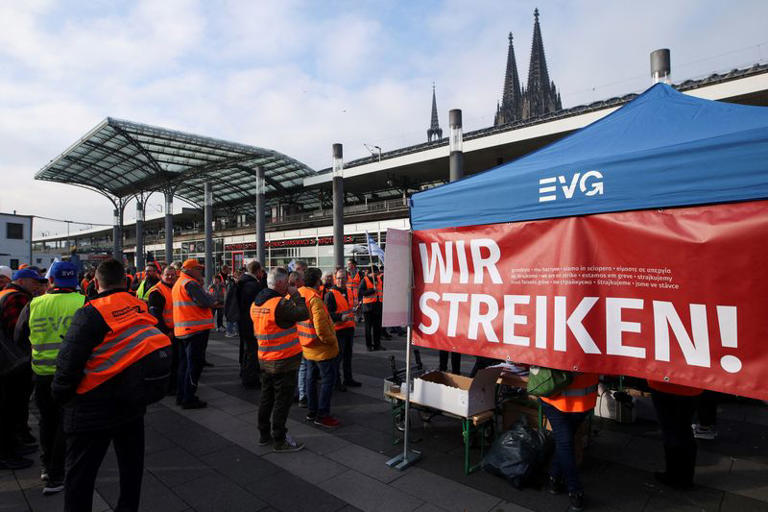
Strikes Cripple German Rail Network, Four Airports
Reuters
BERLIN (Reuters) - Rail workers went on strike across Germany on Friday, mostly bringing national operator Deutsche Bahn's services to a halt in the morning hours, as protests over pay in Europe's largest economy widened.
Germany has witnessed some of its most disruptive strikes in decades since last year, when the war in Ukraine sent energy and food prices soaring, leading to union pressure for wages to rise in line with living costs.
High inflation has also exacerbated labour problems in sectors like aviation that have faced a difficult transition following the COVID-19 pandemic. Read Article
|
|
|
China-Taiwan: Aircraft Carrier ‘Seals Off’ Island on Third Day of Drills
BBC News – Kelly Ng
China has finished simulating “sealing off” Taiwan for three days of drills as it appeared to use an aircraft carrier to launch jets towards the island.
Taiwan said it had detected jets to its east, while China said its Shandong aircraft carrier had taken part.
Beijing began the exercises on Saturday after Taiwan President Tsai Ing-wen met the US House Speaker in California.
The drills have not been as big as those that followed Nancy Pelosi’s visit to Taipei last August. Read Article
China and India: The Future of the Global Consumer Market
Brookings Institution – Juan Caballero, Data Scientist – World Data Lab; Marco Fengler, Research Analyst – World Data Lab
On April 14th, 2023, India is set to overtake China as the world’s most populous country. This historic event marks a turning point in global demography, with India reassuming a position it last held in the 1700s as part of the Mughal Empire.
THE GLOBAL CONSUMER CLASS—INDIA OR CHINA?
At the turn of the century, the global consumer class (those spending more than $12 a day in 2017 PPP) was a western concept, and global brands were western brands, as the rest of the world was too poor to afford them. Today, more than half of the world’s consumers live in Asia, led by the momentum in India and China. These two countries now make up a third of the world’s population, a third of the global consumer class, and approximately a quarter of global consumer spending (in PPPs).
In aggregate, India and China appear very similar. Both countries have a population of 1.4 billion, this year they will each add around 30 million people to their consumer class, and in the past decade, both economies experienced high growth, around 5-7 percent annually. From a bird’s-eye view, India looks like China, or more precisely, a China-to-be. Read Article
|
|
|
Asia, India and Australia |
Right to Health: The Fight Over Who’ll Pay Hospital Bills of India’s Poor
BBC News – Soutik Biswas, India correspondent
For two weeks recently, tens of thousands of private doctors in Rajasthan protested against a landmark bill which guarantees a right to health for the northern Indian state’s 80 million people.
The protests crippled private healthcare services and public hospitals were overwhelmed by patients. On Tuesday, the state government said it had reached an agreement with the doctors, prompting them to call off the strike.
What had raised the hackles of the protesters was a provision in the law that made it mandatory for public and private hospitals to offer emergency treatment to people, the costs of which would be later reimbursed by the government. The doctors said there was no clarity on how and where this money would come from. Read Article
Myanmar Coup: Thousands of Burmese Flee to Thailand After Intense Fighting
BBC Burmese – Jonathan Head and Grace Tsoi
Burmese refugees have fled across to border to Thailand
In Bangkok and Singapore
Some 10,000 Burmese people have fled to Thailand to escape fierce fighting between the military and units of a powerful ethnic armed group since Wednesday, Thai authorities said.
They are fleeing from Shwe Kokko town, controlled by a pro-military militia and home to Chinese-owned casinos. Read Article
|
|
|
Africa, Middle East, Eastern Europe and Russia |
Iran Installs Cameras to Find Women not Wearing Hijab
BBC News
Iranian women walk past a cleric in a street, in Tehran, Iran, 19 September 2022
Iranian authorities have begun installing cameras in public places to identify unveiled women, the police have announced.
Women seen not covering their hair would receive a “warning text messages as to the consequences”, police said.
This would help prevent “resistance against the hijab law”, police said. Read Article
After One Year of War, How Is Ukraine Managing?
IndustryWeek – Anna Nagurney
Signs of economic resilience include a functioning banking system and a thriving IT sector.
Beyond the headlines and the politics, many people outside of Ukraine have little idea of how the country is carrying on day-to-day while war rages.
Since the brutal, unprovoked, full-scale invasion by Russia on February 24, 2022, Ukraine’s economy has shrunk by more than 30%. Before the invasion, annual economic output had topped $200 billion.
There has been great damage to infrastructure (from agriculture to energy to steel) and an immense death toll. Businesses have been impacted and daily lives disrupted, leading to a refugee crisis in Europe and millions displaced even within Ukraine. Read Article
Hungary Digs in Against Europe’s Africa-Caribbean-Pacific Deal
Deutsche Gesellschaft für Internationale Zusammenarbeit (GIZ) GmbH – DEVEX, Vince Chadwick
Something has to give, and it’s either Hungary, the European Union, or a decadeslong partnership between the EU and 79 African, Caribbean, and Pacific states that many say has had its day.
A top Hungarian official told reporters Thursday that it has no intention of lifting its opposition to the still-unsigned post-Cotonou Agreement between the EU and the Organisation of African, Caribbean, Pacific States, or OACPS, unless the deal is altered to address Budapest’s concerns about migration and sexual education. Read Article
Near East and North Africa – Regional Overview of Food Security and Nutrition: Trade as an Enabler for Food Security and Nutrition
Deutsche Gesellschaft für Internationale Zusammenarbeit (GIZ) GmbH – UN Food and Agriculture Organization
This report examines the food security and nutrition situation in the Arab/Near East and North Africa (NENA) region. It discusses how international trade can enhance food security and nutrition in a region that is experiencing an array of external shocks. This report concludes with some recommendations. In countries where domestic production is low yet the diversity of imports is high, trade instability and challenges with food security and malnutrition are less likely. Thus, policymakers are encouraged to (i) reduce trade barriers, facilitate trade including through digital technologies, harmonize non-tariff barriers, improve transparency, strengthen governance and coordinate trade policies; (ii) develop new free trade areas and/or expand the commodity and product coverage of existing ones; and (iii) promote collaboration and coherence among countries and the global community. Download Report
|
|
|
Proactive Technologies' Project Partners |
|
Frank J. Gibson Consulting |
"One thing is certain... nothing is certain!"
The rate of change affecting work, the worker, management and the educational institutions that service all three has been accelerating - made worse by the unexpected Covid-19 pandemic. The economy, the consumer, supply chains and operational strategies have all been disrupted in the short-term, casting doubt on the long-term.
Rapid adaptation is the key to survivability, sustainability and growth. Sometimes an experienced outside advisor can help facilitate needed improvements to take the worry out of change and the fear out of growth. Frank J. Gibson Management and Workforce Excellence Advisor
- Business Development & Growth
- Workforce Development and Optimization
- Training and Cross-Training
- Local,/Regional Workforce Development Projects and Community Development
- Facilitated Problem Solving
- Process Improvement Cross-Functional Leadership Coaching and Mentoring
- Internship and Apprenticeship Projects
- Strategic Doing/Strategic Planning
Copyright © 2023 Frank J. Gibson
ALL RIGHTS RESERVED
|
|
PTI Systems
International, Inc.™
|
- Affiliated with Proactive Technologies, Inc. for projects outside the United States;
- Workforce development partner for employers, and education/ training providers who support employers, to ensure every worker can be trained to full job mastery;
- Experienced with governmental, IDB, GIZ and economic development agency sponsored projects;
- Experienced in assuring multinational employers expanding to the U.S. have the skilled workforce they need.
- PTI Systems International sets-up complete worker development and performance management systems, and provides technical implementation support;
- We provide strategies for our project's transition to local management.
- Speakers for seminars and conferences.
Don't complain about a "skills gap," deliberately develop every worker to full job mastery!
© 2018-23 PTI Systems International, Inc.™
|
|
“When the profit motive becomes unmoored from the purpose motive, bad things happen.”
American engineer, statistician,
professor, author, lecturer, and
management consultant
1900 - 1993
“It is better to be roughly right than precisely wrong.”
English economist, whose ideas fundamentally changed the theory and practice of macroeconomics and the economic policies of governments.
1883 - 1946
“Earth provides enough to satisfy every man's needs, but not every man's greed.”
Indian lawyer, anti-colonial nationalist, political ethicist
1869 - 1948
|
|
U.S. Department of Commerce - Bureau of Economic Analysis |
U.S. International Trade in Goods and Services
The U.S. monthly international trade deficit increased in February 2023 according to the U.S. Bureau of Economic Analysis and the U.S. Census Bureau. The deficit increased from $68.7 billion in January (revised) to $70.5 billion in February, as exports decreased more than imports. The goods deficit increased $2.7 billion in February to $93.0 billion. The services surplus increased $0.8 billion in February to $22.4 billion. Read Report
U.S. International Transactions 4th Quarter and Year 2022
The U.S. current-account deficit narrowed by $12.2 billion, or 5.6 percent, to $206.8 billion in the fourth quarter of 2022, according to statistics released today by the U.S. Bureau of Economic Analysis. The revised third-quarter deficit was $219.0 billion. The fourth-quarter deficit was 3.2 percent of current-dollar gross domestic product, down from 3.4 percent in the third quarter. Read Report
New Foreign Direct Investment in the United States
The statistics on new foreign direct investment in the United States provide information on the acquisition, establishment, and expansion of U.S. business enterprises by foreign direct investors. Read Reports
BEA International Trade and Investment Country Facts
|
|
|
U.S. Department of Commerce - Bureau of the Census |
Monthly Wholesale Trade
February 2023 sales of merchant wholesalers, except manufacturers’ sales branches and offices, after adjustment for seasonal variations and trading day differences but not for price changes, were $669.5 billion, up 0.4 percent (±0.4 percent)* from the revised January level and were up 1.3 percent (±0.9 percent) from the revised February 2022 level. The December 2022 to January 2023 percent change was revised from the Monthly Wholesale Annual Revision Report of up 0.9 percent (±0.7 percent) to up 0.4 percent (±0.7 percent)*. Read Report
Manufacturing and Trade Inventory and Sales
The combined value of distributive trade sales and manufacturers’ shipments for February, adjusted for seasonal and trading day differences but not for price changes, was estimated at $1,817.9 billion, virtually unchanged (±0.1 percent)* from January 2023, but was up 3.3 percent (±0.4 percent) from February 2022. Read Report
|
|
|
Organisation for Economic Co-operation and Development |
U.S. Data versus the World
Find, compare and share the latest OECD data: charts, maps, tables and related publications. Access Data
|
|
|
International Trade in Services
Trade in services records the value of services exchanged between residents and non-residents of an economy, including services provided through foreign affiliates established abroad. This indicator is measured in million USD and percentage of GDP for exports, imports and net trade. Services include transport (both freight and passengers), travel, communications services (postal, telephone, satellite, etc.), construction services, insurance and financial services, computer and information services, royalties and license fees, other business services (merchanting, operational leasing, technical and professional services, etc.), cultural and recreational services, and government services not included in the list above. Trade in services drives the exchange of ideas, know-how and technology, although it is often restricted by barriers such as domestic regulations. All OECD countries compile their data according to the 2008 System of National Accounts (SNA). Access Data and Tables
|
|
U.S. Treasury Continues Undoing of Inflation Reduction Act |
Coalition for a Prosperous America – Charles Benoit
On Friday, March 31, the U.S. Treasury launched their latest torpedo targeting the Inflation Reduction Act’s domestic manufacturing policies. This time, it’s over what countries have a “free trade agreement” with the United States. This is actually universally understood fact: there are twenty countries. But to grow the list beyond the twenty, so as to dilute sourcing requirements, Treasury has now conjured up their own definition of “Free Trade Agreement” and USTR even signed an entirely fake agreement with Japan that may as well be a blank piece of paper. Congressional leaders, both Democrat and Republican, have blasted the move. Has Treasury finally gone too far?
Background: The Inflation Reduction Act Was The Perennial Rejection of the Global Trading System
CPA is a keen supporter of the Inflation Reduction Act’s (IRA) investments into domestic manufacturing. And from a trade policy perspective, CPA has especially embraced the IRA. As soon as the legislation passed in August, 2022, CPA detailed how it “knifed and left for dead the multilateral trading system.”
In short, the IRA limited tax credit eligibly for a number of products depending on where the product was made. This is a core ‘National Treatment’ violation, and something the U.S. Congress had never done in such an explicit and high profile manner. See “The Inflation Reduction Act Sparks Trade Disputes: What Next” in American Affairs for a deep dive into this topic. Read Article
|
|
|
Reshoring, FDI Up 53%, a New Record |
Quality Magazine
Reshoring + FDI job announcements in 2022 were at the highest rate ever recorded. 4Q announcements accelerated even more than anticipated due to the Chips and Infrastructure Acts and deglobalization trends. Top takeaways:
364,000 reshoring + FDI jobs announced for 2022, up 53% from 2021’s record.
2022 brought the total number of job announcements since 2010 to nearly 1.6 million.
EV batteries make Electrical Equipment the top industry. Read Article
|
|
|
Copper Supply Is A Serious Problem And Everyone Involved In Clean Energy Needs To Listen |
Forbes – Mark Le Dain, Contributor, VP at Neo Financial.
Whenever I see copper inventory charts, or supply and demand charts, I assume I’m not understanding them correctly. The future copper deficit has expanded but since no one else is sounding the alarm I assume that maybe I’m simply confused. This is perhaps like the bystander effect, where people become less likely to do something or call for help, the more people are present. Everyone should have been shouting about copper months ago, especially those involved in clean energy policy, but warnings have been few and far between. This started to change this past week as both Trafigura and Goldman Sachs started to sound the alarm on global copper supplies.
Copper is critical to the clean energy transition. An electric vehicle (“EV”) requires 3½ times as much copper as an internal combustion engine vehicle, according to estimates from Wood Mackenzie. If you start looking at buses, they require approximately 11 times as much. As we transition to Evs, it is clear that this will increase copper demand. Required in parallel is the power transmission to support those electric vehicles. Grid infrastructure necessary to support the expected number of charging stations in 2030 is expected to consume 250 percent more copper than the decade prior. This copper will be required regardless of what power source wins, making this trend a very safe bet. Read and Listen To Article
|
|
|
U.S. Monthly Trade Deficit Up 2.7% as Goods Gap Hits $183.2 Billion in Two Months |
Coalition for a Prosperous America – Kenneth Rapoza
The U.S. goods and services trade deficit rose by 2.7% in February to $70.2 billion, even as both exports and imports fell on the month, the Bureau of Economic Analysis said on Wednesday. Exports fell more, leading to the rising gap between the two. But over the last two months, when only goods are considered and not the services trade, the U.S. economy recorded a $92.9 billion deficit in February, second only to the $106.3 billion deficit in February 2022, a record-breaker. All told, the goods deficit for the first two months of 2023 is $183.24 billion.
Wednesday’s trade numbers suggest the U.S. economy may be cooling somewhat. The goods deficit is smaller than it was in the first two months of 2022, when it stood at $214.23 billion, helping propel the U.S. into a record $1.19 trillion deficit last year. Read Article
|
|
|
Mercedes Secures Lithium for 150,000 Cars |
Assembly Magazine
STUTTGART, Germany—German-Canadian start-up Rock Tech Lithium Inc. has begun construction of a new lithium processing plant in Guben, Germany.
Rock Tech signed an agreement with Mercedes-Benz last year to supply the German automaker with enough high-grade lithium hydroxide to produce some150,000 fully electric vehicles. The agreement is part of a Mercedes initiative to make its EV supply chain more localized and more vertically integrated.
“For Mercedes-Benz, the shift towards electric mobility also means a change in our supply chains,” says Markus Schäfer, chief technology officer for development and procurement at Mercedes. Read Article
|
|
|
EV Batteries Are the Next Point of Tension Between China and the US |
MIT Technology Review – Zeyi Yangarchive
And how Chinese companies came to dominate battery manufacturing.
It’s the perfect moment to talk about EV batteries and China: yesterday, I published a story unpacking the country’s two decades of investment into becoming a world leader in the EV industry. It’s about how the Chinese government, companies, and consumers—as well as Tesla—all came together to turn electric vehicles from a research challenge into a common reality.
Among the many factors at play, China’s control of refined materials for battery cells and its advanced battery-making technologies are particularly important. So important that Western automakers who want to transition out of gas cars won’t be able to do it without turning to Chinese-made batteries. That’s why Ford has been planning for a long time to build a battery plant with Chinese battery giant CATL, the world’s largest manufacturer of lithium batteries. Read Article
|
|
|
China Commission Warns of China’s Near Parity with US In Advanced Tech; Doubts Export Restrictions Are Working |
Coalition for a Prosperous America – Kenneth Rapoza
Unless you work for the Pentagon or are in the Navy, you probably don’t know what an ASV is.
They are part of the so-called Uncrewed Marine Vehicles market (UMV) and in this case, an ASV is an autonomous seafaring vehicle – think of it as a drone on water. And China is a top player. Ocean Alpha is based in Hong Kong. Global UMV company iXblue, which also has a U.S. division in Rhode Island and is a defense contractor, also has offices in Beijing. It is unclear if they manufacture their underwater drones in China. But they probably do. CHC Navigation of Shanghai is one of the world’s biggest in this space, which can be used for everything from mapping the ocean floor to finding undersea wrecks to making mini-sea vehicles that are like the Big Brother of the seas – China can see you, but you can’t see them.
On Thursday, April 13, the U.S. China Economic and Security Review Commission heard from 10 witnesses to discuss China’s fast-growing rise to near-parity on American defense technology. The hearing, which focused on export restrictions of technologies that can be used to help China surpass the U.S. militarily, and in the high-speed tech sectors of quantum computing and artificial intelligence, had two main takeaways. First, China is not only gaining but surpassing, already. Second, export restrictions aren’t working because “working with allies” isn’t going according to plan. Read Article
|
|
|
How an International Business Can Enter the U.S. Market Via M&A |
Area Development – Stephanie Few, Partner; John Scannapieco, Partner; Michael Cashin, Partner; Caroline Frey, Associate; Womble Bond Dickinson (US) LLP and, Robert Winborne, Managing Director; Brookwood Associates
Tapping into the U.S. market can provide a company with many advantages, but the process can be complicated and require professional advice and support.
Gaining access to the U.S. marketplace can unlock tremendous opportunity and value. A company that successfully enters one of the world’s largest national markets will enjoy a competitive edge, a network of financial support, new technologies and skill sets, increased profits, and reduced tax burdens. Companies are increasingly turning to mergers and acquisitions (M&A) in order to effectively and efficiently tap into this lucrative market. However, establishing a foothold in the United States requires thoughtful consideration and a solid strategy.
Market Entry Via M&A
Acquiring a company that is already operational in the U.S. means the foreign business can begin work almost immediately, as well as benefit from the target company’s established practices, business relationships. And customer base. Read Article
|
|
|
Trade Facilitation Agreement Has Increased Trade by Over US$ 230 Billion, New Study Finds |
Deutsche Gesellschaft für Internationale Zusammenarbeit (GIZ) GmbH – World Trade Organization
The WTO Trade Facilitation Agreement (TFA) led to a US$ 231 billion increase in trade, particularly in agriculture, according to estimates for the first couple of years of its implementation presented to the Committee on Trade Facilitation on 22 March. Developing members and least-developed country (LDC) members that have made commitments under the landmark agreement posted the most gains, the estimates find.
Based on estimates for the years 2017-2019, WTO economists attribute to the TFA an average 5% increase in global agricultural trade, 1.5% in manufacturing trade and 1.17% in total trade. These increases are largely driven by the trade growth in LDCs, where agricultural exports rose by 17%, manufacturing exports by 3.1%, and total exports by 2.4% under the TFA. The estimates further point to a 16-22% increase in agricultural trade between developing members that have made TFA commitments. These estimates are conservative, as large gains have already been realized, particularly in manufacturing, in anticipation of the Agreement’s entry into force and by developed members making full commitments since the start of the TFA’s entry into force, as noted in previous studies. Read Release
|
|
|
Reshoring and FDI Activity Skyrockets |
Assembly Magazine
SARASOTA, FL—Reshoring activity and foreign direct investment (FDI) job announcements in 2022 were at the highest rate ever recorded. According to the Reshoring Initiative, that’s because manufacturers in a variety of industries continue to rethink their supply chains.
Announcements accelerated even more than anticipated due to the Chips and Infrastructure Acts and deglobalization trends. The 364,000 reshoring and FDI jobs announced last year accounted for a 53 percent increase from 2021’s record. Electrical equipment was the top industry, driven by a huge increase in domestic battery manufacturing. Read Article
|
|
|
Education And Workforce Development News |
|
Job Candidates Struggle to Add Microcredentials to Hiring Platforms |
HR Dive – Carolyn Crist
Technology gaps could interfere with essential information about nondegree training, research from Northeastern University shows.
As employers demonstrate interest in skills-based training in addition to — or instead of — degree-only requirements on hiring applications, job candidates may face barriers to properly sharing their information for hiring teams to assess, according to a March report from Northeastern University.
A company’s hiring platform, as well as third-party options, may not provide adequate fields to capture the relevant skills and nondegree credentials. In addition, some software may prioritize traditional degrees over microcredentials. When extracting data, information about alternative credentials may also be “lost in translation,” researchers found. Read Article
|
|
|
Most Americans Don’t See Value in a Four-year College Degree, New Survey Finds |
HR Dive – Jeremy Bauer-Wolf, Senior Reporter
Dive Brief:
- More than half of Americans do not believe a four-year college degree is worth the cost, according to a new Wall Street Journal-NORC poll released Friday.
- About 56% of respondents said college graduates leave without specific job skills and with high amounts of debt, versus 42% who said a four-year degree is worth the price. This represents a new low in confidence. In 2017, 47% of respondents reported skepticism with higher ed’s ability to lead to good jobs and increased earnings.
-
The organizations also found greater skepticism in the youngest age bracket, 18 to 34, than in other groups. NORC, a research center at the University of Chicago, helped poll more than 1,000 adults in March. Read Article
|
|
|
How Are Economic Developers Partnering to Solve Workforce Challenges? |
Area Development – Louise Anderson, Director of Research, International Economic Development Council
Companies can expect to find help from forward-thinking economic development organizations in fulfilling their labor force requirements.
The landscape of talent supply and development is almost unrecognizable compared to a decade ago. In 2013, labor was plentiful as people and communities were still working to recover jobs lost in the Great Recession. In the early 2020s — amid the third year of a pandemic, the baby-boomer retirement wave, and rapid technological change — we are living with the tightest labor environment in living memory.
Access to talent is the number-one concern for employers today, making it a top concern as well for economic development organizations (EDOs) that seek to attract, retain, and expand businesses in their communities. As they aim to create a competitive advantage for their regions, many EDOs are forming partnerships to help meet employers’ talent pipeline and training needs. Read Article
|
|
|
Study: Summer 2023 Internship Outlook Wavers |
HR Dive – Caroline Colvin, Reporter
According to the National Association of Colleges and Employers, fewer companies reported year-over-year plans to expand intern hiring plans.
Dive Brief:
- Per the National Association of Colleges and Employers, summer 2023 won’t feature the same surge in internships that summer 2022 saw. Employers plan to increase their intern hiring by 9.1% for summer 2023, compared to the 22.6% projected increase for summer 2022 that followed a COVID-related decrease.
- For context, a majority of survey-takers reported plans to increase intern hiring this year, with about a third reporting that they’d hire the same number of interns; meanwhile 13% of survey-takers said they’re cutting back on interns.
-
About one-third of respondents said that economic headwinds are a factor in their plans. Read Article
|
|
|
Opinion As Enrollment Plummets, Academia Gets Schooled About Where it Went Wrong |
The Washington Post – George F. Will, Columnist
’Tis the season to be euphoric, or crestfallen, as young Americans receive notifications from colleges and universities of acceptance or rejection to be members of this or that institution’s Class of 2027. Never mind the spoilsport who defines college as “those magical seven years between high school and your first warehouse job.” And disregard the Federal Reserve Bank of New York’s data showing that 38 percent of recent college graduates, and one-third of all college graduates, hold jobs that do not require a college degree.
But ponder this recent headline: “College Enrollment is Down — But There’s a Silver Lining.” Actually, that decline is a silver lining of the dark cloud hovering over today’s politicized, hysterical and administratively bloated academia. Read and Hear Article
|
|
|
Training And Organizational Development News |
|
A Crisis of Talent or Leadership? |
EHS Today – Ian Williamson
What employers need to understand about trust in today’s changing workforce landscape.
In recent years, this idea of a so-called talent crisis—driven largely by the notions of the Great Resignation and Quiet Quitting—has forced companies to take a hard look at how they manage their labor force. Talent shortages, the prevalence of remote work and the rise of the gig economy have all shifted the power between employees and employers, such that employees feel more empowered to shape when and how they work. In turn, companies have had to find ways to strike a balance between their needs and the needs of employees to attract and retain talent.
But, consider for a moment, that the crisis isn’t really one of talent. Rather, it’s one of leadership. We’re also seeing fragility in the relationship between leaders and employees, especially with regards to trust. All of this is unfolding as we seek out a consensus on what the new normal should look like. Read Article
|
|
|
6 Important Business Lessons I Learned from Failure |
IndustryWeek - Steven L. Blue
Success breeds arrogance. Failure is the gift that keeps on giving.
It was midnight the day before the big event. Midnight before all of my net worth, and more, were on the line. I had done everything I could to make it a success. I plowed everything I had into this venture, and planned for every contingency--except one that could wreck everything: The weather.
I had researched the market thoroughly, and determined that my only competitor was weak and ineffective. Yet I had no backup plan if winter storms in the United States closed down airports where many of my potential customers were coming from to hear about my new venture.
|
|
|
Wrestling with the Rules: How to Lead Through the Haze of Changing Regulations |
IndustryWeek - Geert De Lombaerde
‘You can’t hit a moving target’ when it comes to regulations. But to get close, experts say flexibility and prioritization are key.
At least 18 states enacted nearly 50 bills last year related to uses of toxic per- and poly-fluoroalkyl substances, or PFAS, according to the National Conference of State Legislatures. The number of bills passed was more than triple that of 2019, growth that has been accompanied by similar action on the federal level; the NCSL says the 117th Congress saw the introduction of more than 90 measures addressing PFAS in some way.
And PFAS occupies just one corner of a vast regulatory landscape. An ever-growing patchwork of rules that begets amendments and more rules is a reality businesses face today—and one that is made worse by growing political polarization that can lead to the watering-down or outright reversal of recent decisions. This dynamic has real impacts. Read Article
|
|
|
12% of Managers Say They've Fired a Gen Z Employee in Their First Week of Work — and Being Too Easily Offended is Often to Blame, New Survey Finds |
Business Insider - Aaron McDade
Gen Z is making its mark on the workplace. ljubaphoto/ Getty Images
Nearly 75% of managers in a recent survey said Gen Z is more difficult to work with than other generations.
About 12% and 16% of that group said they have fired a Gen Zer in their first week or month of work, respectively.
Many said they would rather work with Millennials or Gen X employees because they feel they're more productive. Read Article
|
|
|
Stop Stereotyping Gen Z. Focus Instead on Why We’re Disillusioned About the Future of Work. |
Business Insider – Alexandra York
Gen Z stereotypes can lead to older people misunderstand the generation.
- Some older generations think Gen Zers are entitled and uninterested in career growth.
- But Gen Zers who work overtime on their own startups or corporate roles disprove the “lazy” stereotype.
-
The stereotypes ignore many in this generation, and it’s time to understand their thoughts on work. Read Article
|
|
|
Access Proactive Technologies' Recent "Proactive Technologies Workforce News" Article Quicklinks |
Located on the left panel below, this includes articles on structured worker development, achieving worker "full job mastery," engineering/quality/safety compliance, ISO/TS/AS quality program support and compliance, and many other contemporary worker development and management topics. |
|
|
Recent Proactive Technologies News Article Quicklinks |
April
by Dean Prigelmeier, President of Proactive Technologies, Inc.
by Stacey Lett, Director of Operations – Eastern U.S. – Proactive Technologies, Inc.
by Proactive Technologies, Inc. – Staff
by Dean Prigelmeier, President of Proactive Technologies, Inc.
March
by Dean Prigelmeier, President of Proactive Technologies, Inc.
by Stacey Lett, Director of Operations – Eastern U.S. – Proactive Technologies, Inc.
by Stacey Lett, Director of Operations – Eastern U.S. – Proactive Technologies, Inc.
by Dean Prigelmeier, President of Proactive Technologies, Inc.
February
by Dean Prigelmeier, President of Proactive Technologies, Inc.
by Stacey Lett, Director of Operations – Eastern U.S. – Proactive Technologies, Inc.
by Frank Gibson, Workforce Development Advisor, retired from The Ohio State University – Alber Enterprise Center
by Dean Prigelmeier, President of Proactive Technologies, Inc.
January
by Dean Prigelmeier, President of Proactive Technologies, Inc.
by Stacey Lett, Director of Operations - Eastern U.S. - Proactive Technologies, Inc.
by Stacey Lett, Director of Operations - Eastern U.S. - Proactive Technologies, Inc.
by Dean Prigelmeier, President of Proactive Technologies, Inc.
December
by Dean Prigelmeier, President of Proactive Technologies, Inc.
by Stacey Lett, Director of Operations - Eastern U.S. - Proactive Technologies, Inc.
by Dr. Dave Just, formally Dean of Corporate and Continuing Education at Community Colleges in MA, OH, PA, SC. Currently President of K&D Consulting
by Dean Prigelmeier, President of Proactive Technologies, Inc.
|
|
Proactive Technologies, Inc. Partners With Educational Institutions, Workforce/Economic
Development Groups, Government Agencies
|
Structured on-the-job training attracts and engages employers in workforce development partnerships...some projects sustainable for more than 18 years!
This creates a steady need for your related technical instruction, services and a pathway for employment.
These partnerships:
- enhance your institution's opportunity to market your products and services to incumbent workers;
- allow your organization to include structured on-the-job training as a capstone to preemployment preparation;
- document a trainee-to worker's increasing value to the employer - the key to retention - rather than leaving it to chance;
- properly aligns workforce development resources and maximizes the impact and results; allows you to engage an employer's facility, equipment and staff in the training process;
- provides the best, sustainable infrastructure for apprenticeships and internships that last!
- is a win for the trainee, win for the worker, win for the employer, win for the institution and win for the community!
This approach has continued to prove itself since 1988, and does not compete with your school's or agency's products and services; it adds to your efforts the clear, tangible, measurable advantage that employers seek.
Copyright © 2015 - 2023 Proactive Technologies, Inc.™ ALL RIGHTS RESERVED
|
|
Tri-Rivers Career Center - Adult Education provides lifelong, continuous learning for a diverse adult population. We utilize practical skills with an eye toward technological advancement.
We partner with state agencies and employers to provide targeted skill development to future and incumbent workers.
Our RAMTEC (Robotic and Advanced Manufacturing Technology Education Collaborative) facility - one of many throughout the state - offers advanced technical training in specialized areas such as robotics, robotic welding, and engineering technology.
Copyright © 2022 Tri-Rivers Career Center - Adult Education - RAMTEC ALL RIGHTS RESERVED
|
PROACTIVE TECHNOLOGIES, INC. CLIENT SERVICES |
To supplement onsite PROTECH™ system of managed human resource development classes, these regularly scheduled webinars are available to the registered staff of clients:
- Structured On-The-Job Training Instructor Certification
- Structured On-The Job Training Checklist Administrator Certification
- Management Structured On-The-Job Training Project Support Briefing
- Integrating Support for Plant-Wide ISO/AS/IATF Quality and Safety Systems with PROTECH Workforce Development System
- Supporting "Pay-For-Value" Systems
- Promoting Continuous Process Improvement While Implementing the PROTECH System for the Accelerated Transfer of Expertise™
- PROTECH Onsite Lead Trainer and System Administrator Certification
Contact US t o attend one of these seminars and we will send you an e-reservation. Include your client ID, name and user ID number and which webinar you would like to attend.
Copyright © 2019-23 Proactive Technologies, Inc.™ ALL RIGHTS RESERVED
|
|
Vision System Inspects Bearing Assemblies
High-speed cameras met cycle time requirement of less than one second.
|
Assembly Magazine – John Sprovieri, Chief Editor
Roller bearings are a critical component of modern machinery. When the bearing is in operation, the cage must be able to withstand centrifugal force, shock and vibration, especially with complex loads rotating at high speeds. Considerable heat is generated due to the sliding friction between the cage and rolling body. The combination of force and heat can make the cage fail. It may even burn or break.
As a result, bearing manufacturers have strict requirements for materials, precision and production technologies.
Substandard bearing cages can be produced by worn molds and unstable grinding equipment. These problems manifest themselves in defects such as flash, scorches and scratches on the inner rings, outer rings, roller slots, clip surfaces and ribs. A vision system can detect such defects in real-time to ensure quality and alert technicians when maintenance of production equipment is needed. Read Article
|
|
|
Bad Customer Service: A Success Or Failure Of Strategic Business Thinking? |
Forbes – Dmytro Lazarchuk, Forbes Councils Member, Forbes Technology Council
Dmytro Lazarchuk is a co-founder and CEO of Relokia with over 8 years of experience in digital marketing and data migration services.
It may come as a shock (or not) to learn that some companies deliberately provide bad customer service, aiming to increase their profits. But there’s more to customer support than meets the eye.
Bad Customer Service: Why Some Find It Useful
Bad customer service happens when you fail to meet customer expectations or fall short of providing a pleasant experience. Are you picturing your staff being rude or ignoring people’s requests? It goes beyond that. Read Article
|
|
|
Volkswagen Recalls 143,000 Atlas SUVs Due to Problems with the Front Passenger Airbag |
NPR – Kaitlyn Radde
Volkswagen has recalled 143,000 of its Atlas SUVs in the U.S. because of faulty wiring in a weight sensor on the front passenger side, which can switch off the airbag when there’s someone sitting there. Owners shouldn’t let people ride in that seat until the problem can be corrected, the company advised.
Field data shows the problem is “highly sporadic and the warning light is illuminating immediately upon failure,” the company said in documents filed to the National Highway Traffic Safety Administration. Read Article
|
|
|
Lithium Battery Fires Spark Regulation Push |
Axios – Peter Allen Clark
Local, state and federal lawmakers have introduced a flurry of attempts to regulate lithium-ion batteries, following a spate of fires.
Why it matters: Rechargeable lithium-ion batteries are the workhorse power source today for digital devices, and they’re increasingly providing a backbone for the climate-inspired electrification of everything.
The big picture: In the past, batteries used in laptops or smartphones raised the most concern for fire risk. As their reliability has increased, fires started by the larger batteries used in vehicles and mobility devices such as scooters and e-bikes have captured public attention. Read Article
|
|
|
Learns from ISO 9001:2015 |
Quality Magazine – Roderick A Munro
Having conducted well over 700 audits, I’ve noticed some patterns.
When the ISO 9001:2015 first was released, I started looking at how this new standard was going to impact industries. I had been a full time auditor for about two years with one of the old time registrars and I was eager to see how the new standards for both the ISO 9001 and ISO 14001 would affect companies. Now approaching 10 years and a senior lead management system audit and having conducted well over 700 audits, there are some patterns that have developed that are interesting to note.
One of the early ways I updated myself on the new standard was an ASQ TV webinar offered by Mark Ames (AQS Management systems). He was talking about the concept of “risk” being added into the new standard, and commented about the number of times the words “as necessary” or “as appropriate” appear in the 9001. He said that whenever these two phases are used that it was the intent of the ISO TAG 176 to mean “risk-based thinking”! Read Article
|
|
|
Boeing Warns Production Problem Will Likely Slow Deliveries of 737 Max Planes |
CNBC – Sara Salinas
KEY POINTS
- Boeing on Thursday warned it will likely have to reduce deliveries of its 737 Max airplane in the near term because of a parts problem.
- Spirit AeroSystems manufacturers some of the fuselages used in Boeing jets and said in a statement it notified Boeing of a “quality issue” with certain 737 models.
-
It’s the latest in a string of production issues for Boeing and its customers amid an industry-wide shortage of new jets. Read Article
|
|
|
Stanley Black & Decker Recalls 2.2 Million DeWALT, Stanley and Craftsman Fiberglass Sledgehammers Due to Impact Injury Hazard |
USA Today
This recall involves certain DeWALT, Stanley FATMAX and Craftsman Fiberglass Sledgehammers. The recalled sledgehammers weigh between 2 and 12 pounds and range between 14" and 36" in length. The DeWALT sledgehammers are yellow and black, the Stanley sledgehammers are yellow and black and the Craftsman sledgehammers are red and black. Each sledgehammer has the brand written on the handle. Read Release
|
|
|
NASA Is Tracking a Vast, Growing Anomaly in Earth’s Magnetic Field |
Science Alert – Peter Dockrill
NASA is actively monitoring a strange anomaly in Earth’s magnetic field: a giant region of lower magnetic intensity in the skies above the planet, stretching out between South America and southwest Africa.
This vast, developing phenomenon, called the South Atlantic Anomaly, has intrigued and concerned scientists for years, and perhaps none more so than NASA researchers. The space agency’s satellites and spacecraft are particularly vulnerable to the weakened magnetic field strength within the anomaly, and the resulting exposure to charged particles from the Sun.
The South Atlantic Anomaly (SAA) – likened by NASA to a ‘dent’ in Earth’s magnetic field, or a kind of ‘pothole in space’ – generally doesn’t affect life on Earth, but the same can’t be said for orbital spacecraft (including the International Space Station), which pass directly through the anomaly as they loop around the planet at low-Earth orbit altitudes. Read Article
|
|
|
A Stunning Amount of Illegal Eel Can be Found in US Sushi. Organized Crime Likely to Blame. |
USA Today – Elizabeth Weise
Are those illegal eels in your unagi? A study has found 44% of North American eel samples – that’s unagi when used in sushi – were actually from the critically endangered European eel, whose export has been illegal since 2010.
Eel has long been a beloved component of Japanese cuisine. Marinated and grilled, it is served in a donburi dish with rice or as an ingredient in sushi, where it’s generally listed as “unagi,” Japanese for eel.
With the popularity of Japanese cuisine worldwide, eel consumption has spiked. In 2019, 280,000 tons of freshwater eels were produced for the consumer market. Read Article
|
|
|
Airline Passengers Could be in For a Rougher Ride, Thanks to Climate Change |
NPR – Scott Neuman
In March, Ingrid Weisse, her husband and two young sons were aboard Alaska Airlines 889 from Portland, Ore., on a flight home to Hawaii when the Boeing 737 began buffeting so fiercely that it felt as if the plane would shake itself apart.
“It got really, really violent,” says Weisse. There was lots of screaming in the cabin. A flight attendant was hit by an ice bucket that became a projectile. So many people got sick from the sudden changes in altitude that flight attendants had to hand out more vomit bags, she says. Midway through the approximately 45-minute ordeal, one frightened passenger yelled out, “Please tell us this is normal!” Read Article
|
|
|
How to Survive a Tornado: Is a Car Safe? And Other Questions |
BBC - Max Matza
Tornadoes occur in the US more than any other place on earth.
They strike in rural communities in the country’s heartland and even in cities such as New York, Miami and Los Angeles.
They kill dozens, sometimes hundreds of people every year.
Around 1,200 tornados hit the US annually – although they are also seen on every other continent except Antarctica. Read Article
|
|
|
Swimming Pools and Lavish Gardens of the Rich are Driving Water Shortages, Study Says |
NPR – Emily Olson
Swimming pools, flower gardens, indoor fountains — and the urbanites who can afford them — are big factors behind the increasingly dire water crises plaguing cities, an international research team says.
Published in the journal Nature Sustainability, a new study found socioeconomic disparity to be just as influential as climate change and population growth when it comes to explaining why the water supply in so many cities is shrinking.
“There are certain individuals with the power to decide how to manage water who also use more water,” said lead researcher Elisa Savelli of Uppsala University in Sweden. “Even with something as simple as water, it’s unjust. Some social groups have access to too much, and some social groups have too little.” Read Article
|
|
|
More Than 4 in 10 Americans Breathe Unhealthy Air, People of Color 3 Times as Likely to Live in Most Polluted Places |
American Lung Association
American Lung Association’s ‘State of the Air’ report finds air quality worsened by climate change, remains environmental justice issue.
A new report from the American Lung Association finds more than 4 in 10 people (135 million) in the U.S. live with polluted air, placing their health and lives at risk. The 22nd annual “State of the Air” report shows that people of color were 61% more likely to live in a county with unhealthy air than white people, and three times more likely to live in a county that failed all three air quality grades. While the report finds some improvements in the nation’s air quality, it is clear that in many parts of the country climate change is making our air quality worse.
“This report shines a spotlight on the urgent need to curb climate change, clean up air pollution and advance environmental justice,” said American Lung Association President and CEO Harold Wimmer. “The nation has a real opportunity to address all three at once – and to do that, we must center on health and health equity as we move away from combustion and fossil fuels to clean, renewable energy.” Read Release
|
|
|
SpaceX’s Starship Explodes During First Orbital Test Flight |
Wired
After achieving liftoff, the Starship vehicle failed to separate from its Super Heavy booster rocket.
A Spacecraft that might one day transport people to Mars—has completed its first integrated launch, but made it only a few minutes into its highly-anticipated debut long-distance flight.
Just four minutes after liftoff from the company’s launch site in Boca Chica in southern Texas, when the Starship stage was supposed to separate from the Super Heavy rocket, both the stage and rocket experienced a “rapid unscheduled disassembly”—a euphemism that Elon Musk and his SpaceX colleagues sometimes use for a rocket explosion. Read Article
|
|
|
New Report Warns About Human Health Risks From PVC Pipes Used in Drinking Water Systems |
USA Today - Emily Le Coz
A report from a coalition of U.S. environmental advocacy groups has warned of the health risks of PVC plastic and urged public officials against using the material in community drinking water pipes.
PVC is made with vinyl chloride, the same hazardous material released in the fiery train derailment that triggered a public health and environmental crisis in East Palestine, Ohio. It's also a known carcinogen and endocrine disruptor.
Yet, because of its relatively low cost, PVC – polyvinyl chloride – has become a popular option for communities replacing old drinking water pipes and, in particular, the lead pipes and service lines that carry their own public health risks. In 2021, the Biden administration allocated $15 billion through the U.S. Read Article
|
|
|
Cyber Security And IT News |
|
Clop Ransomware Group Triggers New Attack Spree, Hitting Household Brands |
Cybersecurity Dive – Matt Kapko, Reporter
A patch has been available for a vulnerability in GoAnywhere since early February, but a threat actor continues to claim additional victims.
A ransomware threat actor is exploiting a vulnerability in GoAnywhere to launch a spree of attacks, claiming dozens of additional victims, according to threat researchers.
More than 60 organizations were hit between March 22 and March 24, said Adam Meyers, SVP of intelligence at CrowdStrike. The latest attacks come after threat actors affiliated with Clop, also known as Cl0p, claimed more than 130 victims in early February. Read Article
|
|
|
ChatGPT Banned by Regulator in Italy, Which Says There’s No Legal Basis for Using Personal Data to Train the Chatbot Following Data Breach |
Business Insider – Pete Syme
Italy’s data protection regulator announced a ban on ChatGPT, and investigation into OpenAI.
It cited a March 20 data breach, and no “legal basis” for using people’s data to train the chatbot.
The landmark order follows an open letter from over 1,000 people calling on AI companies to pause development. Read Article
|
|
|
From Protecting Email to Printers, Here are 5 Best Practices to Keep Hackers Away |
USA Today – Kim Komando
Some security steps are common knowledge. I don’t need to remind you to install that latest update on your computer, right?
Others are less obvious. Do you lock your computer every time you get up? Unless you live alone, you should. Here’s the easiest way to do it if you’re lazy.
On your phone, you’d probably never guess leaving your Bluetooth connected 24/7 is a mistake. Here’s why – and what to do if you can’t live without your AirPods.
I’ve got your back with more secrets only tech pros know to keep you safe and secure. Read Article
|
|
|
Cyberattacks Hit Almost All Companies Last Year, Sophos Says |
Cybersecurity Dive – Matt Kapko, Reporter
Cyberattacks aren’t a roll of the dice for organizations, but rather a near certainty. Almost all organizations, 94%, experienced a cyberattack of some form during the last year, according to research Sophos released Tuesday.
All companies should assume they will be a target in 2023, researchers warned.
This constant barrage of malicious activity has organizations reeling. Most businesses are confronting threats that are too advanced to deal with internally, and a majority report cyberthreats negatively impact their ability to accomplish IT projects or dedicate time to strategic issues. Read Article
|
|
|
Special Report: Tesla Workers Shared Sensitive images Recorded by Customer Cars |
Reuters – Steve Stecklow, Waylon Cunningham and Hyunjoo Jin
Summary:
- Private camera recordings, captured by cars, were shared in chat rooms: ex-workers
- Circulated clips included one of child being hit by car: ex-employees
- Tesla says recordings made by vehicle cameras ‘remain anonymous’
-
One video showed submersible vehicle from James Bond film, owned by Elon Musk Read Article
|
|
|
Leftover Data Lurks Across the Enterprise, Creating a Business Risk |
Cybersecurity Dive – Sue Poremba
When an organization has little visibility into the data in its possession, it becomes even more vulnerable to data leaks, breaches, and both insider and external threats.
There’s a good chance that someone in your organization is hoarding data.
More likely, everyone in the company is holding on to files, emails and other bits of information they don’t -protect. Making things even more complicated — and risky — is the issue that most hoarded data is forgotten data. Read Article
|
|
|
Samsung Employees Leaked Corporate Data in ChatGPT: Report |
Cybersecurity Dive – Lindsey Wilkinson, Associate Editor
Dive Brief:
- In three separate instances, Samsung Electronics employees in the company’s semiconductor business unit put sensitive corporate data into ChatGPT, according to a report from The Economist Korea.
- One Samsung employee entered faulty source code related to the Samsung Electronics facility measurement database download program to find a solution. Another employee entered program code for identifying defective equipment to get code optimization. The third employee converted a smartphone recording of a company meeting to a document file and entered it into ChatGPT to get meeting minutes, according to the report.
-
After data was leaked, the company implemented an upload capacity of 1024 bytes per prompt, according to the report. Samsung Electronics did not respond to requests for comment. Read Article
|
|
|
FBI Warns Consumers of Malware Threat to Phones from Public Charging Stations |
The Guardian – Gloria Oladipo
‘Juice jacking’ from public USB charging ports in airports, malls and hotels could give hackers access to sensitive information
The FBI is alerting consumers not to use public charging stations, warning that fraudsters could infect such machines with malware and steal their data.
In the newly released warnings, bureau officials cautioned customers to avoid using public USB charging ports in airports, malls and hotels, noting that hackers could use the opportunity to access a person’s phone or tablet.
“Bad actors have figured out ways to use public USB ports to introduce malware and monitoring software on to devices,” the FBI’s Denver office said on Twitter recently. Read Article
|
|
|
Rorschach Ransomware, with a Rare Encryption Speed, Makes it Even Harder for Companies to Respond |
Cybersecurity Dive – Matt Kapko, Reporter
The potential impact and victims claimed by Rorschach remain unknown, but one expert said some yet-undetected attacks are likely underway.
Rorschach, a highly sophisticated ransomware strain, stands out most for its ability to encrypt data more quickly than other known strains and evade advanced security detection, according to ransomware researchers and experts.
The first iteration of the ransomware strain, which was detected by Check Point and deemed the “fastest ever ransomware” last week, carries autonomous propagation capabilities when executed on a Windows domain controller, according to Jon Miller, CEO and co-founder of Halcyon. Read Article
|
|
|
Data Bias a Known but Uncorrected Issue for Businesses |
IndustryWeek - Staff
Machine learning or "AI" programs are not immune to human failures—which can lead to liabilities for unwary businesses.
While appreciation that algorithms and machine-learning programs are not immune to bias is increasingly mainstream, ongoing plans to correct for bias in said programs among businesses that use them are not.
That’s the conclusion of a recent study commissioned by Progress Software Corp., a business software provider, on business leaders’ awareness of data bias. Conducted by U.K.-based research firm Progress, the study was based on 640 interviews with IT professionals in 12 countries, including the United States. Read Article
|
|
|
Cybersecurity Team Paid $350K To Hack Tesla Model 3 In Under 2 Minutes |
CarBuzz – Karl Furlong
Thankfully, this successful invasion was not performed on an actual customer car.
The infotainment and gateway subsystems of a Tesla Model 3 were hacked in mere minutes by a team of hackers, but thankfully, this was not a customer vehicle out in the real world. The hackers were actually part of a research cybersecurity firm known as Synacktiv, and they were competing as part of the Pwn2Own 2023 hacking conference that took place in Vancouver, British Columbia, a few days ago.
The team won $350,000 and a new Model 3 for its efforts, but actual owners of the EV and others like it won’t be filled with warm and fuzzy feelings considering that the hackers were able to “fully compromise” the vehicle so quickly. For safety reasons, only the Model 3’s head unit (not the whole vehicle) was hacked; this head unit controls the infotainment and navigation. Read Article
|
|
|
NCR in Recovery as Ransomware Disrupts Widely Used Point-of-Sale System |
Cybersecurity Dive - Matt Kapko, Reporter
In-restaurant purchases are still being processed on NCR Aloha, but other capabilities and business processes remain down, the company said Monday.
NCR, a payments processor that offers point-of-sale systems to restaurants and retailers, digital banking and ATM services, is still responding to and recovering from a ransomware attack that began impacting systems on April 12.
The cyberattack caused a data center outage that is impacting some functionality in Aloha, a POS used by restaurants, and Counterpoint, which integrates front- and back-office management systems for retailers, NCR said in an incident report update Monday. The company first publicly disclosed it was hit by a ransomware attack on April 15. Read Article
|
|
|
Human Resource Management News |
|
Keeping Teens Safe in Your Workplace |
EHS Today – Staff
Every nine minutes, a U.S. teen is injured on the job, and each year, 59,800 workers under the age of 18 are sent to the emergency room for job-related injuries.
A tight labor market has companies employing younger workers, including teenagers, to fill open jobs.
Keeping these young workers safe is part of the mission of the American Industrial Hygiene Association (AIAH). To create awareness of this issue AIAH has joined with The National Institute for Occupational Safety and Health (NIOSH) to create Safety Matters.
The program is a free, one-hour interactive teaching module and PowerPoint presentation targeted to students in grades 7 through 12, teaching students everything from how to identify hazards at work and predict how workers can be injured or made sick to how workers can communicate with others – including people in authority – when they feel unsafe or threatened. Read Article
|
|
|
‘When Are You Going to Retire?’: Coded Comments Drive EEOC Age Bias Lawsuits |
HR Dive – Caroline Colvin, Reporter
The U.S. Equal Employment Opportunity Commission recently sued two manufacturing companies for age discrimination — announcing both lawsuits the same day.
On March 31, the EEOC filed its suit against Exact Sciences Laboratories, LLC, a Denver, CO-based company known for manufacturing the Cologuard colon cancer screening test (EEOC v. Exact Sciences Laboratories LLC, No.1:23-cv-00817 (March 31, 2023)).
The EEOC alleged the company turned down a job candidate for a medical sales representative role because, despite his qualifications, “the company was seeking ‘more junior’ job applicants.” Exact Sciences said the candidate’s asking salary was too high; then the team hired a younger worker and paid them more than the aforementioned asking salary. Read Article
|
|
|
Sorry, Your Employees Just Aren’t Buying It |
IndustryWeek – Adrienne Selko
Here are some action steps employers can take to turn the tide.
This isn’t a statistic that I’m happy to report. This year, 52% of employees surveyed by EY perceive corporate attempts at empathy to be inauthentic.
And that’s up from 46% in 2021.
Empathy is a trait that plays into psychological safety in the workplace. “When it comes to safety, it’s personal,” says Monique Parker, senior vice president, safety, environment & health at Piedmont Lithium, in a recent EHS Today article. “When a person feels that they’re valued, that they’re heard, that they’re important, then they’re going to be willing to do those extra steps to make sure they’re safe and others around them are safe. But if they don’t feel valued, if they just feel like another number or another employee, then they aren’t going to be going the extra mile.” Read Article
|
|
|
NLRB: Unfair Labor Practice Charges, Union Petitions on the Rise |
HR Dive – Ginger Christ, Reporter
The increases build off record momentum seen in FY 2022.
Union academic workers and supporters march and picket at the UCLA campus amid a statewide strike by nearly 48,000 University of California unionized workers on Nov. 15, 2022, in Los Angeles, California. Mario Tama via Getty Images
Dive Brief:
- Following a surge of union activity last year, unfair labor charges filed with the National Labor Relations Board increased 16%, from 8,275 to 9,592, during the first six months of fiscal year 2023, which ended March 31, the agency said Friday. At the same time, union representation petitions for that period inched 2% upward, from 1,174 to 1,200.
- In FY 2022, NLRB saw record-breaking increases in cases. Between unfair labor charges and union representation petitions, the total number of cases the agency handled rose 23%, from 16,720 to 20,498. That marked the biggest single-year increase in 46 years and the greatest percentage increase in 63 years, NLRB said. At its current pace, FY 2023 is on track to record the second-largest increase in filings since FY 1959.
-
The surge in cases comes as the agency faces budgetary and staffing shortages, NLRB said. In the past 20 years, its field office staff has been cut in half, the agency said. Read Article
|
|
|
Points Systems Won’t Get Your Employees to Show Up on Time |
IndustryWeek Workforce Watch – Carl Livesay
Punitive scoring brings out the worst in everyone.
Attendance and tardiness are a constant challenge. This is especially true when working with unskilled labor. Each occurrence is accompanied by an excuse or an explanation.
Explanations are offered by reliable, trustworthy team members who rarely experience difficulty getting to work. Excuses are more frequent and provided by unreliable team members and should be considered differently than team members who offer explanations.
When a team member is late or absent, sick and safe leave (SSL) is most often used. Acceptable SSL use is legislated by the government in most states. Read Article
|
|
|
Maybe It’s Time to Rethink Your Wellness Program |
EHS Today – Staff
Wharton professors say the problem is that these programs aren’t structured to help the most vulnerable employees.
While some companies are beginning the close their corporate gym doors to cut costs, other companies are probably re-evaluating their benefits.
In an interesting article on Wharton’s website, management professors Iwan Barankay and Peter Cappelli say companies need to meet the needs of the most vulnerable employees. And that’s not necessarily achieved by offering them access to gyms or offering cash incentives to participate in health programs.
“Helping those employees find a primary care doctor or transportation to routine appointments, for example, would improve their health outcomes better than cash incentives,” they say in the article. Read Article
|
|
|
Calling Workers ‘Family’ a Red Flag, Job Candidates Say |
HR Dive - Ginger Christ, Reporter
When HR pros refer to colleagues as “family,” it worries potential employees that there aren’t boundaries between work and home, a People Managing People survey found.
Dive Brief:
- Nearly 1 in 5 (18%) job candidates say it’s a red flag if an interviewer refers to the company as a “family” during an interview, a study by People Managing People, a human resources content provider, found. The study scraped more than 5,000 comments on a Reddit thread about interview red flags.
- Other red flags include a desperation to hire or extreme staff turnover; expectations of overtime; inappropriate questions; low salaries; and unrealistic expectations, the survey found.
-
People Managing People offered hiring managers some tips to avoid red flags during interviews: create a clear and jargon-free job description, be transparent about financial compensation and why the role is open, follow up promptly and give constructive feedback, and share learning and development opportunities. Read Article
|
|
|
Half of Global Workers Open to Leaving Jobs: Study |
CFO Dive - Alexei Alexis, Reporter
Dive Brief:
- About 50% of global employees are open to quitting their jobs, putting many companies in danger of value loss, according to research conducted by Willis Towers Watson.
- The results show the extent to which employers continue to grapple with disrupters such as inflation and the “Great Resignation” — or the difficulty of attracting and retaining talent in the wake of the COVID-19 pandemic, according to WTW, a business advisory firm.
-
“The implications of this research are profound,” Jill Havely, managing director of employee experience at WTW, said in a Thursday press release. “Under the shadow of ongoing global disruption, thriving rather than merely surviving will require organizations to develop a more compelling and purposeful employee experience that reconnects, re-energizes and retains employees while supporting their healthy productivity.” Read Article
|
|
|
Most Americans Oppose Using AI to Hire and Monitor Workers, Pew Says |
HR Dive - Ryan Golden, Senior Reporter
Dive Brief:
- Popular discussion of artificial intelligence has hit new heights, but recently published data from a Pew Research Center survey of U.S. adults showed mixed reaction to the inclusion of AI in various employment functions.
- For example, 71% of respondents said they opposed using AI to make final hiring decisions, 70% opposed using it to analyze employees’ facial expressions and 61% opposed using it to track workers’ movements on the job. A majority also opposed applications including keeping track of office workers, recording computer activity and tracking how often workers took breaks.
-
However, nearly half of respondents said they felt AI would be better than humans at treating all job applicants the same way. Of respondents who said that bias and unfair treatment based on an applicant’s race or ethnicity is a problem, 53% said that AI would improve this issue. Read Article
|
|
|
Environmental, Health & Safety News |
|
OSHA to Expand the Use of Instance-by-Instance Penalties |
EHS Today – Megan Baroni
OSHA’s new policy could significantly increase the monetary penalty amounts associated with certain violations.
A new OSHA policy has gone into effect expanding penalties for instance-by-instance (IBI) citations. The move has the potential to significantly increase the monetary penalty amounts associated with certain violations and signals OSHA’s stated commitment to increased enforcement in 2023 and beyond.
IBI citations are those for which OSHA could issue multiple citations, with corresponding penalties, for each instance of alleged non-compliance—separate penalties for each machine, each location, each entry, each employee. Under OSHA’s prior policy, which was in place since 1990, OSHA would only apply IBI penalties for willful citations, or situations when an employer knowingly fails to comply with a legal requirement or acts with plain indifference to employee safety. Read Article
|
|
|
Keeping Teens Safe in Your Workplace |
EHS Today – Staff
Every nine minutes, a U.S. teen is injured on the job, and each year, 59,800 workers under the age of 18 are sent to the emergency room for job-related injuries.
A tight labor market has companies employing younger workers, including teenagers, to fill open jobs.
Keeping these young workers safe is part of the mission of the American Industrial Hygiene Association (AIAH). To create awareness of this issue AIAH has joined with The National Institute for Occupational Safety and Health (NIOSH) to create Safety Matters.
The program is a free, one-hour interactive teaching module and PowerPoint presentation targeted to students in grades 7 through 12, teaching students everything from how to identify hazards at work and predict how workers can be injured or made sick to how workers can communicate with others – including people in authority – when they feel unsafe or threatened. Read Article
|
|
|
OSHA to Expand the Use of Instance-by-Instance Penalties |
EHS Today – Megan Baroni
OSHA’s new policy could significantly increase the monetary penalty amounts associated with certain violations.
A new OSHA policy has gone into effect expanding penalties for instance-by-instance (IBI) citations. The move has the potential to significantly increase the monetary penalty amounts associated with certain violations and signals OSHA’s stated commitment to increased enforcement in 2023 and beyond.
IBI citations are those for which OSHA could issue multiple citations, with corresponding penalties, for each instance of alleged non-compliance—separate penalties for each machine, each location, each entry, each employee. Under OSHA’s prior policy, which was in place since 1990, OSHA would only apply IBI penalties for willful citations, or situations when an employer knowingly fails to comply with a legal requirement or acts with plain indifference to employee safety. Read Article
|
|
|
A Popular, But Noxious, Piping Fix is Sickening People. And It’s Throughout America’s Sewers |
USA Today – Emily Le Coz, Monique O. Madan
Fumes from cured-in-place pipe projects have landed people in the hospital, triggered evacuations and sparked lawsuits. The industry says it’s safe.
It hit Kaylie Marley in school.
A strong, epoxy-like odor that nauseated her and dozens of classmates and teachers at Spooner Middle School in Wisconsin. By the time they evacuated, Kaylie was feeling lightheaded. She passed out and was rushed to the hospital by ambulance.
A similar odor struck David Walsh when he returned home from work.
It reminded him of fiberglass resin – a strong, sickening scent that assaulted his nostrils and made his head pound. His wife and two children, who had spent the day in the family’s home in Shoreline, Washington, complained of nausea and headaches. They soon felt so unwell that they packed their bags and left. Read Article
|
|
|
How to Protect Your Home—and Your Wallet—Against Natural Disasters |
Brookings Institution – Jenny Schuetz, Senior Fellow – Brookings Metro
The tornados that recently tore through Sharkey County, Mississippi, left a trail of horrific damage: uprooting trees, ripping roofs off homes, reducing some buildings to matchsticks. More than 20 people were killed—an unusually high toll for a single event. Natural disasters cause substantial property and economic damage to the U.S. every year, but because of better building quality, they have far fewer fatalities than similar events in developing countries. According to a 2021 Federal Reserve survey, 16% of Americans experienced some disruption in the previous year from natural disasters, with property damage the most commonly reported occurrence.
Many Americans wrestle with how to prepare for natural disasters and climate-related events. When I moved to downtown Los Angeles in 2009, my parents worried that I would be hurt in an earthquake. Read Article
|
|
|
Why Are Injury Rates for Some Employees So Much Higher than for Others? |
EHS Today – Adrienne Selko
Better training and engagement can help address this workplace issue.
As with any safety goal, understanding your current state—and how it evolved—is the first step in charting a course to get to your future state.
“What I have noticed in my 20 years in the field is that at the beginning of my career, the emphasis was about the number of injuries in total,” says Monique Parker, senior vice president, safety, environment & health at Piedmont Lithium, a developer of lithium hydroxide for the electric vehicle industry. “At that time, we didn’t look specifically at who was being injured. The goal was to make sure those numbers were low.”
|
|
|
What’s the Effect of Office Noise on Health? |
EHS Today – Staff
When a worker’s environmental sound level was above 50 decibels, each 10-decibel increase was related to a 1.9% decrease in physiological well-being.
Just how many decibels are conducive to healthy workplace?
The answer is 50 according to a new study recently published in the journal Nature Digital Medicine by Sudha Ram, professor of management information systems at the Eller College of Management at the University of Arizona.
The study – part of a larger workplace well-being research - – suggests that if employers intend to build or redesign their office spaces with employee health and well-being in mind, they might want to consult acoustical engineers who can help them dial in conditions for good environmental sound, said Sternberg, who is also director of research for the Uarizona Andrew Weil Center for Integrative Medicine and a member of the university’s BIO5 Institute. Read Article
|
|
|
Advice on How to Deal with Workplace Shootings |
EHS Today - Adrienne Selko
Companies should have procedures for employees to report (including anonymously) concerns in the workplace, threats and acts of violence.
As the nation mourns with the employees of Old National Bank in Louisville where one employee shot five others, we again ask ourselves what could have been done.
In an article on PBS, James Densley, professor of criminal justice at Metropolitan State University in DePaul, Minnesota and co-founder of The Violence Project, made this observation. “We have built an industry around how to lock bad guys out. We have heavily invested in physical security measures like metal detectors, cameras and armed security guards. But too often in workplace shootings, this is someone who already has access to the building.”
And the numbers bear this out as a recent study of mass shootings between 2016 and 2020 found that about half of all attacks were perpetrated at businesses, many by employees or customers. Read Article
|
|
|
Ladder Safety Best Practices |
EHS Today - Staff
Ladder deaths accounted for 161 on-the-job fatalities in 2020, with 22,710 ladder-related workplace injuries.
The American Ladder Institute (ALI) is intent on making sure that National Ladder Safety Month turns into a year-long practice.
According to the U.S. Bureau of Labor Statistics, ladder deaths accounted for 161 on-the-job fatalities in 2020, the most recent year for which statistics are available. That same year, there were 22,710 ladder-related workplace injuries, an injury stat that has remained relatively constant over the previous several years.
Here are some best practices. (Note: each section links to a page on ALI) Read Article
|
|
|
Americans Using Unhealthy Coping Mechanisms to Manage Mental Health |
EHS Today - Staff
A new survey found 77% of Americans admitted to using at least one addictive behavior or unhealthy method to address their mental health issues.
Finding ways to deal with mental health issues can be challenging. People turn to behaviors including restricted or binge eating, excessive gambling and even extreme social media use. According to the GeneSight Mental Health Monitor, a survey from Myriad Genetics, 77% of Americans said they have used at least one addictive behavior and/or unhealthy coping mechanism to manage their mental health issues.
The GeneSight Mental Health Monitor is a nationwide survey conducted online by ACUPOLL Precision Research, Inc. in February 2023 among a statistically representative sample (n=1000) of U.S. adults age 18+. The survey included a representative sample of adults diagnosed with depression and anxiety. Read Article
|
|
|
 |
Having trouble finding, selecting, training and keeping the skilled workers you need? Are your employee turnover costs a concern?
Let's start with what we already know:
- Classes alone will not train workers to perform your tasks...
- Quality Control policies and Process Documents are not a substitute for task training...
- Putting 2 people together and hoping for the best is not a training strategy...
- Wishing and hoping won't develop the skilled workers you need...
The cost of one worker malperformance or one worker's under-capacity or under-performance - due to lack of proper training - can more than justify the investment to train all your workers properly!
AND, unstructured, uncontrolled, undocumented task training is going on all day, every day. But if you cannot explain the process, you surely cannot measure and improve it.
Proactive Technologies's approach to structured on-the-job training takes place where, and while, the work is performed. You need no additional staff and structured on-the-job training does not interrupt your work schedule like unstructured, haphazard and ad hoc training or classroom learning does.
You probably have most of the pieces are already in place; they just need structure around them to make the training experience work for everyone through the accelerated transfer of expertise™.
As part of every project, Proactive Technologies provides the support to set-up, implement, manage, document and revise the worker development system so you can stay focused on business.
Copyright © 2019-23 Proactive Technologies, Inc.™ ALL RIGHTS RESERVED
|
|
|
|
EMPLOYERS!
If your organization sees training as a cost, not as an investment, maybe you should consider another approach!
- Cuts the employer's internal costs of training;
- Lowers the costs associated with turnover;
- Drives new-hires and incumbent workers to "full job mastery;"
- Increases worker capacity, work quality, productivity and compliance (ISO/AS/IATF training and records requirement, engineering specifications and safety mandates);
- Creates framework for cross-training, retraining and worker certification;
- Establishes the framework for employer specific/job-specific apprenticeships and internships - registered or not;
- Builds career development tracks and succession plans for hourly (and salary) workers;
- Ensures the increased and maintained "Return on Worker investment" through any type of change...
ALL OF THIS FROM ONE APPROACH!
This structured on-the-job training is performed where, and while, the work takes place!
You need no additional staff, and this will not disrupt your work schedule or burden your existing staff!
If your firm is partnered with local career and technical educational institutions, use of shared employer's equipment, facilities and paid wages of trainer(s) and trainee(s) are attractive match for potential grant assistance.
for more information.
Copyright © 2019-23 Proactive Technologies, Inc.™
ALL RIGHTS RESERVED
|
|
|
|
|
|
Copyright © 1988 - 2023 Proactive Technologies, Inc.TM
ALL RIGHTS RESERVED
|
|
|
|
|
|
|