|
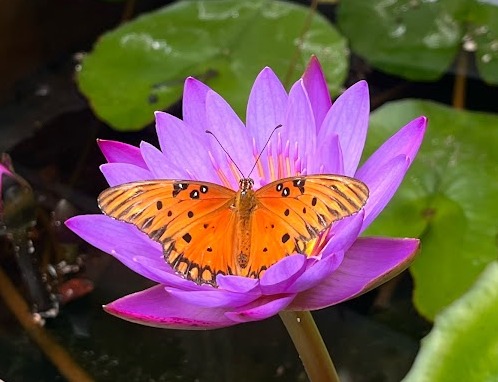
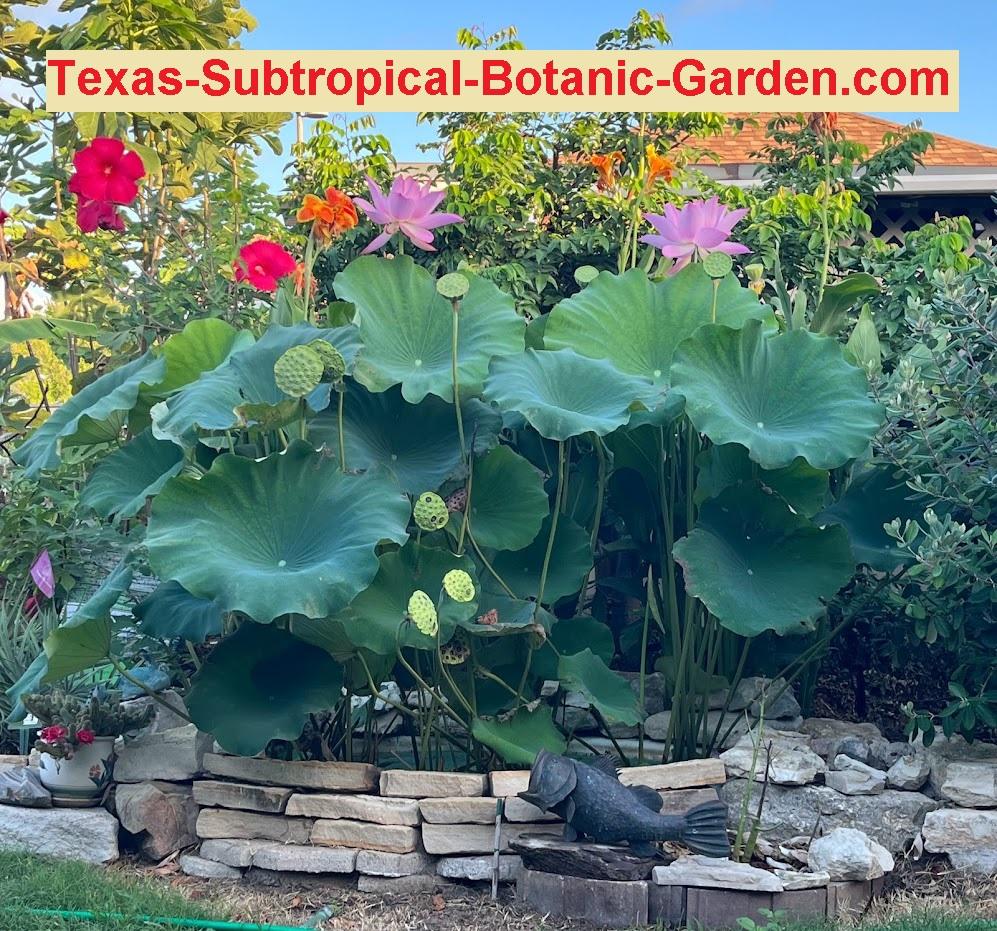
Our Tropical Water Lily is booming!
(In our greenhouse now)
| | |
Post Freeze Care
Now that we are having some warm weather it is best to uncover your plants if your forecast does not show a freeze at night. If you leave them covered - especially if you covered with plastic or a vinyl tarp it could heat up too much and damage your plants if they are in the sun.
Aransas Pass 10 Day Weather Forecast
There still is a possibility of another freeze
Be Patient it will take a month or so before you will know what has died.
So wait till you start seeing some new growth.
Damaged banana leaves can be cut off, leave the trunk it may put new leaves out of the center next spring
Hardy perennials and most trees will take a lot longer to know what (if any) damage was done.
I suggest waiting on trimming/pruning/pulling most of your hardy perennials/trees until you have a better understanding on what survived. Many plants will look stunted or dead but have just been put into dormancy and trimming could do more damage than good right now.
Particularly you may notice pomegranates that were fully green drop all of their leaves. This is normal. In cold climates, pomegranates are deciduous trees and drop their leaves every season. Most of these trees have a cold tolerance down to around 10 degrees and will come right back in warmer weather.
Loquats are another tree that might look very damaged, but have a cold tolerance to about 10 degrees. They may look bad but they are probably fine. However, if you trim your loquat too early after a freeze, you will often kill the tree.
Citrus wait probably 2 weeks or so to see how far down the trunk is dead, by scratching the bark and looking for rich green cambium beneath the bark. If the cambium (the layer just under the bark) is a sickly green or brown that portion is dead. It is possible the citrus could be dead all the way below the graft (close to ground level) and if so the tree needs to be replaced. But if you have healthy wood even a few inches above the graft, you will prune away the dead top and the well established root system will produce a new tree faster than replanting. Be sure to keep any suckers wiped off the portion below the graft.
Winter Pruning Tips
Of your fruit trees
How To Prune Young Fruit Trees - Peach, Apple, Fig and more
Winter Blackberry Pruning
How to Prune Peach Trees
WINTER PRUNING...Fruit Tree Structure
| | |
Subtropical Nursery
Plant Sale at the Nursery Saturday 9 to 4
161 N Rife St, Aransas Pass
The Magenta Towers Butterfly bush, Dwarf Texas Sage, Shoal Creek Vitex and Super Purple Lantana are hot pollinator plants and we have lots of them to attract butterflies, bee & Hummeringbirds to your garden.
These are all very hardy and make great flower arrangements.
We have plenty of Citrus tree varieties, figs, pomegrantes.
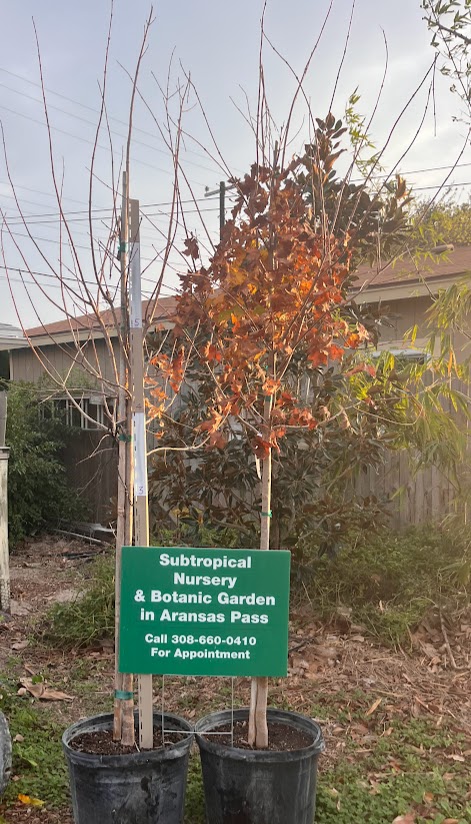
A couple of rare Sugar Maples for great fall color in our climate
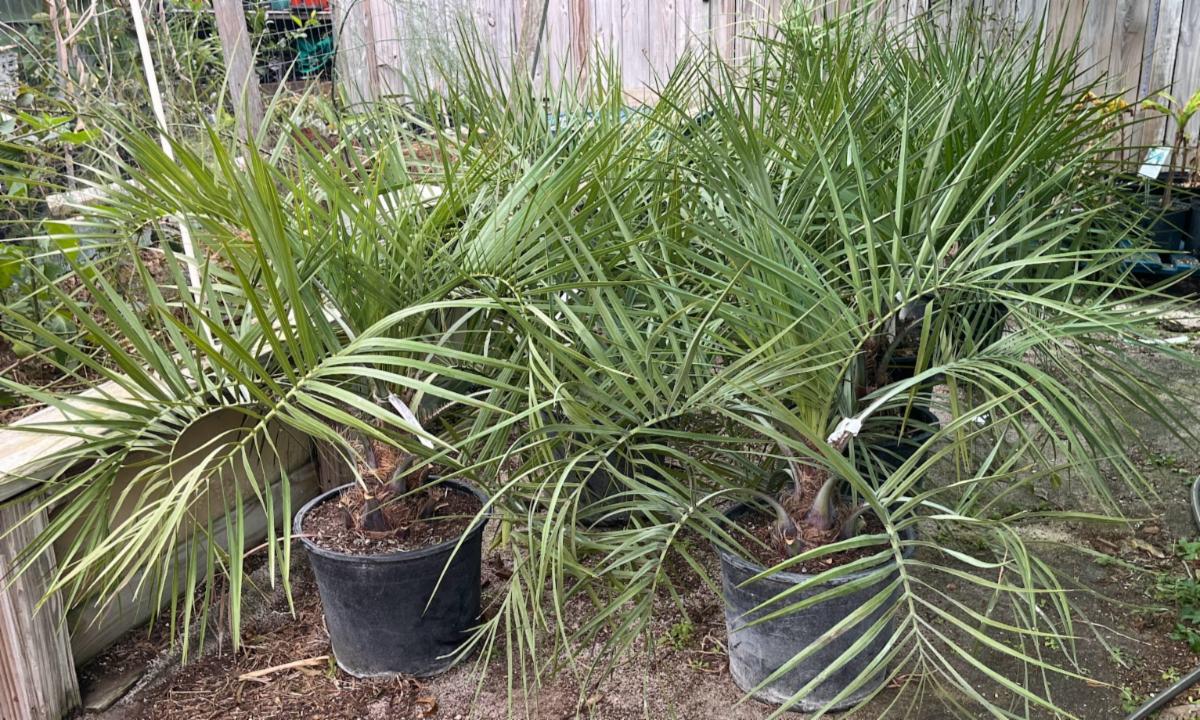
Specimen Jelly/Pindo Palms that produce great tasting fruit.
Check out our Featured Plants that are listed below
| |
|
The Butterflies and Blooming Plants were wrong
Easy Fruit Tree Cold Protection Method video
https://www.youtube.com/watch?v=62ZM615RBdc
Protect Citrus Trees From a Freeze video
https://youtube.com/shorts/9Rwygi3ukZs?si=VZ_l7n8oE7QJZCOh
Links to Products;
Most of the links below can be delivered by this weekend
Plant Jackets For Frost Protection
Tree watering bags slow release placee the water bag up against the trunk and above the graft will protect the tree and also water the soil
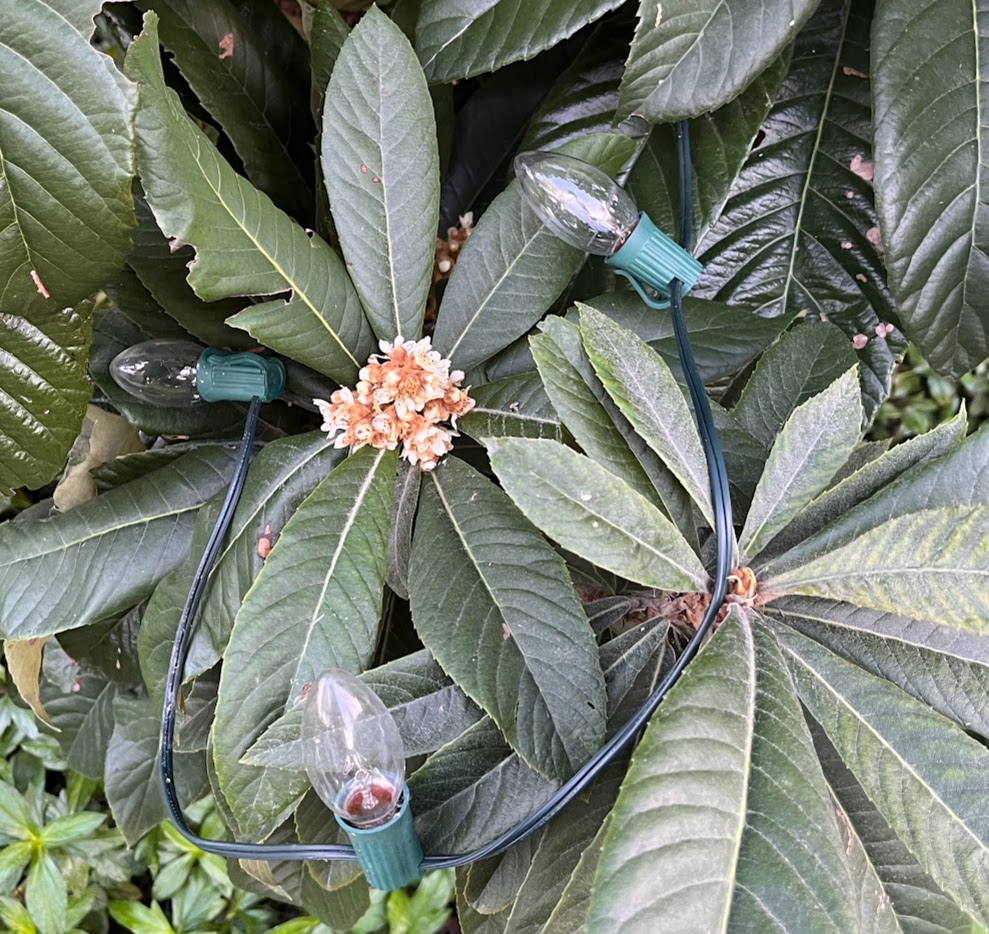
Incandescent Christmas lights larger incandescent bulbs for heat. Keep them off any fruit and sensitive trunks like on Papaya trees so they are not damaged.
Outdoor faucet freeze protector be sure to remove all hoses and you could run the faucet at a drip
Weather station knowing the temperature and wind helps also.
Free mulch and Incandescent Christmas lights
at Subtropical Nursery when you purchase trees
| |
Protecting your young &
Frost Sensitive Plants
Hardiness Zone 9 - 11 Plants
Preparing for a freeze
Protect your water lines!
Don’t forget to detach your hoses from the hose bibs and leave
just a drip on to ensure your house water lines don't freeze.
Check where your water shutoff from the city is to make sure it is covered or underground.
Also if you have a sprinkler system with an above-ground vacuum breaker drain it and insulate it. See the photo below.
Protecting your plants in your yard
https://aggie-horticulture.tamu.edu/.../FrostsandFreezes.pdf
Move potted plants indoors or at least in the garage.
Water your plants well before it freezes ( this stores additional heat)
Mulch well, and above the graft of fruit trees
Plants that are mulched may die to the ground but come back from the roots.
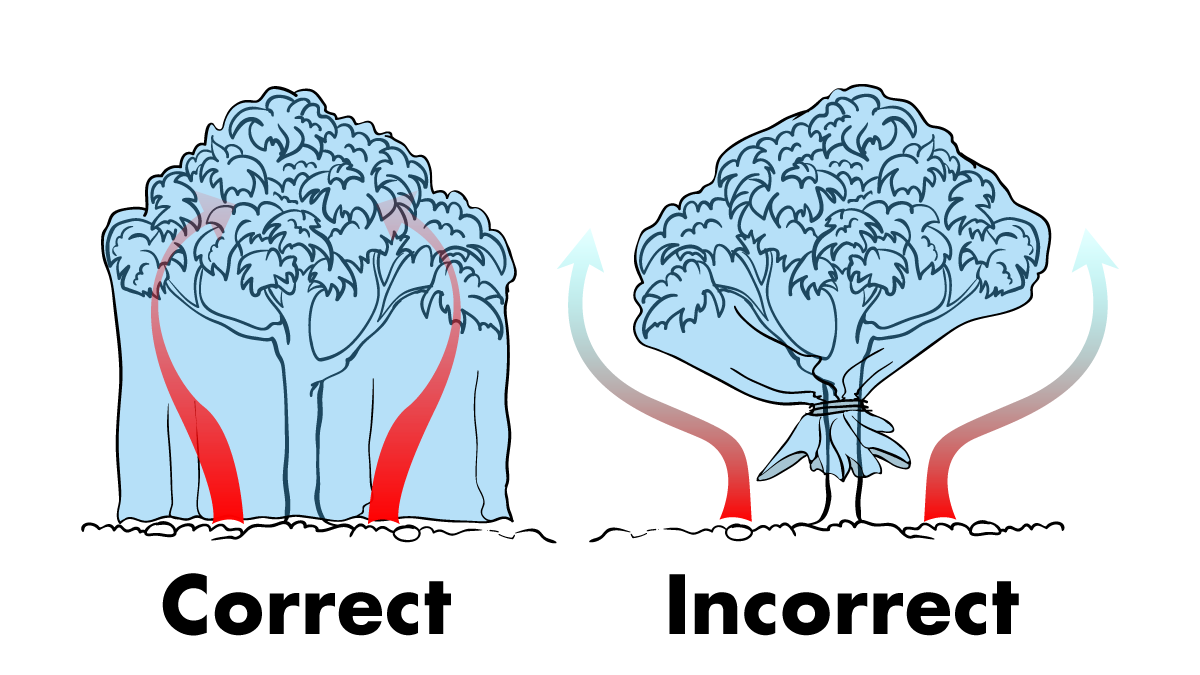
Cover plants with bed sheets, blankets, boxes,
plastic storage tubs etc. down to the ground.
Heat will come up from the moist ground to the covering
to help protect the plant.
So do not tie the covering around the base of the tree,
hold it down away from the tree so heat can come out of the ground to protect the tree.
If you have seedlings in the ground you could cover them with a plastic cup and a sheet of plastic over that, again the ground is not frozen so the heat from the ground will protect the plants. Be sure to remove it when it warms up.
You can use foam pipe insulation to protect the trunk of a tree.
If you have plants that are growing up against the house you could tent them into the house to get heat from the house.
Take cuttings of plants you want to make sure you do not want to lose. Keep them moist.
Be sure to either drain or blow out your sprinkler system and cover the Vacuum Breaker which is above ground to prevent it freezing
| |
Youtube video Dollar CRASHES, Gold Spikes
With Precious Metal Prices Surging you might consider this
GOLD ACQUISITION OPPORTUNITY
If you would like to learn more go to the link above
or contact Ed Victory a former financial planner
at 661-902-9952
Let him know I sent you my member # 0009
The price of gold is above $5,000 or $160+/ gram
| | |
Updated Winter power outage Preparation
Mr Heater
1# Propane Tank Refill Kit
Generator Information
Zombie Box
Backup Power Station
Generlink
Addional Winter power outage supplies
To prepare for a winter power outage, gather supplies focused on warmth, light, communication, food, and water to sustain your household for several days.
Generator for home use
· Flashlights & Lanterns: Keep multiple battery-powered flashlights and lanterns on hand, along with plenty of extra batteries. Do not use candles due to the significant fire risk.
· rechargeable flashlights
· rechargeable lanterns for power outages
· Communication: A battery-powered or hand-crank NOAA weather radio is crucial for receiving emergency information and weather alerts when cell service or landlines are down. A non-cordless landline phone may also work.
· Camping cook stove comes in handy if the power is out
· First-Aid & Medication: A well-stocked first-aid kit is necessary, along with a 7-day to two-week supply of any required prescription medications and basic over-the-counter medicines.
· Power & Charging: Have extra batteries for all devices and a portable power bank or brick charger to keep cell phones and other essential electronics charged.
· Documents & Cash: Keep copies of personal documents (insurance policies, medical info, etc.) and some extra cash in case electronic transactions are unavailable.
· Sanitation & Hygiene: Stock up on toilet paper, moist towelettes, hand sanitizer, and other personal hygiene items.
Winter-Specific Supplies
The primary concerns during a winter outage are loss of heat and potential shortage of supplies.
· Warmth:
o Blankets & Sleeping Bags: Have a supply of warm blankets or cold-weather sleeping bags.
o Warm Clothing: Ensure each person has access to multiple layers of warm clothing, including hats, gloves/mittens, warm wool socks, and winter coats.
o Alternative Heat Source: If you have a fireplace, wood stove, or a properly ventilated portable heater (gas or oil), ensure you have the necessary fuel and a working carbon monoxide detector Never use a gas oven or grill for indoor heating due to the risk of carbon monoxide poisoning.
portable heater propane
portable heater natural gas
I have been using Mr Heater gas heaters that work great and are reasonably priced.
Fire extinguisher
· Water: Store at least one gallon of water per person per day for drinking and sanitation, ideally a two-week supply. Prevent water containers from freezing if possible.
· Food: Focus on a several-day supply of non-perishable, easily prepared foods that require little to no cooking or refrigeration, such as canned goods, nuts, energy bars, and dried fruit. A manual can opener is essential.
· Pet Supplies: Don't forget ample pet food, water, and any necessary medications for your pets.
· Snow & Ice Tools: Keep snow shovels and a supply of salt or cat litter for traction on walkways.
| | |
Do your feet and your pets feet not like the prickly sand burs? Now is the time to apply a Pre-emergent herbicide for sand burs to help control the sand burs in your lawn and garden.
I have used this with great success Lesco granular fertilizer with Dimension pre-emergent. https://amzn.to/4bhkNdS
| | |
Free String of 25 Incandescent Lights with
Fruit Tree Purchase while supply lasts
Incandescent Lights provide heat
to protect Cold Sensitive plants
from frosts when properly covered
| | |
Winter Plant Sale
Free String of 25 Incandescent Lights
with Purchase of a Fruit Tree while supply lasts
to protect your trees from a freeze if we get one
Bring a bag or box for Free Mulch for your trees
Subtropical Nursery Winter Hours
Saturdays 9 AM to 3 PM
or Call for appointment 308-660-0410
161 N Rife St. Aransas Pass
| | |
Mexican Sugar Maple
(only 2 available 15 gal pots)
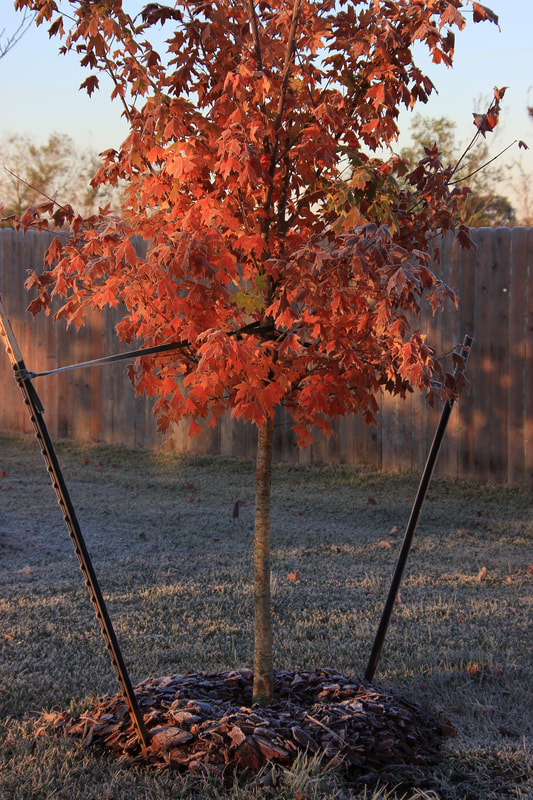
The Rare Mexican Sugar Maple (Acer skutchii) is a beautiful, moderate-sized deciduous tree known for its excellent heat tolerance and vibrant fall colors. Native to the mountainous regions of Mexico.
-
Size: It typically grows to a height of 30 to 40 feet.
-
Foliage: The tree features deeply lobed, palmate leaves that are bright green during spring and summer. The fall foliage is its most striking feature, offering brilliant hues of yellow, orange, and red.
-
Bark: It has a graceful, upright form with smooth gray bark that becomes more furrowed into plates as the tree matures.
-
Growing Conditions: The Mexican Sugar Maple is adaptable to various soil conditions, including alkaline soil, and is both heat and drought tolerant once established. It thrives in full sun exposure and is suitable for hardiness zones 7a to 9b.
| | |
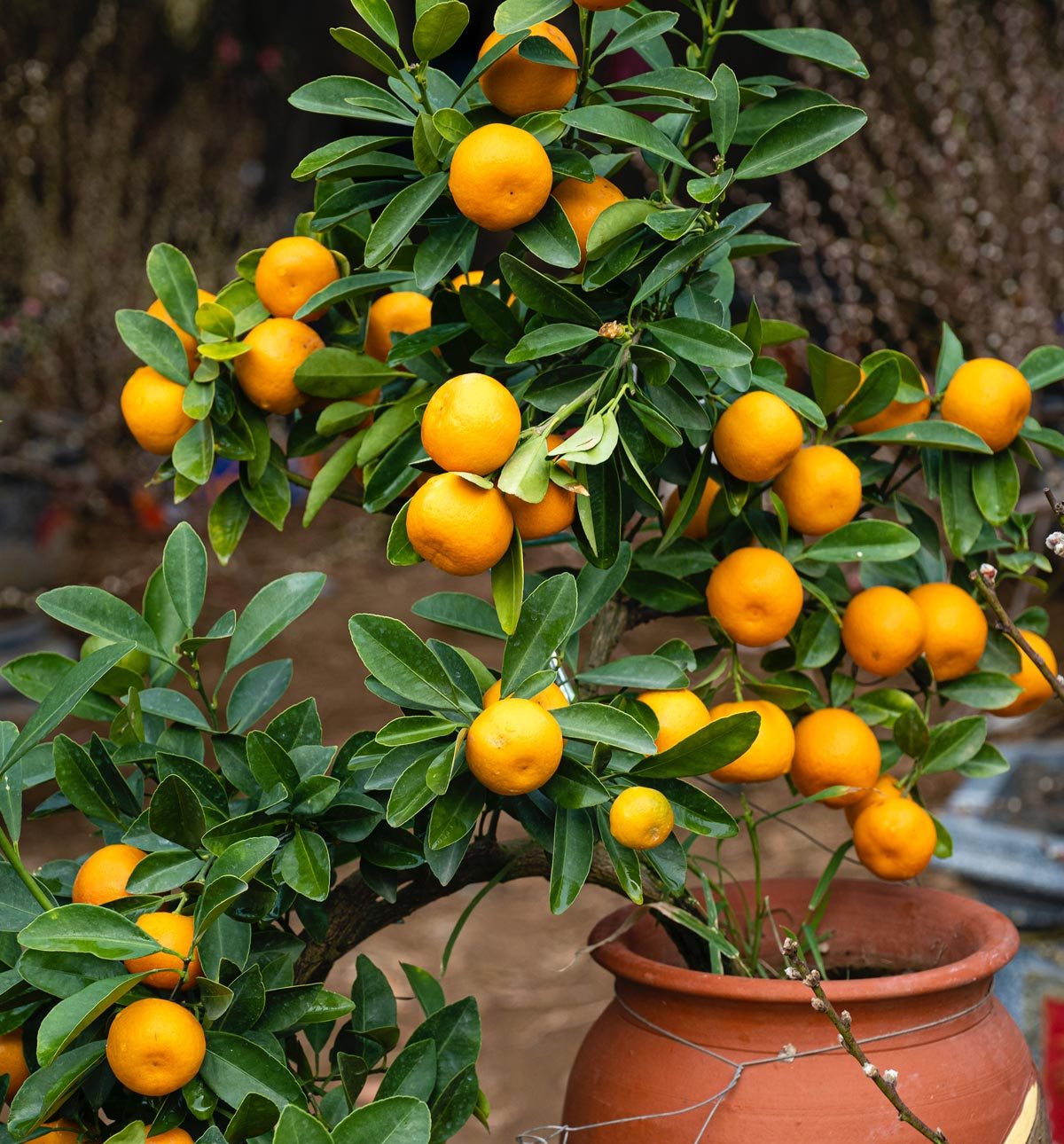
Frost Owari Satsuma
is a variety of mandarin orange tree that is known for its cold hardiness and ease of peeling. It is a popular choice for citrus enthusiasts and can be grown in containers.
· Fruit: Medium-sized, seedless, deep orange, sweet, juicy, and easy to peel
· Tree: Vigorous grower that can reach 10–15 ft tall outdoors, but can be kept shorter in containers
· Climate: Cold hardy and can tolerate temperatures in the low 20s°F and even into the teens for mature plants.
· Harvest: Fruit ripens in late fall and is usually ready for harvest in early winter
· Flavor: Rich but sub acid
| | |
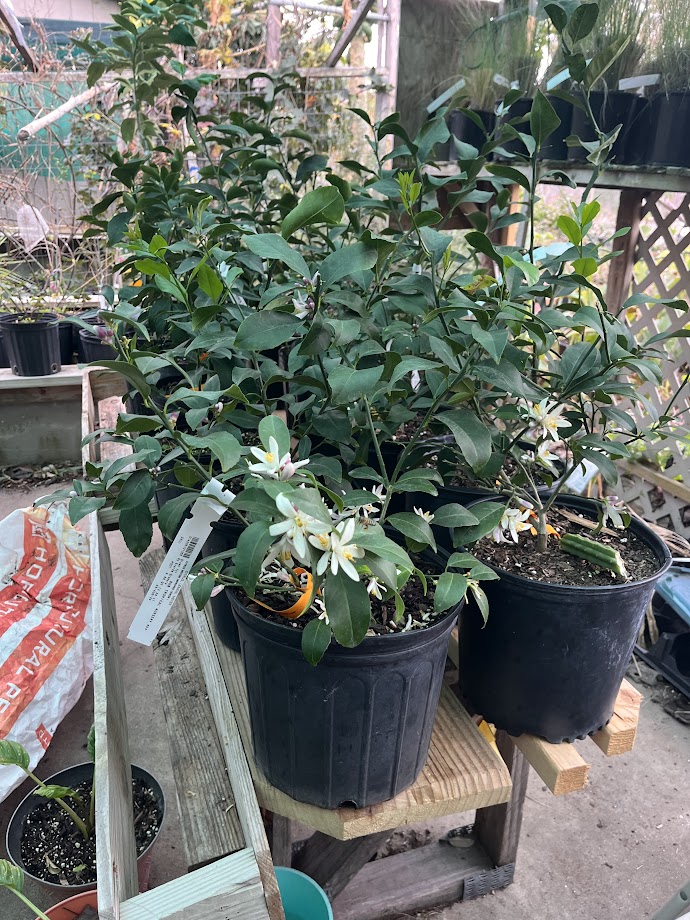
Meyer Lemon (own root)
Blooming Meyer lemon tree (Citrus x meyeri) is a popular, compact evergreen citrus hybrid (citron x mandarin) known for its sweet, less acidic fruit, glossy leaves, and fragrant white-to-purple flowers, thriving in full sun and well-drained soil, and ideal for containers as it's self-pollinating and can be moved indoors in colder zones (USDA 8-11) to avoid frost. It is grown from cuttings, so grown on its own roots. If it freezes to the ground and the roots have been protected it will come back as a Meyer Lemon, not the grafted root stock.
| | |
Pindo Palm
Specimen Pindo Palms (Butia capitata), often called the Jelly Palm, is a slow-growing, cold-hardy feather palm prized for its elegant arching fronds and edible fruit. Native to South America, it is one of the most popular exotic palms in the southeastern United States due to its ability to withstand temperatures as low as 10–15°F.
Size: Typically matures to 15–25 feet tall with a similar spread of 10–15 feet.
Fruit: Produces large clusters of orange-yellow, cherry-sized fruits in summer. The fruit is sweet and tart—often described as a mix of pineapple, apricot, and banana—and is commonly used to make jellies, jams, and wine.
| | |
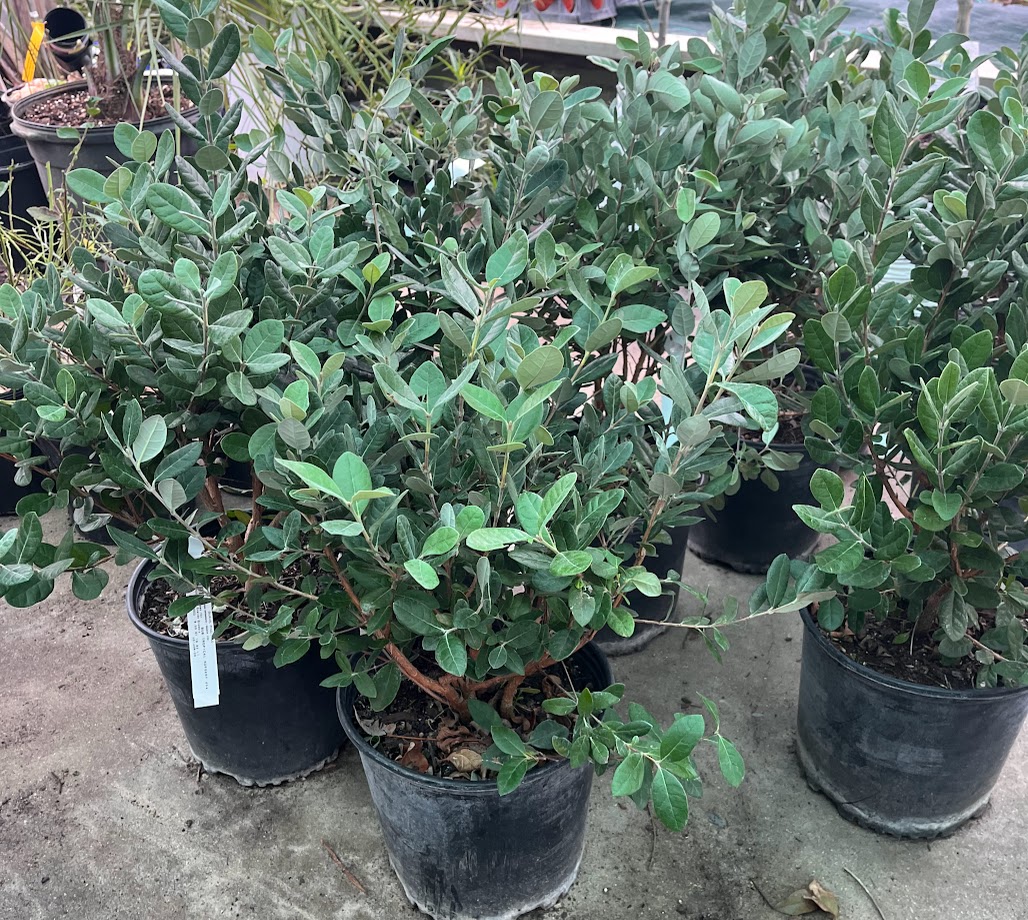
Pineapple Guava
The pineapple guava (Acca sellowiana), also known simply as feijoa or guavasteen, is an evergreen shrub or small tree native
The fruit has a unique flavor profile often described as a mix of pineapple, guava, apple, and mint or strawberry.
Edible Flowers: The fleshy white and pinkish-red flower petals are also edible and have a sweet, marshmallow-like flavor, often used in salads or as a garnish.
Thrives in USDA Zones 8-11, tolerating cooler weather down to about 10-15°F
| | |
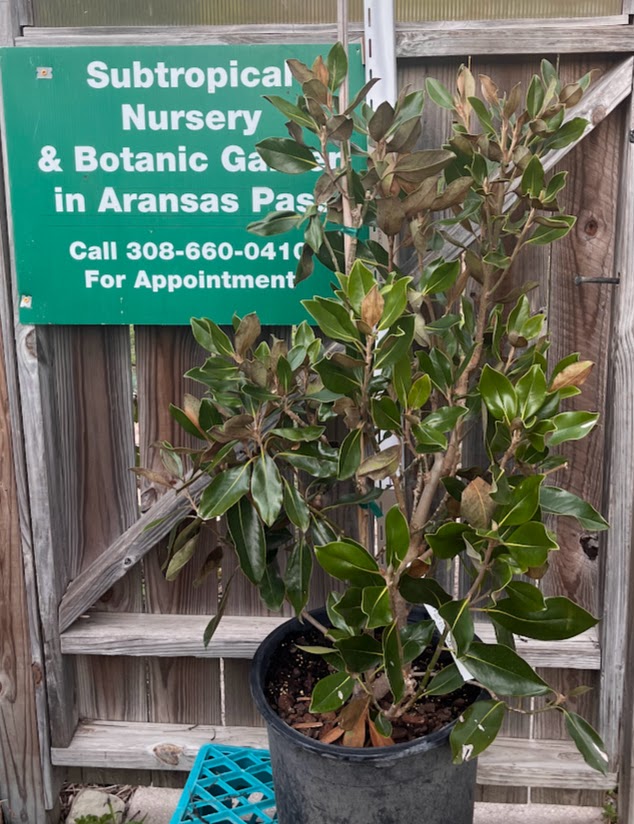
Magnolia, Little Gem
The 'Little Gem' magnolia (Magnolia grandiflora 'Little Gem') is a popular dwarf evergreen tree known for its compact, narrow form, glossy green leaves with a rusty-brown underside, and large, fragrant white flowers.
Size: The tree typically reaches a mature height of 15 to 25 feet and a spread of 8 to 15 feet,
| | |
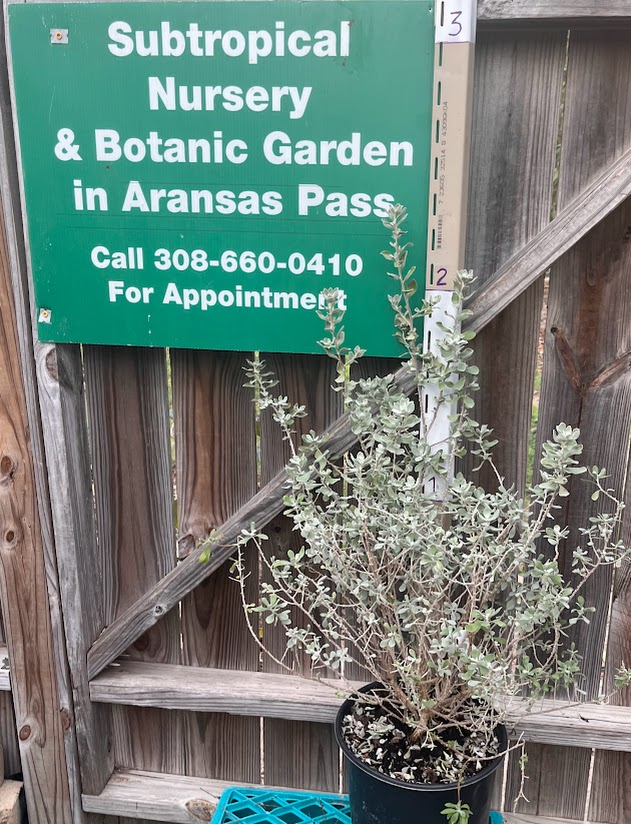
Texas Sage, San Antonio Rose
The 'San Antonio Rose' Texas Sage (Leucophyllum frutescens 'San Antonio Rose') is a popular, compact, drought-tolerant shrub known for its vibrant rose-pink to lavender flowers and silvery-green foliage, thriving in hot, full sun, and blooming throughout warm seasons, especially after rain, making it ideal for arid landscapes, hedges, and attracting pollinators.
Size: A compact, mounded form, typically reaching 4-5 feet tall and wide.
Growth: Moderate growth rate, with a naturally dense, rounded shape.
Hardiness: Grows well in USDA Zones 7-11.
| | |
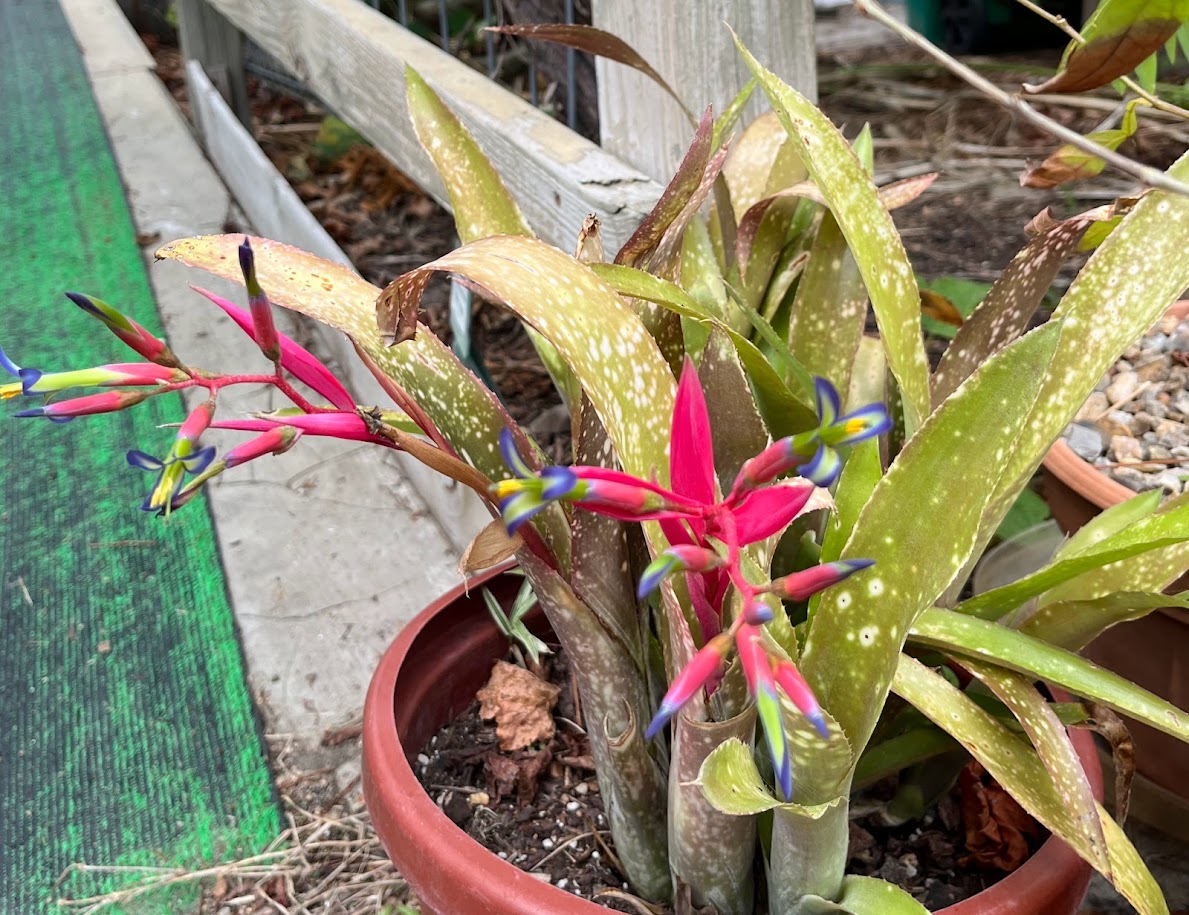
Billbergia nutans
Queen's Tears
"Queens Tear's" for the ornate hanging flowers with royal blue highlighting that often exude tear-like droplets of nectar, another common name is "Friendship Plant" which is attributed to this plant multiplying readily
| | |
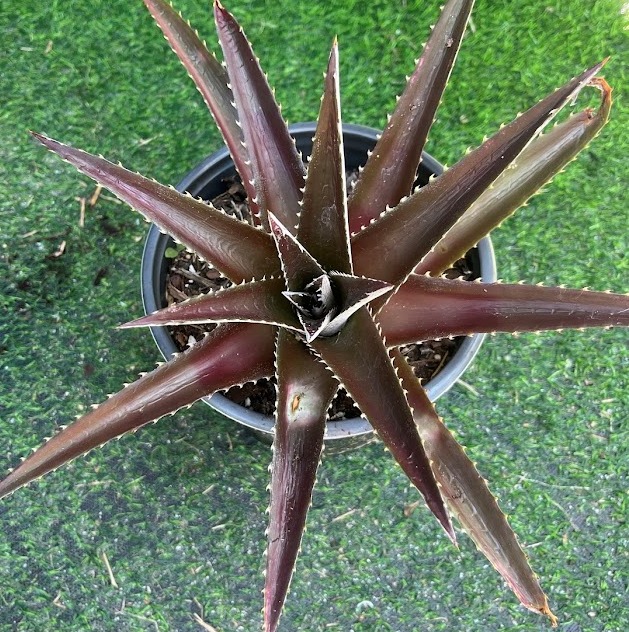
Dyckia platyphylla hybrid "Cherry Cola" Bromeliad
This is a soil-dwelling Bromeliad that is easy to grow, and can handle temperatures down to the low-20s. It's a handsome, low-maintenance plant that multiplies readily into a big stand!
| | |
Planting this fall/winter will establish a good rootsystem for fast growth next spring
Did you know fall is actually a better time of year to plant than spring?
1. Warm soil + cool air = Happy Plants.
Plants prefer moderate temperatures and warm soil.
Fall is the only time of year you get those
2. Less insect, pest and disease pressure.
3. Less water stress.
4. Planting is more pleasant.
5. Plants have a head start next spring as they grow roots in the fall.
Plants are ready to get growing faster in spring.
Flowering is often better the first spring/summer.
6. Better drought tolerance.
Plants get an extra 6-8 months of root growth before they have to withstand dry conditions the following summer compared to planting in spring. Deeper, better established roots are a large factor in determining how well a plant tolerates Heat & drought.
| |
Planting Containerized Trees
Containerized Trees are trees that contain all of their roots in the container.
These can be planted successfully at any time of year if planted properly.
Handling Trees before Planting
Avoiding unnecessary damage and stress to trees prior to planting will ensure better success.
- Keep the rootball moist.
- Handle the tree by the container, not by the trunk.
Preparing the Hole and Planting the Tree
Preparing the planting area properly before planting is very important.
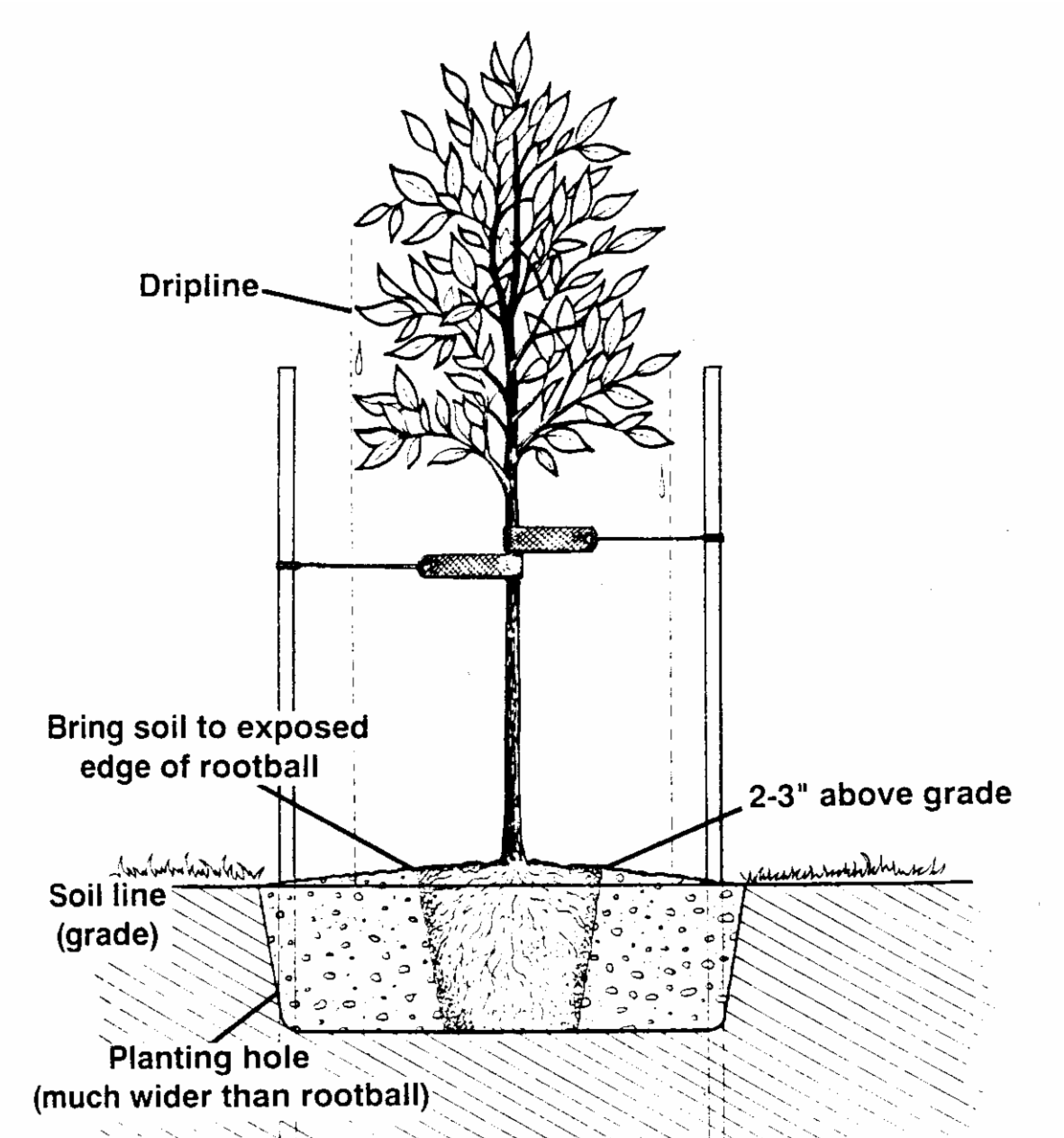
- Dig the planting hole two to three times the diameter of the tree’s rootball and no deeper than the rootball itself.
- For clay soil, plant trees one to three inches above grade. Plant trees at their original grade in sandy soil.
- Do not put crushed stone or gravel in the bottom of the hole!
- Carefully remove the container.
- If roots are excessive and circling the inner walls of the pot, score the outer edge of the rootball by slightly severing or scratching to loosen the root system. Do not cut deeply into the rootball.
Backfilling the Planting Hole
Fill in the planting hole (backfill) with native soil and mix in 1/3 compost to the backfill.
Compost mixed in with sandy soil will increase the ability of the soil to retain water and nutrients. In clay soil, organic material helps to add air pockets and gives space for the roots to find oxygen.
Fertilizing
A new tree should not be fertilized for the 1st year to encourage its roots to expand out into the native soil.
Future seasons it should be fertilized out at the dripline of the tree.
Watering the New Tree
Newly planted trees should be watered in well at the time of planting to ensure air pockets are removed from the backfill material.
Generally, young plantings need an equivalent of one inch of rain per week. Newly planted trees may need to be watered two or three times a week in extremely hot, dry, windy weather because their root systems cannot take up the amount of water needed to replenish the water lost through the leaves. Watch for signs of wilting as an indicator that the tree needs water. (wilting can also be a sign of overwatering especially in clay soil) Be cautious not to overwater or the amount of oxygen in the soil will be lowered to a level that will damage roots, especially in clay soil.
Dig under the mulch a couple of inches to check the soil moisture before watering and only water when it starts to dry out.
If you have several young trees and shrubs, a drip irrigation system would be wise.
Mulching the New Tree
The secret to a thriving orchard is mulch.
New trees should be mulched using organic mulch two to four inches deep and five to six feet in diameter; keep mulch at least two inches away from the trunk of the tree. Do not mound mulch up against the trunk of the tree. You can also put cardboard underneath the mulch to discourage weeds.
The benefits of mulching are:
- Create a weed and turf-free area.
- Reduced plant competition for water and nutrients.
- Regulate soil temperature and moisture.
- Add organic matter to the soil as the mulch decomposes.
Pruning a New Fruit Tree
To produce quality fruit, fruit trees need regular pruning in their first few years to develop healthy growth and well-spaced branches, and continuous minor pruning thereafter. There are many different ways to prune fruit trees that result in good-quality trees.
When you pick up your trees at the nursery I can help you prune your tree to get it to a good start.
Staking Trees
Stake young trees sparingly and briefly when possible.
Stake trees when top-heavy or planted in windswept areas. The material used to attach the tree to the stake should be broad, smooth and somewhat elastic. Do not stake the tree too rigidly. Always allow for sway.
Have your soil & water tested
Texas A & M Soil & Water Testing Lab
| | |
Bamboo Misconceptions
Bamboo scares some people because its nature is to grow…a lot. The running variety of bamboo is considered invasive with rhizomes that grow like crazy to often take over your yard and the ones next to it.
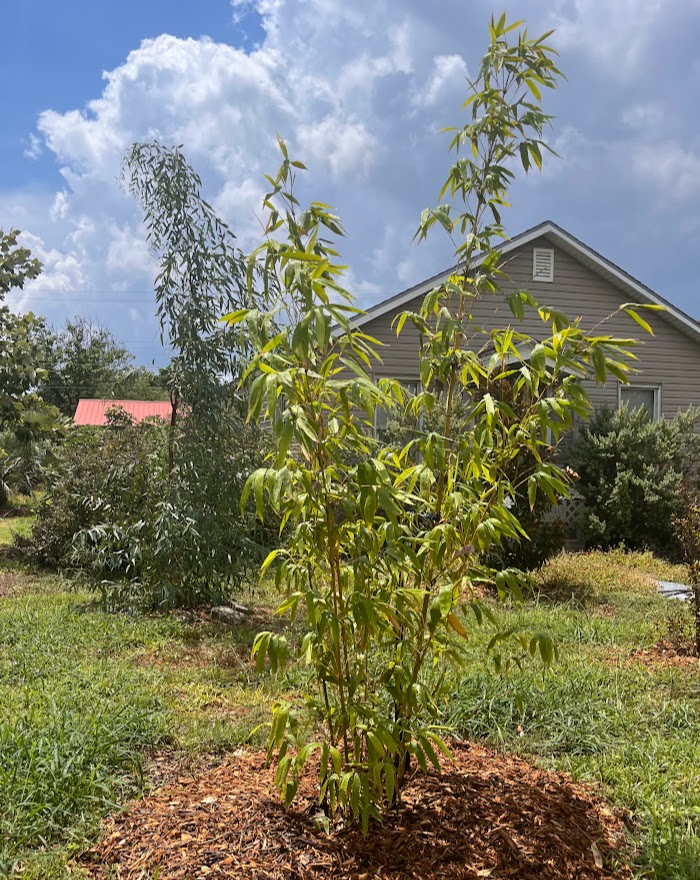
Some varieties are Clumping Non-invasive Bamboo that have non-invasive shorter rhizomes that don't stray far from their origin. And grow in dense clumps, making them ideal for hedging and screening, garden borders, and containers. These bamboos are not classified as invasive.
But – and there’s a big thing – bamboo is one of the most beautiful, hardy, drought-and-pest-tolerant plants a homeowner can add to his yard once established. Quick-growing, long-lived, and easy to maintain.
Bamboo is an attractive and versatile plant that can add a touch of elegance to any garden or interior plantscape.
You can create a beautiful, thriving bamboo landscape that adds an exotic touch to your garden.
Bamboo is one of the fastest-growing plants in the world, so it can quickly form a screen that provides visual, wind and noise buffering.
| | |
Bamboo is a Perennial Evergreen in the grass family. Bamboo is a versatile and visually appealing plant that can be used in many ways in a garden, including:
Ornamental Centerpieces, Focal Point
Many landscapers and home gardeners have found that clumping bamboo plants is the perfect choice for creating an ornamental centerpiece. Whether an urban yard or an Asian-inspired landscaping theme, the unique attributes offered by many varieties of bamboo make a perfect focal point, ornamental centerpiece, and conversation piece.
Have your soil & water tested
Texas A & M Soil & Water Testing Lab
| |
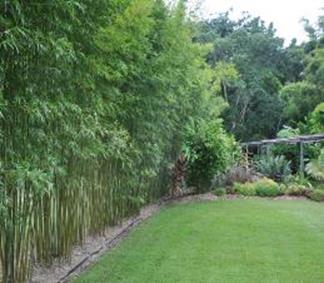
Used as a privacy screen or hedge
Wind Breaks are often constructed using bamboo in many other parts of the world. Because bamboo is a flexible plant that can bend and sway in the strongest of winds, its use as a wind break is common in typhoon-prone areas and tropical locales experiencing heavy winds.
| |
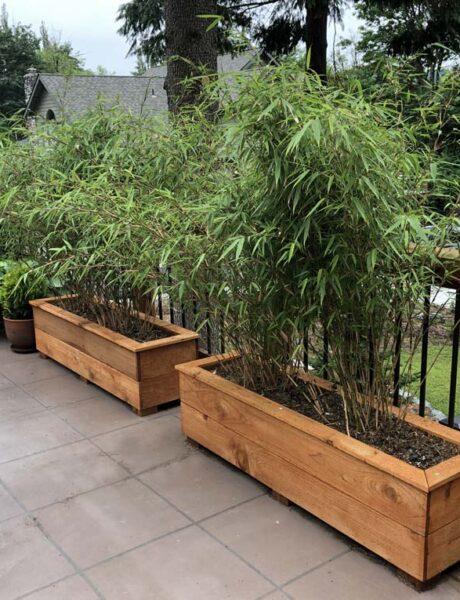
In planters or beds add screening to a patio area.
Some of the shorter bamboos can be successfully confined to pots
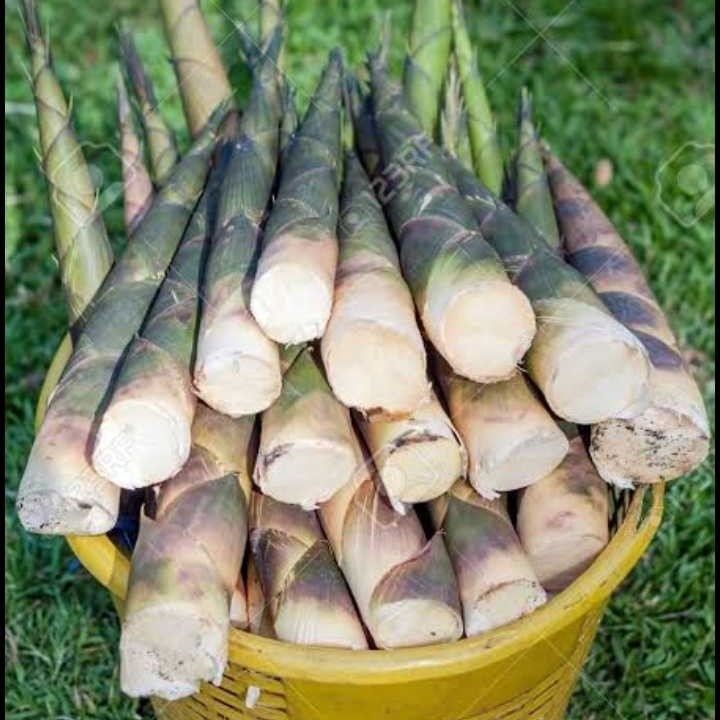
| Edible Bamboo for Bamboo Shoots are known for their health benefits. This includes weight loss, balanced cholesterol, and anti-inflammatory properties. Bamboo shoots also contain high amounts of vitamins and fiber. | |
Taiwanese Sweet Shoot Edible Bamboo
Non-Invasive Clump Bamboo
Highly prized for edible shoots due to its crisp flesh, similar to Asian pears. Grows to 30' with up to 2" diameter thick-walled culms. The culms are straight and erect with relatively short branches forming fairly open clumps.
15 gal Specimen Clumps Available
Hardy to 20 to 25 F
|
Tropical and Exotic Feel or Asian Ambience.
Bamboo is a versatile and beautiful plant that is perfect for creating a stunning landscape design in your backyard. Bamboo is known for its fast growth and elegant, upright stems, which provide a tropical and exotic feel to any garden
| |
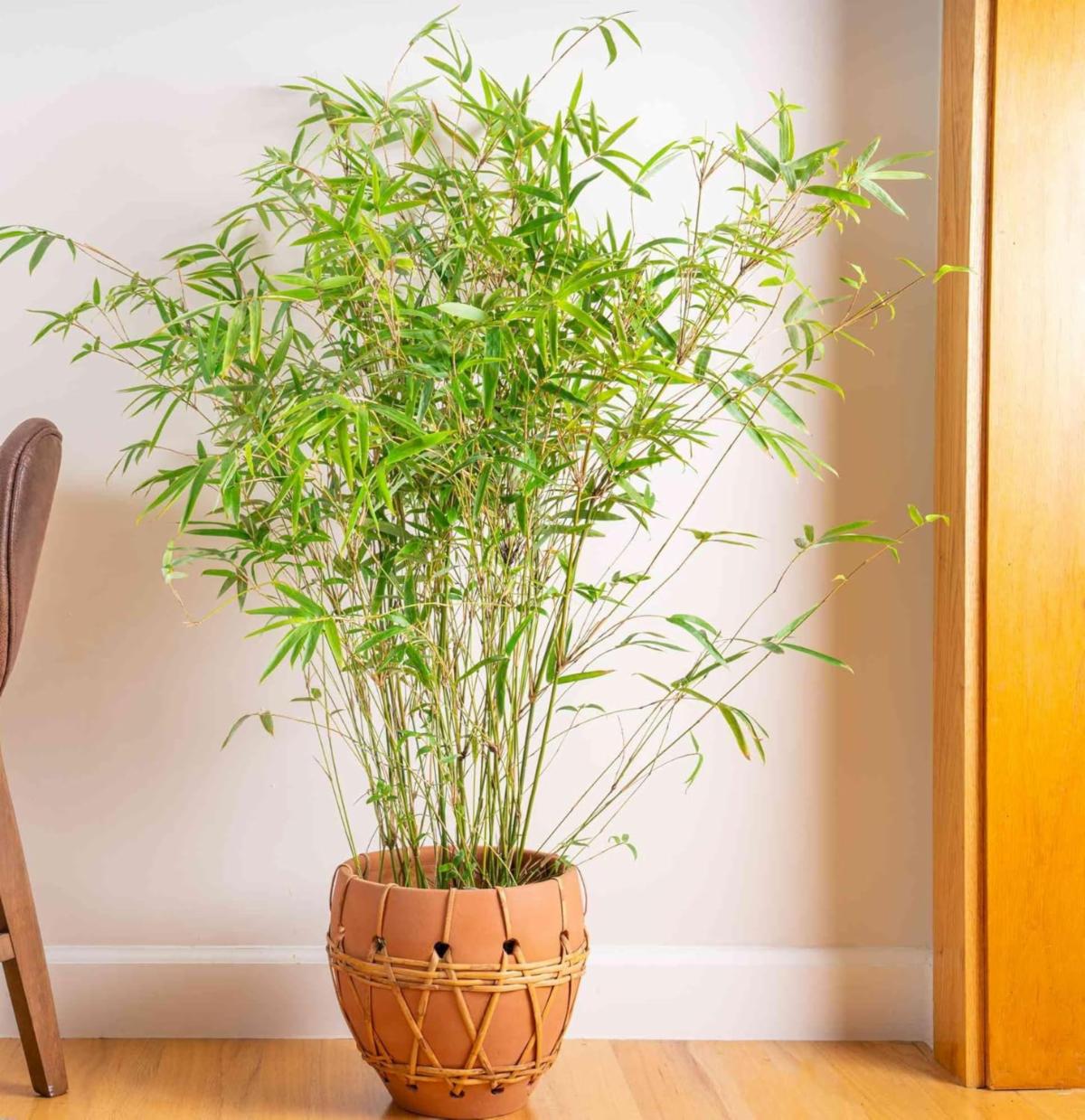
Bamboo for the Interior Plantscaping
A clumping bamboo is easier to grow as a houseplant. indoor bamboos need good drainage, regular watering, and fertilizing.
Bamboo loves humidity, which you can increase by misting it with a spray bottle several times a day. Placing a pebble tray with a little bit of water under the container also helps raise moisture levels. Or place a humidifier nearby. Provide your indoor bamboo with as much bright, indirect sunlight as possible for the best growth.
Keep a close eye on the soil's moisture to make sure your plant is properly hydrated but not soaking; overwatering can cause root rot. Allow the top 2-3 inches to dry out before watering again, and don't water as frequently during the winter. A
pply an organic, slow-release fertilizer twice a year for healthy growth.
| | Share this with your gardening Friends | | | | |