NEW COVID-19 Provider Funding:
Prepare to Apply
The Department of Health and Human Services (HHS), through the Health Resources and Services Administration (HRSA), has announced a new application cycle for $25.5 billion in COVID-19 provider funding. Applicants will be able to apply for both Provider Relief Fund (PRF) Phase 4 and American Rescue Plan (ARP) Rural payments during the application process. PRF Phase 4 is open to a broad range of providers with changes in operating revenues and expenses. ARP Rural is open to providers who serve rural patients covered by Medicare, Medicaid, or the Children’s Health Insurance Program (CHIP).
Providers who have previously created an account in the Provider Relief Fund Application and Attestation Portal and have not logged in for more than 90 days will need to first reset their password before starting a new application. In order to streamline the application process and minimize administrative burdens, providers will apply for both programs in a single application.
The application will close on October 26, 2021 at 11:59 p.m. ET See a detailed list of eligible provider types here.
|
|
Congress must act before pandemic flexibilities expire
In what now seems like a prescient move, my urology practice in Jackson, Wyoming adopted "TeleUrology" in early 2019 as a new way to improve access for our patients. To meet pre-pandemic Medicare payment requirements, each patient had to be located at a so-called "originating site" when receiving a telehealth visit -- usually a clinic located in their small rural community. After starting our journey in 2019 and gradually expanding our reach throughout that year, we experienced a slow, steady transition into telemedicine. Then, almost overnight, the COVID-19 pandemic upended some of the barriers previously required for reimbursement, with new government policies in place to temporarily allow for telehealth flexibilities.
|
|
The drug could fill a big need for a pill that patients could easily take at home to help avoid hospitalization
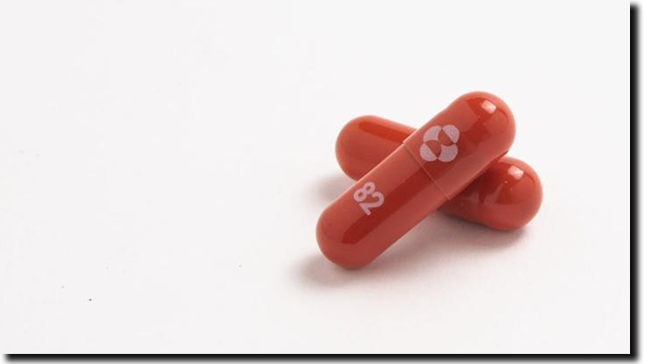
Merck & Co. and partner Ridgeback Biotherapeutics LP said Monday they have filed an application asking U.S. health regulators to authorize their Covid-19 pill, the next step toward adding a long-sought drug for use at home.
The filing comes shortly after data from a late-stage study showed that the antiviral drug, molnupiravir, cut the risk of hospitalization or death by about 50% in high-risk people with mild to moderate Covid-19.
|
|
In January 2022, physician practices will face 9.75% cuts and ambulatory surgery centers face 6% cuts.
1. Physician Payment Cuts
- The expiration of the congressionally enacted 3.75% temporary increase to the Medicare physician fee schedule conversion factor, which was set into place to avoid payment cuts associated with budget neutrality adjustment tied to PFS policy changes.
- The expiration of the current reprieve from the repeatedly extended 2% sequester stemming from the Budget Control Act of 2011. It appears that while Congress originally scheduled this policy to sunset in 2021, it will now continue into 2030.
- The Imposition of a 4% statutory PAYGO sequester resulting from passage of the American Rescue Plan Act, presumably extending for at least another 10 years.
2. Facility Payment Cuts
- Under the present status, it appears that ambulatory surgery centers and other facilities will be suffering from a 2% cut from sequester extension and a 4% reduction with the imposition of a 4% statutory PAYGO sequester resulting from the passage of the Budget Control Act of 2011
3. Telephone Only Services
- CMS has eliminated coverage for telephone-only services (CPT 99441-99443), effective December 20, 2021.
|
|
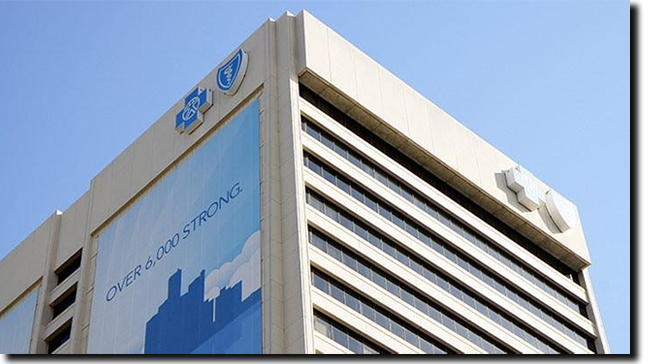
Anthem Blue Cross, the country's second-biggest health insurance company, is behind on billions of dollars in payments owed to hospitals and doctors because of onerous new reimbursement rules, computer problems and mishandled claims, say hospital officials in multiple states.
Anthem, like other big insurers, is using the covid-19 crisis as cover to institute "egregious" policies that harm patients and pinch hospital finances, said Molly Smith, group vice president at the American Hospital Association. "There's this sense of 'Everyone's distracted
|
|
ASIPP® is pleased to offer a new feature for
its members to help provide value to you and your practice.
Click here to visit ASIPP®'s newly created site where you can
make purchases on our Amazon Store, learn more about and
join the ASIPP® GPO and ASIPP®’s partnership with
Fedora Billing & Revenue Cycle Management Company.
|
|
The fiscal year 2022 ICD-10-CM diagnosis code updates became effective Oct. 1.
Here are eight key things to know:
- The number of new codes. Compared to fiscal 2021, when 485 codes were added, just 165 codes were added in fiscal 2022.
- Codes to further describe homelessness.
- Codes for COVID-19.
- Expansion of codes for describing a cough.
- Codes for injuries, poisonings and certain other consequences of external causes.
- Codes for musculoskeletal system and connective tissue diseases in Chapter 13.
- Guidance changes for laterality.
- Guidance change for codes relating to factors influencing health status and contact with health services.
|
|
Pain Medicine Case Reports (PMCR) and Editor-in-Chief Alaa Abd-Elsayed, MD, PhD would like to invite you to submit case reports and case series to the PMCR journal. Your article will be published free of charge.
Open access journals are freely available online for immediate worldwide open access to the full text of published articles. There is no subscription fee for open access journals. Open access journals are no different from traditional subscription-based journals: they undergo the same peer-review and quality control as any other scholarly journal.
Interested in becoming a member of the PMCR Editorial Board?
Editorial board members are asked to review 2-6 manuscripts per year. Please submit your most up-to-date CV to sgold@asipp.org for consideration.
For more information or to submit your articles, click here.
|
|
| CASE REPORT |
Thomas Ng, MD, Anjana Sekaran, MD, and Alopi Patel, MD
Abstract
Background: Pelvic, perineal, and anorectal pain can be common findings in patients with Multiple Sclerosis (MS). These patients can develop bowel and bladder dysfunction with disease progression, as well as musculoskeletal component of their pain. The ganglion impar injection and radiofrequency ablation procedure are well-documented interventions to treat visceral pain arising from the pelvis as well as nociceptive pain from the anus and rectum.
Case Report: We discuss the cases of two MS patients with significant disease progression who present with anorectal pain refractory to medical and surgical treatment. The ganglion impar block was offered to both of these patients with significant pain relief reported immediately and after several weeks.
Conclusion: Ganglion impar block and radiofrequency ablation are safe and effective interventions for pelvic and perineal pain and can be beneficial for severe refractory anorectal pain in MS patients.
Key words: Rectal pain, pelvic pain, perineal pain, Multiple Sclerosis, ganglion impar, interventional pain, radiofrequency ablation
|
|
| RANDOMIZED CONTROLLED TRIAL |
Jayantee Kalita, MD, DM, Sumit Kumar, DM, Varun K. Singh, DM,
and Usha K. Misra, DM
Abstract
Background: The patients with chronic migraine (CM) respond poorly to pharmacological agents including tricyclic antidepressants, beta-blockers, anticonvulsants, calcium channel blockers, flunarizine, and melatonin. The combination of 2 or more pharmacological agents has not shown better efficacy but increased side effects. High rate repetitive transcranial magnetic stimulation (rTMS) has been reported effective in episodic migraine and converts CM to episodic migraine. A combination of high rate rTMS with a pharmacological agent may be more effective compared to rTMS alone.
Objectives: We evaluate the efficacy and safety of 10 Hz rTMS compared to rTMS and amitriptyline in CM.
|
|
| RANDOMIZED CONTROLLED TRIAL |
Mohamed F. Mostafa, MD, Ekram A. Osman, MD,
Mahmoud M. Abo Elkasem, MSc, Mohamed Ismail Seddik, MD,
and Ragaa Herdan, MD.
Abstract
Background: Succinylcholine has a fast onset, short duration of action, and is considered the choice for rapid sequence intubation. However, it produces muscle stiffness and postoperative myalgia (POM) as adverse effects. We hypothesized that the antioxidant selenium might affect POM incidence and severity.
Objectives: The study aimed to investigate the antioxidant effect of selenium (against free radicals' release) in minimizing the frequency of succinylcholine-related POM, measured by the 4-point myalgia score. The severity of fasciculations and the postoperative analgesic profile were recorded. The correlation between fasciculations and POM was also observed.
|
|
Since this malpractice insurance program officially launched in November 2018, ASIPP has signed up hundreds of providers with an average savings of 30%. This is professional liability insurance tailored to our specialty and will stand up for us and defend our practices.
Norcal Mutual is 'A' Rated by AM best and is license in all 50 states. To read a few important points to keep in mind about the program, including discounts, administrative defense, cyber coverage, aggressive claims handling, and complimentary award-winning risk management CME activities, click here.
|
|
ASIPP® is now offering our members the benefit of a unique revenue cycle management/ billing service. We have received a tremendous amount of interest in the ASIPP® billing and coding program.
Click here to learn more about the negotiated rate for practices and more!
|
ASIPP® has formed a partnership with Henry Schein and PedsPal, a national GPO that has a successful history of negotiating better prices on medical supplies and creating value-added services for the independent physician. Working with MedAssets, PedsPal provides excellent pricing on products like contrast media that alleviate some of the financial pressures you experience today.
|
|
up-to-date news related to you, your practice, and your patients!
|
|
|
|
|
|
|