|
|
The Limpkin Times
Apalachee Audubon Society Mission Statement:
Protecting the rich biodiversity of the Florida panhandle through education, appreciation, and conservation.
April 2022
|
|
Carolina Chickadee Eggs, photo by Kathleen Carr
In this Issue:
Special Events with Noah Strycker
April 3: Among Penguins: A Presentation for Children
April 5: Birding Without Borders: An Epic World Big Year
Chapter Programs
Chapter Field Trip (No April birding social)
Avian Influenza in North Florida
President's Message
|
|
Spring has sprung! The hummingbirds are back, Fish Crows have descended into our neighborhood scoping out nesting opportunities in the tops of pine trees, Swallow-tailed and Mississippi Kites are soaring overhead, and we have a nest of Carolina Chickadee eggs in our bluebird nest box. This is the second year for the nest box and after an Eastern Bluebird pair spent 10 days visiting our yard and the box, I was hopeful they were going to adopt it. They even spent an entire Saturday in late February hanging out in the backyard. The male took a dip in the bird bath and followed up with a luxurious sun bath in the lawn! Then they lost interest and the chickadees moved in and started building their nest. So this will be our second year of nesting chickadees, and we’re fine with that; they’re too darn cute for us to feel disappointed. And the bluebirds are still coming to our yard and bird bath, so maybe they’ll adopt our nest box later this summer or next year.
Mark your calendars for Sunday April 3 and Tuesday, April 5! I’m incredibly excited to announce that we will host TWO presentations by noted birder, traveler, and author, Noah Strycker. Sunday, he will give a presentation for children about penguins. Tuesday, he will give a talk about his 2015 World Big Year, during which he saw 6,042 species of birds, breaking the previous record by 1,701 species. See the article below for more information about his talk and book signing. Before the Tuesday talk, we will be selling copies of his Birding without Borders book for $15, tax included, with a book signing at 6PM. NOTE: We will be unable to process credit card payments at the talk, so please bring cash or a check.
|
|
Sincerely,
Kathleen Carr
President, Apalachee Audubon
|
|
Special Events with Noah Strycker |
|
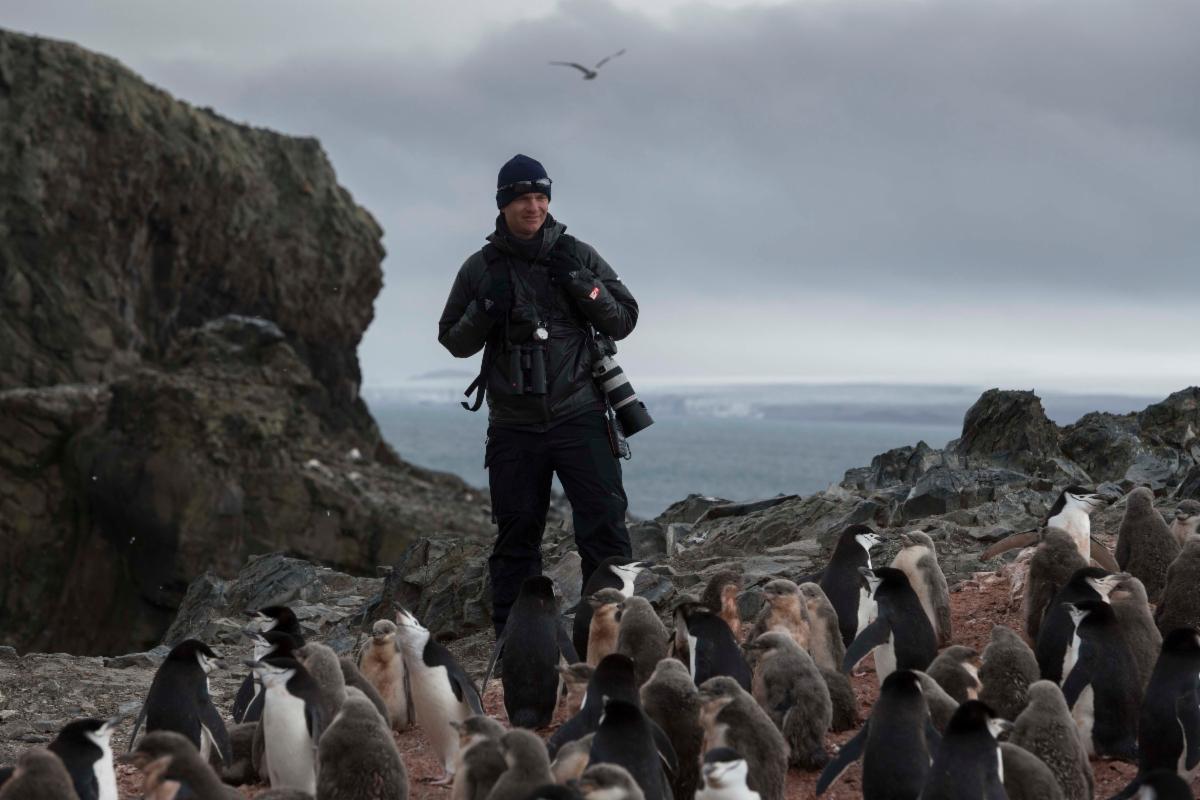
Noah with Chinstrap Penguins, Photo by Christian Aslund
Among Penguins: A Presentation for Children
Sunday, April 3, 2022, 3-4 PM
Challenger Learning Center, Downtown Digital Dome
200 South Duval Street,Tallahassee, FL, 32301
This program is free, but donations to cover Noah’s honorarium are greatly appreciated. There will be a donation box at the door, or you can make a donation via PayPal.
What is it like to spend three months in a colony of 300,000 penguins—with no fresh food or shower, living in a tiny tent in Antarctica?
Noah spins tales from the end of the world, delving into the things you don’t typically see on nature documentaries: thousand-year-old penguin mummies, how to catch a baby penguin, and the wonders of the pee bottle. Months after graduating with his undergraduate degree, in early November 2008, Noah was helicoptered into a remote Antarctic field camp as part of a long-term research study on Adélie Penguins. He soon found himself caught by the great allure of Antarctica—where life is distilled into necessities and incredible moments.
Birding Without Borders: An Epic World Big Year
Tuesday — April 5, 2022
Book signing: 6 PM
Talk: 7-8:30 PM
This is a hybrid event, both in person and online.
King Life Sciences Building, FSU
319 Stadium Drive, Tallahassee, FL 32304
Free parking in the Spirit Way parking garage or open lot; see map at the bottom of this newsletter. Follow the signs to the auditorium, which is accessed from the back entrance of the building.
This program is free, but donations to cover Noah’s honorarium are greatly appreciated. There will be a donation box at the door, or you can make a donation via PayPal.
|
|
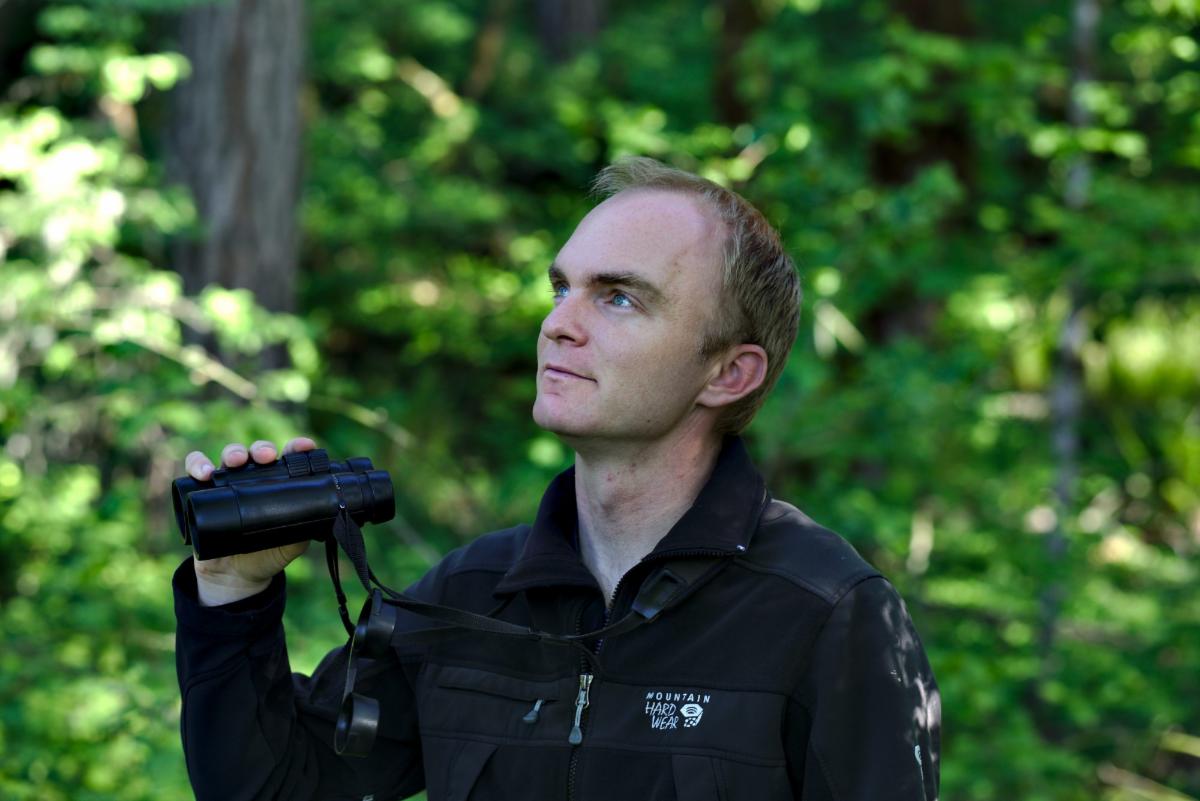
Noah Strycker
In 2015, bird nerd Noah Strycker of Oregon became the first human to see more than half of the planet’s bird species in a single, year-long, round-the-world birding trip. Anything could have happened, and a lot did. He was scourged by blood-sucking leeches, suffered fevers and sleep deprivation, survived airline snafus and car breakdowns and mudslides and torrential floods, skirted war zones, and had the time of his life. Birding on seven continents and carrying only a pack on his back, Strycker enlisted the enthusiastic support of local birders to tick more than 6,000 species, including Adelie Penguins in Antarctica, a Harpy Eagle in Brazil, a Spoon-billed Sandpiper in Thailand, and a Green-breasted Pitta in Uganda. He shared the adventure in real time on his daily blog (audubon.org/noah), and now he reveals the inside story. This humorous and inspiring presentation about Strycker’s epic World Big Year will leave you with a new appreciation for the birds and birders of the world.
|
|
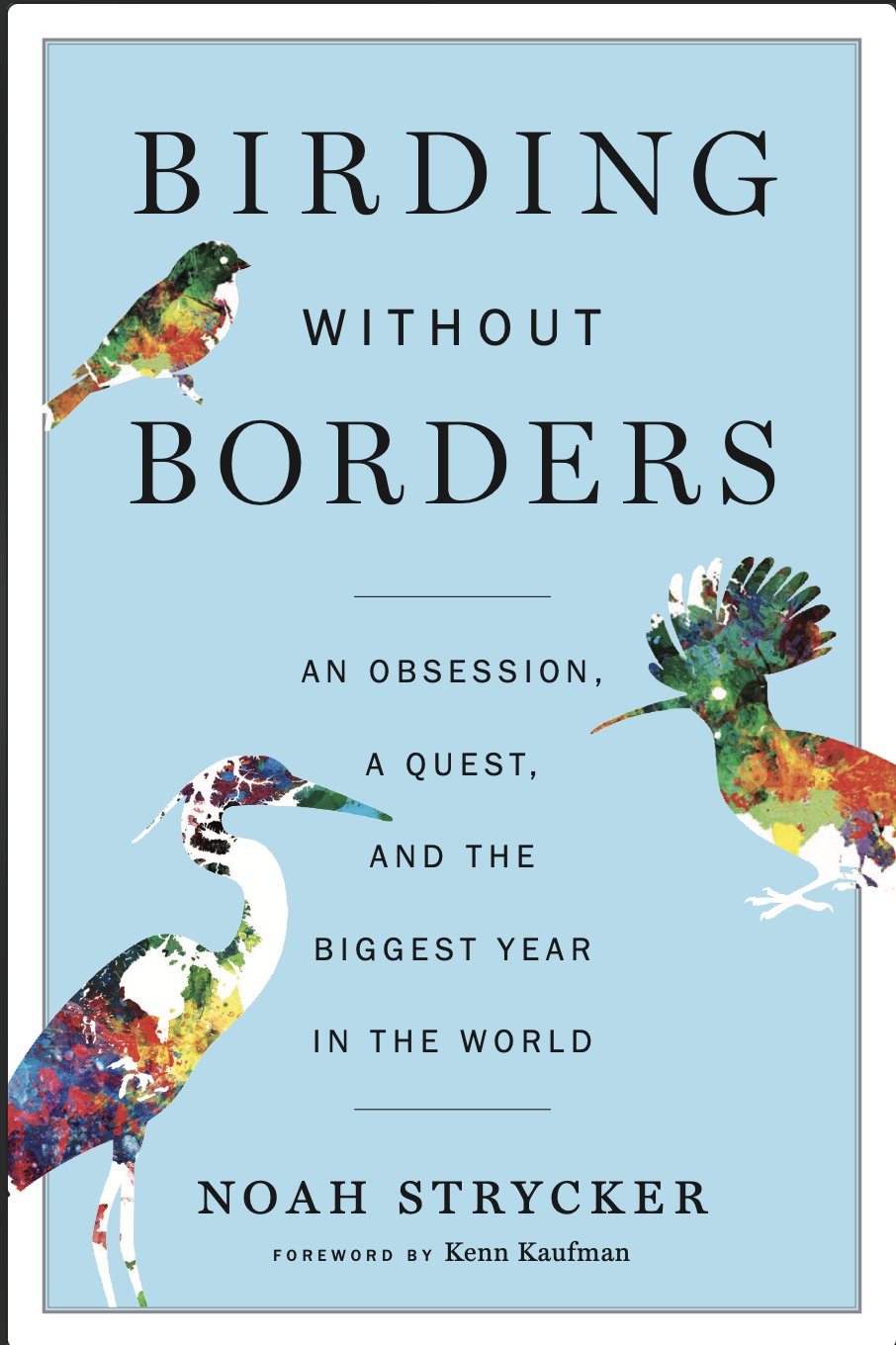
Birding Without Borders
We will have copies of Birding Without Borders: An Obsession, a Quest, and the Biggest Year in the World for sale ($15, tax included) before the event and we will have a book signing before the program. If you already have one of his books, you’re welcome to bring it for him to sign! NOTE: We will be unable to process credit card payments at the talk, so please bring cash or a check. Also, these books are being donated by one of our board members, so 100% of your purchase will go to the Apalachee Audubon!
|
|
Male Eastern Bluebird feeding its chick
Oaks, Inchworms, and Birds: with Dr. Bob Cooper
Thursday, April 21, 2022 at 7 PM
This program is being presented online.
This talk will explore the relationship between trees, insects and birds, exploring the ecology and threats to insectivorous forest birds.
Recently, a report in the journal Science estimated that there are approximately 3 billion fewer birds in North America than there were 50 years ago. A closer look at the data suggests that declines were largest among birds that are insectivorous at least during the breeding season. Alarming reports of drastic declines in insect populations also were published, although mostly from Europe, suggesting an additional link not mentioned in the Science article. Bob will talk about his research on bird-insect interactions that he and his students have conducted over a 30-plus year career. For more information about this talk and our speaker, visit the program webpage.
|
|
Upcoming Programs
Sunday, May 15: Potluck Picnic at Tall Timbers: Firebirds and the History of the Stoddard Bird Program with Jim Cox
|
|
Live Oak along a trail at Elinor Klapp-Phipps park
Spring Migration Field Trip to Elinor Klapp-Phipps Park
Sunday, April 24, 8:00 - 10:30 AM EDT
Address: 4000 N Meridian Rd, Tallahassee, FL 32312
NOTE: Our field trips are usually on the third Sunday of the month, but in April that falls on Easter Day, so it will take place on the 24th instead.
Description: The warmer weather brings along spring migrants. We'll bird one of the best migratory hotspots in the county to search visually and aurally for vibrant warblers, vireos, and thrushes. We'll also appreciate our feathered friends who are already well into breeding season and those that will be starting toward the end of spring. Meet in the trailhead parking for Millers Landing by the soccer/athletic complex at 8:00 AM EDT. Field trip leader TBD.
|
|
Avian Influenza in North Florida |
|
Lesser Scaup Ducks like these appear to be highly susceptible to HPAI. Photo by Andy Wraithmell, FWC
If you are not already aware, on March 21, St. Francis Wildlife issued an announcement that they temporarily would not be accepting any birds to their facility because of an outbreak of a highly contagious and untreatable strain of bird flu in Florida, including Leon County.
If you have bird feeders in your yard, be aware that you should be extra diligent in handling and cleaning them. While there’s no apparent spread to humans, keeping your feeders clean will help reduce the spread of the virus amongst birds.
Press Release: March 21, 2022
Subject: Because of Highly Pathogenic Avian Influenza (HPAI), St. Francis Wildlife Is Temporarily not Accepting Injured, Orphaned or Sick Birds.
HPAI has just been confirmed in an injured Lesser Scaup duck that was found in Tallahassee and brought to St. Francis Wildlife’s wildlife hospital in Quincy, Florida.
During the last two months, confirmed and presumptive cases of HPAI have recently been documented along the East Coast of Florida from Palm Beach County to Duval County and on the West Coast in Charlotte County. Infected birds have been aquatic species (ducks, gulls, herons, terns and pelicans), raptors (great horned owls and bald eagles) and scavengers (vultures). Birds on their northern spring migration may have carried the virus into our area.
Some infected birds may be asymptomatic while others appear lethargic or show neurologic symptoms such as circling, tremors and seizures. Often birds are found dead with no signs of trauma or other causes.
Because HPAI is highly contagious and untreatable, St Francis Wildlife and our two Tallahassee veterinary partners, Northwood and Allied Veterinary Hospitals, are temporarily not accepting any wild birds.
If you find a bird in need of assistance, call FWC Dispatch: 850-245-7716 or FWC 24 Hour hotline: 888-404-3922. To prevent the spread of HPAI, do not handle a sick or dead bird, keep pets away and report it to FWC immediately so it can be tested for HPAI: https://app.myfwc.com/FWRI/AvianMortality/
|
|
Parking at the King Life Sciences Building |
|
|
|
|
|
|