|
Day 24, Sunday, December 3
GAUDI'S BARCELONA
We tried to get going a bit sooner this morning and with some success. By the time we had our Irish crème whisky coffee, some baguettes with brie and chorizo, took a hot shower in a cold shower room, and got all four of us coordinated and out the door, it hadn’t even reached 11 am – in fact, we hopped on the L95 bus at 10:59 for Plaça de Catalunya, Barcelona’s downtown hub.
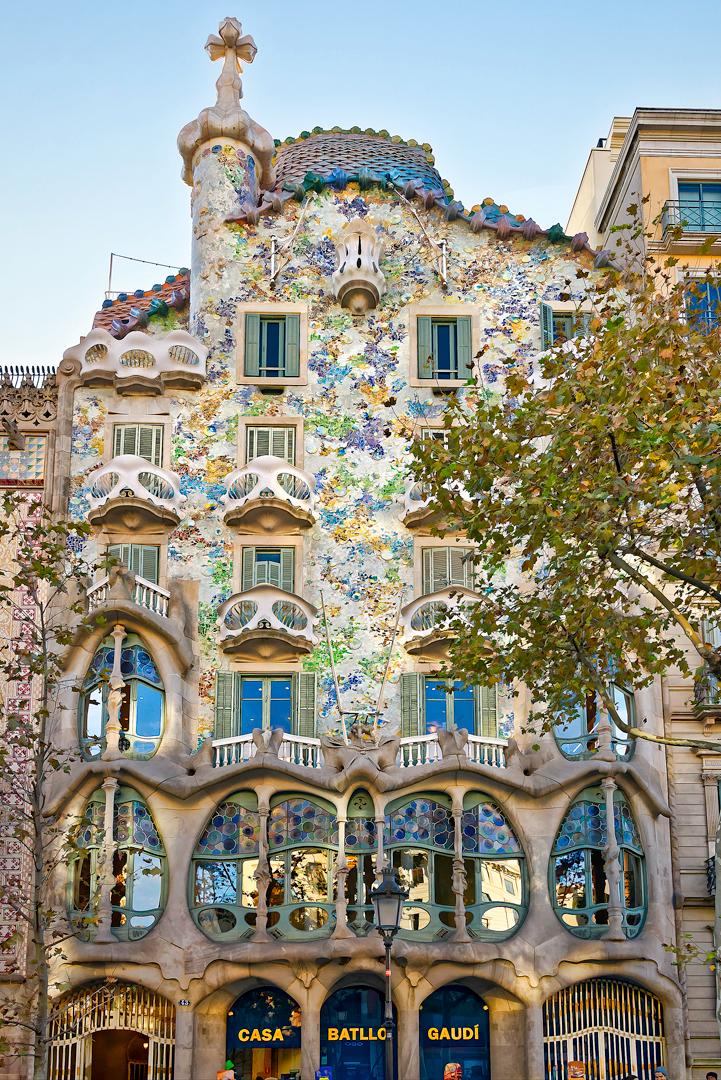
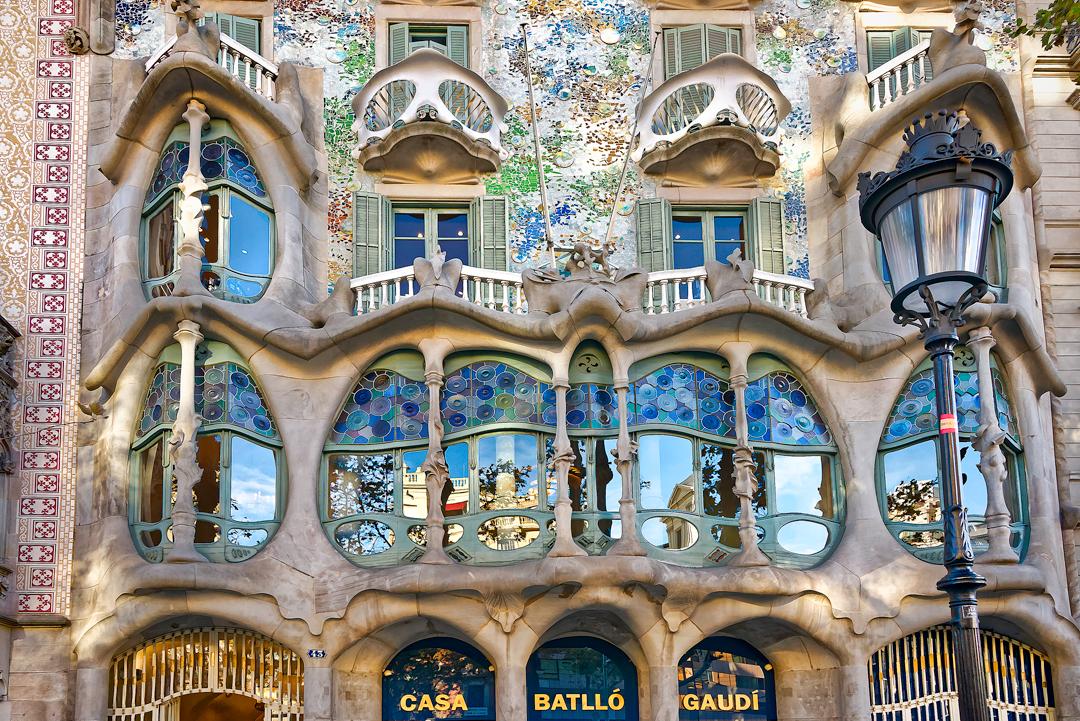
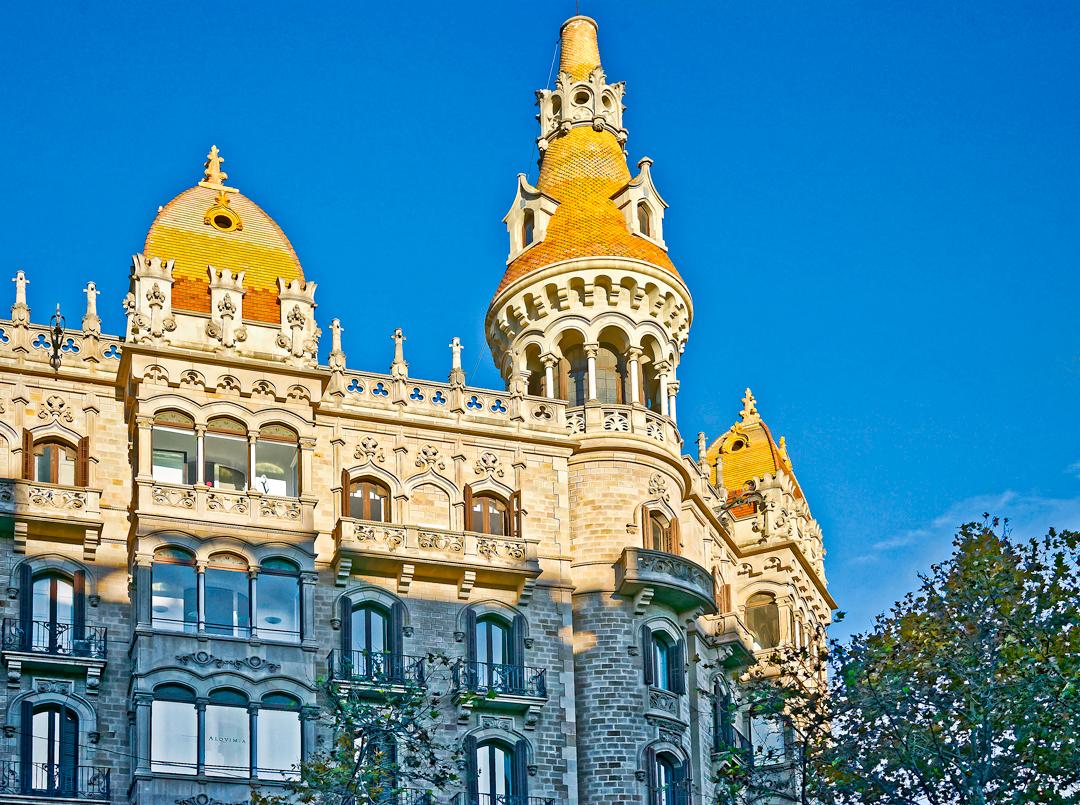
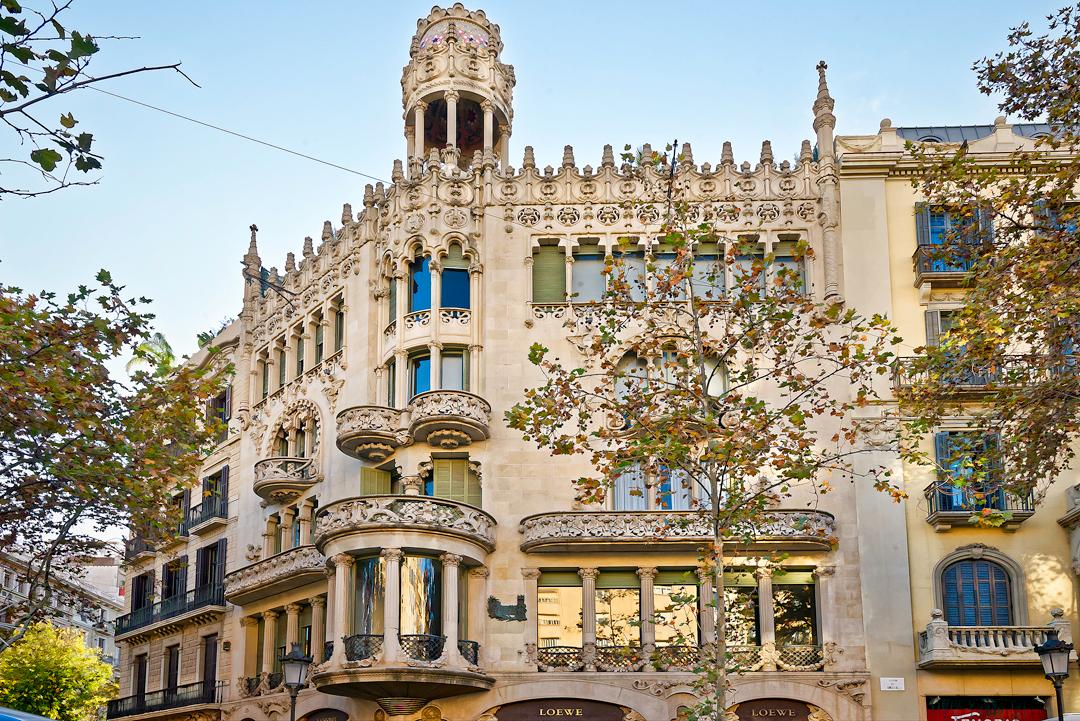
Our primary mission was to get our Montserrat tickets. My personal goal was to check out some Gaudi buildings. Gaudi, a famous Barcelonan architect from the late 1800s and early 1900s, was way ahead of his time and is still ahead of his time. His ageless and unique style is arguably the most wonderful architectural style of all time.
After the L95 bus dropped us off, we crossed the street and took the L1 subway to the train station underneath Plaça de Espanya, where we found the Montserrat ticket office. It ended up costing us 20 Euros each for the round trip 1½-hour train ride through the mountains to Montserrat plus the tram up a mountain to the monastery. I know nothing about Montserrat except that Diane promises it to be yet another awesome village to visit.
A quick note on Plaça de Espanya: This is a huge plaza ringed by an oval stadium, incredible buildings, and centered with a large and beautiful combo statue/fountain. Picking out Barcelona plazas (plaças) is a fun tourist trick.
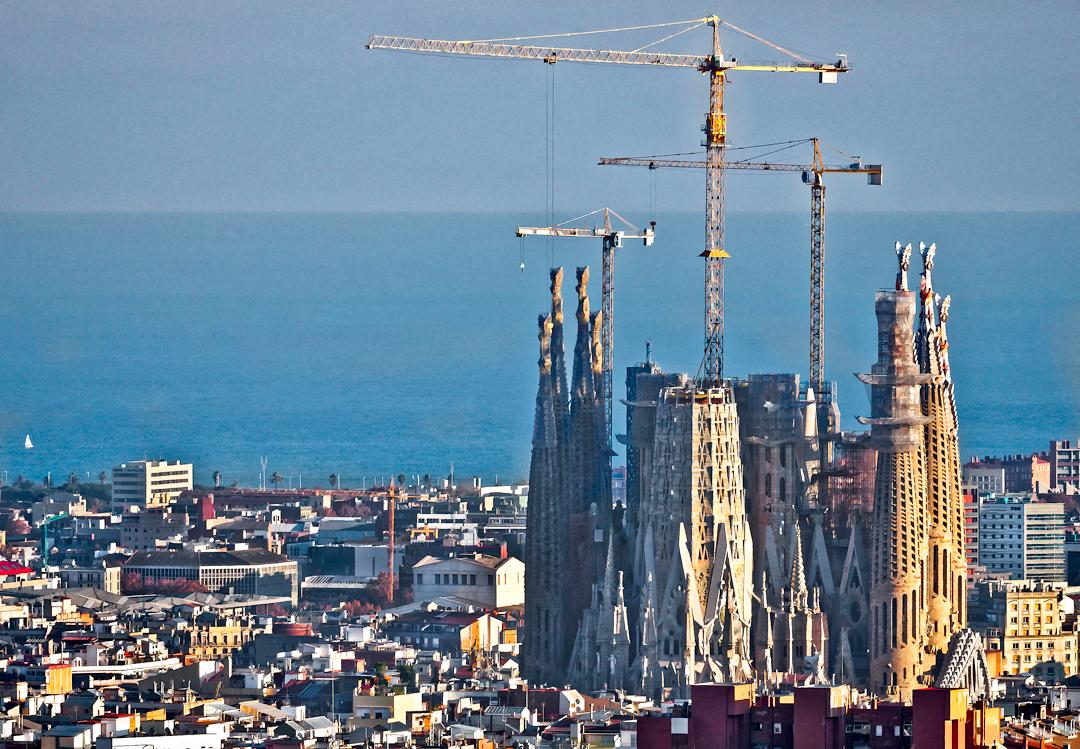
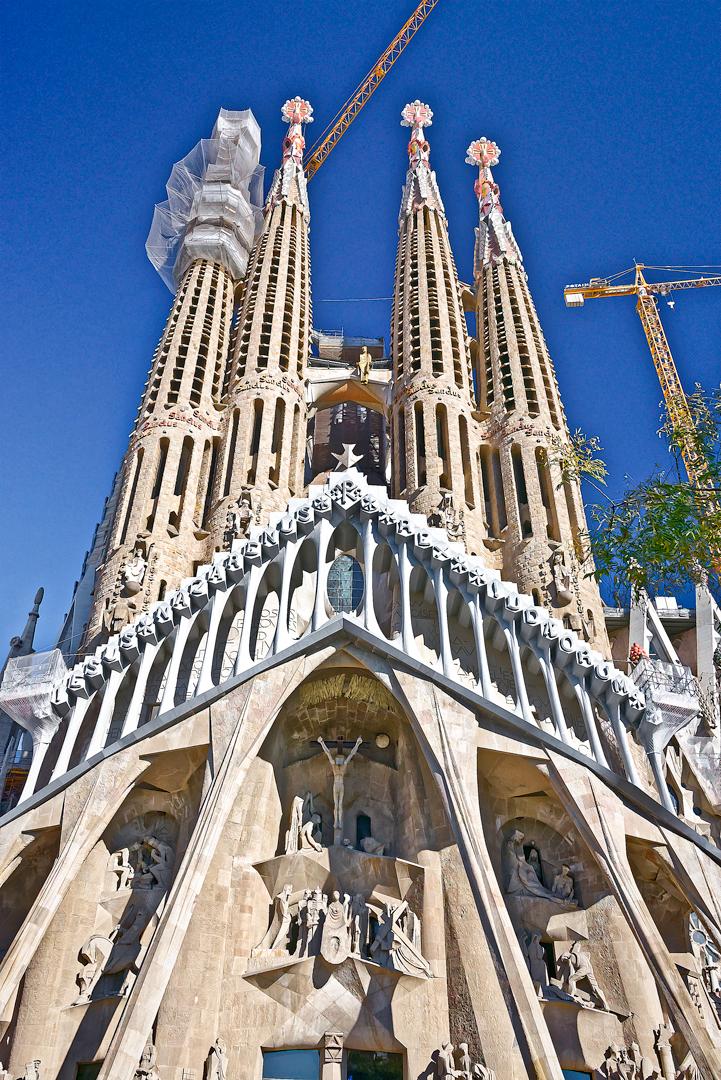
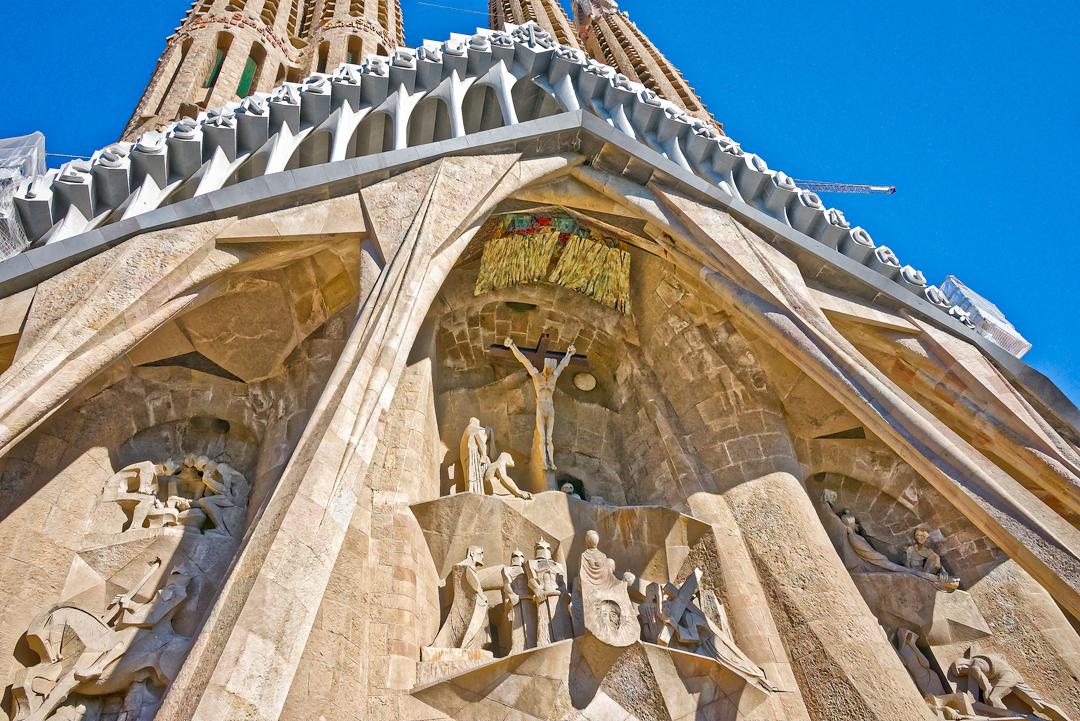
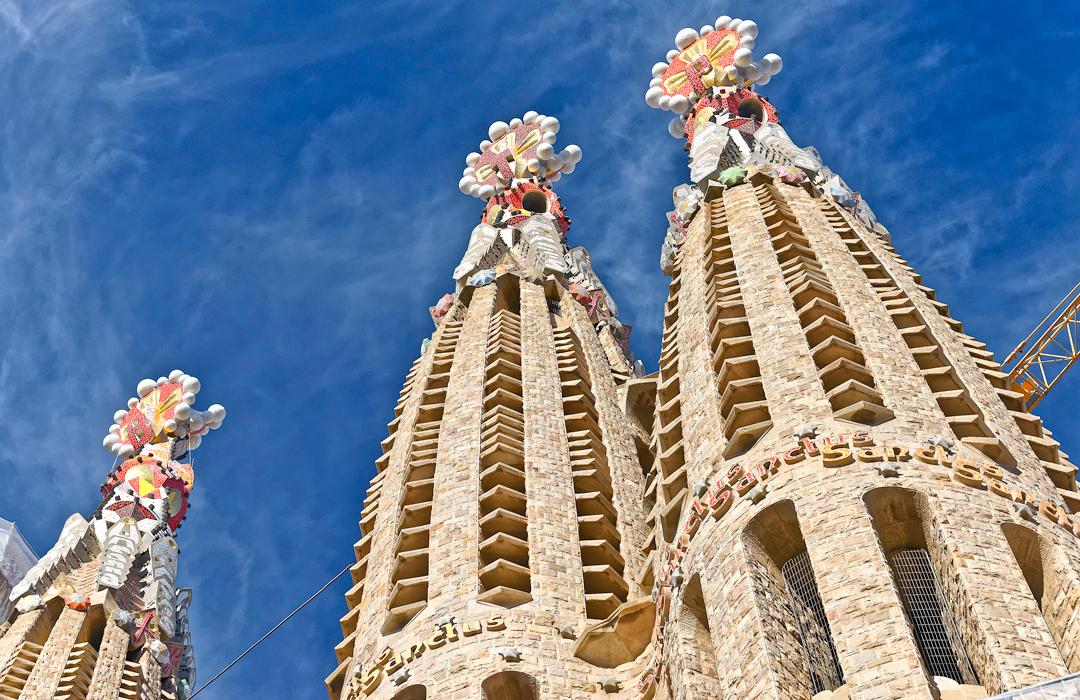
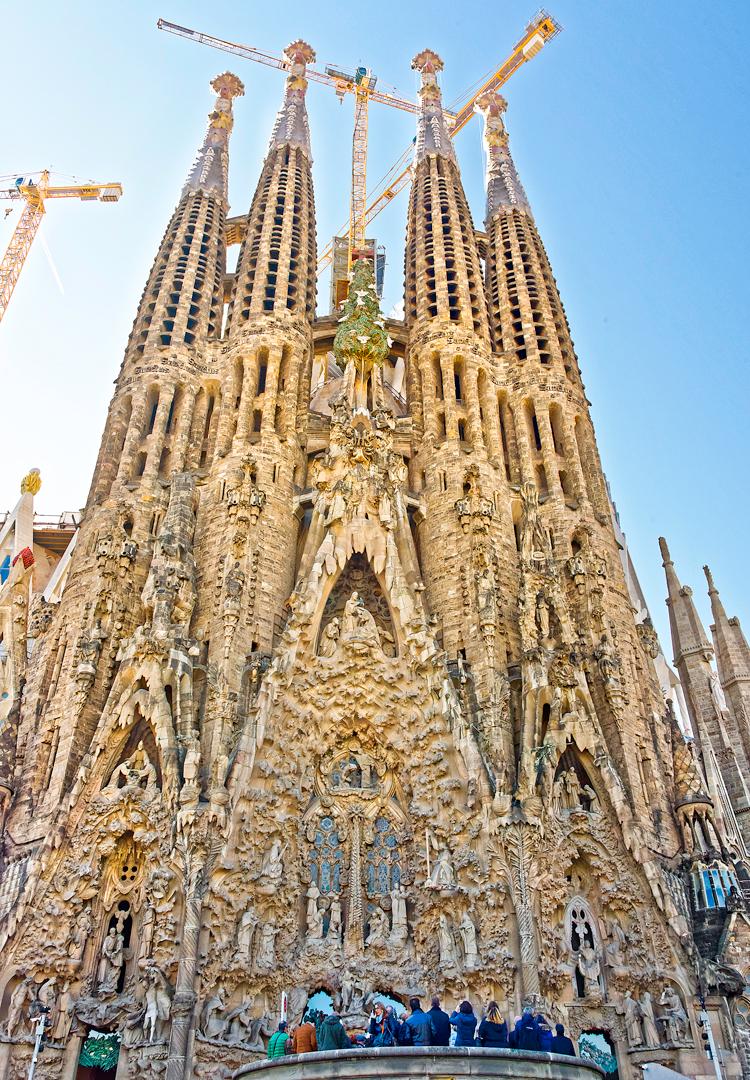
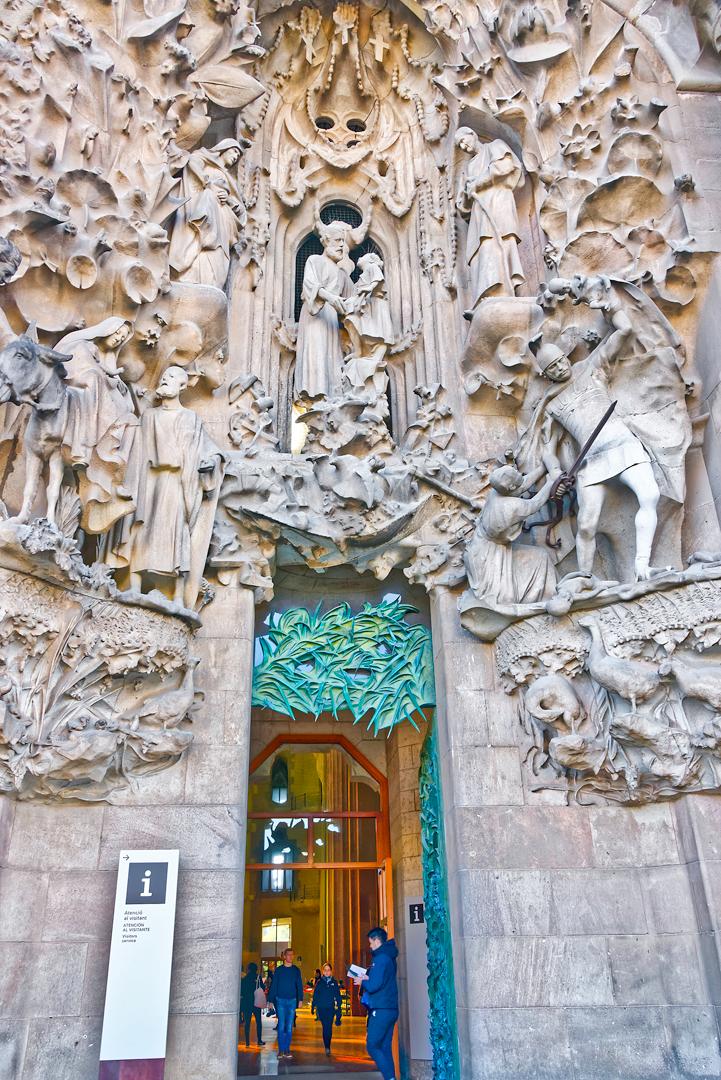
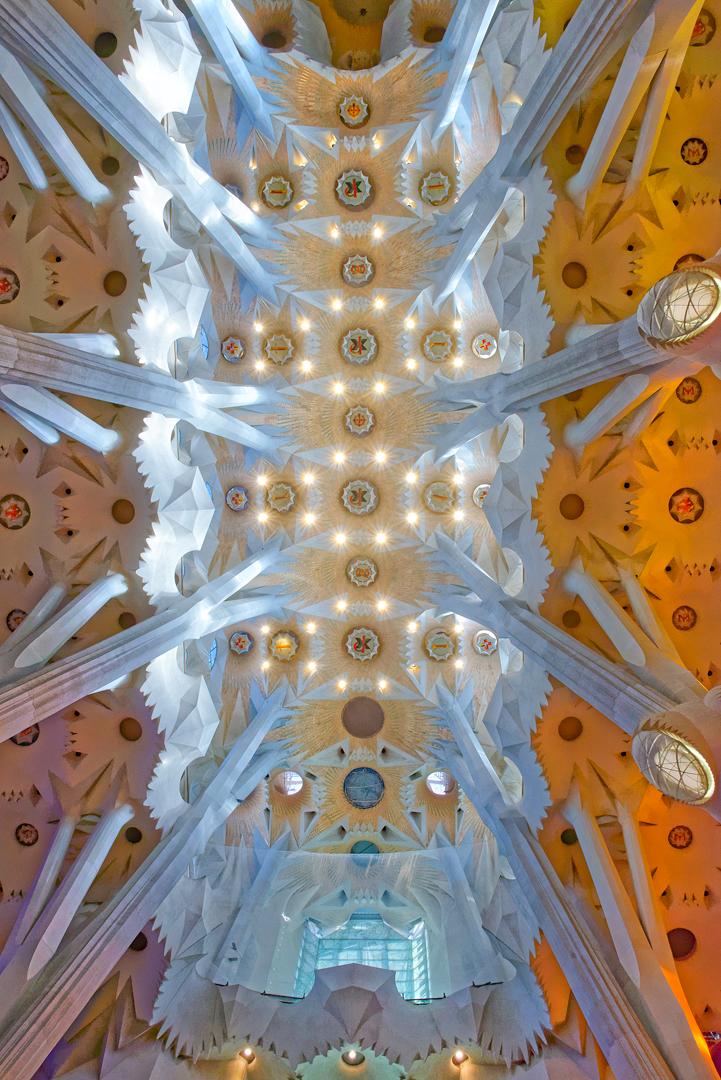
With our tickets tucked in our pockets, we took the L1 in the opposite direction to check out the Sagrada Familia, the grand cathedral designed by Gaudi. Gaudi designed a lot of stunning buildings, but the Sagrada Familia is his crowning achievement. It was started in 1886 but isn’t scheduled for completion until 2026. Fortunately for us, the entire inside is done, and the lion’s share of the exterior is completed.
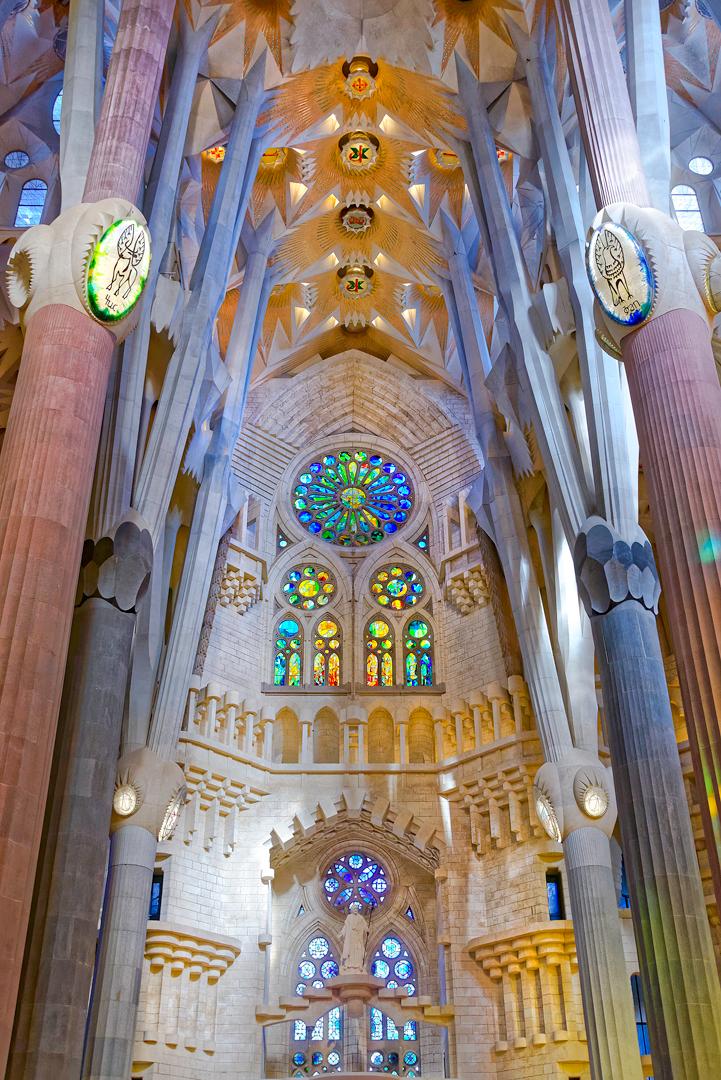
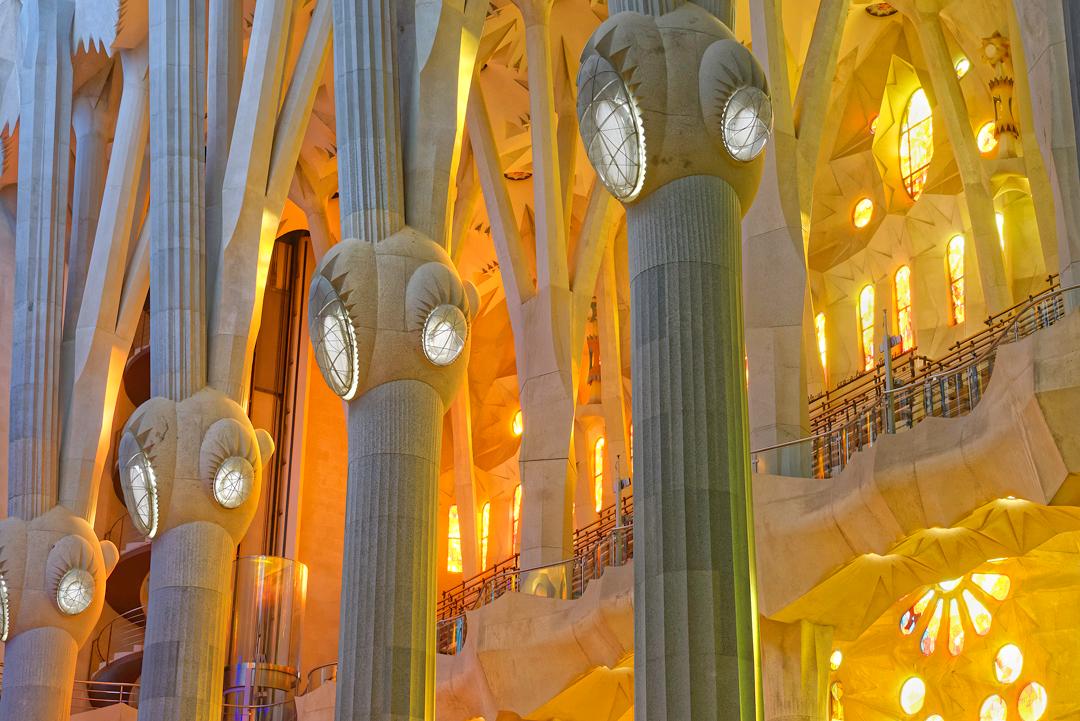
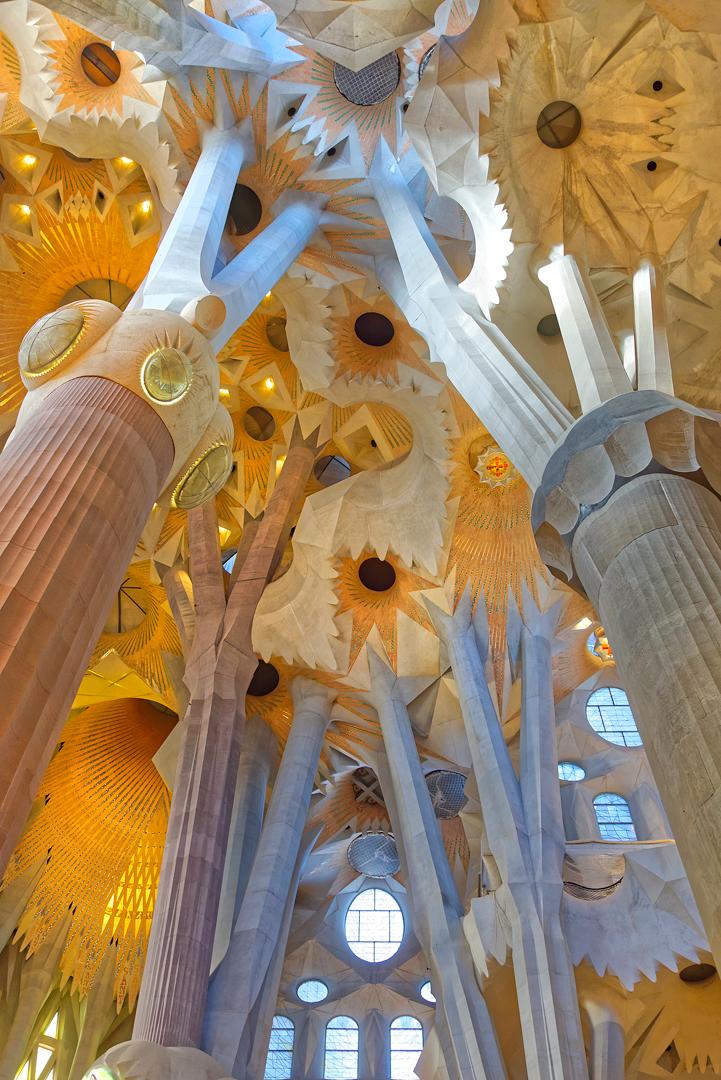
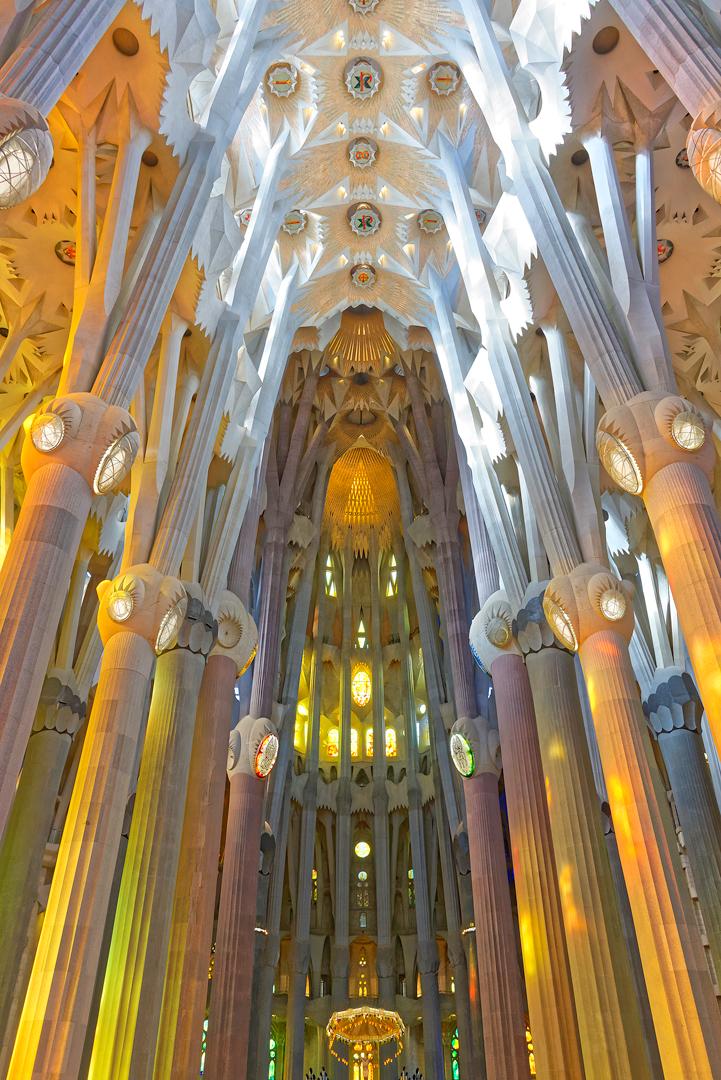
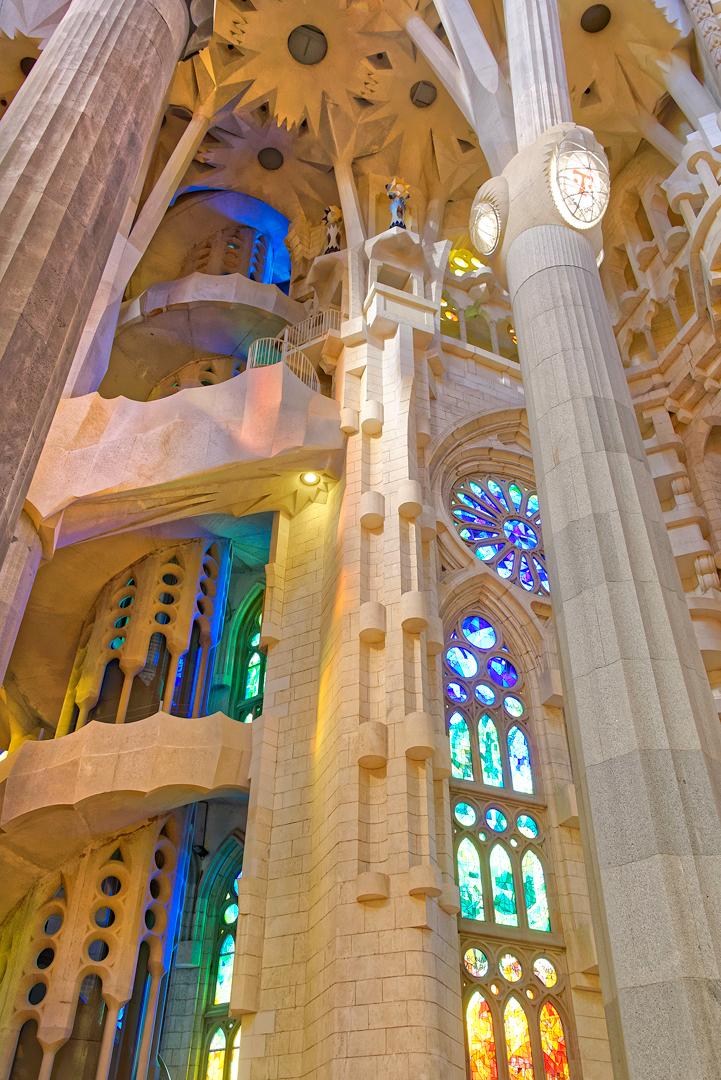
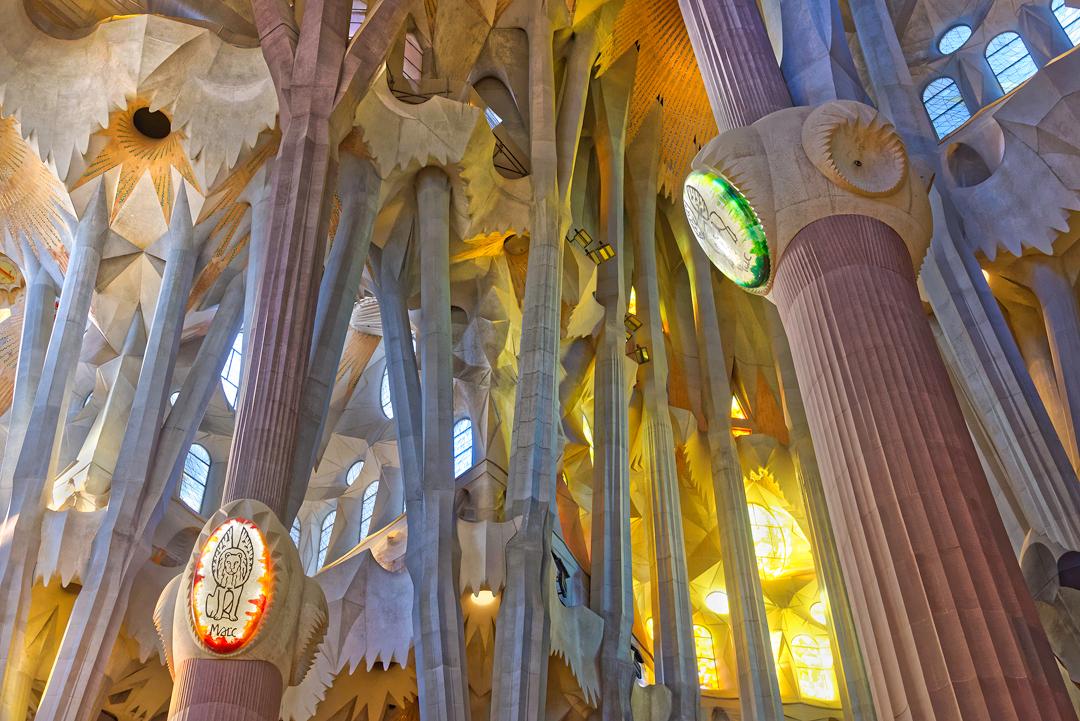
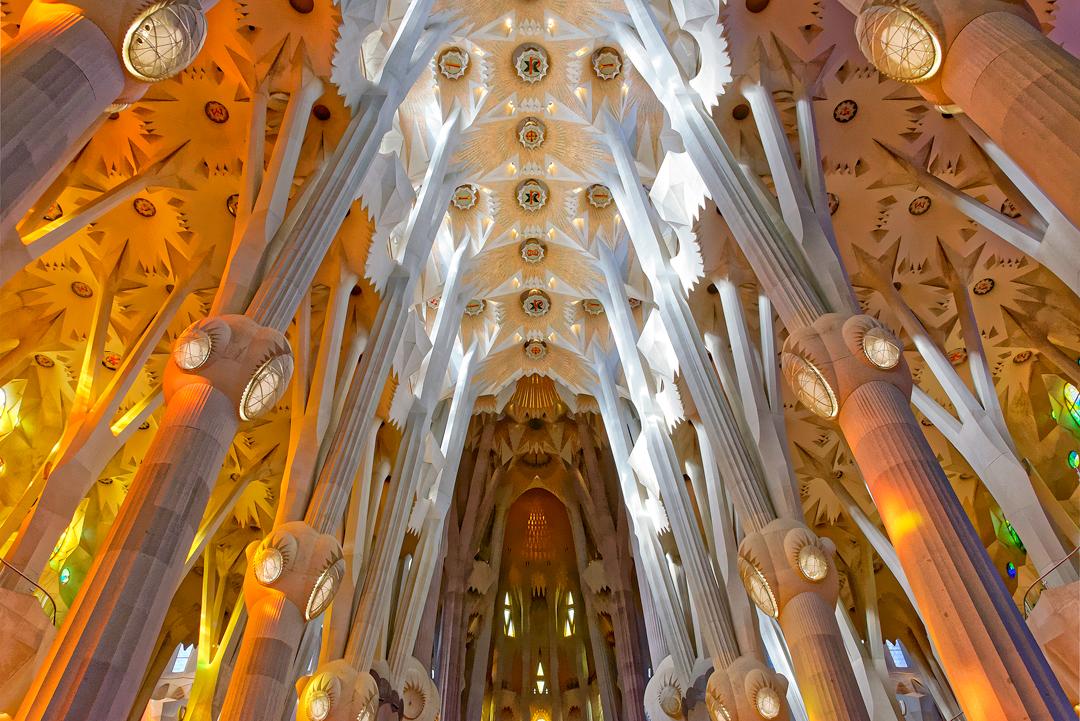
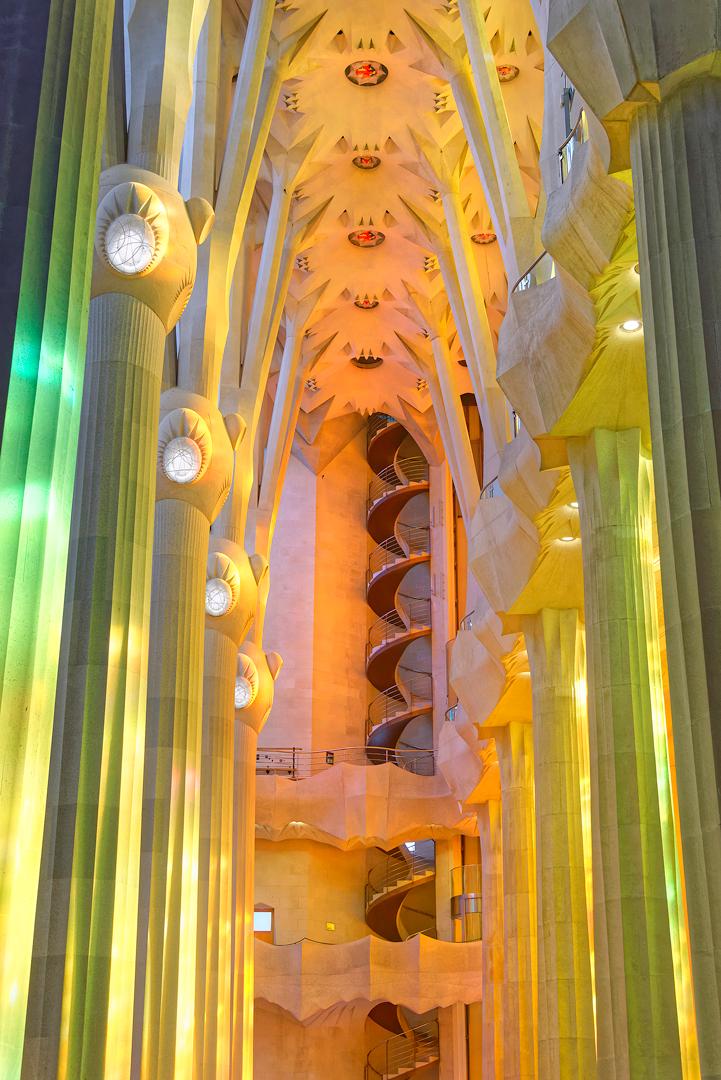
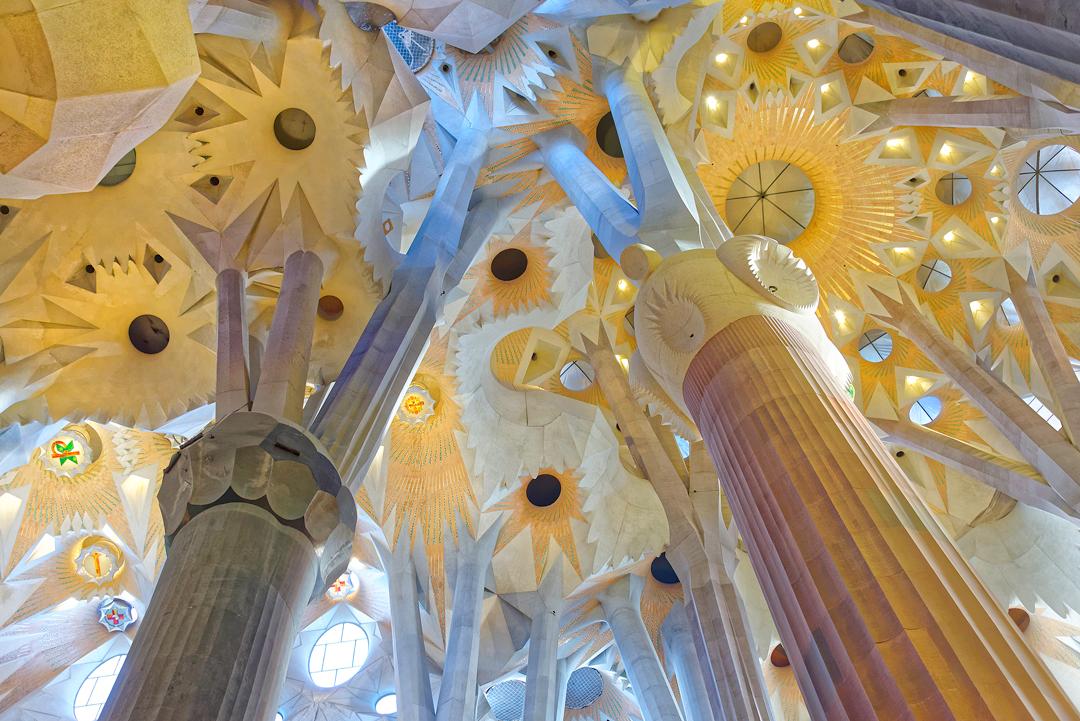
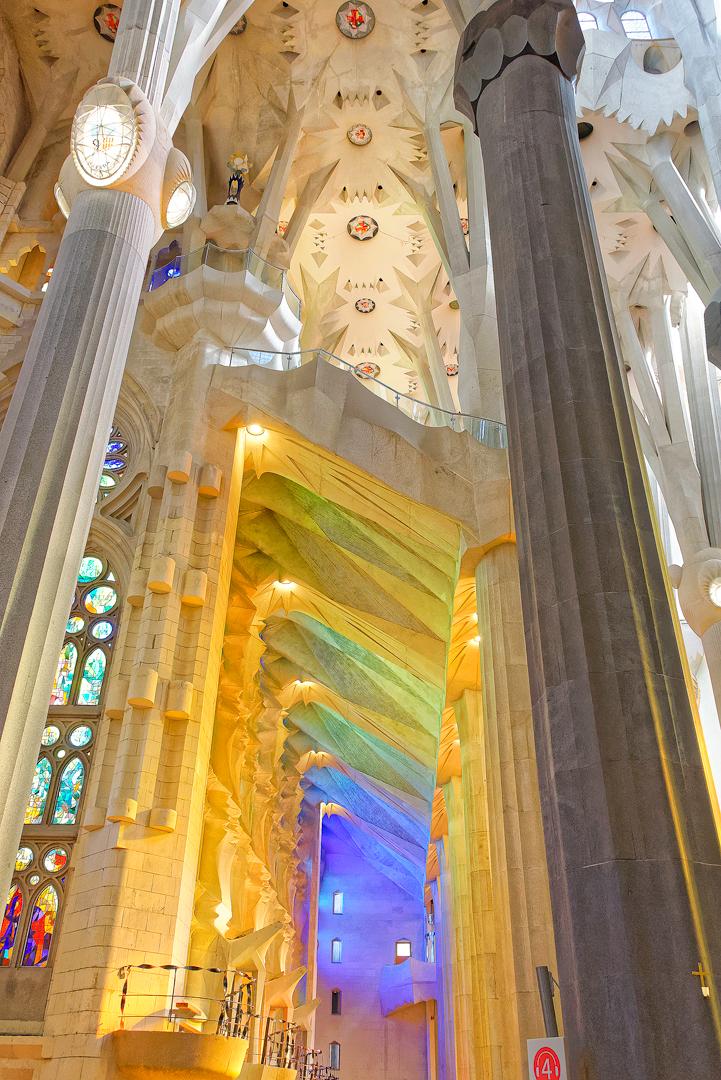
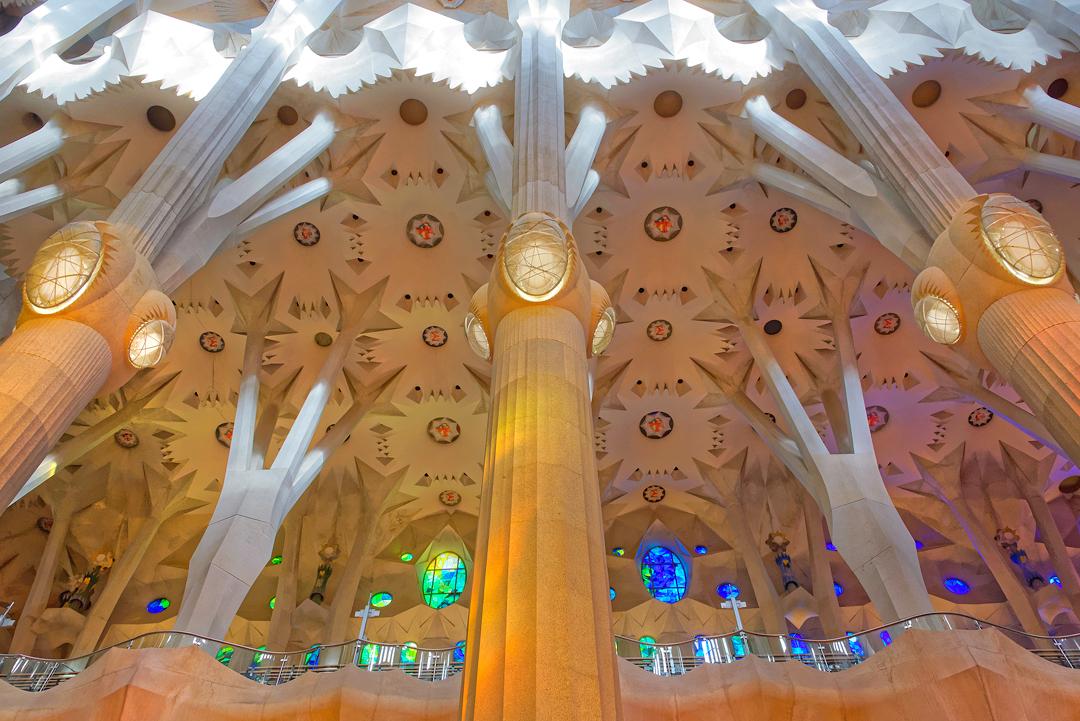
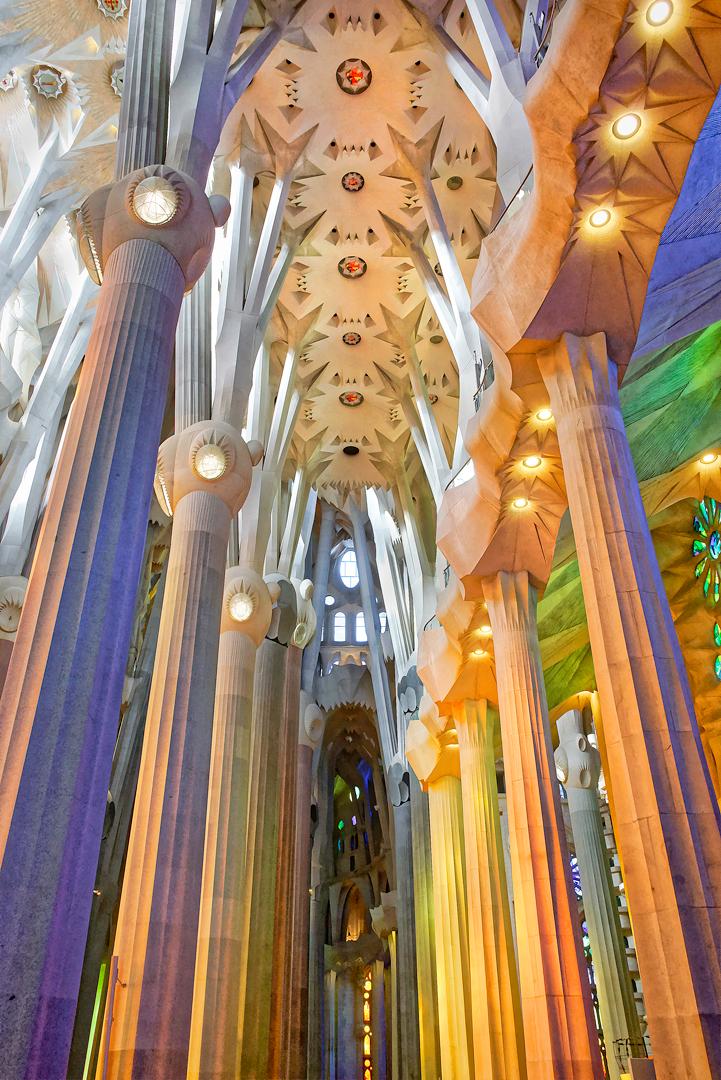
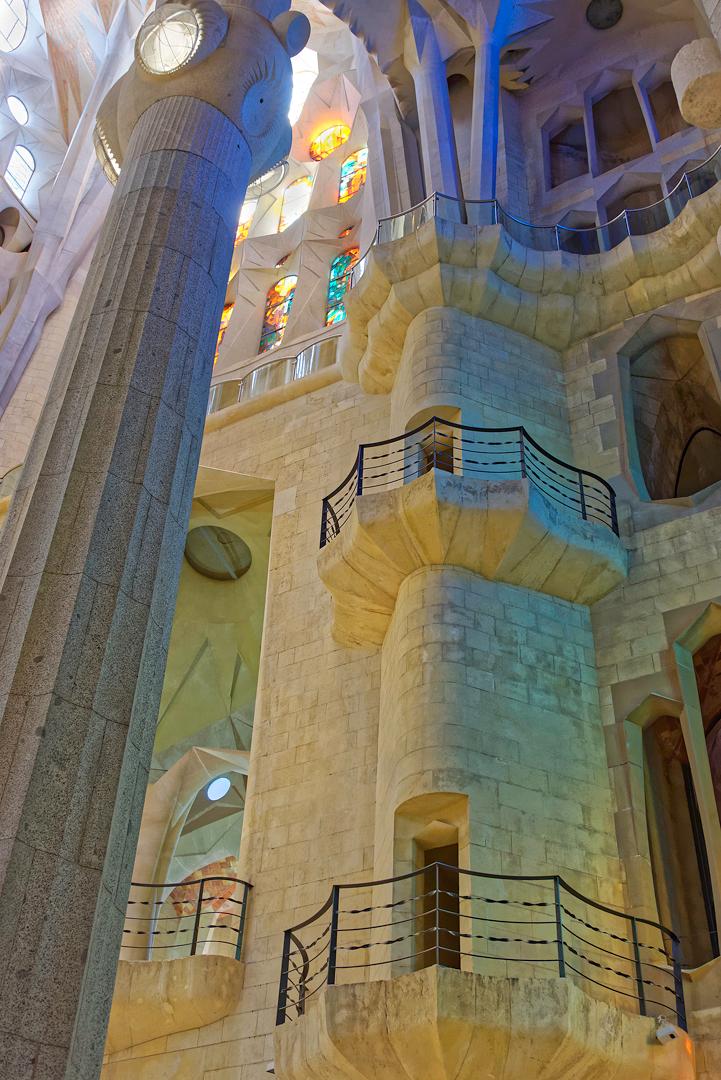
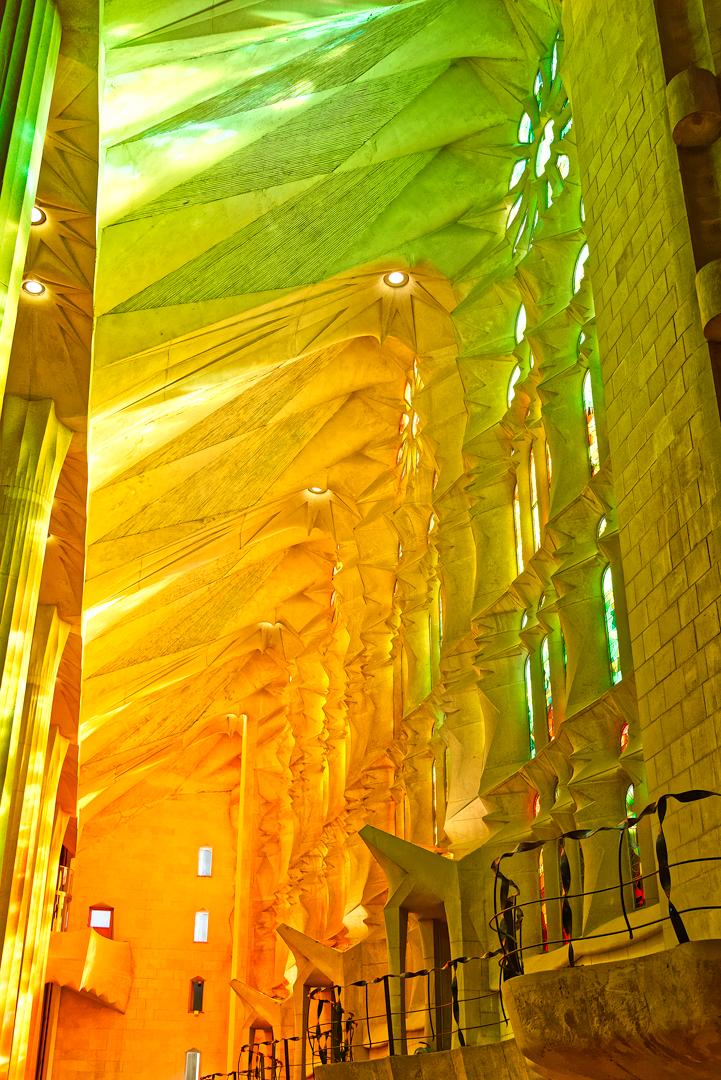
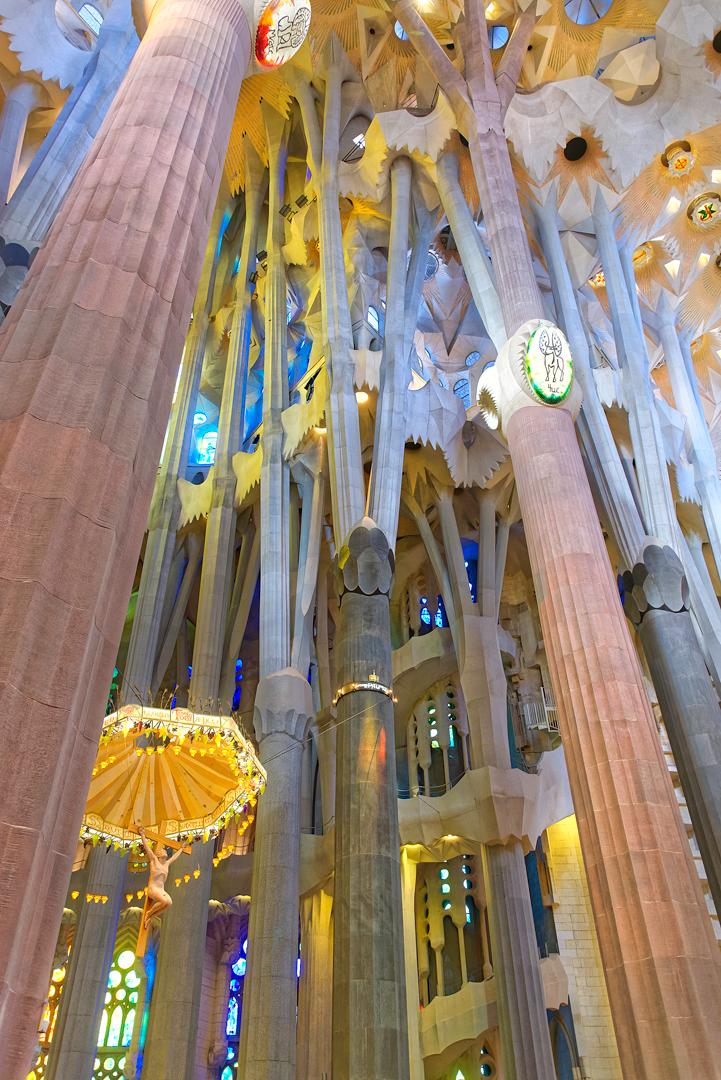
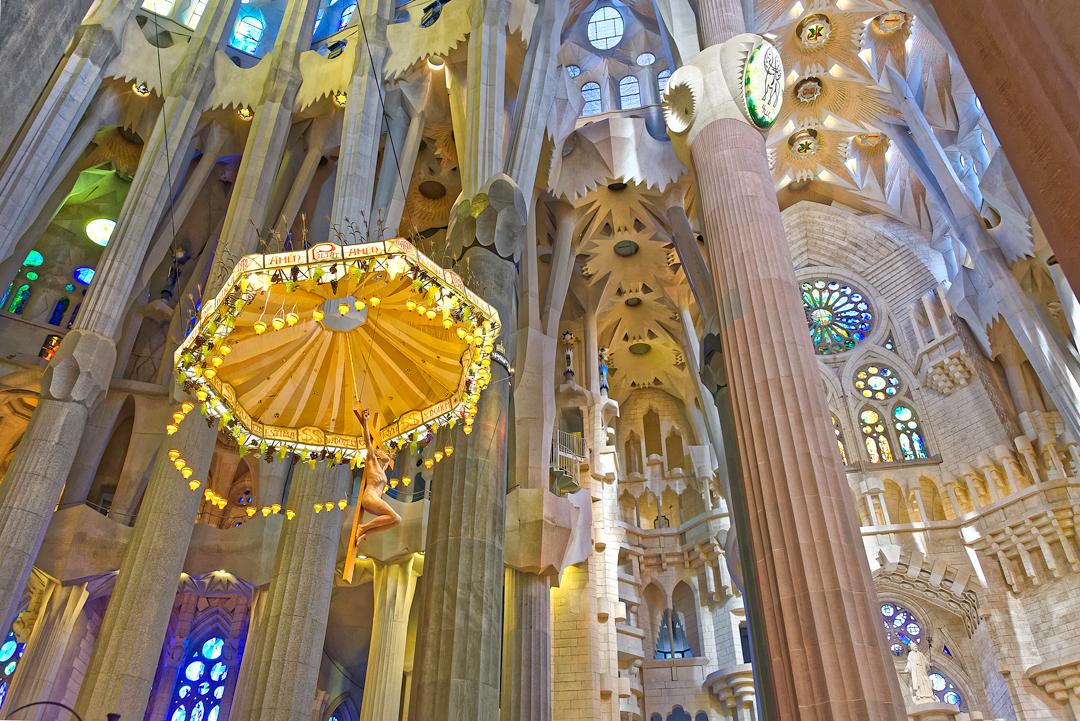
This being our second European exploration trip, Diane and Heinrich have given me many ‘highlights of my life’ experiences. Amsterdam was amazing. Climbing the mountain above Ludwig’s Castle to get that quintessential photo is another. Who could forget flying in a delta-wing ultralight airplane over old East Germany? The Alhambra and all of Granada, the Mosque-Cathedral of Cordoba, the medieval time warp of Albarricin, and the beauty of the surrounding mountains are all permanently etched in my brain. But the Sagrada Familia is different. The space that Gaudi designed is transformative. Although it is, technically speaking, a cathedral, the awe it produced had nothing to do with religion or piety. This was stepping onto another planet, entering into another plane of existence, and experiencing another dimension.
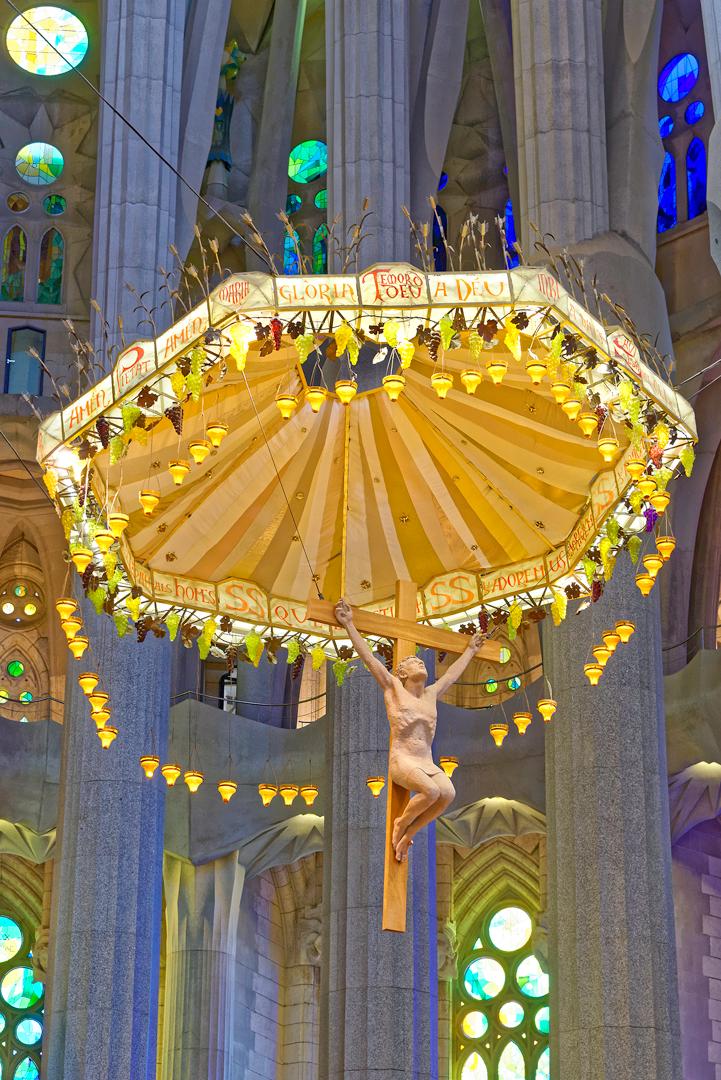
All European cathedrals have tall giant columns that soar into space to hold up a beautifully carved or painted ceiling. Gaudi’s columns are not exactly columns. They are giant curving sea creatures in a wonderfully colorful coral reef with beautiful, otherworldly coral structures forming a huge community of strange shapes. Everything – stairways, arches, platforms, windows, doors, are all shaped to disappear into seemingly hidden dimensions, making them nearly unrecognizable from what they are supposed to be. The play of color is spectacular – blues, reds, and oranges are all perfectly blended and shimmering. It isn’t ornate; there aren’t gold statues, or delicately carved sculptures, or religious paintings. This is form, shape, and color at its fundamental purist. Wow, what was Gaudi on? I’ll take two of them.
|