September & October, 2026 | | |
Kabiri, S., Kavussanu, M., & Ngo, F. T. (2026). Shadows of competition: Unraveling the effects of Dark Triad and moral emotions on antisocial behaviour in Iranian male football players. International Journal of Sport and Exercise Psychology, 1–21. https://doi.org/10.1080/1612197X.2026.2716004
Kamar, E., Jordan, H. C., Pieri, Z., & *Smith, K. (2026). From code to contact: Developmental and clinical correlates of minor-directed sexual offending in a sample of verified hackers. Crime & Delinquency. https://doi.org/10.1177/00111287261473214
Ngo, F. T., Kim, Y.*, Govindu, R., & Agarwal, A. (2026). Examining police responses to stalking and their effectiveness using national data. International Journal of Police Science & Management, 28(2), 98–112. https://doi.org/10.1177/14613557261447770
*Denotes student or former student
| | |
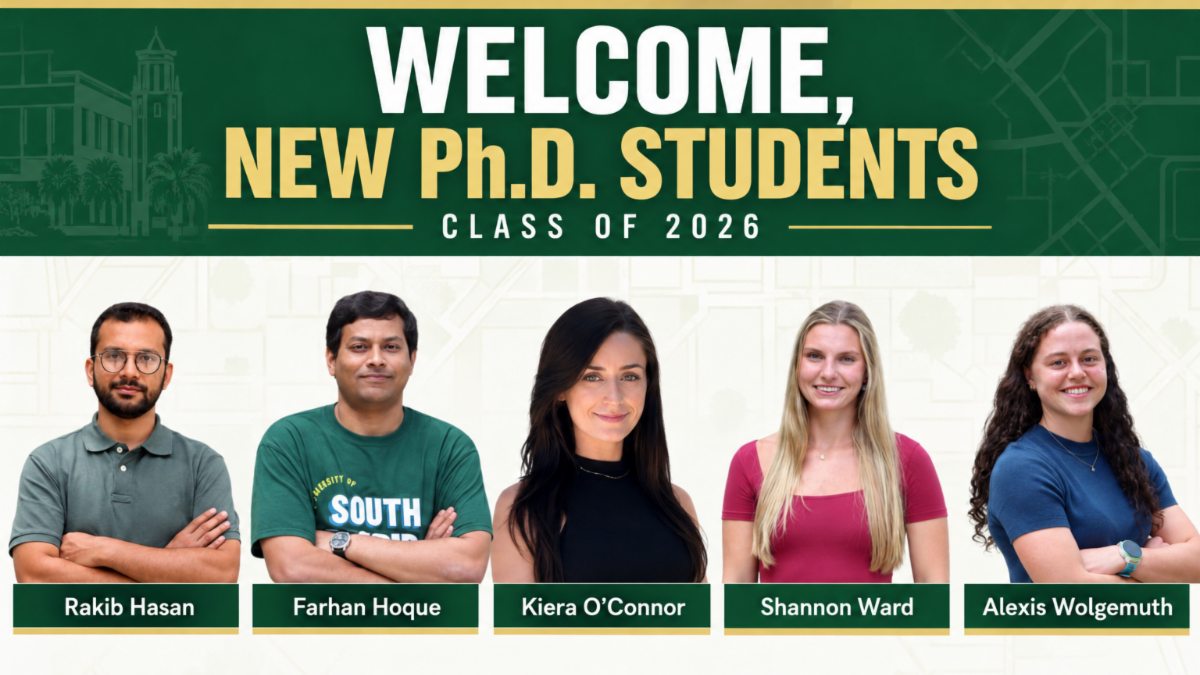
Please join us in welcoming five new doctoral students to the USF Department of Criminology!
Rakib Hasan earned his M.S. in Criminal Justice from the University of Louisiana at Lafayette. His research interests include spatial criminology, fear of crime, and the relationship between communities and crime.
Farhan Hoque earned his M.A. in Criminology and Criminal Justice from the University of Nebraska Omaha. His research interests include reentry, rehabilitation, labor trafficking, and juvenile justice.
Kiera O’Connor earned her M.A. in Criminology from the University of South Florida. Her research interests include reentry and reintegration, criminal-record stigma and redeemability, collateral consequences, employment discrimination, fair-chance hiring, and access to reentry resources and social support.
Shannon Ward earned her M.S. in Criminology and Criminal Justice from Florida Atlantic University. Her research interests include offender decision-making, violence, and criminal behavior.
Alexis Wolgemuth earned her M.S. In Criminal Justice from Marshall University and is interested in developmental and life-course criminology, gender and criminological theory, individual differences, and mixed-methods research.
We are excited to welcome Rakib, Farhan, Kiera, Shannon, and Alexis to the USF Criminology community and look forward to seeing all they accomplish!
| | |
| On the International Stage | |
| |
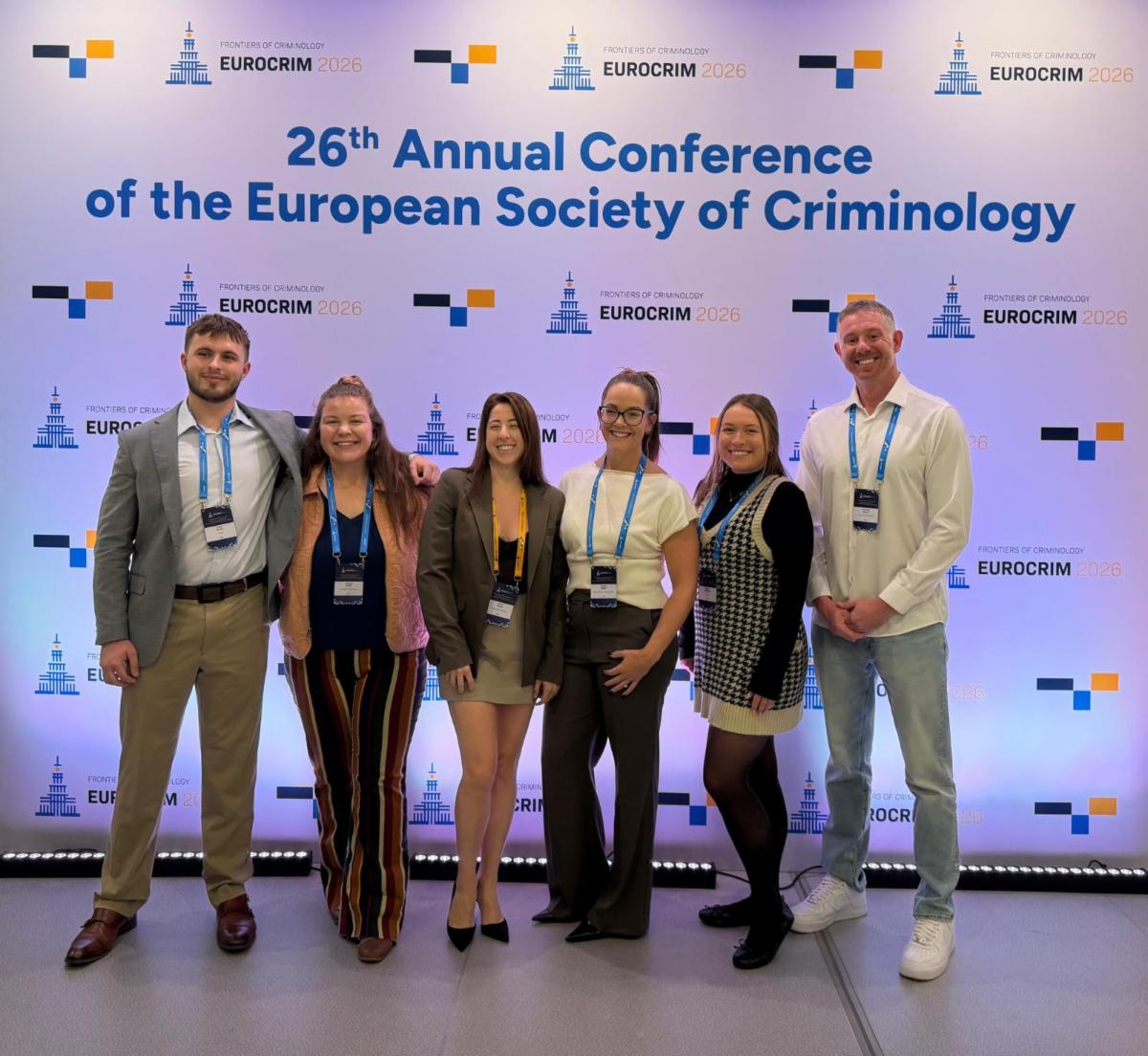
USF Criminology was proud to participate in this year’s European Society of Criminology / Association Europeenne de Criminologie in Warsaw, Poland!
Our team presented research on hackers and the broader cybercrime landscape to an international audience. The conference provided a valuable opportunity to share our work, connect with fellow cybercrime scholars, and represent our department on the global stage.
Congratulations on the successful event!
| | |
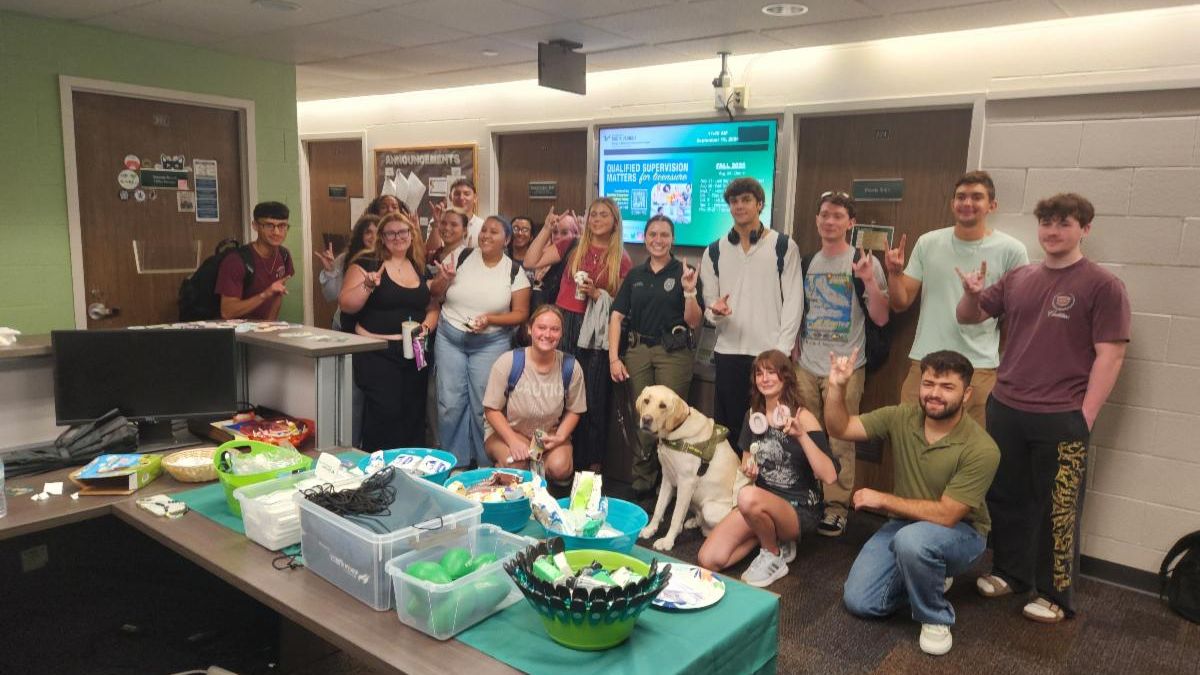
Criminally good time at the Ice Cream Social
Thank you to all of our Criminology students, faculty, and staff who joined us for ice cream, USF CBCS swag, and some much-needed time with Star, the therapy dog!
The event gave students an opportunity to connect with one another and meet Officer Amanda Brake, a USF Criminology alumna, and Officer Frost while learning more about careers in law enforcement.
A special thank you to the College of Behavioral and Community Sciences and Patty Harrison for making this event possible, and to Samantha Dlugi for her assistance in bringing everything together.
We also appreciate Officers Brake and Frost, along with Star, for taking the time to connect with our students and be part of our Criminology community.
Thank you to everyone who helped make the event a success. Go Bulls!
| | |
Southwest Florida Coalition Against Human Trafficking hosts symposium
The News-Press
"Shelly Wagers, an associate professor of Criminology at the University of South Florida and director of the BRIGHT Project, speaks during the Southwest Florida Coalition Against Human Trafficking Symposium Thursday, July 30, 2026, in Fort Myers."
TPD chief reflects on career ahead of retirement
FOX 13
"He has been an adjunct professor at USF for the last five years, but now he'll join USF full time to coordinate the Masters in Criminal Justice program, something he is very passionate about and in fact, his first day on the new job is on Friday."
A fake wi‑fi network appeared on a plane. Then Delta declared an in‑flight emergency.
Inc.
“Passengers connect because there is no way to distinguish a legitimate network name from a fake one just by reading it off the list. If the real network is being jammed, that is typically a de-authentication flood, which knocks devices off the authentic connection so they reconnect to whatever is left,” Tom Hyslip, assistant professor of criminology at the University of South Florida, told me."
Passenger creates unauthorized Wi-Fi network aboard Delta flight from Las Vegas to Atlanta
CBS News
"'Someone will make a small pocket hotspot where they broadcast it, and they try to get a real WI-FI hotspot,' said Thomas Hyslip, PhD, assistant professor of criminology."
Those shock gloves ICE plans to buy can bring strong men to their knees in less than a second
Los Angeles Times
"'Equipping an agency embroiled in controversy over its occasionally fatal enforcement practices with 'sci-fi' technology will likely cause the public to make further efforts to evade ICE agents, instead of becoming more compliant,' said Bryanna Fox, criminology professor at the University of South Florida and former FBI agent."
Florida database breached; Incident not ongoing, state agency confirms
WCTV
"Prior to the breach’s confirmation, University of South Florida Cybercrime Professor Thomas Hyslip said the reports appeared credible."
Florida driver license breach exploited police department employee’s personal device, FLHSMV says
WCTV"Cybersecurity professor Thomas Hyslip said keeping a login on a personal device raises security risks because those devices are much easier to breach than government computers."
Thousands of Florida driver licenses stolen, hackers say
WCTV Eyewitness News
"According to Assistant Professor Thomas Hyslip, it's not uncommon for victims to stay quiet for now."
Jacksonville Sting Nets 18 Men Waiting for Sex Acts at Local HotelJacksonville Sting Nets 18 Men Waiting for Sex Acts at Local Hotel
Hoodline
"A July 2025 report by the University of South Florida estimated that more than 200,000 people were exploited in sex trafficking across the state over the prior year, with minors making up approximately half of all sex trafficking victims."
| |
|
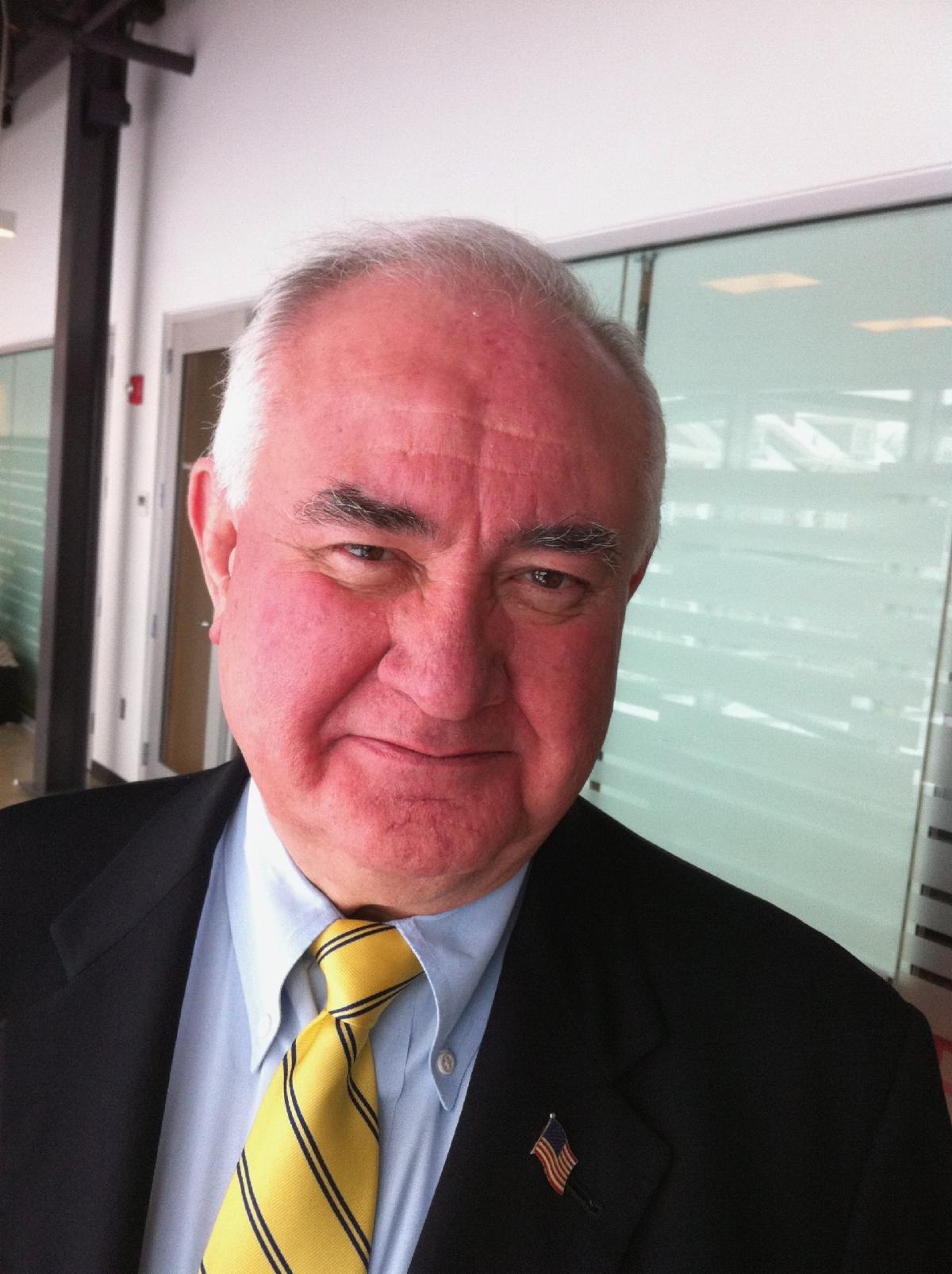
Dr. Tafoya is the instructor for this section of CCJ 6637. Dr. Tafoya began teaching the graduate course in Spring 2026 for the University of South Florida Department of Criminology on the Tampa campus. He joined USF in 2021, teaching in the Department of Criminology at the Sarasota-Manatee campus, where he developed and taught undergraduate courses in Digital Forensics and Cybercrime Investigation, as well as Research Methods.
Prior to joining USF, Dr. Tafoya retired in 2019 as Professor Emeritus from the University of New Haven, where he served in the College of Criminology and Criminal Justice's Department of National Security and Department of Criminal Justice. During his 20 years at the university, he developed and taught courses in undergraduate, master's, and Ph.D. programs. He also served as Director of the National Security program and Director of the Cyber Crime Investigation program.
Before entering academia full time, Dr. Tafoya completed a distinguished 20-year career as an FBI Special Agent. Among his accomplishments, several experiences stand out. In 1993, he became the first known law enforcement officer to make investigative use of the Internet and World Wide Web, shortly after the release of Mosaic, one of the earliest widely used web browsers.
Dr. Tafoya's early use of the Internet supported the FBI's Unabomber investigation, which ultimately led to the 1996 arrest of Theodore John Kaczynski. At the time, the FBI did not have the server infrastructure necessary to host a website and email account for the investigation. NASA's Moffett Field provided a server dedicated to supporting the Unabomber investigation and later the Oklahoma City bombing investigation. This collaboration was facilitated by NASA IT Security Director Randy Robinson.
Dr. Tafoya's experience with computing began decades earlier. In 1964, he worked with an IBM 360 mainframe computer. During his service in the U.S. Marine Corps in Vietnam, he used related computing technology while collecting intelligence data. His later professional work included gathering foreign counterintelligence information and computer-crime-related evidence.
From 1989 to 1990, Dr. Tafoya served as a Congressional Research Fellow for the 101st United States Congress, conducting research and presenting briefings for both the U.S. House of Representatives and Senate. He concluded his FBI career in 1995.
Between his FBI and academic careers, Dr. Tafoya worked for two years in the Intelligence Division of Computer Sciences Corporation in Falls Church, Virginia, and remained on retainer with the organization for an additional four years.
Dr. Tafoya's teaching career in computer crime investigation began in 1980, giving him more than four decades of experience educating students in cybercrime, digital forensics, computer crime investigation, and related fields.
His approach to CCJ 6637 emphasizes the Socratic Method and critical thinking rather than memorization. Dr. Tafoya challenges students to locate and analyze obscure and complex online information sources, developing skills directly applicable to cybercrime investigation, digital forensics, and information security. The course is designed to strengthen analytical reasoning and prepare students to apply these skills in professional settings.
Dr. Tafoya earned his Ph.D. in Criminology from the University of Maryland in 1986. His dissertation, A Delphi Forecast of the Future of Law Enforcement, examined the future direction of law enforcement.
Dr. Tafoya's recent scholarly work includes three chapters in Digital Crime and Digital Terrorism: "Anarchy & Hate on the World Wide Web," "The Investigation of Computer-Related Crime," and "Digital Crime & Terrorism." His work appears in both the fourth edition (2019) and fifth edition (2025).
| | | | | November 2026 |
| | 11 - November | Veteran's Day | | 26-27 - November | Thanksgiving Holiday | | December 2026 |
| | 4 - December | Last day of Fall classes | | 10 - December | Fall end of Term | | 11-13 December | Fall Commencement | | 14 - December | Winter session classes begin | | 25 - December | Christmas Holiday | | |
Healthy Aging at Any Age
By Cary Hopkins Hall, MA, CAP
September is Healthy Aging Month. Whether you are 19 and aren’t thinking about long-term health, or are older and working to ensure positive quality of life in your older years, aging is happening every day. The good news is that at every age you can make choices to be healthy, energetic, and prevent many age-related issues.
Unfortunately, a lot of bad habits start in college years when people feel increased stress, sleep less, and have poor nutrition. This is not necessary or helpful for your studies or future health.
Taking care of yourself is not a trick; you likely know a lot of what is recommended for good health and longevity. Let’s focus on body and mind (although there are other key components as well)!
Some tips for the body
Avoiding inflammation is key; inflammation damages cells. Your immune system becomes activated when your body recognizes anything that is foreign-such as an invading microbe, plant pollen, or chemical. Stress fuels inflammation. Many chronic diseases such as heart disease, depression, and arthritis have been linked to inflammation.
To decrease inflammation in the body, avoid hyper-processed foods. Include foods such as tomatoes, olive oil, green leafy vegetables, such as spinach, kale, and collards, nuts like almonds and walnuts, fatty fish, like salmon, mackerel, tuna, and sardines, and fruits such as strawberries, blueberries, cherries, and oranges. Treats that are a good part of an anti-inflammatory diet can include dark chocolate, coffee, tea, and pumpkin seeds. For more tips on healthy food that reduces inflammation, check out this article by Harvard Medical School -Anti-inflammatory diet: Foods that help reduce chronic inflammation.
Some tips for the mind
In school, and after, it is crucial to keep the brain sharp. Managing stress through mindfulness, meditation, or relaxation techniques also supports mental health and reduces the risk of depression. People who stay physically active also stay mentally sharper.
A healthy diet is good for brain health. Minimizing drinking decreases negative impacts on the brain health. A good night's sleep helps improve brain function and memory, keeps you alert, and makes it easier to do daily tasks. Rest also eases stress and depression. Being social helps ward off depression and stress.
Keeping the brain active through reading, puzzles, learning new skills, or engaging in creative activities can help maintain cognitive function. Just as physical activity keeps your body in shape, activities that engage your mind can keep your brain in shape. And those activities may help improve brain function and memory. Do crossword puzzles. Read. Play games. Learn to play a musical instrument. Try a new hobby. Volunteer at a local school or with a community group.
Perfect is the enemy of the good
We won’t always make perfect choices for our body or mind but making good choices helps! Healthy aging can be achieved with small acts. Add a salad to your lunch, order that matcha, and take a walk with a friend. You can be happier now and impact your health in the future.
“Old age is not so bad when you consider the alternative.” —Maurice Chevalier
| | | | |
Please be sure to send all publications and other news to Petya (pgarbeva@usf.edu), Amanda (arausch@usf.edu), and Dr. Burruss (gburruss@usf.edu).
We will include them in next month's round-up and forward them to the Dean's Office to be featured in The Communique.
|
| USF DEPARTMENT OF CRIMINOLOGY | 4202 E. FOWLER AVE., SOC 107, TAMPA, FL 33620 | 813-974-9708 | | | | |