Volume 7 Issue 6 | June 2026 | | Everything's coming up roses! | | The Root of It newsletter ends with our monthly quotation. If you find your newsletter has been clipped by your email provider please click HERE for a webpage version of the newsletter. | | |
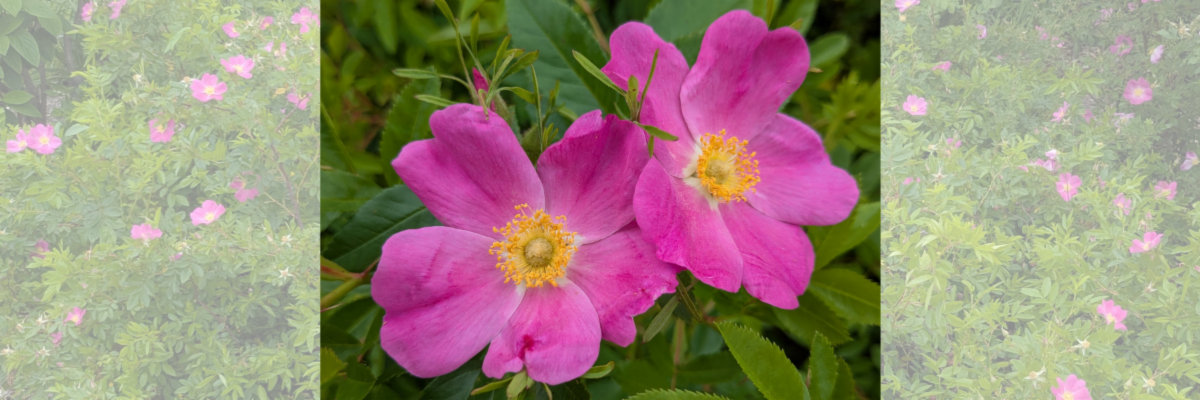
Rosa carolina taken at Secrest Arboretum
photo by Jason Veil
| | |
Have you heard about the Texas Rose Rustlers? You’ll find them scouting old cemeteries, abandoned farmhouses, rural roads, and other undisturbed spots, looking for thriving Old Garden Roses* to propagate. Their weapons are sharp pruning shears, and their saddlebags pack Ziploc bags, a sharpie, paper towels, and water. Many keep this “kit” in their car at all times—ready for any rustling opportunity!
Rose rustling has a long history, and rustlers are often solitary souls, but a Texas group rustle was organized in 1979, and in 1982 the Texas Rose Rustlers organization formed. Besides the thrill of the hunt, the allure of rose rustling is finding roses with the genetics to survive the weather challenges, pests, and diseases that make growing roses a challenge. Then there’s the fragrance that has been bred out of many modern roses. Once propagated, rustlers often share cuttings among themselves and with other rose propagators.
While roses thrive in Texas’ long growing season and mild climate, old world and species roses living in Ohio’s abandoned or neglected areas are also excellent prospects for discovery and propagation. These survivors have handled Ohio’s heat, cold, drought, pests and diseases with aplomb. Rosa carolina (Carolina Rose), Rosa palustris (Swamp Rose), and Rosa setigera (Prairie Rose) are among the treasures commonly found in Ohio. Perhaps in our more refined northern state we should call our botanical explorers “plant hunters”. Naw, rose rustlers it is.
Rose rustling techniques mirror those of home rose propagation. Late spring to early summer is generally the best time to take rose cuttings. Plants should be fully leafed out. Get permission from the property owner before any rustling commences. Early in the day, when plants are fully hydrated and turgid (firm), use a clean, sharp pruning shear or knife to cut a 6-8” section of stem that has finished blooming, is about the diameter of a pencil, and contains several leaves. The axillary buds (leaf nodes) under the leaves contain the magic—the hormones needed to stimulate root formation. Wrap the cuttings in damp paper towels, seal and label the bags with date, origin, and plant description, and protect them from heat and cold until planting.
The sooner you “stick” (plant) your cuttings the better. Cut at a 45 degree angle just below the lower set of leaves and strip those from the stem. Dip the cut end into rooting hormone (optional) and insert the stem into damp, well-draining potting medium, making sure at least one of the axillary buds is below the surface. Water well, and place the cuttings out of direct sunlight. Stick stems directly into the garden if you prefer, but they will need to be moved into a sunny location after rooting. Keep the cuttings moist, but not soggy. Cover them loosely with a plastic bag to create the humid conditions that favor rooting. The rooting process can take six weeks. Check rooting progress by giving the cuttings a slight tug—roots will hold it in place. Propagation using cuttings isn’t 100% successful—be prepared to lose a portion. Glory in the successes! After roots have formed and new growth appears, the rose plants can be moved to a larger pot and placed in the sun (or moved to their permanent location.)
Do avoid taking cuttings from the invasive multiflora rose (Rosa multiflora). Of Eastern Asia origin, it is a scourge in woodlands and pastures and spreads with abandon.
Will these old garden roses win a battle with Rose Rosette Disease? This eriophyid mite-vectored virus can decimate a rose collection in short order. Some roses do have tolerance to RRD—time will tell.
Preserving the past, paying tribute to history, finding the rose that defies the elements, a love of roses—there are many reasons to go on the hunt for Old Garden Roses. I am envisioning myself the Annie Oakley of rose rustling, clad in garden boots and bandana, sharp shooters—er, pruners in my holsters. What fun it will be to Look Around!
*The American Rose Society classifies Old Garden Roses as those that predate the introduction of Hybrid Tea Roses in 1867.
K Edgington
| | |
LEAF BRIEF
A Rose for the Ages
| | |
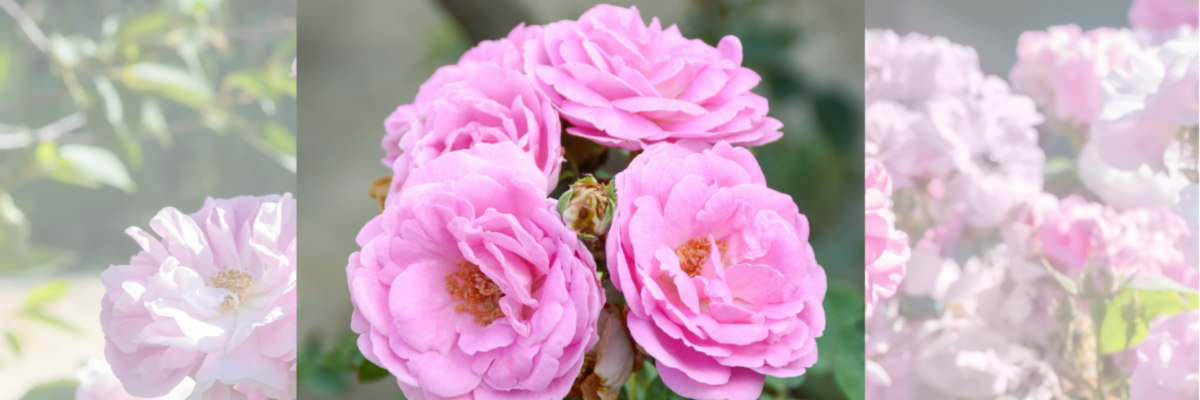
Rosa Ispahan
photo by Michel Viard
| | |
Roses can be intimidating. The endless varieties, pest and disease issues, winter protection and pruning requirements make it difficult to know where to begin.
Begin with a dream. If you yearn for a classic, old-fashioned pink rose with a strong rose fragrance, but don't want the heavy maintenance, you may want to consider Rosa x damascena ‘Ispahan’, also known as Rosa d’Ispahan and Pompon des Princes.
Ispahan was first introduced in Europe around 1832 and named after the historical Persian city of Isfahan in present day Iran, where it has grown since the 13th century. It is a classic damask rose.
Damask roses, originating in the Middle East and named after Damascus, Syria, are prized for their scent, a trait often overlooked by today's gardeners and hybridizers. Their aroma has been described as floral, woody, and seductive.
‘Ispahan’ is among the earliest roses to bloom in late spring, producing clusters of 2.5 inch, mid-pink flowers with deeper centers. While it blooms only once per season, the display can last up to six weeks, often creating a dense “wall of flowers.” This vigorous shrub typically grows 4–8 feet tall and 3–5 feet wide with an arching habit, making it suitable for borders, hedges, or trained as a climber. It works equally well in cottage gardens, traditional borders, or as a stand-alone specimen.
This historic rose has many positive attributes. It tolerates most soil types and pH levels. Despite originating in the Middle East, it is cold hardy to zone 4. Ispahan has notable resistance to black spot, mildew, and rust and has received the Royal Horticultural Society’s Award of Garden Merit, a designation recognizing reliable garden performers, as well as recognition from the Montreal Botanical Garden for outstanding disease resistance. While its larger prickles and smaller bristles can be annoying, they help protect the plant from browsing animals.
Ispahan thrives in full sun, at least six hours a day. It will tolerate some shade but won’t achieve the bloom intensity of sunnier sites. This heirloom rose prefers well-drained, loamy soil with a pH of 6.0 to 7.0 but does well in poor soils too. Water regularly during dry periods. As with all roses, avoid wetting the leaves to discourage disease. Fertilize in early spring and again after blooming. Adding compost is beneficial. Prune Ispahan in late winter or early spring to remove dead canes and maintain its shape and again after it finishes blooming. While remarkably disease resistant, this rose can attract aphids and caterpillars, so monitor accordingly.
For gardeners ready to move beyond modern shrub roses like the Knockout series, Ispahan offers fragrance, resilience, and a connection to the oldest traditions of rose growing. With its rich damask fragrance and old-world beauty, it’s easy to see why Rose Ispahan has stood the test of time.
J Gramlich
| |
|
|
CREATURE FEATURE
A Cutting Conversation
| |
|
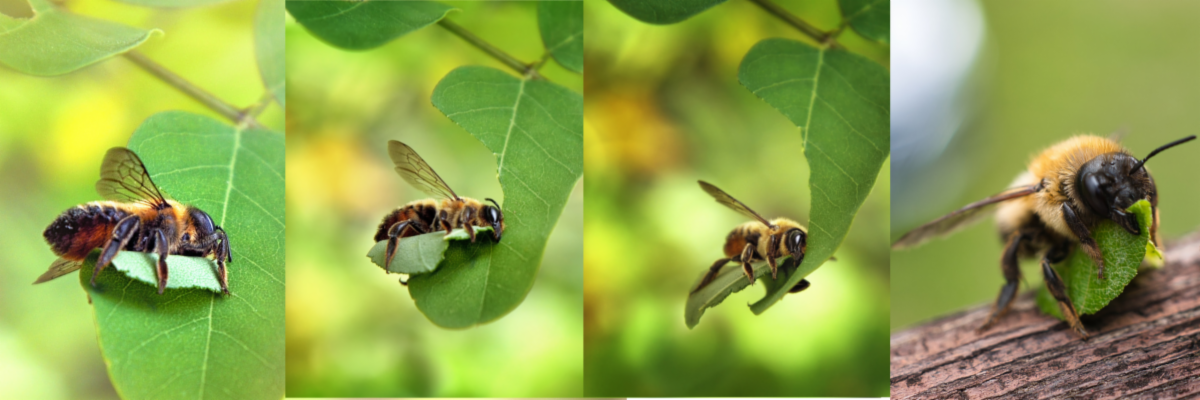
photos by Christian Sturzenegger
| |
It’s a beautiful June afternoon. You stop to smell the roses—your prized Bring Me Sunshine to be exact. You lean over to sniff, but your “ahhhh” becomes “#@!#” as you spot small, neat holes punctuating your rose leaves. “Good Gardening!” you shriek. “What disgusting pernicious creature has attacked my roses with a hole punch?”
“I take no offense,” a small voice replies. “I attribute your remark to ignorance.”
“What?” you ask, looking around wildly. “Who’s talking?”
“A leafcutter bee, order Hymenoptera, family Megachilidae, all of which carry pollen on our abdomens in a scopa (pollen basket) rather than our legs like most bees. Thirty or so species of my genus Megachile live in Ohio. Of course, that only scratches the surface of who I am.”
A black-bodied bee, slightly smaller than a honeybee, is perched on a leaf, staring at you intently. The bee has a triangular abdomen covered in pollen.
Is that bee talking?
“Your roses are fine,” the bee says. “And beautifully decorated with perfect circles—what I call ‘art with purpose’. You’re very lucky, you know.”
Right now you feel many things, but lucky is not one of them.
“I’m building my nest, and your roses are my Home Depot.”
Huh?
“I will explain,” the bee says kindly. “I keep things simple for humans.”
Was that a bee-sized insult?
“Focus!” the bee commands. “We’re talking females, because males only live for 2 weeks and only do one thing. Females live 2 months and do everything else. We don’t have hives or colonies so we’re all queens—like Beyonce.
You sink down onto the grass. On top of your hat. You don’t notice.
“We find empty cavities in twigs, logs, shrubs or hollow-stemmed plants made by other insects, or we excavate in rotting wood or pithy plant material. We do not damage your structures like those home-wrecking carpenter bees. We also nest in soil, cracks in buildings, even old snail shells! We are quite resourceful.” See HERE.
“Kind humans set out bee hotels for us which have holes pre-made just how we like them. The hotels aren’t perfect, but we appreciate them.” (See how to make them HERE.)
“Once we have a cavity, we create cells within them using leaves and petals. This is where your rose comes in.” She taps the leaf with her leg. “I hope I’m not boring you.”
You shake your head no. Your voice doesn’t seem to be working.
“We choose thin, soft leaves that cut easily such as rose, redbud, lilac and hosta. Obviously, we’re very precise. We work from the leaf margin, cutting smooth, even pieces with our mandibles (jaws like scissors in case you didn’t know)—round ones for the base, oval for walls. We sometimes use petals on the inside. One leafcutter bee may cut and carry 10,000 pieces in her lifetime.” HERE are some photos.
“Once a cell is finished, I stop cutting and start gathering pollen and nectar. I mix that with saliva to make ‘bee bread’, place it in a cell and lay an egg on top. I cover the egg with more leaves. Each cell is ½ inch long, each cavity has 8-12 cells.”
“I lay 35-40 eggs, which hatch in a matter of days, faster if the weather is warmer. The larvae gobble up the bee bread, spin a thin cocoon and overwinter as prepupae. Males develop faster than females—I control the sex of my eggs and make sure to lay males at the top of the cavities. That way when new adults chew their way out of their cell in spring, they don’t have to chew each other. Better for survival and less mess.”
The bee frowns. “Of course, life is no bed of roses.”
A bee joke, right? You smile weakly. The bee glares.
“That’s no joke. We have serious enemies—parasitic wasps, flies and beetles—even our cousins the cuckoo bees—who lay eggs in our cells. Their babies eat our eggs, larvae and bee bread. A tragedy.”
She pauses and sighs. “We choose to view life through rose-colored glasses, even though every rose has its thorns.”
You guess that is not a joke so you don’t smile. You guess wrong. The bee puts two legs on her hips. Do bees have hips?
“We are prolific pollinators,” she says. “Twenty times more efficient than honeybees. And a lot tougher. We even take it on the chin to assist in alfalfa crop production.” Watch HERE.
She pauses expectantly. “A simple thank you would be nice.”
You try but still can’t speak. Being glared at by a bee is unnerving. The bee says stiffly, “Unfortunately, our sting is fairly painless.”
You’d like a definition of "painless".
The bee snorts in disgust and flies off. Your voice returns and you manage to croak “Thank you.”
A loud sigh floats back on the breeze. "You're welcome."
C Christian
| |
| |
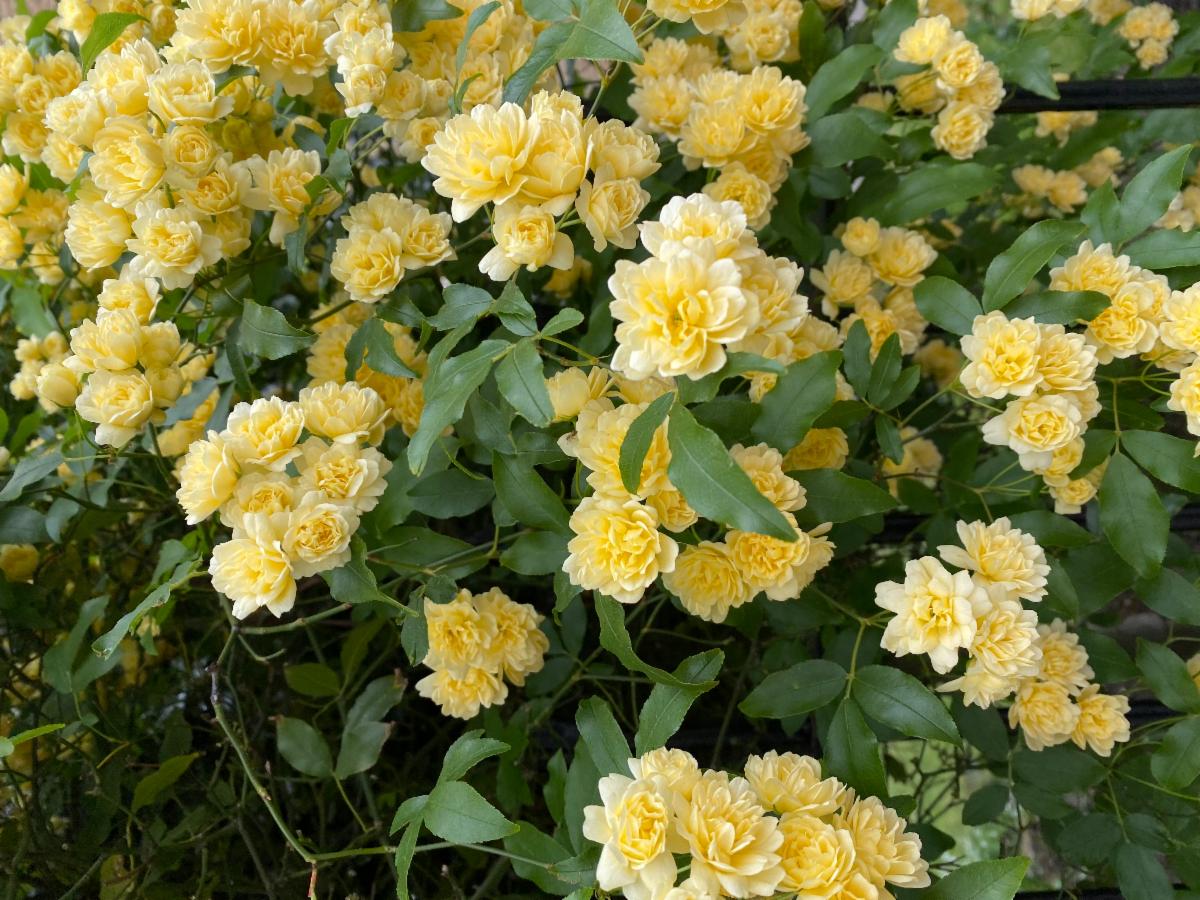
Gorgeous roses climbing a London wall made for unforgettable travels.
photo by E Barth-Elias
| |
| |
Sierra Ganley rose displayed at the Columbus Park of Roses
photo by S Vradenburg
| | |
Northeast Ohio rose lovers don’t have to go far to enjoy their favorite blossoms. Whether looking for heritage roses or the most modern in cultivation, two local gardens stand out. A third, in Columbus, is home to rose gardens bountiful enough to feed the soul of the most discerning rose aficionados.
Stan Hywet Hall and Gardens is the oldest and most historic, designed by landscape architect Warren Manning, with input from Charles Schneider, who designed the Manor House, and Stan Hywet owners Fred A. and Gertrude Seiberling. There was no question there would be a rose garden—such a feature was almost de rigueur for grand estates of that era.
Manning insisted the site for the rose garden be left alone during the home’s construction to avoid damaging the soil. He concentrated on using popular hybrid varieties such as American Beauty and General Jacqueminot and insisted on buying plants from “gardens of distinction.” However, the original location was too close to the Plane Tree Allee, and the roses eventually lost sunlight. After some debate among the architects and the Seiberlings, the garden moved in the 1920s to the area it now occupies adjacent to the service court and south of Birch Tree Allee. Unfortunately, other forces were at work. The Depression and World War II brought decline and the eventual demise of this version of the rose garden.
Once the Stan Hywet Foundation formed in 1957, there were several attempts to rebuild the rose garden using old stump depressions and the recollections of Seiberling descendants. In the 1980s, Frank Seiberling Jr. recommended restoring the gardens to Manning’s 1920s vision. It took 20 years for that effort to begin. The garden was completed as part of the restoration of the grounds.
Today, the rose garden looks much as it did in those early years. The interior beds hold the historic collection from Manning’s plant list and roses contemporary to that era, such as Frau Karl Druschki and LaFrance. The exterior beds hold modern rose varieties such as the climber New Dawn and several varieties of David Austin roses. As disease claims some plants (rose rosette disease is a problem now), the replacements reflect the spirit of the original designers.
For those who want to travel a little farther, Kingwood Center Gardens in Mansfield is a treat. The 47-acre estate and home, Kingwood Hall, was originally the residence of Charles Kelly King, chair of the board of Ohio Brass.
King wanted a rose garden for his wife, Luise, and it was built in the formal garden in an area called the Sunken Garden. However, that area was too moist, had poor air circulation, and the garden was eventually moved to an area east of Roost Hall in 1977. Beginning in the 1990s, the rose gardens served as a trial garden for Jackson and Perkins roses, although the gardeners found the roses required the heavy use of chemicals to remain disease free.
Kingwood is now part of All-America Selections, which evaluates and rates plants according to flower size and color, length of bloom time and pest and disease resistance. It also trials seeds, vegetables, and perennials. Going forward, integrated pest management will guide rose selections, including rugosa roses, which are resistant to the persistent problem of black spot.
If a day trip in search of roses is on your itinerary, the Columbus Park of Roses is a must-see. Originally a horse farm, the city of Columbus bought the 149-acre Whetstone Park for use as a Victory Garden in 1944. In 1951 the Columbus Rose Club, the Central Ohio Rose Society and the City came together and set aside 13 of those 149 acres for rose gardens, which opened to the public in 1953.
The seven-acre Formal Rose Garden displays the ornate Italianate landscape style that calls for symmetric geometric patterns. Each bed must feature the same variety of rose and not include any other variety of flower. About 7,500 floribunda, grandiflora, hybrid tea, climbing and shrub roses reach their full glory in June and September. The Formal Rose garden includes an ornate observation tower and a restored fountain.
The heritage rose garden has flowers cultivated before 1867, the agreed-on date modern roses became popular. This garden holds centifolia, damask, gallicas and rugosas, some of which originate from Mediterranean cultures.
The wider Whetstone Park also features the Herb Garden, the Perennial Garden, the Backyard Garden, and the Arboretum. Visitors can also take self-guided tours of dogwood and conifer gardens.
June is National Rose month, the ideal time to seek out the area’s nearby floral richness. Whether captivated by fragrance, color, or the way the petals fold in on one another and create such astonishing beauty, slow down. Breathe. Don’t forget to stop and smell the roses.
S Vradenburg
| | |
June Checklist:
-
Mulch to suppress weeds, regulate soil temperature, and retain moisture. GARDEN MULCHES: University of New Hampshire
- Prune spring-blooming shrubs and trees such as lilacs, crabapples, and viburnum before their blooms are set for next year.
-
Monitor vegetables, perennials and shrubs for emerging pests and diseases. Treat organically when possible. ORGANIC PEST CONTROL METHODS: South Dakota State Extension
- Trim suckers off tomato plants and provide support with frames or cages or stakes.
- Keep up with bed maintenance including dead-heading spent blooms and weeding.
- Succession plant beans, lettuce, carrots, and beets for later harvests.
- Water deeply during dry spells.
J Gramlich
| | |
We can complain because rose bushes have thorns, or rejoice because thorn bushes have roses.
Abraham Lincoln
| | |
More learning opportunities:
| | We invite you to share The Root of It with your friends and family. If you would like to subscribe to our mailing list please visit our website, scroll to the bottom, and follow the link under Join our email list. | | The Root of It staff: Karen Edgington (Editor), Emma Barth-Elias (Photo Editor), Carolyn Christian, Jennifer Gramlich, Sarah Vradenburg, and Geoff Kennedy (Technical Advisor) | |
We Would Like your Feedback
Contact us at: newsletterscmg@gmail.com
To discontinue receiving this newsletter please click on the UPDATE YOUR PROFILE link below. You may then choose what types of information you would like to receive from us.
| | | | |