Newsletter — November 12, 2026 | | |
IN THE NEWS
POLICY
ECONOMY
ON THE LOCAL FRONT
POLITICAL NEWS
RETAIL THEFT & PUBLIC SAFETY
TRENDS
SAFETY
| | |
A fresh look is coming to your Washington Retail news
Something new is on the way! The Washington Retail Association newsletter is getting a fresh look, with a more streamlined format designed to make staying informed easier and more engaging.
The news you count on isn’t going anywhere. You’ll still find updates on policy and legislation, retail trends, public safety, the economy, industry developments, and issues affecting retailers across Washington.
What’s changing? A simpler way to explore the news. You’ll be able to scan headlines, quickly spot the stories that matter most to you, and click through to read more. Whether you want a quick overview or a deeper dive, you’re in control of how much you explore.
Same important information, just packaged in a way that makes it easier to find what matters to you.
Stay tuned. A new look is just around the corner!
| | |
Seattle pricing ban raises discount concerns, says Washington Retail CEO Jan Himebaugh
Seattle’s new ban on surveillance pricing is raising questions about how grocery stores can continue offering digital coupons, loyalty rewards and other discounts while complying with restrictions on the use of consumer data.
Jan Himebaugh, president and CEO of the Washington Retail Association, told KIRO 7 that retailers support prohibiting businesses from using individual customer information to charge certain shoppers higher prices. However, she said the ordinance needs to clearly protect traditional promotional programs that help consumers save money.
“We just need to make sure that we’re also protecting discounts and coupons and loyalty programs,” Himebaugh said.
Seattle is the first city in the nation to enact a surveillance pricing ban. The ordinance applies to large grocery chains and online delivery platforms, including Instacart and Amazon, when serving Seattle customers. It prohibits individualized pricing based on personal information while allowing certain discounts offered to broader groups of consumers.
The distinction between permitted group-based promotions and prohibited individualized pricing remains a concern for retailers. Himebaugh questioned how broadly customer groups must be defined, noting that uncertainty could discourage businesses from offering certain promotions because of potential legal liability.
Seattle Mayor Katie Wilson said the ordinance is intended to prevent pricing based on personal characteristics, such as race or neighborhood, while preserving familiar coupons and discounts. She acknowledged that additional clarification will occur through a rule-making process involving grocers and other stakeholders.
The city expects implementation guidance and retailer education to begin around March 2027, with enforcement procedures developed later that year. The Seattle City Attorney’s Office will handle violations, and both individuals and the city may pursue enforcement.
The ordinance takes effect September 1, 2027.
KIRO7.com
| | |
Washington Retail's Jan Himebaugh highlights ongoing retail security concerns following Bellevue golf shop thefts
A 36-year-old man has been arrested in connection with a series of organized thefts targeting golf retailers in Bellevue, bringing renewed attention to the security challenges facing brick-and-mortar businesses.
Bellevue police arrested Cameron Rowley in Lakewood on October 28. Investigators say Rowley and two accomplices entered Puetz Golf on 140th Avenue NE on September 10 and stole approximately $3,000 in merchandise.
The theft involved a violent encounter with a store employee. During the suspects’ escape, a door struck an employee and broke a glass window. One suspect then punched the employee multiple times before fleeing in a getaway vehicle, according to police. Investigators identified Rowley through information provided by the store and anonymous tips. The investigation remains ongoing.
Jan Himebaugh, president and CEO of the Washington Retail Association, said Washington retailers are not necessarily experiencing the improvement in retail theft reflected in some national reports. She noted that current statewide theft figures are unavailable, but businesses continue to face significant losses and rising security costs.
Some retailers are placing merchandise in locked cases, increasing security measures and, in certain instances, closing stores because of theft-related losses. Himebaugh also pointed to the challenges of investigating organized theft groups that operate across multiple jurisdictions, making it harder for law enforcement agencies to connect incidents and build cases.
The consequences extend beyond individual businesses. As Himebaugh noted, stolen merchandise and increased security expenses can ultimately affect consumers through higher prices.
The Bellevue case illustrates how retail theft can involve not only financial losses but also risks to employees and the broader community.
King5.com
| | |
U.S. Small Business Administration recognizes veteran-owned businesses Nov. 9–13
National Veterans Small Business Week is happening now, Nov. 9–13, with this year’s theme, “Honoring Veteran-Owned, American Made.” The U.S. Small Business Administration (SBA) is recognizing the nation’s 1.6 million veteran-owned small businesses and highlighting topics including manufacturing, government contracting, and access to capital.
Online and in-person events are planned nationwide. The SBA encourages business associations and community organizations to recognize veteran and military spouse business owners and share their stories. Organizations can also recommend veteran-owned businesses for potential visits and share information about local events.
Learn more about events and resources through the SBA’s National Veterans Small Business Week website.
| | |
Small retailers prepare for Small Business Saturday
Small retailers are preparing for Small Business Saturday with special promotions, community events, and early holiday marketing campaigns designed to attract shoppers and strengthen local connections.
According to the National Retail Federation’s October Holiday Consumer survey, conducted by Prosper Insights & Analytics, one in five holiday shoppers plans to purchase gifts or other holiday items from small or local businesses this year. Among those shoppers, 71% say supporting businesses in their communities is a primary reason for shopping small. Other motivations include finding unique gifts and décor (56%), supporting artists through handmade purchases (37%), and finding high-quality products (33%).
Retailers are using a combination of email campaigns, social media, local partnerships, and digital marketing to reach customers. Some are offering special sales and promotions, while others are focusing on improving their online visibility through updated product information, public relations, and content designed to reach customers using artificial intelligence-powered search tools.
Community events are another key strategy. One Massachusetts hardware store plans to partner with nearby businesses to host pop-up experiences featuring local food and beverage vendors, creating additional reasons for shoppers to visit.
Retailers interviewed for the report emphasized the importance of starting outreach early, maintaining consistent communication, and making customers feel appreciated. They also noted that visibility should extend beyond Small Business Saturday through local media coverage, social media storytelling, and ongoing community engagement.
The holiday season provides an opportunity for independent retailers to highlight what distinguishes them from larger competitors, including personal service, unique products, and connections to the communities they serve.
Small businesses also represent a significant portion of the retail industry. According to NRF research, 98% of retail firms had fewer than 50 employees in 2022.
Explore resources through the SBA’s Small Business Saturday website.
| | |
Reminder: Washington overtime salary thresholds increase January 1
Washington employers should review employee compensation ahead of the new year as the state’s minimum salary requirements for certain overtime-exempt employees are scheduled to increase January 1, 2027.
The overtime exemption salary threshold is tied to Washington’s minimum wage and calculated using a multiplier of a 40-hour workweek. To qualify for an overtime exemption, employees generally must meet both the applicable salary threshold and job duties requirements.
The projected 2027 salary thresholds are:
-
Small employers (1–50 employees): $1,583.10 per week, or $82,321.20 annually.
-
Large employers (51 or more employees): $1,759 per week, or $91,468 annually.
Retailers should review salaries for currently exempt employees to determine whether compensation adjustments or changes to employee classifications may be necessary. Employers should also factor the increases into 2027 staffing and budget plans.
Implementation Schedule
| | |
Promotional email practices face increasing legal risks
A 2025 Washington Supreme Court decision interpreting the state’s Commercial Electronic Mail Act (CEMA) has contributed to a surge in lawsuits targeting promotional email subject lines, with similar litigation now spreading to California and other states.
In Brown v. Old Navy, the court determined that commercial email subject lines containing false or misleading information could violate Washington law, regardless of the email’s actual content. Following the decision, more than 40 lawsuits were filed in California alleging misleading promotional subject lines. Before the ruling, only one such case had been filed.
In response to concerns about the ruling’s impact on businesses, the Washington Retail Association (WR) supported legislative efforts to address the law. The resulting changes reduced statutory damages from $500 to $100 per email and established an actual knowledge standard for violations. The amendments took effect June 11, 2026, but do not apply to lawsuits filed before that date.
California presents potentially greater financial exposure for retailers. Its Anti-Spam Law allows statutory damages of $1,000 per email recipient, up to $1 million per incident. Plaintiffs are also arguing that liability does not require proof of intent, consumer reliance or actual harm.
Common allegations involve promotional language such as “Today Only,” “Ends Tonight” and “Final Sale,” as well as claims that misrepresent discounts, prices or the duration of an offer.
Retailers can reduce potential liability by reviewing promotional subject lines for accuracy, documenting changes to advertised sale periods, establishing written email compliance policies, training employees, and monitoring third-party vendors.
The growing litigation highlights the importance of treating promotional email language as more than a marketing decision. Retailers should review their email practices and maintain clear documentation of compliance efforts to help limit legal and financial exposure.
| | |
Washington residents face another sharp increase in health insurance premiums
Washington residents who purchase health insurance on their own are facing another significant increase in premiums in 2027, adding pressure to household budgets and raising concerns about access to affordable coverage.
Insurance carriers have proposed an average rate increase of 22.2% for individual health plans in Washington next year. This marks the third consecutive year of double-digit increases and is considerably higher than the projected national average of 13%.
Nearly 250,000 Washington residents purchase individual coverage, often because they are self-employed, between jobs or do not have access to employer-sponsored insurance. Many are also dealing with the expiration of enhanced federal premium tax credits that previously helped offset costs.
Insurers cite rising healthcare expenses, including inflation, higher prescription drug prices, and increasingly expensive medical technology, as primary reasons for the proposed increases. State law requires the insurance commissioner to approve rate increases that are mathematically justified.
The financial impact is already changing consumer decisions. State exchange data show that individual plan enrollment declined by 36,500 people, or nearly 13%, over the past year. Some consumers are switching to less comprehensive plans with higher out-of-pocket costs, while others are dropping coverage altogether.
Those decisions carry risks. Going without insurance can expose individuals and families to substantial medical expenses during an unexpected illness or emergency. Additionally, when healthier individuals leave the insurance market, the remaining pool may require more costly care, potentially contributing to further premium increases.
For self-employed individuals and small business owners, rising premiums are creating difficult financial choices, including reducing retirement savings, cutting other household expenses or reconsidering whether maintaining a business is financially sustainable.
| | |
Seattle remote work rate continues to decline
Seattle’s share of workers primarily working from home continued to decline in 2025, although the city remains among the nation’s leading hubs for remote employment, according to new U.S. Census Bureau data.
Approximately 105,000 of Seattle’s 473,000 employed residents primarily worked from home in 2025, representing 22% of the workforce. That is down from 24% in 2024 and significantly below the pandemic-era peak of 47% in 2021, when roughly 205,000 residents worked remotely.
Despite the decline, Seattle ranked fifth among the 50 largest U.S. cities for its share of remote workers. Atlanta led at 25%, followed by Austin at 24%, with Denver and Washington, D.C., tied at 23%. Portland ranked just behind Seattle at nearly 22%.
The trend is not consistent nationwide. Only 12 of the 50 largest cities experienced statistically significant declines in remote work between 2024 and 2025. Several others, including Atlanta, Los Angeles, San Diego, and Nashville, have seen their remote-work rates remain relatively unchanged over the past two years.
In Seattle, the decline was concentrated primarily in the information, transportation and warehousing, utilities, and manufacturing sectors. The professional services sector, which includes fields such as law, accounting, engineering, and information technology consulting, maintained a relatively high remote-work rate of 39%.
The return-to-office policies of major employers may also be contributing to the shift. Amazon's five-day in-office requirement took effect in January 2025, while Microsoft introduced a three-day in-office requirement for some regional employees in February 2026.
Future Census data will help determine whether Seattle's remote-work rate has stabilized or will continue to decline.
| | Image: Kemper Development Company | | |
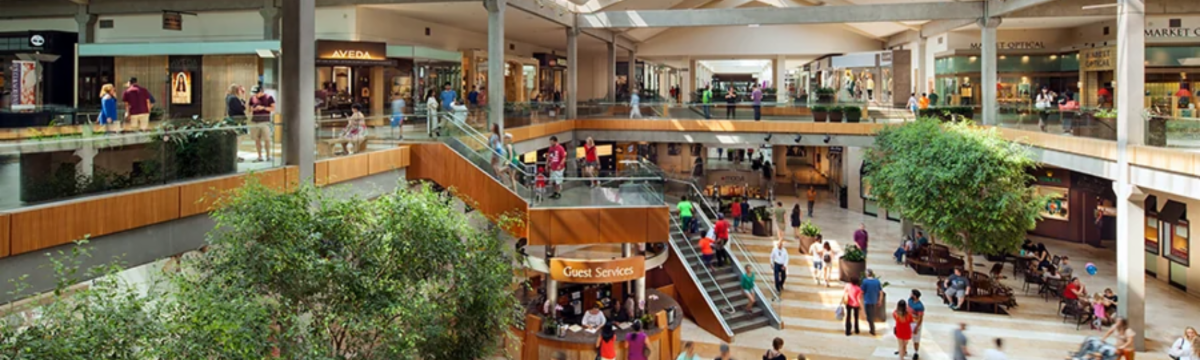
Bellevue Collection put up for sale after decades of family ownership
One of Washington’s largest retail and commercial developments is on the market, marking a significant transition for downtown Bellevue and the family that helped shape its growth.
Kemper Development Company announced in August that it is selling The Bellevue Collection, a 5.5-million-square-foot development spanning approximately 51 acres in the heart of downtown Bellevue. The properties include Bellevue Square, Lincoln Square, and Bellevue Place, along with three hotels, office and residential towers, entertainment venues, more than 200 retail shops, and approximately 50 restaurants.
The development attracts an estimated 13 million visits annually, making it Bellevue’s busiest retail center. Its properties are appraised at more than $1.8 billion, according to King County records.
The decision follows the retirement of 85-year-old Kemper Freeman Jr., who stepped away from the company after being diagnosed with Alzheimer’s disease. Freeman and his family spent several months considering the future of the business before deciding to sell. Company President and CEO Jim Melby said Freeman’s shoes would be difficult to fill, citing the extensive personal attention required to manage the interconnected properties.
The family hopes to sell the entire development to a single buyer rather than divide the properties. While the timing presents challenges, including elevated interest rates and economic uncertainty, company leadership reports that the properties continue to perform well. Its office towers have remained fully leased despite broader challenges in the commercial real estate market.
Freeman’s family has owned and developed properties in Bellevue for generations. His grandfather and father helped establish the family’s real estate presence, including building Bellevue Square in 1945. Freeman Jr. expanded that foundation into the major retail, hospitality, and commercial destination that helped transform Bellevue into a regional economic center.
The eventual buyer will inherit not only a significant real estate portfolio but also a development closely tied to Bellevue’s identity and economic history.
| | Image: Shugart Wasse Workshop | |
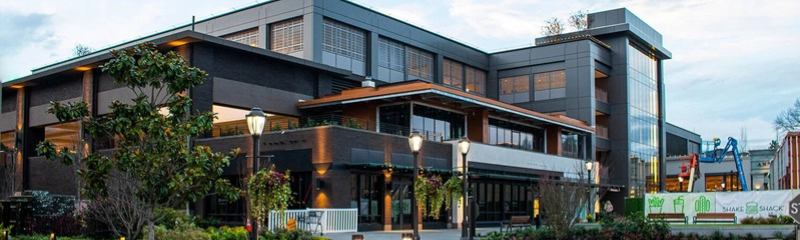
Simon Property Group to acquire Seattle’s University Village
Seattle’s University Village shopping center is set to change ownership for the first time in more than three decades, with Simon Property Group announcing plans to purchase the popular outdoor retail destination.
The Indianapolis-based real estate investment trust expects the transaction to close by the end of 2026. Financial terms of the deal have not been disclosed.
Simon Property Group owns retail properties across the country, including several familiar Washington destinations: Tacoma Mall, The District at Northgate, and outlet centers in Tulalip and North Bend.
University Village, located near the University of Washington, encompasses nearly 600,000 square feet of retail and dining space. Originally built in 1956, the center has evolved over the years into a major shopping destination featuring a mix of national retailers, restaurants and local businesses.
Local business owner Stuart Sloan and his partner, Matt Griffin, acquired the property in the early 1990s. Sloan has remained its owner since then.
In announcing the planned acquisition, Simon CEO Eli Simon described University Village as an exceptional retail destination and said the company looks forward to building on its success for shoppers, retailers and the greater Seattle community.
The company has not provided details about potential changes to the property, its tenant mix or operations following the acquisition.
The sale comes amid other activity in the region’s retail real estate market. Kemper Development announced in August that it was exploring a sale of the Bellevue Collection, the 5.5 million-square-foot mixed-use shopping and business complex. Eastdil Secured Savills was subsequently selected to broker that transaction.
The University Village acquisition represents another significant ownership development in the Puget Sound retail market, although its long-term implications for retailers and shoppers remain to be seen.
| | |
Washington election results: What they mean for retailers
Washington's 2026 general election is bringing changes to the state's legislative landscape, with several closely watched races involving Washington Retail Association (WR) endorsed candidates and a ballot initiative with significant implications for the business community.
Legislative control: Democrats have secured a two-thirds supermajority in the state House, winning at least 66 of 98 seats. Several WR-endorsed Republican incumbents lost their races, including Kevin Waters and David Stuebe in the 17th District, Gloria Mendoza and Deb Manjarrez in the 14th District, and Stephanie McClintock in the 18th District. Rep. Michael Keaton also lost his 25th District seat to Democrat David Berg.
Key races remain close: In the 12th District, Democrat Stacy Willoughby continues to lead WR-endorsed Rep. Brian Burnett. In the other 25th District race, Rep. Cyndy Jacobsen maintains a narrow lead over Democrat Jenn Marie Strickling. Both House races remain uncalled. In the 35th District Senate race, WR-endorsed Sen. Drew MacEwen has moved ahead of Democrat Carolina Mejia by fewer than 500 votes, reversing earlier returns. WR-endorsed Sen. Nikki Torres has won the open 8th District Senate seat over Republican Gabe Galbraith. Reps. Dan Griffey and Travis Couture also maintain leads in their 35th District House races.
Millionaires tax repeal rejected: Voters rejected Initiative 645, which would have repealed Washington's new 9.9% income tax on annual income above $1 million. The measure, supported by WR's Retail Action Council, received approximately 42% support, with 58% voting against repeal. The tax is scheduled to take effect in 2028.
The results will shape the business and policy environment retailers navigate in Olympia in 2027. While several races remain too close to call, the legislative balance is taking shape. All results remain unofficial pending certification.
Results reflect the latest available returns as of November 11, 2026.
| | |
City of Yakima bans live surveillance cameras on city property
The Yakima City Council voted 5-2 to prohibit live Flock surveillance cameras and other automated video analytics systems on city-owned property, citing concerns about privacy and civil liberties.
The Nov. 2 resolution requires existing live cameras within city limits to be removed within 60 days. The restriction applies to cameras that provide continuous, real-time video feeds. It does not affect the city's 87 automatic license plate readers, which capture vehicle and license plate images for law enforcement investigations.
The resolution includes limited exceptions, allowing mobile live-feed cameras at special events such as festivals, parades, and cruise nights with approval from the city manager. Cameras located on private property are also outside the scope of the ban.
The decision follows several months of public debate over the city's use of Flock technology. Yakima County had begun installing hundreds of cameras through a two-year, $2 million pilot program intended to expand law enforcement capabilities and support development of a real-time crime center.
Supporters of the ban raised concerns about privacy, government surveillance, and the potential for misuse of technology. Some residents argued that continuous monitoring of public spaces could undermine civil liberties and public trust.
Opponents, including police officials and two council members, expressed concern that removing the technology could limit law enforcement capabilities. Police Chief Shawn Boyle said live cameras could help compensate for staffing shortages and assist investigations, particularly as the department works toward a regional real-time crime center.
The council's decision reflects an ongoing debate over balancing public safety technology with individual privacy rights. While the resolution addresses live video surveillance, concerns about automatic license plate readers remain part of the broader community discussion.
| | |
Seattle expands police surveillance camera program
Seattle Mayor Katie Wilson has authorized the Police Department to activate additional surveillance cameras in three neighborhoods: the Stadium District, Central District, and Capitol Hill. The expansion follows a review of the city's Real Time Crime Center and includes plans for additional safeguards addressing privacy and civil liberties.
The crime center, launched as a pilot program in 2025, combines live surveillance camera feeds, 911 dispatch information, and officer location data to help police respond to incidents and investigate crimes. The system has since expanded to include hundreds of cameras throughout Seattle, including some owned by private businesses and property owners.
Wilson paused a planned expansion in May, citing concerns about potential privacy risks and the protection of civil liberties. She said she would wait for an independent assessment before authorizing additional cameras.
The decision follows an audit released by New York University's Policing Project, which identified gaps in city and police department policies governing the program. Researchers issued 19 recommendations, including clearer written procedures and stronger oversight of how surveillance information is collected and used.
The audit also reinforced concerns raised in a September review by Seattle's Office of Inspector General for Public Safety. Both reviews called for more clearly defined policies governing the use of privately owned cameras.
The expanded program will allow police to access additional surveillance coverage in the three neighborhoods as part of the city's broader crime response and investigative efforts. The policy recommendations are intended to establish clearer guidelines for how the technology is managed and used.
The decision moves the program forward after months of uncertainty, while raising continued questions about balancing public safety objectives with individual privacy protections.
| | Seattle small-business owners including Lupe Flores, owner of Situ Tacos, say programs designed to help local restaurant owners recover after storefront damages are helpful — but they fail to disrupt the issue of property... (Karen Ducey / The Seattle Times) | | |
Seattle restaurant owners organize in response to repeated break-ins
Frustrated by recurring burglaries and property damage, a group of Seattle restaurant owners is organizing to raise awareness, strengthen neighborhood connections and encourage more action to address business-related crime.
The group, called The Standing Table, was formed by local restaurant and hospitality industry members who began meeting at businesses that had experienced break-ins. The gatherings are intended to provide financial support through customer visits, connect affected owners, and encourage community involvement.
Several business owners say existing city programs that help pay for storefront repairs and security improvements provide some relief but do not address the underlying causes of property crime. Repeated incidents can leave businesses facing expenses for broken doors, windows, locks, stolen merchandise, and additional security measures. Owners also report lost operating time and disruptions to staffing.
Seattle offers a Storefront Repair Fund and a Storefront Security Fund, which reimburses eligible businesses for certain security improvements, up to $10,000. Through September 2026, the city had issued 602 grants totaling approximately $1.55 million. However, business owners say the application process can be complicated, and reimbursements do not cover all associated costs, including employee time and labor.
Seattle City Councilmember Dan Strauss supports maintaining the funding programs but acknowledges that financial assistance alone cannot prevent break-ins. He has also worked on efforts to improve coordination between businesses and police, including encouraging owners to report incidents and submit available video evidence.
Neighborhood ambassador programs are another part of the city's response. In Ballard, ambassadors conduct regular patrols, assist with de-escalation and help businesses document incidents and file police reports.
Although Seattle police data indicates overall property crime is trending toward six-year lows in 2026, some business owners say repeated incidents remain a significant operational and financial burden. Organizers hope stronger community involvement and continued engagement with city officials will help address the problem.
| | |
Holiday shoppers look for ways to manage costs
More than three-quarters of U.S. holiday shoppers are planning ways to manage the cost of gifts and other seasonal purchases, according to the National Retail Federation’s October 2026 Holiday Consumer Survey. Strategies include reducing spending in other areas, buying fewer items for themselves, and using credit to help cover holiday expenses.
Cutting back on non-holiday spending is the most common approach, with 32% of consumers planning to reduce purchases in other categories. Another 22% expect to spend less on themselves to make room in their budgets for holiday shopping.
Cost-saving measures vary by household income. Among households earning less than $75,000 annually, 80% plan to take at least one step to manage holiday expenses. While higher-income households are less likely to make adjustments, the trend is growing. Three in five shoppers with household incomes above $150,000 plan to take at least one cost-management measure, up from 56% in 2025.
Even among higher-income consumers, spending adjustments are taking several forms. Nearly one-quarter (24%) plan to reduce spending in other areas, while 17% expect to cut back on purchases for themselves. Others are considering buy now, pay later services (11%) or opening additional credit cards (10%) to help finance seasonal purchases.
The findings suggest that affordability remains a consideration across income levels as consumers prepare for the holiday season. For retailers, understanding how shoppers are adjusting their budgets may provide useful context for purchasing decisions and consumer spending patterns throughout the coming weeks.
| | |
November safety reminders: Prepare for winter and the holiday rush
November brings a mix of seasonal safety considerations, from winter weather and changing driving conditions to increased holiday activity and workplace demands. Brown & Brown’s November National Safety Observances Calendar offers several timely reminders to help businesses protect employees and customers.
As temperatures drop, businesses should inspect sidewalks, parking lots, entrances, and loading areas for potential slip hazards and establish plans for snow and ice removal. Employees who drive for work should also be reminded to wear seat belts on every trip, with National Seat Belt Day observed November 14.
The holiday shopping season brings additional considerations. Thanksgiving, Black Friday, and Small Business Saturday can mean heavier customer traffic, increased workloads, and more seasonal employees. Reviewing emergency procedures, keeping aisles and exits clear, maintaining adequate staffing, and reinforcing safe lifting practices can help reduce workplace risks.
Employee well-being is another important focus. November observances include American Diabetes Month, Lung Cancer Awareness Month, National Healthy Skin Month, and National Stress Awareness Day. With demanding schedules and increased workloads, employers can encourage regular breaks, respectful communication, and awareness of available health and wellness resources. The Great American Smokeout, observed the third Thursday in November, also provides an opportunity to share tobacco cessation resources.
Finally, Computer Security Day on November 30 is a reminder to review basic cybersecurity practices, including using strong passwords, updating software, backing up important information, and exercising caution with unexpected messages.
Taking time to review safety procedures, prepare facilities, and communicate expectations can help businesses navigate the changing conditions and added demands of the holiday season.
| |
Washington Retail Association diversity statement
Washington Retail Association is committed to the principles of justice, equity, diversity, and inclusion. We strive to create a safe, welcoming environment in which these principles can thrive.
We value all people regardless of race, ethnicity, gender, religion, age, identity, sexual orientation, nationality, or disability, and that is the foundation of our commitment to those we serve.
| | |
Jan Himebaugh, President & CEO — 360.200.6450 — Email
Crystal Leatherman, Vice President of Government Affairs — 360.200-6453 — Email
| | | | |