Weekly Digest Number 39 - September 28th, 2021 |
|
(Editor's Note: If we are not able to gain control of the Class One railroads' headlong rush to disaster, the future of rail employment and railroad workers may just lie with Amtrak, regional, and commuter passenger train services. If Amtrak's plan comes to fruition, it would create thousands of good union railroad jobs.) |
|
Amtrak’s Plan to Connect the U.S.
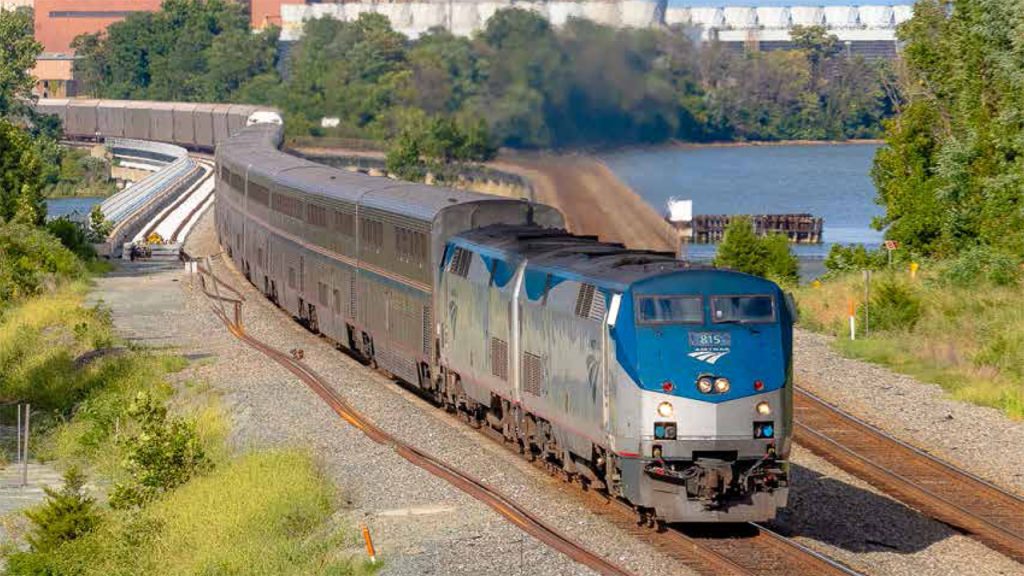
INTERNATIONAL RAILWAY JOURNAL, SEPTEMBER 2021 ISSUE: 50 years since Amtrak was founded, the United States’ federally owned passenger operator is arguably at the most exciting juncture in its history. William Flynn, Amtrak President and CEO, presented the company’s ambitious plans for growth and development to International Railway Journal Editor-in-Chief Kevin Smith.
|
|
It was perhaps fitting that United States President Joe Biden was front and center at the celebration held to mark the 50th anniversary of Amtrak at 30th Street Station in Philadelphia on April 30.
Biden has been a vocal supporter of the federally owned passenger operator for almost the entirety of its existence: from his days as a U.S senator when he would regularly ride the train from Wilmington, Del., to Washington D.C.; to his time as the U.S. Vice President, when he presented the Obama Administration’s plans for several short-lived high-speed passenger projects as part of a 2009 economic stimulus package. Now as the 46th President, Biden has made rebuilding and reviving the country’s infrastructure, including its passenger rail operator, the signature policy of his first term.
The American Jobs Plan was announced by Biden on March 31 and has since moved to Congress for debate and negotiation. The Administration hopes the legislation that emerges will satisfy Biden’s objectives so he can sign it into law this autumn. Inevitably, given the variety of views on the scale and ambition of the proposal on both sides of the political spectrum, there have been several compromises. From a $2.3 trillion plan when Biden presented it, the Senate scaled it back to a $1 trillion initiative, including $550 billion of new spending. However, the legislation took a significant step forward on Aug.10 when 19 Republican senators joined with their 50 Democratic colleagues to pass a bi-partisan Infrastructure bill, a move praised by Biden.
As it stands, the bill includes $66 billion for intercity passenger rail, with $22 billion of this figure set to go directly to Amtrak. This includes $6 billion for the Northeast Corridor, and $16 billion for the national network, including state-supported services.
|
|
(Editor's Note: Read 'em and weep. Even though this article is months old, we are reprinting it here to remind our readers that, of all U.S. companies with more than 10,000 employees, "Glassdoor" has rated three Class One rail carriers among the worst to work for in 2021. Union Pacific is rated here as the WORST company to work for this year, followed closely by NS (number 2) and CSX (number 5). Well, all of you CSX, NS, and UP workers, how did it go in 2021? Was the carrier you worked for accurately judged?) |
|
Worker Beware: These Are the 22 Worst Companies to Work For in 2021 |
|
Union Pacific
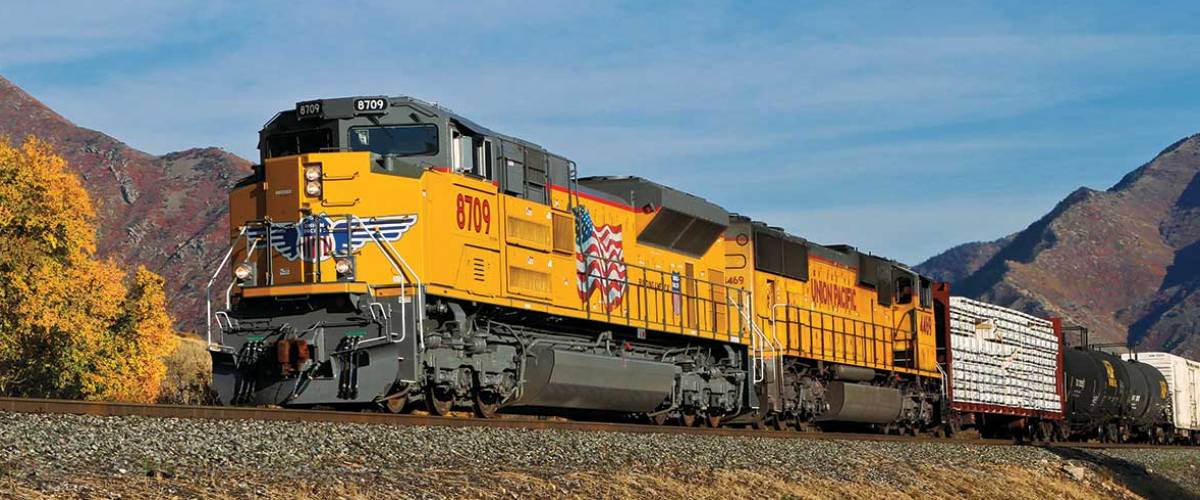
Despite its pedigree and competitive salaries, the third rail company on this list is also the worst rated on Glassdoor, with less than two stars. Only 12% of employees would recommend it to a friend, and half of that number approves of CEO Lance Fritz. The work-life imbalance common at rail companies seems to be an issue, but a number of employees also point to a lack of job security. Fritz announced four months of furloughs during the onset of the COVID-19 pandemic, due to unexpected drops in freight volume. He added that executives would take a 25% pay cut during this time as well, but workers don’t seem impressed — senior management received the lowest of the company’s extremely low scores.
Norfolk Southern
A year ago, this rail transportation company landed in the top 100 on Forbes’ list of the World's Best Employers, but now it’s losing love at a blistering pace. Norfolk Southern once offered many well-paying working-class jobs but recently cut 3,500 positions, The Washington Post reported in early 2020. It joins other railways that are reducing their operations amid a drop in demand for freight. “Good pay, but comes at a heavy price. The lifestyle is definitely not for everyone,” says one reviewer, who identifies as a former freight conductor. Like other rail companies, employees endure long hours and a poor work-life balance. Only 26% of employees would recommend Norfolk Southern to a friend, and 19% approve of CEO James A. Squires.
CSX
Rail transportation supplier CSX operates throughout the eastern United States and central Canada. Its mission is to be the “best run railroad in North America,” but many of its employees would argue it has miles to go. Working for a transportation network can be a tough job in general; one self-identified signal technician notes that “you must travel and may not be close to home.” But on top of those expected hardships, many employees complain of long hours filled with too much hard work. Senior management and workplace culture also received very poor ratings. About a third of reviewers would recommend CSX to a friend, but just one in 10 approve of CEO Jim Foote, who recently furloughed dozens of employees to keep costs low amid an unexpected dip in the business.
|
|
Support the Green Locomotive Act of 2021 |
|
Legislation has been drafted that if enacted, would phase out older freight locomotives, decrease emissions from passenger and freight locomotives, and establish a grant program to facilitate the upgrading of existing locomotives and purchase of new ones.
Entitled the Green Locomotive Act of 2021, the Bill has the support of United Electrical (UE) Union Local #506, the folks who have traditionally built GE locomotives for many decades, now Wabtec. Their efforts to see this bill become law has the support of Railroad Workers United.
Specifically, the Act would ensure that:
(1) the locomotive is in compliance with the following standards—
(A) meets or exceeds Tier 1 standards by 2025; and
(B) meets or exceeds Tier 2 standards by 2028; and
(C) meets or exceeds Tier 3 standards by 2030.
(2) Beginning every year starting on January 1st 2030—
(A) the locomotive has not exceeded a total of 89,100 MWhs of operation
since its original manufacture date; or
(B) the original manufacture date for the locomotive was not more than
twenty-three years ago; or
(C) the primary NOx and PM emissions on the United States Environmental
Protection Agency Certificate of Conformity for the locomotive are equal
to or cleaner than the Cleanest Available Locomotive.
“(b) REMANUFACTURING LOCOMOTIVES.-An existing line-haul or switcher locomotive
covered by subsection (a) may meet those standards by being remanufactured to such standards
|
|
(Editor's Note: It appears that the PSR feeding frenzy is not enough. Wall Street is now demanding even bigger cuts, more job eliminations, absurdly low operating ratios, deeper stock buy-backs, and greater profits. Note that in this article, even the industry itself is starting to question the wisdom of this approach to railroading...) |
|
CN, Under Siege from TCI, ‘Redefining.’ Will it Work? |
|
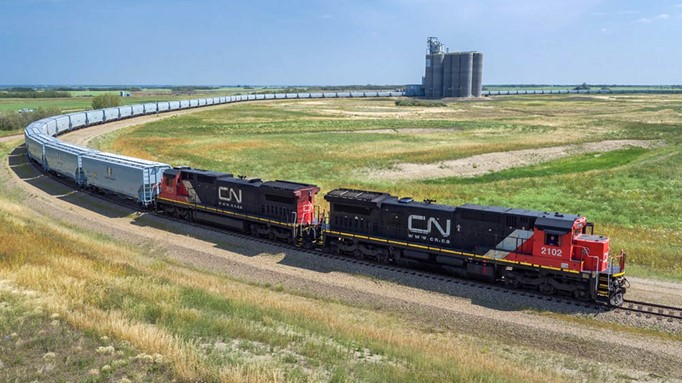
A few days after throwing in the towel on its attempted merger with Kansas City Southern, and facing a board and management reorganization forced by activist investor and “beneficial owner” TCI Fund Management Ltd., CN on Sept. 17 announced its “Full Speed Ahead – Redefining Railroading” initiative, which it describes as an “ambitious value creation plan” consisting of, for full-year 2022, $5 billion in stock buybacks (a previously authorized C$1.1 billion of it to be completed by the end of January 2022), a decrease in capital investment to approximately 17% of revenues, C$700 million of additional, incremental operating income, a 57% operating ratio, and elimination of more than 1,000 jobs, 400 of them from operating crafts.
“Railroads cannot achieve long-term prosperity and remain viable businesses through massive cost-cutting—rather than cost controls—and providing shareholders instant gratification through share repurchases,” noted one industry observer to Railway Age. “You cannot get trapped in the ‘Cult of OR,’ as analyst Tony Hatch has coined it, and the world of stock buybacks and price/earnings ratios of 20x to 22x. The employees who will lose their jobs under CN’s plan will be, in the slim chance the shareholders reject TCI’s takeover bid, collateral damage resulting from a power struggle. Of course, there are no guarantees that TCI will not insist upon similar draconian measures.”
|
|
(Editor's Note: Just as with the other smaller union bargaining coalition - see Rail & Labor News #3 - the larger grouping known as the Coordinated Bargaining Coalition is likewise reporting complete and total intransigence on the part of the Class One rail carriers at the bargaining table. The union waiting game is having no effect. Perhaps it is time for action; e.g. rallies, demos, pickets, "practice" strikes, etc.) |
|
Coordinated Bargaining Coalition Update |
|
The Rail Unions comprising the Coordinated Bargaining Coalition (CBC), negotiating together in the current round of National Negotiations, have issued the following statement: “As we advised in January of 2021, the CBC and the nation’s rail carriers have been at the bargaining table since the beginning of 2020. Since January, CBC has continued to meet with the Rail Carriers, returning to in-person meetings in August. At that meeting, CBC made it clear to the Rail Carriers that neither our Bargaining Coalition, nor our collective memberships, would accept a concessionary agreement on a voluntary basis. The Carriers were told that our members have been asked to work as essential workers throughout the Pandemic, while being treated more like expendable workers. Our members are infuriated that they have worked through these conditions without a wage increase in over two (2) years and it is unacceptable that the Nation’s Rail Carriers continue to stonewall CBC Unions in our effort to settle our contract negotiations on a voluntary basis.
“In January, we said that ‘the Rail Carriers have not made any proposals worthy of consideration by the membership of the CBC Unions.’ No Carrier proposals have been received since our January 2021 update that would change the veracity of that statement. We will continue to negotiate in good faith, fully recognizing that it is our members who must ratify any voluntary agreement.
The unions comprising the Coordinated Bargaining Coalition are: the American Train Dispatchers Association (ATDA); the Brotherhood of Locomotive Engineers and Trainmen / Teamsters Rail Conference (BLET); the Brotherhood of Railroad Signalmen (BRS); the International Association of Machinists (IAM); the International Brotherhood of Boilermakers (IBB); the National Conference of Firemen & Oilers/SEIU (NCFO); the International Brotherhood of Electrical Workers (IBEW); the Transport Workers Union of America (TWU); the Transportation Communications Union / IAM (TCU), including TCU’s Brotherhood Railway Carmen Division (BRC); and the Transportation Division of the International Association of Sheet Metal, Air, Rail, and Transportation Workers (SMART–TD). Collectively, the CBC unions represent more than 105,000 railroad workers covered by the various organizations’ national agreements, and comprise over 80% of the workforce who will be impacted by this round of negotiations.
|
|
Lac Megantic Class Action Against CP Begins; Could Last Seven Months, Revealing New Answers |
|
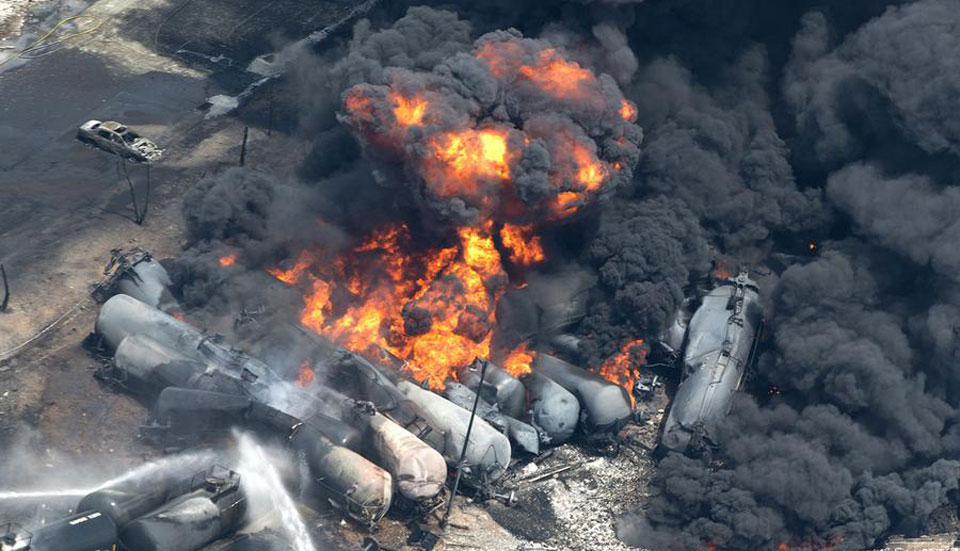
LAC MEGANTIC, QUE. -- Jean Clusiault is having to re-live the horrific train disaster at Lac Mégantic, but he says it's necessary -- he's part of a new class-action lawsuit looking to hold Canadian Pacific railway accountable. The class action got underway this week and could last up to seven months, with the judge expected to hear from more than 100 witnesses, bringing a new set of answers into what happened in the 2013 catastrophe.
Clusiault's daughter, Kathy Clusiault, was among the 47 people killed. She had just moved to the area. Her father is still looking for answers, he says, and the next seven months should deliver some of them. "It makes now eight years that tragedy happens, but for me, I still have my daughter in my mind," he said. The class action is based on the allegation that CP was ultimately responsible, since it contracted out to a smaller and less reliable railway.
In 2013, a runaway train carrying highly flammable crude oil levelled the town. The class action alleges that CP's decision to run the fuel through Lac Mégantic wasn't necessary and was motivated by profit. The allegations in the class action have not been tested or proven in court. To carry crude from Montreal, the company had other options, said the lawyer representing Clusiault and others in the proposed class action. "CP carried the crude oil from North Dakota to Montreal," said lawyer Daniel Larochelle.
|
|
(Editor's Note: We know there are lots and lots of trucks moving containers down the nation's highways. Why are these not moving by rail? Why are the highly profitable Class One carriers incapable, and/or uninterested in this traffic?) |
|
U.S. Rail Traffic Total Dipped in Week 37 |
|
U.S. railroads hauled 505,622 carloads and intermodal units during the week ending Sept. 18, a 3.1% decrease compared with the same week last year, according to Association of American Railroads (AAR) data.
Total carloads for the week were 234,790 units, up 3.5%, while intermodal volume was 270,832 containers and trailers, down 8.3%. Seven of the 10 carload commodity groups posted an increase compared with the same week in 2020. They included coal, up 7,232 carloads to 68,820; metallic ores and metals, up 5,203 carloads to 24,798; and nonmetallic minerals, up 2,054 carloads to 32,676.
Commodity groups that posted decreases were motor vehicles and parts, down 5,896 carloads to 11,709; grain, down 2,609 carloads to 19,432; and petroleum and petroleum products, down 388 carloads to 10,494.
|
|
(Editor's Note: A Phillip Randolph was a student and a follower of Eugene V. Debs, the fiery rail union leader, founder of the American Railway Union, and a hero to railroad workers of North America to this day.) |
|
The Leadership & Legacy of A. Philip Randolph: A Conversation with Gabriel Prawl |
|
Thursday September 30, 11:30am-1:00 (Pacific), Solutionary Rail has the honor of interviewing Gabriel Prawl, President of the A Philip Randolph Institute-Seattle (APRI) and President of ILWU Local 52.
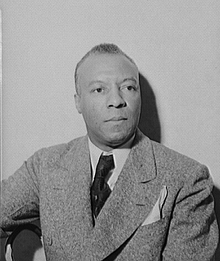
This will be a rich conversation that takes us through the history of the first black trade union to affiliate with the AFL-CIO (in 1925, the AFL, the American Federation of Labor) to the 1963 March on Washington and the 2004 Million Worker March, to the present day labor movement in the context of freight transportation. APRI Seattle has been a supporter of Solutionary Rail from the beginning, and this will be Solutionary Rail’s opportunity to learn more about APRI and the ILWU, building on our solidarity work with Railroad Workers United. On September 30, we will learn about the leadership and legacy of A. Philip Randolph (1889-1979) -- actor, socialist, union organizer, civil rights leader. Solutionary Rail advocates may be especially interested to know that Randolph was a lead organizer and first President of the Brotherhood of Sleeping Car Porters in 1925, the first African-American led labor union to receive a charter from the American Federation of Labor (AFL). Six weeks after the formation of the BSCP, the African American and Chinese American women who were the "maids" on the trains formed the Women's Economic Councils. All were subject to retaliation by their employer, the George Pullman company.
|
|
(Editor's Note: The NTSB is sending a team to investigate. We should know more as to the cause in the coming days.) |
|
Amtrak Empire Builder Derails in Montana (Updated Sept. 27)
|
|
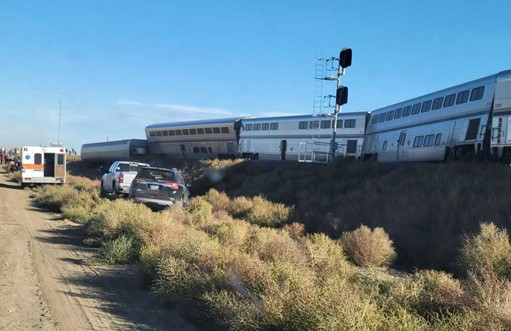
Amtrak’s Empire Builder train 7/27 traveling westbound from Chicago to Seattle/Portland on Sept. 25 derailed near Joplin, Mont., at approximately 4 p.m. MT. The railroad has confirmed that three people have died as a result of the accident.
The New York Times reported that dozens on board were injured, and of those, five were still hospitalized and in stable condition as of Sept. 26. The train, comprising two locomotives and 10 cars, eight of which derailed, was carrying approximately 141 passengers and 17 crew members, according to Amtrak. The derailment occurred on BNSF tracks approximately 3 miles west of Joplin, which is about 100 miles north of Great Falls, in the vicinity of Buelow, Mont. The Times report said the train “was traveling through an apparently flat and straight section of the [Amtrak] route.”
BNSF on Sept. 27 told Railway Age that the “cause of the incident is under investigation, but BNSF can confirm that the tracks were last inspected on Sept. 23 as part of BNSF’s regular safety inspections across our network. BNSF will provide additional details as they become available.”
Late on Sept. 25, the National Transportation Safety Board (NTSB) released a statement on Twitter saying it was “launching a go-team” to investigate the derailment; it announced via Twitter on Sept. 26 that a media briefing with NTSB Vice Chairman Bruce Landsberg will be held Sept. 27.
Amtrak has “a team on the ground to fully support the NTSB as they investigate the cause of the derailment,” the railroad said in a Sept. 26 statement.
|
|
Deutsche Bahn Settles Conflict with Union GDL |
|
After three strikes and a seemingly unresolvable conflict, there is finally an end to the collective bargaining dispute. The last few days, there were confidential and intensive negotiations after Deutsche Bahn and union GDL approached each other on the contentious issues. GDL boss Claus Weselsky and Deutsche Bahn Personnel Director Martin Seiler presented the results at a joint press conference in Berlin. The negotiations started again with the mediation of the two Prime Ministers of Lower Saxony and Schleswig-Holstein, Stephan Weil and Daniel Günther.
The previous strikes had a large impact on rail traffic in the country. In the first wave, 75 percent of long-distance trains were cancelled, for example. Transport of goods via rail also encountered many problems.
|
|
European Rail Gaining Post-Pandemic Momentum |
|
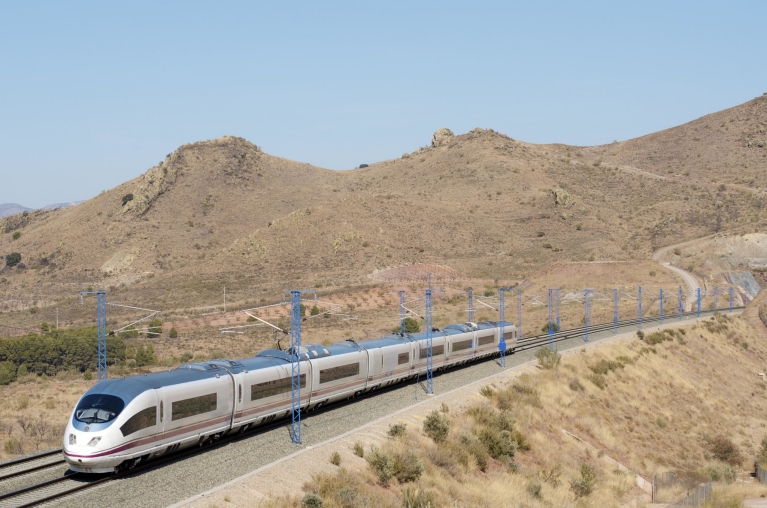
With the pandemic lessening, passengers are returning to train travel across Europe. The Spanish high speed trains from Madrid to Barcelona are exceeding ridership levels pre-pandemic. Meantime, the move for revival of conventional overnight sleeper trains gains momentum. Rail transportation - freight and passenger - is on the agenda across Europe. |
|
Webinar with Larry Spencer - UMWA District 20 Vice President - Key Leader of Coal Miners Strike |
|
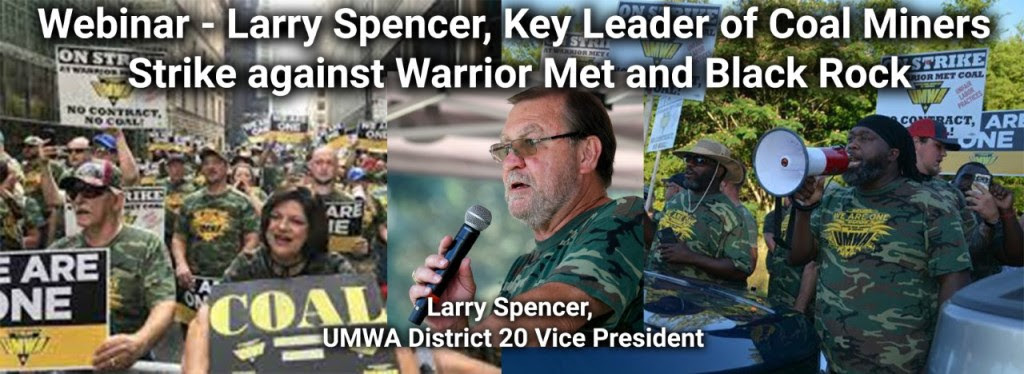
Larry Spencer is the UMWA District 20 Vice President, which represents the 1,100 coal miners in three UMWA locals which on strike against Warrior Met in Alabama since April 1, 2021. The strikers are fighting to reverse concessions that were foisted on them in 2016 when newly formed Warrior Met Coal bought two mines and one preparation plant during bankruptcy proceedings. To keep their jobs, Warrior Met made the miners work up to seven days a week and take a $6-an-hour pay cut, accept reduced health insurance, and give up most of their overtime pay and paid holidays. BlackRock became one of the three majority shareholders in the new company. Black Rock is the world's largest investor in fossil fuels and deforestation. |
|
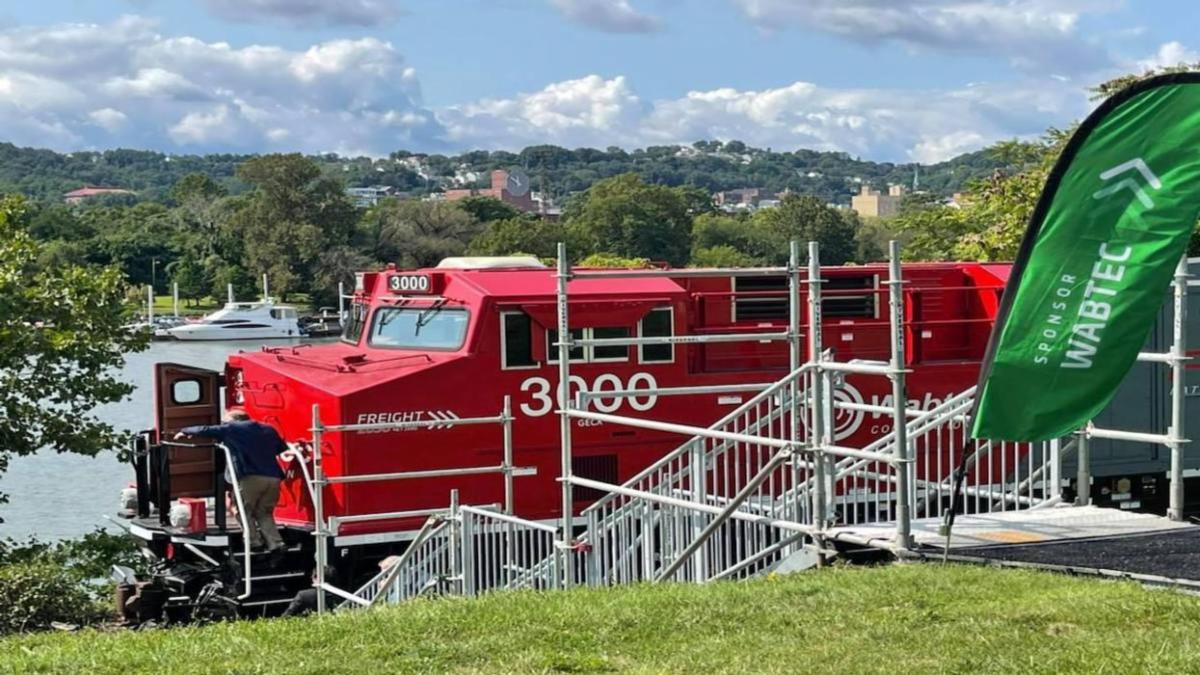
World’s First Battery-Powered Freight Train Unveiled in Pittsburgh |
|
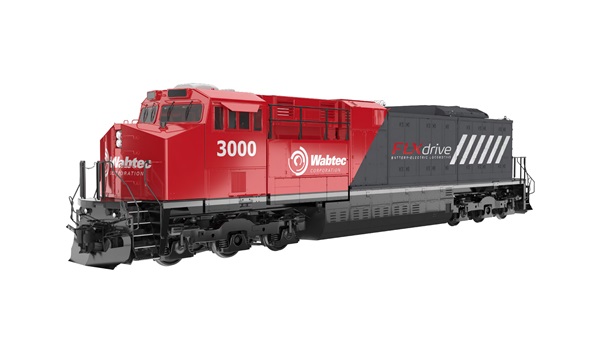
The world's first ever battery-electric freight train was unveiled in Pittsburgh on Friday.
The train, known as the FLXdrive battery-electric locomotive, was built by rail-freight company Wabtec and showcased at Carnegie Mellon University as part of a bid by the two organizations to decarbonize rail freight transport in the U.S., The Guardian reported.
"A bolder, cleaner, more efficient transportation system is in our grasp," Wabtec chief executive Raphael Santana said, as The Guardian reported. "This is just the beginning."
In addition to partnering with Carnegie Mellon on this venture, Wabtec is also working with fellow freight company Genesee & Wyoming, according to Railway Age.
"This partnership with Carnegie Mellon University and Genesee & Wyoming further strengthens our efforts to decarbonize global rail transportation and will significantly increase freight rail utilization, efficiency, and safety throughout the rail network," Santana told Railway Age. "The transportation sector is at a critical inflection point. With technologies providing increased battery and hydrogen power capacity, we have the potential to eliminate up to 120 million tons of greenhouse gas emissions per year in North America."
The train completed a successful trial run in California earlier this year, traveling for three months and 13,000 miles between Barstow and Stockton and reducing fuel consumption for the journey by more than 11 percent.
|
|
|
|
|
|
|