Volume 120

Green Heat News
August 2019
Focus on NSPS
The EPA recently sent a memo to wood heater test labs and third party certifies about significant lapses in documenting certification tests using the ASTM cord wood test method and potentially significant lapses in cord wood testing.

An infomercial from US Stove that is worth reading: “The company has been able to avoid major retail price jumps on the new stoves compliant with the 2020 EPA rules. While many stove producers have added catalytic combustion … U.S. Stove engineers have developed a number of non-catalytic technologies."

The draft is the latest in a series of events that began in January 2018 when the OECA released interim  guidance  intended to “begin the movement toward a more collaborative partnership” between the EPA and states authorized to implement and enforce federal environmental laws and regulations with regard to “all EPA compliance assurance activities, such as inspections and enforcement.”

The EPA just updated its wood heater database to add columns showing which stoves were newly certified and added to list, and the size of the firebox. AGH and others had urged them to include additional info on their database to make it more consumer friendly. We think firebox volume may be more important than BTU output.


Focus on Congress
This bill would establish a federal EPA managed stove change-out program at $75 million a year for 6 years. New heaters have to meet Step 2 standards or cleaner and be 65% efficient or greater. Old stoves do not have be uncertified. More analysis from AGH soon.
Focus on Health & Air Quality
“There's a tradeoff to be made,” he said. “It really depends on how clean the wood-burning stoves are and what source of power they're replacing. “From an air pollution point of view, this (switching from heating oil or propane to wood) is probably not such a good thing, and near-term climate in the Arctic, not such a good thing,” Shindell said. “For long-term climate and CO2, it probably is a good thing. It is a complicated tradeoff.”

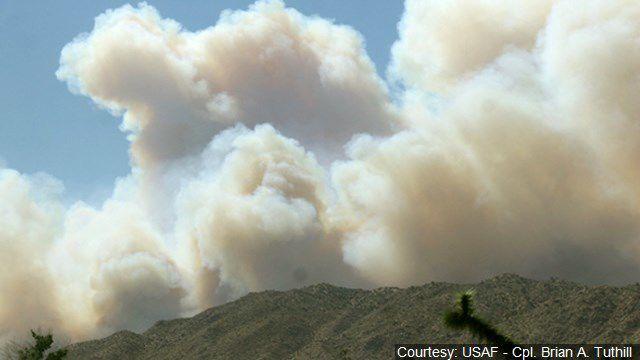
The best way to protect yourself from wildfire smoke is to have a clean air refuge be the bedroom because more time is spent there sleeping. Set up a HEPA air filter and limit your use of candles and stove-top cooking.

A peer reviewed study confirmed that hearth and campfires induce relaxation as part of a multisensory, absorptive, and social experience. For early humans, fire likely extended the day, provided heat, helped with hunting, warded off predators and insects, illuminated dark places, and facilitated cooking.


Best of July Facebook
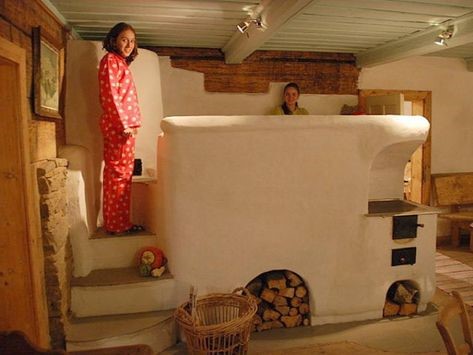
The tradition of heated sleeping platforms continue in the west. It was - and still is - popular in China, Korea and Tibet. In China, its called a Kong, in Korea an Ondol. In Asia, you could cook on the fire as it was heating the masonry mass of the bed.

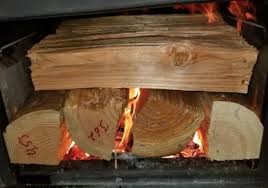
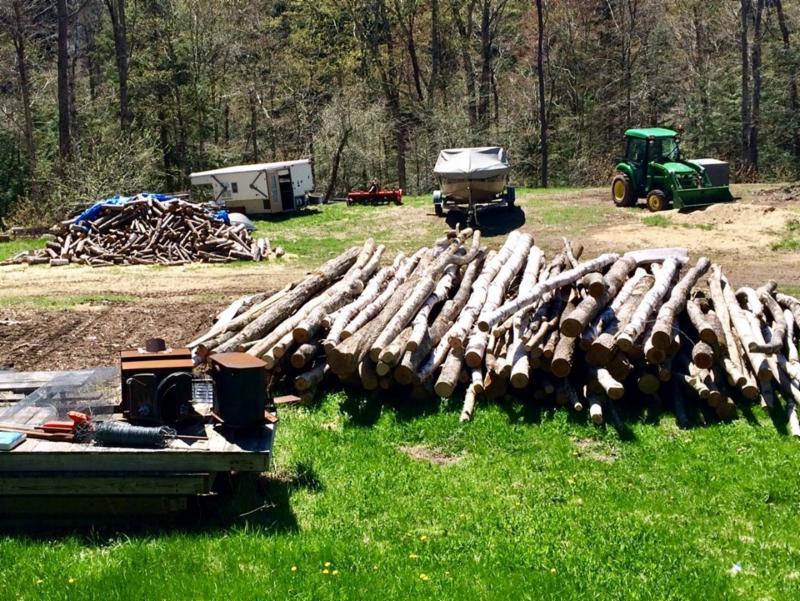
Buying firewood doesn't mean paying $250 - $400 a cord. Thousands of rural families have logs delivered, then they cut it up, split it and stack it. That way a cord only cost around $150, delivered to your door.
State & International News
States

Alaska: Fairbanks North Star Borough Assembly is moving forward on a testing program for ESPs – electrostartic participators that were also tested at the Wood Stove Design Challenge.

California: Electricity, once synonymous with coal, oil and gas, is now rapidly becoming a renewable fuel in many states. As more cities and counties consider banning new gas hook-ups and rely on efficient electric heat pumps, we are likely to see some homes opt for back-up wood and pellet stoves.

Massachusetts: Mass Clean Energy Center is ending its Commercial Ground Source Heat Pump effective immediately and committing $1.35 million to the Residential geothermal and modern pellet heating programs.

Canada

Rene Nunweiler would rather not burn wood, but BC Hydro’s rate heating rate structure was cancelled. She received a special rate from BC Hydro under a program called E-Plus where a separate meter kept track of how much electricity was used on home heating and was at least one third lower than the regular electric rate. (The program probably helped sustain a lot of electric resistance heating - not efficient heat pumps.)

Nova Scotia has a list of 100 buildings that it will consider converting to biomass heating. “When we buy oil, for every dollar we spend eighty cents goes offshore,” said Ibrahim. “With wood that is reversed, 80 cents of that dollar stays here.”

Europe

For the first time in history, the flame in the Olympic cauldron will be from a renewable fuel - wood pellets! The burner will not need any external power supply and will only be filled with pellets once a day. The only fuel used will be Swiss wood pellets - a sustainable solution and an opportunity to promote local knowledge and know-how.


Conferences & Webinars
Seneca, South Carolina, August 26-27, 2019
Register now for the annual convention.

Baltimore, Maryland, September 17-18, 2019
The Mid-Atlantic Bioenergy Council (MABEC) is looking forward to welcoming over 200 attendees from the Mid-Atlantic and beyond to Baltimore, MD September 17-18, 2019.

Burlington, Vermont, October 10-11, 2019
Renewable Energy Vermont's annual forum brings together business leaders, system operators, architects, builders, manufacturers, engineers, scientists, policy makers, and regulators.

Verona, Italy, February 19-22, 2020
The most important facility and equipment fair for heat and energy production.

Wels, Austria, March 4-5, 2020
With more than 450 participants from over 50 countries each year, it is the largest annual pellet event worldwide.

New Orleans, Louisiana, March 11-14, 2020
Experience three impressive days of networking, deal-making, and inspiration.

New Orleans, Louisiana, April, 27-30, 2020
The Conference is the largest meeting of home performance and weatherization professionals in the country.

Washington DC, July, 2020
Competing teams exhibit and compete at the Build Challenge Event, as part of the Smithsonian Folklife Festival in Washington.
Featured Advertisement of the Month
We recently received a promotional email from a foreign stove manufacturer that said: "The smoke must be invisible and must not smell, then neither the environment nor the people are bothered. If you use a new modern wood stove properly, it does not pollute." The Danish Ecological Council started a campaign to rebut this hype to ensure that consumers realize stoves emit PM during all phases of their burn.
Please support our work!
The Alliance for Green Heat is an independent non-profit organization working to promote cleaner and more efficient biomass heating. Please consider making a generous contribution. The Alliance is a tax exempt 501 (c)(3) organization.

  Become a Green Heat Supporter: Make a donation here 
Parting Thoughts
Firewood stacking is an ancient art, started long before humans arrived by
the Bagworm moth.

Alliance for Green Heat | (301) 204 9562 | contact@forgreenheat.org | | www.forgreenheat.org