|
|
Defending wildlife and habitat through:
Advocacy
Conservation
Education
|
|
|
News & Updates: January 2022 |
|
In this issue:
- Sign up to attend the first annual Kansas Lek Treks Prairie-Chicken Festival!
- Hone your birding skills this winter!
- Chapter Spotlight: Southeast Kansas Audubon Society documents a decline in bluebirds
- AOK Nature Walk Recommendations
|
|
|
Join us in April for the first annual
Kansas Lek Treks Prairie-Chicken Festival!
|
|
The highlight of this birding festival will include opportunities to view both Greater and Lesser Prairie-Chickens. No birdwatcher should miss seeing this yearly ritual unfold as males fight among themselves and display to females. The timing of the festival coincides with the peak of prairie-chicken breeding and female visitation to the lek.
The festival will also include field trips to Cheyenne Bottoms, Quivira National Wildlife Refuge, Smoky Valley Ranch, Little Jerusalem Badlands, and more!
Space is limited - register today! Please note, registration is open for COVID vaccinated individuals.
|
|
|
|
|
|
Kansas Lek Treks Saturday Evening Speaker:
Nate Swick
Host of the American Birding Podcast
Birding for Life: How Birding Can Make you a Better Person
We've all heard about birding as a lifetime activity, a fun and rewarding way to stay healthy. But there's more to birding than just that. Birding challenges us not only physically, but mentally. It encourages behavior that helps us make good decisions and it rewards critical thinking. And it allows us to be present of our surroundings and engaged with the world around us, often without even realizing it. The ABA's Nate Swick will make the case that there's no better activity than birding to make you a better person.
|
|
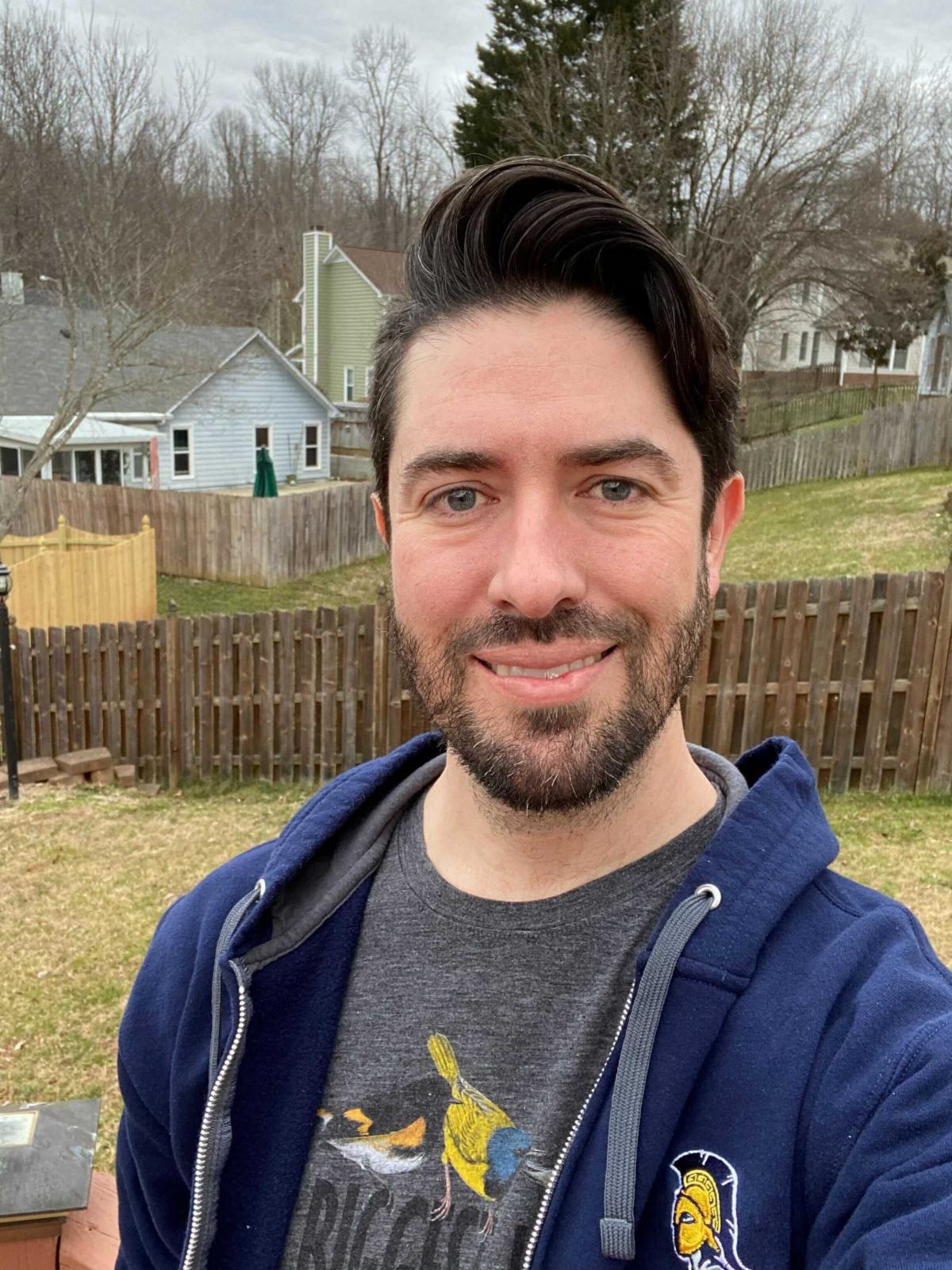
Nate Swick is the Digital Communications manager for the ABA and the host of the ABA's American Birding Podcast. He lives in Greensboro, North Carolina, with his wife, Danielle, and two young children. He is the author of A Beginner's Guide to Birding (Page Street, 2018) and The ABA Field Guide to Birds of the Carolinas (Scott & Nix, 2019). He occasionally serves as the chair of the North Carolina Bird Records Committee and will be trying to get 100 species in all of North Carolina's 100 counties for the rest of his natural life.
|
|
Hone your birding skills this winter! |
|
 |
Many birders are less active in winter due to the cold temperatures. However, if you make the effort, you will sharpen your identification skills so that you are ready when the migrants start to arrive in spring. Try these tips:
- Really get to know common birds. Set out a bird feeder or go to a local nature center regularly. Make sure you can identify all the common birds coming to a feeder. Work on telling the difference between a Song Sparrow and House Finch, and the differences between males and females. By knowing these common birds, you will more easily recognize when a less common bird visits the feeder, like Purple Finch, female Red-winged Blackbird, or Pine Siskin.
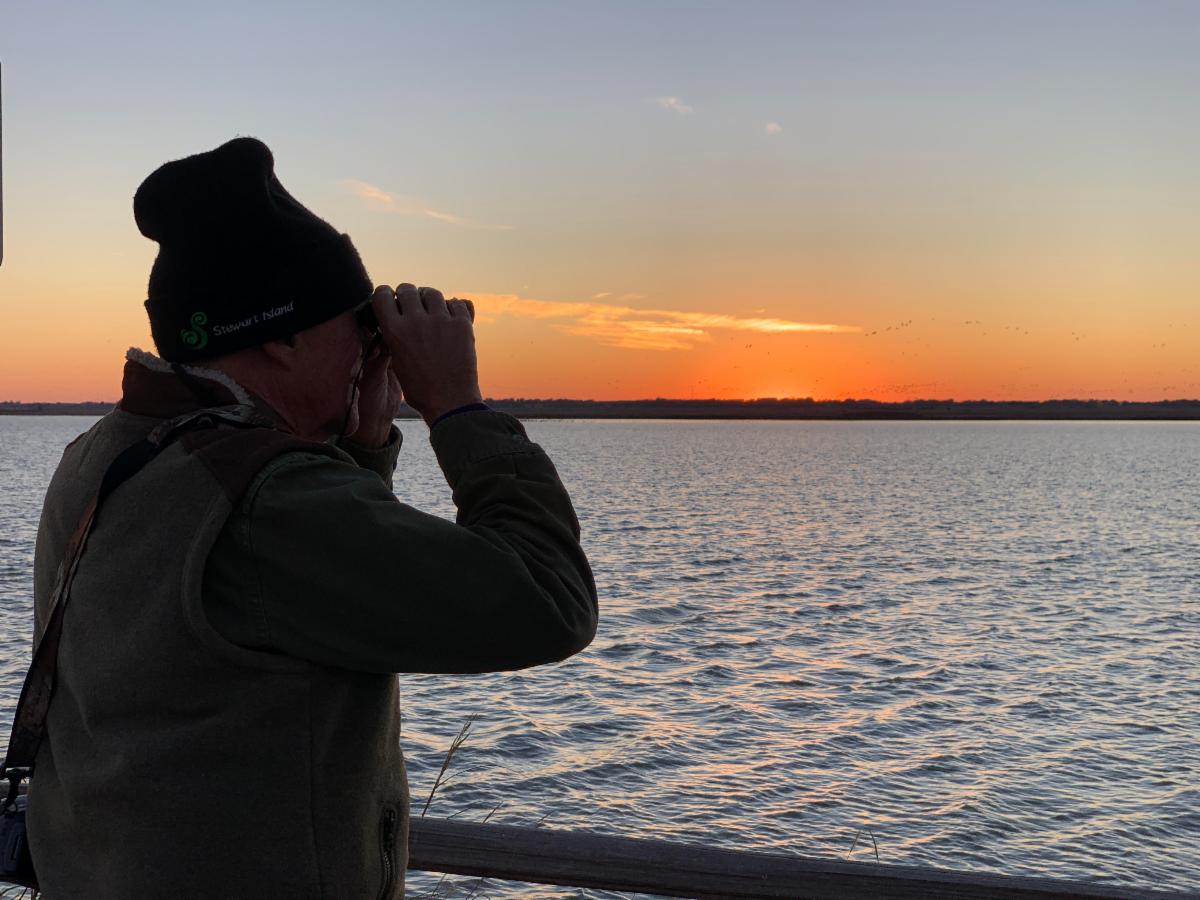
- Practice using binoculars. Finding a bird while using binoculars is a challenge for novice bird watchers. I recommend looking at the bird with your bare eyes, and then putting the binoculars between you and the bird. Again, doing this while watching bird feeders allows you to refine your bird-in-binocular finding skills, so you will be ready for those fast-moving warblers in the spring.
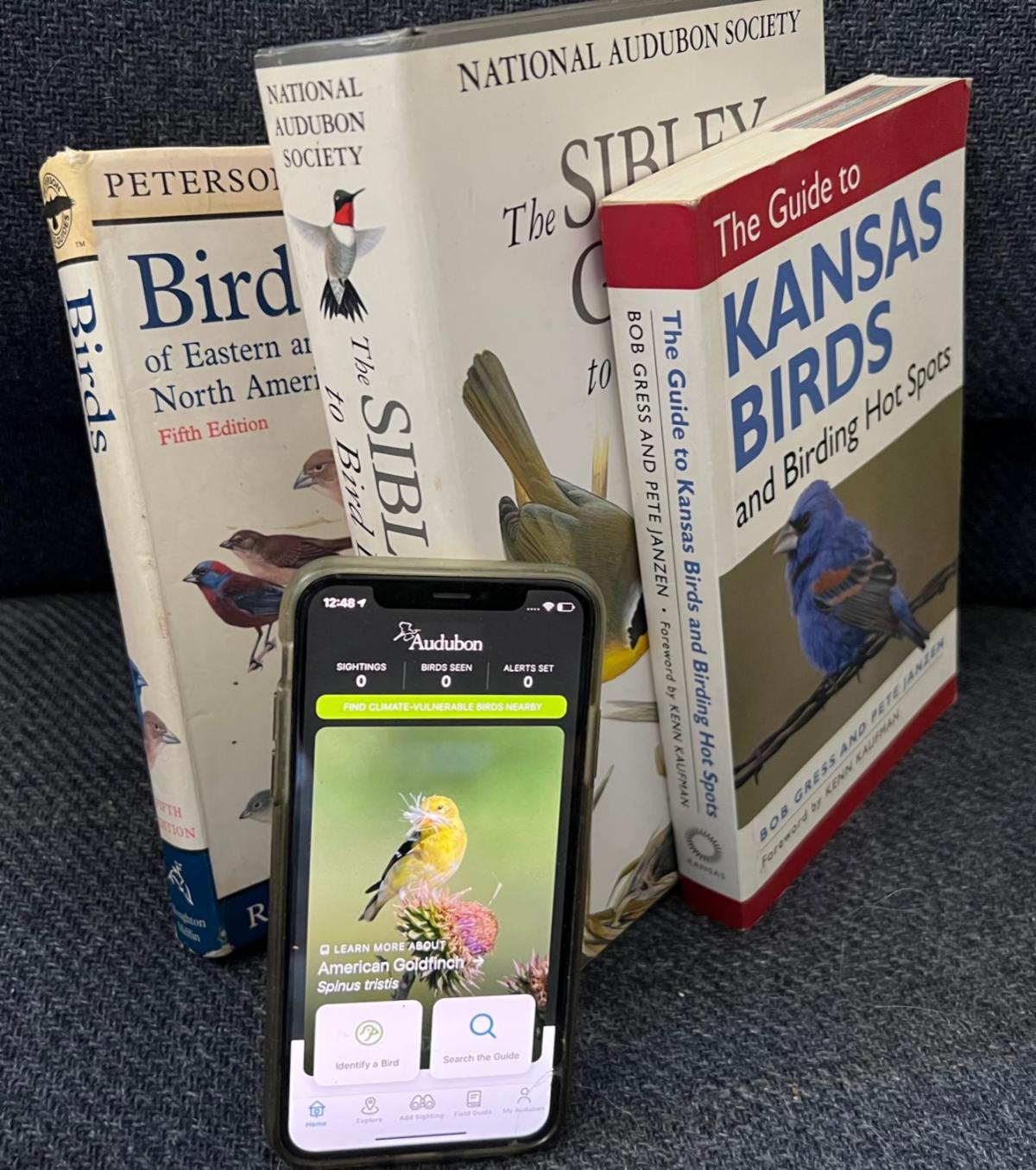
- Get out and practice identifying new birds. There are different ways to identify new birds, from tried-and-true field guides to birding apps. Many people like the Merlin Birding app by the Cornell Lab of Ornithology, but there are many others out there from National Audubon, Peterson, Sibley, and iBird. Most apps are free or reasonably priced, so try a few out and see which you like best. Remember when identifying new birds, expand your focus beyond their markings - you can also get important clues for identification by watching their behavior, what they are eating, and their size and proportions. The Merlin app walks you through the identification process by asking about size, color, and behavior.
- Connect with others who share your interest. There are Audubon Chapters throughout the state with members who love sharing their knowledge and the struggle of bird identification. Find one near you!
|
|
|
|
Chapter Spotlight: Southeast Kansas Audubon Society sees decline in bluebirds during a recent Christmas Bird Count in Parsons |
|
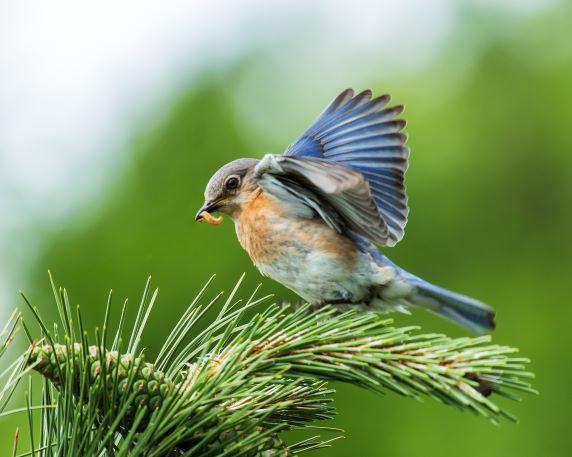
It is no surprise why so many people love bluebirds. Their rich blue back, their bright orange breast, largish size, and tendency for them to sit in the open make them a feast for the eyes. These insect eaters are common breeders in eastern Kansas. In winter, their numbers increase as the young of the year and migrants from farther north join the resident birds. Bluebirds populations fluctuate yearly and anecdotal evidence suggests that prolonged cold weather may be to blame.
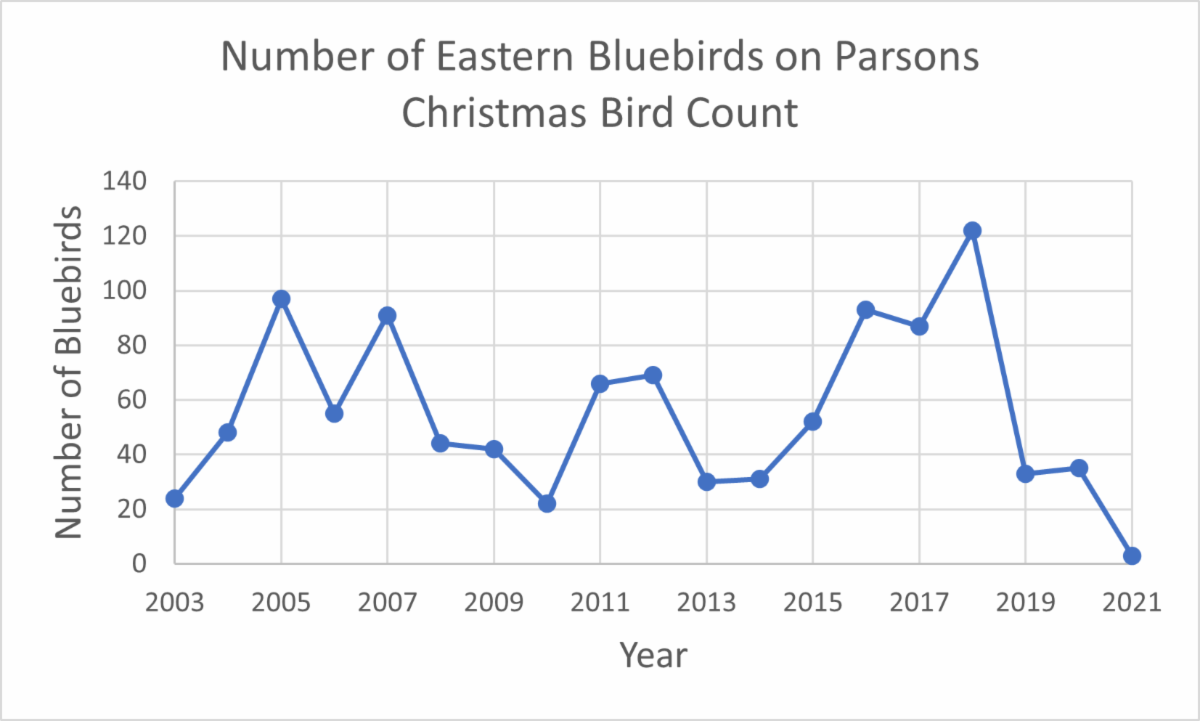
Southeast Kansas Audubon Society conducts an annual Christmas Bird Count in Parsons, covering the southern half of Neosho Co. Despite great conditions for counting (little wind, sunshine, a great crew of counters), only 3 Eastern Bluebirds were counted in 2021. The previous low was 22 birds in 2010. Andrew Burnett, who participates and coordinates the count, theorizes, "the hard freeze we had in late February [2021] did in the local population but I can't be sure. Bluebirds around here typically start building nest or nesting by then [February]. The lack of this species also occurred on my Breeding Bird Survey route this summer with a huge decline noted there also." He asked the Kansas Birding Facebook page, "How are your local KS populations?" Respondents said numbers were down in Quivira, Wilson Lake and Sumner County. However, someone reported good numbers in Johnson County.
Although bluebird numbers are down this year, their populations have the ability to bounce back. To help bluebirds, supply nesting boxes in open fields and along tree lines. Do not use insecticides where bluebirds forage. These and many more helpful hints about attracting bluebirds to your area can be found at the North American Bluebird Society's website.
*We thank Andrew Burnett for permission to share his observation. Photo by Wayne Rhodus
|
|
|
AOK shares favorite walks, hikes and birding spots |
|
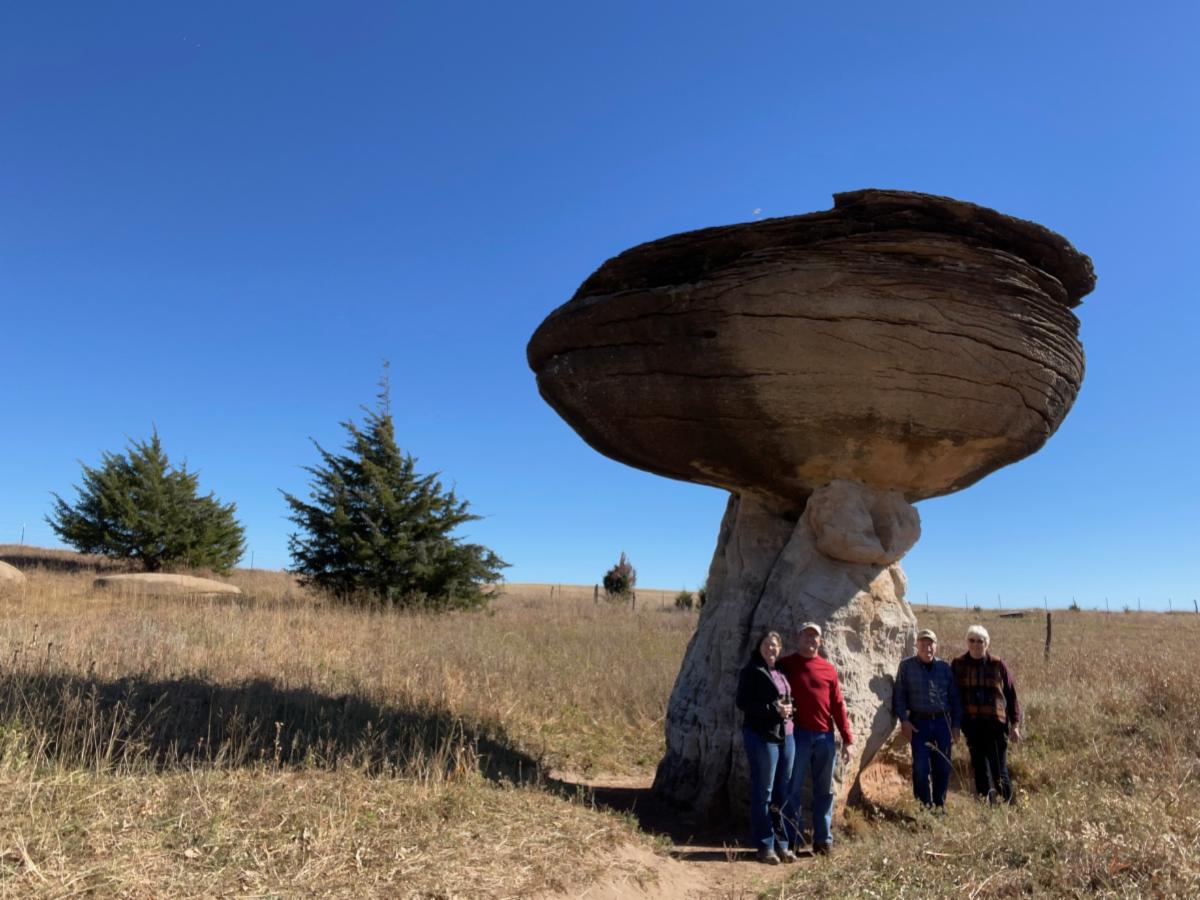
Mushroom Rock State Park is located at 38° 43' 32.4" N 98° 01' 50.3" W on the Prairie Trail Scenic Byway northwest of Marquette about 5 miles north of Kanopolis Reservoir and State Park and 3 miles west of K-141 on Avenue K in Ellsworth County.
Photo taken by Executive Director, Jackie Augustine, who visited the park in October and enjoyed the diversity of rock formations and the large flocks of Harris's Sparrow and juncos in the area.
|
|
One of the 8 Wonders of Kansas Geography, Mushroom Rock is the smallest, but one of the most unique, state parks in Kansas. The park is only 5 acres but boasts some of the most unusual rock formations anywhere. The rocks served as meeting places and landmarks for Native Americans and early pioneers such as John C. Fremont and Kit Carson.
Resembling giant mushrooms rising above the horizon, the Dakota formations of Mushroom Rock State Park are the remains of beach sands and sediments of the Cretaceous Period, the interval of geologic time from about 144 to 66 million years ago. Sandstone and sedimentary rock is held together by natural cement. The concretions that make up Mushroom Rocks are cemented calcium carbonate. The largest rock measures 27 feet in diameter.
|
|
|
|
Lana Arrowsmith - Hutton Niobrara Coordinator - Hutton Sanctuary Management & Reservations lanamicheel@gmail.com
Audubon of Kansas
PO Box 1106 - Manhattan, KS 66505
785-537-4385
|
|
|
|
|
|
|