Issue 59

August 6, 2026

Time to Read: 6 minutes


-Hot Take-

The toughest thing to automate in this industry? Accountability.

Joke of the Week

Q: Why did the coolant line refuse to gossip?

A: It already leaks enough.

Ask a CAM Pro

Real shop problems. Answers from people who have been there.

How can I create custom operations to save time?


Custom operations save time by packaging a proven machining method so it can be reused with fewer selections. The best custom operation captures process knowledge without becoming so rigid that it fails on normal part variation.


Start with a repeatable process

Look for operations your programmers build the same way again and again. Good candidates include:

  • Spot-drill, drill and chamfer sequences
  • Standard pocket roughing and finishing
  • Bore roughing and finishing
  • Face-milling routines
  • Deburring and engraving
  • Recurring feature families


Do not build a custom operation around a one-time workaround. If the original process has not been proven, saving it only makes the mistake easier to repeat.


Capture the settings that make the process successful

Depending on the CAM system and the type of reusable template it supports, a custom operation may store the tool and holder, cutting parameters, coolant, tolerances, stock allowance, stepovers, stepdowns, entry and exit moves, linking behavior, compensation method and operation naming.


Save the settings that define the machining strategy, but be careful with values tied to a specific part, machine or setup.


Keep job-specific decisions visible

Geometry, feature depth, clearance planes and final dimensions should normally be reviewed each time the operation is used. Work offsets and setup orientation may be controlled separately at the setup or coordinate-system level, depending on the CAM system.


Tool selection, speeds and feeds may also require adjustment based on the material, tool condition, machine capability or workholding rigidity.


A good custom operation accelerates programming without encouraging blind acceptance. If a programmer can apply it without noticing an incorrect depth, clearance plane or work offset, the template is hiding too much.


Build around safe defaults

Use conservative, clearly understood defaults for parameters that could cause a collision, scrap a part or overload a tool. Avoid storing machine-specific moves in a template intended for multiple machines unless the CAM system can reliably manage those differences.


Always regenerate the toolpath, review warnings, verify remaining stock when that capability is available and simulate the complete setup. A saved operation is a starting point, not a substitute for verification.


Test and maintain it like any other shop standard

Test the operation on several representative parts and review the posted NC code before releasing it for general use. Give it a clear name, revision, owner and intended application. Document any limits, such as:

  • Approved materials
  • Minimum and maximum depth
  • Tool diameter range
  • Minimum corner radius
  • Compatible machines or controls
  • Required workholding or clearance


Revisit the operation whenever tooling, posts, machines or shop standards change. An outdated custom operation can spread bad information faster than programming from scratch.


Bottom line: Build custom operations from proven machining methods, preserve the settings that define the process and keep part-specific decisions visible. The best custom operation does more than save time. It gives every programmer a reliable starting point without removing the judgment required to apply, verify and post it safely.


Have a programming question?


Send it in for the next edition of Ask a CAM Pro!

Shop Floor Debate

What is the most expensive thing to be wrong about?

Last week's debate: Less than two percentage points separated the top answers. See which one edged ahead.

From the Floor

Owning the Crash Beats Hiding It


“The day a new operator crashed a machine, I braced for the worst. He had only been with us a couple of months, and this was not a little love tap. It was the kind of crash you feel in your bones.


What set him apart was what he did next. He stopped the cycle, tracked me down, and owned every second of it. He told me exactly what happened before I even saw the damage.


Machines get dinged, downtime happens, and nerves get rattled. But standing there listening to him tell me the truth, I could finally let out my breath.


In that moment, it was not about the cost or the downtime. It was about responsibility. Around here, owning a mistake carries more weight than any perfect run ever could. Mess up? Fine. Hide it? That is a problem.”


-Machine Shop Owner

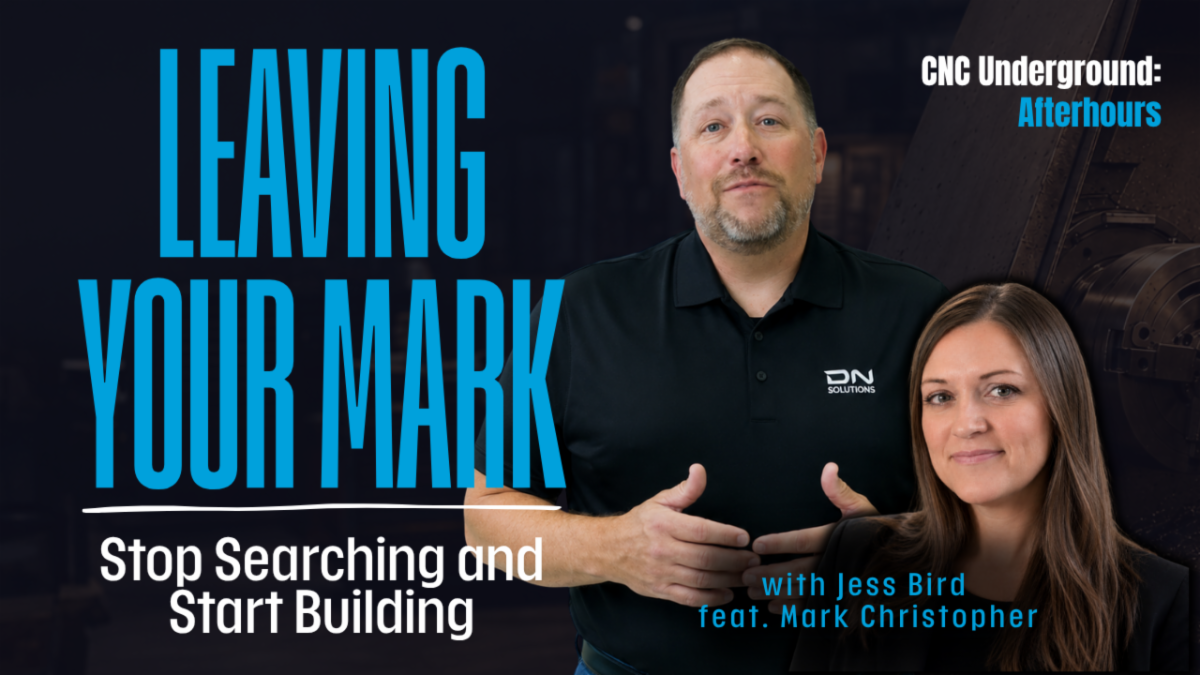
CNC Underground: Afterhours

Mark Christopher of DN Solutions joins CNC Underground: Afterhours to dig deep into the so-called “talent shortage,” the real challenges facing today’s shops, and how investing in people, not just machines unlocks a new era of growth.


Key Takeaways:

  • Find out why the core hiring issue may be unrealistic expectations, not a lack of talent, and what real investment in people actually looks like.
  • Hear how supporting and training employees can generate a stronger workforce, even if it means taking risks on beginners or workers with unconventional backgrounds.
  • Gain perspective on how automation and flexible shop management can boost productivity, prevent bottlenecks, and help you retain your best people.

Video of the Week (Powered by GibbsCAM)

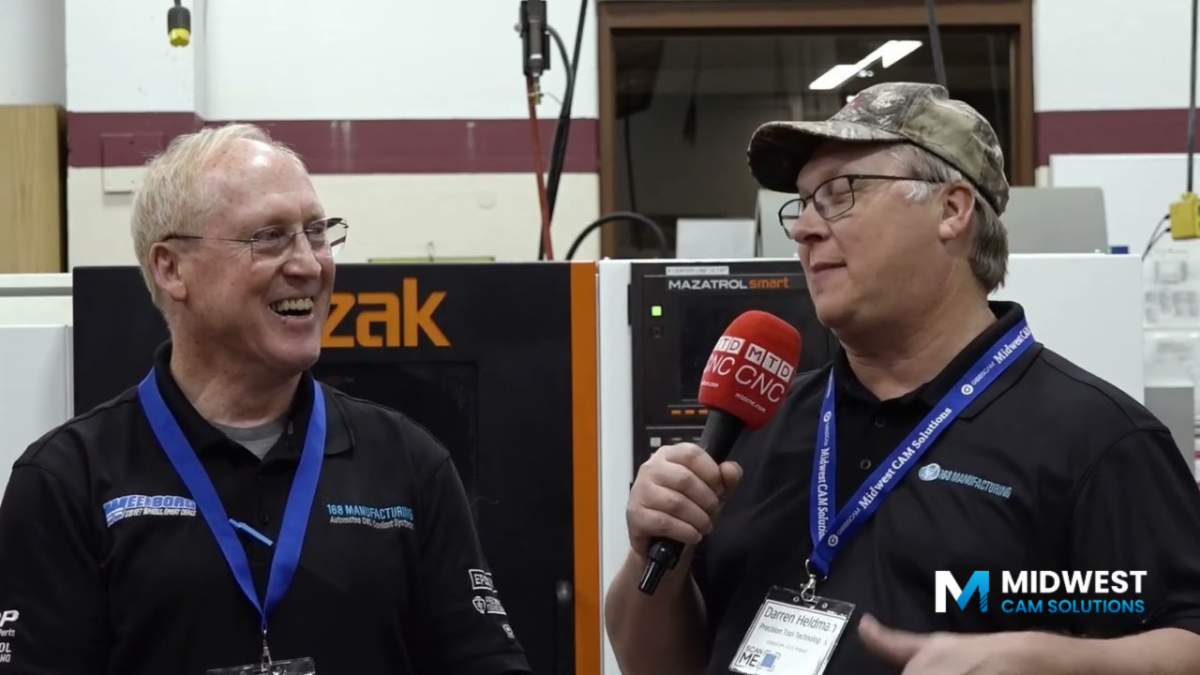
Lights-Out Machining with 168 Manufacturing & GibbsCAM

See how 168 Manufacturing keeps production moving around the clock with smart automation, GibbsCAM, and support from Midwest CAM Solutions.

CAMedy Central

Industry Intel

PMI Reaches Highest Point Since 2022

The Manufacturing PMI rose to 55.6% in July, up 2.3 points from June and its highest level since May 2022, with production, new orders, and employment all showing broad-based growth.


Mikron Launches Multistar Next CNC Rotary Transfer Machine For High-Volume, Flexible Precision Manufacturing

Mikron to showcase the Multistar Next at IMTS 2026, a fully CNC-controlled, modular rotary transfer machine that produces up to 50 components per minute for high-precision parts like electrical connectors while offering greater flexibility than traditional transfer systems.


Manufacturers Voice Support, Growth Objectives As America Turns 250

As the U.S. marks its 250th anniversary amid a manufacturing PMI in expansion territory, companies like Whirlpool, Sonepar, ABB, and industry groups like NAM and AAM are marking the occasion with anniversary campaigns, community initiatives, and renewed calls to celebrate American manufacturing's legacy.

Industry Growth (Open Jobs)

A few hot openings across the industry this week:


CNC Machinist/Programmer (Vertical Mills, Lathes) - Dynamic Air Inc. - Vadnais Heights, MN


Senior CNC Programmer/Machinist - Bel Fuse Inc - Waseca, MN


CNC Programmer & Setup Operator - Uniparts Olsen Inc - Eldridge, IA


CNC Machine Programmer (Aerospace & Defense) - Rensberger Technologies Inc - Sioux Falls, SD


CNC Machine Operator/Machinist - Owen Industries - Fargo, ND


Tool Maker - Bruckman Rubber - Hastings, NE


CNC Programmer - Dwyer Instruments, LLC - Grandview, MO


CNC Programmer - Sonaca North America - Fredonia, KS

Trade Show & Event Radar

Date

Event

Location

Sept 5

Minnesota Manufactured Day - Minnesota State Fair

Falcon Heights, MN

Sept 14-19

IMTS

Chicago, IL

Oct 6-7

Top Shops Conference

Cleveland, OH

Oct 21

GibbsCAM 2027 Rollout

with Midwest CAM Solutions

Brooklyn Park, MN

Oct 21-23

FABTECH

Las Vegas, NV

Oct 28-29

MD&M Midwest

Minneapolis, MN

Nov 11-13

Titans of CNC Boombastic Show

Flower Mound, TX

Did someone forward you this newsletter?

Subscribe to get your own copy every week.