|
In the literature
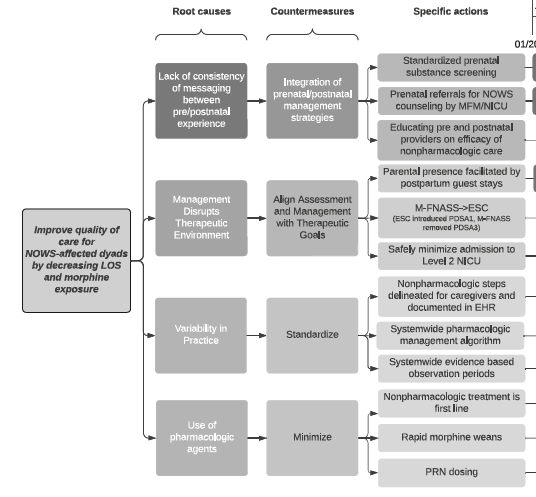
Addressing drivers of healthcare utilization for neonatal opioid withdrawal syndrome
OBJECTIVE: Aim to reduce healthcare utilization (HU) for infants at risk of neonatal opioid withdrawal syndrome (NOWS) by 30% in 1 year and sustain for 2 years.
CONCLUSION: Transition from MFNASS to ESC led to decrease in healthcare utilization for infants at risk of NOWS. QI methodology identified persistent drivers of variability
Eat Sleep Console for the Management of Neonatal Abstinence Syndrome: A Process and Outcomes Evaluation
Introduction: The purpose of the project was to conduct an evaluation of a practice change to Eat Sleep Console (ESC) on the postpartum unit and neonatal intensive care unit (NICU) of a Baby-Friendly® tertiary hospital.
Method: Guided by Donabedian’s quality care model, a process and outcomes evaluation of ESC was conducted through a retrospective chart review and the Eat Sleep Console Nurse Questionnaire, which assessed processes of care and knowledge, attitudes and perceptions of nurses.
Results: Improvement in neonatal outcomes including a decreased need for NICU admission (44% vs 20%; p = .022) and number of morphine doses (12.33 vs 3.17; p = .045) was noted preto post-intervention. Breastfeeding at discharge increased from 38% to 57%, but did not reach statistical significance.
Discussion: Use of ESC resulted in positive neonatal outcomes. Nurse-identified areas for improvement resulted in a plan for continued improvement.
|