Environmental Interpretive Center September 10, 2025 | | |
In this issue:
-
Introducing.....
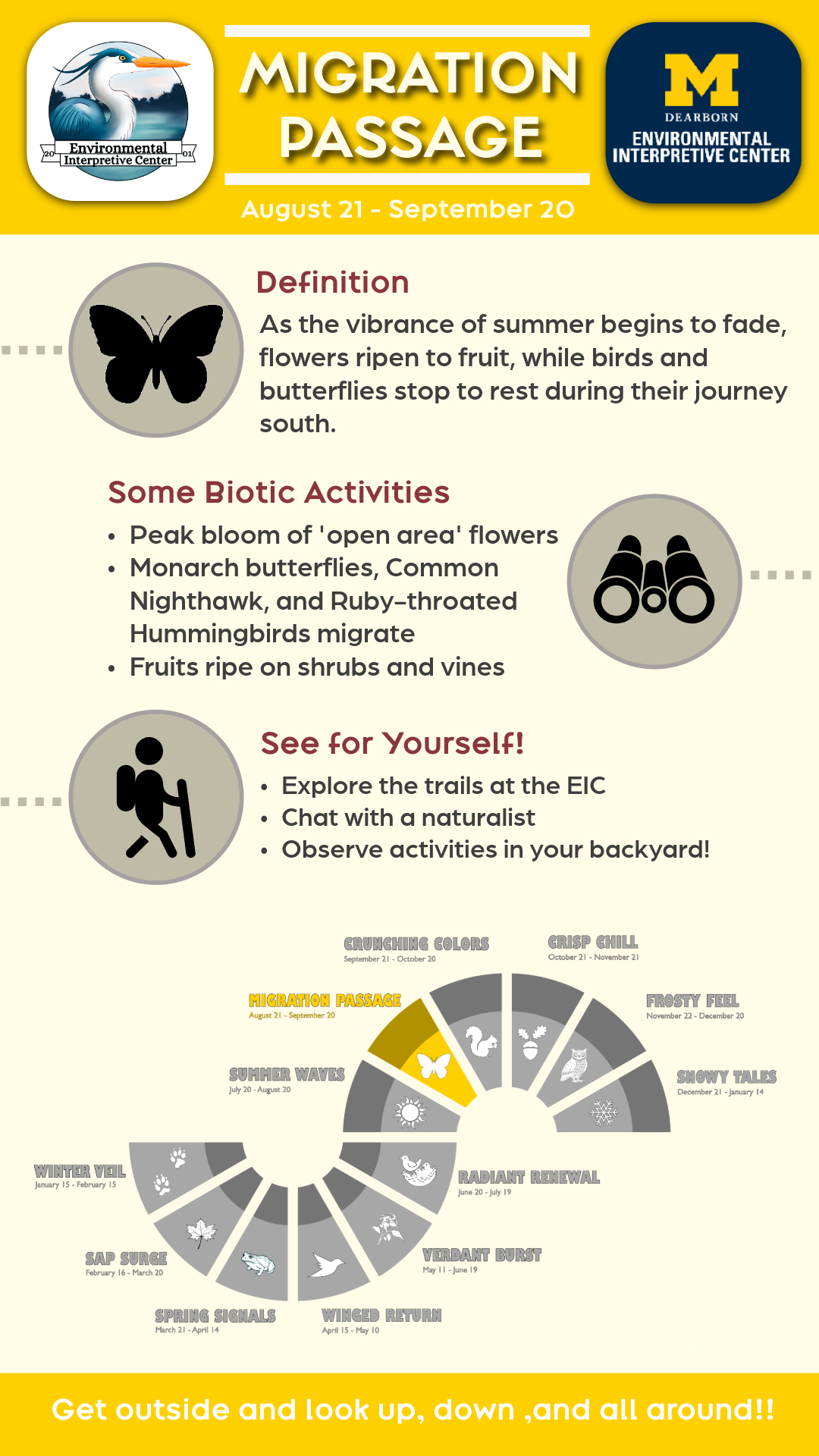
- Microseason "Migration Passage"
- Upcoming EIC Programs and Partner Events
- Avian Ambulance Service
- New Garden Art
- Pollinator Photo Contest
- What's "Growin' On" in the Community Organic Garden?
- Tales From the Trails: A "Berry" Good Place
- Greenways: Valerie's Legacy
| |
Natalie Sampson, Interim Director
Hello friends of the EIC,
I’m delighted to introduce myself, as I join the Environmental Interpretive Center as Interim Director this fall, while our Director Jacob Napieralski takes a well-deserved sabbatical.
I feel incredibly lucky to join at such an exciting time in the Center’s history as it is coming up on its big 25th anniversary next spring.
| | | |
It’s truly inspiring to be part of the EIC team and to witness all that staff, volunteers, and partners are already doing—restoring habitats, leading educational programs, and welcoming visitors of all ages to explore, learn, and care for our natural environment.
On campus, some of you may know me as a Professor of Public Health in the College of Education, Health, and Human Services*, working with local and national organizations to help make environmental health science and policymaking more accessible and inclusive. When I’m not on campus, I’m usually with my family, including my 1st and 5th grader—biking, wandering along the river in our hometown of Ypsilanti, or making art.
At the EIC, you’ll probably catch me out on the trails with my classes, facilitating community events, or collaborating with the amazing team as they connect people to our natural spaces. I look forward to supporting the EIC’s mission this academic year!
*Editor's note: Dr. Sampson earned her BS from the U-M School for Environment and Sustainability in 2003 and was selected as one of three Distinguished Professors of the Year for 2025 by the Michigan Association of State Universities. We are looking forward to working with her in the coming months.
| | | | |
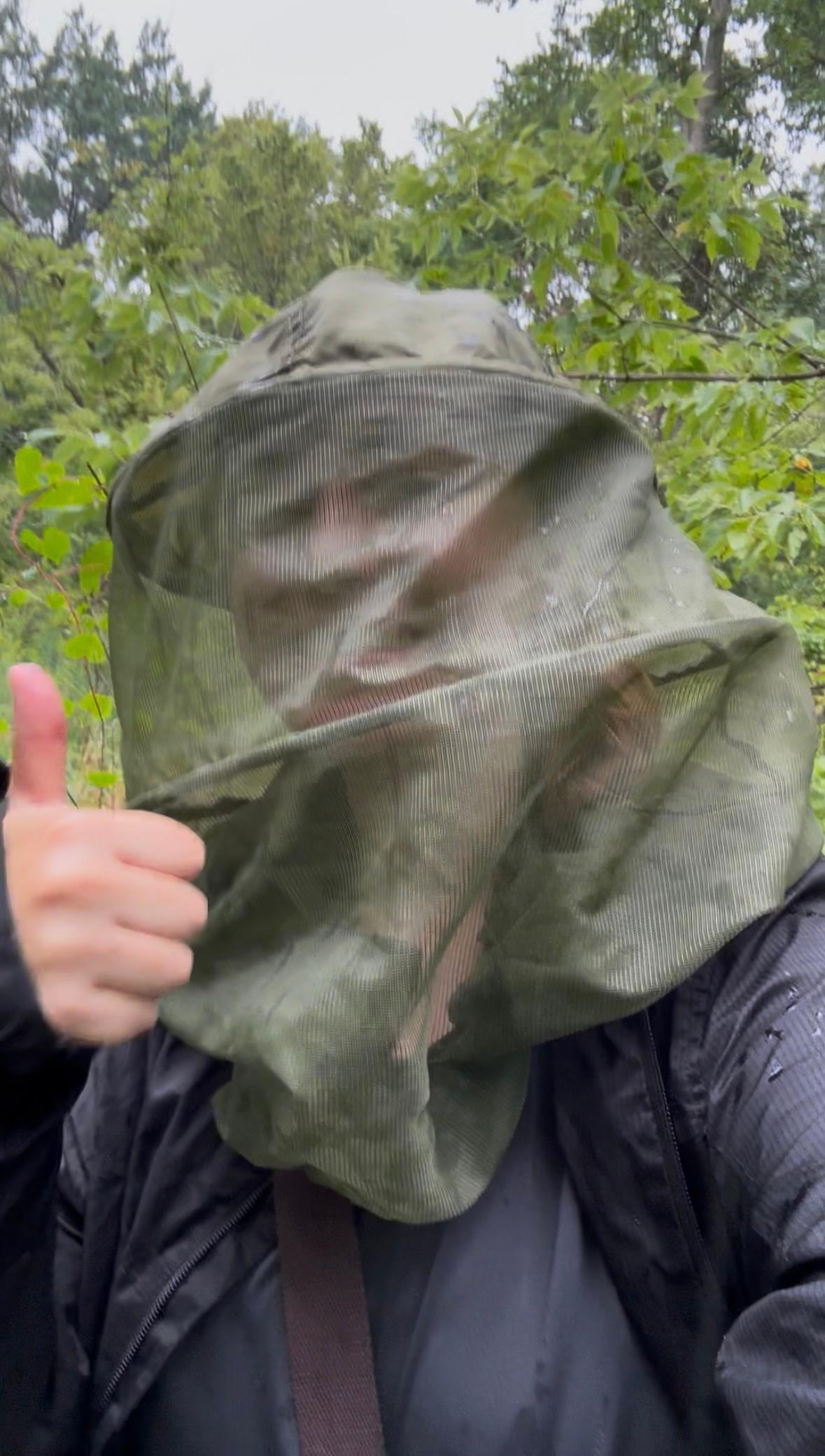
We have entered the "Microseason" of Migration Passage, according to our phenological (seasonal) calendar. Some of the changes may be subtle, but others you may have noticed in your own neighborhood.
One change I've noticed is the bird baths at my home have become "pool parties" for local robins and grackles. Well groomed feathers are essential tools for migratory and residential birds. -Ed.
| |
Nighttime Stroll
Friday, September 19, 7:30-9:00pm.
Recommended for ages 10 and older
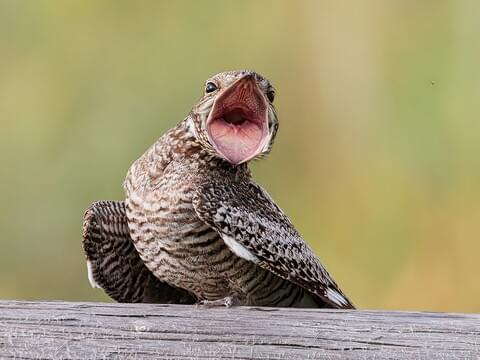
Plenty of birds migrate by the stars, so we can listen for the tiny chip notes overhead. exchanged between warblers and thrushes enroute to warm, insect-rich southern locations. Nighthawks may be snagging a meal as they loop and swoop above.
We'll enjoy the change from day to night, and summer to fall.
Please register for this program.
(Nighthawk photo by Bob Bowhay)
| | |
Photography in Nature Walk
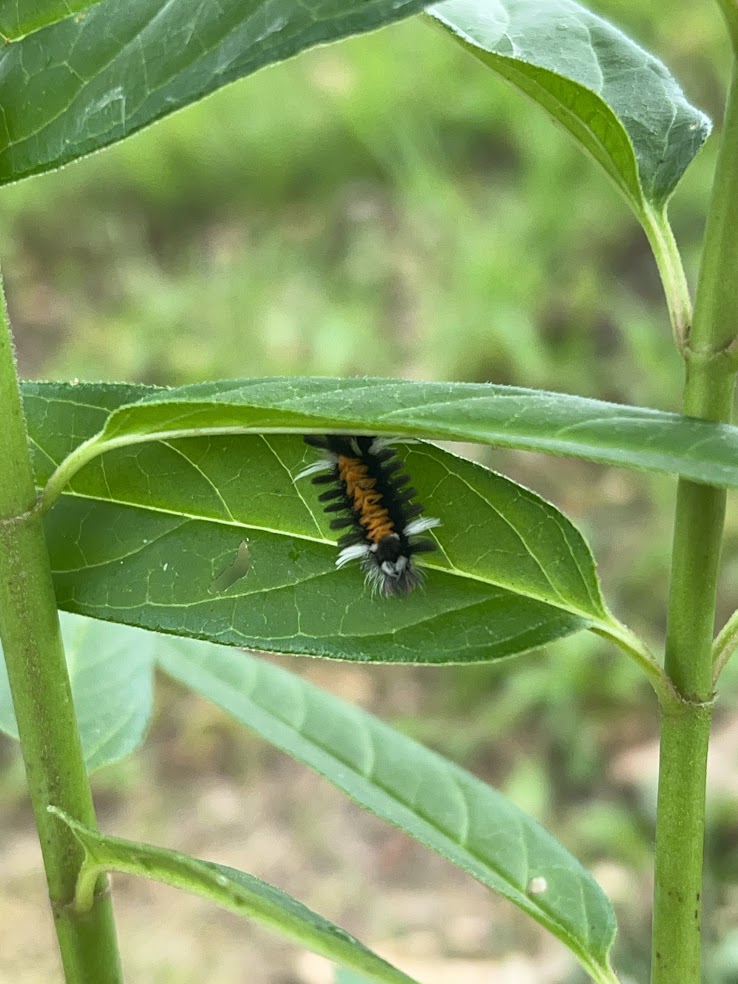
Capture seasonal changes along the Interpretive Trails in the Environmental Study Area. Join like-minded enthusiasts to record nature in pictures, like this fuzzy Milkweed Tussock Moth caterpillar, snapped in our Rain Garden out front. Our next guided walk will take place on September 25, October 23, from 2:30-3:30. Please register for these walks. m
(Tussock moth "cat" photo by Mike Solomon, leader of these walks!)
| |
Fall Migration
Bird Walks
9:00a.m.-11:00 a.m.
Sept. 13, 27, & Oct 4
Ages 12 and older.
Enjoy Saturday bird walks with Rick Simek in search of both migratory and residential birds along the Interpretive Trails.
| | | |
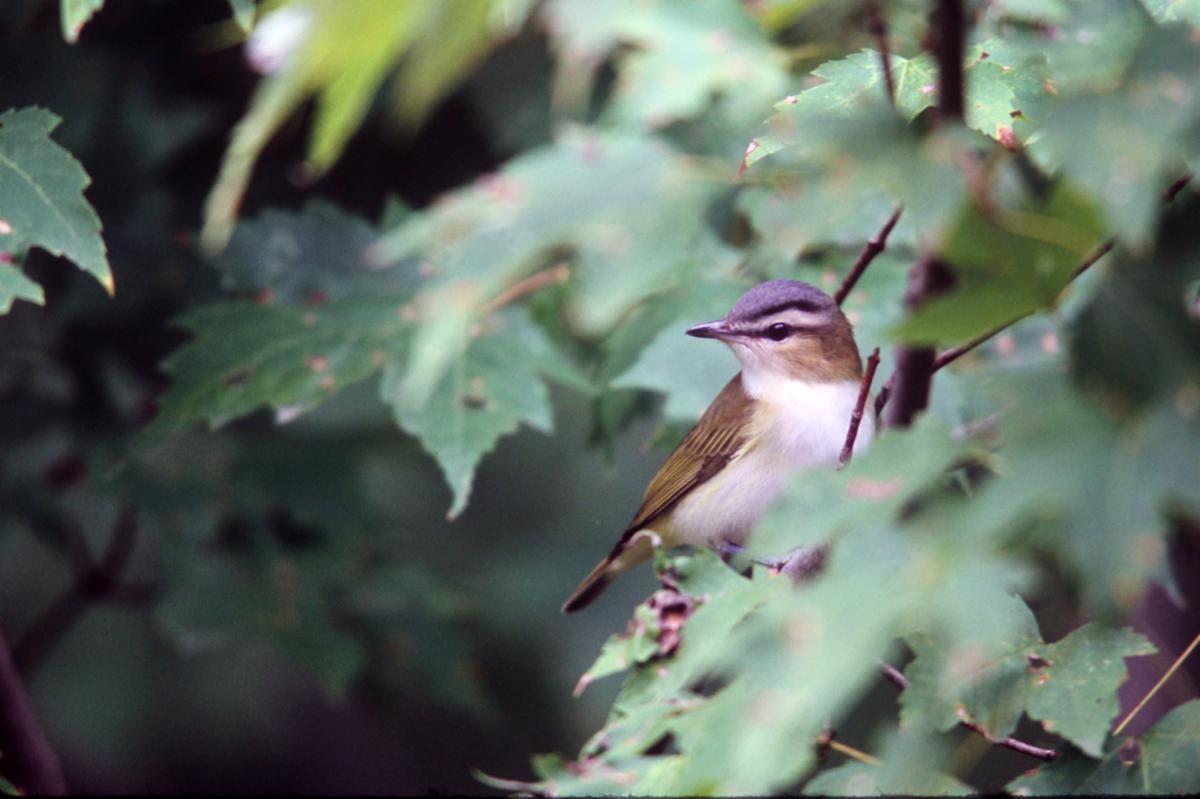
These leisurely paced bird walks reveal a variety of species, including those stopping over in the Environmental Study Area to rest and refuel on their southern journeys, some all the way to South America, like this little bird! Please register for these walks.
(Photo of Red-eyed Vireo by Jim Simek )
| |
Monthly Young Nature Explorers Program!
This monthly program offers four seasons of exciting outdoor science and nature investigations for children 9 to 12 years old. Monthly sessions take place on Saturdays from 9:30 am to noon, starting in September and continuing through May.
| | | |
Session topics include pond studies, insects and spiders, creatures of the soil, birds and migration, owls, animal tracking, wildflowers and trees, and learning about how maple syrup is made right here at the EIC. Participants receive a field pack, field guides, and assorted field equipment. There is a fee for this program, which requires pre-registration for this program.
Dates for the 2025-26 sessions are: Sept. 20,
Oct., 18, Nov. 14 (Friday p.m. for owls!), Dec. 13, Jan. 17, Feb. 14, Mar. 7, Apr. 18, May 9.
| | |
Partner Events
Friday, Sept. 12, 10 p.m.-midnight
Science Learning and Research Center (SLRC), Observatory
Learn about the Moon, planets, stars, nebulae and galaxies from staff astronomers and then use the observatory's powerful telescopes to see them for yourself. Check the observatory's homepage or CASL’s Facebook page one hour before the event to confirm suitable viewing and weather conditions.
Michigan Botanical Society Programs at the EIC*
*Programs will take place in Room 119 and are open to the public
Sunday, October 12, at 2:00 PM
Speaker, Skyler Principe
Learn how to use iNaturalist to not only benefit with your plant identification but help with ongoing projects. Skyler Principe has thousands on iNaturalist observations and will be instructing us on how to use this app.
Sunday, November 9, at 2:00 PM
Speaker, John H. Hartig Dr. John H. Hartig is the author of Rouge River Revived. John will discuss the Rouge River’s history, clean-up efforts and where the River stands today.
| | |
In recent weeks, folks have reached out to the Environmental Interpretive Center (EIC) regarding injured birds found in Dearborn. Unfortunately, the EIC does not have the resources, expertise, or licenses required to rehabilitate wild birds. The options available here at the EIC are the same options available to anyone. The Michigan DNR provides an extensive list of licensed wildlife rehabilitators by county, which we recommend in such cases. It is illegal to handle or keep wild migratory birds yourself without a license.
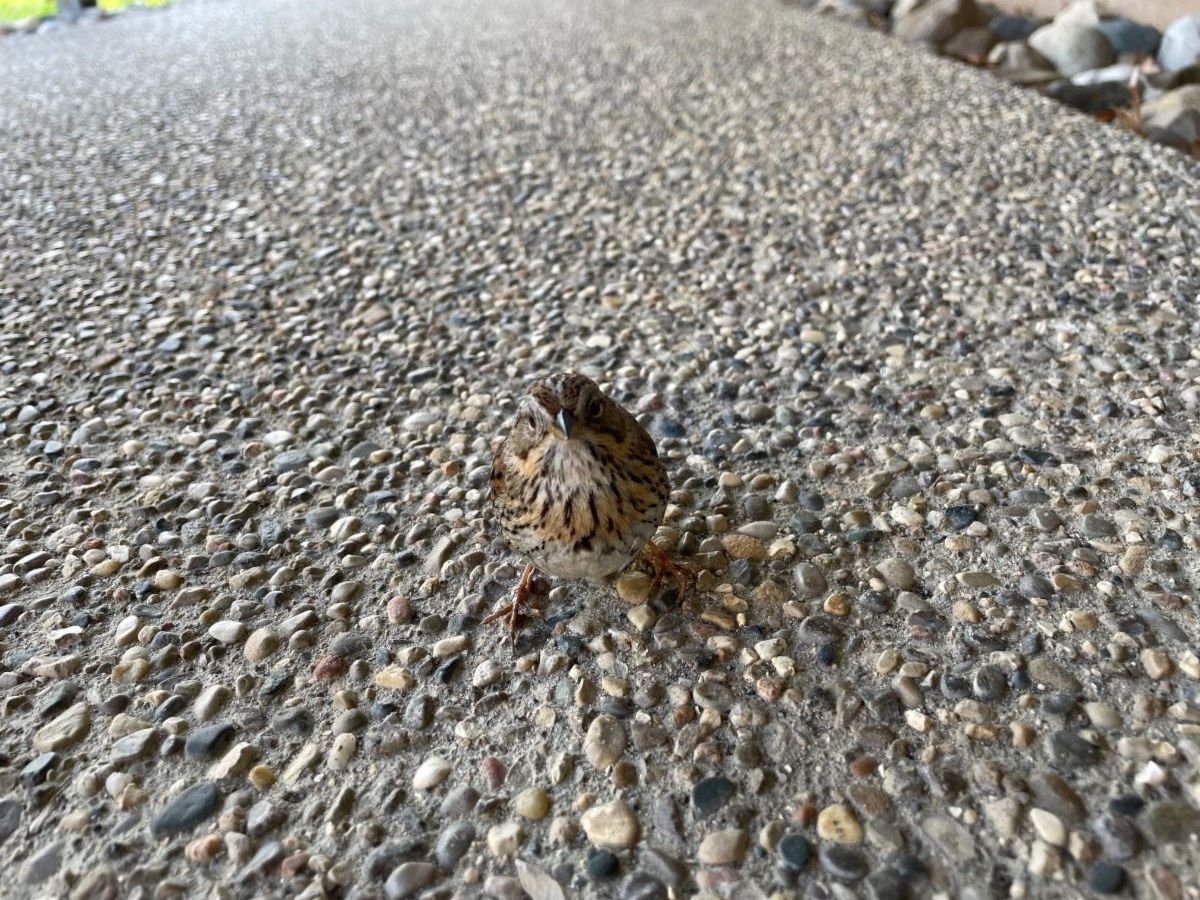
Injuries to birds increase during migration seasons, and fall migration is underway. Oftentimes, the birds are just stunned and need some time to recover, like this Lincoln's Sparrow (above) that Rick Simek encountered earlier this year. Usually, providing them with a dark, quiet place for a short time is sometimes all they need. A shoebox with a towel and air holes in the lid works well. Returning the bird to where it was first found is advisable. If they need further care, the options left are to transport them to a licensed rehabilitator, or to leave the bird outside and let nature take its course, which is often the best option.
| | |
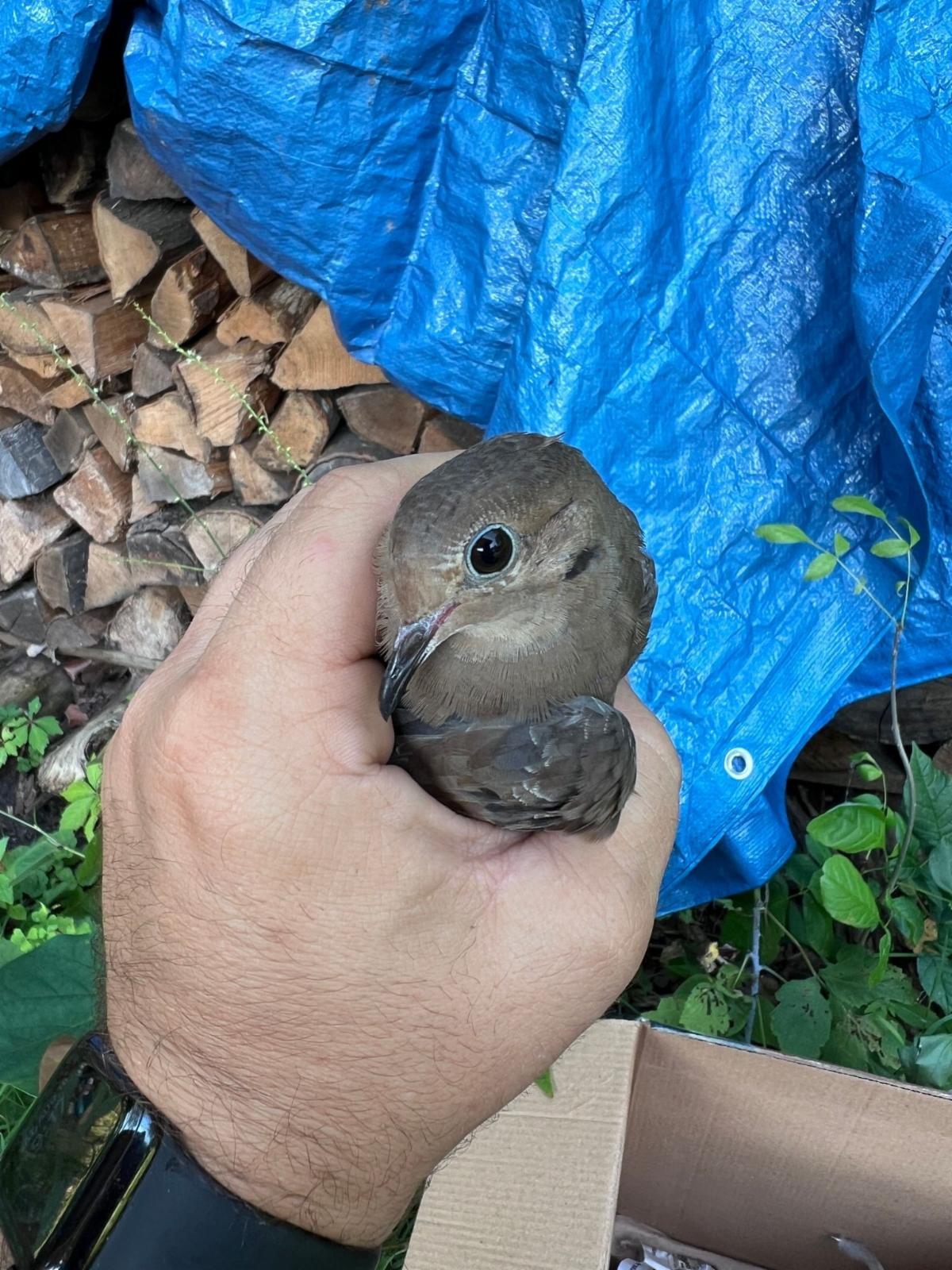
We received calls about two injured birds in the past couple of weeks. The first was a Mourning
Dove (Zenaida macroura) that was brought to us by a Campus Police Officer. I called around to several local rehabilitators, and took the dove to a rehabilitator in Macomb the next day. A follow up call about the bird confirmed its injuries were too severe and it had been euthanized--an unfortunate, but not uncommon outcome.
| | | |
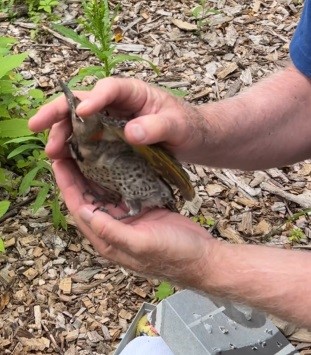
A week later, we got a call about an injured Northern Flicker (Colaptes auratus) from a member of the community, found after being hit by a car. A rehabilitator in Saline received this "patient," but it, too, succumbed to its injuries overnight. (Photos by Mike Solomon)
During migration, millions of birds pass overhead, according to Doppler radar. It is tragic to accept that many of these birds have traveled from far away places to meet their end due to a window collision. To reduce some of these deaths, please consider implementing some of the solutions suggested by organizations such as the Cornell Lab of Ornithology, the US Fish and Wildlife Service, and the National Audubon Society, particularly during this critical migration season.
-Mike Solomon, EIC Staff Naturalist
| |
New Garden Art!
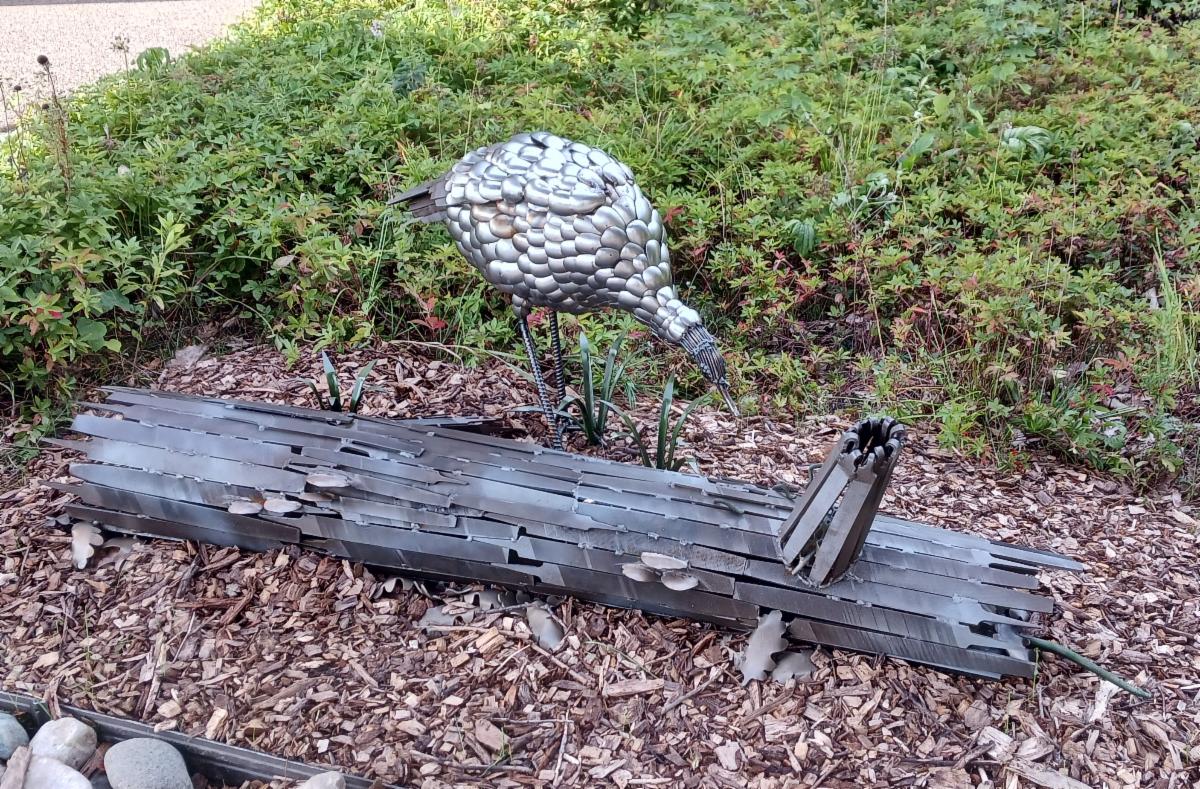
Come over and check out our unique art additions in the Rain Garden by local metal sculptor Laura Steiner! A turkey composed of spoons, rebar, and nails (there are some hidden creatures in the turkey sculpture pictured here) forages behind a hollow log made of a variety of metal files now welcomes EIC visitors.
| | | |
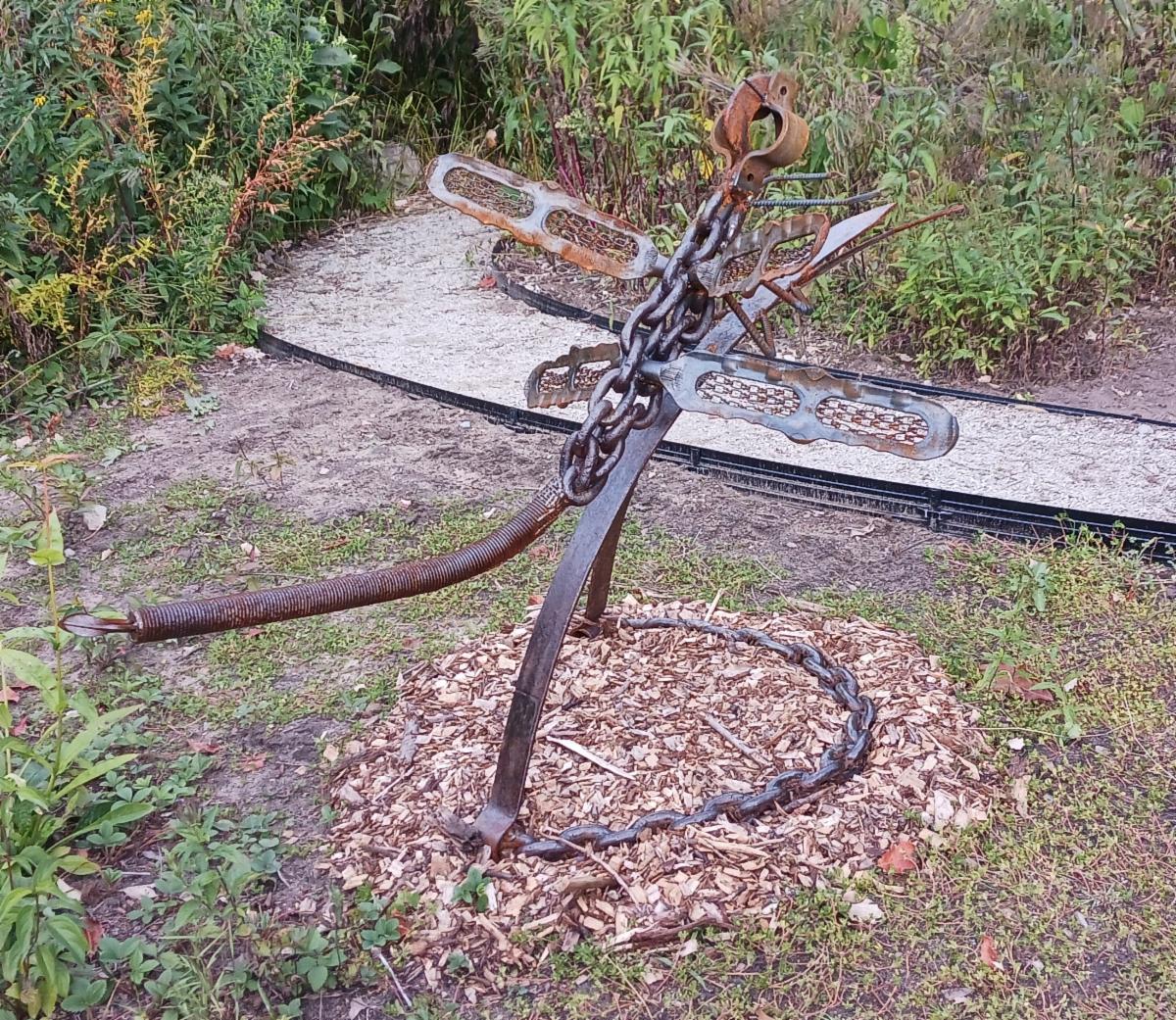
An "industrial strength" dragonfly is perched by Valerie's Loop in the Garden, hopefully catching any mosquitoes that await us. These art installations are some of the first among several that we look forward to sharing with EIC visitors, both inside and out. We will keep you apprised of these exciting changes as they are installed. Come take a look when you're on campus!
| | Enter the Pollinator Photo Contest! | | |
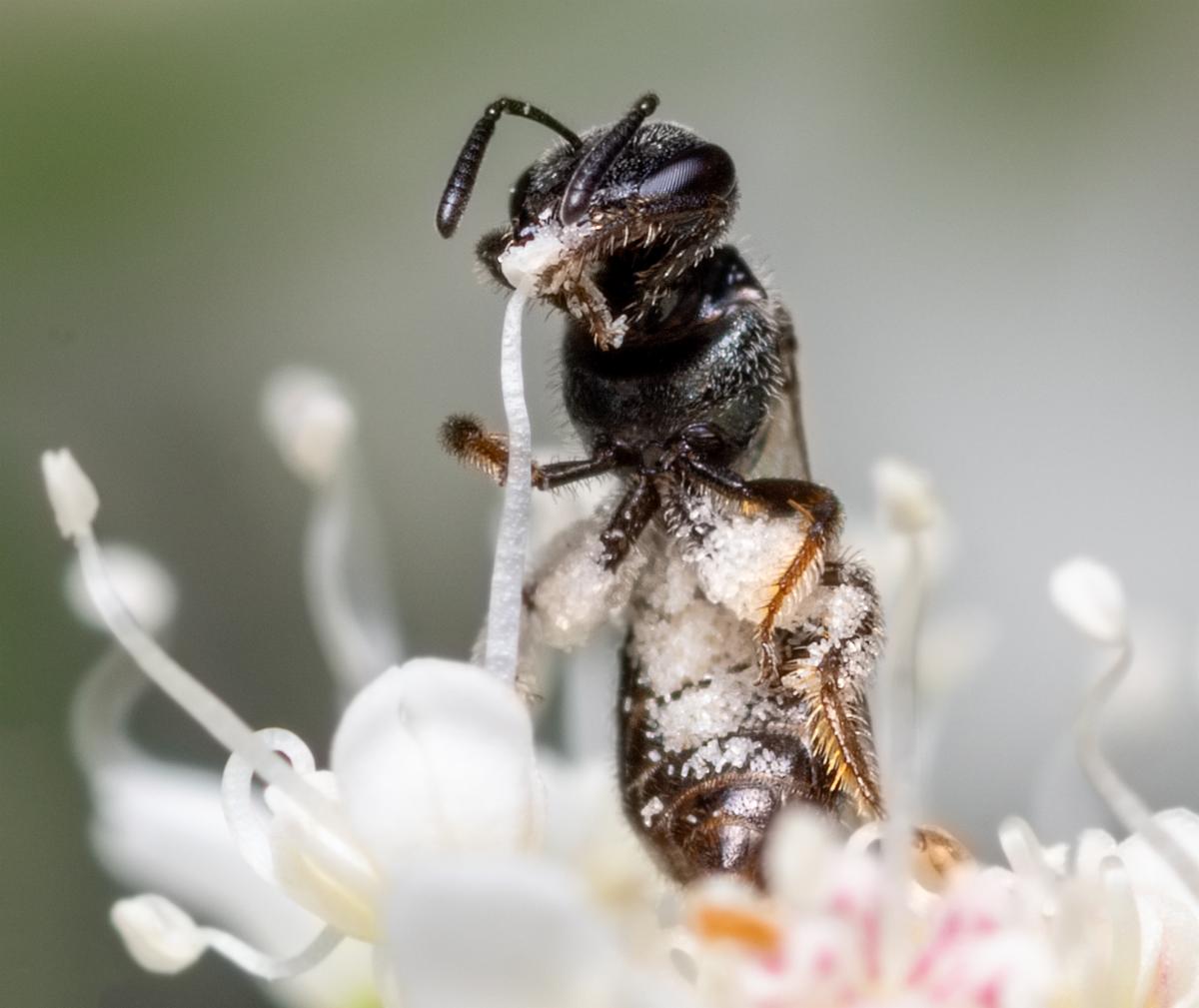
You still have time to enter the Pollinator Photo Contest! The EIC and UM-Dearborn’s Bee Campus USA Committee are still accepting entries for the 6th annual Pollinator Photo Contest. The goal of the contest is to help highlight the amazing abundance, diversity, and beauty of pollinators and their floral counterparts.
Photos may be submitted in either of two categories: pollinators up-close of pollinator-flower interactions. Entries will be accepted from June 1 to September 30, 2025, with winners announced by the end of October. Full contest details are available by visiting the Pollinator Photo Contest Website.
("Insatiable" by previous winner Curtis Coates)
| |
What's "Cookin'" in the
Community Organic Garden?
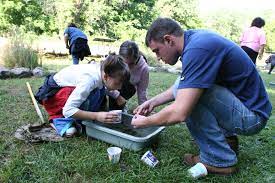
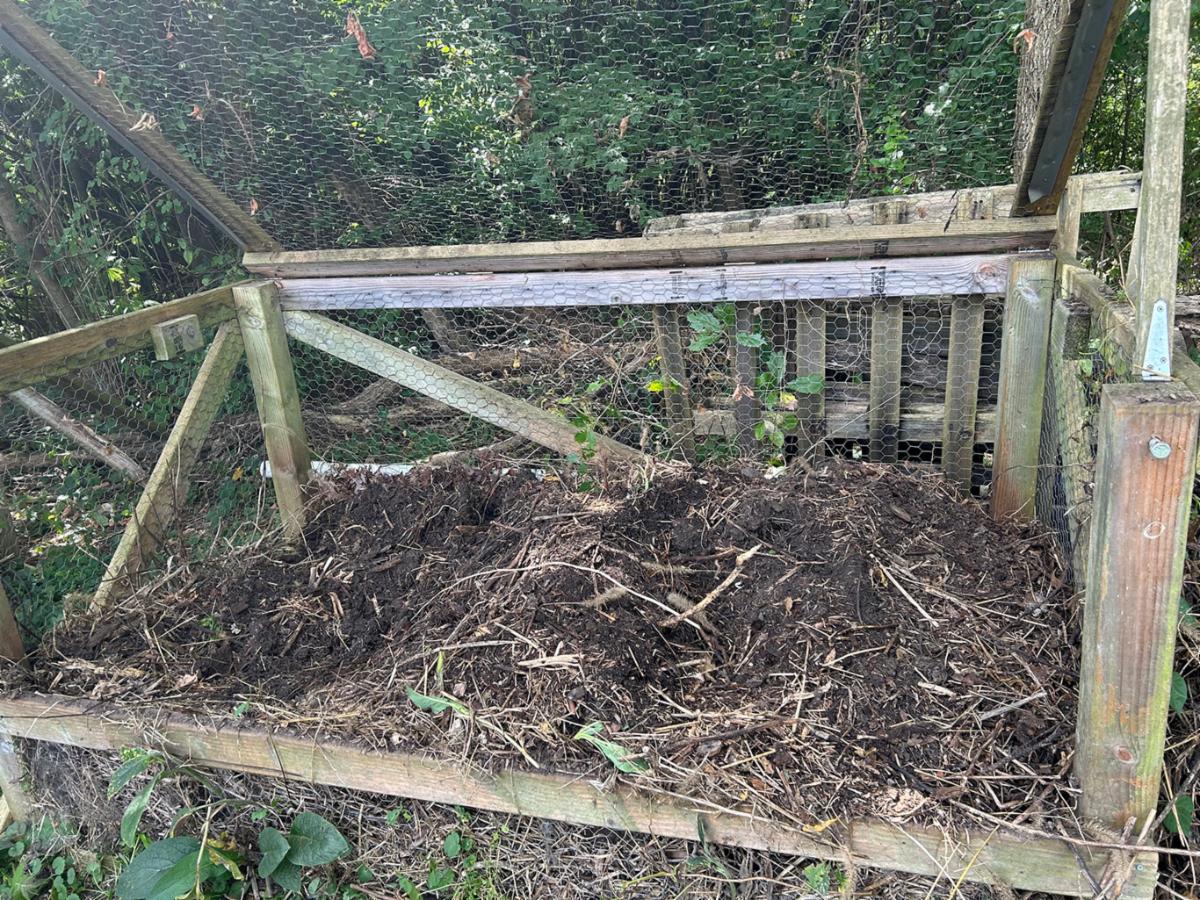
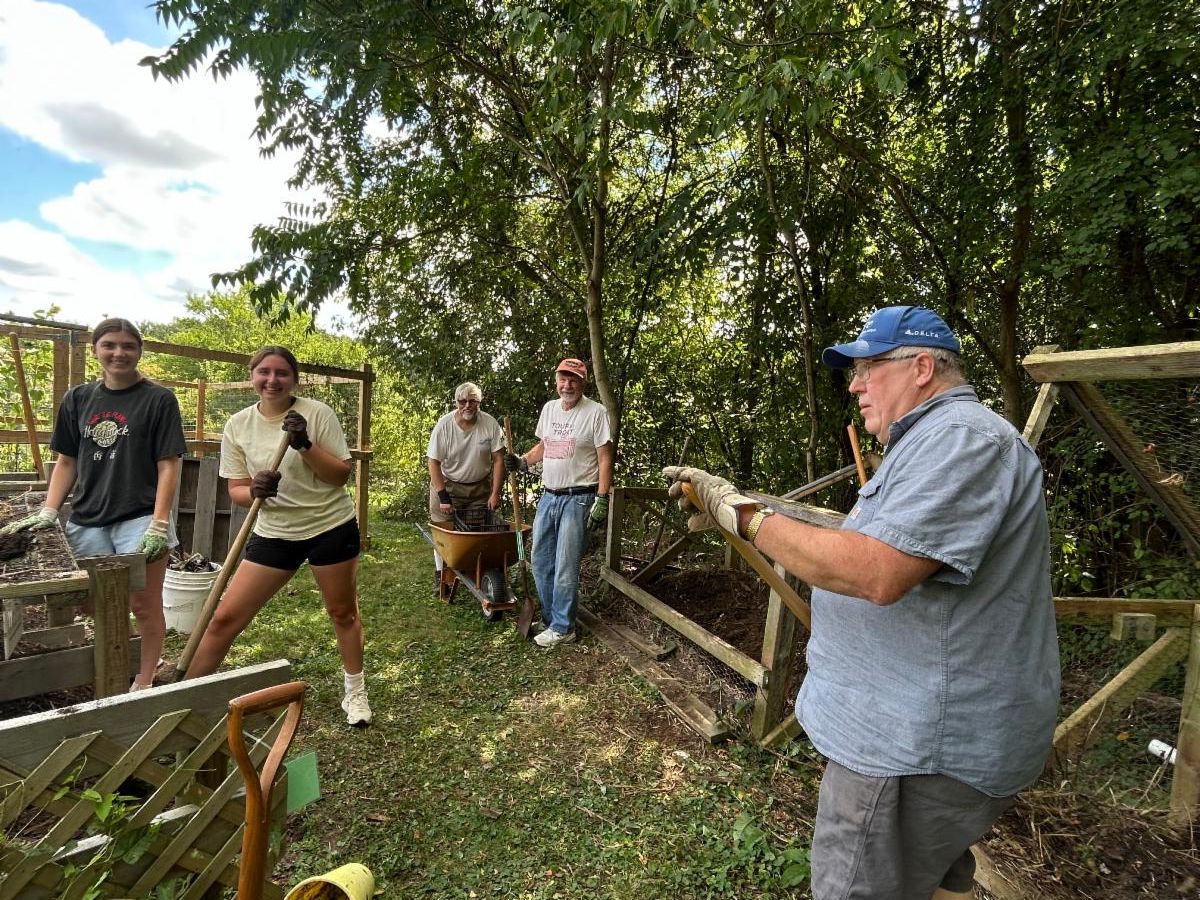
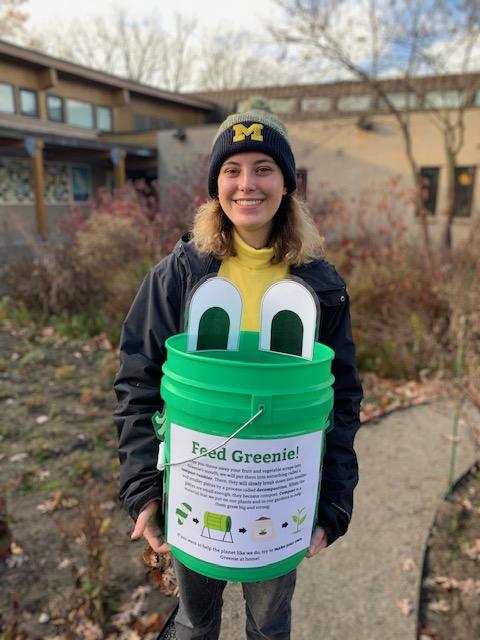
| | This past month we hosted a volunteer compost workshop at the University’s Community Organic Garden. A lot more goes into the composting process than most people think. We sorted and sifted through all of this year’s compost in the bins and removed non-compostable material. | | | |
We ended up collecting upwards of 30 lbs of non-compostable materials ranging from locks and gardening gloves to pieces of plastic and metal. Then we began the turning process of the good compost and mixed brown plant material with green plant material to get the compost to “cook.” There were some volunteers on water duty to wet down the compost to help the decomposition process. (Photos by the author)
In the next few months we will have similar events for the compost. You can check out more at home composting resources here along with explanations of how the composting process works: https://www.epa.gov/recycle/composting-home,
https://extension.illinois.edu/composting/how-it-works
-Joseph Giessuebel, Cooper Family Intern
| | |
A “Berry” Good Place for Fall Migrants
In order to continue their mostly nocturnal migration flights, songbirds need to stop during the day to replenish their energy reserves. In our urbanized
environment, a natural habitat space like the Environmental Study Area (ESA)
serves that purpose very well.
During fall migration, many songbird migrants depend of finding nutritious sources of fruit to refuel. Accessing plentiful sources of fruits high in fat allow these migrant stopovers to add to their fat reserves. As opposed the carb loading, which provides quick but short-term energy, storing fat will prove essential for the longer-term endurance they will need during the next leg of their migration.
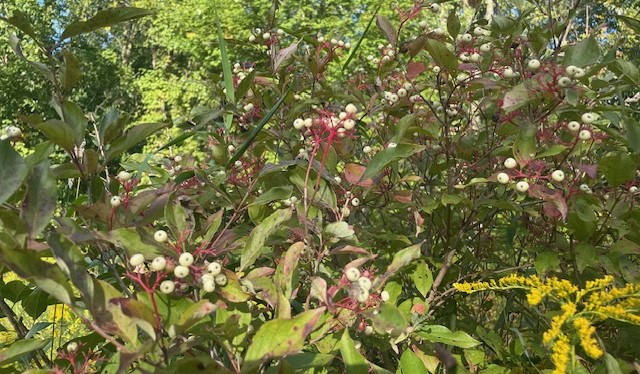
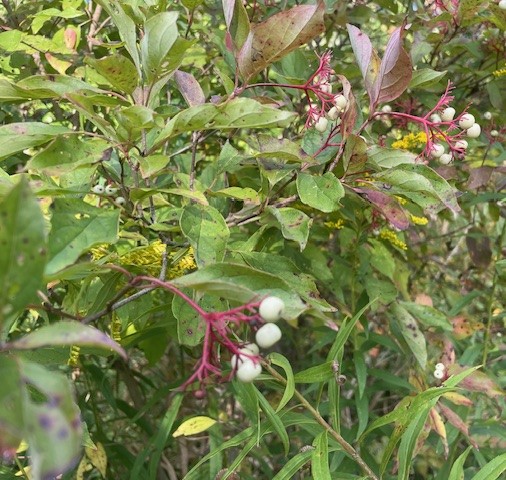
| | One of the best sources of ripe, fatty fruit for stopover bird migrants in the ESA during these late summer/early fall days is the native Gray Dogwood (Cornus recemosa). Born on red stalks called pedicels (see photos), the rather small, creamy white fruits are just the right size for swallowing whole by a range of migrant songbird species. | | | The Gray Dogwood plant also benefits from having its fruits consumed by birds. After being scarfed down by a bird, the seed inside the fruit gets wings (so to speak). The soft flesh of the fruit is digested, but the seed passes through unscathed. Come bird-pooping time, the seed drops to the ground, mixed with a complimentary bit of fertilizer from the bird. If it lands in a good spot to germinate, the seed will sprout. | | |
Adding native Gray Dogwood to a backyard landscape can also help to keep that “ecological partnership” thriving. The coinciding occurrence of this native fruit ripening and migrating bird makes for an ecological win-win for both bird and plant, the Gray Catbirds outside our office window among them.
(Photos by author)
| |
Come fall migration time, you’ll likely host, and help, some hungry avian travelers!
-Rick Simek, EIC Natural Areas Manager
| | |
Valerie's Legacy
The Environmental Study Area (ESA) here at the University of Michigan-Dearborn is one of the few remaining urban natural areas in the metro-Detroit area. By the early 2000s, a significant portion of the ESA became overrun with invasive plant species, especially European Buckthorn (Rhamnus cathartica) and Amur Honeysuckle (Lonicera maackii ). In 2015, Rick Simek, the Natural Areas Manager at the Environmental Interpretive Center (EIC), developed a formal habitat management plan to address the spread of invasive plants in the ESA, as well as improve the quality and diversity of the habitat.
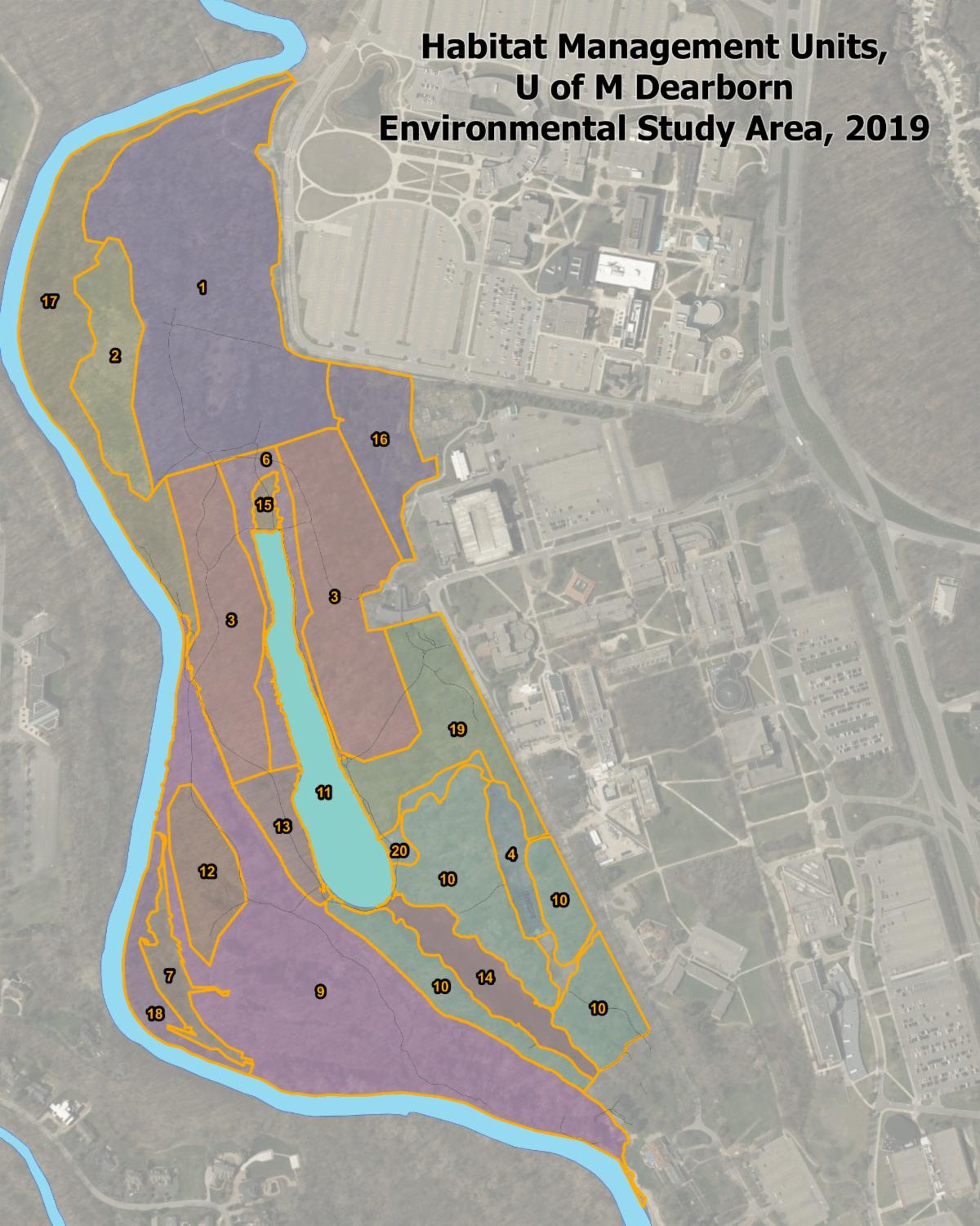
Rick and a host of EIC volunteers have been actively and persistently engaged in removing invasive plant species from the ESA and reseeding/replanting native plants to accomplish these goals. To this point, however, no formal evaluation of the progress of this plan has been conducted. So, to quantify the effectiveness of the EIC habitat management plan, I developed and performed vegetation surveys in a portion of the ESA habitat management unit 3E. This particular area of the habitat was previously a thicket of invasive buckthorn and honeysuckle, but has undergone intensive management since 2018.
To survey the selected area, I placed a total of eighteen 1m x 2m study plots throughout the habitat, starting at the beginning of July. I have since identified all of the understory plants and shrubs in the plots, and counted how many of each species was growing within each plot.
To assess the quality of the habitat, I used the Floristic Quality Index (FQI), which is calculated using the average assigned Coefficient of Conservatism (C-value) of the identified plant species and the total number of species. This resulted in a score of 12, which is considered low-quality on the FQI scale. In addition, I determined the plant diversity of the area using the Simpson’s Diversity Index (D), which is based on the number of species and the number of individual plants. This produced a score of 0.93, which indicates a very diverse habitat.
| | Although the FQI score calculated during this study indicates a low-quality habitat, this score is significantly higher than if invasive plant species were never removed. The habitat is still considered highly diverse, hosting a greater number of native wildflowers, grasses, and shrubs that are preventing the regrowth of invasive species and acting as resources for native fauna. Rehabilitation of an ecosystem, especially one that has undergone such a significant disturbance, takes a great deal of time and effort. | | | The increase in diversity and decrease in invasive species present in the area today still proves that the trajectory has been steered towards a higher-quality habitat. Future management of this habitat management unit should be continued to further guide it toward realizing and sustaining the EIC's habitat management goals. | | |
After over three years of work at the Environmental Interpretive Center–which has ranged from educational programming to gardening to founding Project PAT and more–this was my final project. I would like to give a big thanks to all of my EIC colleagues, who have been some of my biggest supporters through my college years and now the beginning of my career. I also want to give my appreciation to all of the volunteers that have worked with me on my various projects and helped me make my ideas a reality. Even though I will no longer be working at the EIC, I will be a frequent visitor, so don’t be surprised if you see me wandering the trails!
Editor's note: This will be Valerie's last Greenways contribution. We have been so fortunate since she applied as the Stewardship intern during our "early Covid days." Her role at the EIC grew, as did her contributions to our mission. We wish Valerie all the best as she leaves the University and shares her talents in her professional life.
| | |
Venturing outdoors and encountering nature is good for your health. Our trails are accessible, so please visit our Environmental Study Area. Stay engaged in learning activities and check out our Remote Learning Activities & Resources page for ideas to create a “Neighborhood Nature Journal” and “Family Nature Walk” activities!
| | | We also hope to see you in person at our upcoming programs! | |
Please remember...
The EIC Environmental Study Area is open daily from sunrise to sunset. We would like to remind nature-goers that fishing on site is prohibited and to leave bikes and dogs at home because they cause disruption and stress to the EIC wildlife.
| |
| | | |