Product Stewardship Updates |
|
Packaging EPR Momentum Continues |
|
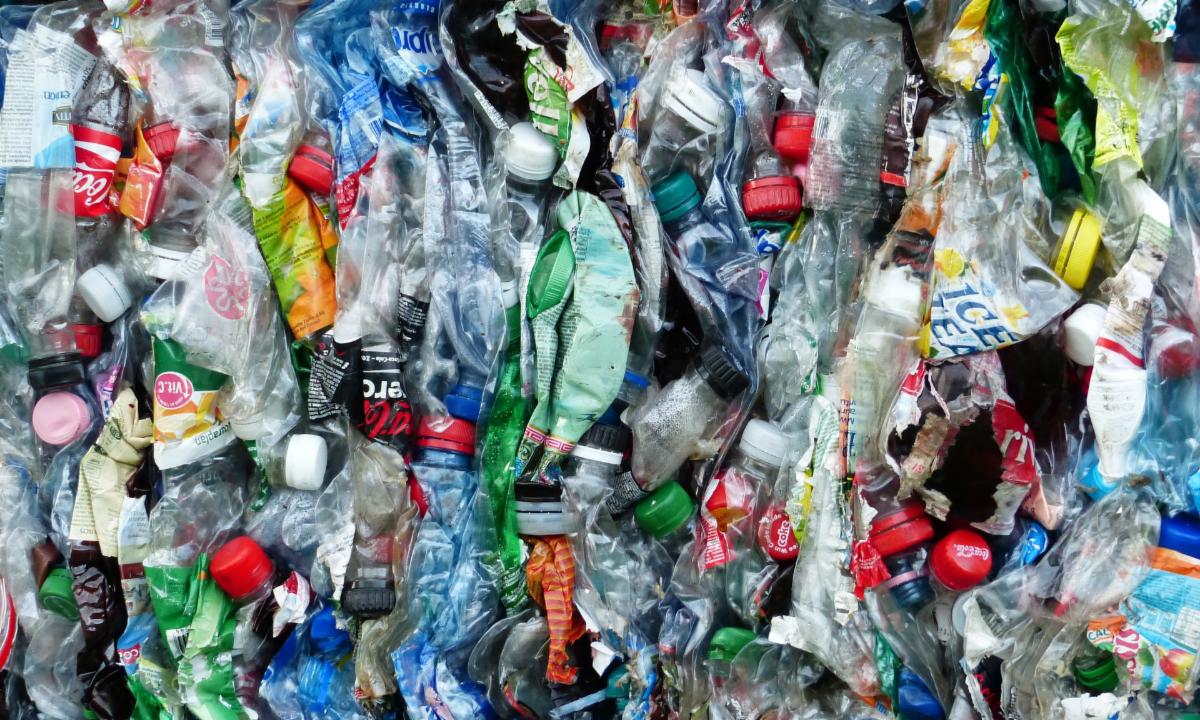
After more than three years of negotiations and the threat of a ballot initiative taxing plastic pollution, California stakeholders successfully negotiated SB54, the Plastic Pollution Prevention and Packaging Producer Responsibility Act, which was sponsored by Senator Ben Allen. The law covers single-use packaging and food serviceware and includes enforceable recycling targets that will increase over time, reaching 65% by 2032.
In keeping with PSI’s packaging EPR model legislation, which was drafted in 2018 and informed similar legislation this year in Colorado and last year in Maine and Oregon, California’s law will create a producer responsibility organization (PRO) to manage the program, with government oversight.
|
|
Electronics EPR Progress Report |
|
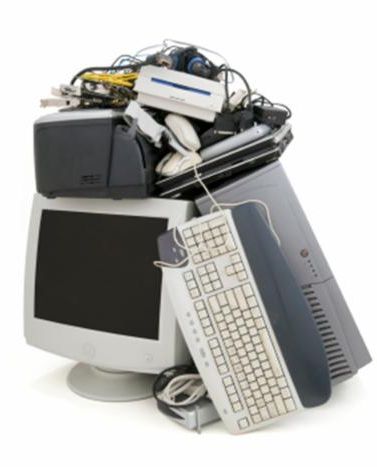
South Carolina is poised to enact a law that will eliminate weight targets for electronics collection and give consumers easy access to drop-off sites. Currently on Governor McMaster’s desk, H 4775 will make South Carolina the second state – after Illinois – to enact this type of EPR law for electronics.
In the two decades since PSI and its government members convened the National Electronics Product Stewardship Initiative and engaged the U.S. Environmental Protection Agency and electronics producers, much has changed. Today, there are 26 laws in 25 states and the District of Columbia — with four bills introduced in 2022 alone. As products became lighter, some programs responded by moving away from weight-based performance targets to convenience-based collection standards. In 2017, PSI provided recommendations to the Illinois Product Stewardship Council, which worked with the Consumer Technology Association to shift the electronics EPR law in that state from a weight-based to a convenience-based program. Over the past year, we collaborated with the state agency and SWANA in South Carolina to draft an amendment to their law with a focus on greater consumer convenience.
This year, PSI is working with stakeholders in Alaska to adjust our model electronics EPR legislation to address that state’s unique transportation challenges and lack of existing infrastructure. We have also begun to work with Oregon state and local governments and other stakeholders to update one of the oldest electronics EPR programs in the United States. Our goal is to ensure that both existing and emerging programs provide convenient collection services and ensure that program costs continue to be internalized by manufacturers. As global momentum increases for “right to repair” legislation that enables consumers to fix their own electronics — which could eventually be linked to eco-modulated fees — the time is now for electronics EPR.
|
|
Legislators Changing the Game on Packaging EPR |
|
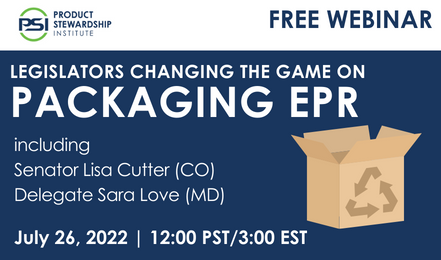
In 2022 alone, 16 states introduced packaging EPR legislation and game-changing packaging laws were enacted in Colorado and California, furthering the momentum from last year, when the first two EPR packaging laws were enacted in Maine and Oregon. This month, PSI will convene a group of legislators – including Senator Lisa Cutter (CO) and Delegate Sara Love (MD), among others – who championed or plan to introduce EPR packaging legislation. They will share their knowledge and lessons learned in our webinar: “Legislators Changing the Game on Packaging EPR.” Learn more and sign up today!
|
|
Legislation News in Brief |
|
Politico cites PSI’s analysis of packaging EPR legislation at a “record high” nationwide.
In its coverage of Colorado’s new packaging #EPR law, Resource Recycling cited PSI’s model legislation and quoted our statement: The bill “represents a paradigm shift in the way paper and packaging are designed and managed in the United States and will significantly increase recycling in the state.”
PSI’s Scott Cassel on the EU’s recent proposal to mandate universal charging for electonic devices, in The Verge: “The EU tried voluntary initiatives. It didn’t work. And so, it shows a strong need for political will to address this global problem. My initial reaction was hallelujah, it’s been a long time coming… Whose home is not tangled in cords?”
In its coverage of Connecticut’s new first-in-the-nation fuel cylinders EPR law, Resource Recycling cited PSI’s years of work on this issue and quoted our newsletter: “The smallest amount of residual propane can cause explosions and fires, which is why the cylinders are typically rejected by recyclers, even though they are made of valuable materials. But that’s all about to change in Connecticut.”
Recycling Today shared a great write up on our recent EPR Masterclass webinar: “Representatives from a European institute and several consumer brands shared a few examples of how brands have responded to EPR in Europe and what factors influenced them most to change packaging design to make it more recyclable.”
MetroWire cited PSI data in its exploration of Wisconsin’s Electronics Recycling Law – which made it one of 24 states to ban electronics from landfills and incinerators.
|
|
PSI Partners Amazon Paint and GDB International, as well as the Missouri PSC, were featured in the MO State Recycling Program Newsletter highlighting our collaborative recycled paint demonstration program in the state.
Coatings Trends & Technologies (CTT), the Midwest's premier coatings conference, brings together stakeholders from across the paint industry to discuss innovations in coatings technology. This September, on a panel spearheaded by PSI, the American Coatings Association and GDB International (both PSI Partners) will be speaking on recycled paint and the success of the PaintCare program.
|
|
Suna Bayrakal, PhD, PSI's Director, Policy & Programs, will present on EPR for Household Hazardous Waste and Lelande Rehard, our Senior Associate, Policy & Programs, will present on Pharmaceuticals EPR, at the NAHMMA National 37th Annual Conference, July 17-22 in Fort Myers, FL.
Sydney Harris, PSI's Policy & Programs Manager, will present on an EPR panel hosted by David Eldridge, Editor of Plastics Recycling World magazine, at the Plastics Recycling World Conference, November 9-10 in Cleveland, OH.
|
|
Can EPR Change Packaging Design? |
|
The Product Stewardship Institute has worked for more than 21 years to develop Extended Producer Responsibility policies and programs in the United States, and our models have helped enact 129 EPR laws in 33 states across 16 product categories, including packaging. For inspiration, we turn to Europe, where packaging EPR has been in operation for 35 years — reducing waste and invigorating stagnant recycling rates to more than 70%.
But have these EPR programs — including tools like eco-modulated fees — led to the design of more sustainable consumer packaging? On June 7th PSI gathered experts to find out, including Joachim Quoden of the Extended Producer Responsibility Alliance (EXPRA), which presented the webinar.
|
|
The Product Stewardship Institute is a policy advocate and consulting 501(c)(3) nonprofit that powers the emerging circular economy. We rely on the generosity of our members, partners, and supporters to convene diverse stakeholders to build extended producer responsibility (EPR) policies, programs, and laws. Thank you!
|
|
The Product Stewardship Institute, Inc. is an equal opportunity employer and provider. Persons with disabilities who require alternatively formatted materials to ensure effective communication should contact Amanda Nicholson at amanda@productstewardship.us or 617.236.4855, TTY: use 711 or 800-439-2730; MassRelay.
|
|
|
|
|
|
|